Quick Info
Curated Experiences
Ancient Rome Walking Tour Including Trajan's Market
Rome: Trajan’s Market and Imperial Forums Guided Tour
Rome Highlights: Colosseum, Forum & Trajan’s Market
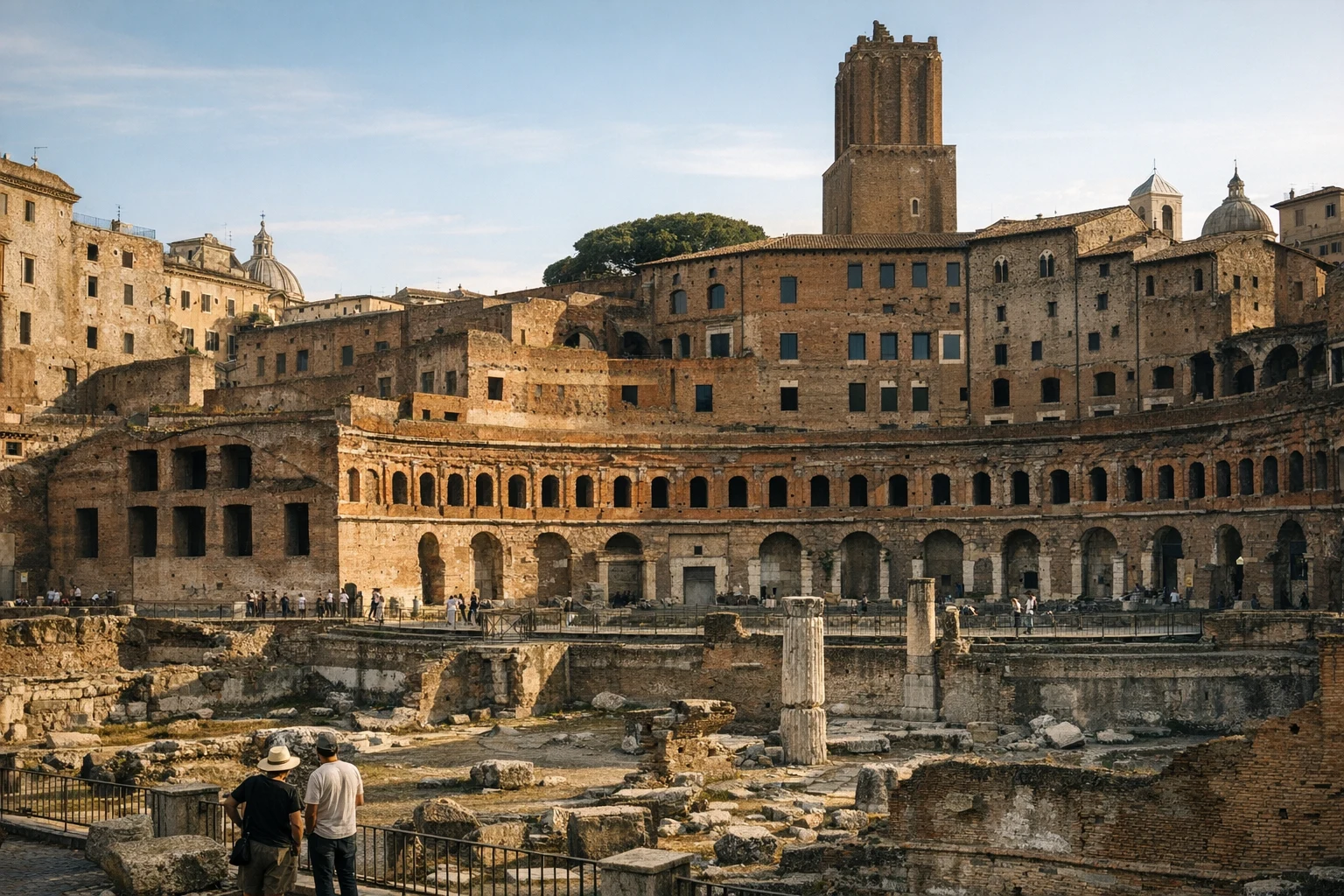
Walking through Rome, where ancient history and modern life collide on every street corner, few sites illustrate the ingenuity and vibrancy of the Roman Empire as strikingly as Trajan’s Market. Located in Italy’s captivating capital, Trajan’s Market invites visitors to step back nearly two millennia, offering a physical and imaginative journey through an era when emperors sought to redefine urban life. Nestled along Via dei Fori Imperiali, just up the rise from the Roman Forum and beneath the imposing shadow of the Altare della Patria, the market stands as a testament to Roman architectural sophistication. For travelers and history enthusiasts alike, it is not merely a set of ruins but an immersive window into daily life at the height of Imperial Rome.
As morning sunlight creeps across its brick arcades and marble floors, the market’s enduring structure reveals a city within a city: a complex of sweeping shops, bustling offices, and wide, paved walkways filled with the spirit of commerce and administration. While modern visitors come seeking knowledge and inspiration, Romans of antiquity came here for something much more tangible—goods, news, and opportunities from across the Empire. Today, Trajan’s Market anchors the sequence of Imperial Forums, its multi-level halls commanding views over ancient boulevards where senators, merchants, and citizens once mingled.
Beyond the grandeur, there’s a lived-in quality to the site, from worn steps to cityscape panoramas that still invite pause and reflection. Trajan’s Market is widely regarded as the world’s first shopping mall, and as you stand within its vast halls and quiet passageways, it’s easy to imagine the bustle of ancient commerce that set the stage for urban centers all over the world. Visiting here means discovering the pulse of Rome both archaeological and alive—a unique intersection where stones speak, time stretches, and history’s stories are still being told.
History
Conception and Construction under Trajan
The early second century CE was a time of unparalleled ambition in Roman engineering and urban planning, largely thanks to Emperor Trajan. Following his campaigns in Dacia, Trajan funneled immense wealth back into Rome, commissioning grand projects to immortalize his reign. Trajan’s Market, conceived as an integral part of the vast Forum of Trajan, broke ground around 107 CE and represents the pinnacle of Roman construction and urban design.
The market was a solution to practical and political needs. Rome’s population nearing a million created insatiable demand for goods, spaces for commerce, and administrative hubs to run the empire’s vast bureaucracy. Chief architect Apollodorus of Damascus designed Trajan’s Market with an innovative semi-circular plan, using brick and concrete, materials that allowed Romans to defy traditional structural limitations. The market was ingeniously embedded into the Quirinal Hill, both cutting through and complementing the natural slope—a dramatic example of the Romans shaping their city’s landscapes to fit human needs.
The Marketplace in Imperial Rome
Upon completion, Trajan’s Market stood as a thriving economic and social center. Its six levels housed over 150 shops (tabernae), offices, storerooms, and administrative rooms, all lining a grand main street (Via Biberatica). Merchants offered everything from spices and silks to olive oil and wine, serving the city’s elites and everyday citizens alike. The complex facilitated the organized flow of goods and information, and its upper stories hosted administrators overseeing distribution, contracts, and even imperial policies.
The adjacent Forum of Trajan, with its monumental basilica, libraries, and Trajan’s Column, was designed not only to impress but also to streamline Rome’s political apparatus. Trajan’s Market complemented these functions, acting as the commercial heartbeat within the empire’s bureaucratic hub. Shoppers and officials mingled, creating a micro-city of commerce, communication, and statecraft set apart from the riotous chaos of the older Roman Forum just to the south.
Decline, Transformation, and Rediscovery
As Rome’s fortunes waned over the centuries, so too did the market’s prominence. The collapse of the Western Roman Empire ushered in an age of instability. Over time, the market’s arcades and halls were repurposed—serving as fortified residences in the Middle Ages, monastic dwellings, and later even military barracks. Successive generations built upon its solid bones, layering their own chapters atop Trajan’s legacy.
The Renaissance and Baroque eras brought new appreciation for ancient forms, but it was only in the 20th century that serious archaeological attention turned to Trajan’s Market. Extensive excavations from the 1920s onwards stripped away later accretions, revealing the original imperial structure buried beneath centuries of reuse and urban renewal. Restoration efforts lovingly repaired battered masonry, stabilized vaults, and opened new galleries—transforming the market into the Museo dei Fori Imperiali, a modern museum set within ancient stones.
Today, Trajan’s Market is celebrated both as a unique architectural achievement and a living record of Rome’s continual transformation from imperial capital to cosmopolitan city. It remains one of the best-preserved and most evocative ruins in the urban core, bridging the world of the Caesars and the bustling life of contemporary Rome.
Key Features
As you approach Trajan’s Market, its form immediately defies expectations. Unlike the flat, rectilinear forums of earlier eras, the market is ingeniously curved, conforming to the cutaway face of Quirinal Hill. This semi-circular structure reveals the Roman genius for adapting architecture to landscape rather than imposing order upon it. The massive brick edifice, once stuccoed and patterned with decorative details, offers a vivid sense of how lively and complex ancient urban environments could be.
The main entrance leads visitors into the Grand Hall—a soaring space originally roofed with wooden trusses and lined with shops below robust barrel vaults. This hall acted as the central artery, guiding crowds through the commercial heart of the site. Light floods the space via high windows, illuminating both ancient stonework and modern museum exhibits that showcase the market’s history and archaeological finds. Bronze fragments, inscriptions, and scale models tell the story not only of Trajan’s Market but of the wider Imperial Forums network.
Rising above, a series of interconnected walkways leads to successive terrace levels. Each tier offered specific functions, from retail stores (tabernae) selling everyday items, to office spaces for administrators. The Via Biberatica, the most famous of these ancient streets, snakes through the middle of the market, its weathered paving stones once trod by merchants, imperial secretaries, and curious visitors alike. This street’s name hints at the goods once sold here—“bibere” meaning “to drink”—a nod to taverns and refreshment stalls that once filled the marketplace with life and laughter.
On the uppermost terraces, you encounter sweeping balconies and loggias with commanding views of Rome and the neighboring forums. These spaces were designed for private business, administrative meetings, and as vantage points for overseeing both commerce below and events in Trajan’s Forum. Architectural remnants tell stories of both grandeur and the daily grind: corbelled arches, finely dressed travertine details, and even graffiti scratched into ancient mortar by long-gone shopkeeps and scribes.
Within the complex lies the Museo dei Fori Imperiali, an engaging collection chronicling the development and function of Rome’s Imperial Forums. Artifacts excavated from Trajan’s Market and the surrounding area include marble statues, monumental reliefs, currencies, and wares that illuminate commerce, governance, and urban life in the empire at its peak. Modern exhibitions use immersive displays, reconstructions, and multimedia to enliven the spaces once used by real Romans, making this not just a monument, but a journey through antiquity.
Stepping outside onto the market’s terraces, the visitor is treated to some of the best panoramic views in central Rome. The juxtaposition of ancient stone and vibrant cityscape below offers a palpable sense of continuity—Rome’s past layered visibly upon its present. Even as ruins, the layered arcades, intricate vaults, and adaptable passageways of Trajan’s Market remain models for urban innovation, connecting centuries of city life, commerce, and civic spirit.
Getting There
Trajan’s Market is centrally located in Rome, making it accessible to visitors from all over the city and beyond. The main entrance sits along Via Quattro Novembre, a short walk from both Piazza Venezia and the Colosseo district. The market’s strategic location near Rome’s major archaeological zones allows it to serve as an ideal starting or midpoint for exploring the city’s ancient past.
For visitors arriving by public transport, the easiest way is via Metro Line B, disembarking at the Cavour or Colosseo stations—both roughly a 10–15 minute walk from the site. Alternatively, buses and trams serving Piazza Venezia (lines 40, 60, 64, 75, and others) drop you within easy walking distance. Fares for single metro or bus rides are €1.50, valid for 100 minutes of travel.
If traveling from Roma Termini, the city’s main railway station, you can reach Trajan’s Market by metro (Line B south to Cavour or Colosseo), or by any number of buses connecting Termini to the historical center—expect a journey time of about 20 minutes. Taxis or ride-sharing services can provide a direct trip as well, with typical fares ranging from €10 to €15 for short journeys within the city center.
For those who prefer walking, Trajan’s Market is only about a 20-minute stroll from the Colosseum and a similar distance from the Pantheon or Trevi Fountain. Walking the ancient streets and boulevards offers a chance to observe hidden ruins, bustling markets, and picturesque piazzas. Clear signage guides tourists at major intersections, and multilingual information panels are posted near the site to orient visitors.
Arriving by car is not recommended, as parking in the historic center can be challenging and expensive. Several private garages and paid lots are available further from the core, but traffic can be heavy, and much of the area around Trajan’s Market is restricted to non-resident vehicles. Cycling is feasible for experienced riders, but bike parking is limited in the immediate vicinity.
Visitors with mobility needs will find that some areas of Trajan’s Market are accessible via ramps and elevators, though not every ancient level can be easily reached. Planning ahead and consulting accessibility information on the official site can ensure a smoother visit.
When to Visit
Rome’s temperate climate makes Trajan’s Market a year-round destination, but certain times of year offer distinct experiences and advantages. Spring (April to June) and early fall (September to October) are widely regarded as the best periods to explore the city’s ancient sights. During these months, daytime temperatures hover between 15°C and 25°C (59°F to 77°F), creating ideal conditions for wandering the open-air ruins and enjoying panoramic city views without the discomfort of summer heat.
In the peak of summer (July and August), Rome’s temperatures can easily reach 35°C (95°F) or higher. Crowds swell, as travelers from across the globe pour into the city. While the market’s interior spaces offer some respite from the sun, terraces and stone-paved streets can become quite hot in midday. If visiting during summer, plan for early morning or late afternoon entry, when sites are less crowded and temperatures more manageable. Bring water, sun protection, and comfortable walking shoes, as the cobblestones and ancient steps can be unforgiving.
Winter in Rome is typically mild (daytime averages between 8°C and 15°C, or 46°F and 59°F), with fewer visitors and shorter wait times at major sites. Rain is more frequent, but the atmospheric clouds and a quieter city can lend a different charm to the ruins. Bundle up for chilly breezes on the terraces, and take advantage of off-season ticket discounts and special exhibitions at the museum.
Trajan’s Market is busiest on weekends and national holidays. Weekdays, particularly Tuesday through Thursday, see lighter crowds, making for a more contemplative and personal visit. The market typically opens at 9:30 AM and closes at 7:30 PM, with last entry an hour before closing—arrive early to enjoy the morning light, or late afternoon for golden-hour views over Rome.
Major Italian holidays (such as Easter, Liberation Day on April 25, and Republic Day on June 2) bring festive energy to the city, but can also see restricted hours or closures. Check the official website for the latest schedules, ticket prices, and any temporary exhibitions or closures before your visit.
| Quick Facts | Details |
|---|---|
| Location | Rome, Lazio, Italy |
| Established | Circa 107–110 CE |
| Builder/Architect | Emperor Trajan & Apollodorus of Damascus |
| Function | Commercial complex (shops), administrative center |
| Size | 6 levels, approx. 150 shops and offices |
| Modern Use | Archaeological site and museum |
| Notable Features | Grand Hall, Via Biberatica, panoramic terraces, Museo dei Fori Imperiali |
| Nearest Metro | Cavour (Line B), Colosseo (Line B) |
| Opening Hours | 9:30 AM – 7:30 PM (last entry: 6:30 PM) |
| Admission | €11 standard (discounts available for youth, students, seniors) |
| Accessibility | Partially accessible (ramps/lifts in some areas) |
| Nearby Attractions | Roman Forum, Colosseum, Piazza Venezia |
Frequently Asked Questions
Where is Trajan's Market located?
Trajan's Market is located in the heart of Rome, Italy, along Via dei Fori Imperiali, near the Roman Forum and Piazza Venezia.
What is Trajan's Market famous for?
Trajan's Market is renowned as the world’s oldest known shopping mall, featuring multi-level arcades of ancient Roman shops and administrative offices.
How much time does a visit to Trajan's Market typically take?
A typical visit lasts 1–2 hours, allowing time to tour the museum, wander the ancient halls, and enjoy panoramic views.
Can you buy tickets in advance for Trajan's Market?
Yes, tickets are available online and at the entrance. Booking in advance is recommended during peak seasons to avoid queues.
Is Trajan's Market accessible to people with disabilities?
The site offers partial accessibility. Some areas have ramps and lifts, but certain ancient sections are best navigated with assistance.
Are guided tours available at Trajan's Market?
Yes, guided tours are available and highly recommended for a deeper understanding of the site's history and architecture.
Is photography allowed at Trajan's Market?
Photography is permitted for personal use. Flash and tripods may be restricted in certain museum areas.
What are the opening hours of Trajan’s Market?
Trajan’s Market typically opens at 9:30 AM and closes at 7:30 PM, with last entry an hour before closing. Hours may vary on holidays.
Nearby Ancient Sites
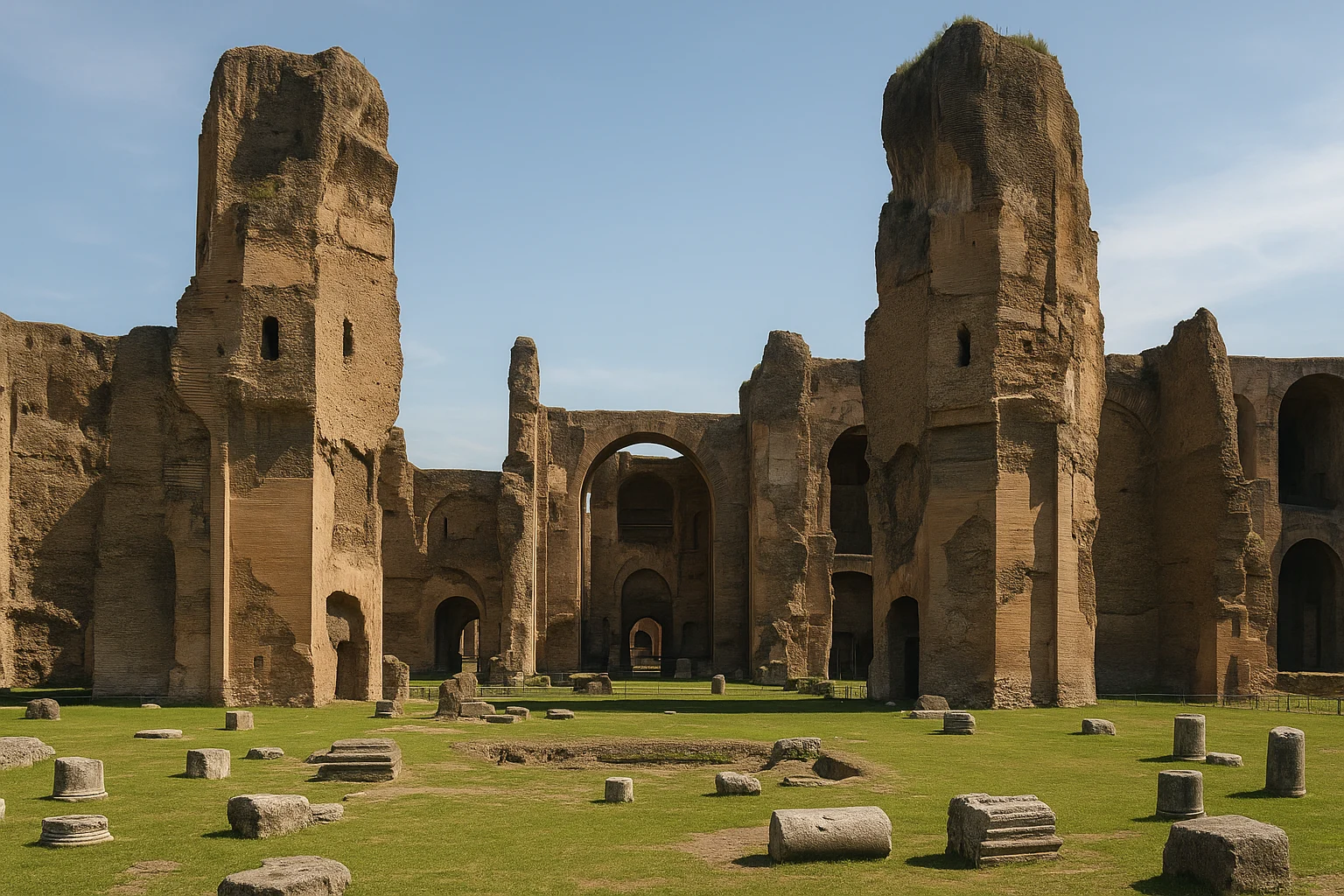
Baths of Caracalla Rome Guide 2026
RomanPlan your visit to the Baths of Caracalla with practical route advice, history context, timing, and ...
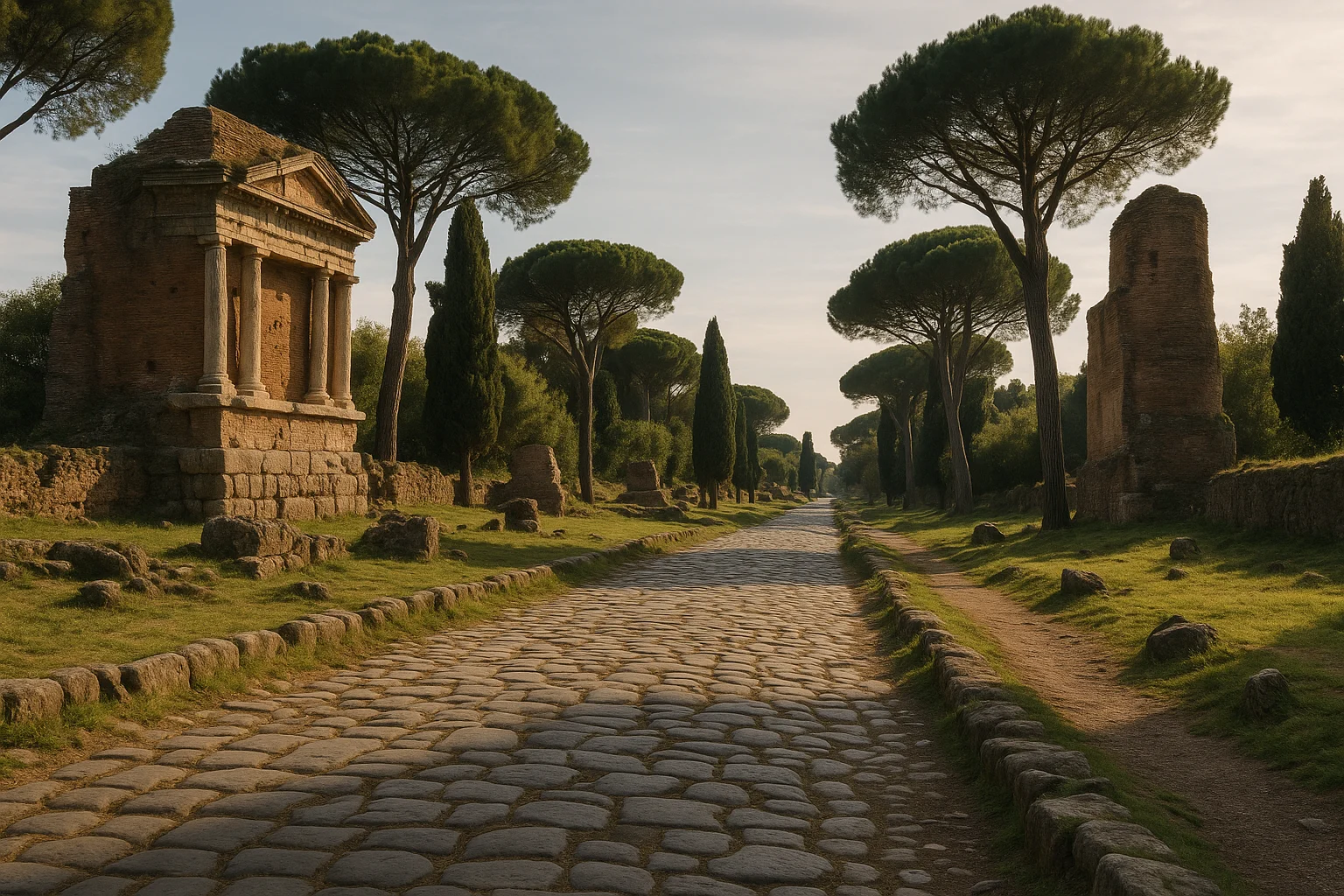
Appian Way Rome Guide 2026
RomanPlan a smart visit to the Appian Way with route choices, catacomb logistics, bike-vs-walk strategy, ...
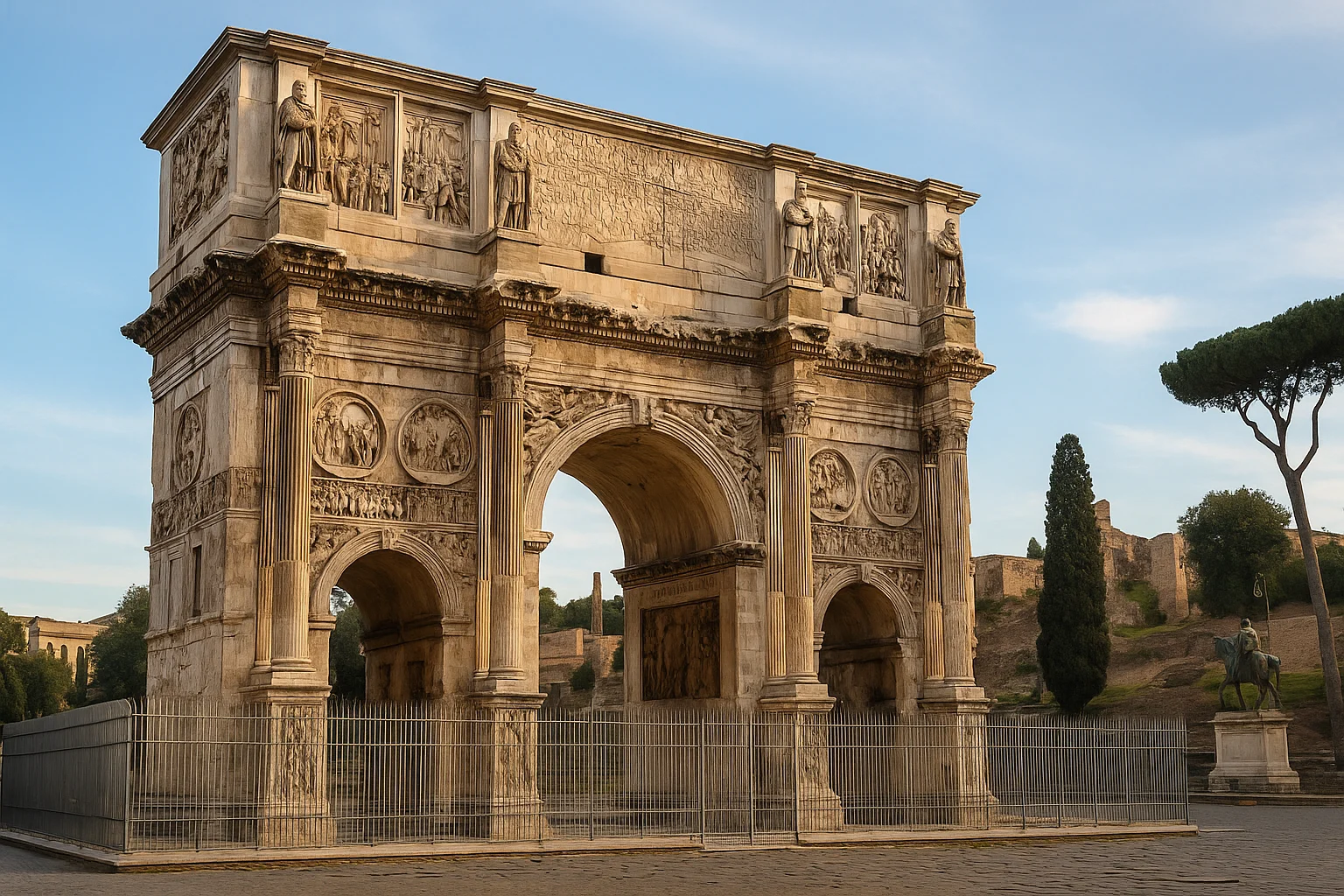
Arch of Constantine Rome: Triumph Over Maxentius Guide
Roman EmpireThe Arch of Constantine commemorates Constantine's 312 CE victory. Spolia details, best photo angles...