Quick Info
Curated Experiences
Trier Roman Monuments Walking Tour
Private Trier UNESCO Roman Heritage Tour
Moselle and Trier Roman Sites Day Tour
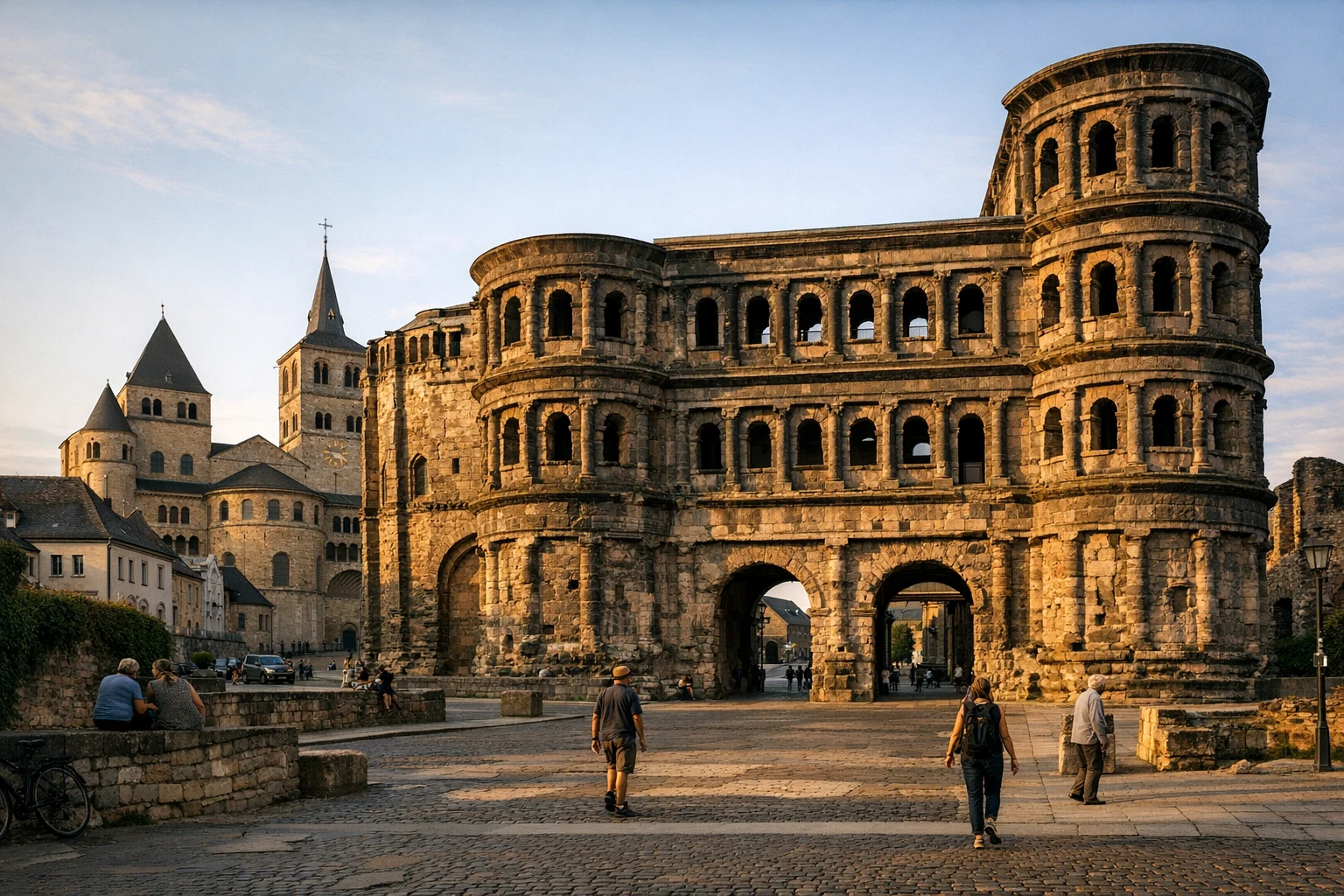
Trier Roman monuments in Germany offer one of the most satisfying ancient city experiences in Europe because the ruins are not gathered into a single fenced archaeological park. They are woven through a living town on the Moselle, where Roman gates, baths, audience halls, bridges, and amphitheater remains still shape the rhythm of everyday streets. You can step out of a café-lined square, turn a corner, and suddenly face the massive dark stone of the Porta Nigra. A few blocks later, the huge Roman throne hall known today as the Aula Palatina rises with startling severity above gardens and traffic. This is what makes Trier special. The monuments are not isolated trophies from the past; they continue to define the city’s scale, routes, and identity.
That intimacy with the modern city is one reason Trier feels so different from many famous Roman sites farther south. The architecture is undeniably imperial, and at moments almost overwhelming, yet the experience of visiting is unusually human in scale. Most major remains lie within walking distance, allowing you to reconstruct the Roman city by moving through it on foot. Along the way, you begin to grasp that Trier was not some remote frontier outpost with a few token buildings. It was one of the great cities of the late Roman Empire, at times an imperial residence and political center of immense significance. For travelers interested in how Rome adapted itself beyond the Mediterranean core, Trier is indispensable. It shows the empire not only at its edge, but at one of its northern peaks of power and urban ambition.
History
Augusta Treverorum and the Roman Foundation
Trier’s Roman story begins in the late 1st century BCE, when the city was founded as Augusta Treverorum, named partly in relation to the local Treveri people and to the imperial order taking shape under Augustus. The site was well chosen. It lay in a fertile river valley with access to trade routes and military corridors linking Gaul, the Rhine frontier, and the wider Roman west. Like many Roman foundations, Trier was both practical and symbolic. It helped consolidate Roman authority in a region of strategic importance while projecting the cultural and administrative order of the empire into the northwest.
From the beginning, Trier was more than a military camp. It developed as a planned urban center with roads, public buildings, temples, and civic institutions. Roman power in the provinces depended not only on armies but on cities, and Trier grew as one of the most important of them. Its location allowed it to prosper through trade and administration, and its early urban development laid the groundwork for the extraordinary monumental phase that would follow in later centuries.
Expansion and Urban Prosperity
During the 1st and 2nd centuries CE, Trier expanded into a wealthy and sophisticated provincial city. Public architecture proliferated, and the city developed many of the features that marked Roman urban status: baths, amphitheater, bridges, warehouses, elite housing, and monumental gates. The surviving remains of this period already make Trier impressive, but the city’s true distinction lies in what happened later, when it rose from prosperous provincial center to one of the key capitals of the Roman world.
This earlier phase matters because it established Trier as a genuine Roman city rather than a temporary administrative experiment. By the time the empire entered the crises and transformations of the 3rd century, Trier already possessed the infrastructure, importance, and urban identity needed to support a much larger political role. It was a city prepared for elevation.
Imperial Residence in Late Antiquity
Trier reached its greatest prominence during the late 3rd and 4th centuries CE, especially under the Tetrarchy and subsequent imperial regimes, when it became one of the principal residences of Roman emperors in the west. This was the period that produced some of the city’s most famous monuments and explains why Trier’s Roman remains feel so unusually grand for a city this far north. Emperors and their courts did not settle lightly. Their presence demanded palaces, audience halls, baths, defensive structures, and the architectural language of imperial rule.
The Aula Palatina, or Imperial Basilica, is one of the clearest examples. Built as a massive throne hall, it expressed the concentrated power of an emperor receiving petitioners and envoys in a space designed to impress through scale and simplicity. The Imperial Baths likewise reveal a city operating on a level far beyond ordinary provincial life, even if the complex was never fully completed or used in the way originally intended. Trier in this period was not peripheral. It was central to the reorganization of Roman power in the west.
The city also became an important Christian center. Bishops gained prominence, churches arose, and Trier’s religious life developed alongside its imperial one. This dual legacy helps explain why the UNESCO listing unites Roman monuments with major Christian buildings. In Trier, the transition from Roman imperial city to Christian urban center was not a rupture so much as an overlapping evolution.
Decline, Transformation, and Preservation
Like every Roman city, Trier changed as imperial structures weakened and political realities shifted. Yet it did not vanish. One of the most remarkable aspects of Trier is its urban continuity. Roman buildings were repurposed, transformed, quarried, inhabited, fortified, and absorbed into later medieval and early modern life. The Porta Nigra, for example, survived partly because it was turned into a church in the Middle Ages, a transformation that altered but also protected the structure. The Aula Palatina became part of later building phases and eventually a Protestant church. Baths became quarries or ruins embedded in new topographies.
This continuity is why Trier’s Roman monuments survive with such force today. They were never entirely abandoned to wilderness. They remained in use, in memory, or in the urban fabric. Modern archaeology, restoration, and preservation clarified their Roman origins and stabilized their surviving forms, but the city itself had already kept them alive through centuries of adaptation. Trier is therefore not just a Roman ruin field. It is a place where Roman architecture continued to matter because the city around it never stopped existing.
Key Features
The Porta Nigra is the monument most visitors associate with Trier, and it earns that role immediately. This massive Roman city gate, built of enormous sandstone blocks that darkened over time, has an authority that feels almost architectural in the abstract. It is both fortress-like and highly formal, with stacked arcades and a sense of depth that changes as you move around it. The gate survives more completely than most Roman urban entrances elsewhere in northern Europe, and standing beneath it gives a vivid impression of what it meant to enter a major imperial city. Its later medieval conversion into a church also adds historical richness. The structure is Roman, but its survival is partly medieval, which makes it a monument not only of origin but of reuse.
The Aula Palatina, or Constantine Basilica, is perhaps even more astonishing once you understand what you are seeing. From the outside, it can seem severe, almost plain compared with more decorative Roman ruins, but that plainness is part of its power. The building is essentially a monumental audience hall: long, high, and uncompromising in scale. Inside, the vast uninterrupted space still conveys the political theater of late Roman emperorship with unusual clarity. Few places allow visitors to sense so directly the architectural mechanics of imperial presence. It is not a temple or a house. It is a room built for authority.
The Imperial Baths reveal another side of Trier’s significance. Though never fully completed in the form originally intended, the complex remains one of the largest Roman bath structures north of the Alps. Subterranean passages, service areas, and monumental brickwork make the site especially evocative. Rather than encountering only a picturesque ruin, visitors can understand how Roman bath architecture functioned as a complex machine of heat, water, movement, and social hierarchy. The scale alone makes clear that Trier was operating at an exceptional level of urban ambition.
The amphitheater and the Roman bridge further expand the city’s Roman profile. The amphitheater reminds visitors that Trier, like other major Roman cities, staged public entertainment as part of civic life and political culture. The bridge, still serving traffic in modified form across the Moselle, demonstrates how Roman engineering continued to shape movement through the city across nearly two millennia. This continuity between ancient infrastructure and modern urban function is one of Trier’s greatest charms.
Perhaps the most important feature of all is that these monuments can be experienced as parts of a single city rather than separate museum pieces. Walking between them helps reconstruct Roman Trier in the mind. The city becomes legible as an urban organism: gate, baths, audience hall, entertainment space, bridge, forum area, and Christian buildings emerging from and alongside Roman forms. That integration is what makes Trier such a rewarding destination for anyone interested in the long life of the Roman city.
Getting There
Trier is easy to reach by train, car, or regional bus, especially from western Germany, Luxembourg, or nearby parts of France and Belgium. The city has a well-connected central railway station, and direct or easy-connection train routes from cities such as Luxembourg, Koblenz, Cologne, and Saarbrücken make it practical for both day trips and longer stays. Train fares vary widely depending on route and booking time, but regional and advance-purchase options can be quite reasonable. From Trier Hauptbahnhof, many of the main Roman monuments are walkable or reachable by a short local bus ride.
If you are driving, Trier is straightforward to access via the regional motorway network, though parking in the historic center can be more limited than in outer areas. Public parking garages and park-and-walk approaches are usually the easiest solution. Because the Roman monuments are spread across the city center and close surroundings, once you arrive it is best to explore mostly on foot. This is one of Trier’s great advantages. Unlike dispersed archaeological zones that require constant transport, the city rewards deliberate urban walking.
Guided walking tours are common and often worthwhile, especially if you want to connect the monuments into a coherent historical story. Independent visitors can also manage very well with a good map and timed entry planning. Allow for museum stops if they interest you, and wear comfortable shoes because a full Roman Trier day involves more walking than the compact map initially suggests.
When to Visit
The best time to visit Trier’s Roman monuments is from late spring through early autumn, when the city is pleasant for long walks and outdoor ruins are easiest to enjoy. May, June, September, and early October are especially good, combining mild temperatures with relatively manageable visitor numbers. The Moselle setting also makes these months attractive beyond the monuments themselves, since the wider town and river landscape feel most inviting then.
Summer is lively and often beautiful, especially if you enjoy outdoor dining and a more animated city atmosphere. The tradeoff is that visitor numbers increase, and some monument areas can feel busier. Still, Trier rarely feels crushed by crowds in the way some Mediterranean heritage cities do. Early mornings are best if you want the clearest photographic views and a quieter experience at major sites such as the Porta Nigra.
Winter is quieter and can actually suit Trier well if you do not mind cold weather. The dark stone of the Porta Nigra and the monumental severity of the Aula Palatina can feel especially dramatic in gray skies and low light. Christmas market season adds a different charm to the city center, though naturally it shifts the mood from archaeology toward seasonal city life. Rain is possible in any season, so a flexible itinerary helps. Overall, though, Trier is one of those rare ancient cities that remains rewarding year-round because its monuments are woven into a living urban environment rather than depending entirely on fair weather.
| Quick Facts | Details |
|---|---|
| Location | Trier, Rhineland-Palatinate, Germany |
| Best Known For | Porta Nigra, Aula Palatina, Imperial Baths, amphitheater, and Roman urban continuity |
| Roman Name | Augusta Treverorum |
| Main Period | 1st to 4th century CE |
| UNESCO Status | Roman Monuments, Cathedral of St Peter, and Church of Our Lady in Trier |
| Signature Monument | Porta Nigra |
| Recommended Visit Length | 1 full day minimum, 2 days ideal |
| Best Season | Late spring to early autumn |
| Best Way to Explore | On foot through the historic center |
| Practical Tip | Treat Trier as a walkable Roman city rather than a single-site stop to appreciate how the monuments connect |
Frequently Asked Questions
What are the Trier Roman monuments best known for?
They are best known for the Porta Nigra, the Aula Palatina, the Imperial Baths, the amphitheater, and the extraordinary concentration of Roman remains in a living German city.
Is Trier really Germany’s oldest city?
Trier is often described that way because of its Roman foundation and long urban continuity, making it one of Germany’s oldest cities with exceptionally rich ancient remains.
How much time should you spend in Trier?
Most travelers should allow at least a full day for the main Roman monuments, though two days is better if you want to explore museums, churches, and the Moselle setting at a relaxed pace.
Can you walk between Trier’s Roman monuments?
Yes. Many of the major Roman monuments are within walking distance of each other in or near the historic center, which makes Trier especially rewarding for a self-guided urban archaeology visit.
Are Trier’s Roman monuments part of a UNESCO World Heritage Site?
Yes. The Roman Monuments, Cathedral of St Peter, and Church of Our Lady in Trier are recognized together as a UNESCO World Heritage Site.
When is the best time to visit Trier Roman monuments?
Late spring through early autumn is ideal for walking the city comfortably, though Trier can be rewarding year-round if you do not mind cooler weather.
Nearby Ancient Sites
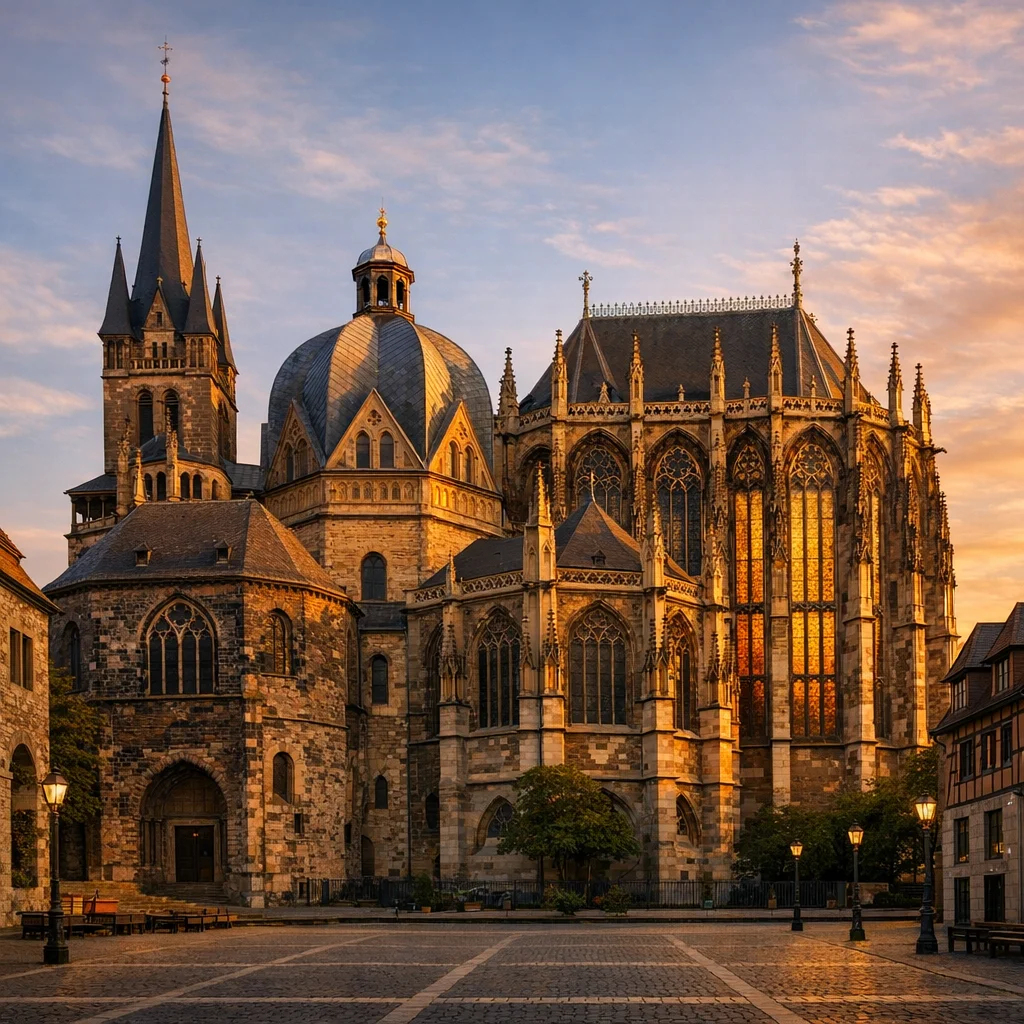
Aachen Cathedral
Carolingian, Holy Roman EmpireVisit Aachen Cathedral, Charlemagne's eighth-century palatine chapel and the first UNESCO World Heri...
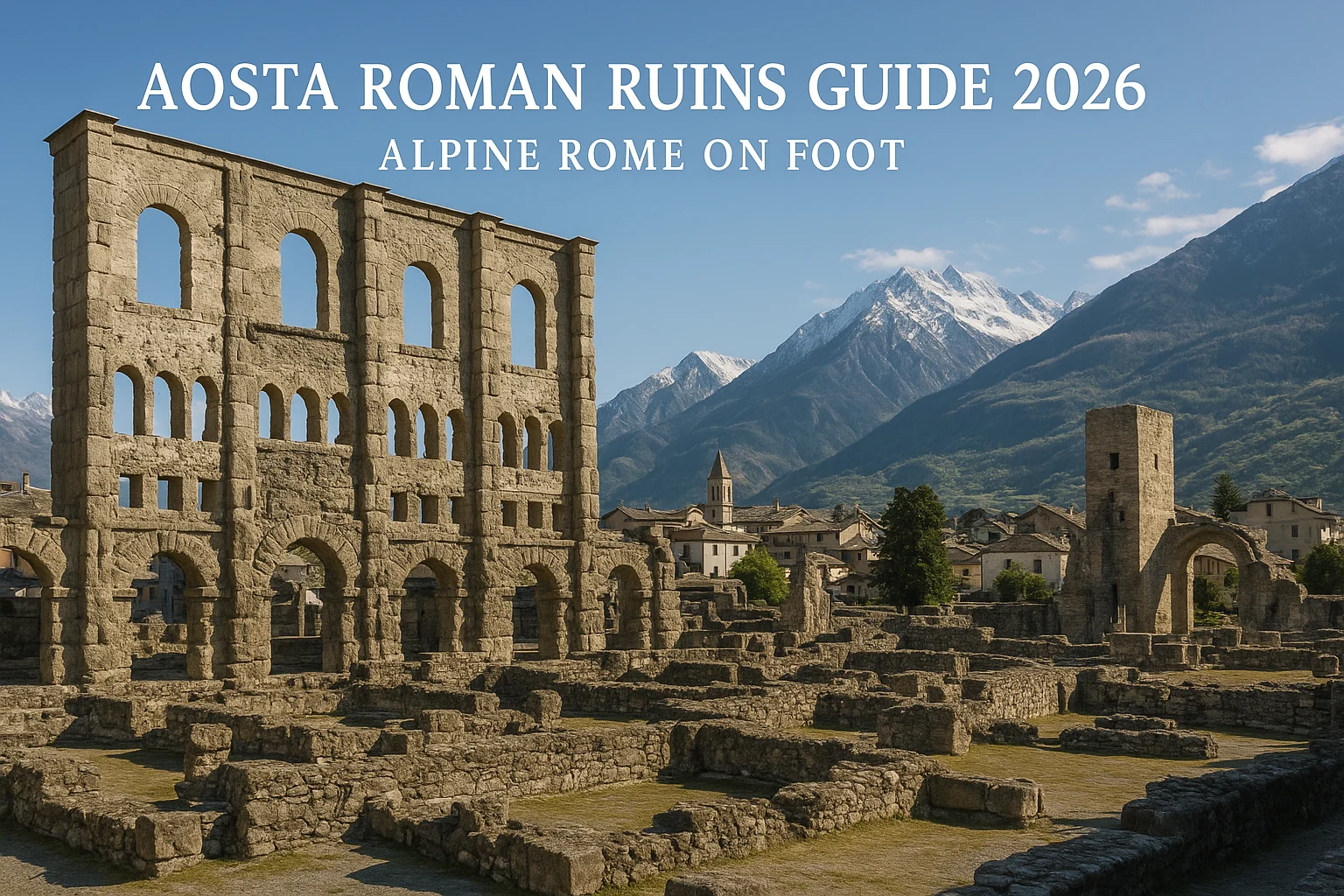
Aosta Roman Ruins Guide 2026: Alpine Rome on Foot
RomanPlan a practical visit to Aosta's Roman remains, including the Arch of Augustus, theater, city walls...
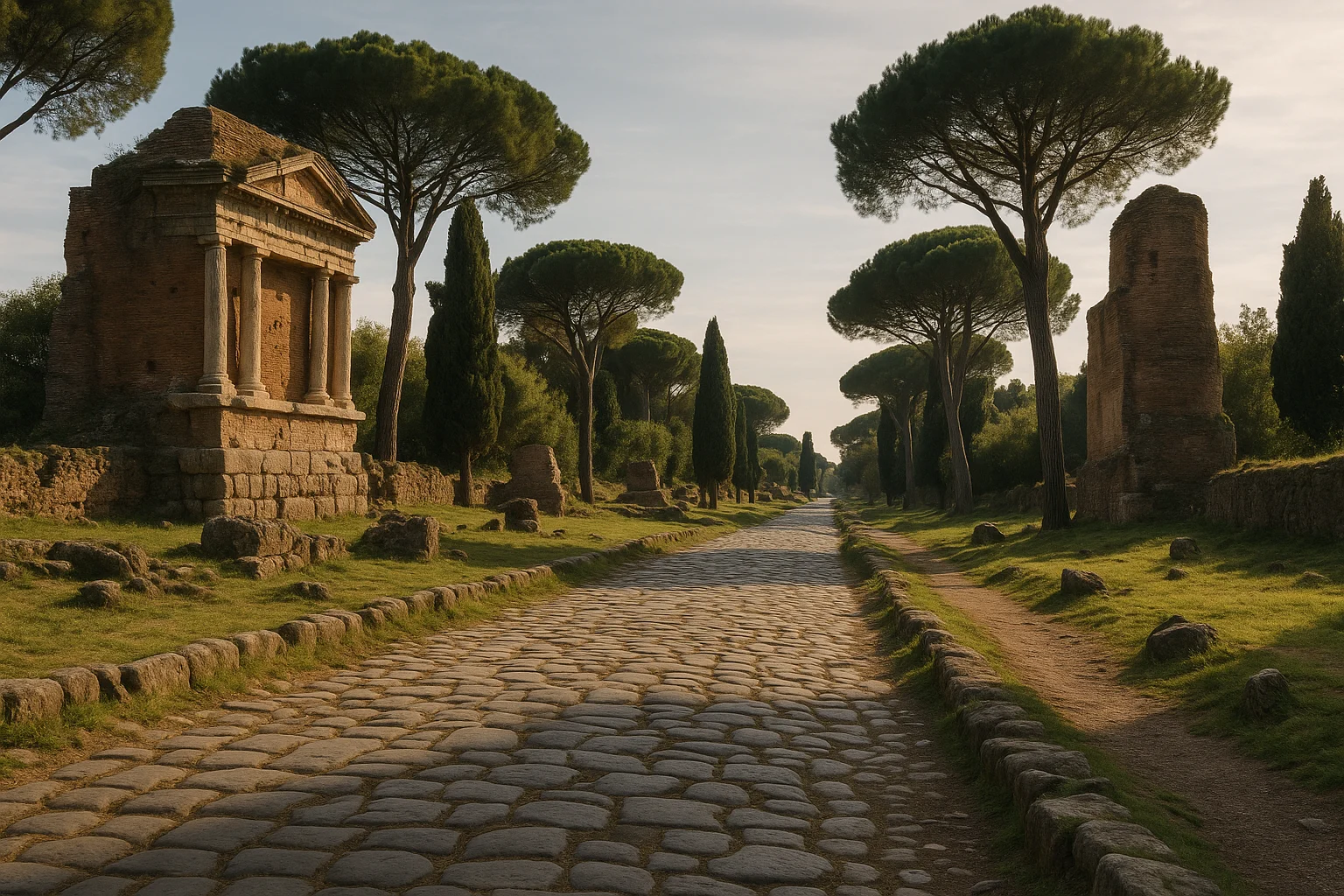
Appian Way Rome Guide 2026
RomanPlan a smart visit to the Appian Way with route choices, catacomb logistics, bike-vs-walk strategy, ...