Quick Info
Curated Experiences
Trim Castle and Boyne Valley Heritage Day Tour
Private Trim Castle and County Meath History Tour
Norman Ireland Small-Group Castle Experience
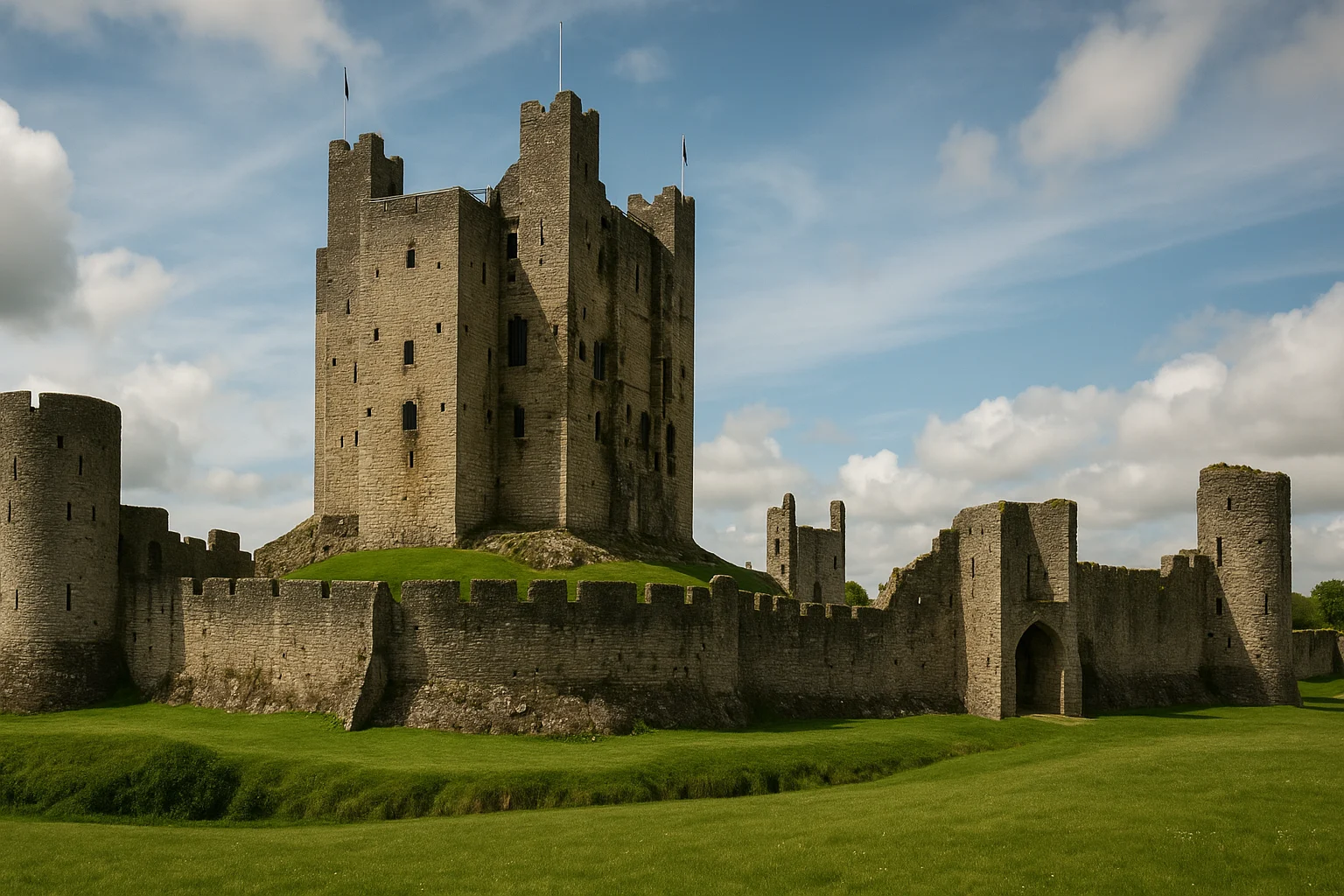
Trim Castle stands above the River Boyne in County Meath like an announcement carved in limestone. This is not a picturesque ruin draped in ivy. It is the largest Anglo-Norman castle in Ireland, a fortress built to project power across the richest farmland on the island, and even after eight centuries of exposure to Meath weather it still dominates the town and the river crossing it was designed to control.
The keep is the thing. A three-story cruciform tower unlike anything else in Ireland, with projecting square towers on each face creating a cross-shaped footprint that provided overlapping defensive sightlines and signaled, to anyone who saw it, the resources and ambition behind the Norman settlement of Ireland. The curtain walls, barbican gate, and flanking towers that followed turned Trim into a fully enclosed military compound that served as a center of English administration for generations.
Come for the guided keep tour, stay for the curtain-wall circuit, and read the castle as a statement of intent rather than just a defensive structure. Trim is where the Norman conquest of Ireland becomes physically, undeniably real.
Historical Context
Hugh de Lacy, one of the most powerful of the Anglo-Norman lords granted lands in Ireland by Henry II, began construction at Trim around 1176. The site was strategic — a river crossing in the fertile Boyne Valley, commanding an area that had been important to Irish kings for millennia. The first structure was likely a timber motte-and-bailey that was burned by the Irish king Ruaidri Ua Conchobair shortly after construction. De Lacy rebuilt in stone, and what rose over the following decades was the most ambitious castle in Ireland.
The cruciform keep at the center of the complex was completed by roughly 1200. Its unusual shape, with a square tower projecting from each face of a central block, created a plan that was both militarily effective and architecturally distinctive. The keep stands roughly 75 feet tall, with walls up to 11 feet thick at the base. Interior chambers on each level served residential, administrative, and storage functions. The great hall, private chambers, and a chapel were all contained within or adjacent to the keep, making it a self-contained lordly residence as well as a fortification.
The curtain walls and their associated towers were added in stages through the early 13th century, eventually enclosing roughly three acres. The barbican gate on the south side provided the main controlled entry, while postern gates allowed for discreet access. The Dublin Gate on the eastern side remains one of the best-preserved sections. Water from the Boyne was channeled into a moat that surrounded portions of the curtain wall, adding a further defensive layer.
Trim served as a center of English administration in Meath throughout the medieval period. Parliaments met here. The young Prince Hal (later Henry V) was held at Trim in 1399 during Richard II’s Irish campaign — a fact that did not escape Mel Gibson, whose 1995 film Braveheart used Trim as a filming location despite the castle having nothing to do with Scotland. By the 15th century, the castle’s military importance had diminished, and it gradually fell into disrepair. The Office of Public Works took over management and carried out significant conservation work beginning in the 1990s.
Today, Trim Castle is one of the best-preserved and most physically commanding Anglo-Norman fortifications in Ireland, and the keep remains the single most impressive piece of Norman military architecture on the island.
Film fans may recognize Trim from Mel Gibson’s 1995 Braveheart, which used the castle as a stand-in for York and London despite having nothing to do with Scotland or England historically. The filming brought tourism and conservation attention to the site, and a small heritage trail in the town references the connection. But the castle’s real story — the Norman settlement of Ireland, the feudal transformation of the Boyne Valley, the centuries of administrative and military use — is considerably more interesting than its Hollywood cameo.
What to See
The Keep (Guided Tour)
The cruciform keep is the heart of Trim and the reason to visit. Interior access is by guided tour only, and the OPW guides provide strong context on how the building functioned simultaneously as residence, administrative center, and fortification. You will climb through multiple levels, seeing the great hall space, window embrasures, garderobes, and the internal layout that reveals how the keep’s cross-shaped plan created distinct zones for different functions. From the upper levels, the views extend across the curtain walls, the river, and the Boyne Valley farmland. The tour lasts approximately 45 minutes and is limited to small groups.
Curtain-Wall Circuit
After the keep tour, walk the full exterior perimeter of the curtain walls. This is where the scale of the fortress registers. The enclosure covers roughly three acres, with defensive towers spaced to provide overlapping fields of fire along every approach. Notice how the walls relate to the river on one side and open ground on the others — the castle was sited to control the river crossing while maintaining clear sightlines in every direction. The best-preserved sections include the Dublin Gate on the east and the barbican on the south.
River Boyne Frontage
Step outside the walls and walk along the Boyne. The river is quiet and relatively narrow here, but its strategic value becomes obvious once you see how the castle commands the crossing point. This is the same Boyne Valley that holds Newgrange and the passage tombs upstream — Norman lords chose a landscape that had been important for millennia, and their castle sits in deliberate relationship to the geography that drew earlier civilizations.
The Barbican and South Gate
The barbican — a fortified gateway designed to control and funnel attackers approaching the main gate — is one of the best-preserved examples of its type in Ireland. The double-tower arrangement and the narrow passage between them demonstrate how castle designers created killing zones without sacrificing access for legitimate traffic. Stand inside the passage and look up: the murder holes and arrow loops are still visible.
Town Context: Yellow Steeple and Talbot Castle
Trim itself preserves fragments of a medieval streetscape that give the castle broader context. The Yellow Steeple, the bell tower of a 14th-century Augustinian abbey, stands about a 5-minute walk from the castle grounds. Talbot Castle, a 15th-century fortified townhouse near the river, adds another layer of Anglo-Norman architecture to the visit. A short walk through town connects these fragments into a picture of how the castle related to the settlement it both protected and governed.
Timing and Seasons
The best months to visit are April through June and September through October, when light is good for photography, temperatures range from 48-60°F (9-16°C), and tour-group traffic is moderate. Summer (July and August) brings warmer conditions, around 60-68°F (16-20°C), but the keep tours fill faster and midday congestion around the walls increases.
The grounds are open year-round, but the guided keep tours operate seasonally, typically from Easter through late October. During winter months, you can walk the curtain-wall circuit and view the exterior of the keep, but interior access is not available. Winter temperatures average 36-46°F (2-8°C), and the river-valley setting means damp, misty mornings are common.
The best strategy for any season is to arrive for the first keep tour of the day. Slots are limited to roughly 15 people, and first-tour visitors typically have the most relaxed, least rushed experience. After the tour, spend the rest of the morning walking the walls and the riverside before the midday crowds arrive.
Tickets, Logistics, and Getting There
Adult admission to the grounds is approximately $6 (EUR 5). The guided keep tour costs an additional $4 (EUR 3), for a combined total of roughly $10 (EUR 8). Children, students, and seniors receive discounted rates. OPW Heritage Card holders enter the grounds free, though the keep tour requires a separate booking. The site typically opens at 10:00 AM and closes between 5:00 and 6:00 PM depending on the season.
Trim is located roughly 45 kilometers (about 50 minutes) northwest of Dublin via the M3 motorway and R154. Free parking is available along the river and in the town center, a short walk from the castle entrance. There is no direct train service to Trim. Bus Eireann operates limited service from Dublin (Busaras) to Trim, but frequency varies by day, so check schedules in advance. For most visitors, a rental car or organized day tour is the most practical option. Day tours from Dublin that include Trim alongside Boyne Valley stops typically cost $72-85 per person.
Practical Tips
- Check OPW tour times for keep access before you arrive. Slots are limited, can fill on busy days, and are not available in winter. Booking online in advance, if available, is the most reliable approach.
- Wear sturdy shoes. The ground inside the keep is uneven stone, and the curtain-wall circuit crosses damp grass and gravel paths.
- Bring a windproof layer. The river valley channels wind across the open grounds, and the keep’s upper levels are fully exposed.
- The grounds are open even when keep tours are not running. A visit for the exterior alone, especially the curtain-wall circuit and Boyne frontage, is worthwhile.
- Budget at least 1.5 hours for the keep tour and wall circuit. Add 30 to 45 minutes for the river walk and town fragments.
- Trim has several pubs and cafes in the town center. The Trim Castle Hotel and Franzini’s on the main street are solid lunch options within a 5-minute walk.
Suggested Itinerary
Arrive at the castle by 10:00 AM and join the first guided keep tour of the day (45 minutes). After the tour, exit and walk the full curtain-wall perimeter clockwise, pausing at the barbican, Dublin Gate, and river-facing sections (30 to 40 minutes). Step outside the walls for the River Boyne frontage walk (15 to 20 minutes).
If time allows, walk into Trim town to see the Yellow Steeple and Talbot Castle (20 to 30 minutes round trip). Return to the car park or a town-center pub for lunch. Total visit time: 2 to 2.5 hours.
For a full-day Boyne Valley itinerary, pair the morning at Trim with an afternoon visit to Newgrange and the Bru na Boinne Visitor Centre (roughly 30 minutes northeast). This combination gives you the medieval military chapter and the Neolithic passage-tomb chapter of the same valley in a single day.
Nearby Sites
Boyne Valley Passage Tombs at Newgrange and Knowth are roughly 30 minutes northeast and represent one of the most significant Neolithic ceremonial landscapes in Europe. The contrast between a Norman military fortress and a 5,000-year-old passage-tomb complex, both shaped by the same river valley, is among the most instructive pairings in Irish heritage.
Glendalough in County Wicklow adds the early medieval monastic chapter to the story. The glacial valley with its round tower and ruined churches represents a different kind of power from Trim’s fortress — spiritual authority rather than military force. Glendalough is about 1.5 hours southeast.
Clonmacnoise on the River Shannon shows what Irish monastic culture looked like on a river-plain landscape before the Normans arrived. The comparison between Clonmacnoise’s scholarly settlement and Trim’s military compound illuminates the disruption that the Norman invasion brought. Clonmacnoise is roughly 1.5 hours west.
The Hill of Tara, roughly 20 minutes south of Trim, adds the pre-Norman political dimension — the symbolic seat of the High Kings of Ireland, a landscape that carried mythic weight long before any Norman lord arrived in the Boyne Valley.
Discover More Ancient Wonders
- Boyne Valley Passage Tombs — Neolithic tomb complex at Newgrange and Knowth
- Glendalough — Early medieval monastic valley in County Wicklow
- Dublin Castle — Medieval-to-modern administrative complex in Dublin city center
- Rock of Cashel — Ecclesiastical hilltop contrasting Trim’s military architecture
- Our guide to Anglo-Norman castles in Ireland
Final Take
Trim Castle is not a castle that asks you to imagine what it once looked like. The keep stands, the walls stand, and the river still runs where it always has. The fortress that Hugh de Lacy built to announce the permanence of the Norman presence in Ireland still announces exactly that, eight centuries later. The cruciform keep is the most physically commanding piece of Norman architecture on the island, and the curtain walls around it define a military compound that makes the scale and ambition of the conquest tangible in a way that documents and chronicles cannot.
If you are passing through the Boyne Valley, Trim is the site that adds the medieval chapter to a landscape most travelers know only for its deep prehistory. Stand inside the keep, walk the walls, and follow the river. The story the castle tells is simple: someone came here, built this, and meant to stay forever.
Quick Facts
| Attribute | Details |
|---|---|
| Location | Trim, County Meath, Ireland |
| Country | Ireland |
| Region | County Meath |
| Civilization | Anglo-Norman Ireland |
| Historical Period | 12th century CE — 15th century CE |
| Established | c. 1176 CE |
| Admission | ~$10 (EUR 8) grounds + keep tour |
| Opening Hours | 10:00 AM daily; closing varies seasonally |
| Time Needed | 1.5-2.5 hours |
| Managed By | Office of Public Works (OPW) |
| Coordinates | 53.5547, -6.6889 |
Frequently Asked Questions
How long do you need at Trim Castle?
Most first visits take 1.5 to 2 hours. That covers the guided keep tour, a walk around the curtain walls, and time along the River Boyne frontage.
Can you go inside the keep at Trim Castle?
Yes, but only on a guided tour operated by the OPW. Tours run at set times with limited group sizes, so arriving early or checking the schedule in advance is worthwhile.
Is Trim Castle worth visiting on a Boyne Valley trip?
Yes. It is the largest Anglo-Norman castle in Ireland and adds a strong medieval military layer to a Boyne Valley itinerary otherwise focused on prehistory.
Nearby Ancient Sites
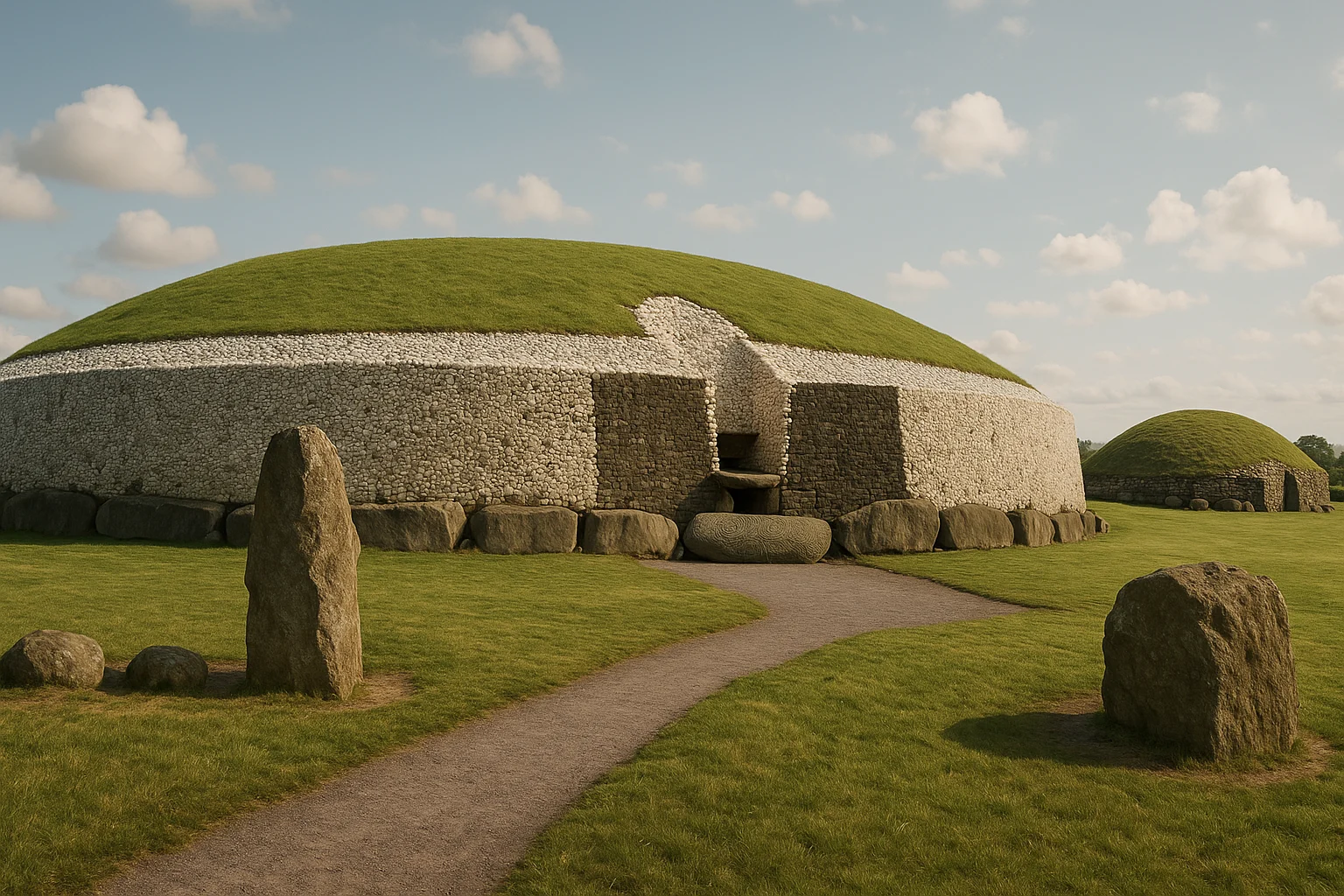
Boyne Valley Passage Tombs Travel Guide 2026: Newgrange, Knowth, and Dowth Visit Strategy
Neolithic IrelandPlan your first Boyne Valley passage tombs visit with practical timing, Brú na Bóinne access flow, a...
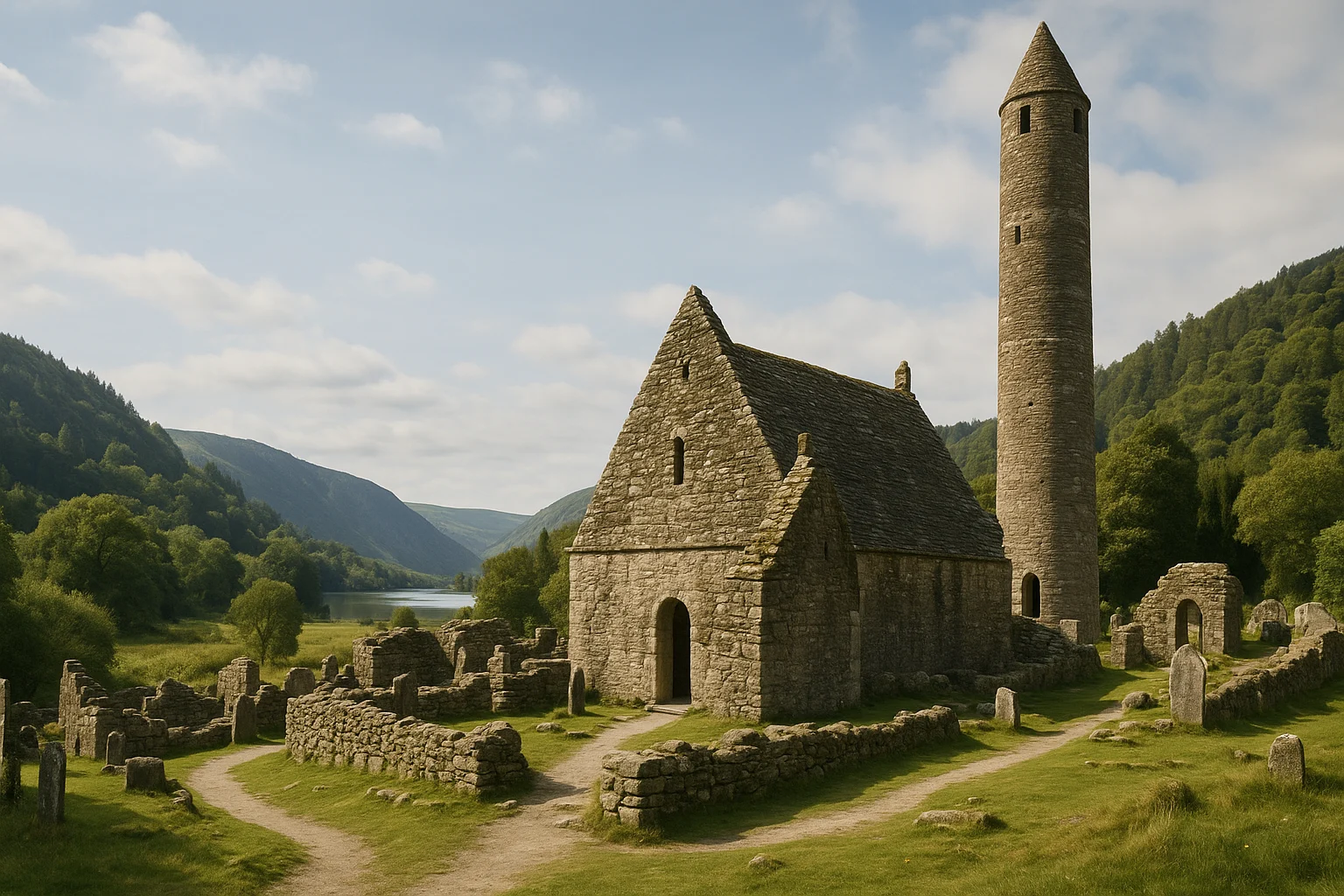
Glendalough Travel Guide 2026: Monastic Ruins, Lakes, and Wicklow Day-Trip Plan
Early Medieval IrelandPlan a clear first visit to Glendalough with route advice, monastic-site context, and practical timi...
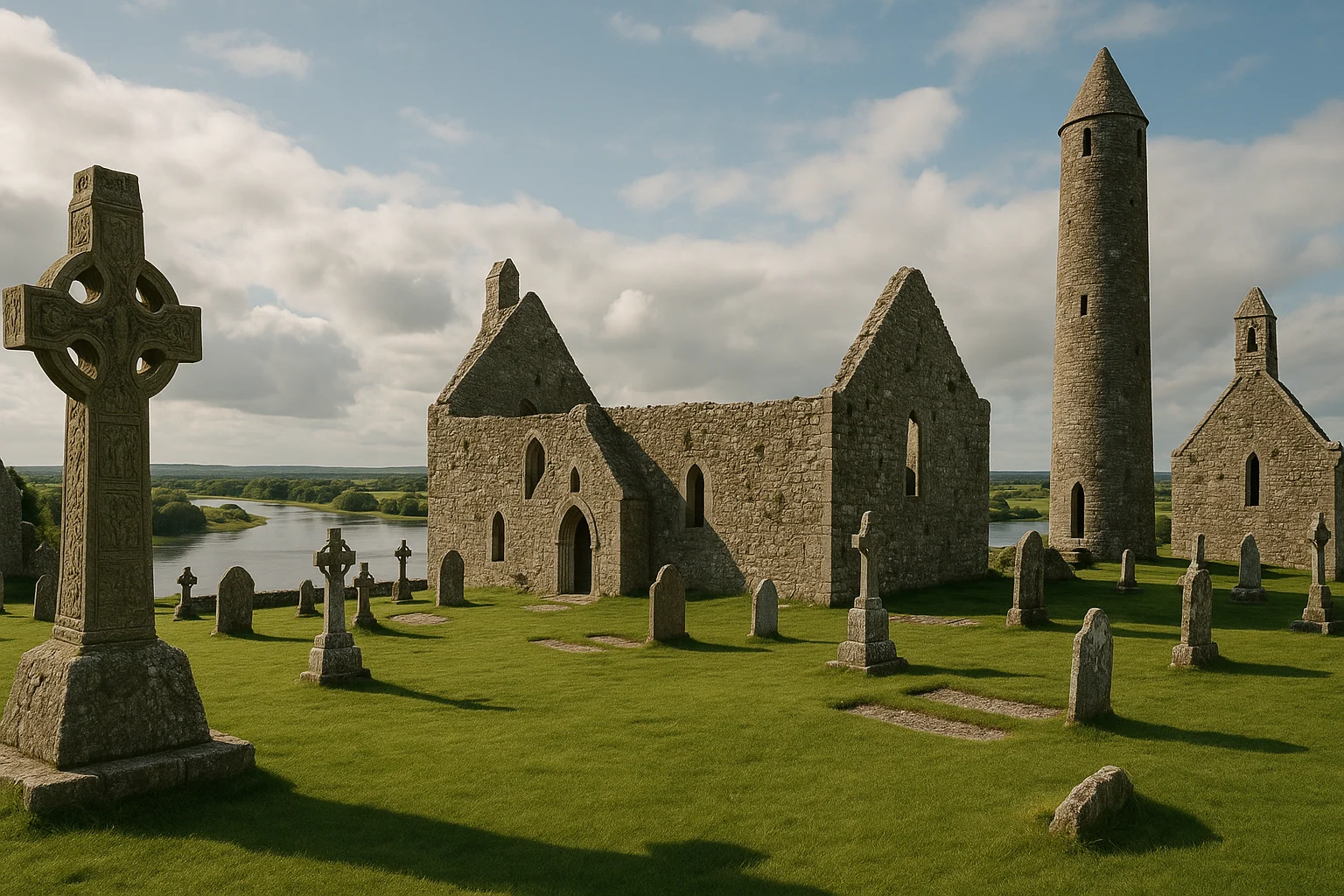
Clonmacnoise Travel Guide 2026: Monastic Ruins, High Crosses, and River Shannon Context
Early Medieval IrelandPlan a first visit to Clonmacnoise with practical timing, monastic-site context, and clear route adv...