Quick Info
Curated Experiences
Uxmal and Kabah Day Trip from Merida
Uxmal Private Archaeological Tour
Uxmal Light and Sound Show Night Tour
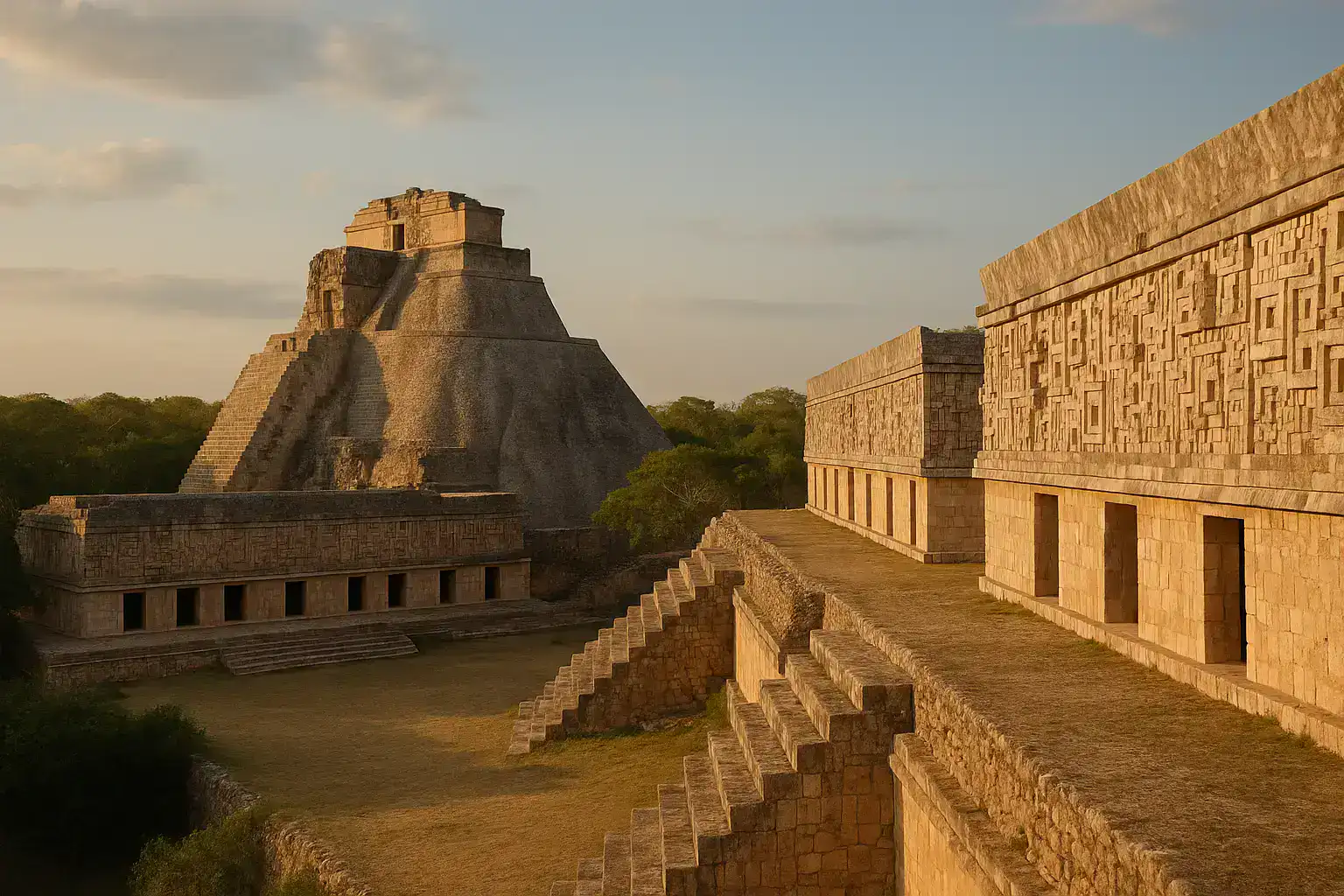
The first thing you notice at Uxmal is the surface of the buildings. At other Maya sites, the architecture impresses through scale — massive pyramids, vast plazas, sheer vertical ambition. At Uxmal, the impression is different. Every upper facade is covered in stone mosaics of extraordinary intricacy: thousands of individually cut limestone pieces fitted together without mortar to create latticed screens, geometric spirals, and rows of hooked-nose rain god masks that stack vertically at building corners like a chorus of stone faces turned toward the sky. This is not decoration applied to architecture. This is architecture conceived as decoration, where the wall itself becomes a canvas for one of the most technically demanding artistic traditions in the pre-Columbian world.
Uxmal sits in the rolling Puuc hills of northwestern Yucatan, about 80 km south of Merida. It is not the largest Maya site, nor the most famous — Chichen Itza claims both of those distinctions. But among archaeologists, architects, and travelers who have seen both, Uxmal consistently earns a different kind of superlative. This is the most beautiful Maya city ever built. The elliptical Pyramid of the Magician rises in a shape found nowhere else in Mesoamerica. The Governor’s Palace carries a facade of over 20,000 individually carved stones aligned to the planet Venus. The Nunnery Quadrangle encloses a courtyard where four buildings create an entire world of sculpted surfaces. If Chichen Itza is Maya power, Uxmal is Maya art.
The site receives a fraction of Chichen Itza’s visitor traffic, which means you can actually stand before these facades, study their details, and absorb what the builders achieved without being pushed along by tour group logistics. That alone makes the drive from Merida worthwhile.
Historical Context
Uxmal’s rise began around 700 CE, during the period archaeologists call the Late Classic — the final great flowering of lowland Maya civilization before the political collapses that emptied cities across the region between 800 and 1000 CE. The Puuc hills provided an unusual setting for a Maya capital: gently rolling limestone ridges with no rivers, no cenotes, and no permanent surface water of any kind. The people who built Uxmal depended entirely on rainfall captured in underground cisterns called chultuns, making water management not just a practical concern but an existential one. The rain god Chaac, whose hooked-nose face appears on virtually every building at the site, was not a decorative motif. He was a survival prayer rendered in stone.
The city reached its zenith under the ruler Lord Chaak, who governed during the late 9th and early 10th centuries and commissioned the Governor’s Palace and other major structures. At its peak, Uxmal may have supported 20,000 to 25,000 people and served as the political center of a confederation of Puuc cities including Kabah, Sayil, Labna, and others, connected by sacbeob — the raised limestone causeways that functioned as Maya highways.
The architectural tradition that defines Uxmal — the Puuc style — represents a fundamental shift in how Maya builders understood building surfaces. Earlier Maya architecture relied on mass and height. Puuc builders instead treated every exterior wall as an opportunity for mosaic composition. They cut individual stones into precisely calculated shapes, each piece a component in a larger geometric design, and assembled them dry without binding agent. The resulting facades shimmer with texture: lattice patterns evoke woven mats, step-and-fret motifs suggest flowing water, and Chaac masks accumulate at corners in stacks of increasing intensity.
Uxmal’s decline followed the broader pattern of Late Classic Maya collapse. By roughly 1000 CE, the city had been largely abandoned, its population dispersed into smaller communities. The jungle reclaimed the buildings over the following centuries. When Spanish explorers arrived in the 16th century, they found the ruins impressive enough to name — “Uxmal” may mean “thrice built,” though the etymology is debated — but the city that produced them was already a memory. Systematic archaeology began in the 19th century with the visits of John Lloyd Stephens and Frederick Catherwood, whose drawings introduced Uxmal to European audiences and established its reputation as a masterpiece.
What to See
Pyramid of the Magician
Every other pyramid in Mesoamerica sits on a rectangular base. The Pyramid of the Magician is elliptical — a smooth-sided oval rising 35 meters in steep stepped levels, its curved form so architecturally unusual that it appears to belong to a different tradition entirely. The shape is not accidental. It represents five construction phases spanning roughly 400 years, each built over the previous one, with the elliptical profile emerging from the accumulated decisions of successive builders who chose to honor existing orientations rather than impose new geometry.
The legend attached to the pyramid holds that a dwarf magician built it in a single night. The story is mythological, but it captures something true about how the structure feels: conjured rather than constructed. Chaac masks cluster at the base, and a steep western staircase leads to a temple doorway framed as the open mouth of a giant serpent — one of the most photographed details at the site. Climbing is prohibited, which has preserved the stonework in remarkable condition.
Practical note: The pyramid is the first major structure you encounter after entering the site. Morning light from the east illuminates the western staircase and serpent-mouth doorway most dramatically. Afternoon light favors the eastern facade.
Governor’s Palace
American explorer John Lloyd Stephens declared this “the most magnificent building I have ever seen” in 1841, and the judgment has held up. The Governor’s Palace is a low, horizontal structure nearly 100 meters long, elevated on a massive artificial platform that frames it against the sky. Its upper facade contains over 20,000 individually carved mosaic stones assembled into an unbroken frieze of geometric complexity that runs the full length of the building without repetition. Stacked Chaac masks flank the central doorway, their hooked noses projecting outward to create deep shadows that animate the surface as the sun moves.
The building’s orientation is not aligned to the cardinal directions or to Uxmal’s main axis. It is aligned instead to the southernmost rising point of Venus on the horizon — a specific astronomical event recurring on an eight-year cycle with profound significance in Maya cosmology. The builders knew where Venus would appear, calculated the geometry to frame that point through the central doorway, and oriented their finest building accordingly. A two-headed jaguar throne carved from a single stone block sits before the entrance.
Practical note: Allow at least 30 minutes here. Walk the full length of the facade to appreciate the mosaic program’s scope. The platform’s elevation provides the best overview of the site’s spatial relationships.
Nunnery Quadrangle
Spanish explorers in the 16th century saw four buildings surrounding a courtyard and named the complex a “nunnery” after European convents. The name stuck despite being entirely wrong. This was almost certainly an elite administrative or residential compound, its four buildings housing Uxmal’s ruling class or the apparatus of civic governance.
Each building carries a distinct decorative program. The North Building displays the most elaborate frieze, including thatched-roof Maya houses rendered permanently in stone — perishable architecture immortalized in limestone. The East Building’s latticed mosaic panels dissolve the upper wall into geometric light. The West Building introduces columns at ground level, creating shaded walkways around the courtyard. Standing at the center, surrounded by these facades, the designed quality of the space becomes overwhelming. This was architecture as enclosure, as stage set, as controlled environment.
Practical note: The Nunnery sits adjacent to the Pyramid of the Magician. Enter through the south building’s vaulted archway for the most dramatic first impression of the courtyard. Late morning light fills the space evenly.
Great Pyramid
The only structure at Uxmal where climbing is still permitted, the Great Pyramid rewards the steep ascent with panoramic views across the entire ceremonial center. From the summit, the Pyramid of the Magician’s elliptical form becomes legible in a way that ground-level perspectives cannot provide, and the jungle stretches to the horizon in every direction. The temple at the top retains carved Chaac masks and macaw heads in good condition.
Practical note: The climb is steep and exposed to full sun. Go early in the day or save it for late afternoon. The summit platform is small and can feel crowded when tour groups arrive simultaneously.
House of the Turtles
A smaller structure near the Governor’s Palace, this building takes its name from a carved frieze of turtles running along its upper cornice. Turtles were associated with rain in Maya cosmology because they emerge after storms. The building’s restrained decoration — clean lines, minimal ornament below the turtle frieze — provides an instructive contrast to the overwhelming mosaic density of the Governor’s Palace nearby.
Practical note: Easy to miss if you are focused on the major monuments. Located on the path between the Nunnery Quadrangle and the Governor’s Palace — pause here for five minutes.
Ball Court
Less well-preserved than the famous court at Chichen Itza but unmistakable in its I-shaped plan, Uxmal’s ball court once hosted the ritual game that connected Maya cities across a thousand years of civilization. The playing alley retains its stone rings, and the overall layout clarifies the game’s spatial requirements in a setting less overwhelmed by tourists than its Chichen Itza counterpart.
Practical note: Located between the Nunnery Quadrangle and the Governor’s Palace platform. A quick stop.
Timing and Seasons
Uxmal’s open, unshaded plazas make timing critical. Get it wrong and you will spend more time managing heat than studying mosaics.
Best months: November through March. Dry skies, temperatures between 22-28°C (72-82°F), and the low-angle winter sun that brings out maximum texture and shadow in the stone facades. December and January are the most popular months; February and March are slightly warmer but less crowded.
Shoulder season: April and May are hotter (30-35°C / 86-95°F) but still manageable with an early start. Visitor numbers drop noticeably after Semana Santa.
Rainy season: June through October brings afternoon showers, lush green vegetation framing the gray stone, and significantly reduced crowds. Morning visits typically avoid the rain entirely. Prices for tours and accommodations drop. The tradeoff is higher humidity and the possibility of muddy paths on secondary trails.
Best time of day: Arrive at the 8:00 AM opening. The hours between 8:00 and 11:00 AM offer cooler temperatures, low-angled light that emphasizes the mosaics’ three-dimensional texture, and thin crowds. Tour buses from Merida begin arriving around 10:30 AM.
Light show: The Son et Lumiere runs Thursday through Sunday evenings, typically beginning at 7:00 PM in winter and 8:00 PM in summer. The colored lights illuminate the Pyramid of the Magician and Nunnery Quadrangle while narration (primarily in Spanish) explains Maya cosmology. It is visually striking and worth seeing if you are already planning an afternoon visit, but not essential for a first visit if your time is limited. Tickets are approximately 75 pesos ($4 USD) beyond the daytime admission.
Tickets, Logistics and Getting There
Admission: 481 pesos (approximately $24 USD) as of 2026. This single ticket covers Uxmal and the nearby Puuc sites of Kabah, Sayil, and Labna — a remarkable value if you plan to visit the full route. Mexican nationals enter free on Sundays. Cash is preferred; card terminals exist but are unreliable.
Hours: Open daily 8:00 AM to 5:00 PM, with last entry at 4:00 PM.
From Merida by car: Drive south on Highway 261 for 80 km (approximately 1 hour). The road is well-paved and passes through traditional Maya villages. Parking at the site costs 30 pesos.
From Merida by bus: Buses depart from Merida’s Terminal Segunda (Second Class Terminal) several times daily for approximately 60 pesos ($3 USD) each way. The journey takes about 2 hours with stops. Check the return schedule upon arrival — the last bus typically departs around 4:00 PM.
By organized tour: Day tours from Merida ($75-90) include transport, a licensed guide, and usually a stop at Kabah. This is the most convenient option for travelers without rental cars.
By taxi: A private taxi from Merida costs approximately 800-1,000 pesos ($40-50 USD) each way. Negotiate the round-trip price before departing, including wait time at the site.
From Chichen Itza: The two sites are 160 km apart (about 2.5 hours by car). A same-day combination is strenuous but possible if you start early. Most travelers visit them on separate days.
Practical Tips
- Bring at least 1.5 liters of water per person. Shade is almost nonexistent on the main plazas, and the Yucatan sun is relentless even in winter months.
- Sunscreen, a wide-brimmed hat, and sunglasses are mandatory. Exposed skin burns fast at this latitude.
- Wear sturdy closed-toe shoes. The stone paths are uneven, and the Great Pyramid climb demands good traction.
- Insect repellent is useful in the rainy season, particularly along trails near the site’s southern edges.
- A pair of binoculars or a zoom lens dramatically improves the experience — the mosaic details on upper facades are impossible to appreciate fully with the naked eye from ground level.
- The on-site cafeteria near the entrance sells basic food and drinks at moderate prices. For a better meal, the Hacienda Uxmal hotel restaurant across the road serves Yucatecan cuisine in a colonial setting.
- There is a small but worthwhile museum near the entrance with artifacts and context panels. Visit it before or after the ruins to enrich your understanding of the Puuc tradition. Allow 20-30 minutes.
- If you are renting a car for the day, combine Uxmal with the Puuc Route: Kabah (23 km southeast), Sayil (30 km), and Labna (35 km). The full circuit takes 6-8 hours and is covered by your Uxmal ticket.
Suggested Itinerary
7:45 AM — Arrive at the parking area. Purchase tickets and orient yourself at the entrance.
8:00 AM — Enter the site. Walk directly to the Pyramid of the Magician. Spend 20-30 minutes circling the base, studying the serpent-mouth doorway, and photographing the elliptical profile in morning light.
8:30 AM — Enter the Nunnery Quadrangle through the south vaulted arch. Explore all four buildings and their distinct facade programs. Allow 30-40 minutes.
9:10 AM — Walk to the Ball Court, then continue to the House of the Turtles. Quick stops: 10 minutes total.
9:20 AM — Ascend to the Governor’s Palace platform. Walk the full 100-meter facade. Study the Chaac masks and the jaguar throne. Allow 30 minutes.
9:50 AM — Climb the Great Pyramid for panoramic views. Allow 20-30 minutes including the ascent and descent.
10:20 AM — Explore the Cemetery Group and any secondary structures that interest you. Allow 15-20 minutes.
10:40 AM — Visit the on-site museum near the entrance. Allow 20-30 minutes.
11:15 AM — Exit the site. Total time inside: approximately 3 to 3.5 hours.
11:30 AM onward — If driving, continue to Kabah (30 minutes south) for the Palace of the Masks, then optionally to Sayil and Labna. If returning to Merida, the drive takes 1 hour.
Nearby Sites
Chichen Itza — The Yucatan’s most famous Maya site is 160 km northeast (2.5 hours by car). Where Uxmal represents Puuc refinement, Chichen Itza displays Maya-Toltec fusion at monumental scale. Visiting both gives a complete picture of Late Classic and Terminal Classic Maya architecture in the Yucatan.
Palenque — The jungle-shrouded Classic Maya capital in Chiapas is a full day’s travel from Uxmal (approximately 8 hours by car or a combination of bus connections). The architectural contrast is worth the effort: Palenque’s vaulted corridors and narrative sculpture panels represent a completely different Maya tradition from Uxmal’s mosaic-covered facades.
Kabah — Just 23 km southeast of Uxmal on the Puuc Route, Kabah’s Palace of the Masks features an entire facade composed of stacked Chaac masks so densely packed that the wall disappears behind rows of hooked stone noses. Covered by your Uxmal admission ticket. Allow 45 minutes.
Sayil and Labna — Further along the Puuc Route (30-35 km from Uxmal), these smaller sites inflect the Puuc style in distinct ways. Sayil’s three-story palace suggests domestic elegance; Labna’s freestanding archway is one of the most photographed structures in the Yucatan. Also covered by your Uxmal ticket.
Final Take
Uxmal is the site where the Maya demonstrated that they could do more with stone than pile it high. The Pyramid of the Magician’s impossible ellipse, the Governor’s Palace’s Venus alignment, the Nunnery Quadrangle’s four facades creating a self-contained architectural universe — these are not monuments built to impress through mass. They are monuments built to impress through intelligence, precision, and an artistic ambition that treated every square meter of wall surface as an opportunity for meaning.
The Puuc hills have no rivers. They have no permanent water. The people who built Uxmal depended on rain captured in cisterns and on the goodwill of a god whose face they carved onto every building they raised. That the architecture they produced under those conditions represents the pinnacle of pre-Columbian art is not ironic. It is the point. Scarcity sharpened everything — the engineering, the aesthetics, the devotion. What survives in these mosaic facades is the record of a civilization that turned necessity into beauty with a discipline that still commands respect.
Discover More Ancient Wonders
- Chichen Itza — The iconic pyramid of Kukulkan and Maya-Toltec fusion architecture
- Palenque — Jungle temples, Pakal’s tomb, and the most refined Maya sculpture in Chiapas
- Monte Alban — The Zapotec hilltop capital above the Oaxaca Valley
- Teotihuacan — The colossal Pyramids of the Sun and Moon near Mexico City
- Explore our complete Mexico Ancient Sites Guide for full itinerary planning
Quick Facts
| Attribute | Details |
|---|---|
| Location | Puuc hills, Yucatan, Mexico |
| Country | Mexico |
| Region | Yucatan |
| Civilization | Maya |
| Historical Period | c. 700-1000 CE |
| Established | c. 700 CE |
| Ancient Name | Uxmal (meaning debated; possibly “thrice built”) |
| UNESCO Status | World Heritage Site (1996) |
| Entry Fee | 481 pesos (~$24 USD); includes Puuc Route sites |
| Hours | 8:00 AM - 5:00 PM daily |
| Best Time | November-March; arrive at 8:00 AM opening |
| Distance from Merida | 80 km (50 miles); 1 hour by car |
| Coordinates | 20.3594, -89.7714 |
Frequently Asked Questions
How do I get to Uxmal from Mérida?
Drive south on Highway 261 (80 km, 1 hour). The road is well-paved and signposted. Buses depart from Mérida's Terminal Segunda (Second Class Terminal) several times daily (2 hours, 60 pesos/$3 USD). Organized tours from Mérida ($75-90) include transport and guide. Taxis cost approximately 800-1,000 pesos ($40-50 USD) each way.
How does Uxmal compare to Chichén Itzá?
Uxmal offers superior architectural detail and significantly fewer crowds than Chichén Itzá. While Chichén Itzá has the iconic pyramid, Uxmal displays the finest Puuc architecture with intricate stone mosaics that Chichén lacks. Uxmal allows more relaxed exploration without vendor harassment. Many visitors prefer Uxmal for its peaceful atmosphere and artistic refinement.
What is Puuc architecture?
Puuc (pronounced 'pook') is a Maya architectural style characterized by intricate stone mosaics, stacked stone Chaac masks (rain god), columns, and smooth lower walls contrasting with ornate upper facades. Named for the Puuc hills region of Yucatán, this style represents Late Classic Maya architecture at its most refined. Uxmal is the style's greatest masterpiece.
Can I climb the Pyramid of the Magician?
No. Climbing the Pyramid of the Magician and most other structures at Uxmal is prohibited to protect the ancient stonework. This policy, while disappointing, has preserved the site's exceptional condition. You can climb the Great Pyramid for panoramic views—it's the only climbing permitted.
How much time do I need at Uxmal?
Plan 3-4 hours for a comprehensive visit. This allows time to appreciate the architectural details, visit the museum, and photograph at leisure. The site is compact compared to Chichén Itzá. Combine with nearby Kabah, Sayil, or Labná for a full-day Puuc region experience.
Is the Uxmal light show worth seeing?
The light show (Son et Lumière) illuminates the Pyramid of the Magician and Nunnery Quadrangle after dark with narration explaining Maya cosmology. It's atmospheric and visually striking, though the narration is primarily in Spanish. Shows run Thursday-Sunday evenings. Book in advance during high season.
Nearby Ancient Sites
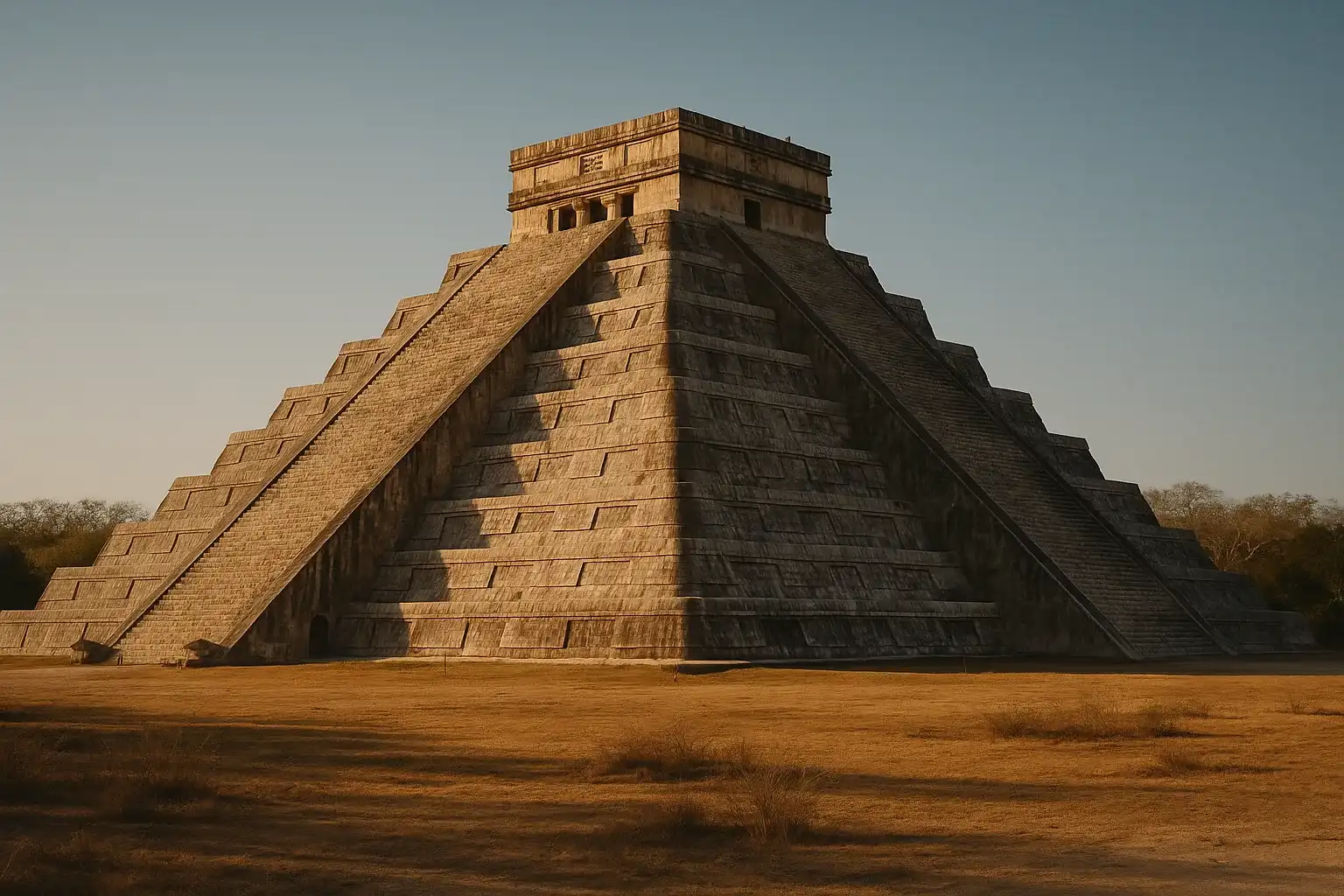
Chichen Itza Travel Guide 2026: Maya Secrets, Sacred Cenote, and Smart Timing
MayaChichen Itza stands as the most visited ancient site in Mexico, showcasing the architectural genius ...
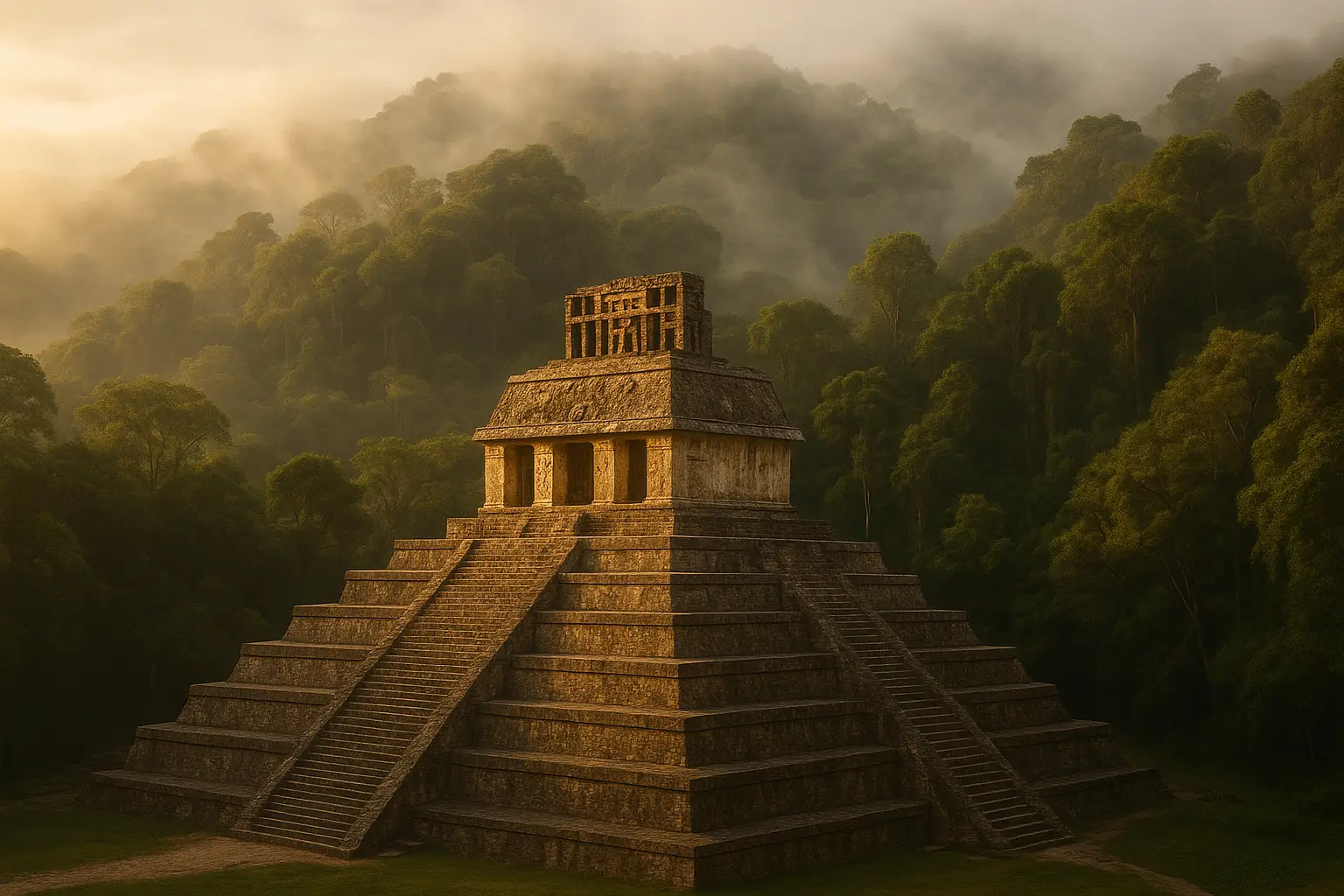
Palenque Mexico Travel Guide 2026: Jungle Maya Temples & Tombs
MayaExplore Palenque's rainforest-shrouded Maya temples with our complete guide. Discover Pakal's tomb, ...
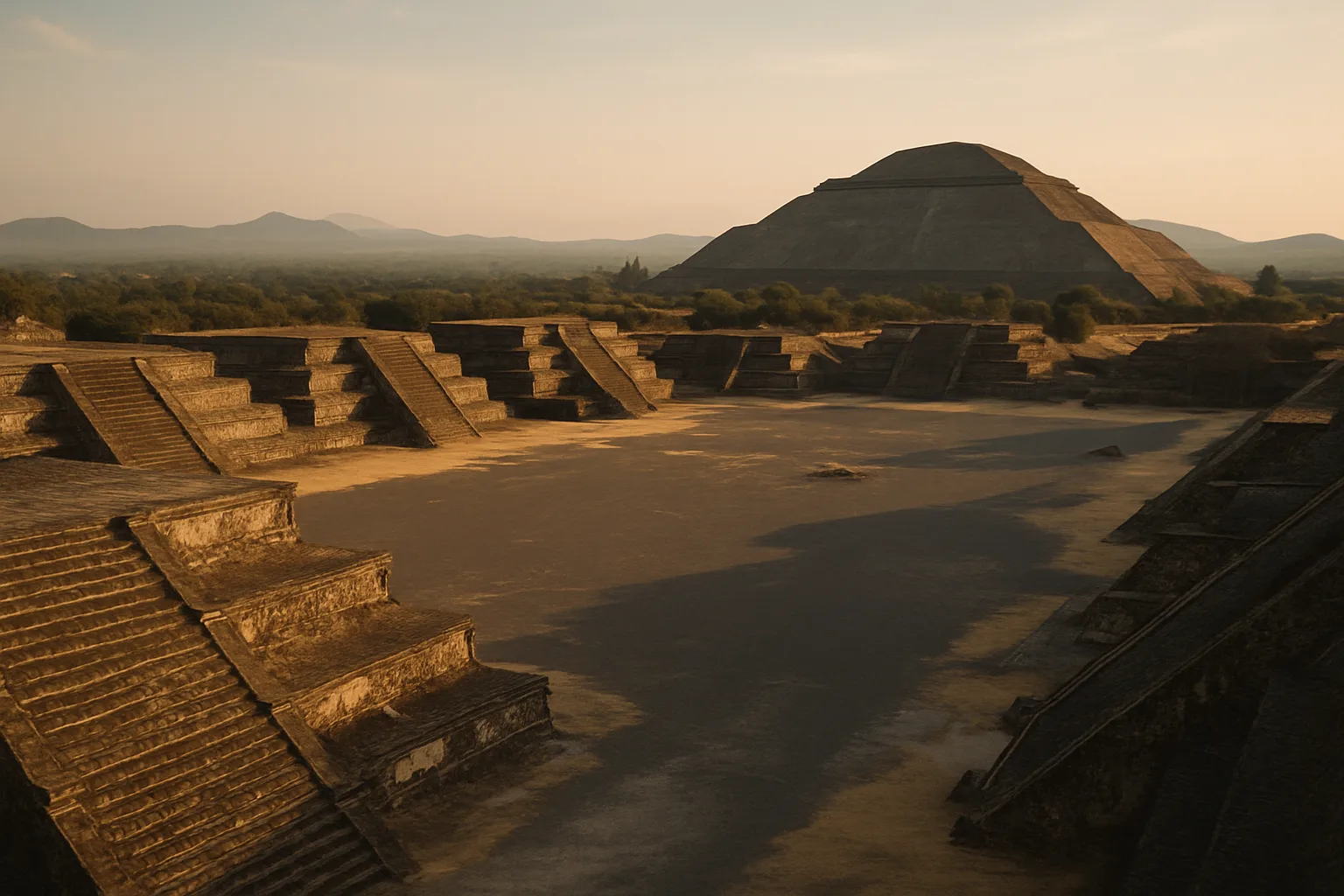
Teotihuacan Mexico Travel Guide 2026: Pyramids, Mysteries & Day Trips
TeotihuacanoTeotihuacan, the 'birthplace of the gods,' remains Mesoamerica's most influential ancient city. This...