Quick Info
Curated Experiences
Valley of the Kings and West Bank Tour
Valley of the Kings, Hatshepsut and Karnak Full-Day Tour
Valley of the Kings Private Photography Tour
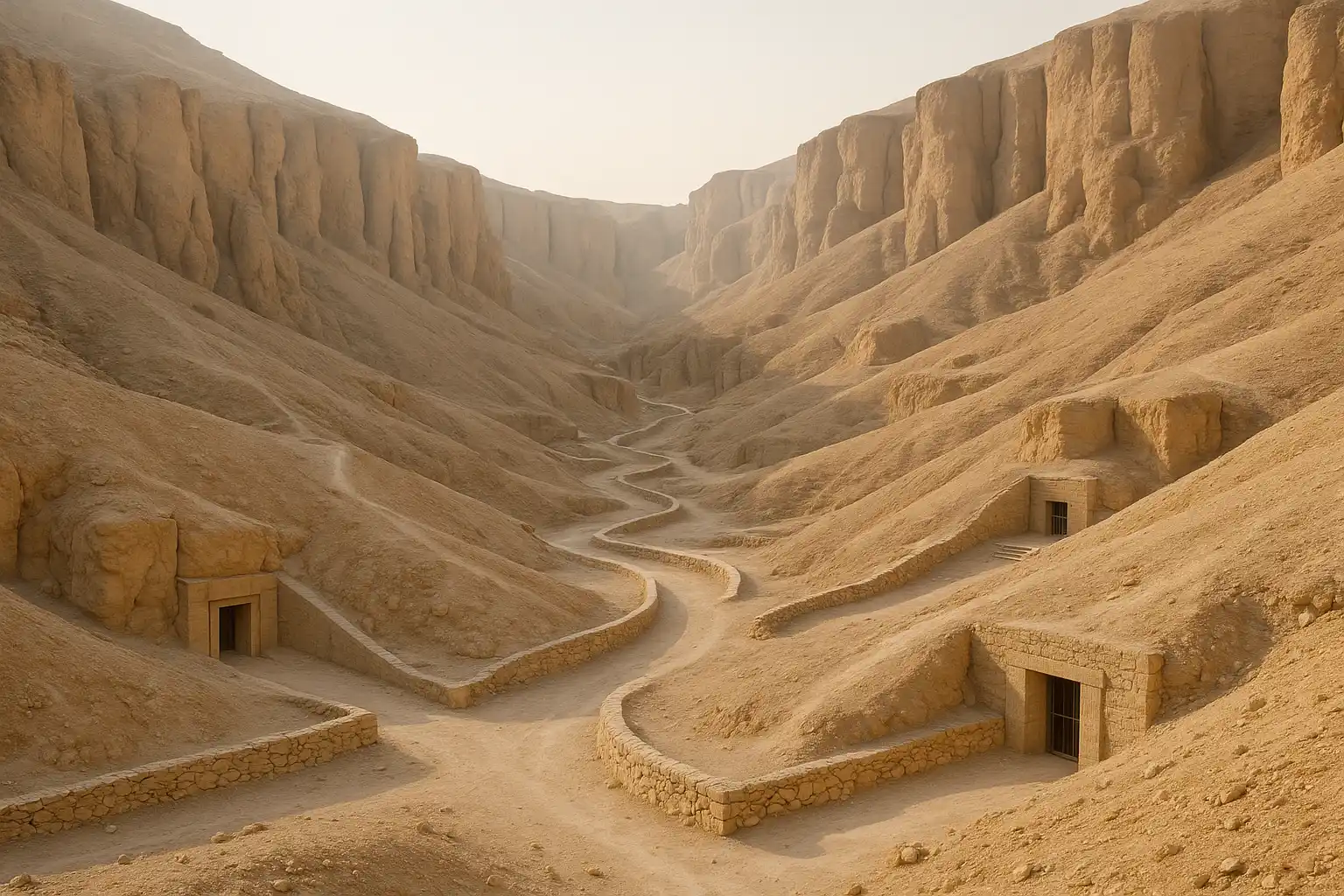
You descend a staircase that tomb workers chiseled by oil lamp light three thousand years ago, pass through a corridor whose walls blaze with cobalt blue, burnt ochre, and whites as crisp as the day they were painted, and emerge into a burial chamber whose ceiling maps the path of the sun through the underworld in vivid color. The desert preserved what no museum could. The dry air of this desolate limestone wadi on Luxor’s west bank has kept pigments fresh, plaster intact, and hieroglyphic programs readable across thirty centuries. The Valley of the Kings is the most extraordinary painted environment surviving from the ancient world.
For nearly 500 years, from Thutmose I around 1539 BCE to Ramesses XI at the close of the New Kingdom, the pharaohs of the most powerful empire on earth abandoned the visible grandeur of pyramid burial for something hidden and, they hoped, more secure. They cut their tombs deep into the cliff faces of this remote, watchable valley, concealed the entrances, and covered every interior surface with the texts and images their souls would need to navigate the afterlife. Sixty-three tombs have been discovered here. Archaeologists believe more remain hidden beneath the rubble and debris that fills the valley floor.
The practical question facing every visitor is which tombs to enter. General admission includes three from a rotating roster, with additional premium tombs available for separate fees. Choosing well is the difference between a good visit and an unforgettable one. This guide tells you exactly how to do that.
Historical Context
Old Kingdom pharaohs built pyramids and paid for that ambition with their security. By the time New Kingdom rulers consolidated power around 1550 BCE, a thousand years of tomb robbery had taught an unambiguous lesson: visibility invited violation. Thutmose I, counseled by his architect Ineni, chose a different strategy. Rather than broadcasting his resting place in a stone monument against the sky, he had his tomb cut in secret into the cliffs of a remote valley, its entrance concealed and its approaches guarded by the natural geography of the Theban mountains.
The location was ideal on every count. The valley sits west of the Nile, on the side the Egyptians associated with death and the setting sun. The natural pyramid-shaped peak of Al-Qurn — “the Horn” — loomed above, mirroring the sacred benben stone without any human construction. The limestone bedrock was stable and soft enough to carve but hard enough to hold painted plaster for millennia. The valley was surrounded by cliffs, accessible through a single defensible entrance, and remote from the agricultural floodplain where Egypt’s living population concentrated.
A walled village of royal tomb workers, Deir el-Medina, sprang up nearby, housing the specialists who spent generations hewing and decorating the underground passages. These were highly skilled artisans — stone cutters, plasterers, draughtsmen, painters — whose work conditions, disputes, and even the first recorded labor strike in history are documented in the ostraca (pottery shards used as notepads) found at the village site. The tombs they produced represent the highest achievement of ancient Egyptian painting and theological decoration.
The scheme worked for a while. The valley served as Egypt’s royal necropolis through the reigns of Hatshepsut, Thutmose III, Amenhotep III, the successors of the heretic Akhenaten, the warrior Ramesses II, and the long twilight of Ramesses III through XI. But when New Kingdom power finally collapsed around 1075 BCE, the priests of Amun quietly transferred many royal mummies to hidden caches for protection. Nearly every tomb was robbed of its portable treasures within a few centuries of burial. Only one royal tomb survived intact into the modern era, its entrance accidentally sealed beneath debris from a later excavation: the modest sepulcher of the boy king Tutankhamun.
Europeans began documenting the valley in the late 18th century. Giovanni Belzoni discovered Seti I’s tomb in 1817. Theodore Davis funded systematic excavation from 1902 to 1914, declared the valley exhausted, and was wrong. Howard Carter’s discovery of Tutankhamun’s intact tomb on November 4, 1922 — the only complete royal tomb ever found — sent shockwaves through archaeology and public imagination alike, and the valley’s secrets are still not fully told.
What to See
The Tomb of Seti I (KV17) — The Valley’s Masterpiece
No tomb in the valley matches KV17. At 137 meters, it is the longest tomb here, descending through a succession of corridors, pillared halls, antechambers, and a vaulted burial chamber whose ceiling depicts the full nocturnal sky in breathtaking detail. Seti I ruled Egypt from approximately 1290 to 1279 BCE, and the decoration throughout his tomb is executed with a technical precision and artistic sensitivity that exceeds every other royal tomb. The figures are slender, elegant, and powerfully drawn. The complete Book of Gates plays out across chamber walls in ordered registers. The burial chamber’s astronomical ceiling renders the body of the sky goddess Nut arching across the cosmos in vivid color.
A separate ticket costing 1,000 EGP (approximately $32 USD) is required, and it is worth every pound. Visitors who bypass KV17 to save the fee miss the valley’s single most extraordinary experience. Buy the ticket at the main booth before entering the valley. Allow 30 to 45 minutes inside.
Tutankhamun’s Tomb (KV62) — History Over Spectacle
KV62 is simultaneously the most famous and the most modest tomb in the valley. The burial chamber measures just 6.4 by 4 meters — small because the king died unexpectedly at approximately nineteen years of age, possibly before a larger tomb could be completed. The decoration is hurried compared to the great royal programs, with painted scenes largely confined to the burial chamber’s north wall.
What makes it matter is history, not visual spectacle. This is the only royal tomb that ancient robbers failed to empty, the only place on earth where you stand in a burial chamber sealed in antiquity and not reopened until 1922. Tutankhamun’s mummy still rests here in his outermost gilded wooden coffin, visible through climate-controlled glass. The walls show the Opening of the Mouth ceremony and scenes from the Amduat. Expect crowds, expect a separate fee of 200 EGP ($6.50 USD), and temper your visual expectations — but do not skip it. The historical weight of the space is unlike anything else in the valley.
KV2 (Ramesses IV) — The Best First Tomb
If you are entering your first tomb in the Valley of the Kings, start here. The descent is gentle, the corridors wide, and the decoration is well-preserved and extensively legible. The Book of Caverns scenes are among the clearest in the valley, with figures retaining their original colors in remarkable condition. The great granite sarcophagus — unusually still present in the burial chamber — gives a vivid sense of the original burial arrangement that most stripped tombs cannot provide. This tomb is consistently open on general admission and is the best introduction to the valley’s underground world.
KV11 (Ramesses III) — The Harpers’ Tomb
One of the largest tombs open on general admission, KV11 is nicknamed for its famous scene of blind harpists playing before the god Atum. Two long corridors branch off the main axis into small side chambers decorated with scenes of daily life, craftsmen, and provisions gathered for the king — subjects unusual in the valley’s standard theological program. A sea battle relief reflects Ramesses III’s military campaigns against the Sea Peoples. The tomb’s scale and variety of subject matter make it one of the most rewarding options on general admission.
KV9 (Ramesses V/VI) — The Astronomical Ceiling
When available for its modest separate fee of 100 EGP ($3 USD), KV9 rewards visitors with one of the most spectacular decorated ceilings in the valley. The complete astronomical program — the body of Nut swallowing the sun at dusk and giving birth to it at dawn, surrounded by decan stars and the hours of the night — is painted in exceptional condition. The tomb represents a strong middle ground between the premium of KV17 and the standard general-admission experience. If it is open during your visit, pay the fee.
KV6 (Ramesses IX) — Color and Accessibility
Long corridors blazing with color and some of the most accessible passages in the valley make KV6 a consistently recommended general-admission choice. The Book of Gates progresses in orderly registers down both walls, and the ceiling of the burial chamber still carries astronomical figures. The physical descent is manageable for visitors who find KV11’s depth or KV17’s length challenging.
Timing and Seasons
The valley opens at 6 AM year-round and closes at 5 PM in summer, 4 PM in winter. The 6 to 8 AM window is prime time in every season: temperatures are cool, the tombs are quiet, and the tour buses from east bank hotels have not yet arrived. By 10 AM, groups converge and the open limestone amplifies heat to punishing levels.
October through April offers the most comfortable conditions — warm days of 25 to 30 degrees Celsius with cool mornings. Winter is high season with more visitors, but the valley’s dispersed layout means individual tombs rarely feel overcrowded before mid-morning. Spring, particularly March and April, combines pleasant weather with vivid desert light.
May through September is brutally hot, with midday temperatures reaching 40 to 48 degrees Celsius. The valley floor is an exposed limestone bowl with no shade between tomb entrances. Summer visits must begin at the 6 AM opening and conclude by 9 AM. This is not a suggestion but a safety measure — heat exhaustion in this environment is a genuine medical risk.
Tickets, Logistics and Getting There
The Valley of the Kings sits on Luxor’s west bank, requiring a Nile crossing. The most atmospheric approach is the public ferry from the dock near the Winter Palace Hotel, costing 5 EGP ($0.15 USD) and running every 15 to 20 minutes. From the west bank landing, a taxi to the valley costs 50 to 100 EGP ($1.50 to $3 USD). Private motorboats from hotel docks charge 25 to 50 EGP. Taxis can cross via the bridge north of Luxor for 100 to 150 EGP including the crossing, though this is a longer route.
Organized half-day tours running $45 to $75 handle all transport and include a guide — the most convenient option, and they combine the valley with Hatshepsut Temple and the Colossi of Memnon for a complete west bank morning.
General entry costs 200 EGP ($6.50 USD) and includes three tombs of your choice. Additional tomb fees: Tutankhamun (KV62) costs 200 EGP ($6.50 USD); Seti I (KV17) costs 1,000 EGP ($32 USD); Ramesses V/VI (KV9) costs 100 EGP ($3 USD). Buy all your tomb tickets at the main booth before entering. The tram from the visitor center to the valley entrance costs 4 EGP ($0.15 USD) each way; the walk takes 10 to 15 minutes through open desert and is manageable in cool weather.
Practical Tips
- Arrive at 6 AM. This is not optional if you want a good experience. The difference between the valley at 6:30 AM and 10 AM is the difference between contemplative silence and a crowded oven.
- Bring at least two liters of water per person. The walk between tomb entrances crosses exposed limestone with no shade. Dehydration happens faster than you expect.
- Sun protection — hat, sunscreen, sunglasses — is essential outside the tombs. Inside, the temperature drops significantly but humidity can be high.
- Wear sturdy shoes with grip. Tomb floors are sandy and uneven, and several descents are steep with worn steps.
- Flash photography is strictly prohibited in all tombs — it accelerates pigment deterioration. Phone cameras without flash are generally permitted, but check signs at each entrance.
- Carry cash for additional tomb tickets, the tram, tips for guards, and water purchases at the visitor center.
- Plan your three general-admission tombs strategically. Do not simply enter the first three you encounter. Consult the site map at the visitor center to identify which tombs are currently open and match them to the recommendations above.
- A small flashlight or phone light helps illuminate ceiling details in dimmer corridors where installed lighting leaves gaps.
Suggested Itinerary
6:00 AM — Arrive at the valley as it opens. Buy your general entry ticket plus any additional tomb tickets (Seti I, Tutankhamun, Ramesses V/VI) at the main booth.
6:15 AM — Take the tram or walk to the valley entrance. Head directly to KV17 (Seti I) if you purchased the premium ticket — experiencing the valley’s greatest tomb in early-morning solitude is the single best experience available here. Allow 30 to 45 minutes.
7:00 AM — Visit KV2 (Ramesses IV) as your first general-admission tomb. The gentle descent and clear decoration make it an ideal warm-up.
7:30 AM — Enter KV11 (Ramesses III) for its scale, variety of decoration, and the famous harpists scene.
8:15 AM — Visit KV62 (Tutankhamun) if you purchased the separate ticket. The experience is brief but historically charged.
8:45 AM — Use your third general-admission entry for KV6 (Ramesses IX) or KV9 (Ramesses V/VI) if available.
9:15 AM — Exit the valley before the heat becomes oppressive. Take the tram back to the visitor center.
9:30 AM — Continue to the Temple of Hatshepsut at Deir el-Bahri (15 minutes by taxi) and the Colossi of Memnon (en route, 15-minute stop) to complete your west bank morning.
Total valley visit time: approximately 3 to 3.5 hours.
Nearby Sites
Karnak Temple Complex — Egypt’s greatest temple sits on Luxor’s east bank, 3 kilometers north of Luxor Temple. The pharaohs who built the Valley of the Kings’ tombs also built Karnak’s halls and pylons. A logical Luxor itinerary dedicates one day to the east bank (Karnak and Luxor Temple) and one day to the west bank (Valley of the Kings, Hatshepsut Temple, Colossi of Memnon).
Luxor Temple — The elegant east bank temple is connected to Karnak by the restored Avenue of Sphinxes. Visit in the evening when floodlighting transforms the colonnade. Combines naturally with a morning Karnak visit for a complete east bank day.
Temple of Hatshepsut at Deir el-Bahri — The terraced mortuary temple of Egypt’s most powerful female pharaoh, built into the cliff face just over the mountain ridge from the Valley of the Kings. A 15-minute taxi ride from the valley entrance, it is the natural companion to a valley visit and should be part of any west bank morning.
Colossi of Memnon — Two massive seated statues of Amenhotep III, each 18 meters tall, standing at the edge of the agricultural floodplain on the approach road to the valley. The stop takes 15 minutes and requires no ticket. Drive past them on your way to or from the valley.
Where Color Outlasts Stone
The tombs of the Valley of the Kings reverse everything the pyramids taught you about Egyptian burial. Where Giza announced its monuments to the sky, this valley hid them underground. Where the pyramids impressed through mass and geometry, these tombs impress through color and text. Where the pyramids were robbed because they could be seen, these tombs were robbed because secrecy, in the end, was no match for greed and inside knowledge.
But what survived the robbers — the painted walls, the astronomical ceilings, the theological programs that mapped a pharaoh’s passage through death and into eternity — constitutes the most complete and most beautiful record of ancient Egyptian religious belief anywhere on earth. You cannot see this anywhere else. No museum has reproduced it. No photograph captures the experience of standing underground in a chamber painted thirty centuries ago and finding the colors as vivid as the day the artist’s brush lifted from the plaster. Come at dawn. Choose your tombs wisely. Give the valley the silence it earns.
Discover More Ancient Wonders
- Karnak Temple Complex: Egypt’s greatest temple, built by the same pharaohs buried here
- Luxor Temple: The elegant processional temple illuminated at night
- Pyramids of Giza: The monuments that preceded the valley as Egypt’s royal burial tradition
- Great Sphinx of Giza: The limestone guardian of the Old Kingdom necropolis
For practical preparation, see our beginner’s guide to visiting ancient sites and our Egypt travel planning guide.
Quick Facts
| Attribute | Details |
|---|---|
| Location | West bank of the Nile, Luxor, Upper Egypt |
| Country | Egypt |
| Region | Luxor |
| Ancient Name | Ta-sekhet-ma’at (“The Great Field”) |
| Civilization | Ancient Egyptian |
| Historical Period | c. 1539—1075 BCE (New Kingdom, Dynasties 18—20) |
| Established | c. 1539 BCE |
| UNESCO Status | Part of Ancient Thebes World Heritage Site (1979) |
| Known Tombs | 63 discovered; more believed to remain hidden |
| Coordinates | 25.7402, 32.6014 |
| Distance from Luxor | 6 km west; 15—20 minutes by taxi from west bank ferry |
| Best Time | October—April; arrive at 6 AM opening |
| General Entry Fee | 200 EGP (~$6.50 USD) — includes three tombs |
| Hours | Summer 6 AM—5 PM; Winter 6 AM—4 PM |
| Suggested Stay | 3—4 hours (valley only); half day with Hatshepsut Temple |
Frequently Asked Questions
How do I get to the Valley of the Kings from Luxor?
The Valley lies on Luxor's west bank. Take the local ferry from Luxor's public dock (5 EGP/$0.15 USD) or a motorboat (25-50 EGP), then taxi to the valley (50-100 EGP/$1.50-3 USD). Alternatively, cross the bridge by taxi (longer route). Organized tours ($45-75) include all transport. Most visitors combine the valley with Hatshepsut Temple and Colossi of Memnon for a full west bank day.
Which tombs should I visit in the Valley of the Kings?
General admission includes entry to three tombs of your choice (rotated for preservation). Recommended: KV2 (Ramesses IV) for accessibility and preserved color; KV6 (Ramesses IX) for beautiful decoration; KV11 (Ramesses III) for large size. Seti I (KV17) requires a separate expensive ticket (1000 EGP/$32 USD) but is the most spectacular. Tutankhamun (KV62) is small and usually crowded; see it for historical significance, not decoration.
How much does it cost to visit the Valley of the Kings?
General entry is 200 EGP ($6.50 USD) including three tombs. Additional fees: Tutankhamun (KV62) 200 EGP ($6.50 USD); Seti I (KV17) 1000 EGP ($32 USD); Ramesses V/VI (KV9) 100 EGP ($3 USD). The tram from the visitor center to the valley entrance is 4 EGP ($0.15 USD) each way. Most visitors spend 3-4 hours visiting 3-4 tombs.
Is the Valley of the Kings wheelchair accessible?
The visitor center and tram are accessible, but the tombs themselves are not. All require descending staircases, navigating narrow passages, and dealing with uneven floors. Some tombs are more accessible than others—KV2 (Ramesses IV) and KV6 (Ramesses IX) have gentler descents. Contact the site in advance for specific accessibility guidance.
When is the best time to visit the Valley of the Kings?
Early morning (6-8 AM) offers cooler temperatures and fewer crowds. The valley opens at 6 AM. Avoid midday (10 AM-2 PM) when heat and tour groups peak. Winter (November-February) offers the most pleasant weather. Summer visits require starting at opening and leaving by 9 AM due to extreme heat.
What happened to the treasures from the tombs?
Most tombs were robbed in antiquity. Only Tutankhamun's (KV62) was found intact in 1922 by Howard Carter. His treasures are now in the Egyptian Museum in Cairo (moving to the Grand Egyptian Museum). Other tombs' surviving artifacts are scattered in museums worldwide. The tombs you see today contain only wall paintings, sarcophagi, and sometimes mummies in situ.
Nearby Ancient Sites
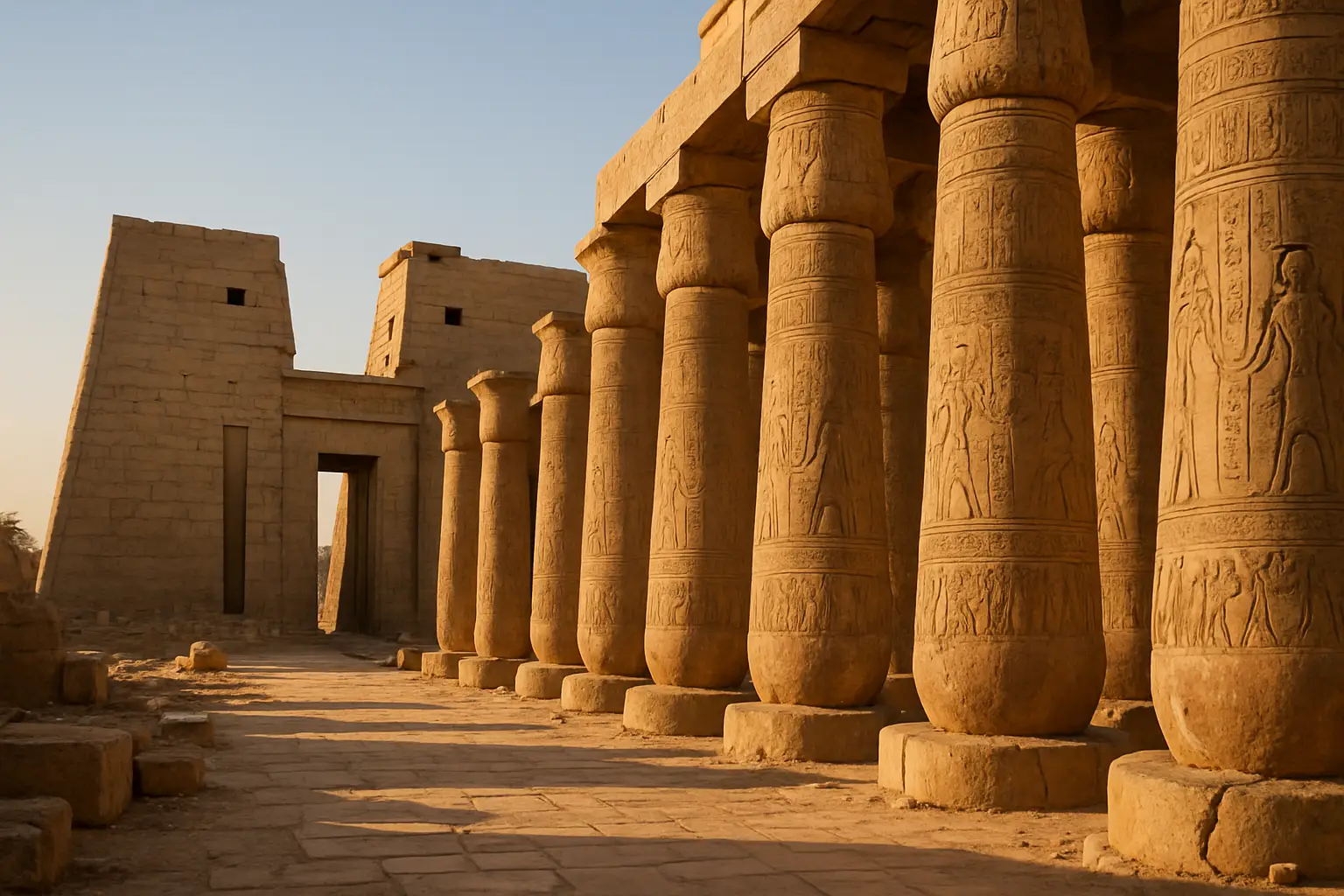
Karnak Temple Complex Egypt Travel Guide 2026: Egypt's Greatest Temple
Ancient EgyptianExplore Karnak, the world's largest ancient religious complex. Discover the Hypostyle Hall, Sacred L...
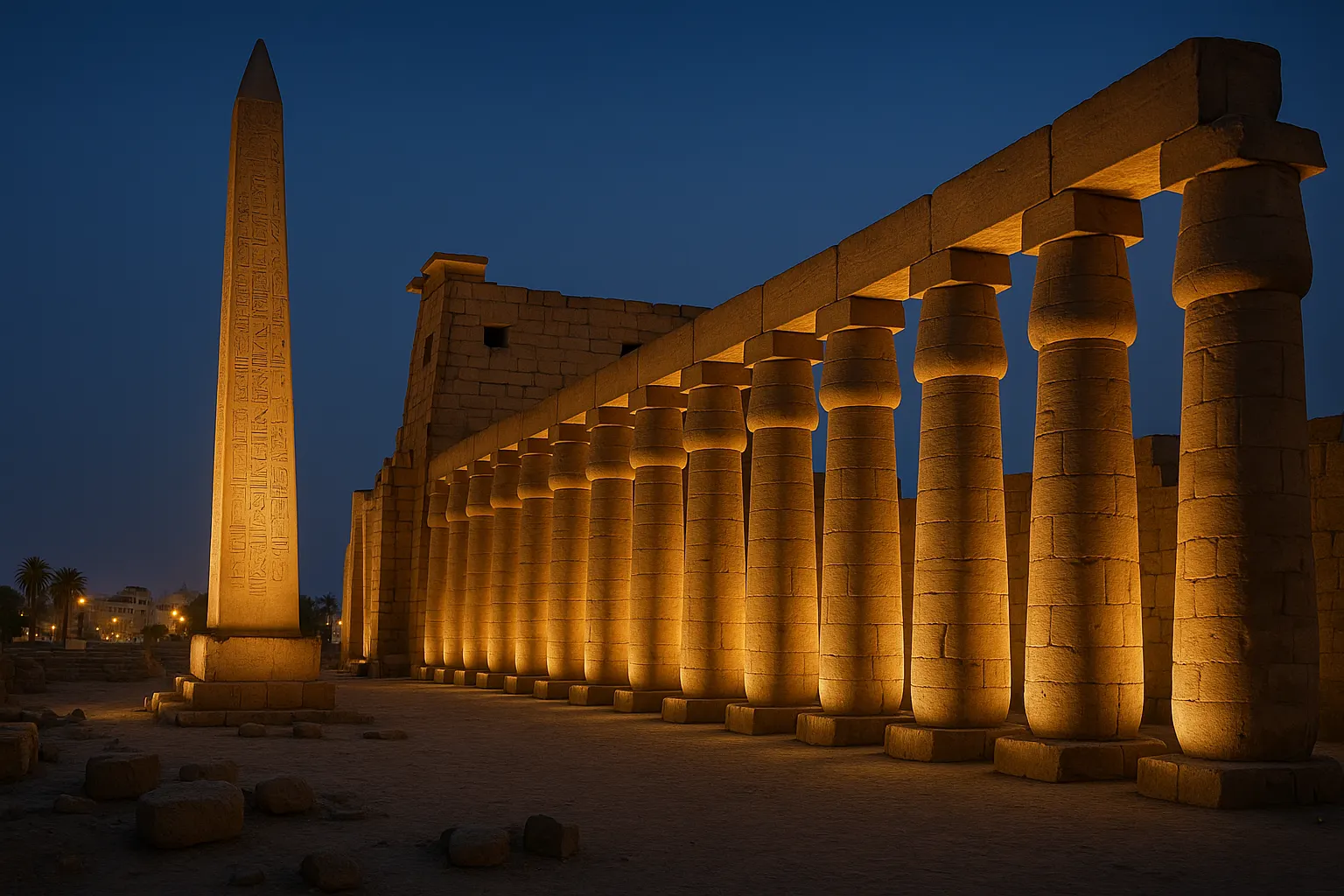
Luxor Temple Egypt Travel Guide 2026: The Elegant Temple of Luxor
Ancient EgyptianVisit Luxor Temple, the most elegant temple in Egypt. Discover the Avenue of Sphinxes, Colonnade of ...
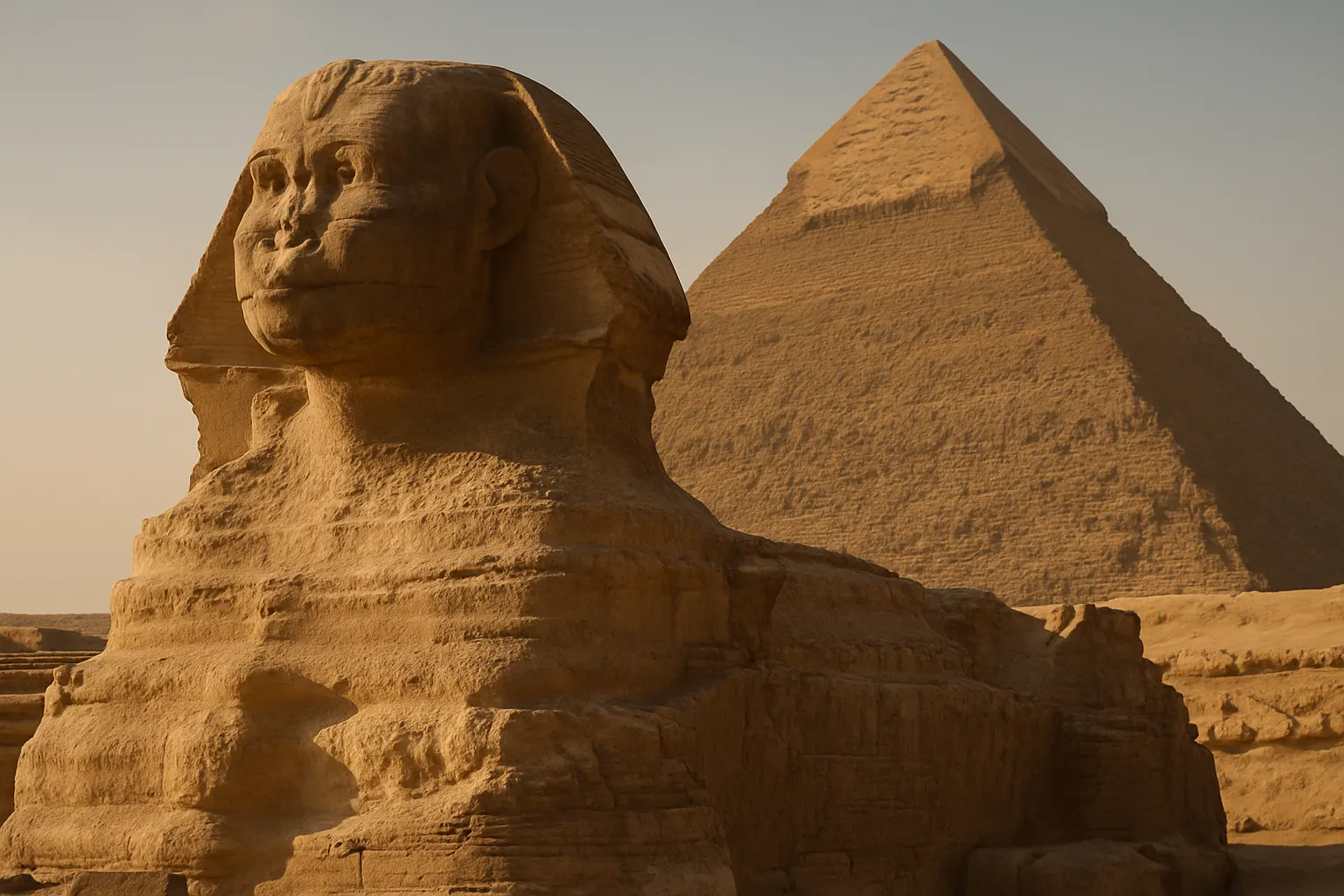
Great Sphinx of Giza Egypt Travel Guide 2026: Guardian of the Pyramids
Ancient EgyptianVisit the Great Sphinx, Egypt's enigmatic limestone guardian. Our guide covers the Sphinx's history,...