Quick Info
Curated Experiences
Agrigento Valley of the Temples Skip-the-Line Entry
Valley of the Temples and Agrigento Old Town Half-Day Tour
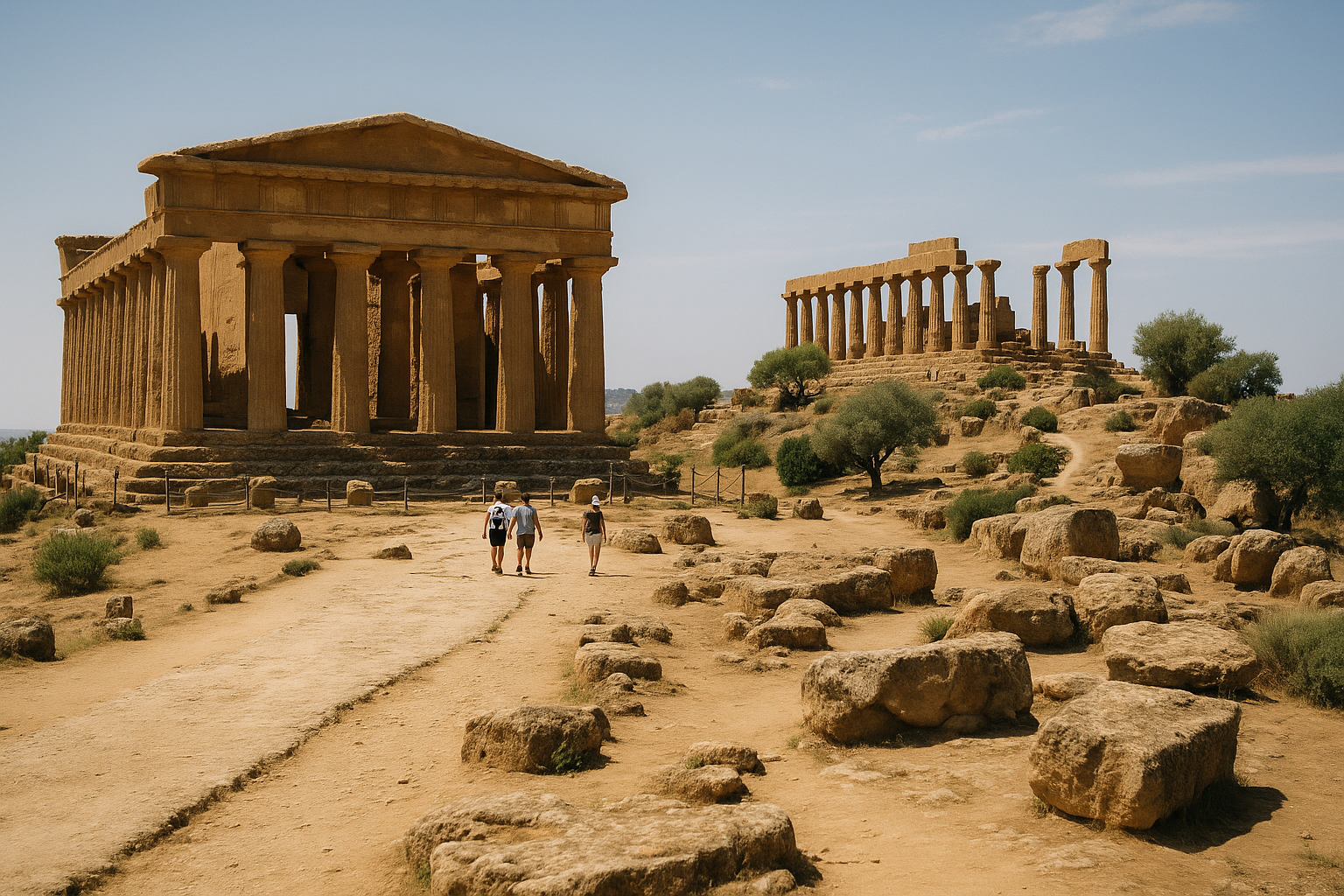
The first thing that recalibrates your expectations at Agrigento is the ridge. You arrive expecting a cluster of ruins tucked into a valley, but instead you step out onto an elevated spine of land where massive Doric columns hold their geometry against a backdrop of Sicilian wheat fields, almond groves, and the distant shimmer of the Mediterranean. The Temple of Concordia stands with almost impossible completeness at the center of this ridge, its honey-colored stone glowing in afternoon light with a clarity that makes you question whether this building is really 2,500 years old.
It is. And it is not alone. The Valley of the Temples stretches for nearly a mile along this southern ridgeline, holding the remains of at least seven major temples, civic structures, fortification walls, and necropolis zones that together document the ambitions of Akragas, one of the wealthiest and most powerful Greek colonies in the ancient Mediterranean. This is not a site where you squint at foundations and imagine walls. The architecture still speaks at full volume.
For travelers building a Sicily itinerary around ancient history, Agrigento is the anchor. No other site on the island combines this level of preservation, this density of monumental architecture, and this quality of landscape setting. It is the single strongest argument that classical Greek civilization was not confined to the Aegean.
Historical Context
Akragas was founded around 580 BCE by Greek settlers from Gela, itself a colony with Rhodian and Cretan roots. The location was chosen for its agricultural potential, defensible terrain, and access to trade routes connecting the central Mediterranean. Within a generation, Akragas had grown into one of the largest and richest cities in the Greek world, with a population that may have reached 200,000 at its peak — rivaling Athens itself.
The great temple-building campaign of the 5th century BCE transformed the southern ridge into a monumental sacred corridor. The tyrant Theron and his successors channeled war spoils, agricultural wealth, and civic pride into a construction program that produced the temples visitors walk among today. These were not modest shrines. The Temple of Olympian Zeus, had it been completed, would have been the largest Doric temple ever built. The scale was deliberate: Akragas was announcing itself to the Mediterranean world.
Carthaginian invasion in 406 BCE shattered this golden age. The city was sacked, its population scattered, and much of the monumental center damaged. Recovery came slowly and unevenly under shifting Carthaginian and then Roman control. By the time Rome absorbed Sicily after the First Punic War in 241 BCE, Agrigentum (as the Romans renamed it) remained a significant provincial city, but its era of independent grandeur had passed.
The medieval period brought further transformation. The Temple of Concordia was converted into a Christian church in the 6th century CE, a pragmatic act of reuse that paradoxically ensured its extraordinary survival. Other temples were quarried for building stone, their columns and blocks recycled into churches, walls, and harbor works. Systematic archaeological attention began in the 18th century, and UNESCO inscribed the site in 1997, recognizing it as one of the most outstanding examples of Greek art and architecture in the western Mediterranean.
What survives today is remarkable for both its quality and its legibility. You can walk from temple to temple along the ancient ridge road and read the spatial logic of a Greek sacred landscape with a directness that few sites anywhere in the world can match.
What to See
Temple of Concordia
The Temple of Concordia is the reason most people come to Agrigento, and it delivers completely. Built around 430 BCE, it is one of the best-preserved Greek temples in existence, with its full peristyle of 34 Doric columns, both pediments, and much of the cella wall still standing. The proportions are mature classical Doric at its most refined: solid without heaviness, rhythmic without monotony. Walk the full perimeter slowly. The east facade, facing the sunrise, shows the temple at its most formal and symmetrical. The south flank, with the Mediterranean visible beyond, places the architecture in the landscape context its builders intended. The conversion to a Christian basilica in the 6th century CE is what saved the structure, and you can still see the arched openings cut into the cella walls for the church nave.
Practical tip: Concordia is most photogenic in the hour before sunset, when the limestone turns deep gold. Arrive by 5:00 PM in summer or 3:30 PM in winter to claim a good position on the eastern approach path.
Temple of Juno (Hera Lacinia)
At the eastern summit of the ridge, the Temple of Juno commands the highest ground and the widest views. Twenty-five of its original 34 columns still stand, and fire damage from the Carthaginian sack of 406 BCE remains visible as reddish discoloration on some of the stone surfaces. The setting is more dramatic and more exposed than Concordia’s, with steep drop-offs on the southern side and panoramic sightlines that sweep from the coast to the inland hills. The altar platform at the east end preserves traces of the sacrificial and ceremonial activity that was the temple’s primary function.
Practical tip: Start your visit here if you arrive early. The eastern end of the park is less crowded at opening time, and the morning light on Juno’s columns is excellent. Walking westward from Juno to Concordia follows a natural downhill grade that conserves energy for the longer second half of the route.
Temple of Heracles (Hercules)
The Temple of Heracles is among the oldest in the complex, probably dating to the late 6th century BCE. Only eight columns remain upright (re-erected in the early 20th century), but the massive foundation platform and scattered architectural fragments convey the building’s original scale. This is a good place to slow down and practice reading a temple in ruin: trace the stylobate dimensions, note the column drum diameters, and estimate the former height. Heracles also preserves some of the most archaic stylistic features in the park, with stockier column proportions that predate the more elegant classical forms at Concordia and Juno.
Practical tip: The area around Heracles is less shaded than the eastern ridge. Bring water and a hat, especially if you reach this point during midday hours.
Temple of Olympian Zeus
The Temple of Olympian Zeus is a ruin of ambition rather than elegance. Had it been finished, it would have been the largest Doric temple ever constructed, measuring roughly 112 by 56 meters at the stylobate. What remains are colossal foundation blocks, scattered architectural fragments, and a prone reproduction of one of the telamones — massive carved male figures that served as structural supports in place of conventional columns. The original telamones stood over 25 feet tall. The ruin requires more imagination than Concordia, but it rewards visitors who engage with it as evidence of political messaging: this was a victory monument, funded by war spoils from the defeat of Carthage at Himera in 480 BCE, and its sheer excess was the point.
Practical tip: Spend time with the prone telamon reproduction near the center of the ruin. It gives you a visceral sense of the scale these buildings achieved and the engineering ambition they represented.
Garden of Kolymbetra
Tucked between temple zones, the Garden of Kolymbetra is a restored ancient irrigation basin now managed by FAI (Italy’s National Trust). The lush citrus and olive groves that fill this sunken garden offer a radical change of pace from the exposed ridge walk. The garden preserves remnants of the hydraulic engineering that supported Akragas and provides welcome shade, fragrance, and a different perspective on how the sacred landscape connected to the city’s agricultural infrastructure. Entry is separate from the main park ticket at around $5 to $7 USD.
Practical tip: Save Kolymbetra for the middle of your visit, when shade and a drink of water matter most. The garden has a small refreshment point.
Timing and Seasons
Spring (March through May) is the best season overall. Temperatures run 59 to 77°F (15 to 25°C), wildflowers carpet the ridge slopes, and the almond trees that border the temple precinct are often in bloom during March. Crowds are present but manageable outside Easter week.
Summer (June through August) brings intense heat, regularly 82 to 100°F (28 to 38°C) on the exposed ridge. If you must visit in summer, arrive at opening (typically 8:30 AM) or come for the evening session, which many seasons offer as a separate ticket window with dramatic artificial lighting. Midday summer visits are miserable and potentially dangerous on the shadeless path between temples.
Autumn (September through November) is a close second to spring. Temperatures settle into the 64 to 84°F (18 to 29°C) range, light quality stays high, and the summer crowds thin considerably after mid-September.
Winter (December through February) is mild by northern European standards, with daytime highs around 50 to 61°F (10 to 16°C). Occasional rain and wind are possible, but clear winter days offer the emptiest walking conditions and a starkly beautiful quality to the stone. The site rarely closes for weather.
The single best time of day is the final 90 minutes before closing. The light drops low across the ridge, the stone turns warm gold, and the tourist buses have departed.
Tickets, Logistics, and Getting There
Standard admission to the Valley of the Temples archaeological park is approximately $15 to $20 USD (around 14 to 18 euros), depending on temporary exhibitions and combined ticket options. The Regional Archaeological Museum Pietro Griffo, located just north of the park, is a worthwhile add-on at roughly $10 USD additional and holds artifacts, architectural fragments, and one of the original telamones from the Zeus temple. Combined park-plus-museum tickets are often available for about $20 to $25 USD.
From Agrigento center: Taxis cost $13 to $20 USD (10-15 minutes). Local bus lines 1 and 2 run from the central train station to the temple area for about $2 to $3 USD. By foot, the downhill walk from the old town takes roughly 25 to 30 minutes, but the return climb is steep.
From Palermo: The drive takes 2 to 2.5 hours via the SS121/SS189 or the A19 motorway. Buses (Cuffaro and others) run several times daily for approximately $10 to $15 USD each way, taking about 2 to 2.5 hours.
From Catania: Allow 2.5 to 3 hours by car or bus. Direct services are less frequent than from Palermo, so check schedules carefully.
Parking: The park has two main parking areas near the eastern (Juno) and western (Zeus) entrances. The eastern lot is recommended if you plan to walk the full ridge from east to west. Parking costs about $5 USD.
Pre-booking timed entry is strongly recommended from April through October and during Italian holiday weekends. Card payment is generally accepted at ticket offices.
Practical Tips
- Wear sturdy, closed-toe shoes. The ridge path is mostly paved but includes uneven stone sections, gravel stretches, and steps near several temples.
- Sun protection is critical. There is almost no natural shade between the Temple of Juno and the Garden of Kolymbetra, a stretch of roughly 20 minutes of exposed walking.
- Carry at least 1.5 liters of water per person. The on-site refreshment options are limited and concentrated near the entrances.
- A compact pair of binoculars enhances the experience at the Zeus temple, where carved details on scattered fragments are easier to appreciate from a distance.
- Audio guides are available at the ticket offices for about $6 to $8 USD and provide solid interpretive context for each temple station.
- If you have mobility limitations, the western entrance near the Zeus temple offers flatter terrain for the first portion of the visit. The eastern end involves more elevation change.
Suggested Itinerary
East-to-West Morning Route (3 hours): Enter at the eastern gate near the Temple of Juno by 8:30 AM. Spend 30 minutes at Juno, absorbing the views and the fire-marked stone. Walk westward along the ridge path to the Temple of Concordia, arriving around 9:15 AM for focused time at the park’s centerpiece. Allow 30 to 40 minutes here. Continue past the early Christian necropolis zone to the Temple of Heracles by 10:15 AM. Finish at the Temple of Olympian Zeus area by 11:00 AM, spending time with the telamon reproduction and the massive foundation.
Midday option: Detour to the Garden of Kolymbetra for shade and refreshment, then visit the Regional Archaeological Museum on your way back toward Agrigento center.
Sunset Return (1.5 hours): If staying overnight in Agrigento, re-enter the park in late afternoon for a second pass focused on Concordia and Juno in golden light. This is the experience that makes Agrigento unforgettable.
Nearby Sites
Taormina Ancient Theatre is approximately 3 hours east by car or 4 hours by public transport. The Greek-Roman theatre overlooking Mount Etna and the Ionian Sea offers a completely different monumental experience and pairs well with Agrigento as a two-anchor Sicily archaeology route. Plan them on separate days.
Segesta lies about 1.5 to 2 hours northwest, offering a beautifully preserved unfinished Doric temple and a hilltop theatre in an Elymian rather than Greek colonial context. The contrast with Agrigento’s confident civic architecture is instructive.
Paestum is across the Strait of Messina and up the mainland coast, roughly 5 to 6 hours from Agrigento by car and ferry. Its three standing Doric temples form the most direct architectural comparison to Concordia and Juno anywhere in the western Mediterranean.
Syracuse Archaeological Park is about 2.5 to 3 hours east. Its Greek theatre, Roman amphitheatre, and quarry caves add urban-scale civic architecture to complement Agrigento’s sacred ridge landscape.
Final Take
Agrigento is where you understand that Greek civilization in the western Mediterranean was not a footnote. Standing on the ridge at sunset, watching the Temple of Concordia turn from white to gold to amber while the sea darkens behind it, you are looking at a building that has outlasted every empire that claimed the island. The Valley of the Temples does not ask you to imagine lost grandeur. It shows it to you, column by column, in light that the original builders would still recognize.
This is not the most convenient stop on a Sicily itinerary, but it is the most essential one.
Discover More Ancient Wonders
- Taormina Ancient Theatre — Greek-Roman performance architecture with Etna and sea panoramas
- Segesta — Elymian temple and theatre in Sicily’s western hill country
- Syracuse Archaeological Park — Greek theatre, Roman amphitheatre, and quarry caves in eastern Sicily
- Italy Ancient Sites Hub — Complete planning resource for Italian archaeology travel
- Budget Travel Guide — Make your Sicily trip work on any budget
Quick Facts
| Attribute | Details |
|---|---|
| Location | Agrigento, Sicily, Italy |
| Country | Italy |
| Region | Sicily |
| Ancient Name | Akragas |
| UNESCO Status | Archaeological Area of Agrigento (1997) |
| Civilization | Greek-Roman-Norman |
| Historical Period | 6th century BCE-Medieval era |
| Established | c. 580 BCE Greek colony |
| Entry Fee | ~$15-$20 USD (€14-18) |
| Hours | Seasonal daytime hours, with evening openings in summer |
| Best Time | Spring and autumn; early morning or sunset |
| Suggested Visit | 2.5-3.5 hours on-site |
| Coordinates | 37.2901, 13.5853 |
Frequently Asked Questions
How much time should I plan for the Valley of the Temples?
Most visitors need 2-3 hours to walk the core route between the Temple of Juno and the Temple of Concordia. Add extra time if you plan to visit the museum, pause for photography, or stay through sunset lighting.
Is the Valley of the Temples really in a valley?
Not exactly. The temples stand on a long ridge south of modern Agrigento, which is why views open toward the sea and countryside. The name reflects the broader landscape rather than a deep enclosed valley.
Do I need to buy tickets in advance?
Advance booking is smart in peak spring and summer periods, especially if your Sicily itinerary is tightly scheduled. Timed entry can protect your day from long lines and reduce midday heat delays.
What is the best time of day to visit?
Early morning and late afternoon are best for temperature, softer light, and lower crowd pressure. Sunset hours are especially strong for photos at Concordia and along the connecting ridge paths.
Can I combine Agrigento with other major ancient sites in Sicily?
Yes. Many travelers pair Agrigento with Taormina's ancient theatre over a longer Sicily route, while archaeology-focused trips often add Syracuse's Neapolis park for a strong Greek-Roman sequence.
Nearby Ancient Sites
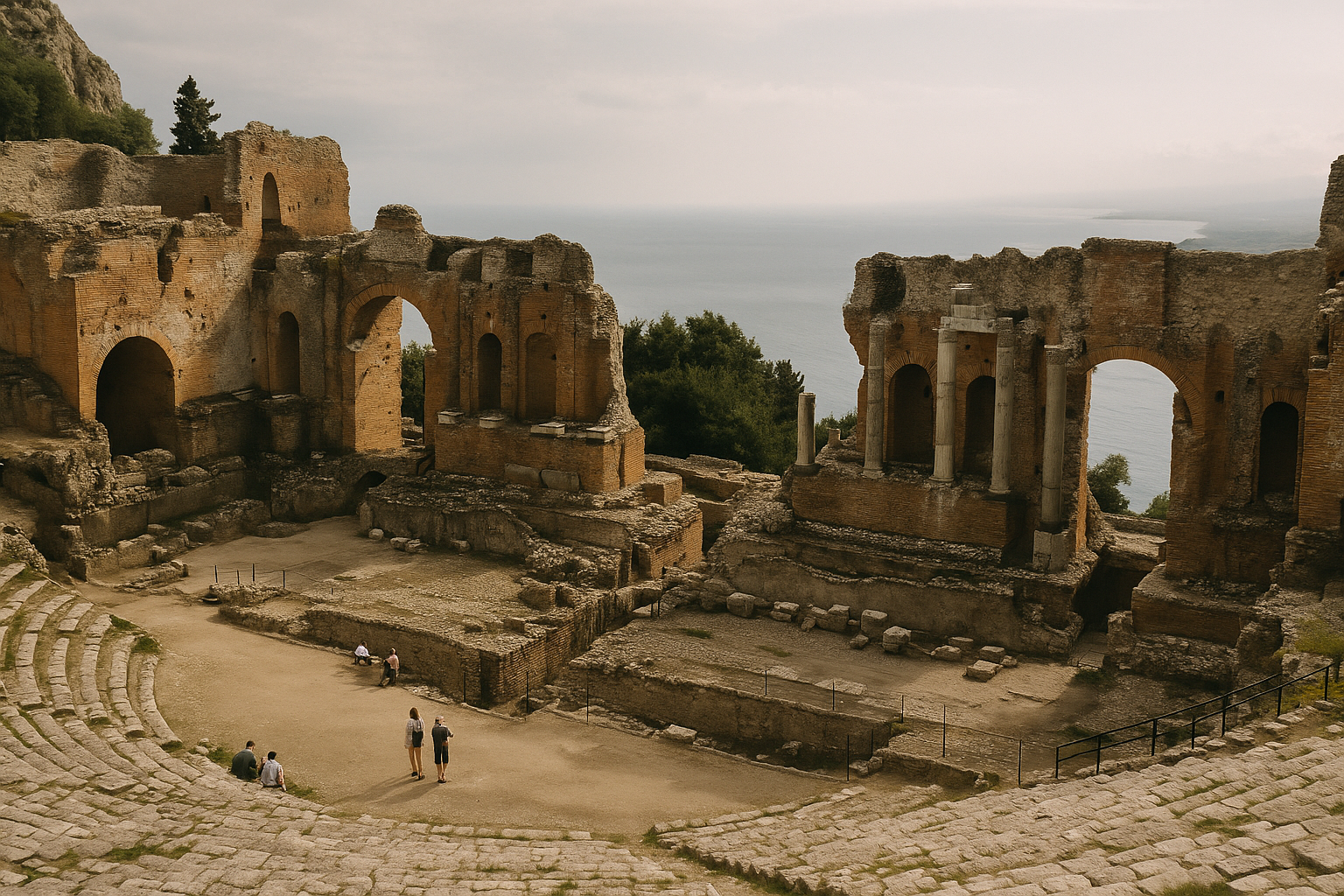
Taormina Ancient Theatre: Sicily’s Greek-Roman Stage Above the Sea
Greek / RomanPlan your visit to Taormina’s ancient theatre: history, views of Etna, tickets, logistics, and what ...
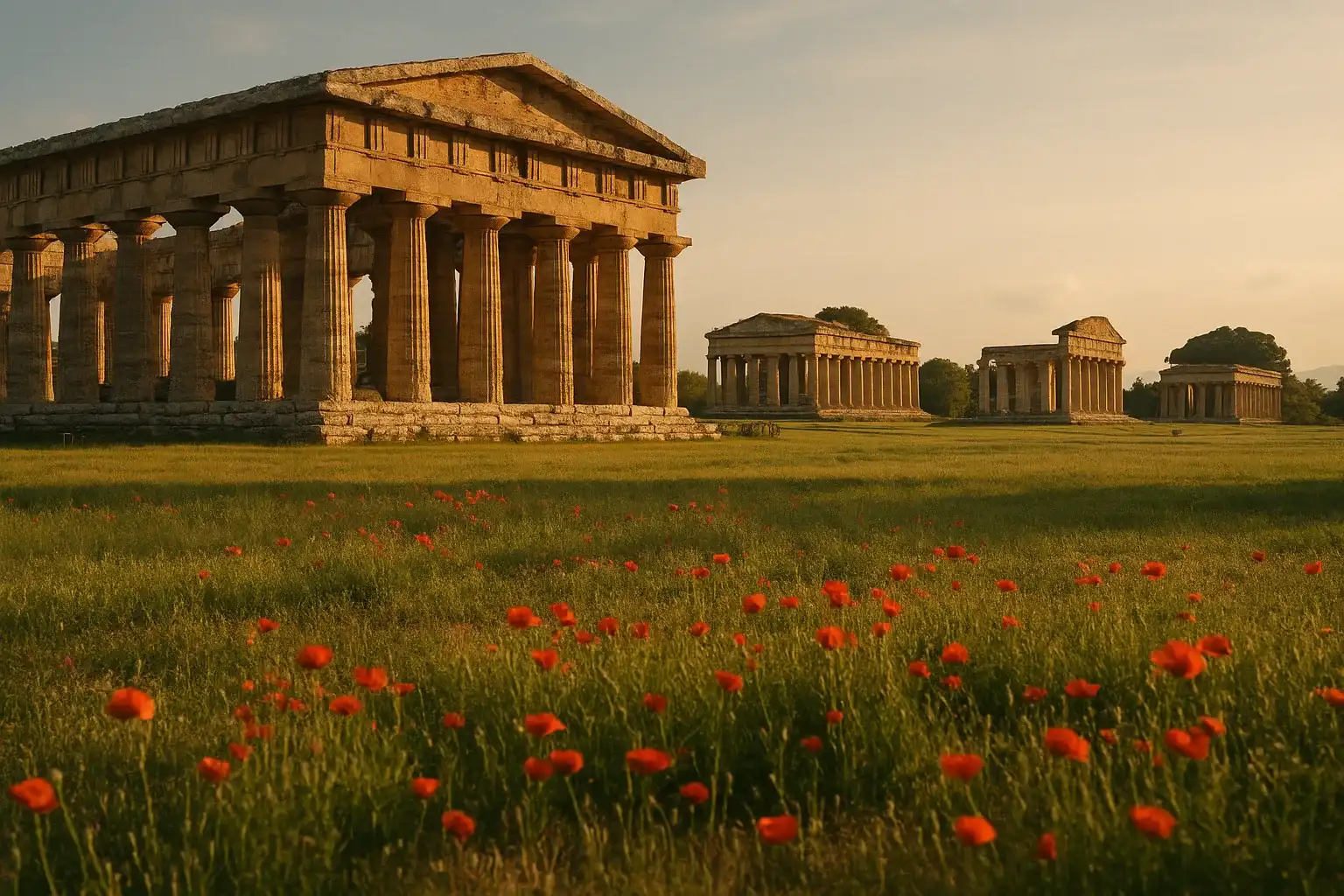
Paestum: Europe's Best-Preserved Greek Temples on Italy's
Ancient Greek / RomanDiscover Paestum's magnificent Greek temples, the Tomb of the Diver, and buffalo mozzarella farms on...
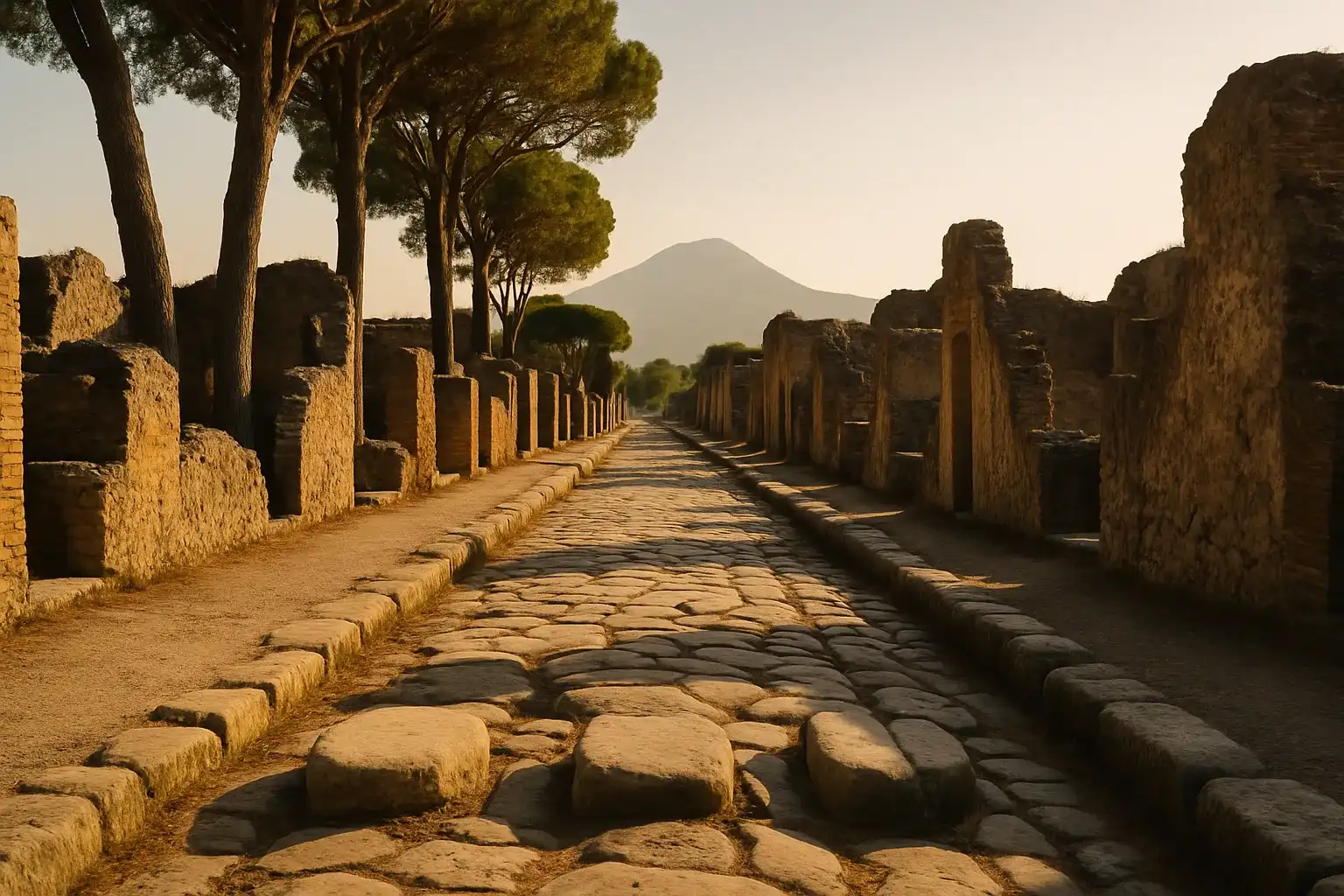
Pompeii Italy Travel Guide: Frozen in Time, Complete 2026
Roman EmpireWalk the streets of ancient Pompeii with our complete guide. Discover the best routes, must-see hous...
Herculaneum Italy Travel Guide 2026: Better Preserved Than Pompeii
Roman EmpireDiscover Herculaneum's extraordinary preservation of ancient Roman life. See carbonized wood, vivid ...