Quick Info
Curated Experiences
Tucume Pyramids and Royal Tombs of Sipan Museum in Chiclayo
Chiclayo Archaeology Tours and Excursions
Chiclayo Day Trips and Excursions
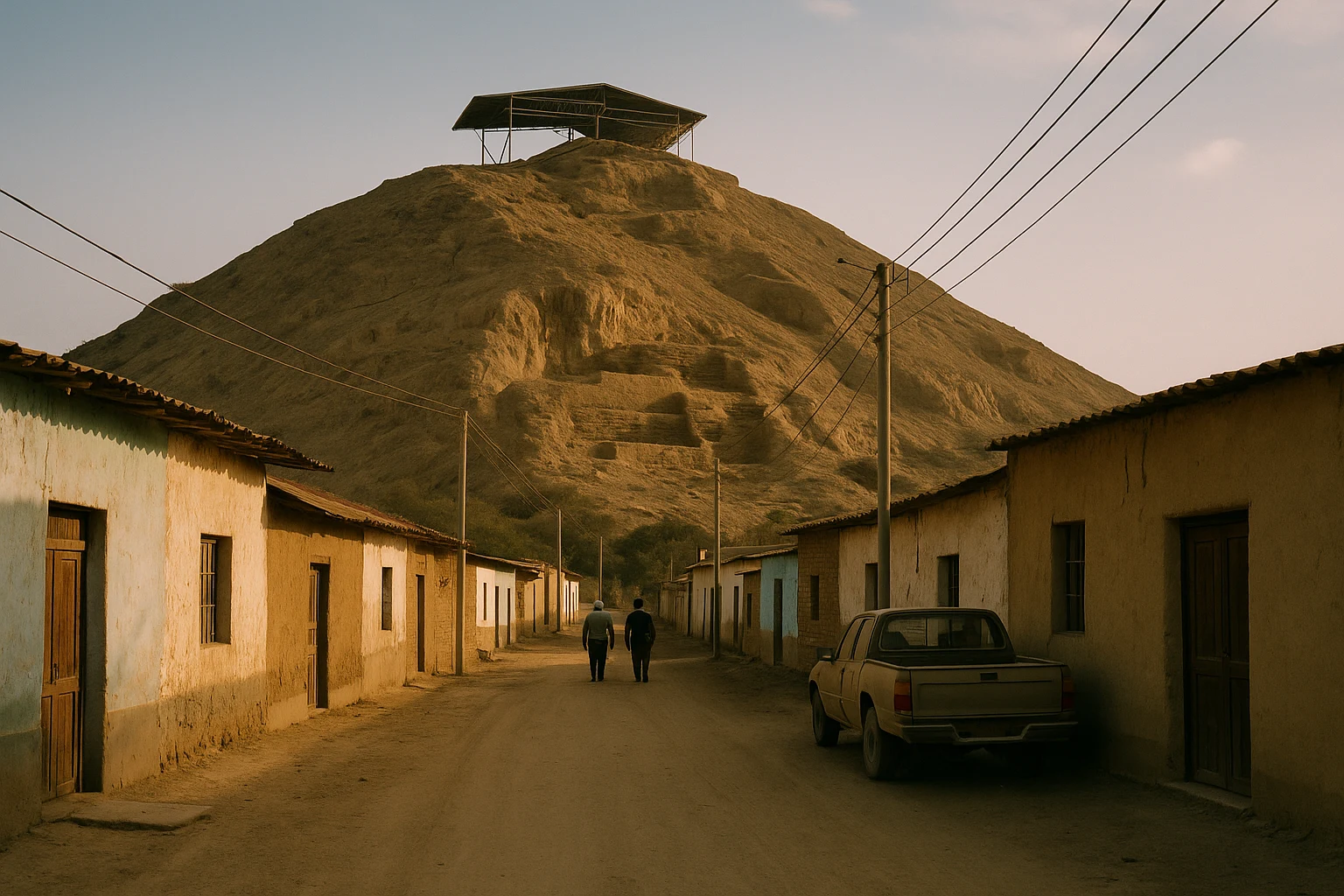
Ventarron in Peru is one of those places that can permanently reset how you understand ancient history. On paper, it looks modest compared with famous Andean giants: no jagged mountaintop citadel, no colossal stone terraces, no iconic postcard gate. What you encounter instead, a short drive from Chiclayo in the Lambayeque region, is something rarer: a ceremonial complex that reaches back to the deep foundations of civilization on the Pacific coast, including mural painting from a period so early it forces you to widen your timeline for monumental religion in the Americas. You are not walking through imperial climax here. You are standing near the beginning.
Ventarron matters because it bridges archaeology and imagination without exaggeration. Excavations revealed temple architecture and painted relief from roughly two millennia before the rise of later north-coast powers, showing organized ritual space, symbolism, and labor coordination at startling antiquity. This guide explains that long chronology in plain language, then moves into what you can see today, how to get there from Chiclayo, what conditions to expect in each season, and how to combine Ventarron with nearby destinations such as Tucume for one of Peru’s most intellectually rewarding archaeology days.
History: Ventarron and the deep time of Lambayeque
Early ceremonial foundations (c. 2500-2000 BCE)
Archaeological work at Ventarron points to very early ceremonial occupation on Peru’s north coast, in a world where settled agriculture, irrigation knowledge, and collective religious practice were beginning to reshape desert valleys into permanent social landscapes. Communities here were not empires in the later sense, but they already organized labor for planned architecture, ritual feasting, and repeated ceremonial rebuilding. The earliest construction phases at Ventarron suggest deliberate orientation, bounded sacred space, and carefully prepared surfaces rather than improvised shelters. In other words, the site begins as architecture with purpose, not as accidental accumulation.
Temple expansion and painted iconography (c. 2000-1600 BCE)
In its best-known phase, Ventarron developed into a formal temple complex with walls, interior enclosures, and painted imagery interpreted as among the oldest surviving temple murals in the Americas. The often-cited avian-deer motif reflects a symbolic world in which animals, fertility, and cosmic order likely intersected inside ritual storytelling. What matters most is not just the painting itself but the system around it: prepared plaster surfaces, planned construction episodes, and evidence that builders understood preservation through enclosure and renewal. This was not one isolated artwork. It was part of a sacred architectural program sustained over generations.
Long continuity, adaptation, and regional change (c. 1600 BCE-1st millennium CE)
Like many Andean ritual centers, Ventarron did not exist in historical isolation. Over centuries, north-coast societies shifted through environmental stress, political change, and cultural interaction. Nearby valleys saw the rise of complex traditions that later archaeology would identify as Cupisnique, Moche, Lambayeque, and Chimu, each with distinct ceremonial and political vocabularies. Ventarron appears to have experienced periods of reuse, adaptation, and partial abandonment as religious geographies moved across the wider region. Even when major construction waned, the landscape likely retained sacred memory. Andean sites often outlived their first builders through inherited reverence, not constant occupation.
Modern rediscovery and archaeological interpretation
Ventarron entered broad scholarly and public awareness through 21st-century excavations led by Peruvian archaeologists working to map early ceremonial architecture in Lambayeque. The discoveries quickly gained attention because they challenged older assumptions that monumental religious painting emerged significantly later on the coast. As work progressed, interpretation emphasized both possibility and caution: dating evidence established remarkable antiquity, while ongoing conservation highlighted how fragile these adobe-and-plaster environments are in coastal conditions. Today, Ventarron stands as a key reference point in discussions of early Andean religion, labor organization, and visual culture. It is not simply an old site; it is a site that changed the timeline.
The Key Monuments: What to See at Ventarron
The painted temple sector
The heart of Ventarron is the excavated temple area where traces of early mural work and plastered architecture survive under protective management. You are not looking at a complete, fully standing temple in the way travelers might imagine from later stone civilizations. Instead, you see an archaeological palimpsest: wall segments, layered surfaces, and reconstruction cues that reveal how ritual interiors were built, modified, and occasionally sealed. The famous imagery associated with Ventarron, especially the intertwined avian and deer-like forms, represents a theological visual language from deep antiquity. In practical terms, this is a place where a guide’s explanation can be the difference between “interesting ruin” and “world-historical revelation.” Photography is usually possible from designated positions; a slight zoom helps capture surviving pigment and texture without crossing barriers.
Adobe architecture and construction layers
Ventarron’s architecture is valuable because it demonstrates process as much as monumentality. Builders worked with earthen materials, plaster preparation, and controlled enclosure sequences, producing spaces that were repeatedly renewed rather than permanently “finished.” As you move through exposed sectors, notice where one wall line overlaps another and where fill deposits suggest intentional ceremonial closure. These details show that construction was historical even for the ancient builders themselves: they curated their own past by burying and rebuilding sacred features. For modern visitors, this layered logic can feel subtle compared with large later pyramids, but it is the core reason scholars treat Ventarron as foundational evidence for early organized religion on Peru’s coast.
The wider Ventarron-Collud complex context
Ventarron is often discussed alongside nearby archaeological sectors in the broader Collud-Ventarron zone, where later phases and associated remains provide context for the main ceremonial nucleus. Depending on conservation status and active research restrictions, not every area is equally accessible, but understanding the site’s wider footprint helps explain why this is not a single isolated shrine. It is part of a ritual landscape connected to settlement, movement corridors, and eventually to larger north-coast ceremonial traditions. If your interest is chronology, this is where Ventarron becomes especially powerful: in a relatively compact geographic area, you can read transitions from very early temple expression toward increasingly complex regional cultural systems.
Interpretive viewpoints and landscape reading
One of Ventarron’s underrated features is the surrounding valley context. Step back from the excavated structures and look at the environmental frame: irrigated agricultural zones, dry coastal light, and the lowland routes that linked communities long before modern roads. Ancient ceremonial sites were rarely arbitrary; they were chosen for visibility, movement, and cosmological orientation as much as for resources. At Ventarron, even a brief pause to “read” the landscape helps explain why ritual architecture emerged here early. The site’s value is partly intellectual: it trains you to see archaeology not as disconnected ruins, but as social infrastructure embedded in terrain.
Getting There: Transportation and Access
Ventarron is reachable as a practical half-day trip from Chiclayo, and most visitors should treat it as a targeted archaeology visit rather than a casual stop.
From Chiclayo
From central Chiclayo, the journey generally takes 35-50 minutes depending on traffic and whether you are departing from the airport district, downtown, or Lambayeque city edge.
- Taxi/private driver: Typical fare is 55-90 PEN ($15-24 USD) one way, depending on vehicle type and waiting arrangements. For convenience, many travelers negotiate a round trip with on-site waiting at 140-220 PEN ($38-59 USD).
- Public transport + mototaxi: Budget travelers can use local buses or combis toward nearby towns, then transfer by mototaxi for the final approach. Combined cost often lands around 6-12 PEN ($1.60-3.25 USD), but travel time and reliability vary.
- Organized archaeology circuit: Regional operators in Chiclayo can package Ventarron with Lambayeque museums or Tucume. Prices vary by group size, usually from 45-95 USD (165-350 PEN) per person for guided day routes.
From Lambayeque city or Tucume corridor
If you are already based in Lambayeque city or visiting the Tucume valley, Ventarron can be inserted efficiently as either an early-morning first stop or a late-morning transfer before museum visits.
- Taxi from Lambayeque city: Usually 35-60 PEN ($9-16 USD), about 25-40 minutes.
- Private car rental: Useful for flexible same-day sequencing with Tucume and museum stops; confirm parking conditions in advance and avoid leaving valuables visible.
- Driver-guided regional day route: Often the easiest way to connect multiple archaeology sites without navigation friction, especially if your Spanish is limited.
Admission and Hours
Admission policies can shift with conservation work, so confirm current entry conditions through local tourism offices or your hotel the day before. As a planning baseline, expect modest local ticket pricing in the 10-20 PEN ($3-5 USD) range when open sectors are accessible to visitors. Typical visiting windows are daytime morning-through-afternoon schedules, often around 09:00-16:00, with occasional closures for research or site protection. Cash is the safest assumption for small-site entry points. If your itinerary is tight, ask your driver to verify access by phone before departure from Chiclayo.
When to Visit: Seasonal Considerations
Spring (September-November)
Spring is often the most balanced season for Ventarron. Daytime temperatures commonly run around 20-27°C (68-81°F), coastal haze is manageable, and crowd levels are generally low outside holiday weekends. Morning light gives better surface contrast on adobe and plaster details than harsh midday sun. If you want comfort plus clear photography conditions, this is a reliable window.
Summer (December-March)
Summer brings warmer conditions, frequently around 24-32°C (75-90°F), with stronger sun exposure at open archaeological sectors. Crowds are still moderate compared with Peru’s major southern destinations, but local travel can increase during vacation periods. Start early, carry more water than you think you need, and prioritize shade breaks between stops. For many visitors, summer remains very workable as long as the schedule is morning-heavy.
Autumn (April-May)
Autumn is a quietly excellent shoulder period. Temperatures usually settle around 21-28°C (70-82°F), and tour traffic can feel lighter after peak holiday movement. Visibility is often good, and the lower heat load makes it easier to combine Ventarron with a second site such as Tucume in the same day. If you prefer flexible pacing without intense conditions, autumn is a smart choice.
Winter (June-August)
Winter on Peru’s north coast is mild rather than severe, typically around 18-24°C (64-75°F), with occasional morning garua (coastal mist) softening contrast in early hours. Crowds remain manageable and walking comfort is high, making winter excellent for visitors sensitive to heat. Bring a light layer for early departures, and plan key photo moments toward late morning or early afternoon when haze usually eases.
Combining Ventarron with Chiclayo and Lambayeque
Ventarron works best as part of a deliberately sequenced day, not as an isolated check-box stop. The strongest itinerary begins with an early departure from Chiclayo around 8:00 AM, reaching the site before the sun gets hard and before any transport complications can steal your window. Spend the first hour on context: take in the main ceremonial sectors, then ask your guide to walk you through chronology rather than only visual highlights. By 10:00 AM, when heat begins to build, shift north toward Lambayeque and continue into the region’s museum network or onward to Tucume.
A classic pairing adds Tucume after lunch. Arriving around 1:30 PM gives you enough time for the site museum and a measured circuit through the pyramid landscape before late-afternoon light improves on the mounds. This sequence is historically satisfying because it moves from Ventarron’s deep early ceremonial evidence to the much later monumental adobe planning of Lambayeque and Chimu societies. You feel continuity and transformation in one day rather than treating each site as separate trivia.
If you want a softer pace, build a two-part day anchored in Chiclayo food culture. After Ventarron, stop near Lambayeque city for a long lunch featuring local rice-and-seafood traditions, then choose one museum and one short additional site rather than chasing everything. By 5:30 PM, return to Chiclayo without the fatigue that comes from overpacked circuits. Either version works, but the principle is the same: Ventarron should come first, while your mind is fresh enough to appreciate what makes it exceptional.
Practical Information
What to Bring
- Sun protection: Wide-brim hat, high-SPF sunscreen, and sunglasses are essential because exposed sectors have limited shade.
- Water: Bring at least 1 liter per person for a short visit; 1.5 liters is safer if combining multiple sites.
- Footwear: Closed shoes with grip are best for dusty, uneven, and occasionally compacted-earth surfaces.
- Camera or phone with zoom: A mild zoom helps capture mural or plaster details from protected viewpoints.
- Cash: Carry small bills in PEN for transport, entry, and roadside purchases where card acceptance is unlikely.
Dress Code and Etiquette
Ventarron is an archaeological conservation zone, so behavior matters as much as clothing. Light, breathable clothing works best in warm conditions, but avoid anything that leaves you uncomfortable under direct sun. Stay on designated paths, never touch painted or plastered surfaces, and follow photography restrictions if temporary conservation controls are active. When traveling with local communities nearby, basic courtesy and patient interaction go a long way.
Accessibility
Compared with highland archaeological climbs, Ventarron is relatively accessible for many visitors because distances are moderate and elevation is low. That said, surfaces can be uneven and dusty, with occasional steps or rough transitions that may challenge travelers with limited mobility. If accessibility is a priority, arrange a private visit and ask in advance about current path conditions, available assistance, and which sectors can be reached most comfortably.
Why Ventarron Matters
Ventarron matters because it strips away the lazy idea that civilization appears all at once in grand imperial forms. Here, on Peru’s north coast, you meet something quieter and more profound: early communities already thinking in ceremonial architecture, symbolic imagery, and intergenerational ritual memory long before the better-known monuments of later centuries. The site is a reminder that human sophistication often begins in materials that look fragile to us now — adobe, plaster, pigment — yet those materials carried cosmology, authority, and belonging across millennia.
For your journey through Peru, Ventarron can become a kind of intellectual compass. After seeing it, later sites read differently. You start noticing continuity instead of disconnected dynasties, inherited sacred geographies instead of isolated ruins. In that sense, Ventarron is not only a destination. It is a beginning point: a place where the deep past feels close enough to alter how you see the rest of the map.
Quick Facts
| Attribute | Details |
|---|---|
| Location | Ventarron archaeological zone, Lambayeque region, Peru |
| Ancient Name | Unknown (modern name: Ventarron) |
| UNESCO Status | Not individually inscribed; part of north-coast heritage landscape |
| Established | c. 2000 BCE ceremonial complex |
| Distance from nearest hub | About 30-35 km from central Chiclayo (35-50 min by road) |
| Entry Fee | Typically around 10-20 PEN ($3-5 USD), subject to conservation access |
| Hours | Usually daytime access, often around 09:00-16:00 (verify locally) |
| Best Time | Spring and autumn mornings for cooler conditions and clearer light |
| Suggested Stay | 1-2 hours on site; half day when combined with nearby museums |
Explore More Northern Peru
- Tucume Pyramids: A vast Lambayeque-Chimu-Inca adobe complex that pairs naturally with Ventarron’s deep chronology.
- Huaca del Sol and Luna: Essential Moche ceremonial architecture near Trujillo with extraordinary iconographic context.
- Chan Chan: The largest adobe city in the Americas, ideal for understanding late north-coast urban planning.
Plan your complete Peru archaeology journey with our Peru Ancient Sites Guide. For route strategy, read our how to plan an archaeological itinerary in Peru.
Frequently Asked Questions
How much time should I plan at Ventarron?
Plan 60-90 minutes on site if you are focusing on the excavated temple areas and interpretation panels. If you are deeply interested in early Andean religion and architecture, allow up to 2 hours and pair the visit with nearby museums in Lambayeque or Chiclayo.
What is the best time of day to visit Ventarron?
Early morning is the best window because temperatures are cooler and the desert light is softer for seeing adobe texture and relief details. Midday can be harsh and bright, especially from December through March.
Do I need a guide at Ventarron?
A guide is strongly recommended because Ventarron's significance is not obvious from architecture alone; context about chronology, ritual use, and mural conservation transforms the visit. Local guides are sometimes available through regional tour operators in Chiclayo.
How do I get from Chiclayo to Ventarron?
The easiest option is a taxi or private driver from Chiclayo, usually 35-50 minutes depending on traffic and your exact starting point. Public transport reaches nearby towns but often requires a final mototaxi segment and local navigation.
Can I combine Ventarron with Tucume in one day?
Yes. Start Ventarron early, then continue north to Tucume for the afternoon museum and mirador circuit. This combination gives you an unusually complete timeline from early ceremonial architecture to later Lambayeque-Chimu monumental planning.
Is Ventarron suitable for children and older travelers?
Yes for most visitors, because the walking distances are modest and terrain is generally manageable, though surfaces can be dusty and uneven. Bring water, sun protection, and stable footwear, and avoid peak midday heat.
Nearby Ancient Sites
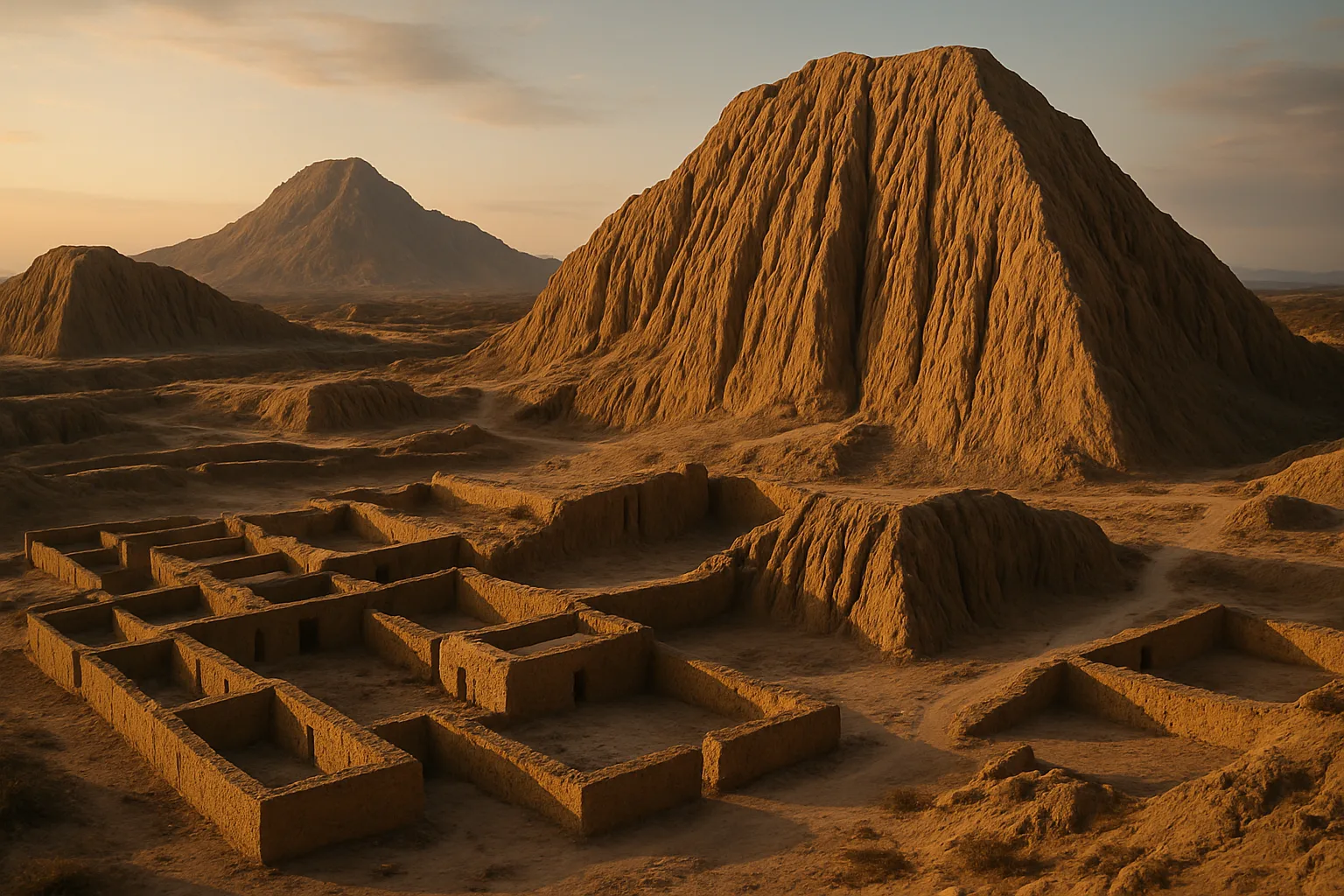
Tucume Pyramids Peru Guide 2026: Adobe Huacas & Lambayeque Valley
Lambayeque-Chimu-IncaTucume's 26 adobe pyramids near Chiclayo hold Lambayeque, Chimu, and Inca history. Explore Huaca Lar...
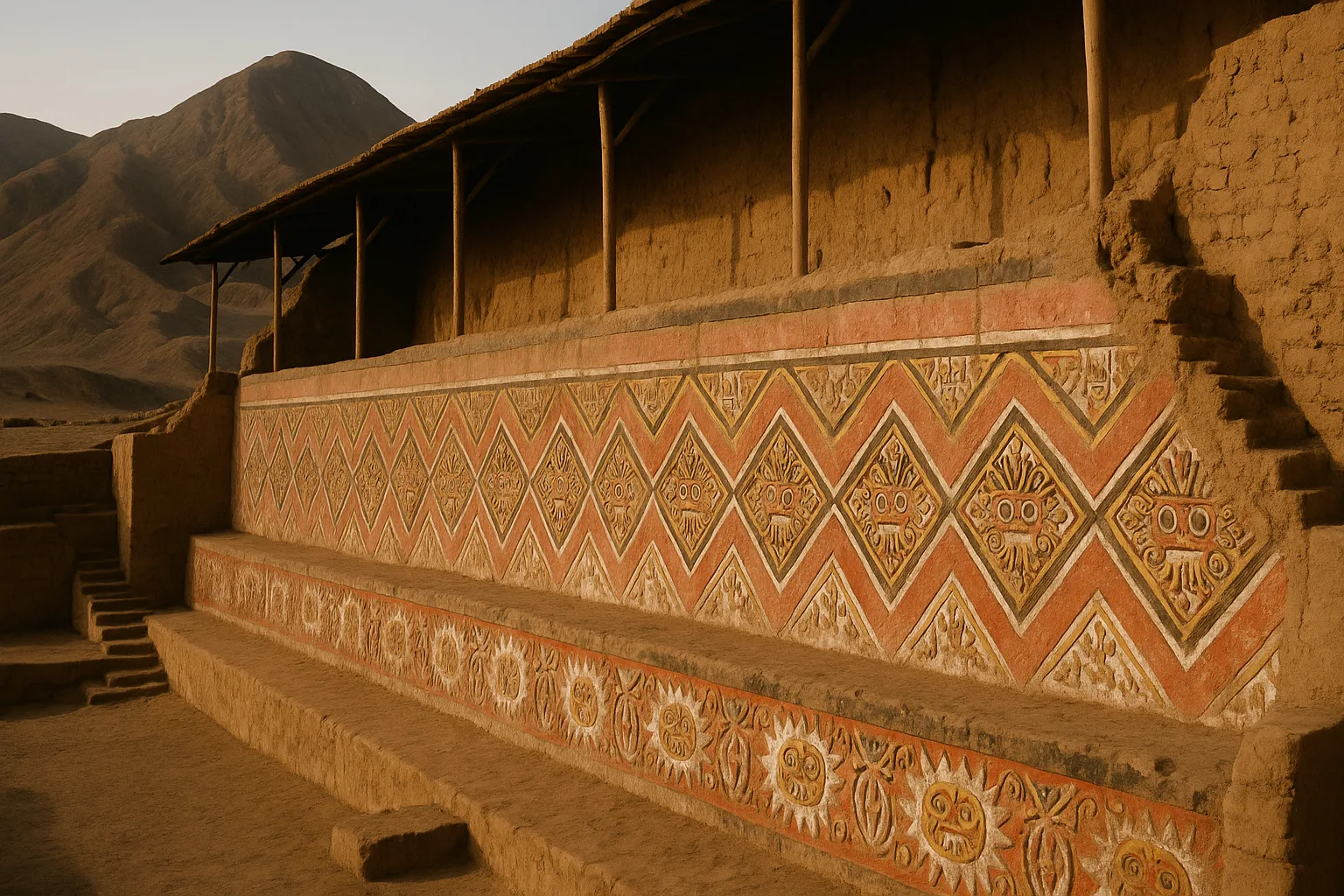
Huaca del Sol and Luna Peru Guide 2026: Moche Pyramids at Trujillo
Moche-Chimu-IncaExplore Huaca del Sol and Huaca de la Luna near Trujillo: Moche mural archaeology, practical access ...
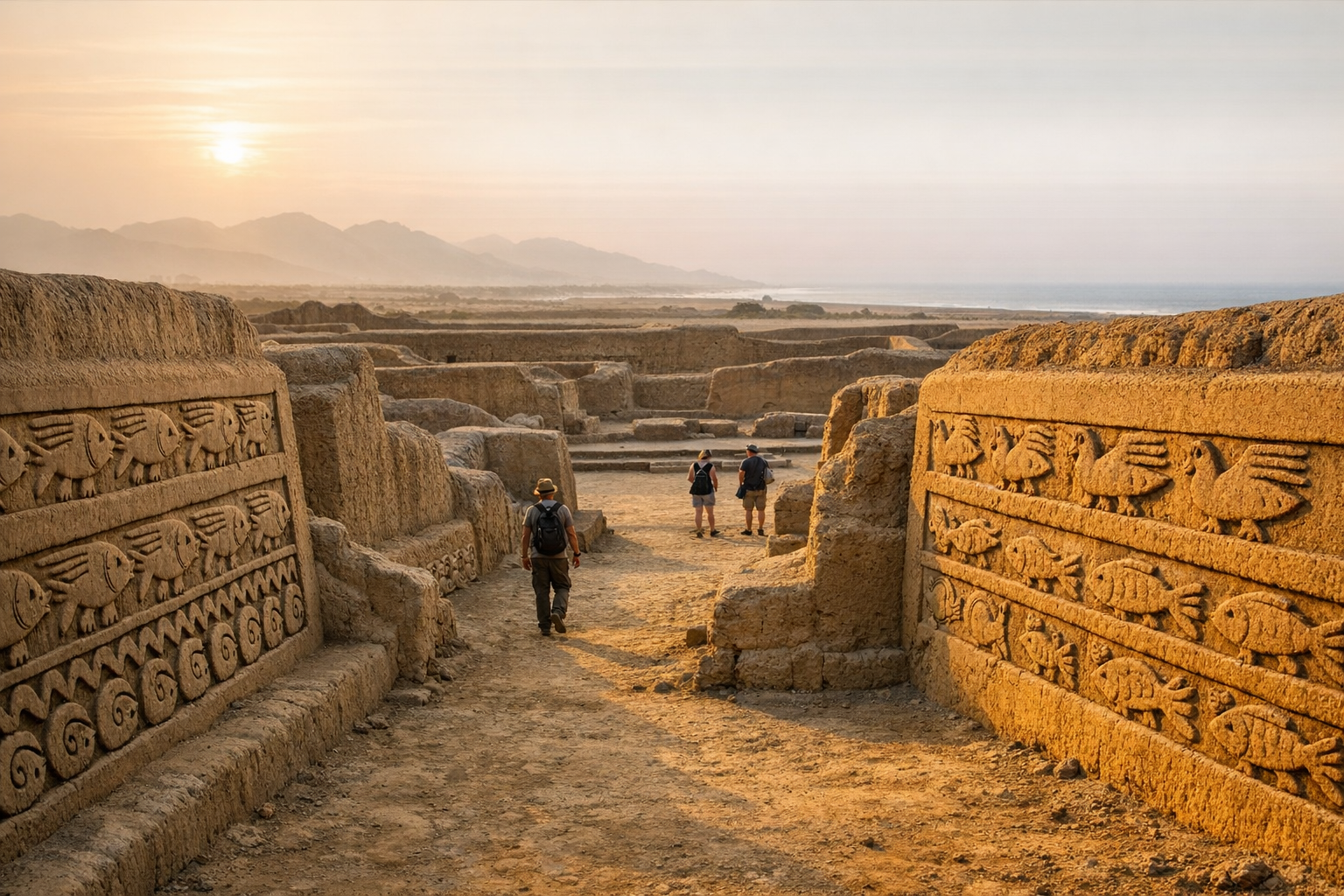
Chan Chan Peru Guide 2026: Chimu Capital & Adobe Citadels
ChimuExplore Chan Chan near Trujillo — the largest pre-Columbian city in the Americas. Discover the Chimu...