Quick Info
At a glance
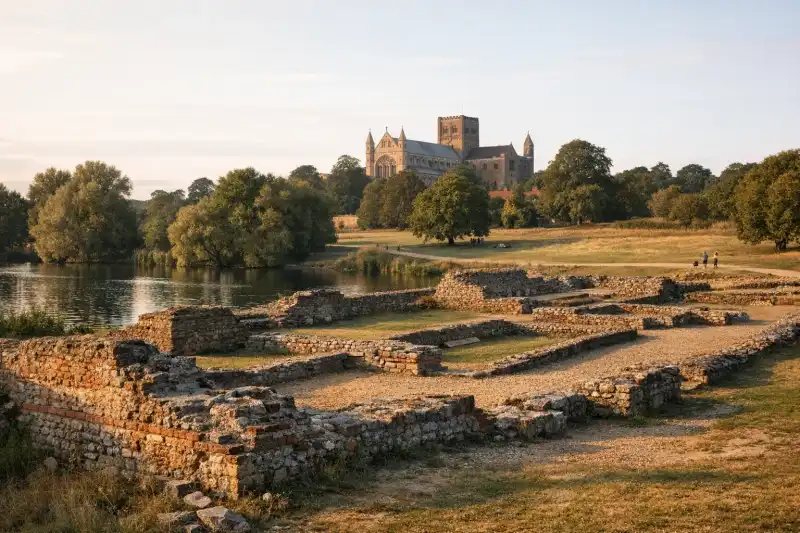
Verulamium (St. Albans) in the United Kingdom is one of the most rewarding places to encounter Roman Britain not as an isolated ruin, but as the footprint of a real city still shaping the landscape around it. Instead of standing on a remote hill or within a fenced archaeological zone, Verulamium unfolds through parkland, suburban streets, museum galleries, buried foundations, and fragments of masonry that hint at a once-bustling urban center. The modern city of St. Albans sits beside and over parts of the ancient settlement, giving the visit a distinctive layered quality: Iron Age memory, Roman ambition, medieval continuity, and modern English life all coexist in remarkably close quarters.
For travelers, that means Verulamium offers something rare. It is accessible enough for a casual day trip from London, yet substantial enough to satisfy serious interest in archaeology, Roman urbanism, and the history of Britannia. The open spaces of Verulamium Park soften the experience; ducks skim across the lake, joggers pass by, and children play near ground that once carried paved Roman streets and prosperous townhouses. Then, almost suddenly, the Roman world becomes tangible in mosaics, hypocausts, inscriptions, and the outline of the theater at nearby Gorhambury. Verulamium is not about monumental survival on the scale of Rome or Ephesus. Its power lies in reconstruction through fragments, in understanding how a provincial city lived, traded, worshipped, recovered from disaster, and eventually faded into the fabric of England.
History
Iron Age origins and the Catuvellauni
Before Verulamium became a Roman city, the area was already significant. It was associated with the Catuvellauni, one of the most powerful tribes in late Iron Age southeastern Britain. Their center was not exactly the later Roman city itself, but the wider region around modern St. Albans had political and economic importance before the Roman conquest. The name Verlamion or a related form likely predates Roman occupation, and classical references suggest the area was already known as a substantial settlement.
This pre-Roman background matters because Verulamium was not founded on empty land. The Romans often built upon existing centers of power, adapting tribal territories into their own administrative network. In the decades around the Claudian invasion of 43 CE, places like this became crucial points where local elites, imperial policy, and military logistics met. The future city therefore emerged from both conquest and continuity.
Foundation under Rome
After the Roman invasion, the settlement developed into Verulamium, eventually one of the principal cities of Roman Britain. Its location was strategic: north of Londinium and connected to the road system that structured movement across the province. The city became a municipium, a status that granted certain legal privileges and marked it as an important urban community within the empire. This was not merely a military outpost but a functioning town with civic identity, commerce, public buildings, and residential quarters.
Roman urban planning reshaped the site. Streets were laid out, drainage organized, and substantial buildings raised in stone and timber. Townhouses with mosaics, baths, temples, shops, and administrative spaces reflected the spread of Roman material culture. Verulamium’s citizens would have included local Britons, immigrants, merchants, officials, craftspeople, and others tied into the economy of the province.
Boudica’s revolt and rebuilding
One of the defining events in Verulamium’s early history was its destruction during the revolt of Boudica around 60 or 61 CE. Along with Londinium and Camulodunum, Verulamium was attacked and devastated as anti-Roman resistance swept through southeastern Britain. Archaeological evidence, including destruction layers, supports the literary record that the town suffered serious damage.
Yet this catastrophe was not the end. In many ways it marked the beginning of Verulamium’s mature Roman phase. The city was rebuilt, and over the following generations it grew into a prosperous and well-appointed center. Reconstruction after the revolt likely brought improvements in planning and building style, while prosperity in the 2nd and 3rd centuries allowed elite houses and public facilities to flourish. What visitors see in the museum today often belongs to this later, rebuilt city rather than the first vulnerable settlement.
Prosperity in the high empire
By the 2nd century, Verulamium had become one of the leading cities in Roman Britain. Fine mosaics, plastered walls, underfloor heating systems, imported goods, and evidence of organized public life reveal a community that was well integrated into imperial culture. The city’s theater, unusual in Roman Britain, suggests a blend of entertainment and possibly religious function. Temples and ritual objects indicate active spiritual life, while cemeteries beyond the urban core remind us that this was a complete civic organism with formal boundaries and social hierarchy.
Trade connected Verulamium to Londinium and beyond. Coins, pottery, glass, and luxury items show both regional exchange and long-distance links. The city was not on the extreme frontier but within a relatively prosperous zone of the province, benefiting from roads, agricultural hinterland, and administrative stability.
Late Roman change and post-Roman legacy
Like many towns in Roman Britain, Verulamium changed in the later empire. There is evidence for continued occupation into the 4th century, but urban life gradually transformed. Public buildings may have been repurposed, maintenance became uneven, and some districts saw reduced activity. This was not necessarily a sudden collapse; rather, the city adapted to shifting political and economic realities as Roman authority in Britain weakened.
After the end of Roman rule in the early 5th century, the city’s formal Roman character faded. Materials from ancient buildings were quarried for later construction, and the focus of settlement moved. Nearby, the memory of the martyr Saint Alban and the rise of medieval St. Albans created a new center of gravity. Even so, the Roman city never entirely vanished. Its roads, walls, buried houses, and artifacts remained in the ground, and antiquarian curiosity eventually led to systematic excavation. Today, Verulamium survives as an archaeological landscape whose fragments tell the story of both Roman power and its afterlife in England.
Key Features
What makes Verulamium especially engaging is that it is not a single ruin but a set of connected experiences. The first is the setting of Verulamium Park itself. Broad lawns and open views create a calm approach to the site, but beneath this pleasant public space lies the plan of a major Roman city. Walking here, you are effectively crossing the ground of ancient streets and neighborhoods. For many visitors, that invisible scale is one of the most striking things about Verulamium: the city was extensive, and the modern landscape only partly reveals it.
The Verulamium Museum is central to understanding the site. It houses one of the finest collections for Roman Britain, and it transforms scattered remains into a coherent urban story. Mosaics are among the standout pieces. Their geometric designs, craftsmanship, and preservation offer immediate visual evidence of domestic wealth. They also remind visitors that Roman urban life in Britain could be comfortable, decorative, and deeply invested in status. Alongside these are wall plaster, pottery, jewelry, inscriptions, coins, and everyday objects that make the city feel inhabited rather than abstract.
Another major feature is the surviving hypocaust and mosaic remains visible in the park area. These exposed elements help bridge the gap between gallery interpretation and physical archaeology. Seeing the channels of a Roman heating system or the footprint of a townhouse gives the site tactile authority. You begin to understand how architecture shaped comfort and prestige, and how much engineering underpinned ordinary elite life.
The Roman Theatre at Gorhambury is perhaps the most distinctive surviving monument associated with Verulamium. Reached separately from the main park, it is one of the few visible Roman theaters in Britain. Although not preserved to a monumental height, its plan is legible enough to appreciate the structure’s purpose and rarity. The theater likely served for performances and perhaps ceremonial functions linked to a nearby temple precinct. Its existence suggests that Verulamium was not merely administrative and commercial; it also participated in the cultural life expected of a Romanized city.
Traces of the city wall and defensive circuit add another dimension. They point to phases of concern with security, administration, and urban identity. In Roman towns, walls were practical but also symbolic, defining the city as a proper civic space. Even where only fragments survive, they help visitors imagine Verulamium as a bounded, planned entity rather than a loose scattering of remains.
The wider topography matters too. The River Ver and surrounding valley landscape contributed to settlement, agriculture, and communication. Roman cities depended on more than streets and public buildings; they needed access to water, supply routes, and rural estates. Looking across the park and toward modern St. Albans, it becomes easier to picture Verulamium as part of a broader inhabited environment rather than an isolated archaeological exhibit.
Finally, Verulamium’s greatest feature may be the relationship between ruin and continuity. Close by stands St. Albans Cathedral, tied to the later medieval town and the cult of Britain’s first recorded saintly martyr. While not part of Roman Verulamium itself, the cathedral and historic center enrich the visit by showing how one urban tradition gave way to another. The Roman city did not simply disappear; it was succeeded, remembered, quarried, reinterpreted, and folded into the identity of St. Albans. Few places in Britain allow you to experience these historical layers within such a walkable area.
Getting There
Verulamium is one of the easiest major Roman sites in Britain to reach. From London, the simplest route is by train to St. Albans City station. Fast services from London St Pancras typically take around 20 to 25 minutes, with off-peak return fares often in the range of £12 to £20 depending on timing and booking conditions. From the station, you can either take a local bus, grab a taxi for roughly £7 to £10, or walk around 25 to 35 minutes to Verulamium Park.
If you are driving, St. Albans is just north of London and accessible via the M1, M25, and A roads depending on your starting point. Public parking is usually available near the park and museum, though charges vary by location and length of stay. Expect to pay roughly £2 to £6 for several hours in council-operated car parks, with higher rates possible in central locations. Weekends and school holidays can be busier, so arriving early is sensible.
By bus, St. Albans has connections from surrounding Hertfordshire towns and some links from North London. Fares are generally modest, often under £5 for local trips, though journey times are much longer than the train.
Once in St. Albans, the site is best explored on foot. Verulamium Park, the museum, the cathedral, and the historic center can all be combined in a day. The Roman Theatre at Gorhambury is slightly farther out and may require a longer walk, local taxi, or careful planning with local transport. For visitors wanting a smooth day trip, train plus walking is usually the most efficient option.
When to Visit
Late spring to early autumn is the most appealing period for visiting Verulamium. From May through September, the park is green, the open-air ruins are easier to enjoy, and the longer daylight makes it practical to combine multiple parts of St. Albans in one trip. Summer brings the liveliest atmosphere, with families, picnickers, and events occasionally adding energy to the surroundings. This is ideal if you want Verulamium to feel integrated into a living landscape rather than experienced in isolation.
That said, midsummer can also mean more visitors, especially on weekends and school breaks. If you prefer a quieter experience, aim for a weekday morning in May, June, or September. These months often offer pleasant temperatures and enough light for extended walking without the heavier crowd levels of peak holiday periods.
Autumn can be particularly attractive for photography. The trees around the park add color, and lower sunlight can emphasize the contours of the landscape. Cooler weather also makes longer walks more comfortable. Winter visits are entirely feasible, especially if your main interest lies in the museum and archaeological interpretation rather than lingering outdoors. The ruins may feel more subdued in cold or wet weather, but there is also something fitting about seeing a Roman city under bare branches and gray English skies.
Rain is always possible in the United Kingdom, so waterproof layers and sturdy shoes are sensible in any season. If you are planning a visit centered on the Roman Theatre or a full walking circuit, choose a dry forecast if possible. For the best balance of comfort, visibility, and atmosphere, late spring and early autumn are hard to beat.
| Quick Facts | Details |
|---|---|
| Ancient name | Verulamium |
| Modern location | St. Albans, Hertfordshire, United Kingdom |
| Cultural period | Roman Britain, with Iron Age roots |
| Founded as Roman city | 1st century CE |
| Notable event | Destroyed in Boudica’s revolt around 60/61 CE and rebuilt |
| Key remains | Mosaics, hypocausts, city wall fragments, Roman Theatre |
| Best companion site | Verulamium Museum |
| From London | About 20–25 minutes by train to St. Albans City |
| Typical visit length | Half day to full day |
| Best season | Late spring to early autumn |
Guided tours: worth it?
Self-guided works here, but a guide can add real value if you want the ruins explained as a living place rather than just a sequence of monuments.
Best for
- First-time visitors who want context, not just photos
- Short visits where a planned route saves time
When to go self-guided
Go independently if you prefer setting your own pace, reading as you go, and checking official hours or ticket rules directly before you arrive.
What I’d avoid
Skip paid tours that bundle unrelated stops you do not actually want. The best option should either save meaningful planning time or add historical context you would miss on your own.
St Albans Roman History Tours
Useful when: you want to compare guided formats before deciding
Verulamium and St Albans Day Tours
Useful when: you want to compare guided formats before deciding
London to St Albans Roman Britain Tours
Useful when: you want to compare guided formats before deciding
Some tour links are affiliate links, which may earn Ancient Travel a small commission at no extra cost to you. I try to surface options that make practical sense for the site—not just anything bookable.
Frequently Asked Questions
What is Verulamium?
Verulamium was a major Roman city in Britannia, now partly preserved in and around modern St. Albans. Visitors can see remains in Verulamium Park and related finds in the local museum.
Is Verulamium worth visiting if I am based in London?
Yes. St. Albans is an easy day trip from London, and Verulamium offers one of the most accessible introductions to Roman Britain, with ruins, a museum, and a Roman theatre nearby.
How much of the Roman city can still be seen?
Large parts of the city lie beneath modern St. Albans, but visible remains include sections of walls, hypocausts, mosaics, street lines, and the Roman theatre at Gorhambury.
Do I need a ticket to visit Verulamium?
The park and many outdoor remains can be seen freely, while the Verulamium Museum and the Roman Theatre usually require paid admission. Check current opening hours and prices before visiting.
How long should I spend at Verulamium?
Allow at least half a day for the museum, park, and the main ruins. A full day is better if you also want to visit the Roman Theatre, St. Albans Cathedral, and the historic town center.
What is the best time of year to visit Verulamium?
Late spring through early autumn is ideal for combining the outdoor ruins with walking in the park, though the site can be visited year-round and the museum adds value in colder months.
Nearby Ancient Sites
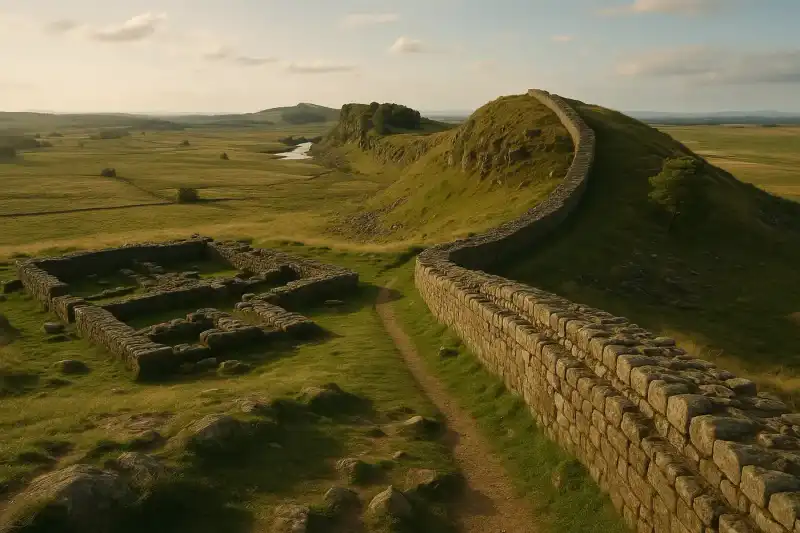
Hadrian's Wall Travel Guide 2026: Best Sections, Roman History, and Practical Planning
Roman BritainPlan a UK frontier-heritage day at Hadrian's Wall with clear section priorities, practical one-day r...
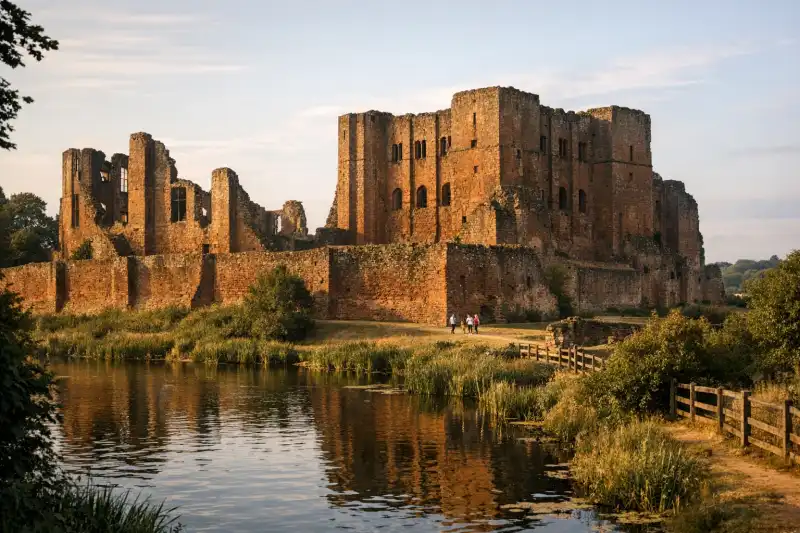
Kenilworth Castle
Norman and medieval EnglishExplore Kenilworth Castle in the United Kingdom, a vast medieval fortress famed for royal drama, Eli...
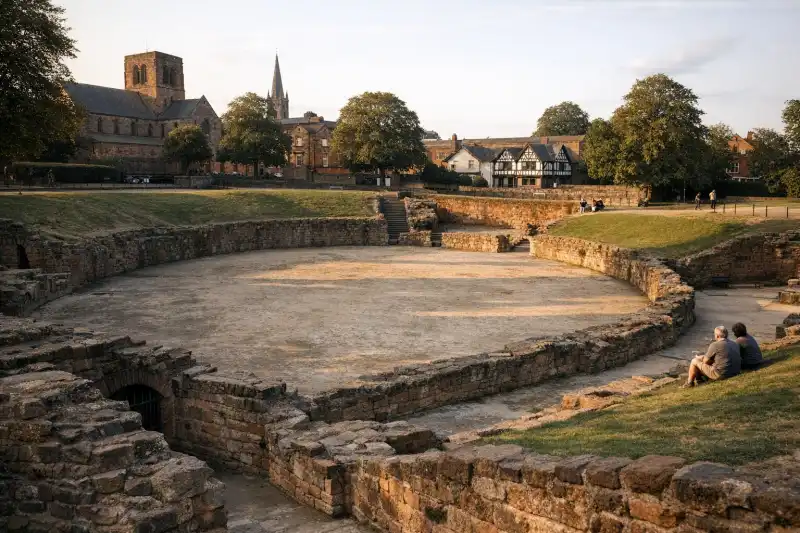
Chester Roman Amphitheater
Explore Chester Roman Amphitheater in the United Kingdom, the largest known Roman amphitheater in Br...