Quick Info
At a glance
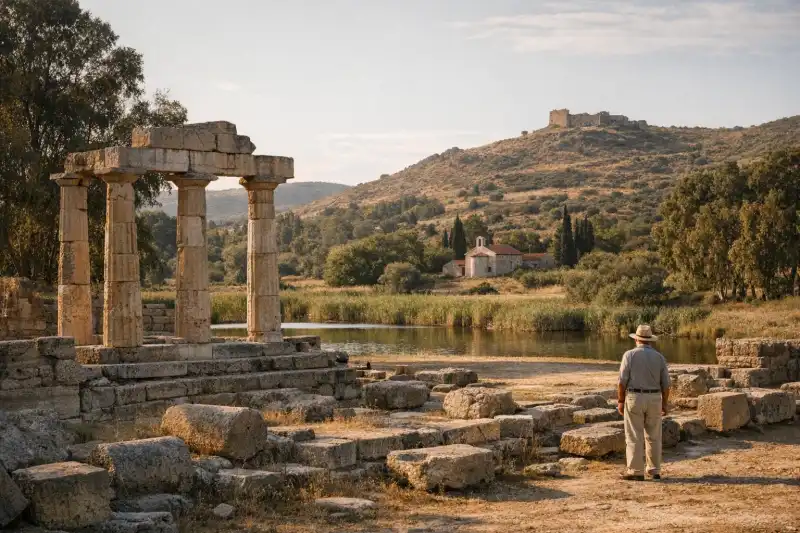
Vravrona in Greece is one of the most quietly moving ancient places in Attica, a sanctuary where archaeology, myth, and landscape still feel inseparable. Less famous than the Acropolis yet deeply rewarding, this site unfolds beside reeds, low hills, and a small river plain near the eastern coast of Attica, creating an atmosphere very different from the marble-crowned monuments of central Athens. Here, the remains of the Sanctuary of Artemis Brauronia lie within a setting that preserves something of the site’s original character: a liminal environment between land and water, cultivated plain and sacred precinct, everyday life and ritual experience.
For travelers interested in ancient religion rather than only monumental architecture, Vravrona offers a rare sense of intimacy. It was a place especially associated with Artemis, goddess of the wild, the hunt, childbirth, and transition, and it became famous in antiquity for rites involving young girls who served the goddess before marriage. The surviving ruins do not overwhelm by scale, but they reward slow looking. A long stoa, a small stone bridge, sacred water, architectural fragments, and the nearby museum together help visitors imagine how this sanctuary once functioned as both a local and pan-Attic place of devotion. Because it sits outside the modern urban center, Vravrona also makes an ideal excursion for those who want to combine ancient history with a calmer excursion into the countryside of Greece.
History
Early cult and sacred origins
The history of Vravrona begins long before the surviving classical ruins. The area was inhabited from prehistoric times, and archaeologists have found evidence that the surrounding plain had significance in the Bronze Age. By the early first millennium BCE, the site had become associated with the worship of Artemis in her local form as Artemis Brauronia. This local cult eventually grew into one of the best-known sanctuaries in Attica outside Athens itself.
The sanctuary’s setting helps explain its importance. In Greek religion, places near springs, marshes, river mouths, and edges of cultivated land often attracted cult activity because they felt set apart from ordinary civic space. Artemis, in particular, was a deity of thresholds: between wilderness and city, childhood and adulthood, danger and protection. At Vravrona, her cult seems to have been tied both to the natural environment and to rites of passage, especially for girls approaching marriageable age.
Ancient literary traditions also connected Brauron with myth. One strand linked the sanctuary to Iphigenia, the daughter of Agamemnon, who in some versions of the story was rescued by Artemis and brought to this region. Such myths reinforced the sanctuary’s sacred prestige and gave it a place within the wider imaginative world of Greek heroic legend.
Archaic and Classical flourishing
Vravrona reached particular prominence during the Archaic and Classical periods. By the 6th century BCE, the sanctuary had acquired monumental structures and a more formal layout. The Athenians, who integrated local Attic cults into their wider religious and political identity, promoted Brauron as an important sacred center. One reason was the sanctuary’s role in the ritual life of Attica. Girls known in ancient sources as “arktoi,” or “little bears,” took part in ceremonies here, likely involving symbolic performances, offerings, and transitional rites before adulthood.
The exact details of these rituals remain debated, but the evidence is clear enough to show that Vravrona was not simply a remote shrine. It was woven into family, civic, and gendered religious practice. Dedications found at the site include garments, reliefs, statues, and personal offerings, many connected to female life, childbirth, and protection. Artemis at Brauron was a guardian not only of the wild but also of women and children during vulnerable stages of life.
Architecturally, the sanctuary developed around a central sacred area, with a notable stoa and facilities that suggest both ritual use and the accommodation of visitors or participants. The site’s marshy conditions also influenced its layout, and water remained a central feature of its religious character. In the 5th century BCE, when Athens was at the height of its power, Brauron’s sanctuary shared in the broader prosperity and cultural energy of the region.
Hellenistic adaptation and Roman continuation
Like many Greek sanctuaries, Vravrona did not remain static. In the Hellenistic period, political conditions shifted, but pilgrimage, local devotion, and traditional cult practice often continued with adjustments rather than abrupt breaks. The sanctuary appears to have remained active, though perhaps with changing patterns of patronage and use. New repairs and modifications likely responded both to practical needs and to evolving religious customs.
Under Roman rule, many Greek sanctuaries retained significance as places of memory, local identity, and traditional worship. Vravrona seems to have continued in use into the Roman era, although not necessarily with the same intensity as in earlier centuries. The persistence of cult at such places often depended on local attachment, economic circumstances, and the extent to which elites invested in restoration or display.
Natural forces also shaped the site’s fate. Flooding and silting in the river plain likely affected accessibility and preservation over time. Sanctuaries founded in fertile but unstable environments could flourish for centuries and then become vulnerable to environmental change. At Vravrona, that interaction between sacred architecture and shifting landscape remains one of the keys to understanding both its rise and its gradual decline.
Rediscovery and modern archaeology
In modern times, Vravrona emerged from relative obscurity through archaeological research that clarified its importance within the sacred geography of Attica. Excavations identified the sanctuary’s major structures, recovered dedications, and helped reconstruct the role of Artemis Brauronia in Athenian religious life. The finds also illuminated the social world of ancient women and children in ways that many larger political monuments do not.
Today, Vravrona is valued not only as an archaeological site but as a place where scholars and visitors can better understand the diversity of ancient Greek religion. It offers a more textured and human counterpart to the grand civic centers of Athens. Rather than power alone, Vravrona speaks of ritual, family devotion, local landscape, and the emotional dimensions of worship in ancient Greece.
Key Features
The most memorable feature of Vravrona is the way the site sits in its natural setting. Unlike an acropolis or fortified hilltop, this sanctuary opens low across the plain, with mountains in the distance and wetland vegetation nearby. The atmosphere can feel almost pastoral, and that sense of environmental continuity is essential to the experience. Even before focusing on individual ruins, visitors often notice how plausible the place still feels as a sacred landscape. Artemis did not belong only to temples; she belonged to edges, waters, and uncultivated zones, and Vravrona preserves that association better than many other sanctuaries.
Among the architectural remains, the stoa is one of the most significant. Its plan helps visitors understand how the sanctuary functioned, not simply as a symbolic sacred point but as an active ritual complex. Stoas in Greek sanctuaries could frame movement, provide shelter, organize ceremonial space, and create a setting for offerings or gatherings. At Vravrona, the stoa gives shape to the sanctuary and invites you to imagine processions, waiting participants, priests, and families arriving with dedications. Even in ruin, the geometry of the structure suggests order within a landscape otherwise defined by water and open ground.
Another striking feature is the small stone bridge, often one of the most photographed elements of the site. Though modest compared with famous monuments elsewhere in Greece, it adds a vivid practical and symbolic dimension. It reminds visitors that sacred places were lived spaces, requiring movement across streams and uneven terrain. The bridge also reflects the sanctuary’s dialogue with water. Crossing toward a sacred precinct can itself be meaningful, and here the physical act would have reinforced the sense of entering a protected ritual zone.
The sacred spring and watery environment are crucial for understanding Vravrona’s identity. Springs and marsh-adjacent spaces carried strong associations in Greek cult, especially in sanctuaries connected with purification, fertility, and liminality. At Vravrona, the proximity of water may have shaped not only ritual practice but the very emotional tone of the cult. Pilgrims coming here would have encountered a place that felt fertile, transitional, and slightly outside ordinary civic order. That atmosphere survives in subtle ways even now.
The museum is another essential part of the visit, because many of Vravrona’s most revealing treasures are small, personal, and easily overlooked without context. Votive reliefs, inscriptions, sculptural fragments, and dedications offer evidence of who came here and why. One of the most moving aspects of the collection is its testimony to female experience in antiquity. Objects related to childhood, dress, and childbirth underscore the sanctuary’s role in marking life passages. This makes Vravrona especially important for travelers who want to move beyond the military and political focus that often dominates ancient history itineraries.
Artistic fragments from the sanctuary also show the quality of devotion invested here. While Vravrona was never meant to rival the Acropolis in scale, it still attracted substantial offerings and carefully made architecture. The cumulative effect is not grandeur in the usual sense, but significance. The site reveals how central local sanctuaries were to Greek religious life, and how a place could be both regionally embedded and mythically resonant.
Finally, one of Vravrona’s greatest features is precisely its relative quiet. Because it is often visited as a half-day trip rather than a crowded marquee attraction, there is space to observe details, hear birds from the wetland, and think about how ancient sanctuaries worked as environments rather than as isolated buildings. For many travelers, that slower rhythm becomes the most memorable aspect of all.
Getting There
Vravrona is located in eastern Attica, relatively close to Athens and not far from Athens International Airport, making it one of the easiest lesser-known ancient sites to reach on a short excursion. By car, the journey from central Athens usually takes around 45 minutes to 1 hour, depending on traffic. From the airport, the drive can be as short as 20 to 25 minutes. A rental car gives the greatest flexibility, especially if you want to combine Vravrona with nearby coastal stops. Fuel costs for a round trip from Athens are modest, often around €10 to €18 depending on vehicle type and route.
Taxis are a straightforward option if you prefer not to drive. From central Athens, expect a one-way fare generally in the range of €35 to €55, while from the airport the fare may fall around €25 to €40. Prices vary by time of day, luggage, and booking method. For travelers in a small group, this can be a practical and time-efficient choice.
Public transport is possible but less seamless. Bus connections from Athens toward Markopoulo or eastern Attica can be used in combination with a local taxi for the final stretch. Depending on the route, total public transport costs may be about €5 to €12 per person one way, though travel time is longer and schedules may require patience. If using buses, check current KTEL or regional timetable information before departure.
Many visitors choose to visit Vravrona as part of a private day tour from Athens. This is especially useful if you want historical interpretation included and do not want to navigate local transport logistics yourself.
When to Visit
The best time to visit Vravrona is spring or autumn, when Attica’s light is gentle, the landscape is greener, and temperatures are comfortable for walking outdoors. From March to May, the surrounding plain and wetland area are especially pleasant, and the softer weather makes it easier to spend time both at the ruins and in the museum. Spring is ideal if you want to appreciate the environmental side of the sanctuary rather than rush through it in heat.
Autumn, especially September through early November, is another excellent season. The sea remains relatively warm nearby, summer crowds elsewhere in Greece begin to thin, and daylight is still generous. This can be one of the most balanced times to combine Vravrona with a broader Athens itinerary.
Summer is certainly possible, and the site’s proximity to the coast can make it attractive as part of a beach-and-archaeology day. However, midday heat in June, July, and August can be intense, with temperatures often climbing above 32°C. If visiting in summer, aim for early morning or late afternoon, bring water, and wear sun protection. The open nature of the site means shade can be limited.
Winter offers a quieter and sometimes dramatic experience, with moody skies and fewer visitors. Rain is more likely, and damp conditions may make the landscape feel more marshy, but that can also emphasize the sanctuary’s original environmental character. Whenever you go, weekday mornings are usually the calmest times for an unhurried visit.
| Quick Facts | Details |
|---|---|
| Location | Vravrona (Brauron), Attica, Greece |
| Main significance | Sanctuary of Artemis Brauronia |
| Historical peak | Archaic and Classical periods |
| Distance from Athens | დაახლოებით 35–40 km / about 45–60 minutes by car |
| Nearest major hub | Athens International Airport |
| Recommended visit length | 1.5 to 3 hours |
| Best seasons | Spring and autumn |
| On-site highlight | Stoa, stone bridge, sacred landscape, museum |
| Ideal for | Ancient religion, archaeology, quieter day trips from Athens |
Vravrona rewards a different kind of traveler: one willing to slow down, read the landscape, and imagine ritual as something embedded in ordinary terrain rather than separated from it. It may not have the overwhelming fame of Athens’s central monuments, but that is part of its power. Here in Attica, the ancient Greek world feels less like a series of textbook masterpieces and more like a lived sacred geography, shaped by water, memory, local custom, and devotion. For anyone interested in understanding Greece beyond its most photographed ruins, Vravrona is one of the most eloquent places to go.
Guided tours: worth it?
You can visit Vravrona independently, but a guide can help connect the most important objects to the wider ancient landscape instead of turning the visit into a long label-reading session.
Best for
- Trips where tickets, circuits, or timed entry can shape the day
- Museum-plus-site days where the collection needs context
- Short visits where a planned route saves time
When to go self-guided
Go independently if you prefer setting your own pace, reading as you go, and checking official hours or ticket rules directly before you arrive.
What I’d avoid
Skip paid tours that bundle unrelated stops you do not actually want. The best option should either save meaningful planning time or add historical context you would miss on your own.
Vravrona Greece Tours
Useful when: you want to compare guided formats before deciding
Athens to Vravrona Day Trips
Useful when: transport or pickup logistics matter
Archaeological Museum of Vravrona Tours
Useful when: you want to connect a site and museum visit
Some tour links are affiliate links, which may earn Ancient Travel a small commission at no extra cost to you. I try to surface options that make practical sense for the site—not just anything bookable.
Frequently Asked Questions
What is Vravrona known for?
Vravrona is best known as the Sanctuary of Artemis Brauronia, an important ancient religious center in Attica associated with rituals for girls, sacred springs, and a beautifully preserved archaeological landscape.
How far is Vravrona from Athens?
Vravrona is roughly 35 to 40 kilometers from central Athens, depending on your starting point, and the drive usually takes about 45 minutes to one hour in normal traffic.
Is there a museum at Vravrona?
Yes. The Archaeological Museum of Vravrona displays finds from the sanctuary and surrounding region, including votive offerings, reliefs, statues, and objects linked to the cult of Artemis.
Can you visit Vravrona without a car?
Yes, but it is easier with a car or taxi. Public transport is possible from Athens via suburban routes toward eastern Attica, though schedules and final connections can be less convenient than driving.
How much time do you need at Vravrona?
Most visitors spend 1.5 to 3 hours exploring the sanctuary, stoa, small bridge, sacred spring area, and museum, with extra time if you want to enjoy the surrounding wetland landscape.
Is Vravrona suitable for families?
Yes. The site is manageable in size, visually interesting, and close to open natural scenery, making it a good family-friendly excursion from Athens when paired with the museum.
Nearby Ancient Sites
Acropolis Travel Guide 2026: Parthenon, Tickets, and Best Time
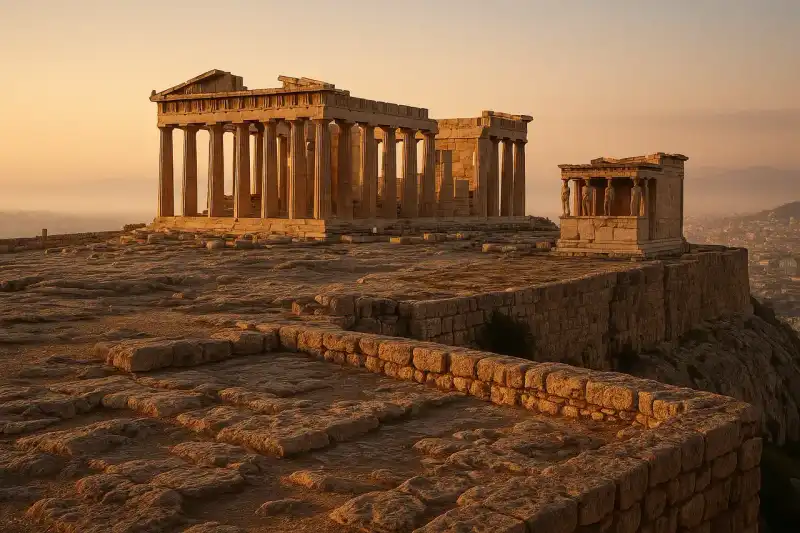
Ancient GreecePlan an efficient Acropolis visit with practical ticket timing, key monuments, and museum pairing ti...
The Complete Acropolis Athens Travel Guide: Temples
Ancient GreecePlan the perfect visit to the Acropolis of Athens with our 2026 guide. Discover the Parthenon, best ...
Ancient Agora of Athens Travel Guide 2026: Route, Tickets, and Context
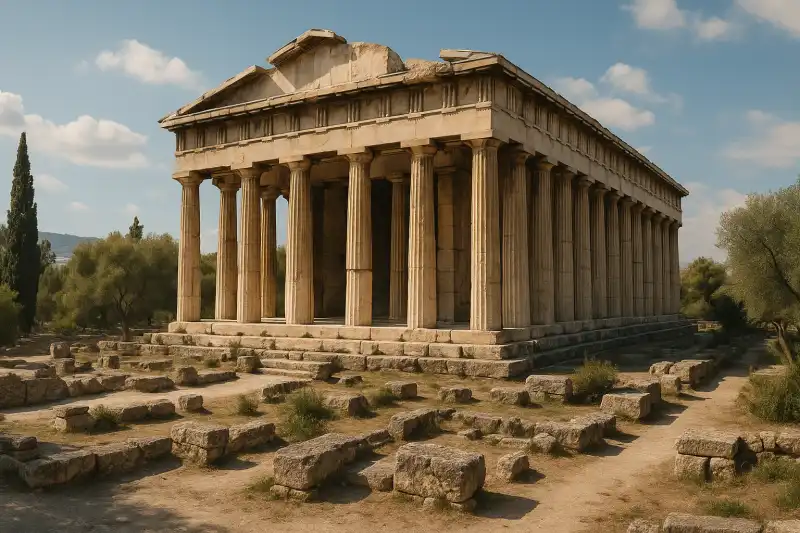
Classical GreekPlan a better Ancient Agora visit with practical timing, monument priorities, and clear historical c...