Quick Info
Curated Experiences
Ayacucho & Wari Archaeological Day Tour
Andean Heritage Private Tour from Cusco
Peru Archaeology Full-Day Experience
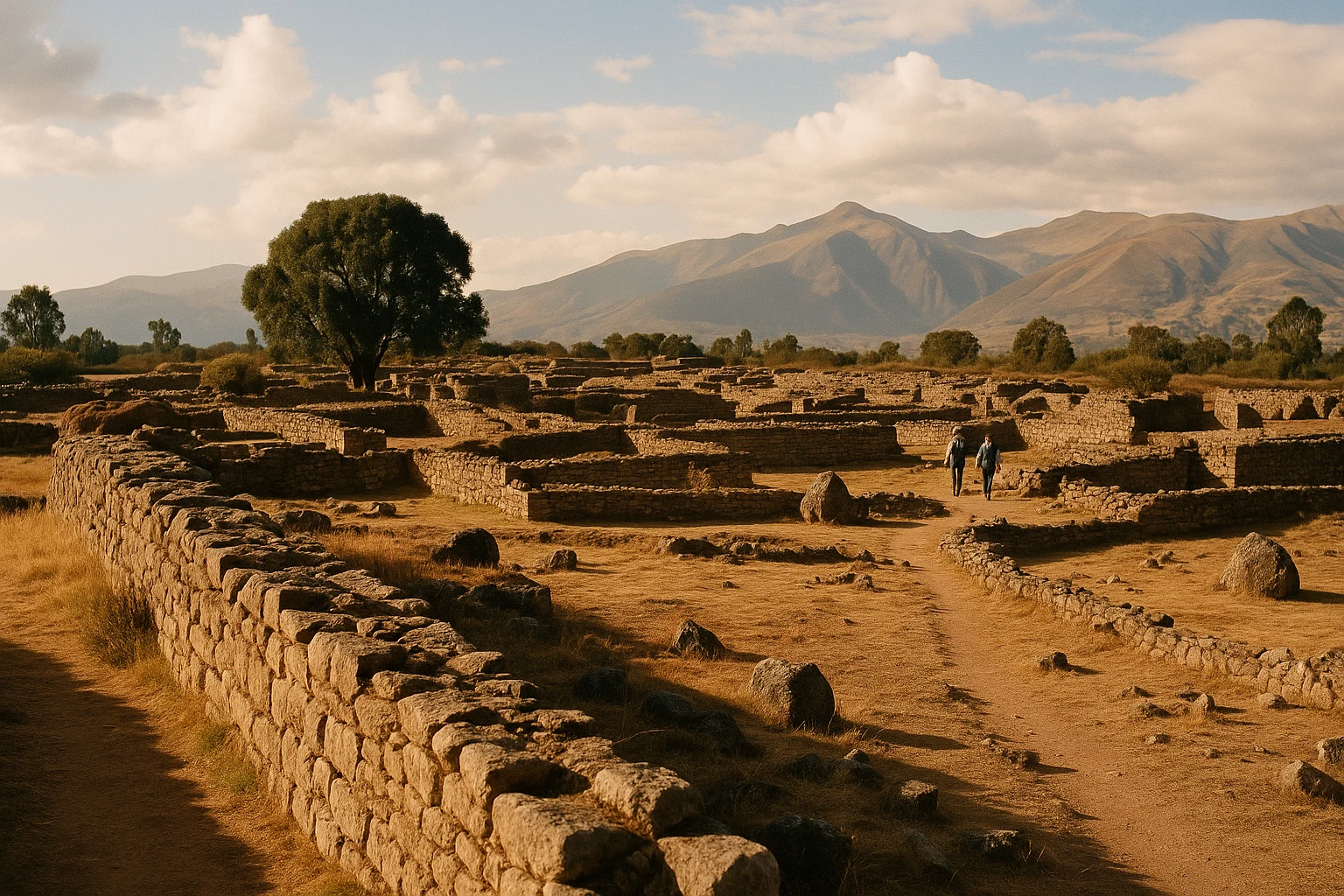
The first thing that strikes you at Wari in Peru is not a single monumental temple rising above the horizon, but a city logic written in stone: compounds nested within compounds, corridors that narrow deliberately, terraces that shape movement, and elevated sight lines that make clear this was a capital built to govern. Long before the Inca consolidated power from Cusco, the Wari state engineered one of the Andes’ earliest expansive imperial systems, projecting authority across mountains, coasts, and valleys through roads, colonies, and administrative planning. Walking the archaeological complex near modern Ayacucho, you are not looking at an isolated ruin. You are looking at the infrastructure of an empire that helped define what Andean statecraft could be.
That is what makes Wari so rewarding for travelers willing to look past postcard expectations. This is a site for people who want to understand how power was organized in pre-Columbian South America: how cities functioned, how territory was controlled, and how architecture could shape social order. In this guide, you will get the historical timeline, a monument-by-monument reading of the key sectors, practical transport and ticket logistics from Ayacucho, seasonal planning tips, and a realistic half-day itinerary that combines Wari with nearby cultural stops.
History: The Andean State Before the Inca
Local foundations and regional experiments (c. 200 BCE-550 CE)
Before Wari became the capital of an expansionist polity, the Ayacucho highlands were shaped by earlier societies including the Huarpa culture, whose settlements developed around terrace agriculture, local exchange, and ritual landscapes. Archaeological evidence suggests a long period of experimentation in settlement organization and ceramic style, rather than a sudden political revolution. Interaction with highland and coastal groups intensified over time, and elite coordination became more visible in architecture and craft specialization. By the 5th and early 6th centuries CE, the conditions existed for a new level of political centralization in the basin.
Rise of the Wari capital (c. 550-750 CE)
From around the mid-6th century CE, the Wari state transformed the zone into a planned urban center often estimated at well over 1,000 hectares in its broad metropolitan footprint. The city was divided into walled sectors, with restricted compounds likely tied to administration, craft production, storage, and elite activity. Standardized ceramics and architectural conventions began appearing far from Ayacucho, indicating that Wari influence spread through formal colonies, strategic enclaves, and alliances rather than through one single mode of conquest. This period marks one of the clearest early cases of state-level territorial management in the Andes.
Imperial integration across the Andes (c. 750-950 CE)
At its height, Wari-linked installations appeared across much of what is now Peru, from highland corridors to coastal regions. Scholars debate the exact mechanisms of rule, but broad agreement holds that Wari built durable administrative networks that connected provinces to core authority. Distinctive road engineering, storage infrastructure, and orthogonal planning recur at major affiliated sites. Religious ideology also traveled with state presence, visible in iconography tied to the Staff God tradition and other shared ritual motifs. Wari power was never uniform everywhere, yet the scale of coordination was unprecedented for its era.
Fragmentation, transition, and legacy (c. 950-1200 CE)
By the late 10th century CE, many Wari centers show contraction, reduced elite construction, and eventual abandonment of major compounds. The causes were likely multiple: political stress, ecological pressure, shifts in exchange patterns, and regional realignments. What did not disappear was institutional memory. Later Andean polities inherited landscapes already marked by roads, storage concepts, and administrative precedent. When the Inca later developed their own imperial system, they did so in a world where Wari had already demonstrated that large-scale coordination across ecological zones was possible.
Modern rediscovery and archaeological research (20th century-present)
Although local communities always knew these ruins, systematic archaeological study accelerated in the 20th century, with major survey and excavation campaigns refining chronology and urban interpretation. Work at sectors such as Vegachayuq Moqo and Monqachayuq has illuminated construction techniques, social zoning, and evidence for state-managed activities. Ongoing analysis of ceramics, human remains, and isotopic data continues to sharpen the story of migration, administration, and ritual practice. Wari today remains one of the key laboratories for understanding how early Andean empires formed, governed, and eventually transformed.
The Key Monuments: What to See at Wari
Vegachayuq Moqo sector
The best introduction to Wari’s urban intelligence is Vegachayuq Moqo, a dense cluster of stone compounds and enclosed pathways that quickly dispels the idea of random ruin scatter. Walls are not simply boundaries; they are instruments of control, guiding circulation and creating nested thresholds between public movement and restricted access. Archaeologists interpret this sector as a major administrative and residential zone with high-status architecture and possible storage functions nearby. As you move through the excavated areas, look for repeated planning modules that suggest standardized construction teams and centralized design principles.
From a photography standpoint, morning light is excellent here because low-angle sun clarifies wall alignments and shadow depth. Wide shots from slightly elevated points help reveal the geometric planning that is harder to perceive at ground level. If you carry a longer lens, isolate doorway alignments and corner joins to capture the site’s disciplined masonry logic.
Monqachayuq and funerary architecture
The Monqachayuq area is especially important for travelers interested in social hierarchy and ritual practice. Excavations have identified contexts linked to elite and possibly ceremonial use, including sectors interpreted as funerary or mortuary-related spaces. Even where preservation is partial, you can still read how spatial segregation worked: some compounds prioritize privacy and controlled access, while adjacent spaces appear more functional and service-oriented. This contrast supports the broader interpretation of Wari as a city where governance, ritual, and daily labor were deeply interwoven.
Interpretive signage can vary in depth depending on current conservation phases, so a local guide is often worth the cost if you want detailed context. The best visual compositions here come from oblique angles that show elevation shifts between adjacent walls. Shoot after light cloud cover when stone textures are visible without harsh glare.
Cheqowasi and storage-administration zones
In and around sectors often grouped under names like Cheqowasi, travelers can observe architectural evidence for the practical machinery of state power: enclosed units suited to storage, controlled passageways, and distribution-linked layouts rather than purely ceremonial design. Whether every room served a single fixed function remains debated, but the recurring logic of compartmentalization strongly suggests organized provisioning systems. In an Andean context where vertical ecological exchange was essential, managing goods moving between zones was political power in material form.
This part of Wari rewards patient looking more than quick sightseeing. Stand still for a few minutes at corridor intersections and imagine movement protocols: who was allowed through, what was carried, and where records were probably kept in quipu-like administrative systems now archaeologically invisible. Mid-morning is ideal because wind is usually lighter, making both photography and close reading of low wall lines easier.
Site museum and interpretive context
The archaeological museum associated with Wari is the bridge between fragmented architecture and imperial narrative. Here, ceramics, lithics, and explanatory models help decode what you saw outside: standardized vessel forms tied to administration, iconography connected to state religion, and maps situating Wari among related centers across Peru. For many visitors, this is where the site shifts from “interesting ruins” to an intelligible political project. If museum galleries are partially closed during conservation, even a short visit still adds critical context for chronology and style.
Plan museum time before or immediately after the open-air circuit so details stay fresh. If you are documenting your trip, photograph labels (where permitted) and sketch quick notes on sector names; Wari terminology can blur after a long day unless you anchor it immediately.
The surrounding highland landscape and strategic views
One of Wari’s strongest arguments is geographic: from nearby rises, you can see how the city sat within a network of valleys and routes that linked highlands to broader exchange corridors. These views are not just scenic add-ons. They explain why an imperial capital emerged here, and why controlling movement mattered. The relationship between built compounds and natural topography reveals a planning philosophy that fused defense, administration, and communication.
Late afternoon can be spectacular for broad landscape shots when clouds break and soft light spreads across terraces and ridgelines. Keep in mind that weather shifts quickly in Ayacucho’s highlands; carry a light shell even on seemingly clear days.
Getting There: Transportation and Access
Wari is close enough to Ayacucho for an easy half-day outing but far enough that planning your return transport in advance makes the visit smoother.
From central Ayacucho
From Plaza Mayor and surrounding districts, the most straightforward option is taxi or pre-arranged driver. Travel time is typically 35-50 minutes, depending on traffic and exact drop-off point.
- Taxi (most practical): 35-60 PEN ($9-16 USD) one way; agree on waiting time or return pickup before departure.
- Shared transport/collectivo: 8-15 PEN ($2-4 USD) when available on relevant corridor routes; service is cheaper but less predictable for fixed return timing.
- Rental car: 140-220 PEN ($37-58 USD) per day plus fuel; useful if combining Wari with Quinua and Pampa de Ayacucho in one loop.
From Ayacucho airport (Coronel FAP Alfredo Mendívil Duarte)
If you arrive same day and want to visit immediately, route via your hotel or direct to Wari depending on luggage and timing.
- Airport taxi to Wari area: 55-90 PEN ($15-24 USD), around 45-65 minutes depending on city traffic.
- Airport to city, then onward taxi: often simpler for logistics; split journey if you need cash, snacks, or layers.
- Private driver/full-day circuit: 260-420 PEN ($69-111 USD) depending on vehicle and stops; best for travelers who prefer one booking.
Practical Information
Admission and Hours
Wari generally charges a modest entrance fee, commonly around 10-15 PEN ($3-4 USD), though local policies and student rates can change, so confirm at your hotel or with your guide the night before. Card terminals are inconsistent; carry cash in small denominations. Typical visiting hours are approximately 9:00 AM to 5:00 PM, with best on-site conditions in the first two hours after opening or after about 3:00 PM when sun intensity drops. Unlike some Cusco circuits, Wari is not reliably bundled into a broad regional pass, so expect to pay on site.
What to bring
- Sun protection: UV is strong at altitude even on cool days; bring hat, sunscreen, and sunglasses.
- Water: At least 1 liter per person for a half-day visit.
- Footwear: Closed, grippy shoes for uneven stone and dusty paths.
- Layers: Morning can feel cool, midday warm, and wind can pick up quickly.
- Cash: Small bills for entry, snacks, and transport changes.
Dress code and etiquette
There is no strict formal dress code, but practical and respectful attire is best: comfortable layers, covered shoulders for sun exposure, and shoes suited to rough terrain. Avoid climbing on fragile walls or entering restricted sectors for photos. Many local visitors have deep regional pride in Wari; treating the site as living heritage, not a backdrop, goes a long way.
Accessibility
Wari presents moderate mobility challenges due to uneven surfaces, low walls, and variable pathways. Some viewpoints can be reached with limited walking, but full exploration is difficult for wheelchair users without assistance. Travelers with reduced mobility may benefit from visiting the museum first and then selecting only the flattest external sectors with a driver-assisted route.
When to Visit: Seasonal Considerations
Spring (September-November)
Temperatures are often comfortable, roughly 10-22°C (50-72°F), with increasingly green highland surroundings after early seasonal moisture. Crowds are usually light to moderate, and visibility is often strong in the mornings. This is a very good balance period for travelers who want clear views without peak holiday density. Start early, then layer up for wind by late afternoon.
Summer (December-February)
Summer brings the wettest phase in the Ayacucho region, with daytime ranges around 9-21°C (48-70°F). Crowd levels remain manageable compared with Peru’s major icons, but rain and cloud can interrupt long open-air sessions. Paths may become slick, and afternoon showers are common. Bring waterproof outerwear and prioritize morning visits when weather is typically steadier.
Autumn (March-May)
Autumn is often the ideal season at Wari: fresh post-rain landscapes, clearer skies, and temperatures near 9-22°C (48-72°F). Crowd pressure is usually low, making it easier to experience the site quietly and photograph without interruptions. Light is particularly attractive in April and May, when stone textures read cleanly in morning and late-day sun.
Winter (June-August)
Winter is the driest season and offers crisp visibility, with daytime conditions around 7-21°C (45-70°F) and colder early mornings. This period sees more domestic travel around holiday windows, but Wari still feels spacious compared to Cusco’s busiest sites. Bring a warm layer for dawn departures and consider gloves for early starts. If you value reliable weather above all else, winter is excellent.
Combining Wari with Ayacucho
Wari works best as the anchor of a culturally dense half-day or full-day route from Ayacucho. A strong sequence begins with departure from the city around 8:00 AM, arriving at the archaeological complex by 8:45 AM before the sun gets strong. Spend roughly two hours moving through Vegachayuq Moqo and adjacent sectors, then pause for broader landscape views around 10:45 AM to understand how the capital controlled regional corridors. By 11:30 AM, continue to Quinua, the artisan town known for ceramics and whitewashed architecture, where workshops provide a practical bridge between ancient material culture and living craft traditions.
After lunch in Quinua around 1:00 PM, continue to the nearby Pampa de Ayacucho historic area by 2:00 PM for republican-era context that complements the deep-time perspective of Wari. This pairing gives you a rare narrative arc in a single day: pre-Inca imperial administration in the morning, local craft continuity at midday, and modern nation-making in the afternoon. Return to Ayacucho by 4:30 PM or 5:00 PM, in time for dinner near the historic center.
If you have less time, a focused Wari-only outing still works beautifully. Leave Ayacucho early, stay on site for 2.5 to 3 hours with museum context, and be back in the city before lunch. The key is securing return transport in advance so you are not negotiating logistics after your visit.
Why Wari Matters
Wari matters because it expands your sense of what Andean history looks like before the Inca name enters the conversation. Here, among disciplined walls and controlled corridors, you can see an earlier experiment in scale: a highland state learning how to organize labor, movement, storage, and ritual across difficult geography. The stones are quieter than those at Peru’s blockbuster sites, but their argument is just as powerful. They tell you that empire in the Andes was not an isolated invention. It was a long historical process, and Wari was one of its defining architects.
For travelers, that makes this place unforgettable in a different register. You do not come only for spectacle. You come for structure, for continuity, for the feeling that historical time is layered under your feet in visible plans and invisible systems. By the time you return to Ayacucho, Wari has done what the best archaeological landscapes do: it has made the region larger in your mind, and your journey through Peru more coherent.
Quick Facts
| Attribute | Details |
|---|---|
| Location | Near Ayacucho, Peru |
| Ancient Name | Wari (Huari) imperial capital zone |
| UNESCO Status | Not individually inscribed; central to Peru’s pre-Inca heritage record |
| Established | c. 550 CE imperial capital |
| Distance from nearest hub | ~22 km from Ayacucho (35-50 minutes by road) |
| Entry Fee | Typically 10-15 PEN ($3-4 USD) |
| Hours | Usually around 9:00 AM-5:00 PM |
| Best Time | April-August, early morning for light and cooler temperatures |
| Suggested Stay | 2-3 hours on site; half day with museum and Quinua |
Explore More Peru
- Machu Picchu: Peru’s most iconic Inca citadel and essential contrast to pre-Inca state architecture.
- Sacsayhuaman: Monumental Inca masonry above Cusco, ideal for comparing imperial building traditions.
- Nazca Lines: A radically different archaeological landscape focused on ritual geoglyphs across the desert pampa.
- Chan Chan: The vast adobe capital of the Chimú, revealing another model of large-scale pre-Columbian governance.
Plan your complete route with our Peru Ancient Sites Guide. For trip design and logistics, read our Peru itinerary planning guide.
Frequently Asked Questions
How much time should I plan for Wari?
Plan 2-3 hours on site for the excavated sectors and viewpoints, and closer to half a day if you include the museum and nearby Quinua. If you enjoy archaeological detail, add extra time for the interpretation panels and topographic model. Most visitors pair Wari with Pampa de Ayacucho in one continuous route.
What is the best time of day to visit Wari?
Early morning is usually best for cooler temperatures, cleaner light on the stone walls, and fewer tour groups. Late afternoon can also be beautiful, especially in the dry season, but weather shifts faster in the highlands. Midday sun is strong at this altitude, so bring sun protection and water.
How do I get to Wari from Ayacucho?
Wari is roughly 22 kilometers northeast of central Ayacucho and is easiest by taxi or private driver. Typical one-way fares run about 35-60 PEN ($9-16 USD), with travel time around 35-50 minutes depending on traffic. Shared transport is possible but less predictable, so most travelers book a return taxi or guided circuit.
Is there an entry ticket, and does any pass cover Wari?
Wari generally uses a low-cost admission ticket sold at the site entrance, commonly around 10-15 PEN ($3-4 USD), though fees can change. There is no widely used national archaeological mega-pass equivalent to Cusco's BTC that consistently covers Wari. Carry small cash denominations because card acceptance can be unreliable.
What are the main highlights at Wari?
The most important features are the dense stone compounds in the Vegachayuq Moqo sector, evidence of planned urban zoning, and hilltop views that reveal why the city controlled regional movement. You will also notice unusually tight masonry, restricted-entry corridors, and storage architecture associated with state administration. The museum context helps make these fragments legible.
Is Wari safe to visit for independent travelers?
Yes, Wari is generally safe for independent travelers during daylight hours, especially when approached from Ayacucho on established routes. Standard precautions apply: keep valuables discreet, confirm return transport in advance, and carry layers for shifting highland weather. The site is quiet rather than crowded, which many travelers find ideal for focused exploration.
Nearby Ancient Sites
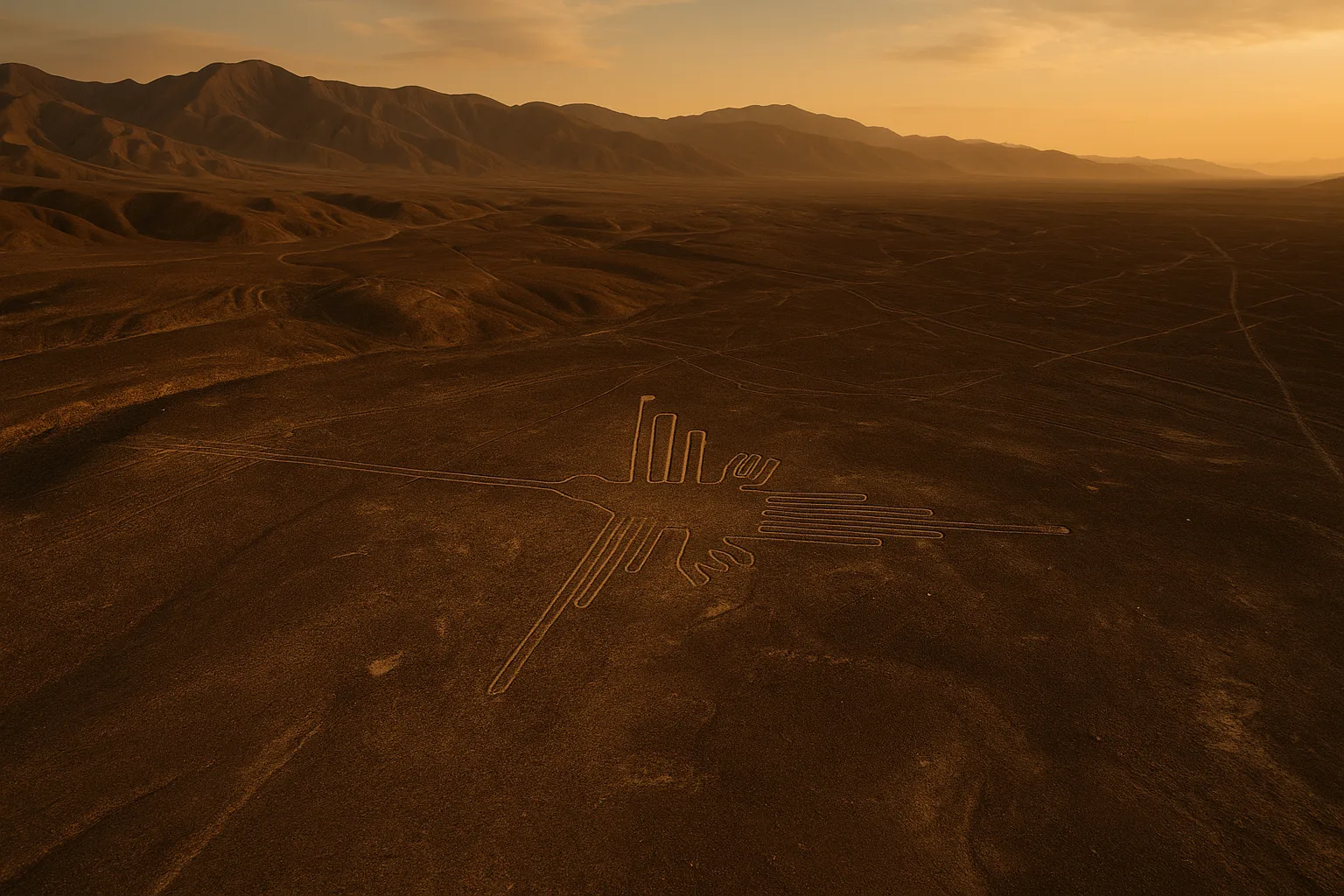
Nazca Lines Peru Guide 2026: Geoglyphs & Desert Mystery
NazcaExplore Peru's Nazca Lines: ancient geoglyphs etched in desert sand. Plan your overflight or land to...
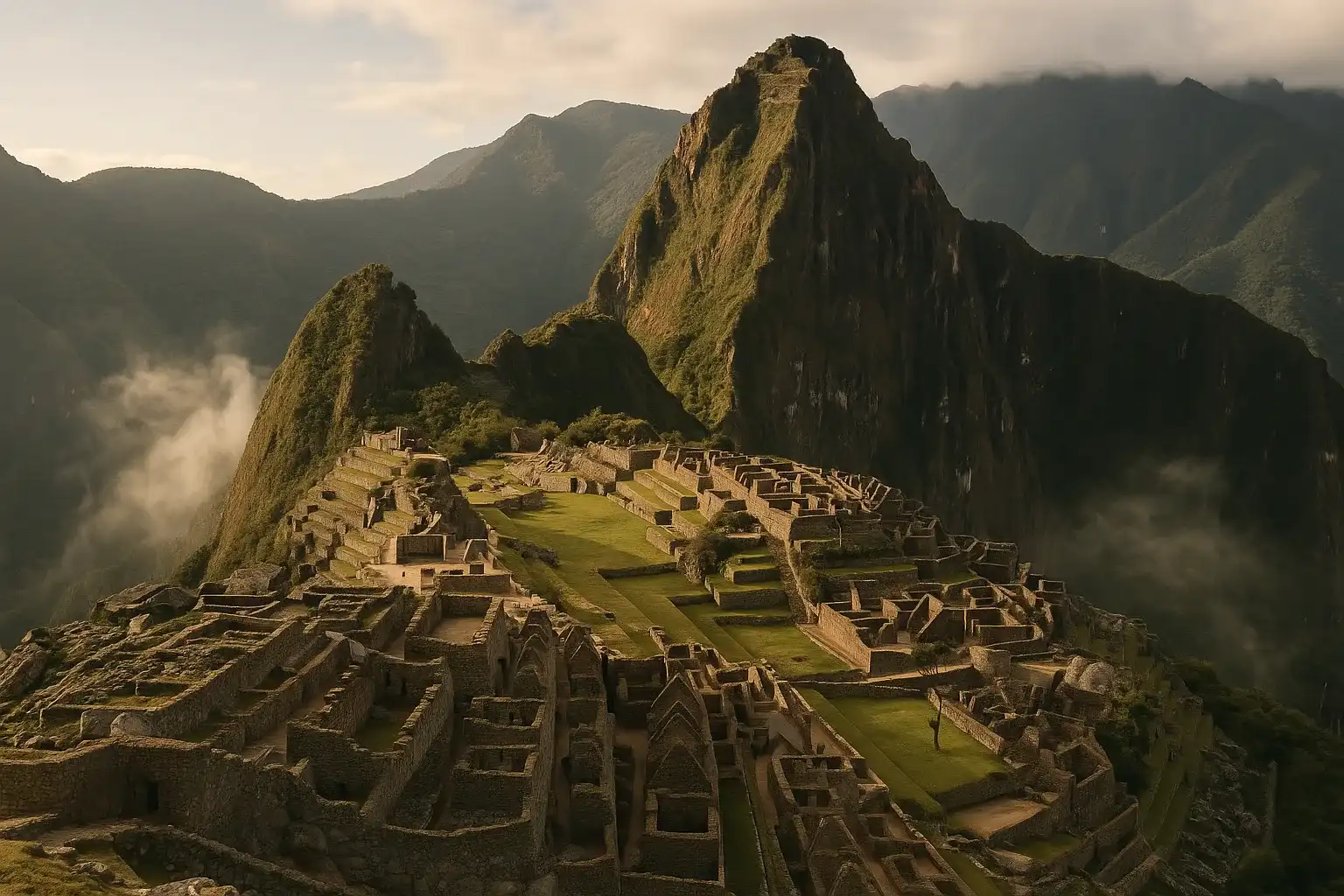
Machu Picchu Peru Travel Guide 2026: Circuits, Tickets & Entry Tips
Inca EmpireNavigate Machu Picchu's 2026 circuit system with our definitive guide. Learn how to choose your rout...
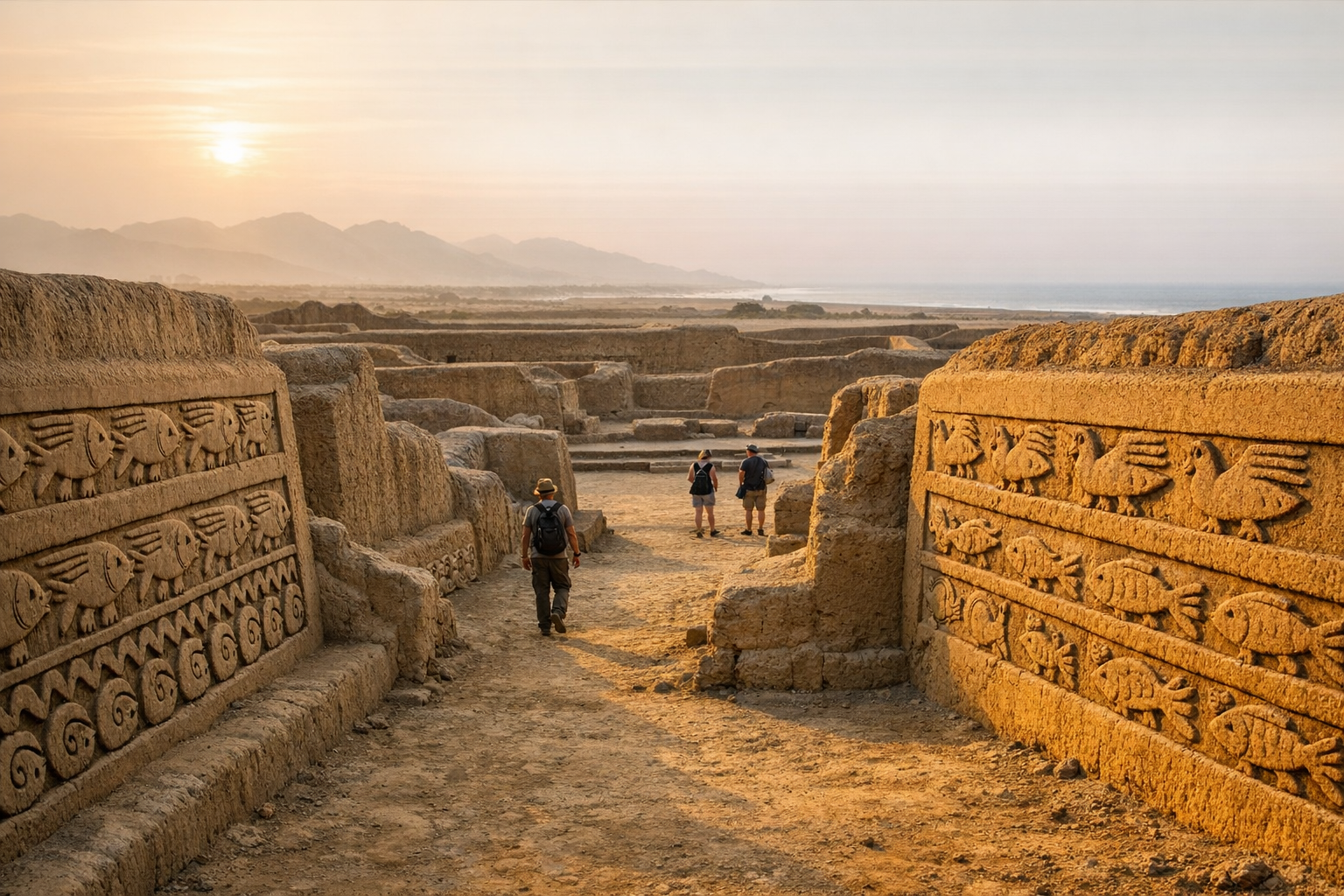
Chan Chan Peru Guide 2026: Chimu Capital & Adobe Citadels
ChimuExplore Chan Chan near Trujillo — the largest pre-Columbian city in the Americas. Discover the Chimu...
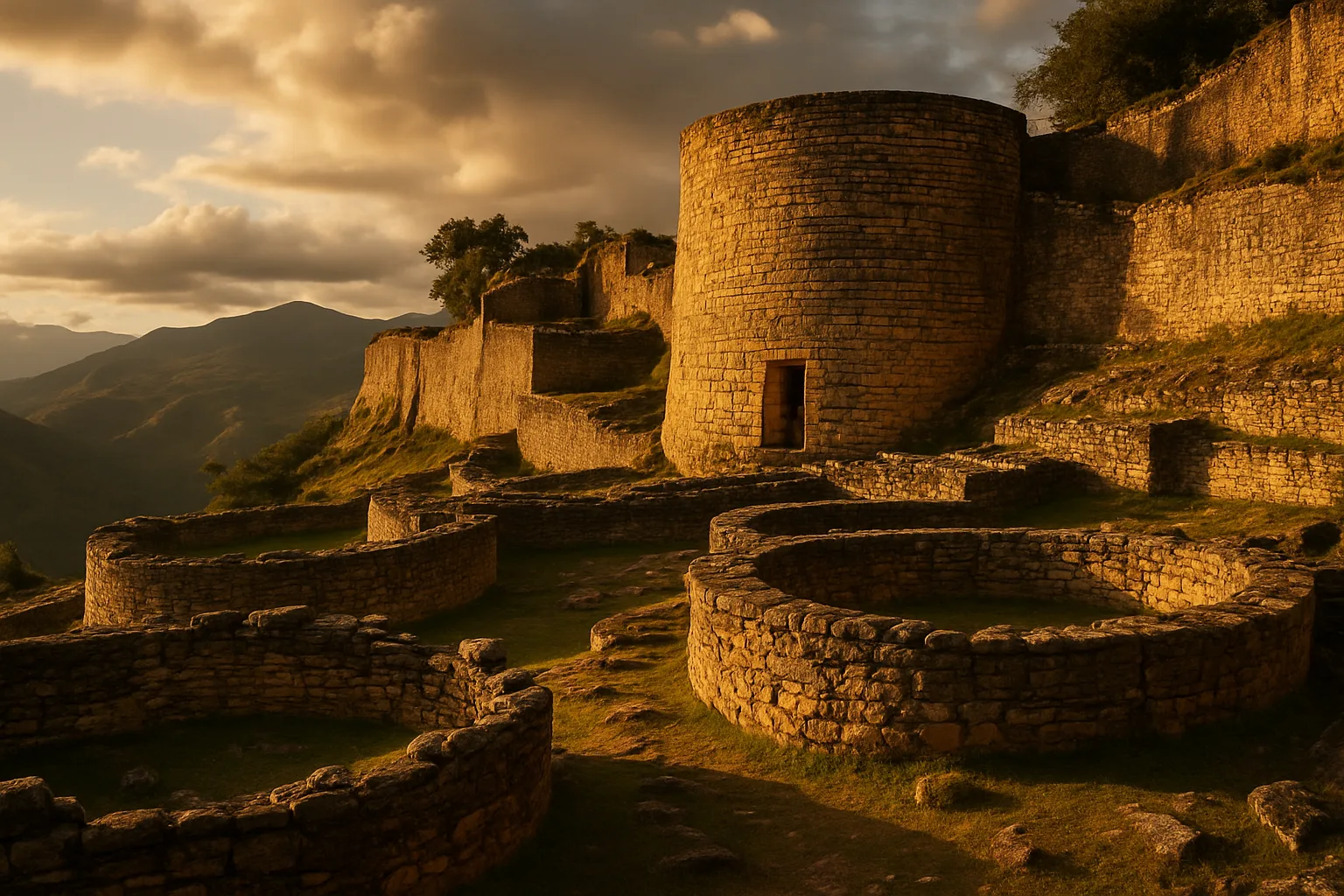
Kuelap Peru Guide 2026: Chachapoyas Cloud Fortress
ChachapoyasExplore Kuelap, the massive Chachapoyas cloud fortress in northern Peru. Reach it by cable car from ...