Quick Info
Curated Experiences
Ayutthaya Temples Tour Including Wat Chaiwatthanaram
Private Ayutthaya Historical Park Tour with Wat Chaiwatthanaram
Bangkok Day Trip to Ayutthaya and Wat Chaiwatthanaram
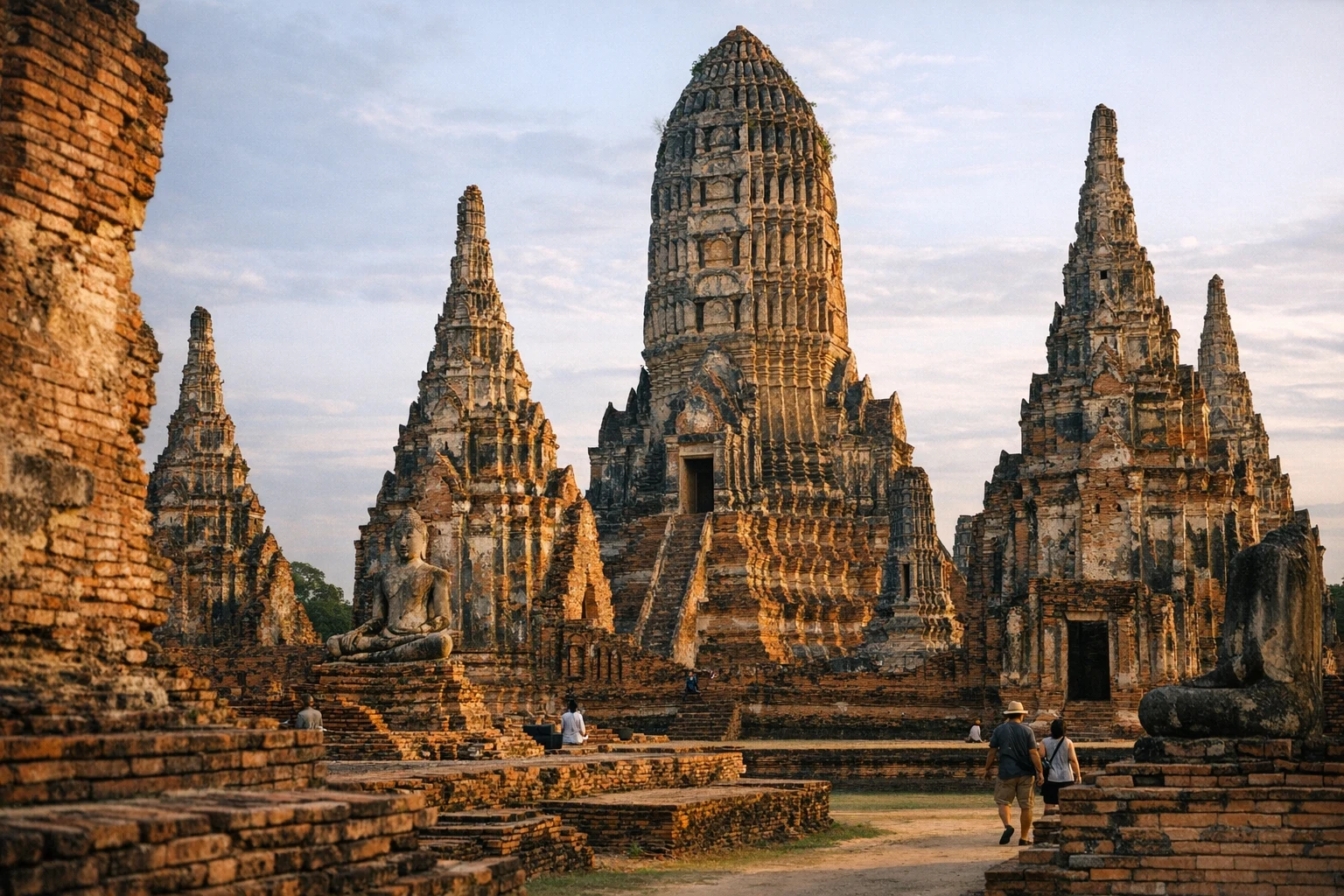
Wat Chaiwatthanaram in Thailand is one of the most striking temple ruins in Ayutthaya, a place where symmetry, river light, and royal ambition come together with unusual force. Standing on the west bank of the Chao Phraya River, just beyond the old island core of the former Siamese capital, the temple rises from the plain in a composition so balanced and theatrical that it still feels ceremonial even in ruin. The central prang dominates the skyline, smaller towers radiate around it, and long galleries frame the entire sacred scheme with an elegance that becomes more dramatic as the sun begins to lower. Many travelers first arrive because they have seen photographs taken at sunset, and those images are not misleading. But the temple’s appeal goes deeper than its silhouette. Wat Chaiwatthanaram is one of the clearest expressions of how the Ayutthaya court used architecture to project kingship, cosmology, and sacred legitimacy.
What makes the site especially compelling is its combination of severity and grace. The brick and stucco surfaces are weathered, many Buddha images were damaged or removed, and the structure bears the scars of war, neglect, and time. Yet the original design remains powerfully legible. Unlike some ruin fields that require imagination just to reconstruct the basic form, Wat Chaiwatthanaram still declares itself in geometry. Its axial plan, elevated terraces, and ring of towers communicate intention from the first glance. For visitors trying to understand Ayutthaya not merely as a city of disconnected temple ruins but as a royal and cosmological capital, this site is essential. It shows how architecture in the 17th-century kingdom could absorb Khmer precedent, Buddhist symbolism, and royal ideology into one unmistakable composition on the riverbank.
History
Ayutthaya and the Royal Landscape
Wat Chaiwatthanaram belongs to the later greatness of the Ayutthaya Kingdom, one of the most powerful and cosmopolitan states in mainland Southeast Asia. By the 17th century, Ayutthaya was not simply a regional capital but a major royal city with extensive trade networks, diplomatic relations, court ceremony, and a monumental sacred landscape shaped by Theravada Buddhism and royal patronage. Temples were central to how kingship was expressed. They served religious purposes, of course, but they also articulated legitimacy, memory, dynastic authority, and political symbolism.
The location of Wat Chaiwatthanaram on the river mattered from the beginning. Ayutthaya was a hydraulic and island-based city, and the placement of major temples around its water routes and ceremonial approaches helped define the capital’s visual and sacred order. This temple was not hidden inside a monastery quarter. It stood in a prominent location where architecture and riverine movement could reinforce one another. The result was a monument that worked as both a religious site and a highly visible statement of royal presence.
Foundation Under King Prasat Thong
Wat Chaiwatthanaram was built in 1630 by King Prasat Thong, one of the most significant rulers of 17th-century Ayutthaya. Historical interpretations vary somewhat, but the temple is commonly associated with royal merit-making and possibly with memorial intentions connected to the king’s mother or to dynastic concerns more broadly. Whatever the exact motive, the monument clearly belonged to the politics of kingship as much as to ordinary temple patronage. It was built on a scale and in a style that conveyed authority.
Architecturally, the temple is especially important because of its strong Khmer-inspired features. The central prang and surrounding tower arrangement evoke older models of sacred mountain symbolism, adapted into the Ayutthaya context. This does not mean the temple was a direct imitation of Angkorian forms, but it clearly drew on a regional vocabulary of monumental sacred kingship. In Ayutthaya, such architectural borrowing carried political weight. It placed the Siamese court in dialogue with older traditions of imperial and sacred legitimacy across mainland Southeast Asia.
Ritual Life and Dynastic Meaning
During the Ayutthaya period, Wat Chaiwatthanaram was an active royal temple and an important ceremonial site. It was likely used for state rituals, court observances, and religious functions tied closely to the monarchy. The temple’s design suggests both cosmological symbolism and processional use. The elevated platform, central tower, surrounding prangs, and cloistered galleries all contribute to a structured sacred environment in which movement, hierarchy, and visual order mattered.
This helps explain why the site feels so composed even in ruin. It was never intended as an improvised monastery. It was a formal sacred statement built under royal patronage, with every major component positioned to support meaning. Like many great state-sponsored Buddhist monuments, it united personal merit, dynastic legitimacy, and cosmic imagery. The king’s relationship to Buddhism was not private. It was materialized in architecture, and Wat Chaiwatthanaram is one of the clearest surviving examples of that process in Ayutthaya.
Destruction, Abandonment, and Restoration
The fall of Ayutthaya to Burmese forces in 1767 was one of the great catastrophes in Thai history, and Wat Chaiwatthanaram suffered heavily in the destruction and aftermath. Like many monuments in the old capital, it was damaged, looted, and left in ruin. Buddha images were decapitated or removed, buildings deteriorated, and the once-active temple became part of a devastated landscape that no longer functioned as the center of royal power. Its riverbank position and striking architecture ensured that it remained visible, but its ceremonial life ended.
In the modern era, archaeological conservation gradually transformed the temple from a romantic ruin into one of Ayutthaya’s best-known restored monuments. Stabilization and restoration allowed the plan to become legible again and secured the site as part of the wider Ayutthaya Historical Park UNESCO World Heritage landscape. Even so, the temple still carries the emotional trace of loss. It is beautiful not because it escaped history, but because its structure survived enough destruction to remain eloquent. That tension between ruin and restoration is part of what gives it such force today.
Key Features
The most defining feature of Wat Chaiwatthanaram is its central prang, which rises above the whole composition with a commanding vertical emphasis. This tower is not only the visual focus of the temple; it is the symbolic center as well. Its form reflects the sacred mountain concept found across South and Southeast Asian religious architecture, where the temple becomes a cosmic diagram as much as a place of worship. At Wat Chaiwatthanaram, the central prang achieves this symbolism with unusual clarity. It is tall enough to dominate the horizon but still proportionally integrated with the structures around it, which gives the monument a strong sense of order rather than simple mass.
Surrounding the main tower are four smaller corner prangs and a broader ring of subordinate structures, all raised on a rectangular platform and connected by galleries. This arrangement is one of the site’s greatest architectural pleasures. It allows the temple to work as an ensemble rather than merely a single iconic tower. Walking through the galleries and around the terraces, you begin to feel how carefully the monument was planned. Axes align, towers repeat and vary, and the eye is constantly drawn back toward the center. This geometric discipline is one reason the temple photographs so well and remains so memorable in person.
The cloistered galleries once held rows of Buddha images, many of which are now damaged or lost, but even in their altered state they preserve the rhythm of sacred repetition. The surviving bases, niches, and fragments help visitors imagine the full visual density the temple once possessed. This interplay between what remains and what is missing is important. Wat Chaiwatthanaram is not pristine, yet its losses often intensify rather than diminish the experience. The empty or damaged spaces speak directly to Ayutthaya’s destruction and to the vulnerability of sacred art in times of war and abandonment.
The riverside setting is another essential feature. Unlike temple complexes hidden deep inside urban fabric, Wat Chaiwatthanaram benefits from broad sky, open ground, and the nearby Chao Phraya. This gives the monument breathing room and helps preserve its ceremonial dignity. Light changes dramatically here over the course of the day, and the temple’s profile becomes especially striking in late afternoon. The site is one of the most celebrated sunset spots in Ayutthaya for good reason. The combination of brick ruins, low sun, and open horizon gives it a cinematic quality without making it feel artificial.
Finally, the temple’s emotional power lies in its balance between formal royal architecture and ruin atmosphere. It is ordered enough to feel intellectually satisfying and worn enough to feel moving. Few temples in Ayutthaya hold those qualities together quite so well.
Getting There
Wat Chaiwatthanaram is located within the Ayutthaya historical zone, just west of the main island area of the former capital, and it is easy to reach from modern Ayutthaya city. From central Ayutthaya, the ride by tuk-tuk, taxi, bicycle, or private driver usually takes around 10 to 20 minutes depending on your starting point. Tuk-tuks are one of the most common and practical options, and short local rides often cost roughly THB 100 to 300 depending on negotiation and whether you are hiring transport for a broader temple circuit. Bicycle rental is also popular in Ayutthaya, especially for travelers who enjoy slower exploration, though the ride can feel hot in midday conditions.
Many travelers come from Bangkok on a day trip, either by train, minivan, private car, or guided tour. Once in Ayutthaya, Wat Chaiwatthanaram is often combined with Wat Mahathat, Wat Phra Si Sanphet, and other major temple ruins. Guided day tours are very common and can be useful for understanding the wider historical context of the old capital, but independent visitors will also find the site straightforward to reach.
Because the temple sits a little apart from the densest cluster of ruins, planning the route matters slightly more than with some central Ayutthaya sites. Still, it is easy to include and often becomes a highlight of the day. Bring water, sun protection, and clothing suitable for temple etiquette and exposed walking.
When to Visit
The best time to visit Wat Chaiwatthanaram is during Thailand’s cooler dry season, especially from November to February. These months offer more comfortable temperatures for walking among the ruins and taking time with the site’s open terraces and galleries. Ayutthaya can be hot at any time of year, but cooler months make a significant difference if you plan to explore several temples in one day.
Late afternoon is the most famous time to visit, and rightly so. The temple is renowned for sunset views, when the central prang and surrounding towers catch warm light and the whole complex seems to deepen in color. This is also when the site feels most atmospheric, especially as shadows lengthen across the galleries and the riverside breeze picks up. The downside is that this is also one of the busier periods, particularly for photography.
Early morning is the best alternative if you want cooler temperatures and fewer visitors. The temple feels quieter, more spacious, and easier to read architecturally without the visual distraction of larger crowds. The rainy season can also be rewarding in its own way, with greener surroundings and dramatic skies, though downpours and humidity may complicate longer visits. Whenever you go, try to avoid the harshest midday heat unless it is your only option. Wat Chaiwatthanaram rewards timing because so much of its beauty depends on light and atmosphere.
| Quick Facts | Details |
|---|---|
| Location | Ayutthaya, Phra Nakhon Si Ayutthaya Province, Thailand |
| Best Known For | Khmer-inspired riverside temple ruins and dramatic central prang |
| Historical Period | Ayutthaya Kingdom, 17th century CE |
| Builder | King Prasat Thong |
| UNESCO Context | Part of the Ayutthaya Historical City World Heritage landscape |
| Signature Feature | Central prang surrounded by symmetrical corner towers and galleries |
| Recommended Visit Length | 45 minutes to 1.5 hours |
| Best Time to Visit | Late afternoon for atmosphere, early morning for calm |
| Nearby Base | Ayutthaya or Bangkok |
| Practical Tip | Pair the site with Srah Srang-style sunset planning—come late for light, but early if you want fewer crowds and more room to appreciate the geometry |
Frequently Asked Questions
What is Wat Chaiwatthanaram best known for?
Wat Chaiwatthanaram is best known for its striking Khmer-inspired central prang, symmetrical riverside layout, and some of the most photogenic ruins in Ayutthaya.
Who built Wat Chaiwatthanaram?
The temple was built in 1630 by King Prasat Thong during the Ayutthaya period, possibly as both a royal merit-making temple and a dynastic monument.
Is Wat Chaiwatthanaram part of Ayutthaya?
Yes. It is one of the major monuments within the wider Ayutthaya historical landscape and UNESCO World Heritage Site.
How much time should you spend at Wat Chaiwatthanaram?
Most visitors should allow 45 minutes to 1.5 hours, though photographers and history lovers often stay longer, especially near sunset.
When is the best time to visit Wat Chaiwatthanaram?
Late afternoon is especially popular because the light is softer and the temple is famous for sunset views, though early morning is quieter and cooler.
Do you need a guide at Wat Chaiwatthanaram?
A guide is not required, but it can help greatly in explaining the temple’s symbolism, royal history, and relation to the wider Ayutthaya capital.
Nearby Ancient Sites
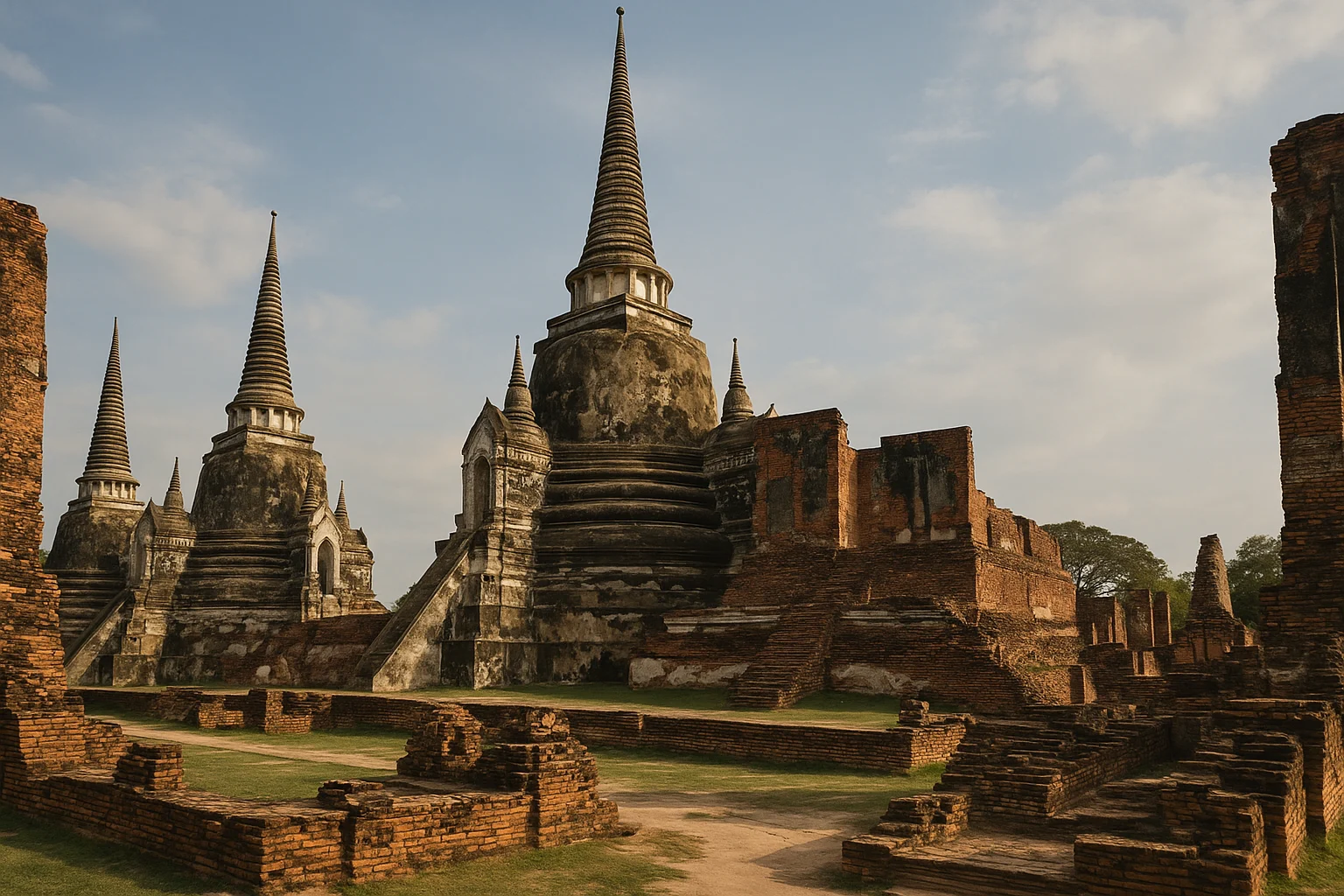
Ayutthaya Travel Guide 2026: Temple Ruins, Day Trip Planning, and What to Prioritize
Ayutthaya KingdomPlan a focused Ayutthaya visit with practical temple routing, timing, and transport guidance from Ba...
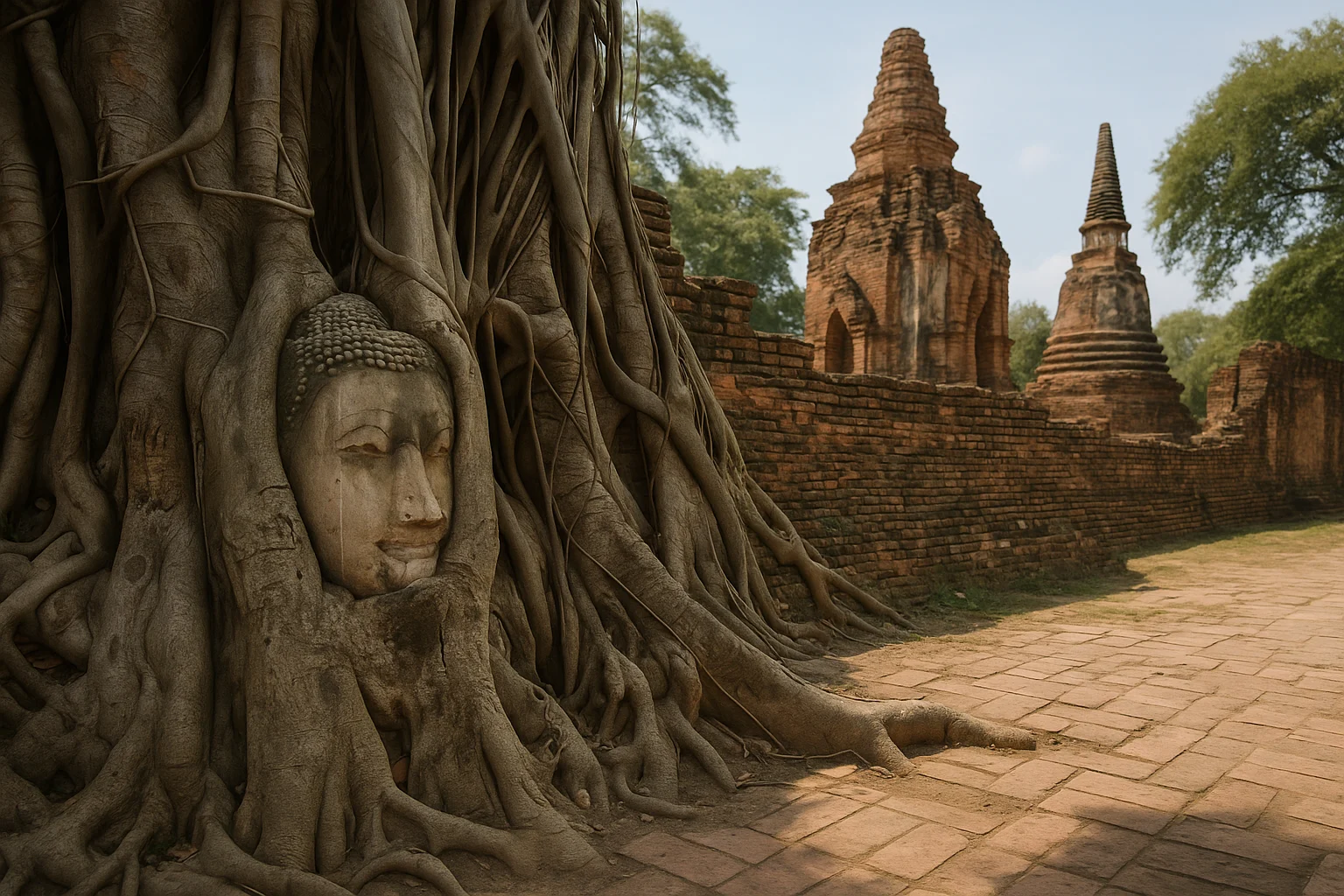
Wat Mahathat Ayutthaya Travel Guide 2026: The Tree-Root Buddha Head, Timing, and What to Know
Ayutthaya KingdomPlan a focused Wat Mahathat visit with practical timing, photography etiquette, and routing tips ins...
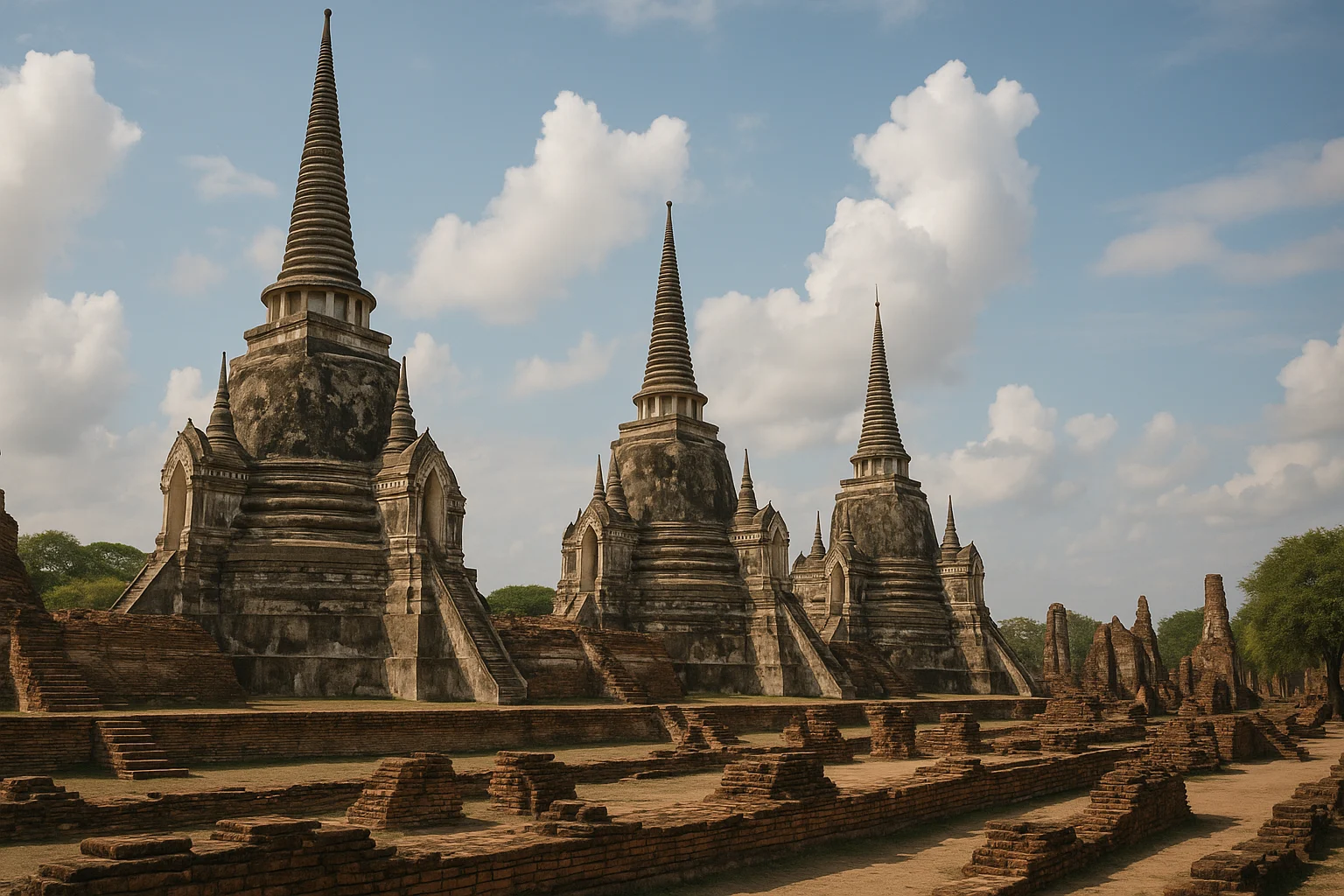
Wat Phra Si Sanphet Travel Guide 2026: Ayutthaya's Royal Temple Without Monks
Ayutthaya KingdomPlan a smarter Wat Phra Si Sanphet visit with timing tips, temple context, and practical Ayutthaya r...
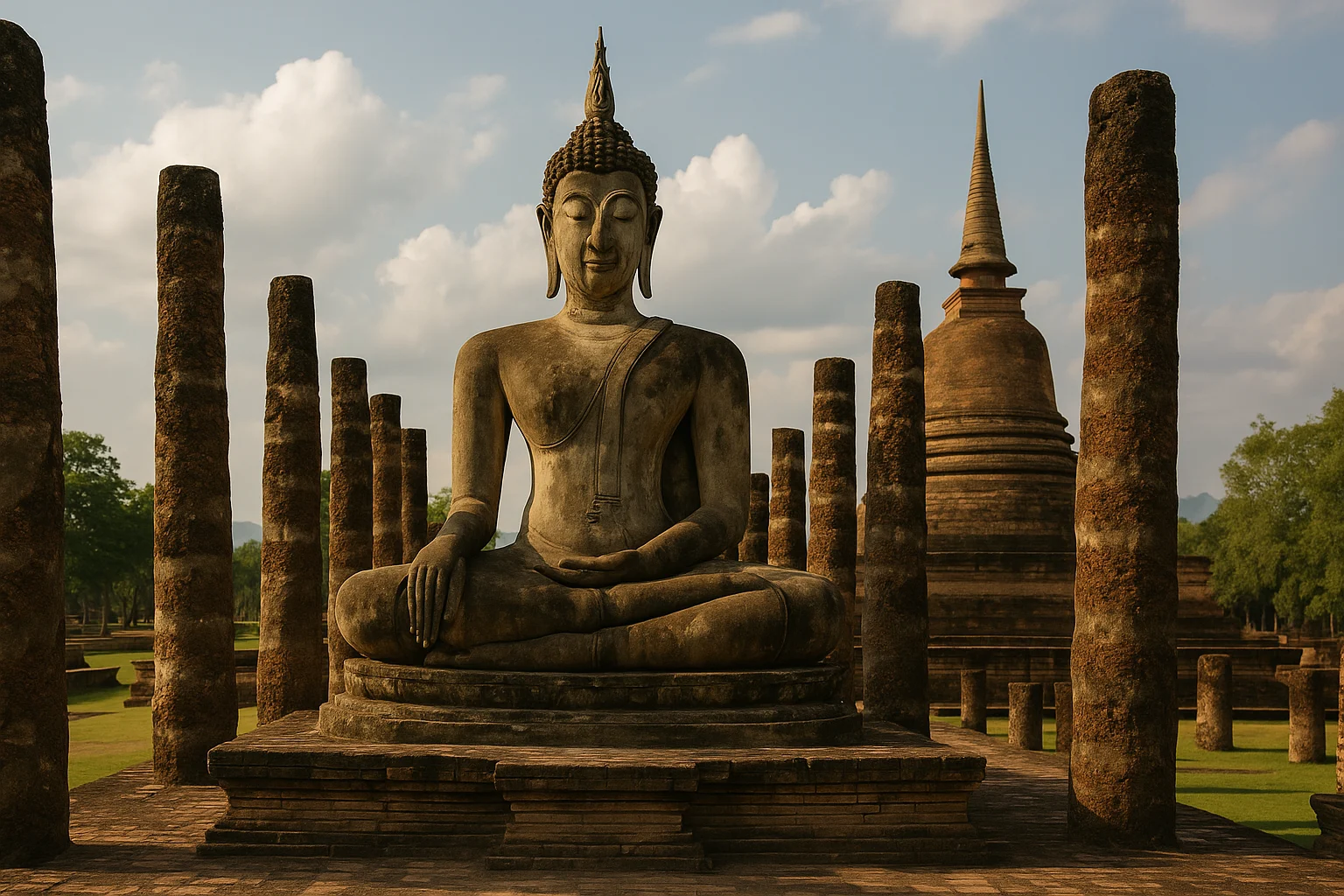
Sukhothai Historical Park Travel Guide 2026: Thailand’s First Capital Without the Crowds
Sukhothai KingdomPlan a smarter Sukhothai Historical Park visit with route tips, key ruins, and practical timing for ...
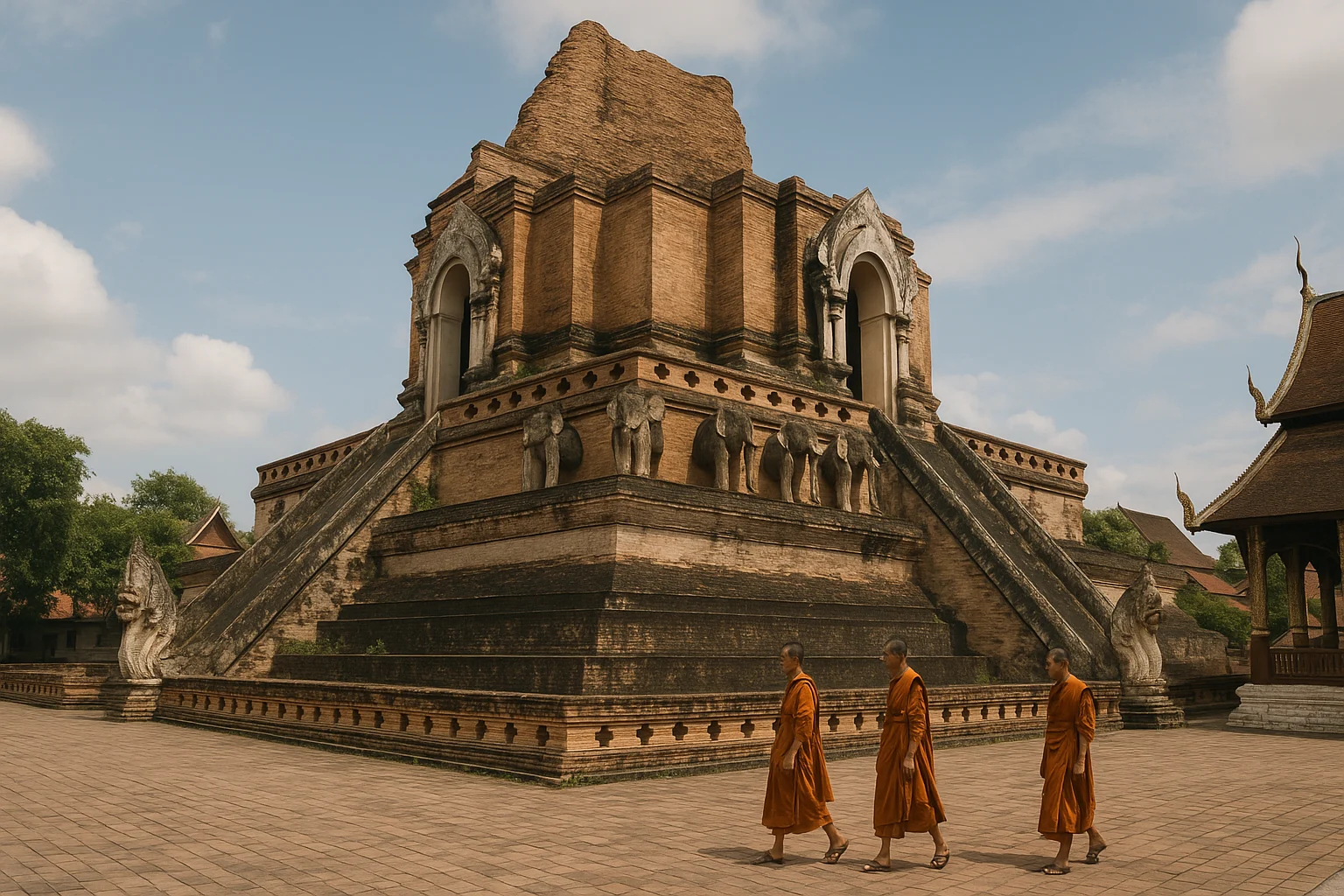
Wat Chedi Luang Travel Guide 2026: Chiang Mai's Ruined Stupa, Monks, and Visit Timing
Lanna KingdomPlan a focused Wat Chedi Luang visit with practical timing, temple etiquette, and old-city route tip...