Quick Info
Curated Experiences
Chiang Mai Temples and Old City Cultural Tour
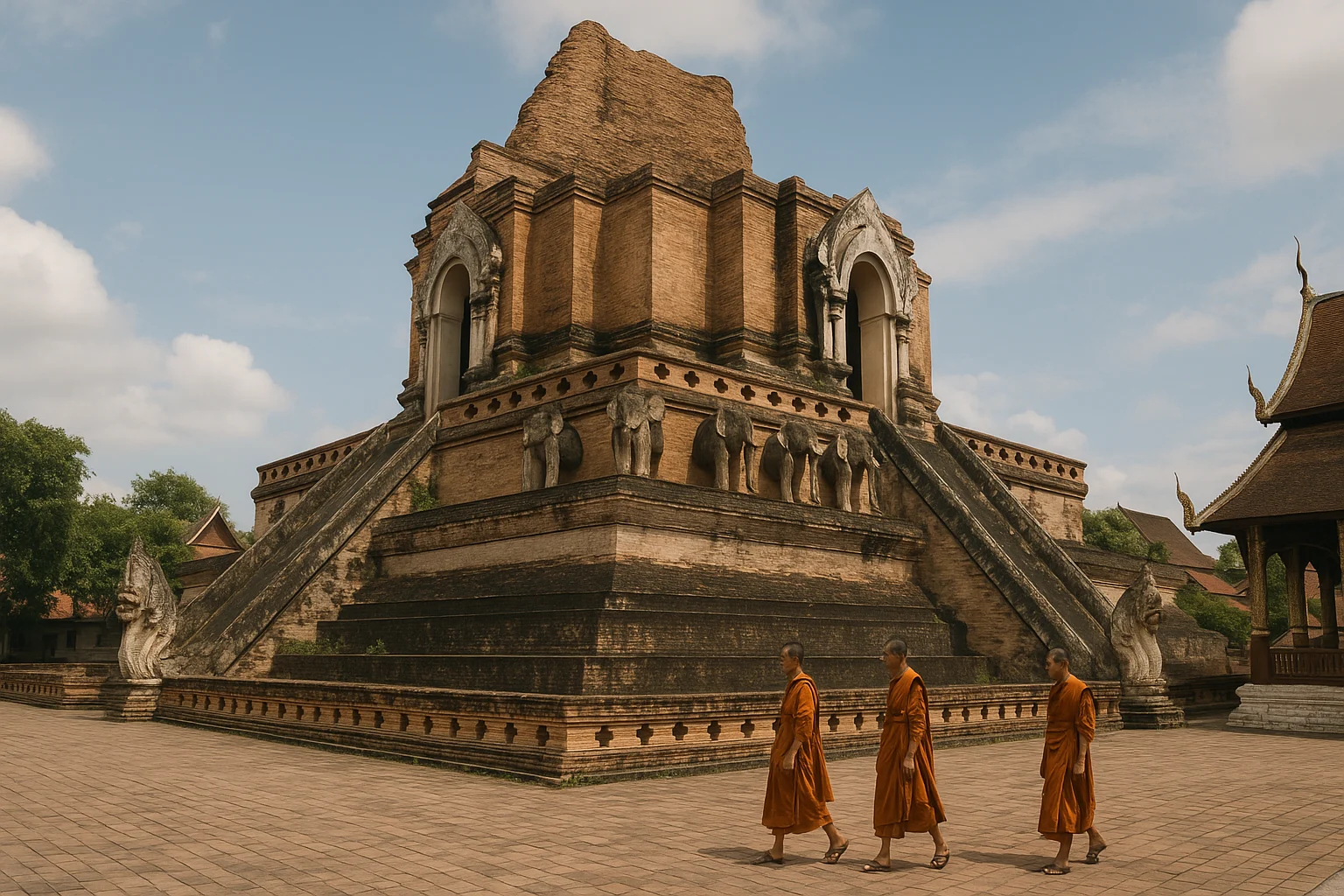
Most of Chiang Mai’s Old City temples are gilded and gleaming, their spires freshly lacquered and their compounds swept to photogenic perfection. Wat Chedi Luang is different. The massive ruined stupa at its center stands half-collapsed and weathered to raw brick, rising above the surrounding monastery like a broken mountain. At roughly 60 meters in its current truncated state — sheared from an estimated 80 meters by a 16th-century earthquake — the chedi is the most commanding structure in the walled quarter, and the most honest. Where other temples polish their surfaces, this one leads with damage. It is not restored, and that is precisely the point.
But Wat Chedi Luang is not merely a ruin. The monastery surrounding it is one of the most active religious communities in northern Thailand. Novice monks cross the courtyard carrying textbooks. Lay worshippers kneel before gilded Buddha images in the main viharn. A monk-chat program invites visitors to sit and talk with young monks practicing their English. The chedi and the living monastery coexist without the separation that heritage sites typically impose between past and present. You stand at the base of a 600-year-old ruin while incense smoke drifts from the worship hall next door, and neither element feels staged.
The site also occupies a singular place in Thai religious history. The Emerald Buddha — now the most revered image in the country and the centerpiece of Bangkok’s Wat Phra Kaew — resided in a niche on the eastern face of this chedi for decades before beginning its long migration south through Luang Prabang and Vientiane. That connection alone places Wat Chedi Luang in the first tier of northern Thai heritage sites.
Historical Context
Construction began around 1391 CE under King Saen Muang Ma, who intended the chedi as a funerary monument for his father. Successive Lanna rulers expanded it over the following century, eventually pushing the structure to an estimated 80 meters in height — among the tallest religious buildings in mainland Southeast Asia. At that scale the chedi was a statement of Lanna ambition meant to rival the Khmer and Sukhothai monuments to the south. The kingdom was asserting architectural independence from the older traditions that had influenced it, and the sheer vertical reach of the stupa was the most visible form that assertion could take.
The Emerald Buddha arrived at the temple in the mid-15th century, housed in a niche on the eastern side of the chedi. It remained here until 1551, when it was taken to Luang Prabang during a period of political upheaval. The image’s subsequent journey through Vientiane and eventually to Bangkok traces a line through centuries of regional power shifts, but its Chiang Mai chapter is frequently overlooked by visitors who encounter it only in its current royal setting. A jade replica now occupies the niche where the original once sat, and the eastern face of the chedi is worth approaching specifically to see it.
A major earthquake in 1545 sheared off the upper tiers, reducing the chedi by roughly a third. The Lanna kingdom, already weakened by Burmese incursions, never rebuilt the structure to its original height. Partial restorations have reinforced the base and stabilized the remaining brickwork, but the deliberate decision to leave the upper structure incomplete gives Wat Chedi Luang its distinctive silhouette — a truncated pyramid of exposed laterite and brick that reads more like Ayutthaya’s war-damaged prangs than the polished stupas found elsewhere in Chiang Mai. That aesthetic honesty is the ruin’s greatest strength.
Through Burmese occupation, Thai reunification, and the modern era, the monastery surrounding the chedi has never ceased functioning. Monks have maintained continuous residence here for over six centuries. Unlike reconstructed monuments where the religious function is largely performed for visitors, Wat Chedi Luang’s devotional life is unbroken and unselfconscious.
What to See
The Ruined Chedi
Circle the full base before settling on a viewpoint. The rear (western) side draws fewer visitors and offers the clearest read on original brickwork versus modern stabilization patches. Along the lower platform, look for the elephant buttresses — a row of brick elephants that once supported the entire base tier, now partially restored but still powerfully evocative of the original design. The remains of the naga staircases on the north and south faces are easy to miss if you approach only from the main eastern entrance. On the eastern face, the niche that once held the Emerald Buddha now contains its jade replica, flanked by guardian figures. Spend genuine time here. The texture of the ruin rewards close attention in a way that a quick photograph from the front steps does not.
The Main Viharn
The worship hall sits directly east of the chedi. Step inside quietly and follow local cues — incense smoke, low chanting, and kneeling worshippers make it clear this is not a museum exhibit. The interior murals and gilded Buddha images deserve a slow look once your eyes adjust from the outdoor glare. A smaller secondary hall to the north holds additional images and is usually less crowded. Observe the Lanna-style Buddha figures, which differ subtly from central Thai styles in their proportions and hand positions.
Monk Chat
Wat Chedi Luang runs one of Chiang Mai’s best-known monk-chat programs, typically held in a shaded area near the eastern entrance. Novice monks practice their English by fielding questions about Buddhist life, temple routines, and northern Thai culture. Sessions are informal, free, and genuinely two-directional — the monks are as curious about visitors as visitors are about them. Topics range from meditation practice to daily monastic schedules to the monks’ personal stories and motivations. Check locally for current hours, as schedules shift with the academic calendar. Sessions are most reliably available during weekday afternoons.
The City Pillar Shrine (Inthakin)
Within the compound, the Inthakin shrine holds deep significance for Chiang Mai residents that predates and transcends Buddhism. It is associated with the annual Inthakin Festival, usually held in late May or June, when the city’s guardian spirit is honored with elaborate offerings over several days. The shrine demonstrates how pre-Buddhist animist traditions persist alongside Theravada practice in northern Thai spiritual life — a layering of belief systems that makes Lanna culture distinctive within the broader Thai world. Even outside the festival the shrine is worth a brief visit for the insight it provides into Chiang Mai’s spiritual identity.
Evening Atmosphere
If your schedule allows, return to the compound at dusk. The chedi is illuminated at night, and the warm light on exposed brick produces an entirely different mood from the daytime visit. Evening also coincides with monks’ chanting, which sometimes drifts from the viharn into the courtyard. The combination of lit ruin, incense, and distant chanting is one of the most atmospheric experiences available in the Old City.
Timing and Seasons
November through February offers the most comfortable conditions, with morning temperatures around 59 to 68°F (15 to 20°C) and afternoon highs of 82 to 90°F (28 to 32°C). Humidity is low and rain is rare. This is northern Thailand’s cool season and the most popular tourist window. March and April bring intense heat — temperatures above 100°F (38°C) are common — and the burning season’s agricultural haze, which can obscure views and irritate lungs. Avoid Chiang Mai during the worst haze weeks (typically mid-March to mid-April) if air quality matters to you. The wet season from June through October means afternoon downpours but also thinner crowds and lush greenery in the compound.
For daily timing, arrive either shortly after the 6:00 AM opening or in the late afternoon, roughly an hour before sunset. The exposed brick catches warm golden tones in low-angle light. Midday light flattens the textures and the heat drives most visitors to seek shade. Allow 45 to 75 minutes for a thorough visit, longer if you sit in on a monk-chat session or want to experience the evening illumination.
Tickets, Logistics and Getting There
Wat Chedi Luang charges a small entrance fee of 40 baht (approximately $1.10 USD) for foreign visitors. Hours are 6:00 AM to 6:00 PM daily. The temple sits near the center of the Old City, walkable from most guesthouses inside the moat — typically 5 to 15 minutes on foot from any accommodation within the walled quarter.
From outside the Old City, songthaews (red shared pickup trucks) run throughout Chiang Mai and can drop you at any moat gate for 30 to 40 baht per person. From the Chiang Mai airport, a taxi or rideshare to the Old City takes 15 to 20 minutes and costs approximately 150 to 200 baht ($4 to $6 USD). Bicycle rental is an efficient way to link multiple temples in a single morning — shops inside and just outside the moat charge 50 to 100 baht per day. The Old City’s flat terrain and manageable distances make cycling practical for all fitness levels.
Practical Tips
- Dress modestly: shoulders and knees covered. Carry a lightweight cover-up if you are temple-hopping in hot weather.
- Remove shoes before entering any indoor worship space. Socks are not required but may be appreciated on hot stone floors.
- Keep voices low near prayer areas. Do not position yourself between worshippers and the altar for photographs.
- Carry small cash for the entrance fee and donation boxes.
- Limit your Old City temple route to two or three sites per session. Temple fatigue is real, and rushing through five compounds in a morning flattens the experience of each one. Wat Chedi Luang, Wat Phra Singh, and Wat Chiang Man make a focused half-day circuit of the three most important temples inside the moat.
- Water is available from vendors near the entrance. A cold bottle after circling the chedi in the afternoon heat is not optional — it is necessary.
- The Sunday Walking Street market, which runs along Ratchadamnoen Road through the Old City, passes near the temple. If your visit falls on a Sunday, combine the two experiences for a full evening.
Suggested Itinerary
4:30 PM — Arrive at Wat Chedi Luang in the late afternoon. Begin with a full circuit of the ruined chedi, approaching from the west side first for the best light and fewest visitors.
4:50 PM — Examine the eastern face and the Emerald Buddha niche. Note the elephant buttresses on the lower platform and the naga staircase remnants on the north and south sides.
5:10 PM — Enter the main viharn. Sit quietly and observe the worship space. Study the Lanna-style Buddha images and interior murals.
5:25 PM — Visit the City Pillar Shrine for its insight into pre-Buddhist spiritual traditions.
5:35 PM — If a monk-chat session is running, join it for 15 to 20 minutes.
5:55 PM — Stay as dusk falls. The illuminated chedi against the darkening sky is the compound’s most atmospheric moment. Total visit time: approximately 90 minutes.
Optional morning alternative: Arrive at 7:00 AM for a quieter, more reflective visit. Walk to Wat Phra Singh (10 minutes north) afterward, then Wat Chiang Man (10 minutes northeast) to complete the Old City circuit by late morning.
Nearby Sites
Wat Phra That Doi Suthep — Chiang Mai’s hilltop temple overlooks the city from the slopes of Doi Suthep mountain, 30 minutes by songthaew. Where Wat Chedi Luang offers a ruin and a living monastery, Doi Suthep offers a maintained golden chedi and panoramic views. The two sites provide the complete picture of Lanna Buddhist architecture — one broken, one preserved, both authentic.
Ayutthaya Historical Park — Five hours south by bus or train, Ayutthaya’s sprawling temple ruins show what happened when the continuity that Wat Chedi Luang maintained was broken by war. The contrast between a monastery that survived and a capital that did not is one of the most instructive pairings in Thai historical travel.
Wat Mahathat Ayutthaya — The tree-root Buddha head and headless statue rows provide Ayutthaya’s emotional center. Pair with Wat Chedi Luang to trace how Buddhist monuments respond differently to the forces of time, earthquake, and invasion.
Wat Phra Singh and Wat Chiang Man — The other two essential temples inside the Old City moat. Together with Wat Chedi Luang they form a natural half-day walking circuit covering the three most significant religious sites in the walled quarter.
The Ruin That Refused Restoration
Wat Chedi Luang earns its reputation through restraint. The ruin is left largely as the earthquake shaped it, its exposed brick and truncated profile making no pretense of completeness. The monastery carries on around it — monks chant, novices study, lay worshippers kneel — without apology or performance. There is no velvet rope between the past and the present here. The 600-year-old chedi and the living religious community exist in the same space and the same time, and neither one explains the other away. Give this site an unhurried hour, approach the chedi from all sides, and sit somewhere quiet in the compound before you leave. What you take away from Wat Chedi Luang is not a photograph of a ruin. It is the recognition that sacred architecture does not have to be intact to remain sacred.
Discover More Ancient Wonders
- Wat Phra That Doi Suthep — Chiang Mai’s golden hilltop temple with panoramic valley views
- Wat Mahathat Ayutthaya — The tree-root Buddha head and the ruins of Ayutthaya’s spiritual heart
- Ayutthaya Historical Park — The ancient capital’s full spread of royal temple ruins
- Plan your northern Thailand route with our beginner’s guide to visiting ancient sites
- Capture the exposed brick with our guide to photographing ruins
Quick Facts
| Attribute | Details |
|---|---|
| Location | Chiang Mai Old City, Northern Thailand |
| Country | Thailand |
| Region | Northern Thailand |
| Civilization | Lanna Kingdom |
| Historical Period | 14th to 16th century CE |
| Established | c. 1391 CE |
| Original Height | ~80 meters (estimated); ~60 meters after 1545 earthquake |
| Entrance Fee | 40 baht (~$1.10 USD) |
| Hours | 6:00 AM–6:00 PM daily |
| Best Season | November to February |
| Best Time of Day | Early morning or late afternoon |
| Typical Visit Duration | 45 to 90 minutes |
| Coordinates | 18.7878, 98.9868 |
Frequently Asked Questions
How long should I spend at Wat Chedi Luang?
Most travelers spend 45 to 75 minutes, depending on whether they linger for monk chat sessions, side shrines, and photo stops around the main chedi.
Is there a dress code at Wat Chedi Luang?
Yes. Shoulders and knees should be covered, and visitors should remove shoes before entering indoor worship spaces.
Is Wat Chedi Luang better in the morning or evening?
Late afternoon and early evening are usually best for cooler temperatures and softer light on the ruined stupa, while mornings are quieter for reflective visits.
Nearby Ancient Sites
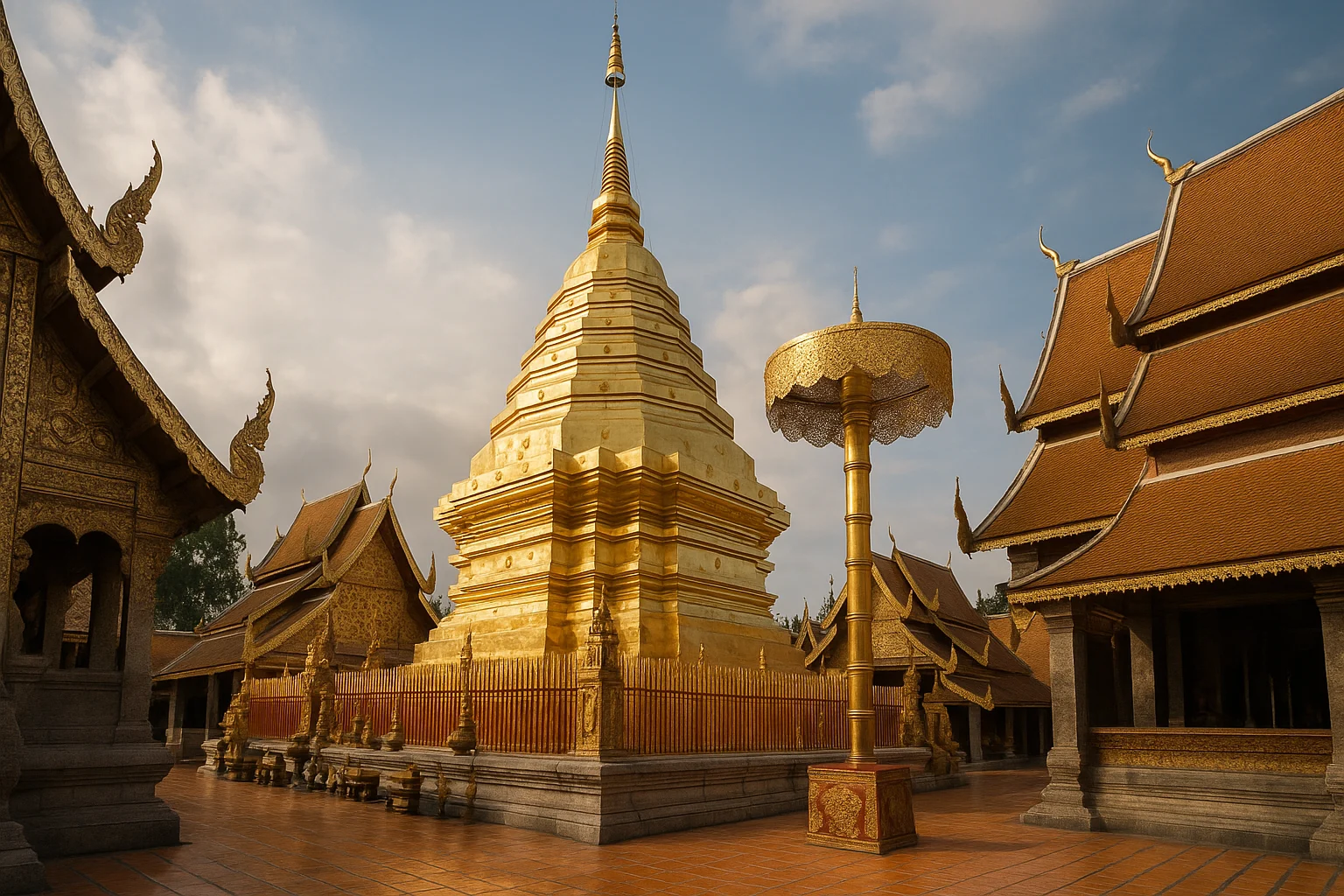
Wat Phra That Doi Suthep Travel Guide 2026: Temple Etiquette, Timing, and Chiang Mai Logistics
Lanna KingdomPlan a smooth Wat Phra That Doi Suthep visit with practical timing, temple etiquette, and route tips...
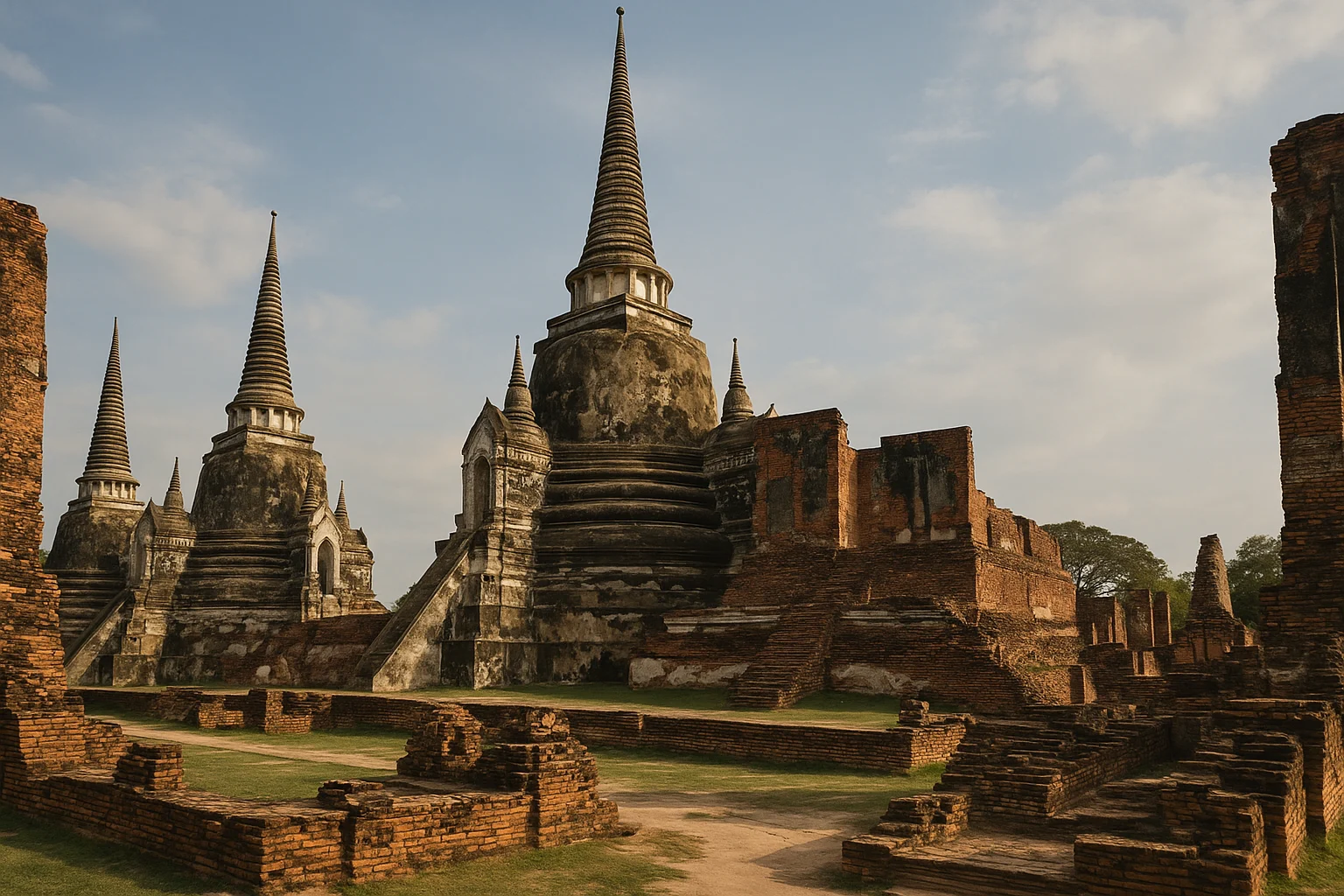
Ayutthaya Travel Guide 2026: Temple Ruins, Day Trip Planning, and What to Prioritize
Ayutthaya KingdomPlan a focused Ayutthaya visit with practical temple routing, timing, and transport guidance from Ba...
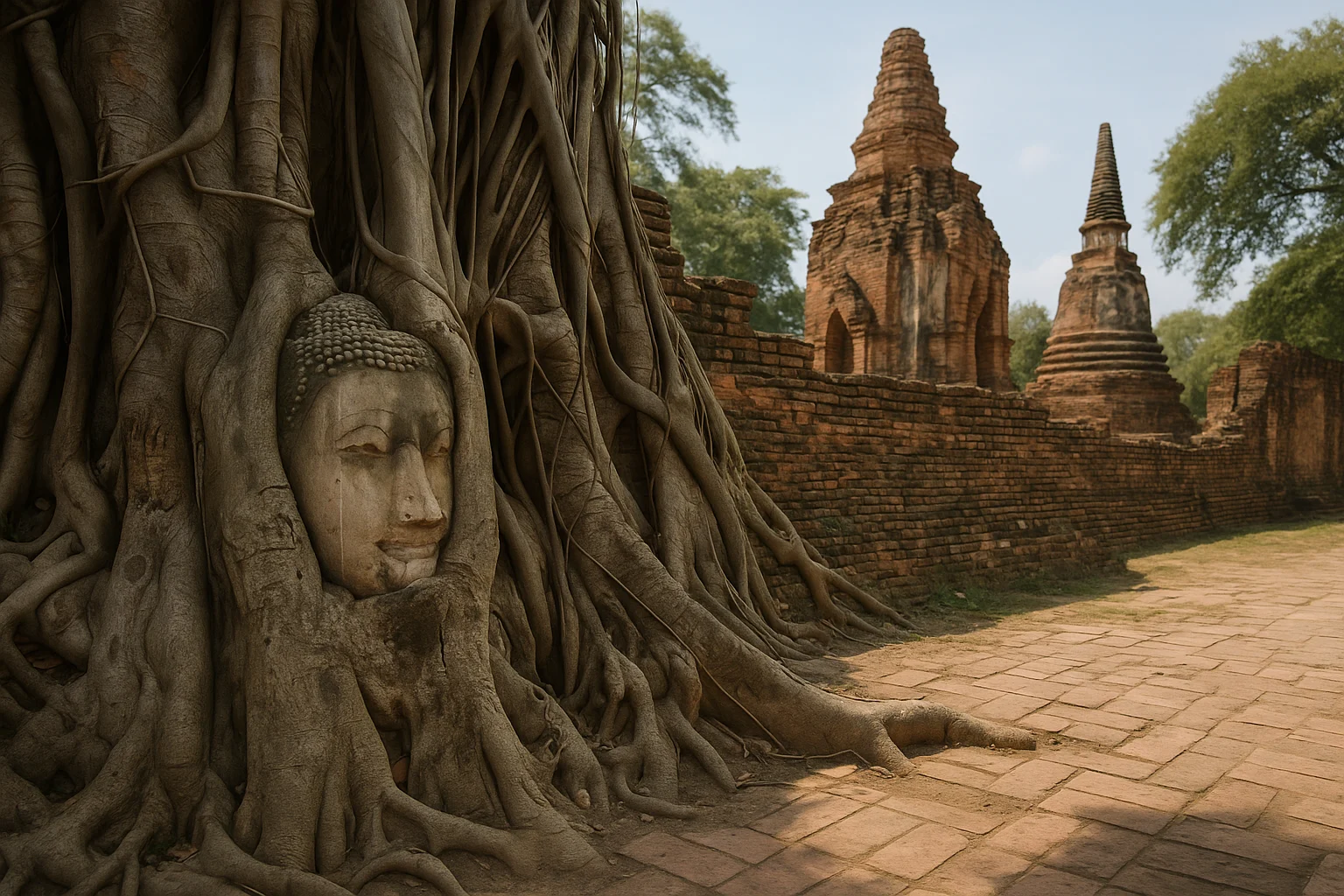
Wat Mahathat Ayutthaya Travel Guide 2026: The Tree-Root Buddha Head, Timing, and What to Know
Ayutthaya KingdomPlan a focused Wat Mahathat visit with practical timing, photography etiquette, and routing tips ins...