Quick Info
Curated Experiences
Guided Historical Walking Tour of Sukhothai and Wat Mahathat
Sukhothai Ancient City & Temples Full Day Tour
Cycling Tour of Sukhothai Historical Park
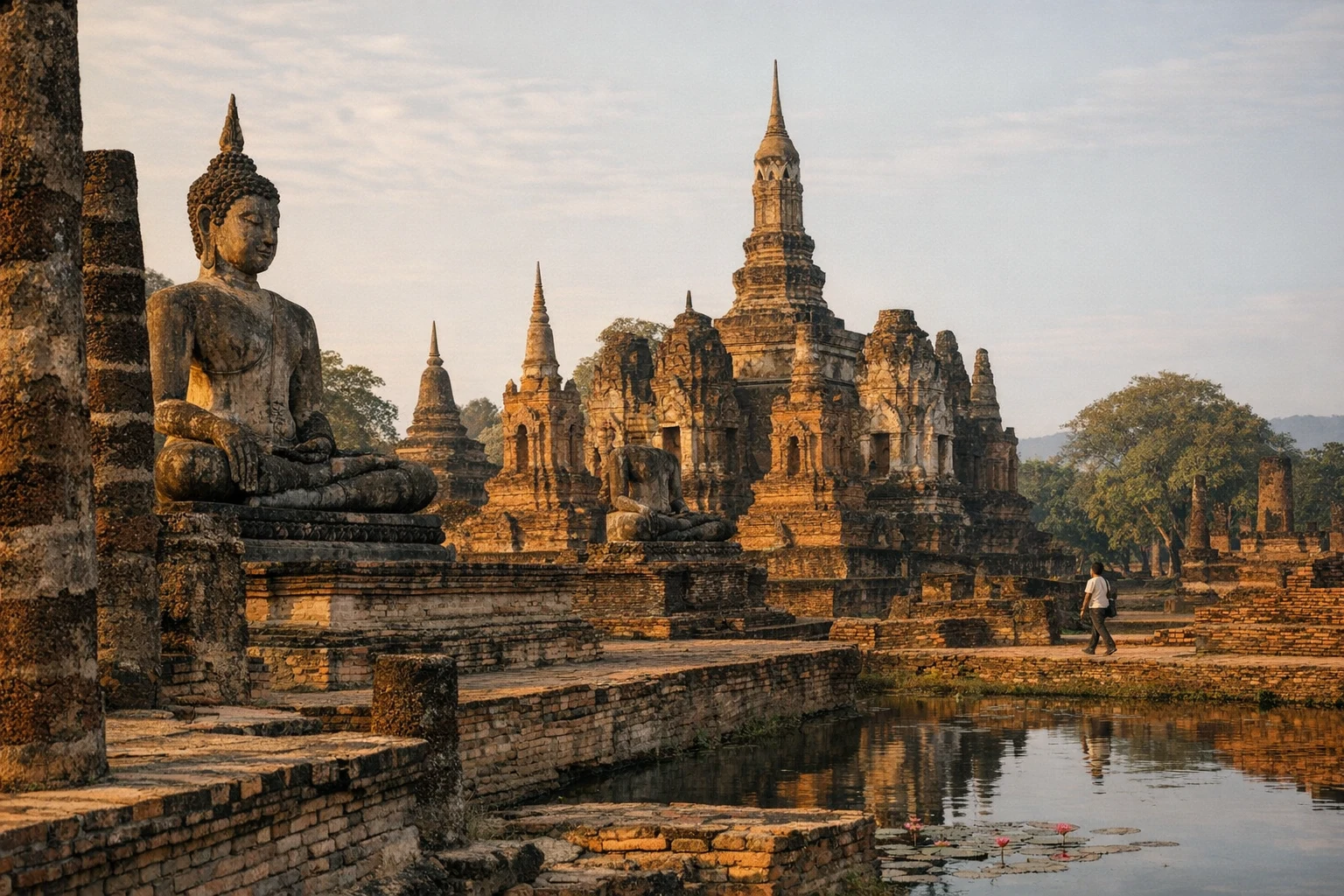
Nestled in the heart of Sukhothai Historical Park in Thailand, Wat Mahathat (Sukhothai) stands as an enduring symbol of the country’s golden age of civilization. Surrounded by serene lotus ponds and grand stupas, this breathtaking site is considered the spiritual and architectural nucleus of the ancient Sukhothai Kingdom, which flourished in northern Thailand from the 13th to the 15th centuries. For visitors arriving early in the morning, white mists drift over weathered brick chedis and the reflections of Buddha statues shimmer in the still waters, evoking the quiet dignity and timelessness of this UNESCO World Heritage site. The name “Wat Mahathat” translates to “Temple of the Great Relic,” a fitting title for the primary temple among Sukhothai’s more than twenty ancient sanctuaries.
What inspires so many travelers to make the pilgrimage to Wat Mahathat is not just its age or artistic grandeur, but the transportive power of its landscape. As you enter beneath arched gateways flanked by ancient trees, centuries of Buddhist devotion seem to resonate in the silence. The layout exemplifies early Thai Buddhist temple architecture while reflecting Khmer and Sri Lankan influences, making it a masterpiece of cross-cultural exchange and creative adaptation. Layers of lotus-bud chedis, seated and walking Buddha images, and meditative pavilions invite you to imagine processions led by saffron-robed monks in a city once bustling with intellectual, religious, and royal activity. Today, Wat Mahathat offers a rare opportunity to wander through atmospheric ruins at your own pace, untangling stories etched in stone and discovering the foundations of Thai identity. It’s a journey that connects the deep roots of Thai spirituality to the living rhythms of the present, making Wat Mahathat an essential destination for anyone drawn to the world’s great monuments of faith and history.
History
The Founding of Sukhothai and Wat Mahathat
Modern Thailand’s origins can be traced to the rise of the Sukhothai Kingdom in the mid-13th century. Before Sukhothai’s emergence, the region was dominated by the Khmer Empire, whose architectural and artistic influence still lingers in the oldest layers of Wat Mahathat. Around 1238 CE, local Thai chieftains rebelled against Khmer rule and established the independent kingdom of Sukhothai, which quickly became a cultural and political lodestar.
King Sri Indraditya, the first monarch of Sukhothai, began a tradition of temple construction that his successors would greatly expand. It was his son, King Ramkhamhaeng the Great (r. 1279–1298), who is traditionally credited with founding Wat Mahathat at the geographic and symbolic center of the capital. The temple’s original purpose was to house sacred relics of the Buddha, underscoring its significance for Buddhist pilgrimage and royal ritual. Under King Ramkhamhaeng’s rule, Sukhothai society blossomed intellectually and artistically, culminating in a distinctive Sukhothai style that blended influences from India, Sri Lanka, and the Khmer world.
Architectural Flourishing and Cultural Golden Age
Wat Mahathat’s construction and expansion reflect the soaring ambitions of Sukhothai’s golden age. Successive kings invested heavily in both religiosity and urban development, embellishing the temple with stupas, ordination halls, assembly pavilions, and graceful Buddha images. Between the late 13th and early 15th centuries, a steady influx of artisans helped refine Sukhothai’s characteristic sculptural style—serene faces, fluid gestures, and elegant walking Buddha postures.
This period saw an explosion of inscriptions, sermons, and religious texts, some of which were etched onto the very stones of Wat Mahathat. These records survived centuries of political upheaval, providing invaluable insights into the kingdom’s laws, language, and worldview. Buddhism thrived under royal patronage, and the central temple soon became a focal point for festivals, educational activities, and state rituals.
Decline, Rediscovery, and World Heritage Recognition
After its zenith, Sukhothai’s fortunes waned. By the late 14th century, the kingdom was overshadowed and eventually absorbed by the rising Ayutthaya Kingdom to the south. Wat Mahathat, once thronged with monks and pilgrims, gradually fell silent. The city’s abandonment in the 16th century led to a slow process of decay; jungle growth and neglect disguised much of the site for centuries.
Rediscovery began in earnest in the late 19th and early 20th centuries when Thai kings and scholars made efforts to reclaim Sukhothai’s legacy. Archaeological restoration accelerated from the 1960s through the 1980s, culminating in the creation of Sukhothai Historical Park. In 1991, the entire area, including Wat Mahathat, was inscribed as a UNESCO World Heritage site for its outstanding universal value. Restoration works have since stabilized key structures and revealed a remarkable array of original stucco decorations, murals, and reliefs.
Today, walking among the relics of Wat Mahathat, visitors participate in a long tradition of reverence and rediscovery, joining generations who have come to marvel at the inception of Thai civilization.
Key Features
At the core of Wat Mahathat (Sukhothai) sprawls an elegant, symmetrical layout that fuses religious symbolism with artistic beauty, revealing the full breadth of the Sukhothai architectural tradition. The complex is dominated by a towering main stupa (chedi) in the shape of a lotus bud, an iconic feature in Thai temple design. This central chedi is flanked on all sides by smaller satellite stupas, once believed to contain relics and ashes of revered monks, forming a mandala-like pattern that reflects Buddhist cosmology.
Upon entering the temple grounds, visitors are greeted by an avenue of stone pillars—remnants of the vast viharn, or assembly hall. These silent sentinels evoke the grandeur of a space that once buzzed with chanting monks and supplicants. Moving deeper into the sanctuary, the eye is drawn to a magnificent seated Buddha image in the meditation pose, adorned with delicate stucco work and flanked by guardian figures. The field of standing columns offers glimpses of how the original wooden roof may have cast cooling shadows over worshippers, while the interplay of light and shade gives the ruins an ever-changing atmosphere.
One of the most outstanding features is the presence of both seated and standing Buddha statues, including rare examples of the walking Buddha, a Sukhothai innovation that embodies grace, movement, and spiritual dynamism. These sculptures are renowned for their slender forms, soft smiles, and finely stylized robes, capturing a sense of transcendent calm. Around the central core, you will find numerous subsidiary chedis in diverse styles—bell-shaped Sri Lankan dagobas, Khmer prangs, and smaller Thai-inspired structures—all testifying to the mix of influences present during the kingdom’s rise.
Not to be overlooked are the lotus ponds that grace the site’s periphery, providing reflective surfaces that double the visual impact of the temple above. These ponds were not only decorative but also essential for temple rituals and daily life. Detailed stucco reliefs along the base of some chedis depict mythological motifs—celestial beings, guardian lions, and lotus blossoms—reminding visitors of the cosmological ideas that shaped Sukhothai art.
Beyond the immediate complex, visitors find causeways lined with sculpted finials, hidden meditation niches, and the subtle remains of boundary walls. As daylight shifts, the textures of brick and stucco change, revealing centuries of history in every weathered surface. With its harmonious plan and dramatic ruins surrounded by gently waving reeds, Wat Mahathat remains one of Asia’s premier sites for understanding the synthesis of art, religion, and landscape in ancient Siam.
Getting There
Reaching Wat Mahathat (Sukhothai) is an accessible adventure, no matter where your journey begins in Thailand. The ruins are located within the Sukhothai Historical Park, roughly 12 kilometers west of New Sukhothai town, the modern provincial capital. The nearest major city is Phitsanulok, about 60 kilometers away, which serves as a common gateway for both domestic and international travelers.
If arriving from Bangkok, travelers have several options. The quickest is by air: daily flights from Bangkok’s Don Mueang Airport (DMK) to Sukhothai Airport (THS) are operated by Bangkok Airways. The flight takes about 80 minutes, and a shared airport shuttle to the Historical Park costs approximately 300 THB (around USD $9) per person, with the journey taking about 40 minutes. Taxis and private transfers are also available for slightly higher fares.
Long-distance buses depart frequently from Bangkok’s Mo Chit Northern Bus Terminal to both New Sukhothai and Old Sukhothai, with the journey covering roughly 430 kilometers in 7–8 hours. Bus fares start at 400–600 THB (USD $12–$18) for air-conditioned coaches. For greater comfort and privacy, travelers can hire private cars or minivans via ride-hailing apps or agencies, with prices starting from 4,000 THB (USD $115) per trip.
From Phitsanulok, regional trains and buses connect to Sukhothai town; the onward ride to the Historical Park is easily covered by local tuk-tuks (about 150 THB/ride) or songthaews (shared pickups) for under 50 THB. Bicycles can be rented in both Old and New Sukhothai for about 30–50 THB per day and provide a charming way to cycle through tree-lined roads under your own steam.
Once at the Sukhothai Historical Park entrance, Wat Mahathat is at the heart of the Central Zone, a short walk or cycle from the main ticket gate. Visitors can also hire a guided electric tram for about 40 THB per circuit, which loops through major highlights—including Wat Mahathat, making it a suitable option during hot weather or for those with limited mobility.
When to Visit
The optimal time to visit Wat Mahathat (Sukhothai) is from November to February, when northern Thailand enters its cool, dry season. During these months, temperatures hover between 18°C and 30°C (64°F to 86°F), and gentle breezes make exploring the ruins comfortable, even at midday. Clear blue skies and lush green surroundings enhance the colors of the ancient brickwork and flowering lotus ponds, offering the best opportunities for photography and contemplative walks.
The transition months of October and March can also be pleasant, though with greater risk of unpredictable rain showers or the onset of rising heat. From March through May, temperatures soar and humidity increases, with daytime highs exceeding 35°C (95°F) at times; travelers visiting during this season should start their explorations early in the morning or late in the afternoon to avoid the strongest sun.
The rainy season, stretching from June to October, transforms the park into a vivid landscape of tall grasses and blooming flora. While afternoon thunderstorms are common, crowds are fewer and mornings can be comfortably cool. Visitors should pack umbrellas, and walkways may become slippery in places. The renowned Loy Krathong festival, usually held in November, is a highlight of the Sukhothai calendar. During the festival, Wat Mahathat is illuminated with candles and lanterns, and the air is alive with music, dance, and traditional floating offerings—a magical event not to be missed.
Regardless of the season, it is best to arrive early or near sunset to enjoy the tranquil beauty of the temple ruins with fewer crowds and softer light.
Quick Facts
| Attribute | Detail |
|---|---|
| Location | Central Zone, Sukhothai Historical Park, Sukhothai Province, Thailand |
| Established | Late 13th century (c. 1292 CE), during the reign of King Ramkhamhaeng |
| Primary Religion | Theravada Buddhism |
| UNESCO Status | Inscribed in 1991 as part of Sukhothai Historical Park and Associated Historic Towns |
| Notable Features | Central lotus-bud chedi, standing and walking Buddha statues, lotus ponds, stone pillars |
| Entrance Fee | 100 THB (foreigners); 10–30 THB additional for bicycles/vehicles |
| Opening Hours | 6:30 am – 6:00 pm daily; later during festivals |
| Suggested Visit Time | 2 hours (Wat Mahathat only); half day for wider Sukhothai Historical Park |
| Accessibility | Partially wheelchair accessible; uneven surfaces, but paved walkways in central areas |
| Best Visiting Months | November to February (cool, dry season); Loy Krathong festival in November |
Frequently Asked Questions
What are the opening hours for Wat Mahathat (Sukhothai)?
Wat Mahathat is open daily from 6:30 am until 6:00 pm, with extended night hours during the Loy Krathong festival.
Is there an entrance fee for Wat Mahathat or Sukhothai Historical Park?
Yes, the entrance fee for Wat Mahathat as part of Sukhothai Historical Park is currently 100 THB for foreigners, plus 10-30 THB for bicycles or vehicles.
Can I hire a guide on-site to learn more about the history of Wat Mahathat?
Yes, guides are available at the park entrance or can be booked in advance for in-depth history tours.
Are there facilities such as toilets and restaurants near Wat Mahathat?
Yes, there are basic facilities including toilets, small cafés, and souvenir shops near the main entrance to the Historical Park.
What is the dress code for visiting Wat Mahathat (Sukhothai)?
Visitors should dress respectfully, covering shoulders and knees, as a mark of respect when exploring temple ruins.
How much time should I allocate to explore Wat Mahathat and nearby ruins?
Allow at least 2 hours for Wat Mahathat, or half a day if exploring more of Sukhothai Historical Park.
Is the site wheelchair accessible?
Some parts of the site have paved walkways and can be accessed by wheelchair, but expect uneven terrain in several areas.
Nearby Ancient Sites
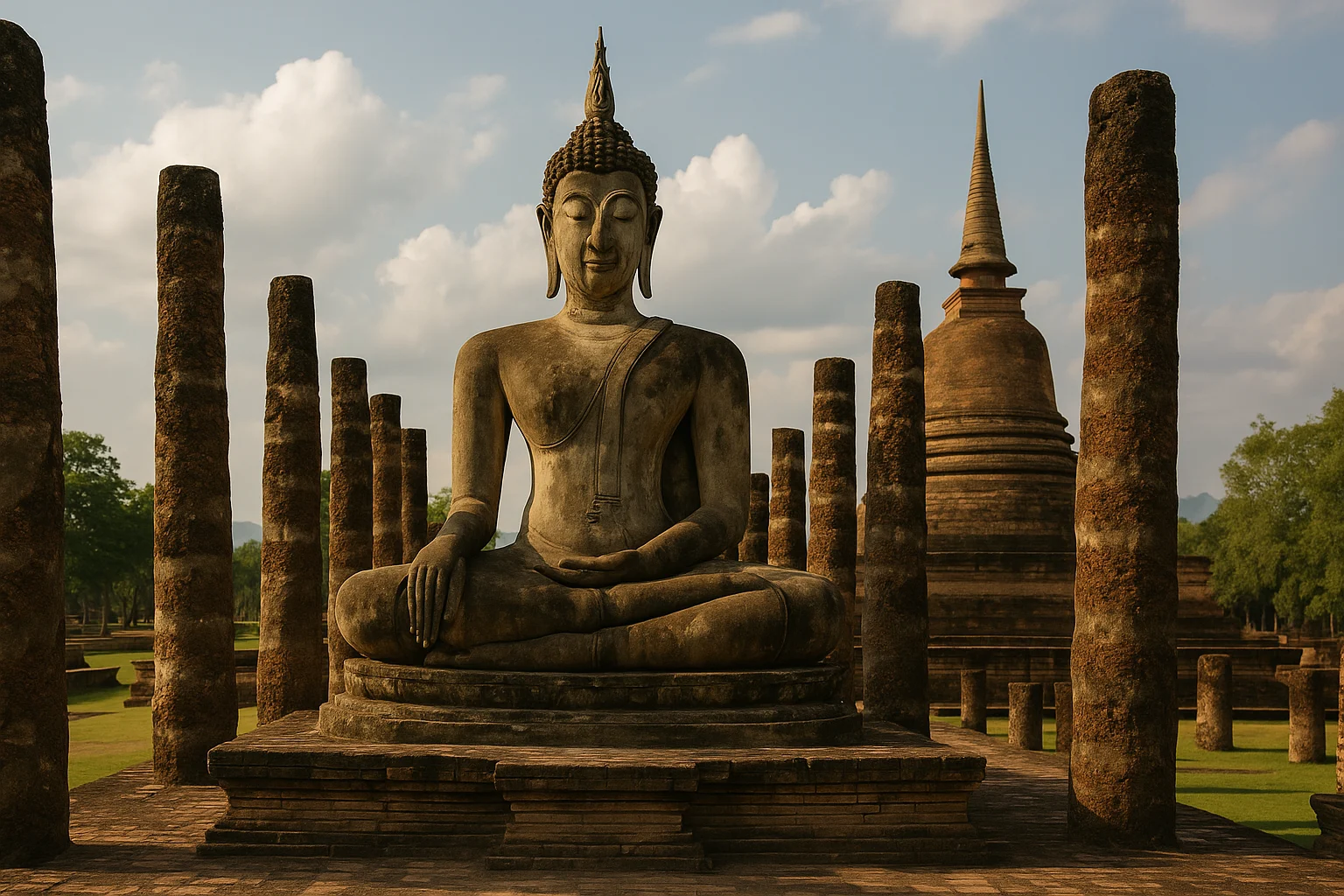
Sukhothai Historical Park Travel Guide 2026: Thailand’s First Capital Without the Crowds
Sukhothai KingdomPlan a smarter Sukhothai Historical Park visit with route tips, key ruins, and practical timing for ...
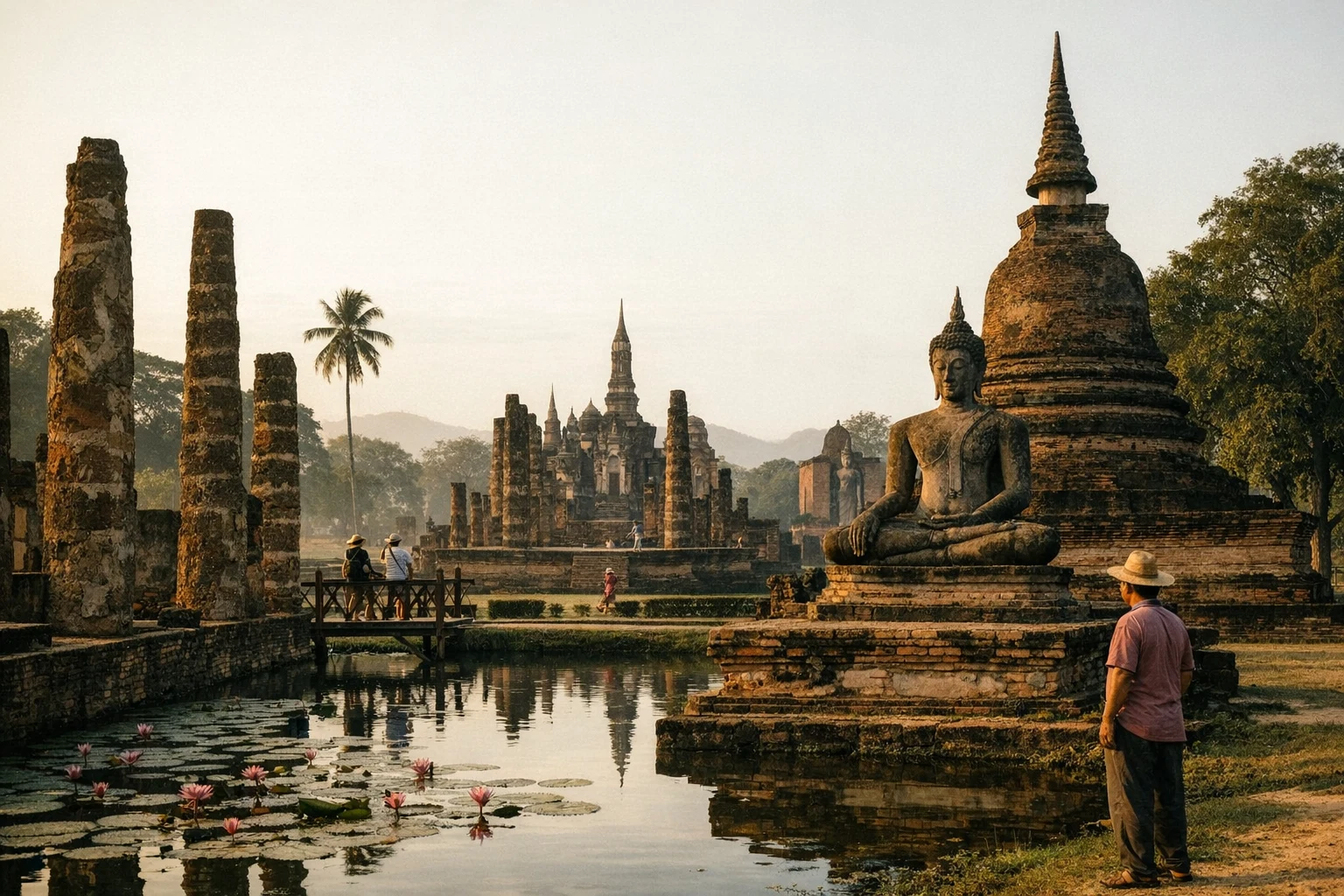
Sukhothai
Sukhothai, in northern Thailand's Sukhothai Province, is famed as the cradle of Thai civilization an...
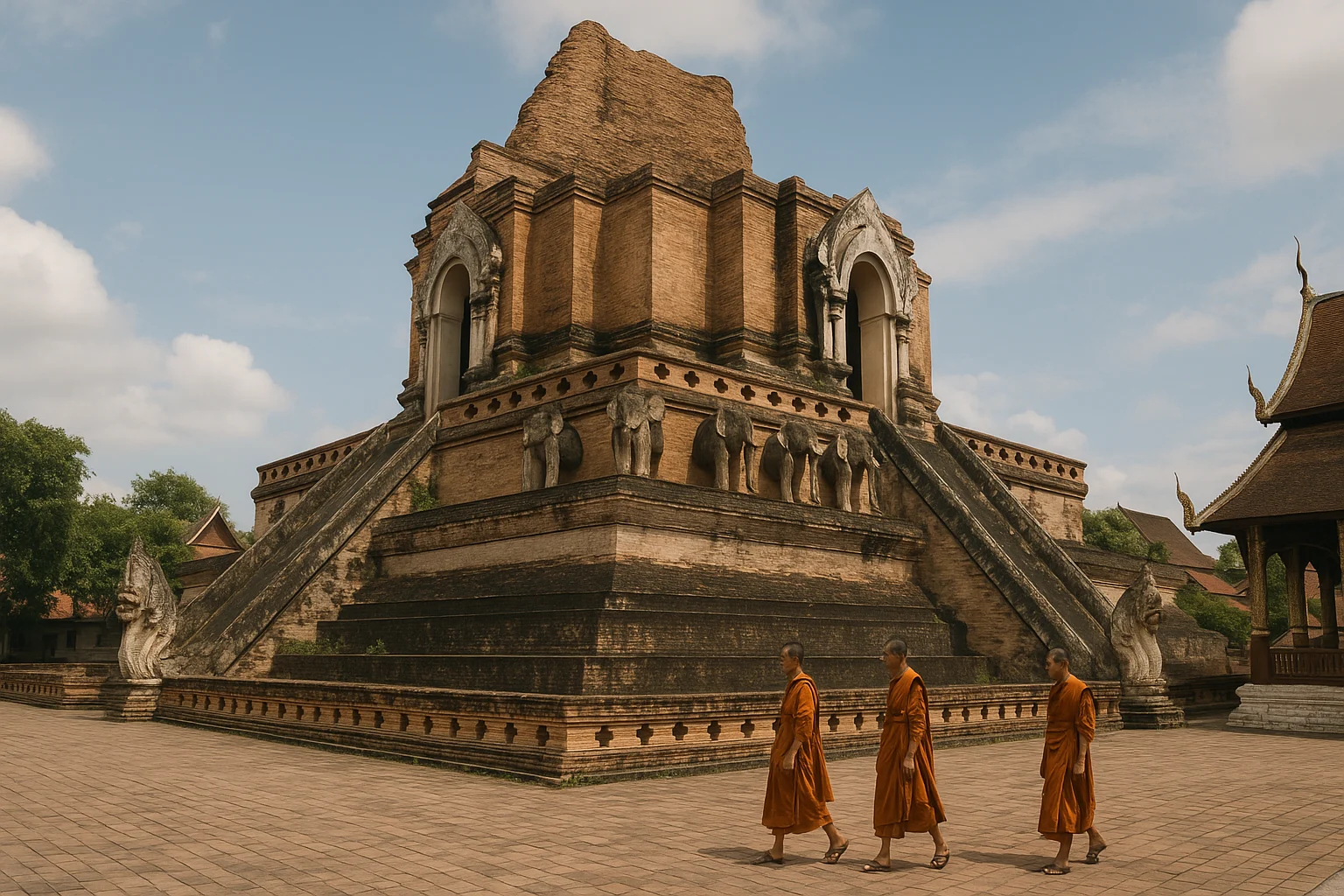
Wat Chedi Luang Travel Guide 2026: Chiang Mai's Ruined Stupa, Monks, and Visit Timing
Lanna KingdomPlan a focused Wat Chedi Luang visit with practical timing, temple etiquette, and old-city route tip...
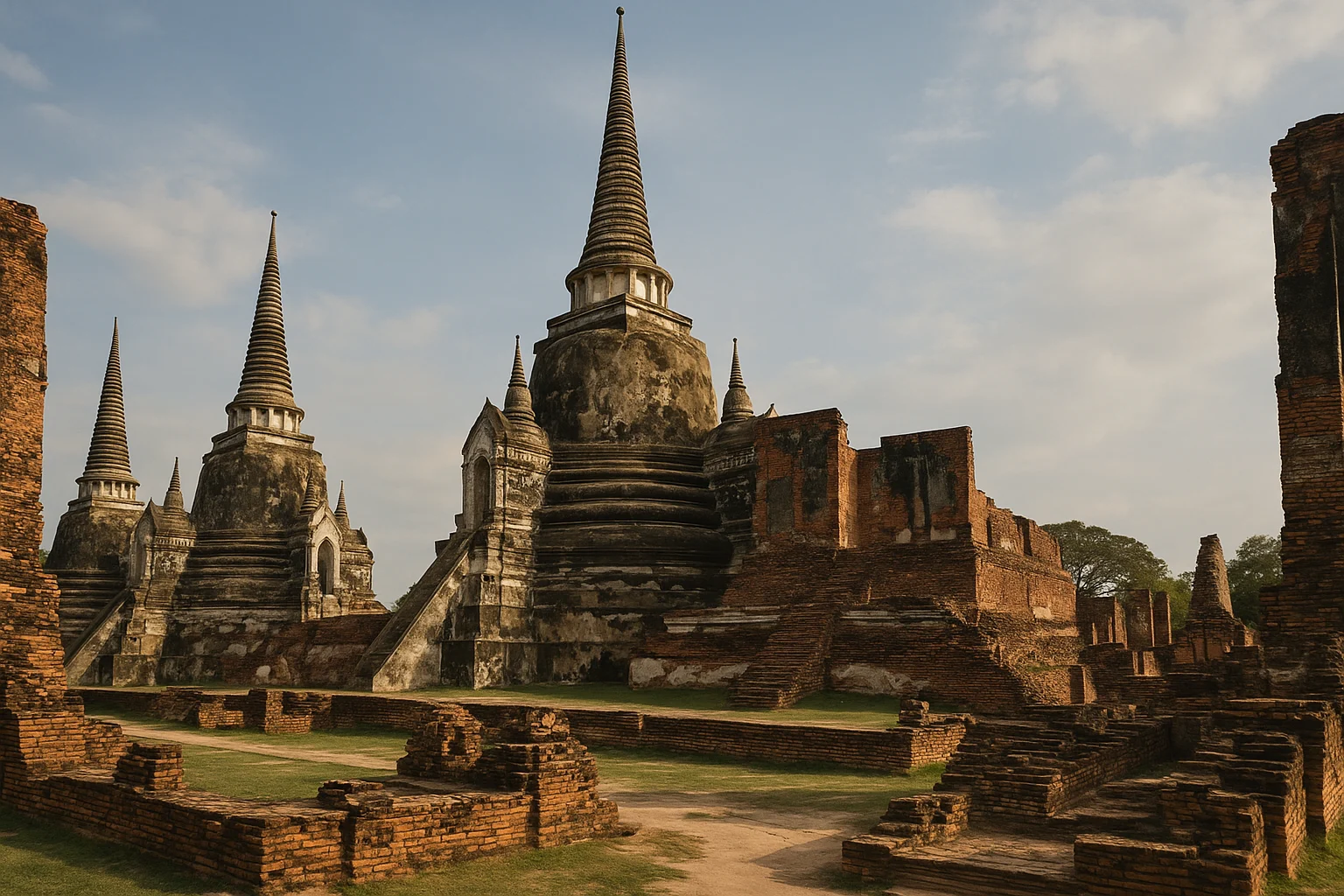
Ayutthaya Travel Guide 2026: Temple Ruins, Day Trip Planning, and What to Prioritize
Ayutthaya KingdomPlan a focused Ayutthaya visit with practical temple routing, timing, and transport guidance from Ba...
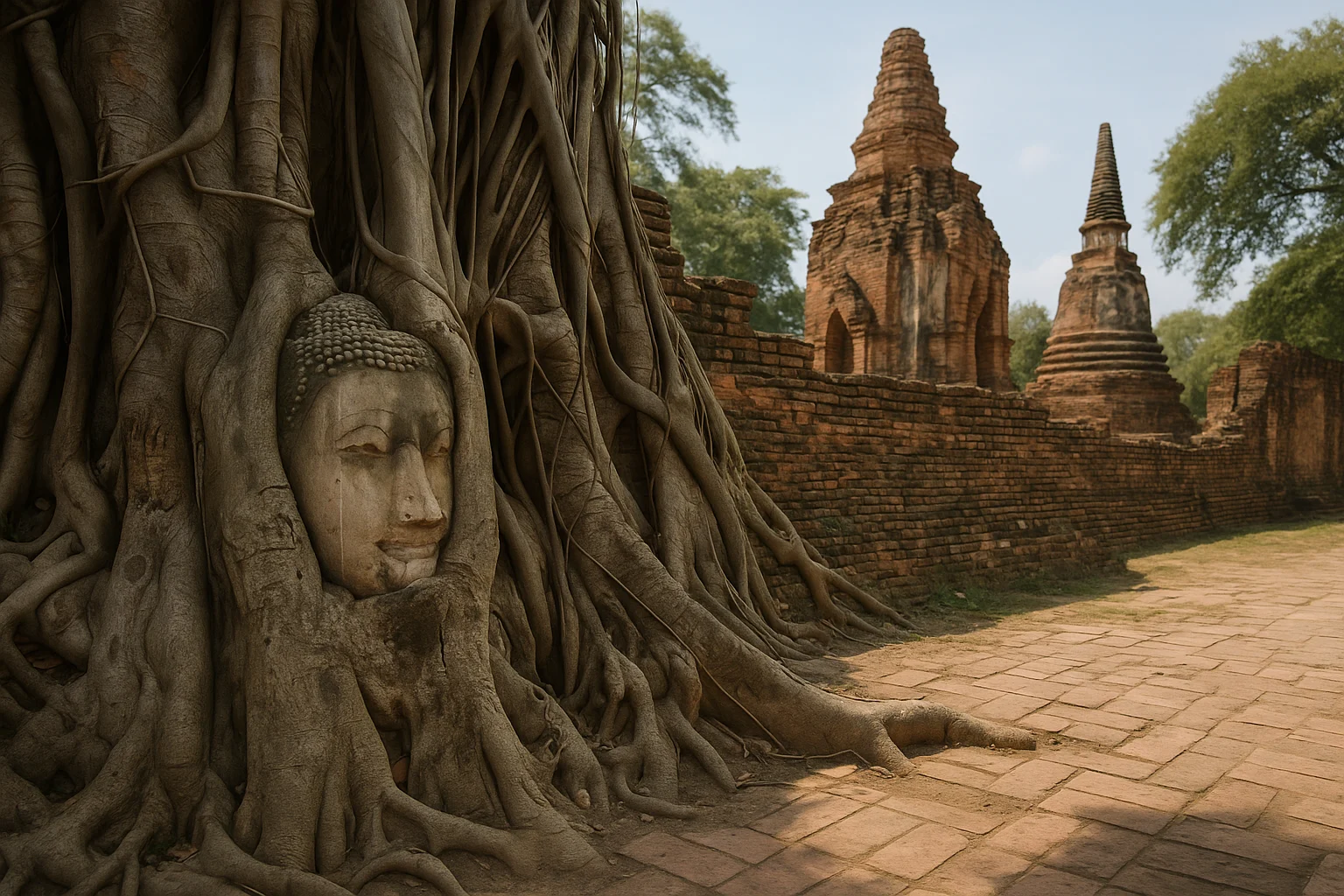
Wat Mahathat Ayutthaya Travel Guide 2026: The Tree-Root Buddha Head, Timing, and What to Know
Ayutthaya KingdomPlan a focused Wat Mahathat visit with practical timing, photography etiquette, and routing tips ins...