Quick Info
Curated Experiences
Ayutthaya Historical Park Day Tour from Bangkok
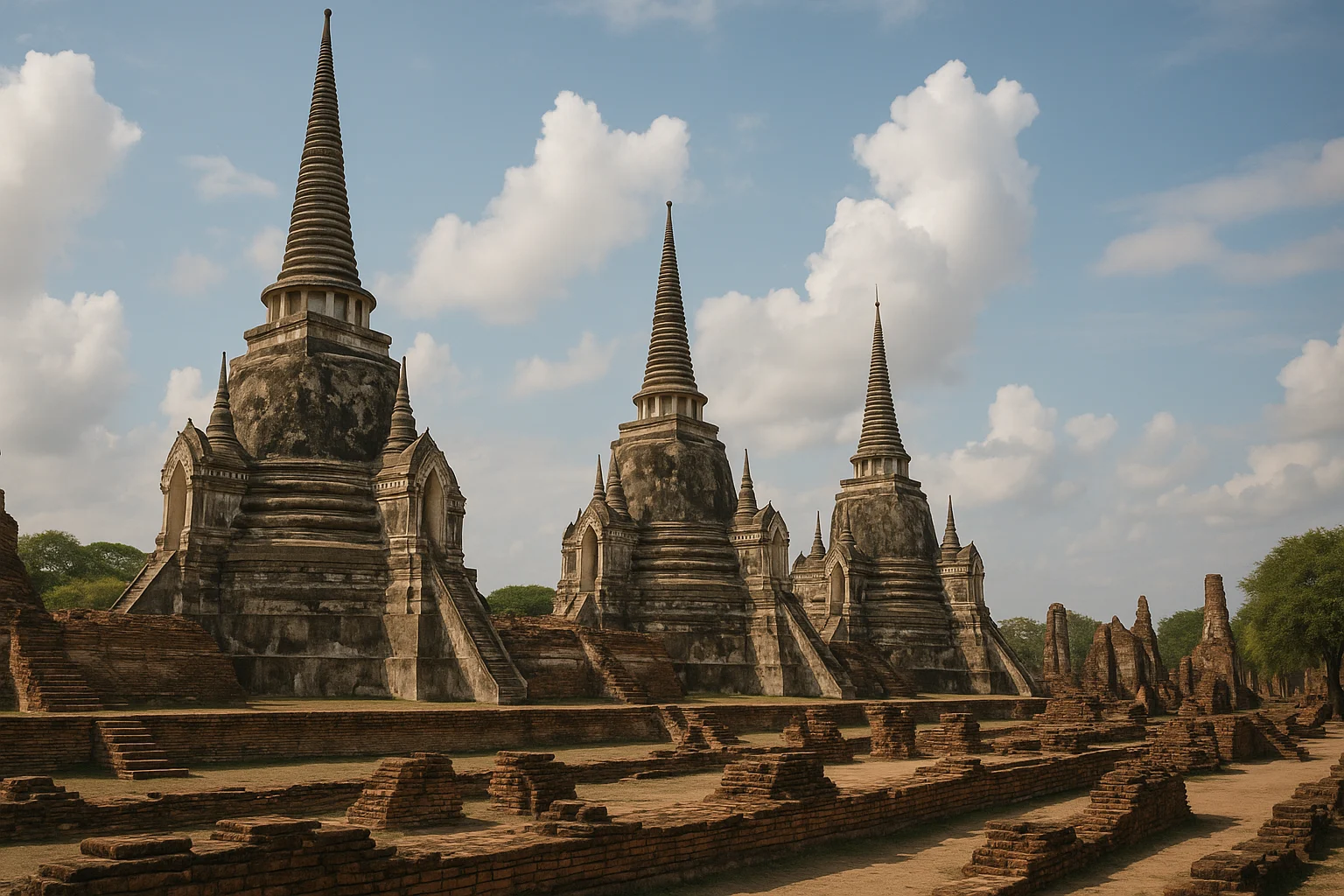
Three bell-shaped chedis stand in precise alignment on a broad brick platform, their forms rising clean and symmetrical against the Ayutthaya sky. There is nothing tangled or overgrown about this ruin. Where other temples in the historical park have been swallowed by roots and crumbled into picturesque disorder, Wat Phra Si Sanphet reads deliberate — austere, controlled, and unmistakably royal. This was the highest-status temple in the Ayutthaya Kingdom, built inside the Grand Palace compound and reserved exclusively for royal ceremony. No monks lived here. No daily alms rounds passed through its gates. No lay devotees came to make merit on ordinary mornings.
That distinction is the key to understanding what you see. The emptiness is the point. Most Thai temple ruins are layered with the remains of monastic life — dormitories, kitchens, lecture halls. Here there is only the platform, the chedis, and the surrounding palace foundations. Wat Phra Si Sanphet was designed to project royal authority through architecture alone, and even in ruin, stripped of its gold and its stucco and its 16-meter standing Buddha, it succeeds. The three chedis remain the image most visitors carry home from Ayutthaya, and they are worth more than a quick photograph. They are the closest thing the old capital has to a national symbol, and understanding their function changes how you read every other temple in the city.
Historical Context
Ayutthaya rose to prominence in the 14th century as a trading kingdom positioned at the confluence of three rivers in the central Thai lowlands. At its peak in the 16th and 17th centuries, the city controlled much of mainland Southeast Asia and maintained diplomatic relations with Persia, China, Japan, and the courts of Europe. The kings who ruled from the island capital needed sacred architecture that matched their ambitions, and Wat Phra Si Sanphet was the result.
King Borom Trailokanat established the temple around 1448 CE, converting what had been a royal residence into a temple compound within the palace walls. His son, King Borommaracha IV, added the first two chedis in 1492 to enshrine his father’s ashes. A third chedi followed in 1530 under King Borommaracha IV’s grandson, completing the alignment visitors see today. Unlike virtually every other Thai wat, Wat Phra Si Sanphet never housed a resident monastic community. It functioned as the spiritual engine of the court itself — state rituals, dynastic consecrations, and the enshrinement of royal ashes all concentrated within a single walled precinct.
At its peak the temple housed a 16-meter standing Buddha image covered in roughly 170 kilograms of gold leaf, a figure so renowned it gave the temple part of its identity across Southeast Asian courts. The compound also included a viharn (assembly hall) large enough for state audiences and several smaller structures for ritual preparation. The sheer concentration of gold, sacred relics, and royal remains made Wat Phra Si Sanphet the single most symbolically potent target in the entire kingdom.
When Burmese armies sacked Ayutthaya in 1767, they understood this perfectly. Invaders stripped the gold from the standing Buddha and melted it down, demolished the viharn, and set fire to much of the compound. The three chedis survived structurally but lost their outer stucco and decorative elements. What visitors see today reflects restorations beginning in the late 19th century, with major consolidation work in the 1950s and ongoing maintenance by Thailand’s Fine Arts Department. The chedis have been partially re-plastered, but much of the compound remains exposed brick — an honest reading of what survived and what did not.
The template set by Wat Phra Si Sanphet shaped Thai royal architecture for centuries to come. When the new capital was established in Bangkok, the designers of Wat Phra Kaew (the Temple of the Emerald Buddha) explicitly modeled elements on this temple’s layout. Understanding Wat Phra Si Sanphet is preparation for understanding Bangkok’s own Grand Palace.
What to See
The Three Chedis
Walk a full circuit of the raised platform before choosing your photo angle. The chedis photograph best from a slightly off-center position where the staggered depth between them becomes visible, rather than from the straight-on frontal view that most visitors default to. Early morning and late afternoon light sharpens the contrast between aged brick and the patches of white restoration plaster. From the eastern approach, all three align in a single sightline that compresses their scale in a way that helps convey the original visual impact. Each chedi enshrines the ashes of a king, and the ascending size from east to west traces the growing ambition of the dynasty that built them.
The Palace Footprint
The surrounding foundations trace what was once a sprawling royal compound with audience halls, bathing pools, and administrative buildings. Most visitors focus only on the chedis and miss these entirely, but slowing down to read the low walls and floor plans transforms the site from a row of monuments into a seat of government. The relationship between the sacred chedis and the secular palace structures is precisely the point of Wat Phra Si Sanphet: this was where political power and religious authority met, and the architecture was designed to make that connection visible. Take 15 to 20 minutes walking the foundation outlines to understand the compound’s original scale.
The Viharn Foundation
Southeast of the chedis, the low brick outline of the original viharn marks where the gold-covered standing Buddha once towered over state ceremonies. The structure was one of the largest assembly halls in the kingdom before the Burmese demolished it. A replica of the gold Buddha now stands at Viharn Phra Mongkhon Bophit, just south of the compound walls — a brief visit there provides a visceral sense of what the original interior must have looked like and makes the ruins hit harder on return.
Viharn Phra Mongkhon Bophit
Step outside the compound’s southern wall to visit this reconstructed hall housing a massive seated Buddha image — one of the largest bronze Buddha statues in Thailand. The building is modern and the Buddha has been repaired and re-gilded, but the experience provides the visual reference point that the empty ruins across the wall cannot. Standing before the bronze figure, you begin to grasp the scale of devotional art the Burmese destroyed. The hall is free to enter and typically uncrowded.
Timing and Seasons
The best season runs from November through February, when temperatures drop to a manageable range of 77 to 90°F (25 to 32°C) and humidity eases. These months correspond with Thailand’s cool season, though “cool” is relative — mornings are pleasant but midday remains warm. March through May brings extreme heat, with afternoon temperatures regularly exceeding 100°F (38°C). The open brick platform has almost no shade, and midday heat during the hot season can be genuinely dangerous. The wet season from June through October delivers afternoon downpours that can make the uneven brick surfaces slippery, but mornings are often clear and crowds thin considerably.
Within any given day, arrive between 8:00 and 10:00 AM or after 4:00 PM. The low-angle light during these windows creates the strongest shadow definition on the chedis and is dramatically more photogenic than the flat overhead glare of midday. Sunset light in particular turns the partially plastered brick a warm gold that photographs memorably.
Tickets, Logistics and Getting There
Wat Phra Si Sanphet charges a separate admission fee of 50 baht (approximately $1.40 USD) for foreign visitors. If you plan to visit multiple ruins, the Ayutthaya Historical Park combination ticket at 220 baht (approximately $6.20 USD) covers six major sites and saves money if you visit three or more. Hours are 8:00 AM to 6:00 PM daily.
From Bangkok, the most efficient option is a minivan from Victory Monument (roughly 90 minutes depending on traffic, approximately 60 to 80 baht) or the train from Hua Lamphong Station to Ayutthaya (about two hours, 20 to 345 baht depending on class). From the Ayutthaya train station, a short tuk-tuk ride or ferry crossing plus walk brings you to the historical park island. If hiring a driver for the day from Bangkok, negotiate a flat rate that covers three or four temple stops within the park — expect 1,500 to 2,500 baht ($42 to $70 USD) for a full-day private car.
Within the Ayutthaya Historical Park, Wat Phra Si Sanphet sits at the center of the island. A rented bicycle is the best way to connect it with nearby temples — rental shops cluster near the guest house district on the island’s east side, typically charging 50 to 80 baht per day. Tuk-tuks are the alternative for those unwilling to cycle in the heat, with hourly rates around 200 to 300 baht.
Practical Tips
- Sun protection is essential. Wear a hat, apply sunscreen, and carry water. The exposed brick platform amplifies heat, and there is no reliable shade on the main terrace.
- Comfortable shoes with grip help on uneven historic surfaces. Avoid sandals if you plan to explore the outlying foundations.
- Modest dress is expected at all Thai temple sites: shoulders and knees covered. Even at a ruin without active worship, the custom applies.
- Carry small bills for admission. Change may be limited at the ticket booth.
- A guide or pre-visit reading about Ayutthaya’s Khmer-influenced architecture adds context that the minimal on-site signage does not provide.
- Cycling between temples is ideal in the morning hours but impractical between 11:00 AM and 3:00 PM during the hot season. Bring a lock if you rent a bicycle.
- Water and simple food are available from vendors near the entrance. For a proper meal, restaurants cluster near the guesthouse area east of the park.
Suggested Itinerary
8:00 AM — Arrive at Wat Phra Si Sanphet at opening. Begin with a full circuit of the three chedis, photographing from multiple angles while the light is low and crowds are thin.
8:30 AM — Walk the palace foundation outlines surrounding the chedis. Read the footprint of the compound as a working seat of government.
8:50 AM — Visit the viharn foundation southeast of the chedis. Note the scale of the original assembly hall.
9:00 AM — Walk south to Viharn Phra Mongkhon Bophit to see the reconstructed bronze Buddha. Allow 15 minutes.
9:20 AM — Walk or cycle east to Wat Mahathat (10 minutes). Explore the tree-root Buddha head, the headless Buddha rows, and the collapsed prang. Allow 45 to 60 minutes.
10:15 AM — Continue north to Wat Ratchaburana (5 minutes by bicycle), whose intact prang rises above street level and contains partially preserved murals. Allow 30 minutes.
10:45 AM — Optional extension: cycle south to Wat Chaiwatthanaram across the river for its Angkor-inspired layout (15 minutes by bicycle). Return to the guesthouse district for lunch by noon. Total morning: 3 to 4 temples in approximately 4 hours.
Nearby Sites
Ayutthaya Historical Park — Start here for broader city context and route planning. Wat Phra Si Sanphet is the centerpiece of the park, but the surrounding ruins fill a full day.
Wat Mahathat Ayutthaya — A 10-minute walk east. The tree-root Buddha head and rows of headless statues provide the emotional gut punch that Wat Phra Si Sanphet’s controlled geometry does not. The pairing of these two sites — royal ceremony versus monastic life, both in ruins — is one of the most instructive contrasts in Thai historical travel.
Wat Chedi Luang — In Chiang Mai, this ruined Lanna-era stupa provides a northern counterpart to Ayutthaya’s court geometry. Two kingdoms, two centuries, two very different ideas about how temples should anchor a city.
Sukhothai Historical Park — The predecessor kingdom’s sacred architecture in a more pastoral, spread-out setting. Comparing Sukhothai’s early Buddhist forms with Ayutthaya’s imperial ambitions traces the full evolution of Thai monumental architecture.
Kingship Made Sacred
Wat Phra Si Sanphet is not the most ornate temple ruin in Thailand. It will not overwhelm you with scale the way Angkor does, or with atmosphere the way root-wrapped Wat Mahathat manages. But it may be the most legible statement of royal power in Southeast Asian ruins. The alignment of the chedis, the deliberate emptiness of the platform, the absence of monastic clutter — all of it points to a single purpose: kingship made sacred through architecture. The Burmese stripped the gold and toppled the Buddha, but they could not erase the geometric logic of the chedis or the spatial authority of the platform. Four centuries of ruin have not diminished what was built here. They have clarified it. Give this site a focused hour in good light, read the palace foundations as carefully as the chedis themselves, and let it set the tone for the rest of your Ayutthaya day.
Discover More Ancient Wonders
- Wat Mahathat Ayutthaya — The tree-root Buddha head and the ruins of Ayutthaya’s spiritual heart
- Ayutthaya Historical Park — Full overview of the ancient capital’s temples and ruins
- Wat Chedi Luang — Chiang Mai’s ruined Lanna stupa, the northern counterpart to Ayutthaya’s chedis
- Explore our beginner’s guide to visiting ancient sites for Southeast Asia trip planning
- See our guide to photographing ruins for tips on capturing temple architecture
Quick Facts
| Attribute | Details |
|---|---|
| Location | Ayutthaya Historical Park, Central Thailand |
| Country | Thailand |
| Region | Central Thailand |
| Civilization | Ayutthaya Kingdom |
| Historical Period | 14th to 18th century CE |
| Established | c. 1448 CE |
| UNESCO Status | Part of the Historic City of Ayutthaya World Heritage Site (1991) |
| Admission | 50 baht (~$1.40 USD); combo ticket 220 baht for six sites |
| Hours | 8:00 AM–6:00 PM daily |
| Best Season | November–February (cool season) |
| Best Time of Day | 8:00–10:00 AM or after 4:00 PM |
| Suggested Stay | 45–75 minutes |
| Distance from Bangkok | ~80 km; 90 min by minivan, 2 hours by train |
| Coordinates | 14.3554, 100.5593 |
Frequently Asked Questions
How much time should I spend at Wat Phra Si Sanphet?
Most travelers need 30 to 60 minutes for the main chedi platform, photo stops, and a quick walk through surrounding ruins in the former palace zone.
What makes Wat Phra Si Sanphet different from other Ayutthaya temples?
It was a royal temple inside the Grand Palace complex and did not function as a monastery for resident monks, which makes its role more ceremonial and court-centered.
Can I combine Wat Phra Si Sanphet with other nearby ruins on foot?
Yes. It pairs easily with Wat Mahathat and nearby palace-area ruins, though midday heat makes cycling or tuk-tuk transfers more comfortable for longer loops.
Nearby Ancient Sites
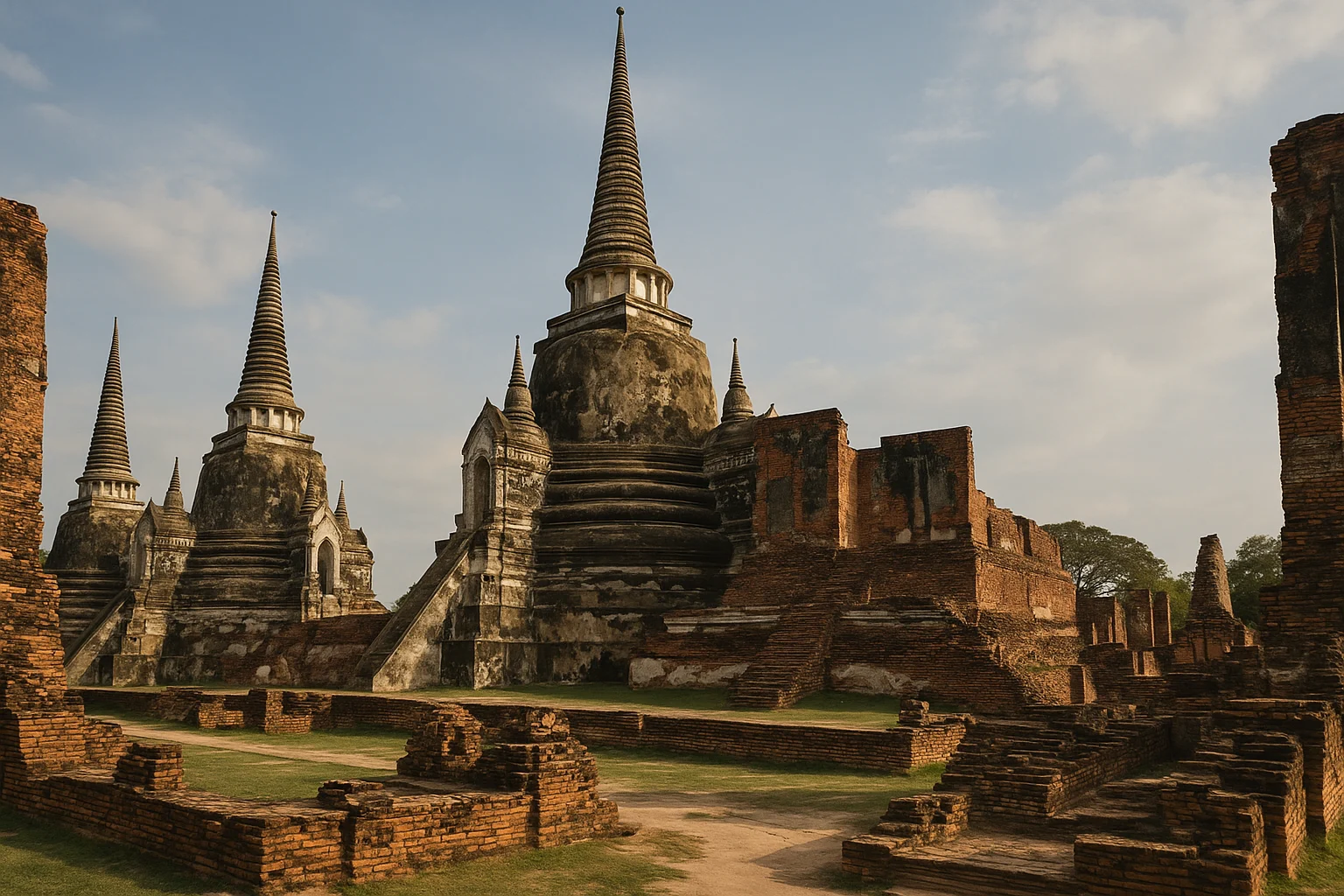
Ayutthaya Travel Guide 2026: Temple Ruins, Day Trip Planning, and What to Prioritize
Ayutthaya KingdomPlan a focused Ayutthaya visit with practical temple routing, timing, and transport guidance from Ba...
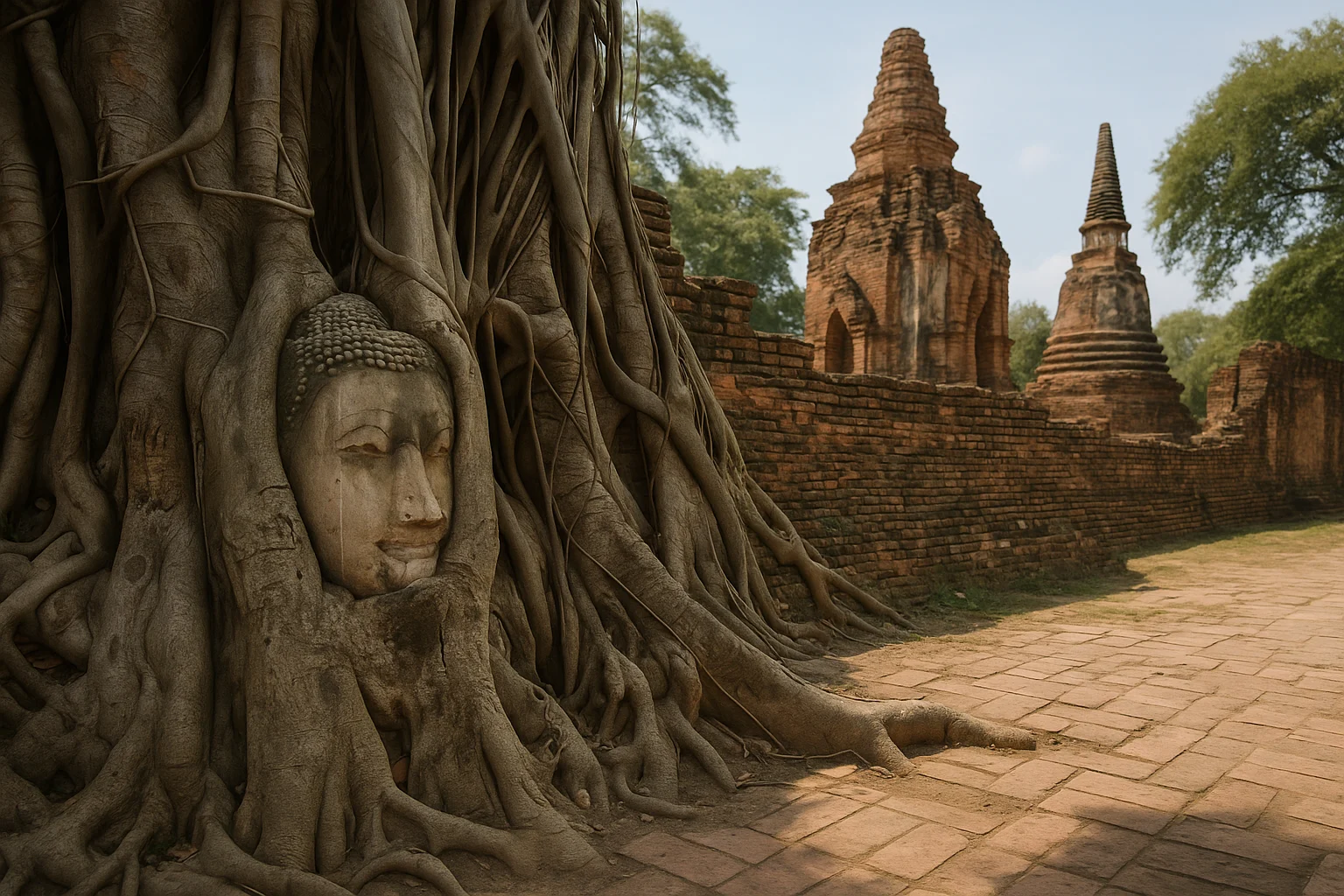
Wat Mahathat Ayutthaya Travel Guide 2026: The Tree-Root Buddha Head, Timing, and What to Know
Ayutthaya KingdomPlan a focused Wat Mahathat visit with practical timing, photography etiquette, and routing tips ins...
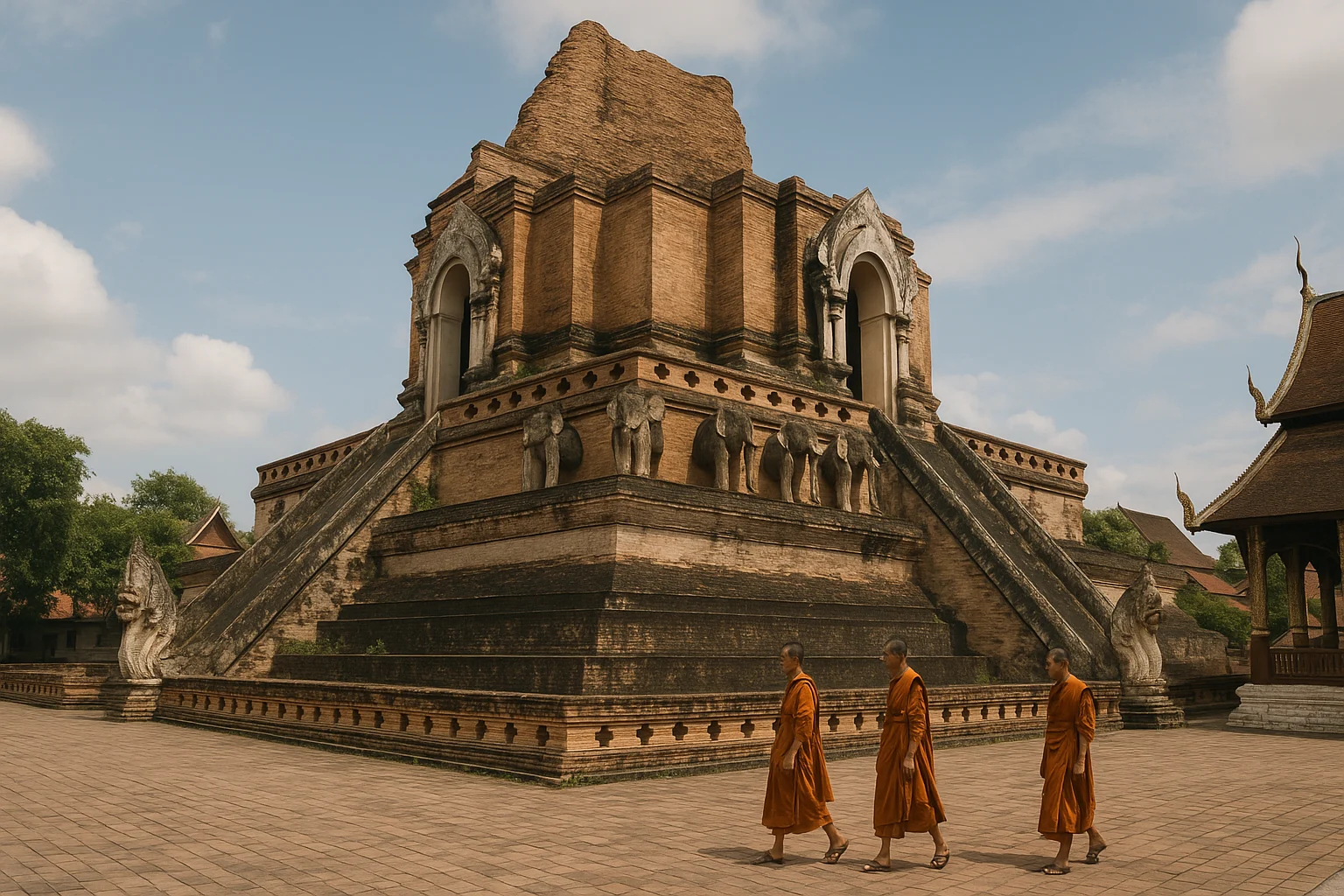
Wat Chedi Luang Travel Guide 2026: Chiang Mai's Ruined Stupa, Monks, and Visit Timing
Lanna KingdomPlan a focused Wat Chedi Luang visit with practical timing, temple etiquette, and old-city route tip...