Quick Info
Curated Experiences
Chiang Mai Doi Suthep Temple and City Highlights Tour
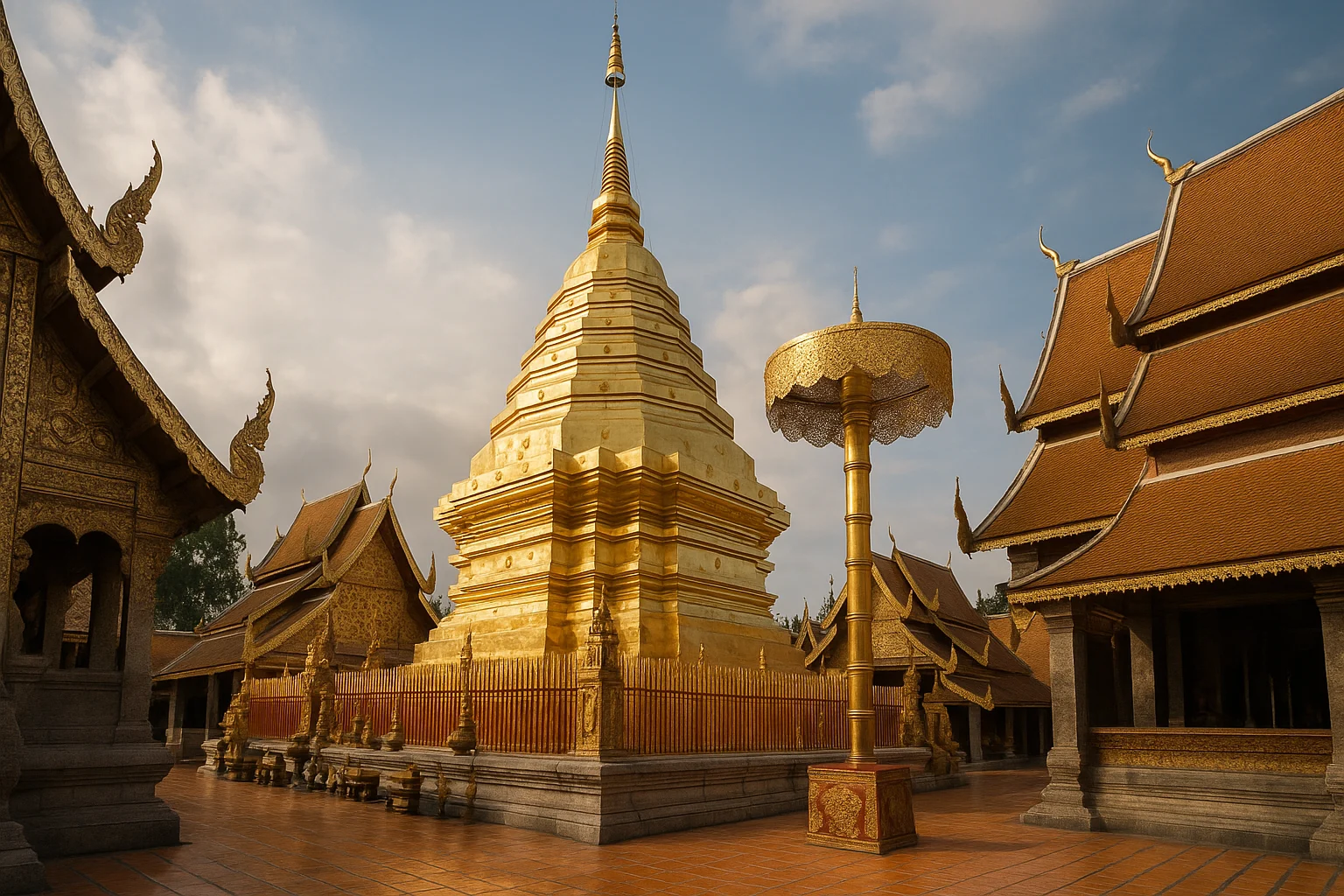
The golden chedi catches sunlight at 1,070 meters above the valley floor and throws it back toward the city below, a beacon visible from streets and rooftops across Chiang Mai. Wat Phra That Doi Suthep is not merely Chiang Mai’s most recognizable landmark — it is the spiritual anchor of northern Thailand’s most important city, the temple that locals say watches over everything beneath it. Monks chant here every morning. Pilgrims climb the 306-step naga staircase on Buddhist holidays. Incense smoke drifts across the upper terrace while the Ping River valley stretches to the eastern horizon. The golden spire has been continuously venerated for more than six centuries, and unlike many Southeast Asian heritage sites where tourism has overtaken tradition, Doi Suthep remains a functioning monastery first and a visitor destination second.
That distinction shapes everything about the experience. This is not a ruin to be explored or a museum to be toured. It is a living temple where the rhythms of devotion have not been interrupted since the Lanna Kingdom established the site in 1383. The approach is a pilgrimage route. The terrace is a place of active worship. The chedi enshrines a relic of the Buddha that believers have venerated for over six hundred years. Arriving with that understanding — and dressing, speaking, and moving accordingly — transforms what could be a quick sightseeing stop into one of the most grounding cultural encounters in northern Thailand.
Historical Context
The temple’s founding is inseparable from the political consolidation of the Lanna Kingdom under King Ku Na in the 1380s. According to the founding legend, a white elephant carrying a relic of the Buddha was released to choose the temple’s location. The animal climbed Doi Suthep, trumpeted three times, and died — marking the precise spot where the chedi would be built. Whether taken literally or read as political mythology, the legend reveals something essential: the temple was conceived as a statement of Lanna sovereignty and Buddhist legitimacy during a period when the kingdom was asserting independence from Sukhothai and the emerging Ayutthaya power to the south. Establishing a relic shrine on the mountain above the capital was not merely pious. It was strategic.
Construction of the original chedi dates to approximately 1383 CE. The structure was expanded significantly in the 16th century, when the chedi was raised to its current height and clad in copper plates later replaced with gold. The naga staircase — the serpent-flanked processional steps that remain the temple’s most iconic feature — was added in 1557 under the patronage of a Lanna noble family. The staircase codified in stone what pilgrims already understood: the ascent to the temple is not merely physical but spiritual, a transition from the secular lowlands to sacred mountain space.
Through Burmese occupation, Thai reunification, and the modern era, Doi Suthep never fell into ruin or abandonment. This continuity is what makes the site feel fundamentally different from restored monuments elsewhere in the region. Nothing here has been reconstructed for visitors. The chedi, the murals, the monastery buildings — all have been maintained by the same religious community, generation after generation, for over 640 years. The gold you see on the chedi was applied by monks and donors over centuries of accumulated devotion. The prayer bells that ring across the terrace were hung by pilgrims whose families still worship here. The temple is not a snapshot of the past. It is the past, still in motion.
What to See
The Naga Staircase
The 306-step staircase flanked by undulating seven-headed serpent balustrades is more than an entrance — it is a ritual threshold between the secular world and sacred space. The physical effort of the climb is part of the design. If your mobility allows it, take the stairs at least one direction rather than the funicular tram. The canopy of trees overhead filters the light, the steepening pitch of the steps forces you to slow, and the gradual reveal of the temple above creates an arrival sequence that no shortcut replicates. The naga (serpent) motif represents the mythical water serpents of Buddhist and Hindu cosmology who guard the transition to sacred ground. On Buddhist holidays the staircase fills with pilgrims carrying offerings, and the collective energy of hundreds of people ascending together provides an experience no ordinary morning visit can match.
The Golden Chedi and Upper Terrace
The heart of the complex. The gilded chedi rises from a broad terrace ringed by ceremonial parasols, Buddha images, and bell towers. Walk clockwise around the chedi following the flow of worshippers — this is the traditional circumambulation path and the correct way to experience the space. The panels depicting the Buddha’s life, the lotus motifs along the base, and the four directional Buddha statues at each corner unfold in sequence as you circle. The gold surface of the chedi catches and reflects light differently throughout the day: warm amber in the morning, nearly white at midday, deep orange in the late afternoon. Early morning visits often coincide with monks receiving alms on the terrace, adding living ritual to the architectural spectacle.
The Chiang Mai Viewpoint
The eastern overlook offers a panoramic view of Chiang Mai’s old city moat, the Ping River corridor, and the surrounding valley. On clear mornings — most common from November through February before the burning season haze sets in — visibility extends to the mountain ranges beyond. This viewpoint doubles as useful orientation if you plan to explore the old city on foot later: you can pick out the square of the moat, the spire of Wat Chedi Luang, the Night Bazaar area, and the Nimman district from above. Bring binoculars if you have them.
The Monastery Grounds
Most visitors cluster around the chedi terrace and leave within 30 minutes. If you have time, walk the quieter paths through the surrounding monastery compound, where monks’ quarters, meditation halls, and smaller shrines sit beneath mature trees. This is where the working-monastery character of Doi Suthep is most apparent. The contrast between the tourist-filled terrace and the contemplative hush of the monastic paths, separated by a few dozen meters, captures the dual nature of the site perfectly.
The White Elephant Statue and Museum
Near the base of the naga staircase, a small museum documents the temple’s history and the founding legend of the white elephant. The displays include historical photographs of the temple before modern restoration, religious artifacts, and information about the Lanna kingdom’s relationship with Buddhism. The museum is small but useful for visitors who want context before or after the climb.
Timing and Seasons
November through February offers the clearest skies and most comfortable temperatures. Morning temperatures at the temple’s elevation hover around 59 to 68°F (15 to 20°C) — noticeably cooler than the city below. Afternoon highs reach 77 to 86°F (25 to 30°C). This is the optimal window for photography, comfort, and viewpoint visibility.
March and April bring smoke haze from agricultural burning that can reduce visibility from the viewpoint to near zero and irritate eyes and lungs. If air quality is important to your experience — and at a site whose appeal relies substantially on panoramic views — avoid these months entirely. The rainy season from June through October means lush greenery and thin crowds but slippery stone steps and afternoon downpours that can arrive suddenly.
Arrive before 9:00 AM to beat the half-day tour buses that dominate from mid-morning onward. The mountain elevation provides cooler temperatures than the city, but direct sun on the open terrace is intense by midday. Sunrise visits are possible and offer the calmest, most contemplative atmosphere — the temple is accessible before official hours for early worshippers, and arriving at dawn to watch the valley fill with light below is one of Chiang Mai’s most memorable experiences. Sunset visits offer dramatic skies but heavier crowds from tour groups and local families.
Tickets, Logistics and Getting There
Admission is 30 baht (approximately $0.85 USD) for foreign visitors. The funicular tram that bypasses the naga staircase costs an additional 50 baht roundtrip. Hours are approximately 6:00 AM to 6:00 PM, though the temple grounds are partially accessible earlier for worshippers.
The most common transport from Chiang Mai is a shared red songthaew truck from the base of the mountain road near Chiang Mai Zoo. The fare is approximately 60 to 80 baht per person each way, negotiable. The ride takes 30 to 40 minutes up a winding mountain road with steep switchbacks. Songthaews depart when full (usually 8 to 10 passengers), so waits of 15 to 30 minutes are common during off-peak hours.
Rideshare apps (Grab, Bolt) work for the trip and cost approximately 200 to 400 baht each way depending on demand, with the advantage of departing on your schedule. Organized half-day tours ($49 and up) bundle Doi Suthep with other stops and handle logistics, but limit your time on site to 30 to 45 minutes — insufficient for a meaningful visit.
Scooter rental from the city is cheap (200 to 300 baht per day) but the mountain road has steep switchbacks, unpredictable traffic including tour buses, and limited guardrails. Only ride if you are genuinely experienced with mountain roads. Budget 2 to 3 hours total including round-trip transport from central Chiang Mai.
Practical Tips
- Shoulders and knees must be covered. Wraps are occasionally available for rent at the entrance, but availability is inconsistent — bring your own lightweight cover-up to avoid delays.
- Remove shoes before stepping onto any temple floor. Carry them or leave them at the designated racks.
- A light rain shell during the wet season (June through October) is essential. Mountain weather shifts faster than valley weather, and the stone staircase becomes slippery when wet.
- Shoes with grip are important for the naga staircase. The stone steps are worn smooth by centuries of foot traffic.
- Carry small bills for admission, the tram, offerings, and transport. ATMs are not available at the temple.
- Water is critical. The stair climb combined with altitude and heat (even in the cool season) causes faster dehydration than visitors expect.
- Keep voices low on the upper terrace. Do not step on or over prayer mats. Do not point your feet toward Buddha images or monks.
- The temple is a functioning monastery. Treat it accordingly. Photographs are welcome but behavior should match the space.
Suggested Itinerary
7:00 AM — Depart Chiang Mai Old City by songthaew or rideshare. Arrive at the base of Doi Suthep around 7:30 to 7:40 AM.
7:45 AM — Climb the 306-step naga staircase. Take your time — the canopy overhead, the serpent balustrades, and the gradual steepening of the pitch are all part of the experience. Allow 15 to 20 minutes.
8:05 AM — Arrive at the upper terrace. Circle the golden chedi clockwise, following worshippers. Study the life-of-Buddha panels, the directional Buddha statues, and the ceremonial parasols. Allow 20 to 30 minutes.
8:35 AM — Walk to the eastern viewpoint. On clear mornings the valley stretches to the distant mountain ranges. Identify Chiang Mai landmarks below. Allow 10 to 15 minutes.
8:50 AM — Explore the quieter monastery grounds beyond the main terrace. Observe the monks’ quarters, meditation halls, and smaller shrines.
9:10 AM — Descend via the staircase or tram. Visit the white elephant museum at the base if time allows.
9:30 AM — Depart by songthaew. Return to Chiang Mai Old City by 10:00 AM with time for a late breakfast before the morning temple circuit.
Afternoon continuation: Walk to Wat Chedi Luang in the Old City for the ruined-stupa counterpart to Doi Suthep’s maintained splendor. Add Wat Phra Singh and Wat Chiang Man for a comprehensive Chiang Mai temple day.
Nearby Sites
Wat Chedi Luang — In the Old City below, this ruined Lanna-era stupa provides the essential contrast to Doi Suthep. Where Doi Suthep is gilded and maintained, Wat Chedi Luang is truncated and exposed. Where Doi Suthep sits above the city in mountain isolation, Wat Chedi Luang anchors the urban center. Together they represent the full spectrum of Lanna Buddhist architecture — one preserved, one broken, both authentic.
Angkor Wat — For travelers tracing Buddhist and Hindu sacred architecture across Southeast Asia, Doi Suthep connects to Angkor as part of a broader tradition of mountain-temple sanctuaries. The Khmer concept of the temple-mountain finds its Lanna expression on Doi Suthep’s slopes.
Borobudur — Java’s massive Buddhist monument represents the same theological proposition as Doi Suthep — spiritual elevation expressed through physical ascent — on a vastly larger architectural scale.
Bagan — Myanmar’s temple-plain offers the contrast between a single hilltop sanctuary and an entire landscape of sacred architecture. Visitors moving between Chiang Mai and Bagan trace the northern arc of mainland Southeast Asian Buddhism.
Ascent as Practice
Doi Suthep rewards the visitor who resists the urge to rush. It is easy to reach from Chiang Mai, easy to photograph, and easy to check off a list in under an hour. But the temple is not designed for speed. It is designed for ascent — physical, spiritual, contemplative. The 306 steps of the naga staircase are not an inconvenience to be bypassed by the funicular tram. They are the point. The climb changes your breathing, shifts your attention from the everyday to the deliberate, and delivers you to the golden terrace in a state of mind that no parking lot ever could. Circle the chedi with the pilgrims. Sit on the terrace and watch incense smoke curl upward against the mountain forest. Let the pace of the place set your pace. When you do, Doi Suthep becomes not a viewpoint but a vantage point on a living tradition that has not paused or performed for six centuries. It simply continues, and invites you to join it, briefly, on the mountain.
Discover More Ancient Wonders
- Wat Chedi Luang — Chiang Mai’s ruined Lanna stupa in the heart of the Old City
- Angkor Wat — Cambodia’s mountain-temple masterpiece
- Borobudur — Java’s Buddhist monument of spiritual ascent
- Bagan — Myanmar’s vast temple plain across the Irrawaddy River
- Plan your Southeast Asia temple route with our beginner’s guide to visiting ancient sites
Quick Facts
| Attribute | Details |
|---|---|
| Location | Doi Suthep Mountain, Chiang Mai, Northern Thailand |
| Country | Thailand |
| Region | Northern Thailand |
| Civilization | Lanna Kingdom |
| Historical Period | 14th century CE–present |
| Established | c. 1383 CE |
| Elevation | ~1,070 meters (3,510 feet) |
| Naga Staircase | 306 steps |
| Admission | 30 baht (~$0.85 USD); tram 50 baht roundtrip |
| Hours | ~6:00 AM–6:00 PM daily |
| Best Season | November–February (clear skies, cool temperatures) |
| Best Time of Day | Before 9:00 AM; sunrise for the best atmosphere |
| Suggested Stay | 1.5–2.5 hours on site; 3 hours with transport |
| Distance from Chiang Mai | ~15 km; 30–40 min by songthaew |
| Coordinates | 18.8047, 98.9215 |
Frequently Asked Questions
How long should I spend at Wat Phra That Doi Suthep?
Most travelers need 1.5 to 2.5 hours including the staircase, main terrace, and viewpoint time.
What should I wear to Doi Suthep?
Dress modestly: shoulders and knees should be covered. Carry a light layer in case temple wrap coverage is required.
Is Doi Suthep better at sunrise or sunset?
Sunrise is usually calmer and cooler, while sunset can be dramatic but often busier with tour groups and local visitors.
Nearby Ancient Sites
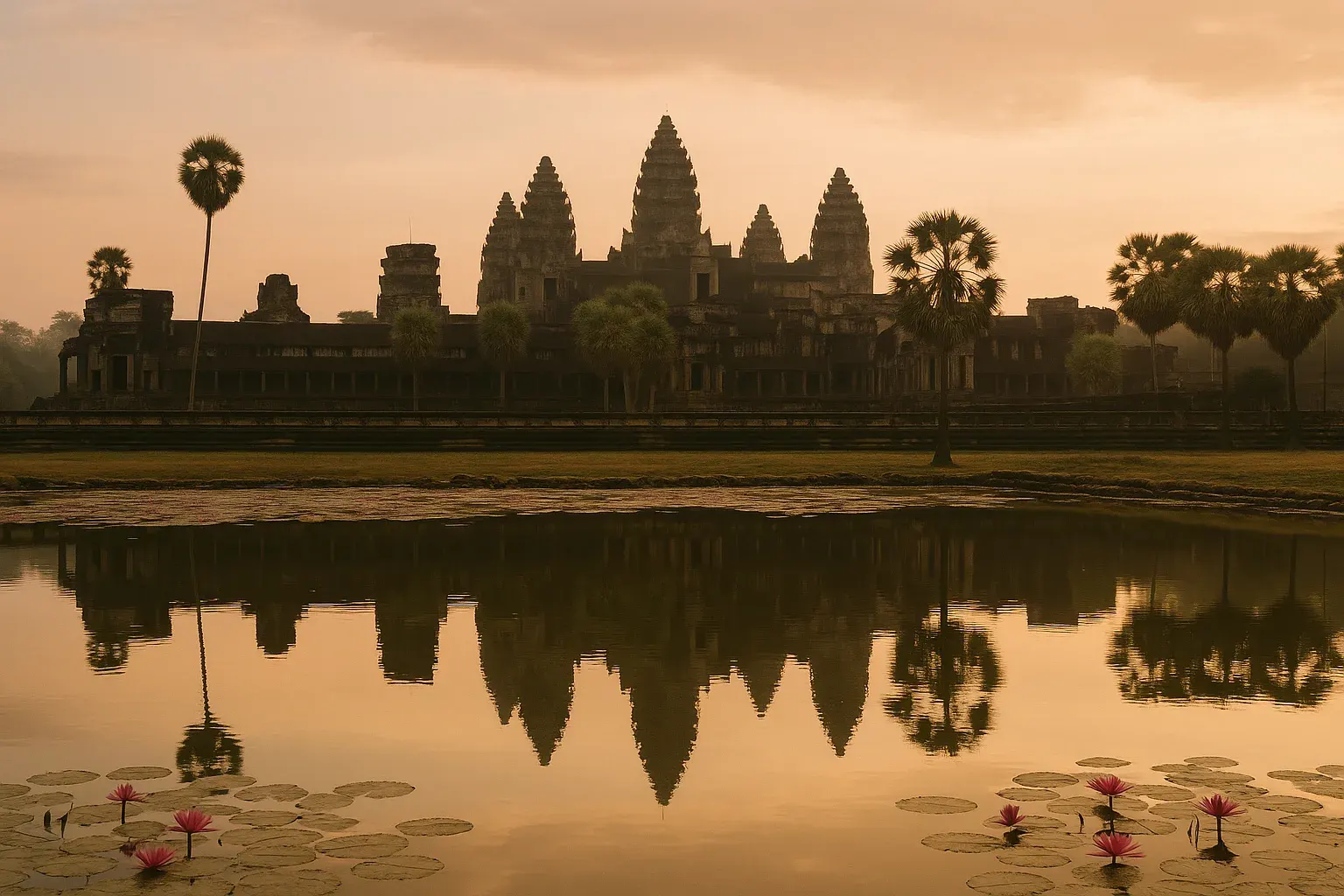
Angkor Wat Travel Guide 2026: Everything You Need to Know
KhmerAngkor Wat, the world's largest religious monument, spans over 400 acres in the heart of Cambodia. T...
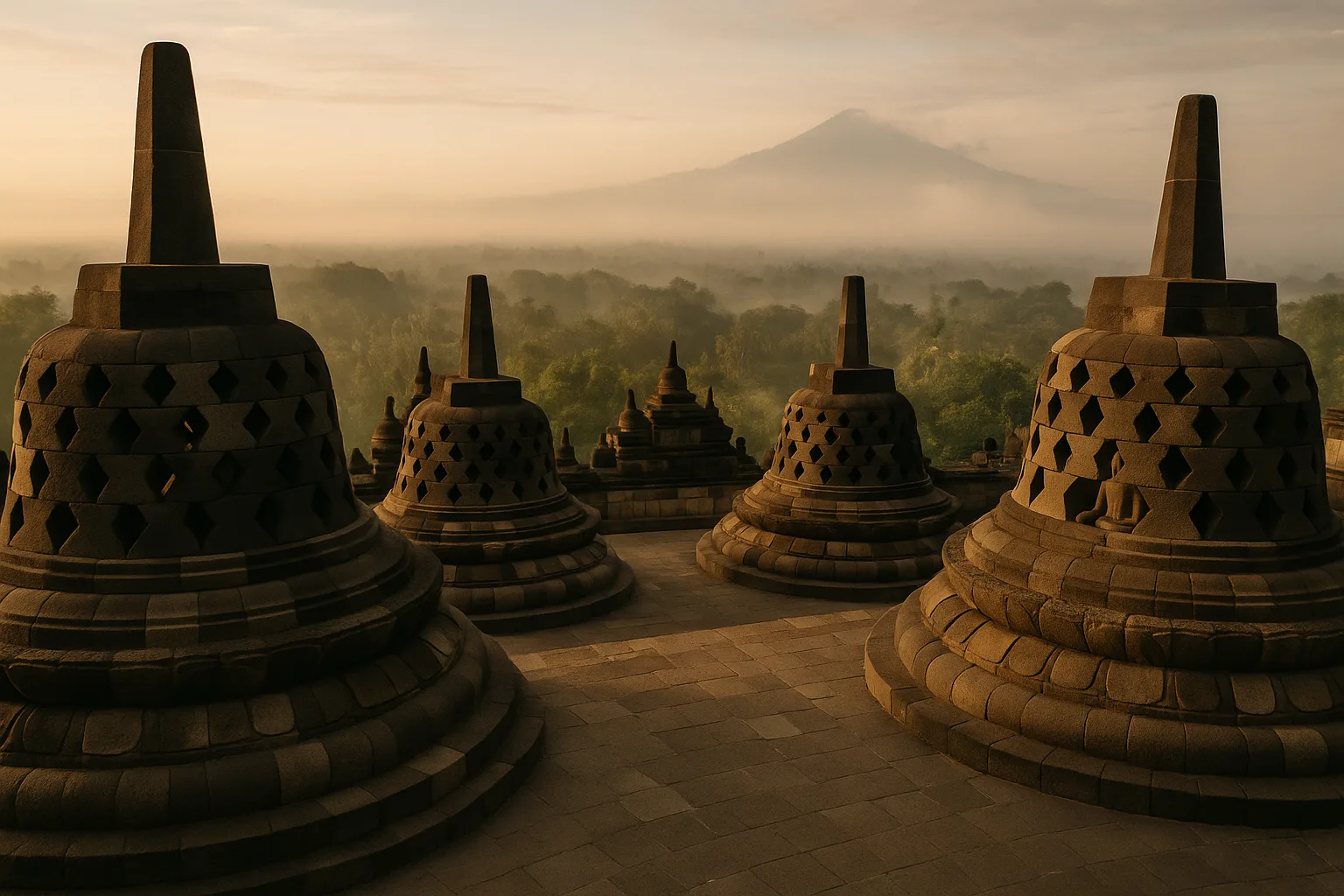
Borobudur Temple, Indonesia: The Sacred Mountain of a
Sailendra Dynasty (Buddhist)Discover Borobudur, the world's largest Buddhist temple and Indonesia's most visited attraction. Com...
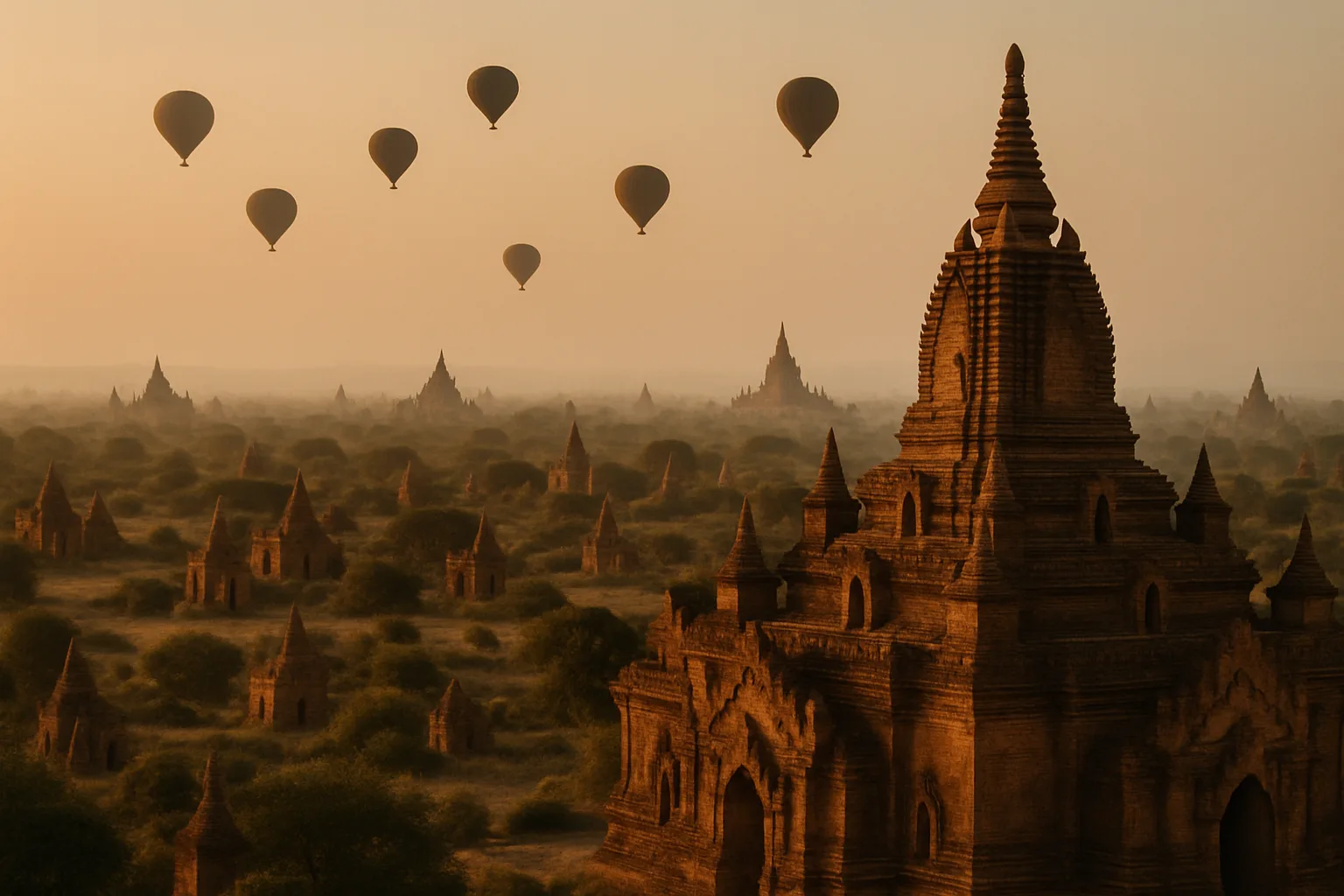
Bagan: 2,000 Temples Rising from the Myanmar Plains
Pagan Kingdom (Burmese)Explore Bagan, Myanmar's ancient temple city with over 2,000 surviving pagodas scattered across the ...