Quick Info
Curated Experiences
Whitby Abbey and Coastal Town Walking Tour
North York Moors and Whitby Day Trip from York
Dracula Tour and Whitby Abbey Visit
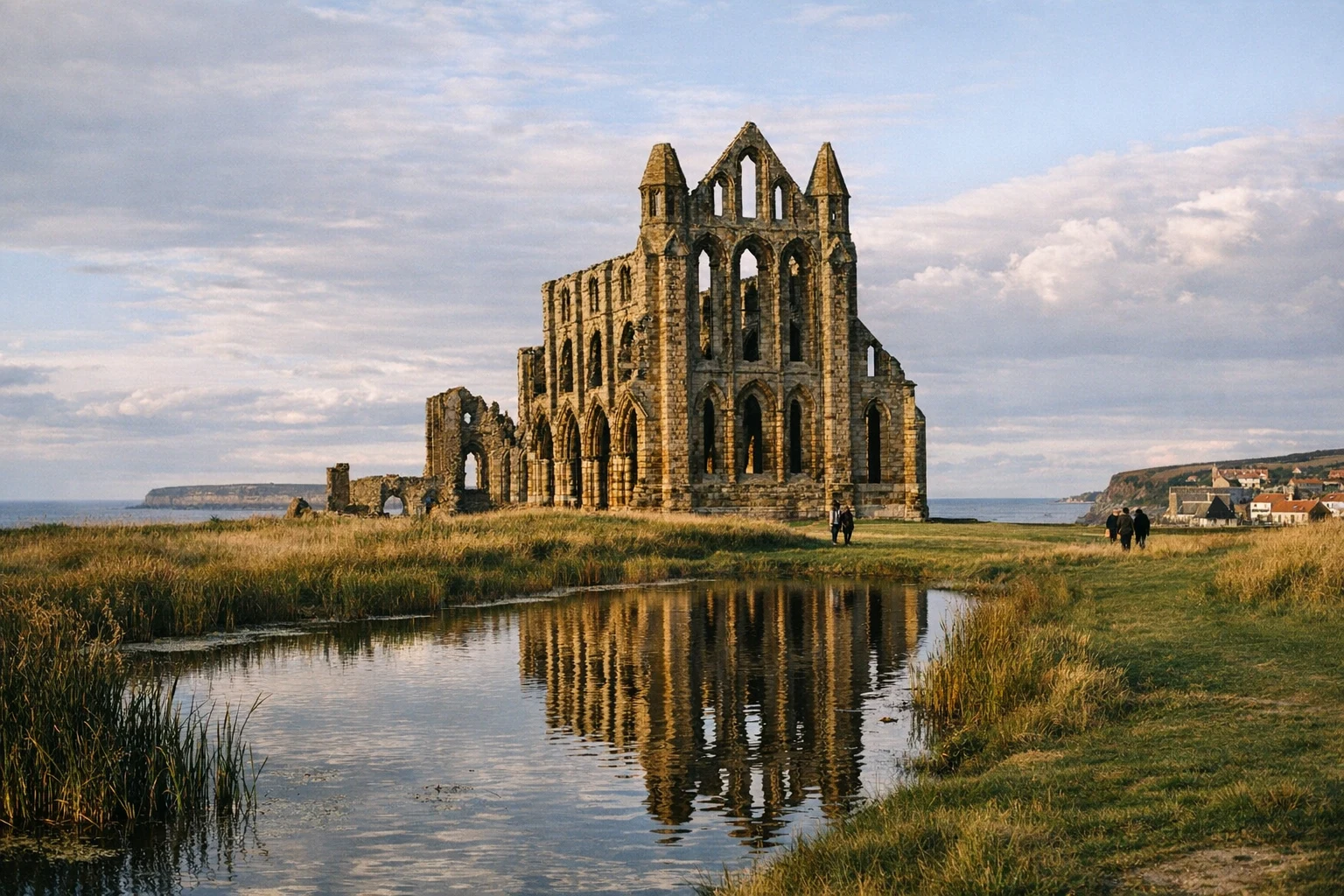
Perched high upon the windswept cliffs of North Yorkshire, Whitby Abbey stands as one of the most evocative and atmospheric ruins in the United Kingdom. From the moment you see the skeletal arches rising against the North Sea’s brooding sky, you sense you’ve arrived at one of Britain’s most storied places—a timeless monument where myth, history, and raw natural beauty collide. Whitby Abbey, located in the historic seaside town of Whitby, embodies centuries of faith, creativity, and human enterprise. Today, its magnificent facade—now roofless—continues to inspire awe and draw visitors from across the world, each seeking their own connection to the abbey’s monastic legacy, its haunting romance, and its captivating stories.
The abbey’s setting, atop Whitby’s East Cliff, offers panoramic views of the bustling fishing harbor below, winding cobbled streets, and the North Sea’s shifting hues. For over a millennium, this headland has attracted settlers, monks, kings, and—later—writers and artists who found inspiration in the interplay of stone, sky, and sea. Famously, Whitby Abbey entered the annals of literature as the dramatic backdrop for Bram Stoker’s “Dracula,” deepening its association with both Gothic horror and British heritage. But the site’s true significance stretches far deeper, from its early Christian origins in the 7th century, through battles, Viking raids, artistic flourishing, and post-medieval ruin. Walking its grassy grounds, you tread the same earth as saints, scholars, marauders, and poets.
Whitby Abbey’s allure is not only in its picturesque remains, but also in its role as a beacon of English medieval culture—an anchor amid the tides of history. Whether you are drawn by the echoes of ancient prayers, striking photo opportunities, or simply the thrill of exploring magnificent ruins, a visit to Whitby Abbey promises both vivid storytelling and a deep sense of discovery.
History
Founding and Early Medieval Glory
Whitby Abbey’s story begins in AD 657, when the formidable Abbess Hild (or Hilda) founded a monastery at Streaneshalch—later known as Whitby—at the behest of King Oswiu of Northumbria. This early double monastery, housing both men and women under Hild’s wise guidance, soon gained renown as a center of learning and piety across Anglo-Saxon England. Hild herself became celebrated for her leadership, and Whitby attracted noble and royal patronage, thriving as a hub of religious life and scholarship.
The abbey’s most famous moment in this early period was the Synod of Whitby in AD 664. This council, called by King Oswiu, brought together leaders of the Roman and Celtic Christian traditions to resolve differences in religious practice—most notably, how to calculate the date of Easter. The synod’s decision to follow Roman customs set a precedent for English Christianity, marking Whitby as the spiritual crossroads of its age.
Destruction and Renewal in the Viking Age
Like much of England’s North Sea coast, Whitby was not spared the violence of Viking raids. In the late 9th century, Norse invaders devastated the abbey, scattering the monastic community and leaving the site desolate. For nearly two centuries, the ruins stood quietly as the tides washed below and the old stones fell prey to time and weather.
It was not until the Norman Conquest that Whitby Abbey experienced a renaissance. In 1078, Reinfrid, a former soldier turned monk, arrived to restore monastic life under the new Norman regime. With the support of William de Percy, a powerful Norman noble, the abbey was rebuilt—first in wood, then in grander stone. These efforts marked the beginning of the abbey’s second golden age.
Gothic Grandeur: 13th to 16th Centuries
From the late 12th century onward, successive waves of building and artistic ambition elevated Whitby Abbey to new heights. By the 13th and 14th centuries, the abbey church was transformed into a soaring masterpiece of Early English Gothic architecture, its nave lined with pointed arches and tall lancet windows designed to fill the interior with ethereal light. The surrounding monastic complex included cloisters, dormitories, a scriptorium, and kitchens, all supporting a thriving community of Benedictine monks.
Whitby continued to serve as a center for religious observance, spiritual retreat, and artistic production, wielding significant local influence and growing landholdings throughout the medieval period. Pilgrims and travelers stopped frequently, drawn by the abbey’s reputation and the relics of St. Hild.
Dissolution and Romantic Ruin
Whitby Abbey’s story took a dramatic turn in the 16th century with the Dissolution of the Monasteries under King Henry VIII. In 1539, the community was disbanded, and much of the abbey’s treasures, manuscripts, and property were seized by the Crown. The once-glorious buildings fell into gradual decay, their stones plundered for local construction and left increasingly open to the elements.
Romantic artists and writers, especially during the 18th and 19th centuries, rediscovered Whitby Abbey’s haunting silhouette. The ruins became a muse for landscape painters and the setting for Bram Stoker’s world-famous vampire tale, “Dracula,” published in 1897. By the late Victorian period—and especially in the early twentieth century—conservation efforts began in earnest, preserving the site as a cherished symbol of English heritage.
Modern Care and Cultural Legacy
Today, Whitby Abbey is managed by English Heritage and protected as a Grade I listed building. It hosts an acclaimed visitor centre, engaging exhibits, and cultural events including dramatized tours, music concerts, and even themed festivals. The abbey remains an archaeological treasure, with ongoing excavations and research shedding light on its earliest days and medieval life. Its legacy as a place of learning, peace, and contemplation continues to inspire all who wander through its echoing arches, reminding visitors of the enduring power of history amidst Yorkshire’s wild and beautiful coast.
Key Features
Whitby Abbey is celebrated as much for its architectural drama as its air of mystery and melancholy. From the moment you ascend the famous 199 stone steps leading up from Whitby’s old town, the site commands your attention, each ruined wall and arch telling a story written in limestone and centuries.
The most striking element is the abbey church itself, an awe-inspiring fragment of English Gothic design. The main ruins date primarily from the 13th and 14th centuries, with tall, slender lancet windows that once filled the nave with natural light. Although time and weather have removed the roof and much of the intricate stonework, the symmetrical rows of pointed arches and massive columns remain, lending the church its unmistakable silhouette—visible for miles along the coast and far out at sea.
Wandering among the fragmented remnants of the choir and high altar, visitors can picture the solemn mass, the chants echoing under now-open sky, and the everyday rhythm of monastic life. Moss and wildflowers thrive among the stones, and gulls soar through the empty windows—nature reclaiming what once was the home of devotion and scholarship.
The atmospheric cloister garth, now a grassy open area, would once have been enclosed by covered walks where monks meditated, read scripture, and worked on illuminated manuscripts. Traces of the Chapter House, where the abbot would have led daily meetings, and the refectory, where the community dined in silence, provide further glimpses into the Benedictine daily routine.
The abbey’s proximity to the edge of the East Cliff provides spectacular coastal viewpoints. From the perimeter paths, the scene shifts from the ruins themselves to panoramic vistas overlooking Whitby harbour, the town’s iconic red-roofed cottages, and the unceasing drama of the North Sea. It is especially beautiful at sunrise or on misty, windswept afternoons—moments that seem to collapse centuries and bring the past vividly to life.
The modern visitor centre, built sensitively into the former Cholmley family mansion beside the ruins, complements your exploration. Here, you’ll find interactive exhibits on the abbey’s history, archaeological finds from ancient burials to fragments of glass and jewelry, and displays explaining the significance of the Synod of Whitby. The centre also houses a gift shop, café, and accessible facilities, ensuring comfort for all visitors.
Throughout the year, Whitby Abbey plays host to living history events, dramatic performances, and seasonal festivals. The connection to Bram Stoker’s “Dracula” is celebrated each autumn, drawing fans of Gothic fiction and supernatural tales. Whether shrouded in sea-mist, lit by golden sunlight, or brooding beneath dark clouds, the abbey offers photographers and artists endless inspiration.
Getting There
Reaching Whitby Abbey is an experience in itself, combining scenic travel with timeless charm. Whitby sits on the North Yorkshire coast, easily accessible by car, train, or bus, with the abbey located prominently above the town on East Cliff.
If traveling by car, Whitby is roughly 90 minutes by road from York (50 miles/80 km) or Scarborough (20 miles/32 km), both of which are well-connected towns. Whitby Abbey is well-signposted, and drivers can use the main pay-and-display car park adjacent to the visitor centre. On busy days—particularly during high season or special events—overflow parking is available nearby, and flat daily parking rates usually range from £4 to £7 for several hours.
For those using public transport, regular trains run between Middlesbrough and Whitby, offering picturesque journeys through the Esk Valley. York station connects to Middlesbrough with fast trains, making the journey to Whitby a manageable two to three hours from most major northern cities. Bus services connect Whitby with Scarborough, Middlesbrough, and the scenic North York Moors villages, with fares typically between £4 and £9 for single journeys.
From Whitby’s town centre, there are two primary approaches to the abbey. The most famous—and atmospheric—is to climb the 199 stone steps from Church Street, ascending through the old St. Mary’s Churchyard to the dramatic headland. This route is steep but manageable for most visitors. Alternatively, those with reduced mobility may access the abbey via the car park and paved pathways, bypassing the steps entirely for a level approach through the visitor entrance.
Cyclists enjoying the “Cinder Track” route between Scarborough and Whitby will find secure bicycle parking at the abbey. For the more adventurous, guided walking tours are available, combining abbey admission with explorations of Whitby’s historic alleys, harbor, and cliffs.
When to Visit
The best time to visit Whitby Abbey depends on your preferences for weather, crowds, and local events. The abbey is open year-round, but each season offers a unique mood and experience.
Spring brings crisp sea breezes and carpets of wildflowers, with the ruins bathed in bright, clear light and fewer visitors crowding the site. Temperatures are mild, typically ranging from 8° to 15°C (46° to 59°F), making it perfect for those who enjoy a tranquil atmosphere and scenic photography.
The summer months of June through August see the greatest influx of tourists, with families, history buffs, and international travelers drawn to Whitby’s festivals, regattas, and maritime activities. The abbey hosts popular living history events and special guided walks during this period, so advance booking is recommended. Expect more crowded conditions, with temperatures in the comfortable range of 15° to 20°C (59° to 68°F), and the surrounding town bustling with activity.
Autumn transforms the abbey grounds with golden leaves and atmospheric mists, intensifying the site’s Gothic allure. October is especially popular among “Dracula” fans, who gather for the annual Whitby Goth Weekend—a celebration of Gothic music, fashion, and literature that brings the town to life with costumes and themed events.
Winter offers the quietest experience, with bracing winds and dramatic skies lending the ruins a desolate beauty. The abbey is open on a reduced schedule, and some facilities may close for maintenance or inclement weather, so it’s important to check ahead. This is the best time for solitude and moody photography, though the hilltop location can be exposed to cold gusts and icy patches.
Regardless of the season, it’s wise to bring layers and waterproof gear—as the North Sea weather can be changeable—and to allow extra time to wander Whitby’s harbor, explore local seafood restaurants, or stroll along the town’s historic piers.
Quick Facts
| Fact | Detail |
|---|---|
| Location | East Cliff, Whitby, North Yorkshire, England, United Kingdom |
| Founded | AD 657 by St. Hild (Hilda) of Whitby |
| Most Notable Event | Synod of Whitby, AD 664 |
| Architectural Style | Early English Gothic (13th-14th centuries) |
| Religious Order | Benedictine |
| Managed By | English Heritage |
| Admission Fee | Adults £11, Children £6.60, Family tickets £28.60 (2024 rates, subject to change) |
| Accessibility | Visitor centre, shop, café, accessible toilets, step-free approach from the main car park |
| Closest Train Station | Whitby Station (1 mile/1.6 km) |
| Famous Literary Connection | Bram Stoker’s “Dracula” (1897) |
| Annual Events | Living history days, Whitby Goth Weekend, music performances |
| Parking | Pay and display car park adjacent to abbey entrance |
| Time to Visit | Typically 1.5–2 hours, more for guided tours or exploration |
| Website | English Heritage: Whitby Abbey |
Visiting Whitby Abbey is more than a step into the past—it’s an encounter with the raw energy of a landscape, the endurance of human creativity, and the enduring fascination of England’s northern coast. Whether shrouded in fog, caught in sunlight, or ringing with festival music, Whitby Abbey remains a place where imagination takes flight and history lingers in every stone.
Frequently Asked Questions
What are the opening hours of Whitby Abbey?
Whitby Abbey is usually open daily from 10am to 6pm, but hours can vary by season. It's best to check the English Heritage website for the latest times.
Is Whitby Abbey accessible for wheelchair users?
The visitor centre and main approaches are accessible, but some ruined areas have uneven ground. Accessible parking and toilets are available.
Do I need to buy tickets in advance?
Buying tickets online in advance is recommended, especially during weekends and holidays, to guarantee entry and potentially save on admission fees.
Is parking available at Whitby Abbey?
Yes, there is a large pay-and-display car park near the entrance, with additional overflow parking during busy periods.
How long should I allow to visit Whitby Abbey?
Most visitors spend 1.5 to 2 hours exploring the ruins, visitor centre, and enjoying the coastal views, although longer visits are common for history enthusiasts.
Nearby Ancient Sites
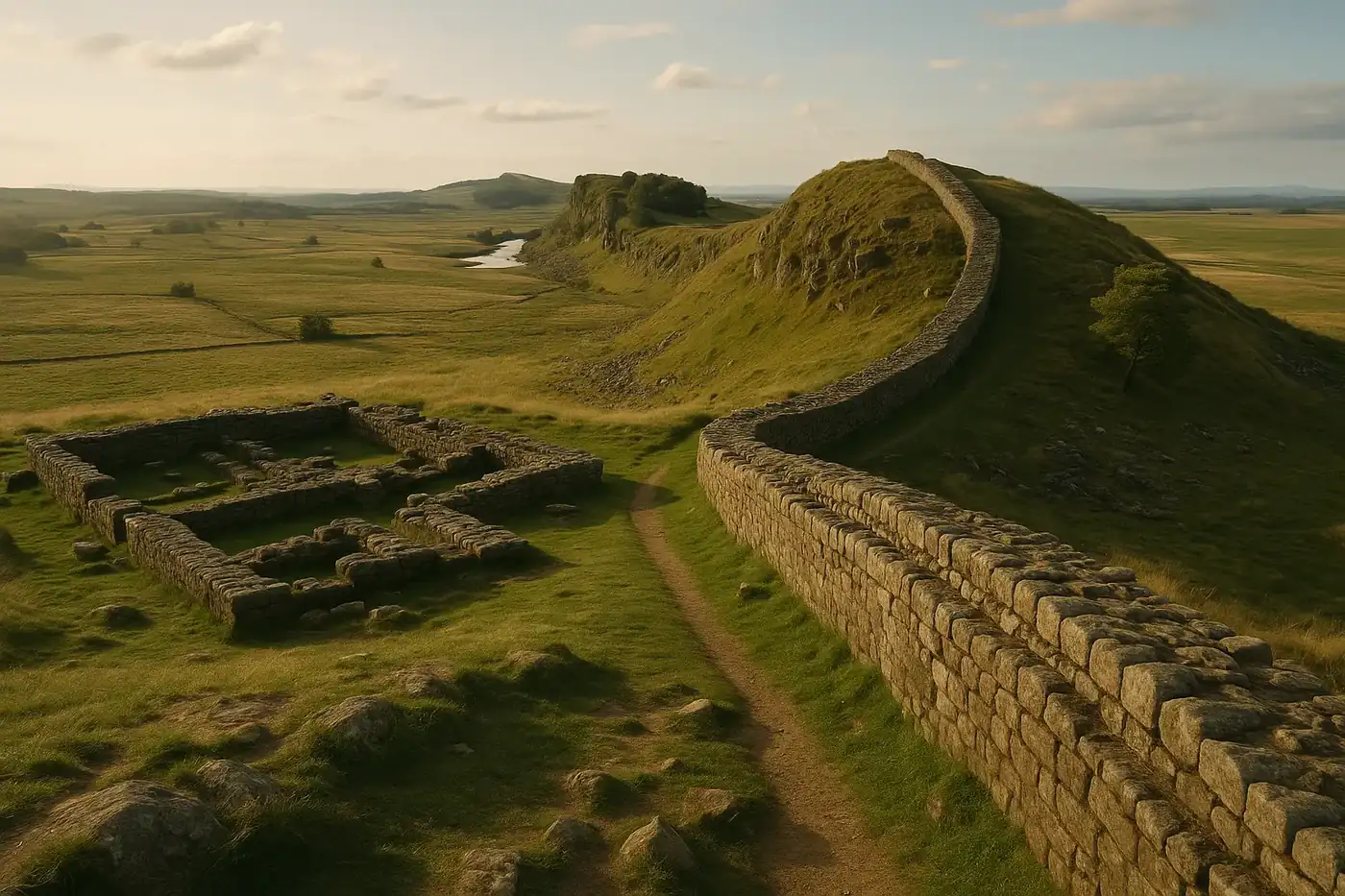
Hadrian's Wall Travel Guide 2026: Best Sections, Roman History, and Practical Planning
Roman BritainPlan a UK frontier-heritage day at Hadrian's Wall with clear section priorities, practical one-day r...
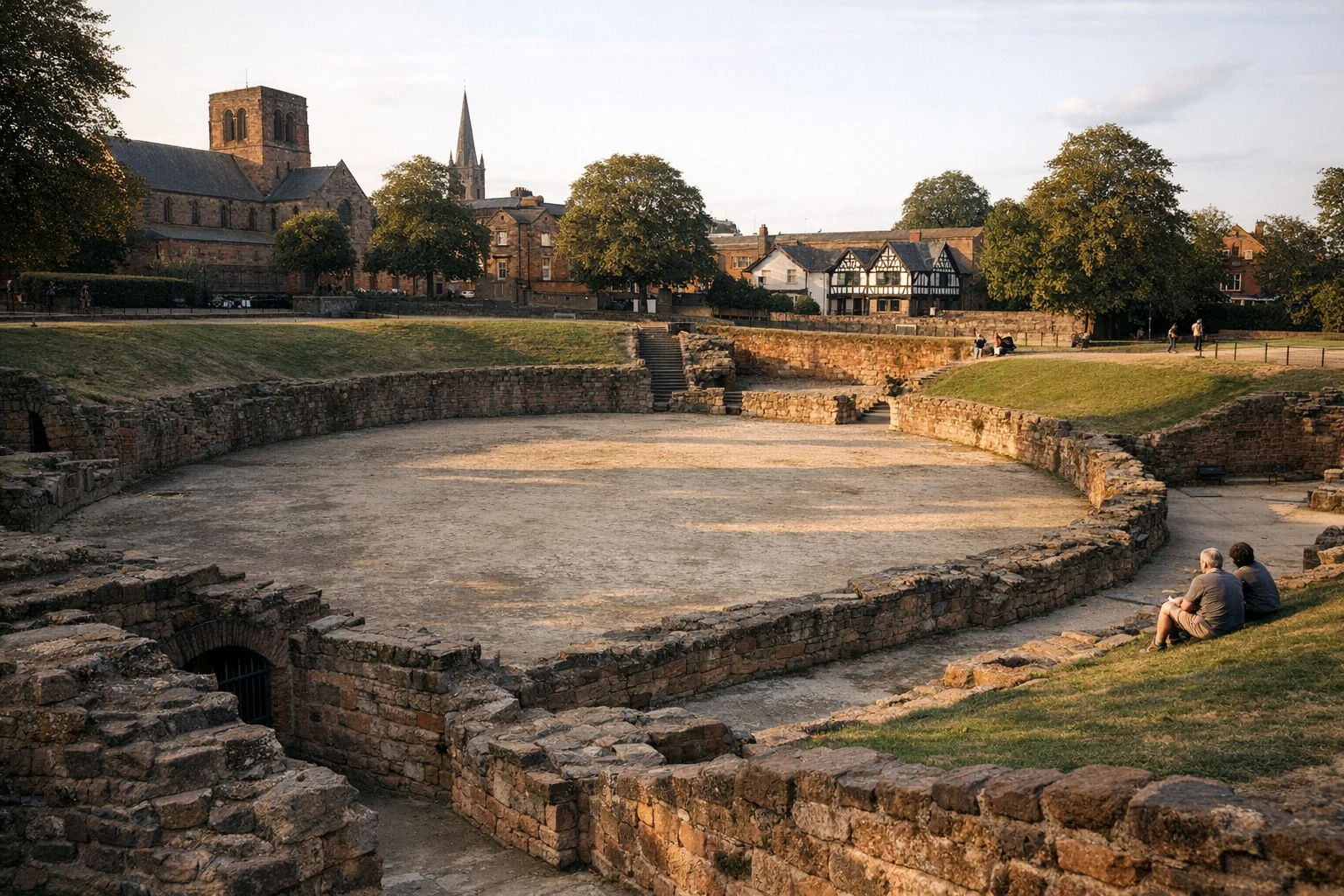
Chester Roman Amphitheater
Explore Chester Roman Amphitheater in the United Kingdom, the largest known Roman amphitheater in Br...
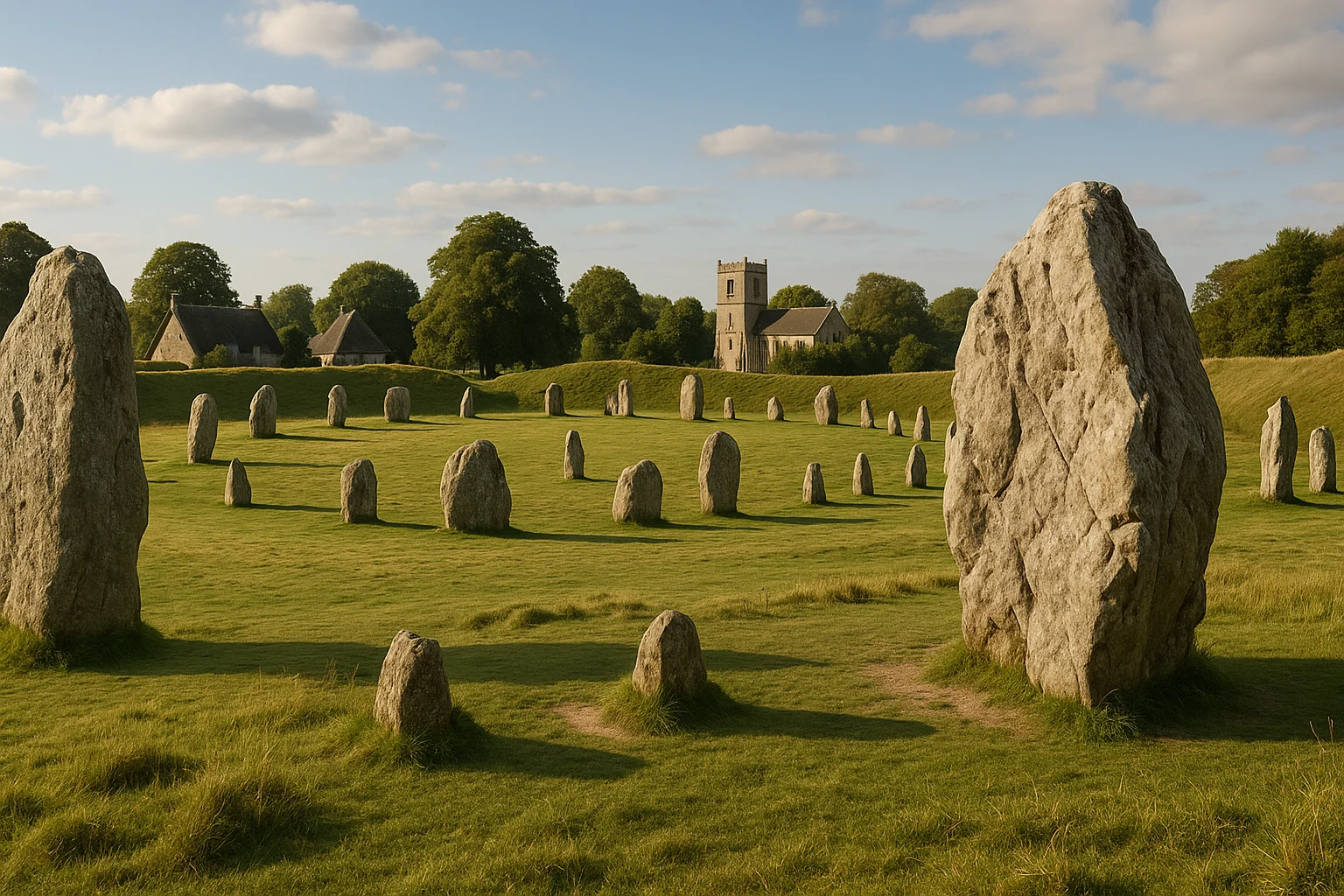
Avebury Stone Circle Travel Guide 2026: Best Walk Routes, History, and Visit Planning
Neolithic BritainPlan a stronger visit to Avebury Stone Circle with practical walking routes, landscape context, and ...