Quick Info
Curated Experiences
Wuhou Temple and Jinli Ancient Street Guided Tour
Chengdu City Highlights: Wuhou Shrine and Panda Base
Three Kingdoms Heritage Half-Day Tour from Chengdu
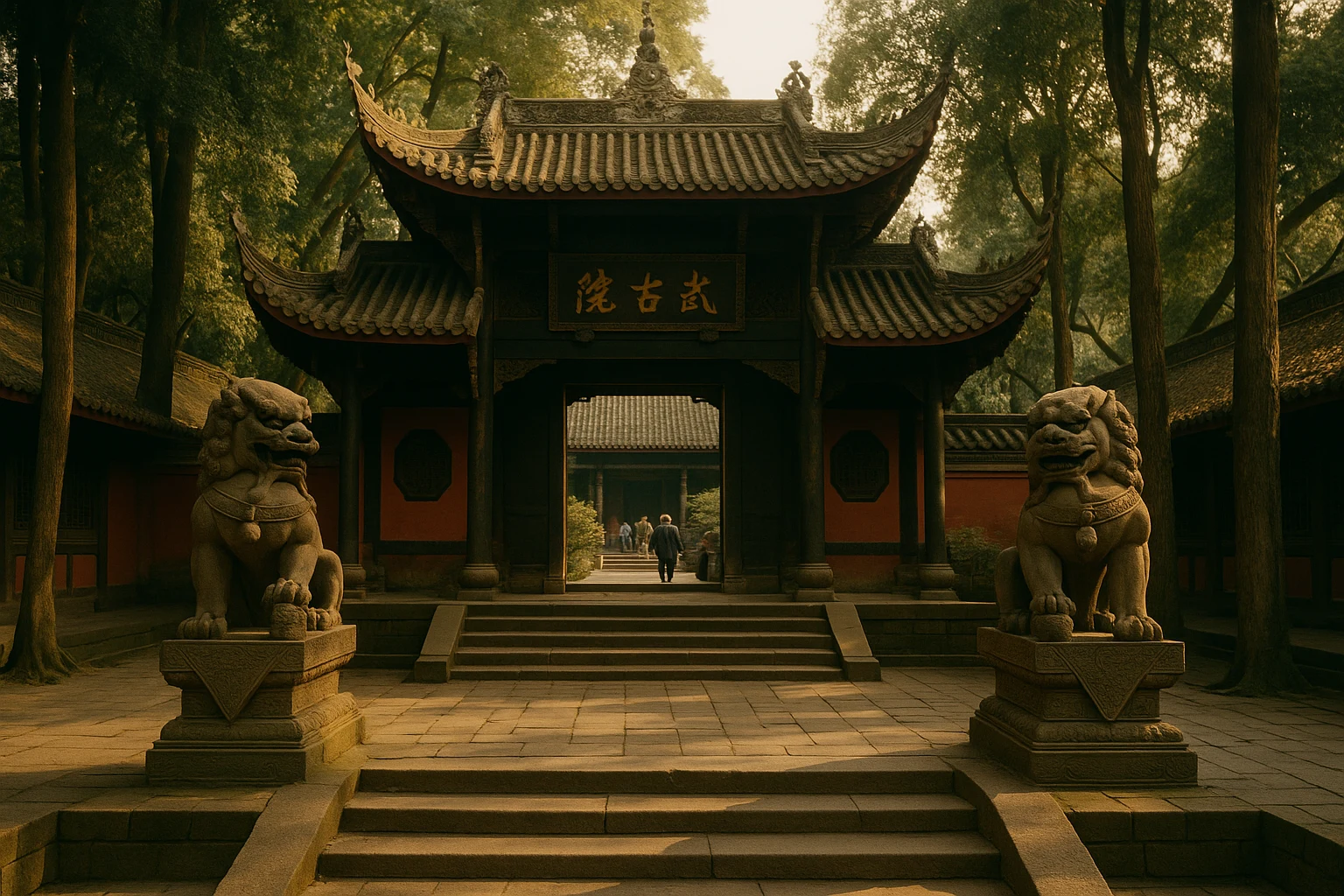
Nestled among ancient cypresses in the heart of Chengdu, Sichuan Province, Wuhou Temple stands as China’s most complete and best-preserved memorial complex dedicated to the heroes of the Three Kingdoms era. Named for the Marquis of Wu — the posthumous honorific bestowed upon Zhuge Liang, the legendary prime minister and military genius of the Shu Han kingdom — the shrine draws millions of visitors each year who come to walk its vermillion corridors, trace weathered inscriptions on Tang dynasty steles, and breathe the incense-tinged air that has honored these figures for more than seventeen centuries. Liu Bei, the benevolent warlord who founded the Shu Han state and appointed Zhuge Liang as his closest counselor, is also entombed and commemorated here, making Wuhou Temple the only surviving site in China where a ruler and his minister are enshrined side by side. The complex sits in the Wu侯祠 neighborhood of southern Chengdu and flows seamlessly into the bustling Jinli Ancient Street, creating an experience that moves naturally from solemn historical contemplation to the color and noise of traditional Sichuanese commerce.
History
Origins in the Western Jin and Liu Song Dynasties
The impulse to honor Zhuge Liang at this precise location began almost immediately after his death in 234 CE, when the state of Shu Han was still fighting to unify China under Liu Bei’s heirs. Zhuge Liang died during the Northern Expeditions, the series of military campaigns he launched in a lifelong attempt to restore the Han dynasty. Grief and veneration ran deep, and local communities in the Chengdu basin began constructing small shrines to his memory within a generation of his passing. By the Western Jin dynasty (265–316 CE), a formal Zhuge Liang shrine existed in Chengdu, likely near the site of Liu Bei’s existing mausoleum, and the two cults of devotion gradually merged. The Liu Song–period writer Pei Ziye noted in the fifth century that worshippers from across Sichuan came to this location to honor both the emperor and his adviser as though they were inseparable — a pairing that would define the site’s identity for all subsequent centuries.
Tang and Song Expansion
The Tang dynasty (618–907 CE) elevated Wuhou Temple’s prestige dramatically. Emperor Xuanzong and later Tang rulers regarded Zhuge Liang not merely as a local hero but as the paragon of loyal service and strategic brilliance — qualities the dynasty wished to cultivate among its own officials. Tang-era poets including Du Fu, who lived in Chengdu during his years of exile, wrote verses describing the site’s cypress-shaded melancholy and the weight of lost kingdoms. Du Fu’s famous couplet — “Where is the prime minister’s shrine? / Deep in the cypress forest, northwest of Jinli” — remains one of the most quoted lines in Chinese literary history and speaks directly to an eighth-century version of the temple. Stone steles inscribed with Tang imperial calligraphy survive in the complex today, their surfaces weathered but still legible. During the Song dynasty (960–1279 CE), popular devotion to the Three Kingdoms narrative intensified through the spread of storytelling, drama, and eventually early printed novels, and the temple complex at Chengdu expanded accordingly to accommodate large-scale public rituals and commemorative ceremonies.
Destruction and Qing Reconstruction
The late Ming dynasty brought catastrophe to Chengdu. Zhang Xianzhong, the rebel leader who briefly established his own kingdom in Sichuan in the 1640s, systematically sacked the city and its institutions before Qing forces defeated him. The Wuhou Temple complex was largely destroyed in this violence, and the surrounding district was left depopulated. Reconstruction began in earnest in 1672 under the Kangxi Emperor’s administration, with local officials commissioning an entirely new ensemble of halls, gates, and gardens on the ancient foundations. The Qing builders retained the dual focus on Liu Bei and Zhuge Liang, organizing the complex along a south-north central axis with the main imperial halls honoring Liu Bei at the front — reflecting Qing Confucian protocol about precedence between ruler and subject — and the Wuhou Hall dedicated to Zhuge Liang set slightly behind. This layout, preserved to the present day, quietly navigates the paradox of a temple named for the minister rather than the emperor it technically subordinates.
Modern Era and UNESCO Recognition
Following the establishment of the People’s Republic, Wuhou Temple was designated a key cultural protection site in 1961. Renovation work carried out from the 1980s onward has stabilized the historic structures, reintroduced period-appropriate landscaping, and expanded interpretation facilities. The adjacent Jinli Street was developed in the early 2000s to provide a commercial and cultural buffer zone that funnels visitor traffic away from the most sensitive historic zones while presenting Sichuanese folk arts, snacks, and handicrafts. Today the Wuhou Temple Museum oversees the complex, housing one of China’s most significant collections of Three Kingdoms–related artifacts, inscribed steles, and painted sculpture ensembles.
Key Features
The Liu Bei Hall and Imperial Tomb
Entering through the outer gate and crossing the first courtyard, visitors encounter the Liu Bei Hall, the largest single structure in the complex and the formal anchor of the central axis. Inside, a gilded statue of Liu Bei dominates the main chamber: he is depicted seated in imperial regalia, his expression combining the gravity of rulership with the warmth that his traditional portrayal always emphasizes. Flanking him are life-size sculptures of his advisers and generals, including the strategist Pang Tong and the civil official Sun Qian, rendered with individual faces and postures that depart from the generic temple statue conventions common elsewhere. Behind the hall, a low mound rising beneath ancient trees is identified as Liu Bei’s actual burial mound — one of the remarkable claims that no archaeological excavation has definitively tested, though historical records from the fourth century CE mention his interment at this location. Whether or not the mound contains imperial remains, the spatial relationship between the memorial hall and the presumed tomb gives the Liu Bei section of the complex a gravity unusual among Chinese memorial shrines.
The Wuhou Hall and the Zhuge Liang Legacy
The Wuhou Hall, reached through a second gate and courtyard, enshrines a gilded bronze statue of Zhuge Liang flanked by his son Zhuge Zhan and grandson Zhuge Shang — both of whom died fighting the Wei forces that ultimately conquered Shu Han in 263 CE, lending the display an almost unbearable quality of dynastic tragedy. Zhuge Liang is depicted holding a feather fan, the attribute that in Chinese popular culture has come to signify his calm, bird’s-eye view of chaos, his ability to read the patterns of wind and battle where others saw only noise. Surrounding the hall are the Side Corridors of Civil and Military Officials, long gallery spaces lined with painted clay sculptures of the fourteen most important civil ministers and fourteen most important military generals of Shu Han. These forty-seven surviving figures — some dating to the Qing reconstruction, others repaired or replaced over subsequent generations — constitute one of the largest and most artistically coherent Three Kingdoms–era sculpture ensembles in existence.
The Stele Forest and Ancient Inscriptions
The eastern precinct of the complex contains a remarkable concentration of carved stone steles spanning more than a thousand years. The oldest and most celebrated is the Tang Stele, erected in 809 CE by the Tang official Pei Du, who composed the text, the calligrapher Liu Gongchuo wrote the characters, and the stonecutter Wang Tong carved them — an arrangement described in the inscription itself and celebrated by contemporaries as a work combining three perfections. The stele records Zhuge Liang’s virtues in formal prose and establishes the rhetorical template that all subsequent Chinese official memorials to him would follow. Alongside it stand Song, Ming, and Qing steles recording repairs, imperial visits, donations, and poetic tributes. Reading the progression of these inscriptions is in itself a history of how Zhuge Liang’s legacy was constructed, contested, and continuously renewed across dynasties with very different political needs.
Gardens, Plum Blossoms, and the Red Wall Lane
The garden areas woven between the halls are not incidental: they are part of the complex’s historical design, and the ancient cypresses and ginkgo trees planted during earlier reconstruction phases are now protected specimens with their own registry entries. A section of red-ochre perimeter wall running along one garden path has become perhaps the most photographed single element of the site — a long lane where the warm red of the rammed-earth wall contrasts with the trailing branches of plum and bamboo. This Red Wall Lane (红墙小道) is an unofficial name that has gained wide circulation through social media, and it tends to be most crowded in late afternoon when low-angle sunlight catches the color at its warmest. The plum groves within the garden bloom in late January and February, drawing large crowds for the annual Plum Blossom Festival that the temple hosts during that period.
Jinli Ancient Street
Immediately east of the main temple complex, Jinli Ancient Street occupies a strip of reconstructed Qing-style commercial buildings that presents Sichuanese folk culture in accessible, walkable form. Vendors sell Three Kingdoms–themed souvenirs alongside local specialties: sugar paintings, shadow puppets, Sichuan embroidery, and the omnipresent mapo tofu and dan dan noodles. While Jinli is unambiguously a commercial construction rather than a heritage site, its proximity to the temple and its evening lantern displays make it a natural complement to a Wuhou visit, and the combination of the two keeps most visitors engaged for a full half-day.
Getting There
Wuhou Temple sits approximately 4 kilometers southwest of Chengdu’s Tianfu Square, making it easily reachable from most central accommodation by public transit or taxi.
Metro: Chengdu Metro Line 3 is the most direct public transit option. Disembark at Gaosheng Qiao station and follow the signs north along Wuhou Avenue for roughly 10 minutes on foot. The fare from central stations is ¥2–4 depending on distance. Line 3 connects directly to Chengdu South Railway Station, useful for travelers arriving by high-speed rail from Leshan (approximately ¥30, 45 minutes) or from other Sichuan cities.
Taxi and Ride-Hailing: DiDi (China’s dominant ride-hailing app) or traditional taxis from Tianfu Square take 15–25 minutes depending on traffic and cost ¥15–25. The main temple entrance faces Wuhou Avenue and is clearly marked; drivers will recognize the landmark.
Bus: Routes 82, 334, and several others stop near the Wuhou Ci bus stop on the avenue in front of the main gate. Fares are ¥2.
From Dujiangyan: High-speed rail connects Dujiangyan to Chengdu in approximately 30 minutes (¥15–20), departing from Qingchengshan station. From Chengdu Railway Station, take the metro south to the temple area in an additional 30–40 minutes.
Bicycle-sharing docks cluster near the entrance and allow cyclists to ride the pleasant riverside paths along Funan River from central Chengdu in about 30–40 minutes.
When to Visit
Chengdu’s climate is mild and overcast for much of the year — the Sichuan Basin famously sees fewer sunny days annually than almost any other major Chinese city, which gives the temple’s red walls and dark-wooded interiors a characteristic moody atmosphere that many visitors find atmospheric rather than dreary.
Spring (March–May) is arguably the finest season. Temperatures range from 15°C to 22°C, plum and cherry blossoms yield to wisteria and azalea within the garden, and the crowds of the Lunar New Year holiday have dissipated. This is also when Chengdu’s tea culture reaches a seasonal peak: the gardens inside the complex and the pavilions of nearby Renmin Park fill with locals drinking tea and playing mahjong in a scene unchanged for decades.
Summer (June–August) is warm and humid, with temperatures occasionally reaching 35°C. Rain is common, and afternoon thunderstorms can be sudden. The upside is lush greenery throughout the gardens and a higher concentration of Chinese domestic tourists, giving the site an energetic festive atmosphere, particularly around the Dragon Boat Festival in early June.
Autumn (September–November) brings the best combination of moderate temperatures (18°C–26°C), reliable low humidity, and golden light that particularly flatters the ginkgo trees in the complex’s eastern section. This is peak photography season for the Red Wall Lane.
Winter (December–February) is cool and damp rather than cold by northern Chinese standards, rarely dropping below 3°C. The Lantern Festival illuminations installed for the Lunar New Year period transform the temple complex into a spectacle of traditional lantern art, and the Plum Blossom Festival typically begins in late January.
Weekday mornings before 10:00 AM are consistently the least crowded window regardless of season.
| Quick Facts | |
|---|---|
| Location | Chengdu, Sichuan Province, China |
| Coordinates | 30.6420° N, 104.0432° E |
| Dedicated to | Zhuge Liang (Marquis of Wu) and Liu Bei (Emperor Zhaolie of Shu Han) |
| Founded | Late 3rd century CE (Western Jin dynasty) |
| Current complex built | 1672 CE (Qing dynasty, Kangxi era) |
| Admission | ¥50 per person |
| Hours | 8:00 AM – 6:00 PM daily |
| Nearest metro | Gaosheng Qiao (Line 3), 10-minute walk |
| Recommended visit duration | 2–3 hours for temple; 1–2 additional hours for Jinli Street |
| UNESCO status | Not individually inscribed; part of broader Chengdu cultural heritage |
| On-site facilities | Audio guides (Chinese, English, Japanese), museum galleries, café, gift shop |
Frequently Asked Questions
What is Wuhou Temple dedicated to?
Wuhou Temple is dedicated to Zhuge Liang, the brilliant military strategist of the Shu Han kingdom during the Three Kingdoms period, and to Liu Bei, the founding emperor of Shu Han. The name 'Wuhou' means Marquis of Wu, the posthumous title awarded to Zhuge Liang.
How old is Wuhou Temple?
The site has been a place of veneration since the Western Jin dynasty in the late third century CE, making it over 1,700 years old. The current complex of halls and gardens dates largely to 1672, when it was rebuilt during the Qing dynasty after earlier structures were destroyed.
What are the opening hours and admission fees?
Wuhou Temple is open daily from 8:00 AM to 6:00 PM (last entry 5:30 PM). Admission is ¥50 per person. The adjacent Jinli Ancient Street is free to enter and makes a natural extension of the visit.
How do I get to Wuhou Temple from central Chengdu?
The temple is about 4 km southwest of Tianfu Square in central Chengdu. Metro Line 3 stops at Gaosheng Qiao station, a 10-minute walk from the entrance. Taxis from the city center cost roughly ¥15–20. Many hotels offer shuttle services to the site.
Is Wuhou Temple worth visiting for travelers unfamiliar with the Three Kingdoms?
Absolutely. Even without prior knowledge of the Three Kingdoms era, the temple's ancient cypress groves, red-walled courtyards, centuries-old stone steles, and the vibrant Jinli Street alongside it make for a compelling half-day. English-language signage and audio guides help contextualize the history for international visitors.
Can I visit Wuhou Temple and the Leshan Giant Buddha on the same day?
It is possible but makes for a very full day. Leshan is roughly 130 km south of Chengdu, a 1.5- to 2-hour journey each way by high-speed train or tourist bus. Most visitors prefer to dedicate separate days to the two sites to avoid rushing either experience.
What is the best time of year to visit Wuhou Temple?
Spring (March–April) and autumn (September–November) offer the most comfortable temperatures and vivid foliage. Summer is warm and humid but lively with festivals. The Lantern Festival period around the Lunar New Year sees spectacular illuminations in the temple grounds.
Nearby Ancient Sites
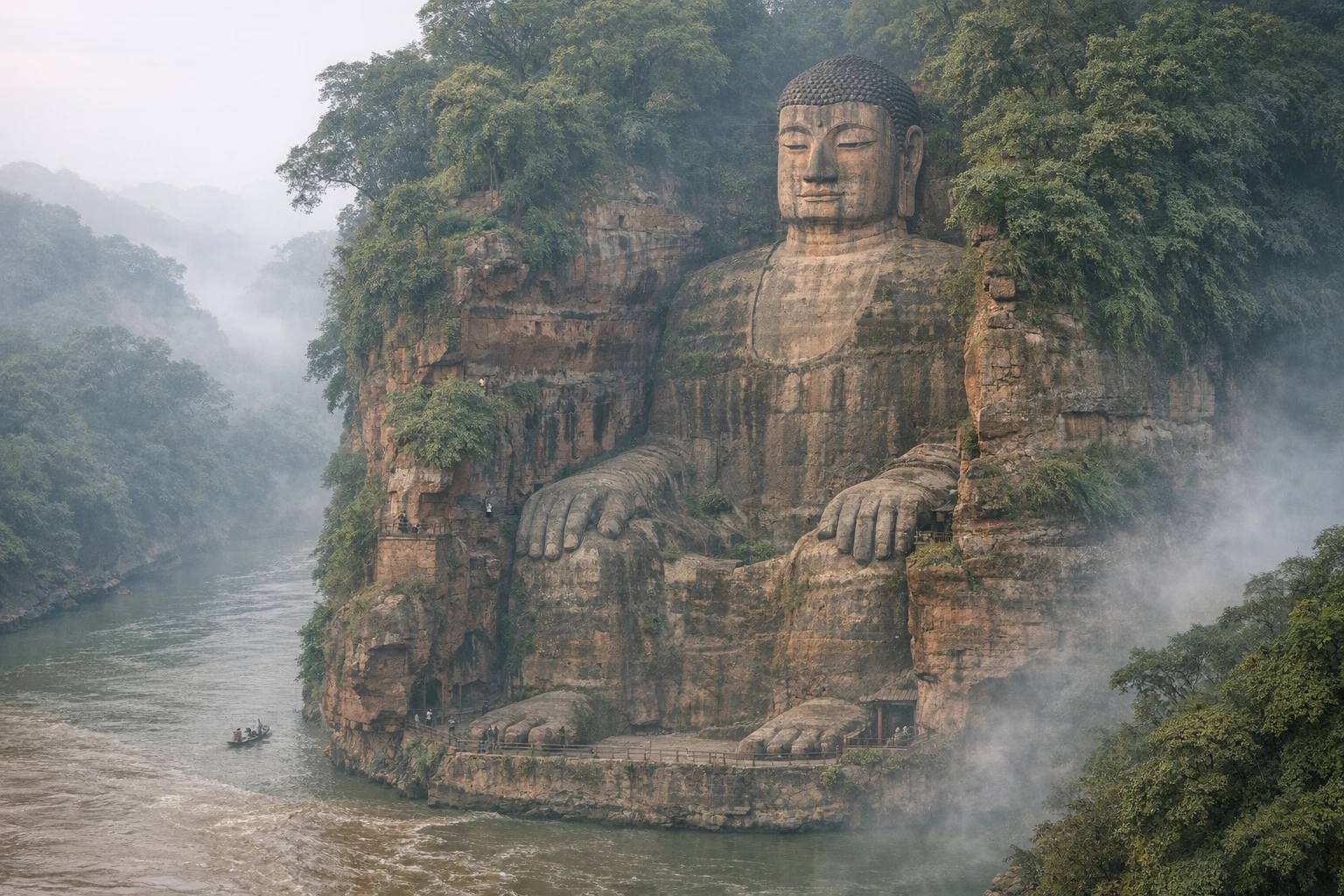
Leshan Giant Buddha
Tang Dynasty ChinaThe world's tallest pre-modern stone Buddha, carved into a clifftop in Sichuan, China, overlooking t...
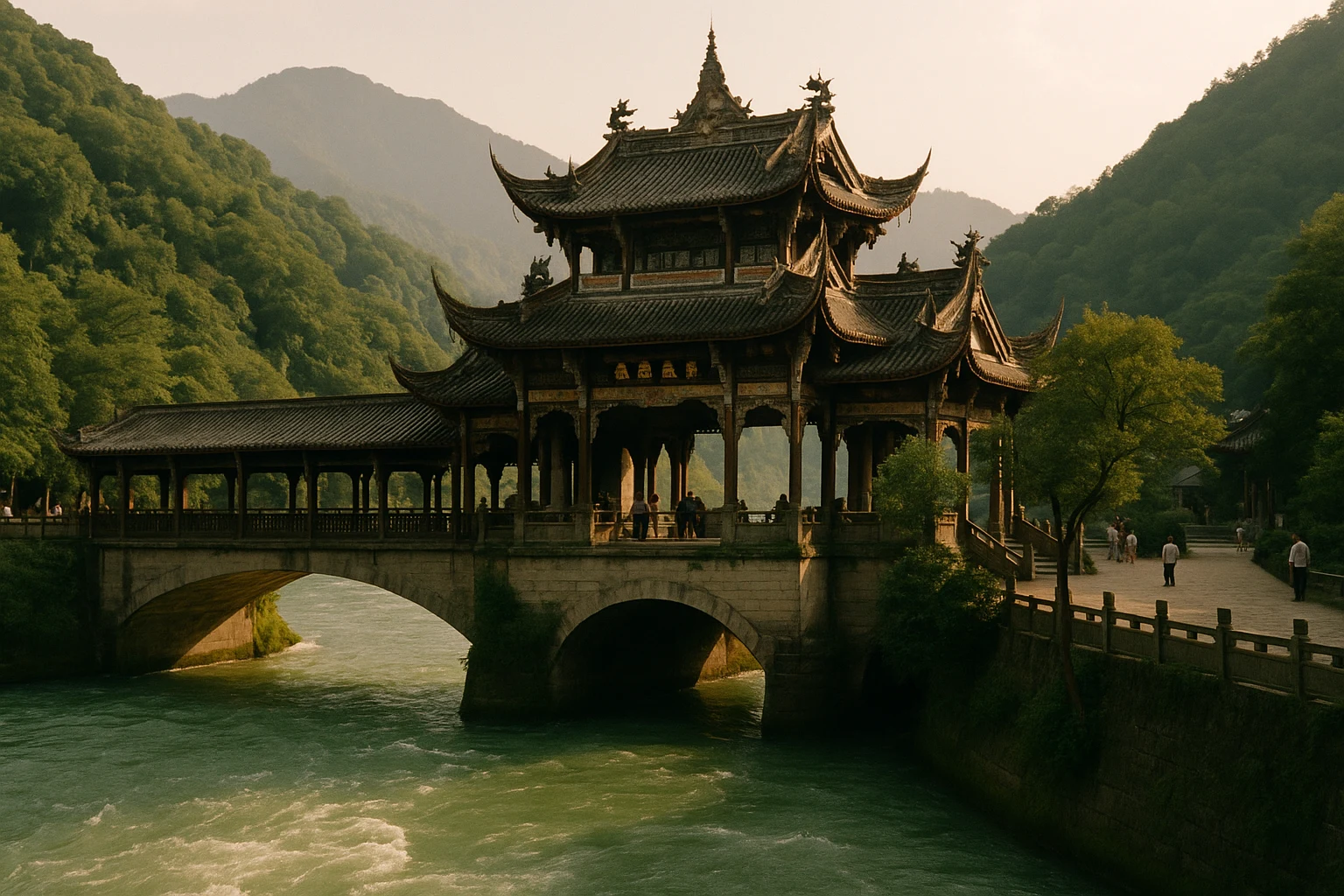
Dujiangyan Irrigation System
Explore Dujiangyan, the world's oldest functioning irrigation system, built in 256 BCE by engineer L...
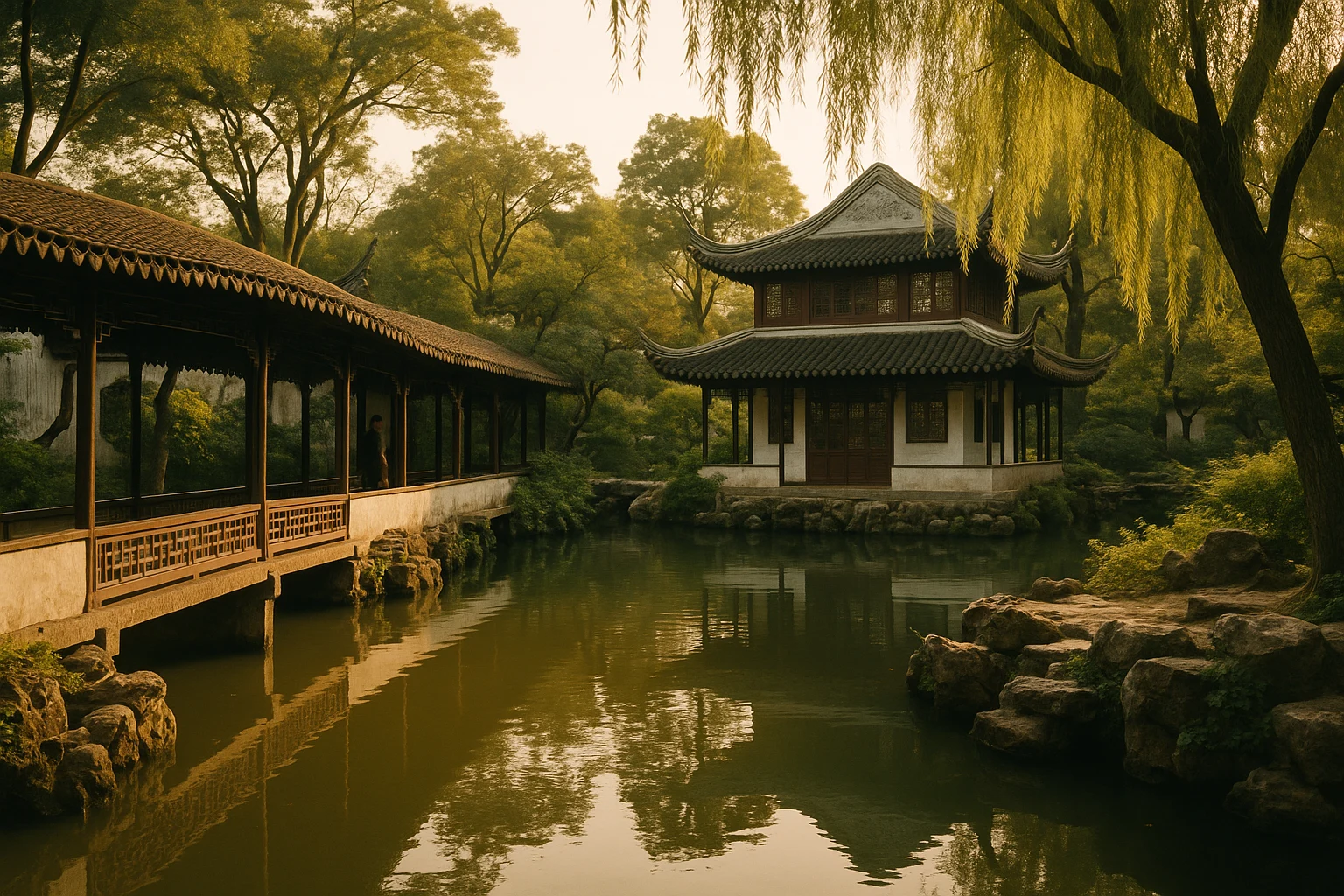
Humble Administrator's Garden
Chinese ImperialSuzhou's largest classical garden, a UNESCO World Heritage masterpiece of water, stone, and pavilion...
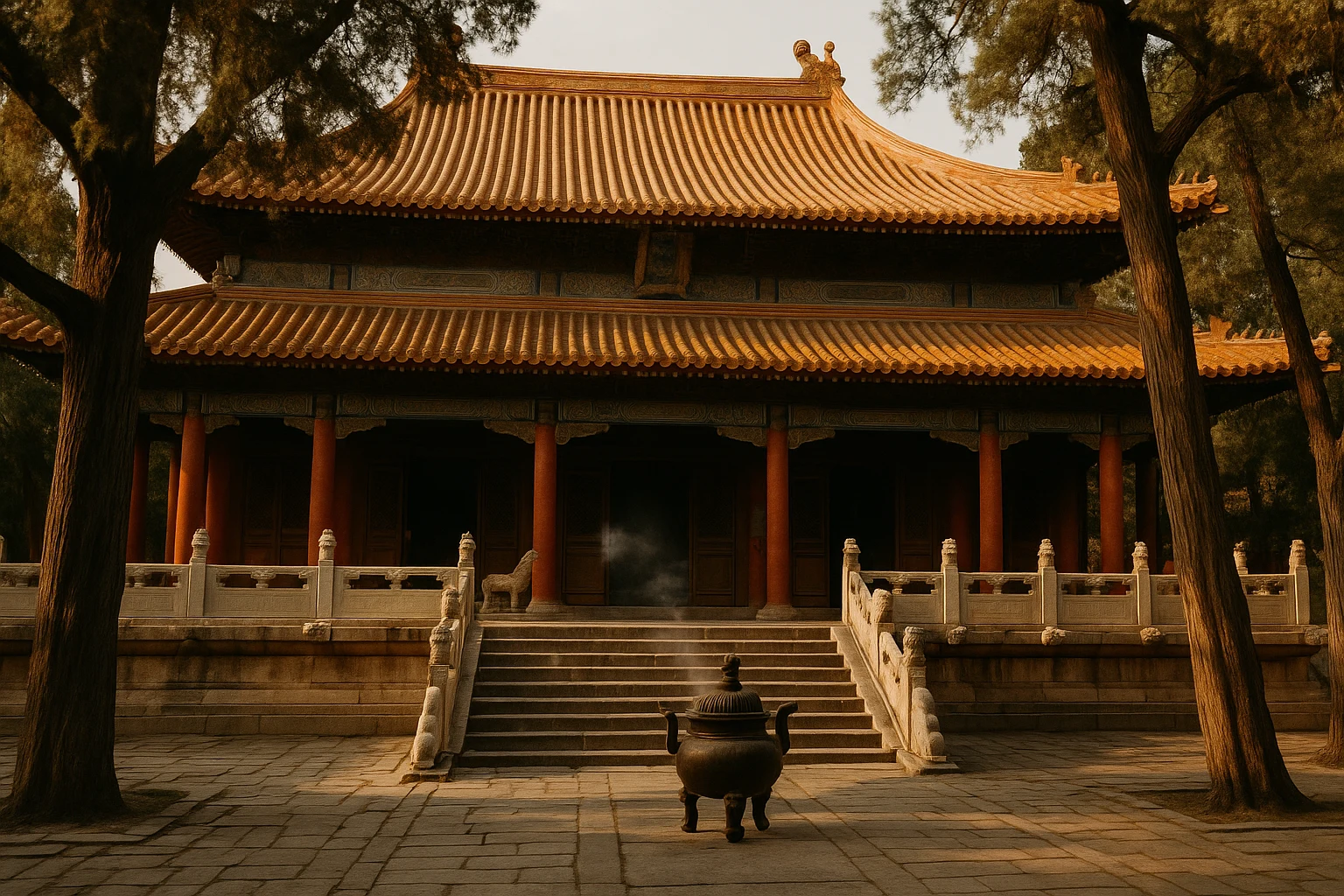
Confucius Temple (Qufu)
The ancient Temple of Confucius in Qufu, Shandong, is China's largest Confucian temple complex, a UN...