Quick Info
Curated Experiences
Grassland Heritage: Xanadu Ruins and Mongol Culture Day Tour
Inner Mongolia History and Ruins Full-Day Excursion
Kublai Khan’s Xanadu & Steppe Exploration
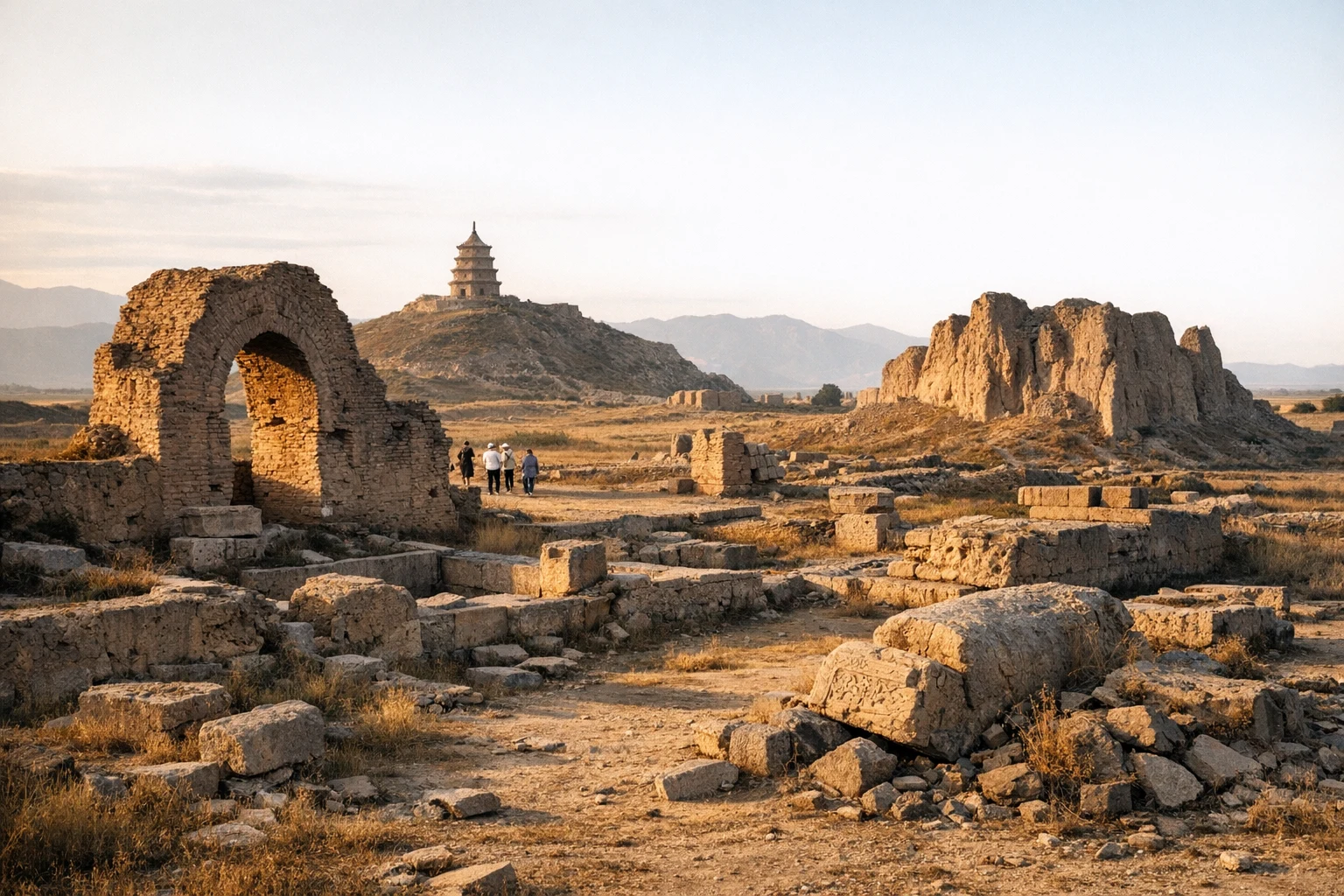
Imagine a vast, open steppe beneath a boundless sky, where the winds of history whisper among scattered ruins and the grasses of Inner Mongolia sway in silent tribute. Here, surrounded by rolling hills and endless horizons, lies the legendary Xanadu Ruins—also known as Shangdu—in northern China. Once the dazzling summer capital of Kublai Khan, grandson of Genghis Khan, Xanadu was the seat of one of the most powerful empires the world has ever known. If you close your eyes, you can almost hear the thunder of hooves, the call of Mongol warriors, and the voices of poets and travelers who made their way to this fabled city. Today, the Xanadu Ruins beckon to modern explorers seeking to trace the footsteps of empire-builders, visionaries, and storytellers. Whether you’re a history enthusiast, an intrepid traveler, or simply curious about the legends that inspired Coleridge’s famous poem, visiting Xanadu Ruins in China is a stirring journey into the heart of the Yuan dynasty and the vastness of the Eurasian steppe.
As a UNESCO World Heritage Site, Xanadu is not merely an archaeological location—it’s a living testament to the ambitions and dreams of a civilization that once stretched from the Sea of Japan to the heart of Europe. The remnants of city walls, palace foundations, and sprawling street grids hint at the sophisticated planning and cosmopolitan spirit that defined this city. The juxtaposition of human creativity and the raw power of nature make Xanadu a place where myths and history entwine. Whether you arrive with a camera, a field notebook, or a sense of wonder, you’ll leave with stories to tell and memories etched in the crisp Mongolian air.
History
The Birth of Xanadu: Foundation in the Mongol Era
The story of the Xanadu Ruins begins in the mid-13th century, at the height of the Mongol Empire’s power. In 1256, Kublai Khan—determined to build a city that would bridge the worlds of China and Mongolia—commissioned Shangdu (later known in the West as Xanadu) as his summer capital. Located in present-day Zhenglan Banner, Xilingol League, Inner Mongolia, the site was chosen for its strategic grassland position, which made it accessible both to Chinese agricultural heartlands and the nomadic steppe.
Designed by the famed Chinese architect Liu Bingzhong, Shangdu combined the geometric precision of traditional Chinese urban planning with the open, flowing ethos of Mongolian life. The city was laid out in a neat grid, with three concentric enclosures: the palace city at the core, the imperial city in the middle, and the outer city walls protecting the whole. In its heyday, the city buzzed with diplomats, artisans, scholars, and traders from across Asia and beyond. Persian, Arab, and Venetian merchants mingled with Mongol and Chinese locals, creating a cosmopolitan blend of cultures unique to the era.
Golden Age: Cultural Crossroads and Imperial Grandeur
Under Kublai Khan’s rule, Xanadu flourished as a political, economic, and cultural center. The city was renowned for its elegant palaces, vast parks, and sophisticated irrigation systems that transformed the steppe into fertile gardens. Summer months saw the migration of the imperial court from the southern capital of Dadu (present-day Beijing) to Shangdu, where the emperor would conduct ceremonies, host foreign delegations, and enjoy elaborate entertainments. Xanadu became a symbol of both Mongol might and the Yuan dynasty’s embrace of multiculturalism. Italian traveler Marco Polo described the city in glowing terms, marveling at its grandeur and its role as the heart of the world’s wealthiest empire.
Religious tolerance was one of Xanadu’s most distinguishing features. Buddhist, Taoist, Confucian, and even Christian and Muslim institutions were all present in the city, reflecting the open-minded policies of the Mongol rulers. Intellectual exchange flourished, with scholarship, science, and the arts thriving amidst the convergence of East and West. In Xanadu’s libraries and temples, Persian astronomers compared notes with Chinese inventors and Tibetan monks.
Decline and Abandonment
The fortunes of Xanadu, however, were closely tied to the health of the Yuan dynasty. As the century wore on, political instability, rebellions, and environmental pressures began to erode the city’s prominence. The Mongol emperors eventually shifted their focus to Dadu, and after the demise of the Yuan dynasty in 1368, the city was gradually abandoned. By the early Ming dynasty, Shangdu was virtually deserted, its magnificent palaces and gardens reclaimed by the inexorable advance of the steppe.
Over the centuries, time and elements took their toll upon the once-glorious Xanadu. Earthquakes, erosion, and human activity reduced it to ruins, yet the appeal of the lost city persisted in poetry, legend, and the curiosity of travelers. Its mythic status was reinforced by Samuel Taylor Coleridge’s romantic poem, which captured the imagination of generations who longed for “a stately pleasure-dome” lost amidst the wilds of Asia.
Rediscovery and World Recognition
Modern archaeological surveys began in earnest during the 20th century, revealing the sophisticated urban planning and remnants of the city’s grandeur beneath the grasslands. Systematic conservation efforts were launched to preserve the site and protect it from further degradation. In 2012, the Xanadu Ruins were inscribed as a UNESCO World Heritage Site—an affirmation of their unique historical, cultural, and architectural significance. Today, ongoing excavations continue to shed light on the city’s vibrant past, piecing together the story of Shangdu from the surviving foundations, ceramics, and written records.
Key Features
A visit to the Xanadu Ruins rewards the curious traveler with a tapestry of wonders that emerge from the earth and grass. The most striking aspect of the site is its sheer scale: the original city enclosed an area of more than 25 square kilometers, though only a fraction is currently accessible to visitors. As you approach, the outlines of city walls begin to emerge from the rolling plain, their rammed-earth construction still impressively robust in places. These fortifications once sheltered a city that was home to thousands, with the architecture blending Han Chinese techniques and Mongol sensibilities.
At the heart of Xanadu lies the palace city—the site of Kublai Khan’s summer residence. Though much of it has been reduced to low foundations, the size and layout give a sense of its majesty. The ceremonial halls and audience chambers are visible in their footprint, mapped by excavated column bases and tiled fragments that hint at colorful, ornate decoration. Archeologists have uncovered remnants of stone platforms and drainage systems, testifying to the advanced planning that went into the city’s infrastructure. In spring and summer, wildflowers bloom among the ruins, softening the grandeur with a wash of color.
Outside the palace complex, the imperial city area stretches out, governed by a strict geometry of streets, canals, and courtyards. This section once housed officials, artisans, and religious centers, attesting to the city’s administrative and spiritual life. Particularly impressive are the remains of walls built with tamped earth, which were further reinforced by wooden structures in their heyday. Vestiges of grain storage, workshops, and marketplaces provide clues to daily life—an intriguing contrast to the formal austerity of the palatial core.
In the northeast section of the ruins, visitors can faintly trace the outlines of a large Buddhist temple built during Kublai Khan’s reign. Here, remnants of stone bases and ornamental fragments offer tantalizing glimpses of the city’s diverse religious life. The archaeological finds, including glazed tiles, porcelain shards, and carved stone, are displayed at the nearby visitor center, providing a deeper context to what you see in the field.
Perhaps the most evocative feature of the Xanadu Ruins is the interplay between nature and history. Herds of horses still graze within the city’s boundaries, echoing the nomadic traditions that shaped the Mongol court. The steppe wind carries the scent of grasses and wild herbs across the ancient stones, reminding us that time, while relentless, has not yet silenced the legacy of Shangdu. For photographers, artists, and historians, Xanadu offers endless inspiration—its solitude, its vastness, and its poignant sense of faded glory make it a place that is never truly silent.
Getting There
Reaching the remote Xanadu Ruins takes advance planning, but the journey itself adds to the sense of adventure. The nearest major city is Xilinhot (Xilingol), approximately 220 kilometers southwest of the site. From Beijing, you can take a high-speed train to Xilinhot; fares typically range from RMB 180 to RMB 360 (USD 25–55) one way, depending on class and time of booking. The comfortable journey takes about 6–7 hours and offers sweeping views of northern China’s changing landscapes.
From Xilinhot, travelers can hire a taxi or private car to Zhenglan Banner—the administrative region where the Xanadu Ruins are located. The drive takes around 2.5 hours and costs approximately RMB 300–400 (USD 45–60) each way. Local bus services are available but infrequent, so arranging transportation through a hotel or travel agency is advisable for efficiency and comfort, especially if you’re pressed for time or traveling in a group.
An alternative route from Beijing is by long-distance bus, which takes up to 12 hours and is less comfortable but more budget-friendly. Self-driving is also possible for seasoned travelers comfortable with Chinese roads and signage (an international driver’s permit may be required). Guided tours departing from major cities like Beijing, Hohhot, or Xilinhot offer the easiest way to visit Xanadu, often including transportation, meals, entrance fees, and a guide. These tours can be booked in advance and cost between RMB 800 and RMB 1,800 (USD 120–270), depending on inclusions and group size.
Once at the site, there is a visitor center where you can purchase tickets, join a guided tour, and learn about recent excavations. From the center, it’s a short walk or complimentary shuttle ride to the core archaeological areas. The ruins are best experienced on foot, so wear sturdy shoes and be prepared for open terrain. While access is straightforward during the warmer months, winter snow and heavy rains in summer can occasionally make the last stretch of road challenging.
When to Visit
The climate of Inner Mongolia is sharply continental, with cold, dry winters and warm, short summers. The best time to visit the Xanadu Ruins is from late May to late September, when the steppes are green, the flowers in bloom, and temperatures range from 15°C to 28°C (59°F–82°F). During these months, the grasslands around the site are at their most picturesque, and the weather is generally stable—perfect conditions for exploring the open landscape and photographing the ruins against a dramatic sky.
Spring (April–early May) is crisp but can be quite windy, with occasional dust storms. Bring warm layers, as temperatures can drop sharply, especially in the evenings. Autumn (late September–October) offers cooler air and golden grasslands, making it another attractive but short window for visits before the cold sets in.
Winter (November–March) in Inner Mongolia is harsh, with temperatures plummeting well below freezing and frequent snowfalls covering the ruins. While visiting in winter is possible for the adventurous, be aware that local services may be limited and access can be more difficult. Summer thunderstorms, though generally brief, can turn the steppe roads muddy, so check local weather and road conditions before setting out.
Special events, such as the Naadam Festival, sometimes take place in the region during summer and offer the chance to witness Mongolian horse racing, wrestling, and traditional culture in action. These can add a memorable dimension to your visit to Xanadu but also attract more visitors, so book accommodation early if your trip coincides with festival dates.
| Quick Facts | |
|---|---|
| Location | Zhenglan Banner, Xilingol League, Inner Mongolia, China |
| UNESCO World Heritage | Inscribed in 2012 |
| Founded | AD 1256 by Kublai Khan |
| Civilization | Mongol Empire, Yuan Dynasty |
| Main Site Area | Approximately 25 square kilometers |
| Nearest City | Xilinhot (Xilingol) |
| Entrance Fee | RMB 65 (adult), with discounts for students and seniors |
| Best Visiting Months | Late May to late September |
| Languages Spoken | Mandarin Chinese, Mongolian |
| Facilities | Visitor center, restrooms, basic refreshments, guided tours available |
| Famous For | Kublai Khan’s summer capital, multicivilizational fusion, steppe vistas |
| How to Get There | Train to Xilinhot, taxi/private car to Xanadu Ruins |
Frequently Asked Questions
What is the best way to reach the Xanadu Ruins from Beijing?
The most convenient way is to take a high-speed train from Beijing to Xilingol, then hire a local taxi or join a tour to the Xanadu Ruins.
Is there an entrance fee to visit the Xanadu Ruins?
Yes, the entrance fee is typically RMB 65 for adults. Discounts are available for students and seniors with valid ID.
What facilities are available at the site?
There is a visitor center with informational displays, restroom facilities, and basic snacks available. Guided tours are often available.
Are the Xanadu Ruins suitable for children and families?
Yes, the site is family-friendly with open landscapes. However, bring sun protection and water, as shade can be limited.
What should I wear when visiting Xanadu Ruins?
Wear comfortable shoes, bring a hat and sunscreen, and dress in layers due to the variable steppe climate.
Nearby Ancient Sites
Beizhen Ancient City Ruins
Chinese frontier urban cultureExplore China’s Beizhen Ancient City Ruins, a layered frontier city landscape in Liaoning shaped by ...
Confucius Temple (Qufu)
The ancient Temple of Confucius in Qufu, Shandong, is China's largest Confucian temple complex, a UN...
Fenghuang Ancient Town
Ming and Qing Dynasty ChinaFenghuang Ancient Town preserves Ming and Qing dynasty architecture along the Tuojiang River in west...