Quick Info
Curated Experiences
Xuankong Hanging Temple Day Tour from Datong
Mount Heng and Hanging Temple Private Tour
Datong Full-Day Tour with Hanging Temple and Yungang Grottoes
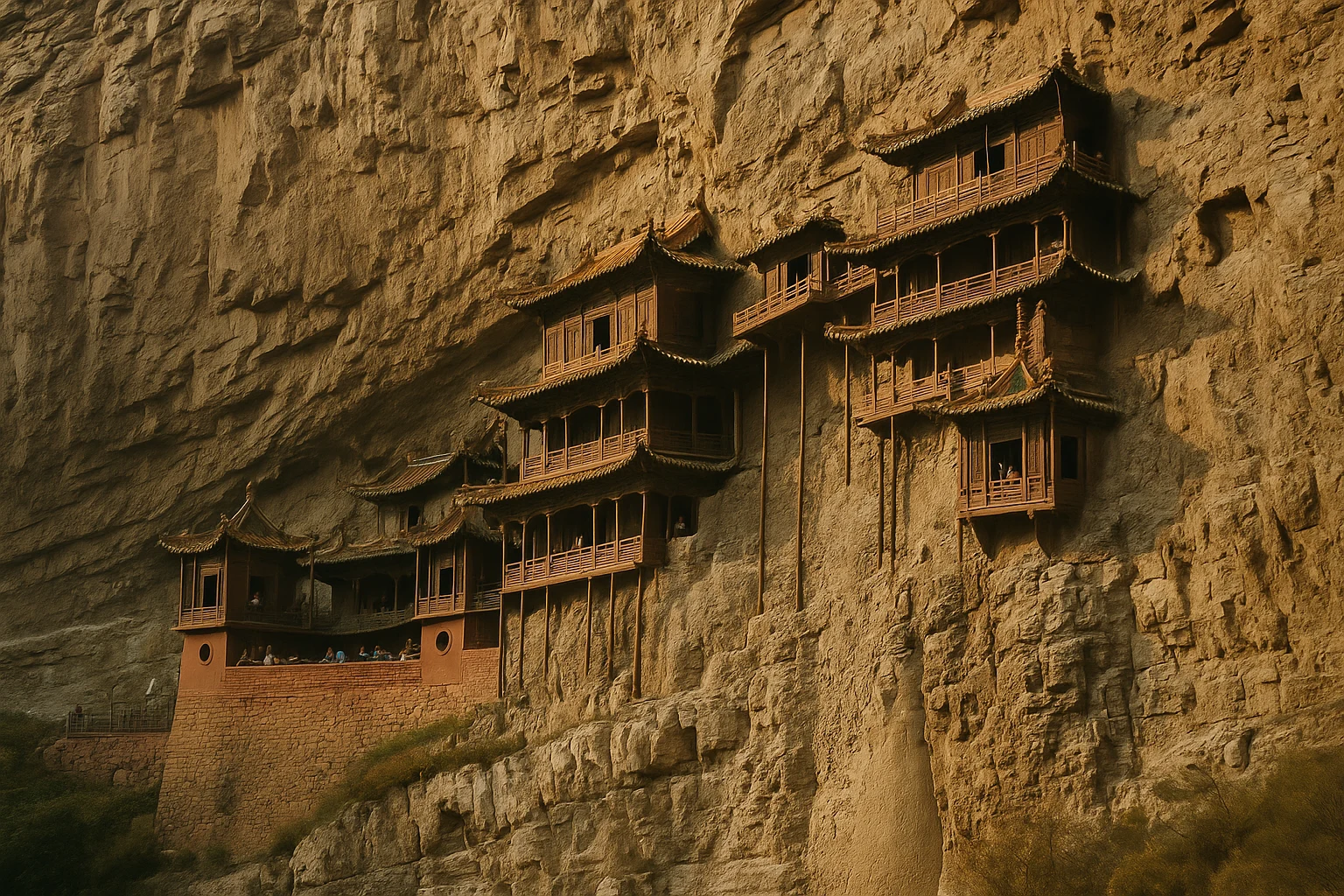
There are structures that defy easy description, places where your eyes and your reason briefly negotiate before you simply accept what you are seeing. Xuankong Temple in Shanxi Province, China, is one of them. Tucked into the vertical face of a sandstone cliff above the Jinlong Gorge on the flanks of Mount Heng, the temple’s red-painted pavilions, tiered balconies, and connecting walkways appear to hover in mid-air, held aloft by wooden beams no thicker than a man’s forearm. To stand on the gorge floor and look up at it — especially in early morning mist, when the cliffside above dissolves into cloud — is to understand immediately why its name, Xuankong Si, translates as “Temple Suspended in Emptiness.” Built in 491 AD during the Northern Wei dynasty, the monastery has clung to this cliffside for more than fifteen hundred years, weathering dynasties, floods, earthquakes, and the full arc of Chinese history while remaining, structurally and spiritually, exactly what it was always meant to be: a place where the human and the divine meet somewhere between earth and sky.
History
Northern Wei Origins
Xuankong Temple was founded during the reign of Emperor Xiaowen of the Northern Wei dynasty, a period of intense state-sponsored Buddhist patronage and remarkable architectural invention across northern China. According to tradition, the temple’s founder was a monk named Liao Ran, who selected the cliff site deliberately. The gorge below was prone to catastrophic flooding, and the elevated position offered both physical protection and symbolic elevation above worldly concerns. The founding principle was also acoustic and meteorological: the cliff overhang above shields the buildings from direct rain and snow, explaining in part how wooden structures from the fifth century — repeatedly repaired but never entirely rebuilt — have survived in a climate that is otherwise punishing to timber.
The Northern Wei court was particularly drawn to sites that merged Buddhist doctrine with dramatic natural settings, as evidenced by the near-contemporary Yungang Grottoes carved at Datong. At Xuankong Temple, the challenge was not stone but gravity. Early builders drilled horizontal holes into the cliff face and inserted load-bearing wooden beams — called cantilever brackets — that extend outward to support the floor platforms of each hall. Secondary support columns were added later, but many of these barely touch the ground, functioning more as visual reassurance than structural necessity. Chinese architectural tradition holds that the beams alone carry the temple; the slender columns are there, as one ancient inscription puts it, “for those who lack faith.”
Tang and Song Expansion
During the Tang and Song dynasties, the temple was substantially expanded. Additional halls were added to accommodate a growing community of resident monks, and the original strictly Buddhist character began to evolve. Tang China witnessed an unusual period of religious openness in which Buddhism, Taoism, and the state-sanctioned teachings of Confucius circulated freely within elite and popular culture simultaneously. Xuankong Temple came to reflect this pluralism. By the Song period, the complex housed separate shrines to the Buddha, to Laozi, and to Confucius — an arrangement virtually unique in Chinese religious architecture, where the three traditions typically occupied distinct institutions rather than sharing corridors.
Ming and Qing Renovation
The most significant campaigns of repair and reconstruction occurred during the Ming (1368–1644) and Qing (1644–1912) dynasties. Ming craftsmen strengthened the cantilever beam system, added painted decorations to the exterior woodwork, and replaced several halls that had deteriorated. Qing restorations focused on the interior shrine sculptures, many of which are bronzes and stone carvings dating to this era rather than to the original construction. The poet Li Bai, visiting during the Tang dynasty, reportedly carved the words “magnificent and perilous” into the cliff face beside the temple — a judgement that remains as accurate today as it was twelve centuries ago.
Modern Conservation
The twentieth century brought both neglect and renewed attention. Following the establishment of the People’s Republic, the temple was periodically closed during periods of political upheaval before being reopened to tourism in the 1980s. Since then, it has been designated a National Key Cultural Relic Protection Unit and subjected to rigorous structural assessment. Engineers have reinforced weakened beams with stainless-steel anchors concealed within the timber, and the cliff face itself has been stabilised in sections to reduce rockfall risk. The result is a site that feels genuinely ancient — weathered timber, smoky bronze statues, stone inscriptions worn to illegibility — while meeting contemporary safety standards for the millions of visitors who now make the climb each year.
Key Features
The Cantilever Architecture
The engineering at the heart of Xuankong Temple remains its most compelling feature. The entire complex spans approximately 152 metres of cliff face, distributed across forty main halls and chambers connected by a network of narrow corridors, exterior walkways, and near-vertical staircases. The cantilever beams that support the structure are driven between one and five metres into the rock, a depth that provides remarkable load-bearing capacity despite the beams’ modest diameter. What makes the engineering elegant rather than merely functional is the way the builders exploited the cliff’s natural indentations, tucking halls into recesses and expanding across projections so that the building appears to grow organically from the rock rather than to have been applied to it.
Walking through the temple is an experience that alternates between the intimate and the vertiginous. Interior halls are small and dimly lit, filled with the smell of incense and the soft gleam of bronze statuary. Step outside onto a connecting walkway, however, and the gorge opens below you — sometimes ten metres down, sometimes thirty, depending on where the cliff face recedes. The wooden balustrades are solid but worn smooth by generations of hands, and the combination of confined passage and sudden exposure to open air gives the whole circuit an intensity that purely ground-level monuments rarely match.
The Three-Religion Hall
The most theologically striking feature of Xuankong Temple is the San Jiao Hall, the Hall of Three Religions, where statues of Shakyamuni Buddha, Laozi, and Confucius are enshrined side by side. This arrangement is not merely decorative tolerance. The Northern Wei founders, and the Tang monks who formalised the practice, held that the three traditions represented complementary paths toward harmony: Buddhism addressing the individual’s liberation from suffering, Taoism describing the natural order of the cosmos, and Confucianism regulating the proper relationships between human beings. To place them in the same room was an explicit statement that no single tradition held a monopoly on wisdom. In a country where religious and philosophical disputes have periodically been violent, the hall stands as an enduring argument for coexistence.
Sculptures and Artifacts
The temple’s eighty-odd statues span multiple dynasties and materials. Among the most significant are a group of Tang-era bronze figures in the main Buddhist halls, their surfaces darkened by centuries of incense smoke. Song-dynasty stone carvings depicting bodhisattvas in elaborate headdresses occupy niches carved directly into the cliff. The Qing-period painted clay figures in the Confucian and Taoist shrines are later in date but vivid in execution, their faces individuated in a way that earlier Chinese devotional sculpture rarely attempted. Together the collection constitutes an informal survey of Chinese religious art across more than a millennium, arranged not in museum cases but in the cramped, incense-hazed rooms for which every piece was originally made.
The Cliff Setting and Surrounding Gorge
Xuankong Temple cannot be separated from its natural context. The Jinlong Gorge through which the River Hun once ran — it has largely been diverted by the Hengshan Reservoir upstream — is a dramatic slash of vertical sandstone, its walls streaked ochre and grey. The cliff above the temple overhangs the entire complex, providing the natural canopy that has protected the timber from direct precipitation for fifteen centuries. On clear days, the shadow cast by the overhang shifts through the morning, illuminating different sections of the temple as the sun rises — a daily light show the founders would have intended as a reminder of the sun’s indifference to human constructions.
Getting There
Datong, the nearest major city, is the most practical base for visiting Xuankong Temple. Datong is well connected to Beijing by high-speed rail, with journey times of around two hours on the fastest services. From Beijing South Station, multiple daily G-train departures reach Datong in as little as 1 hour 45 minutes; second-class seats cost approximately 200–250 RMB.
From Datong, the most convenient option is a private car hire or taxi to the temple, a drive of approximately 65 kilometres south on national highway G55. Journey time is typically 75–90 minutes. Most drivers who serve this route also know the nearby Hengshan scenic area and can wait while you visit. Expect to negotiate a round-trip fare of 250–400 RMB depending on waiting time.
Public transport is slower but feasible. Buses from Datong South Long-Distance Bus Station serve Hunyuan County (约 1.5 hours, around 25 RMB), from where shared minibuses cover the final 5 kilometres to the temple entrance (around 5–10 RMB). The last minibus back from the temple departs mid-afternoon, so time your visit accordingly if travelling independently.
Organised day tours from Datong typically combine Xuankong Temple with the Yungang Grottoes and occasionally Hengshan’s summit temples, offering a full survey of the region’s heritage in a single day. These can be booked through Datong hotels or through the Viator listings above.
When to Visit
Shanxi Province has a continental climate with cold, dry winters and hot summers. The best months for visiting Xuankong Temple are May, June, September, and October, when temperatures are comfortable, skies are generally clear, and the gorge landscape is at its most photogenic.
Summer (July and August) is the peak domestic tourism season and can see the walkways genuinely crowded, with queues at the entrance gate and narrow passages becoming bottlenecks. Temperatures in July can reach 32–35°C, and afternoon thunderstorms are possible. If visiting in summer, arrive at opening time — typically 8:00 AM — to beat both the heat and the crowds.
Autumn is arguably the finest season. October brings golden light, moderate temperatures in the 10–18°C range, and the surrounding hills turn amber and rust. This is the window most recommended for photography.
Winter (December through February) sees the fewest visitors and can be genuinely beautiful — frost on the wooden railings, snow on the cliff ledges above — but temperatures drop well below freezing and some walkway sections may be icy. Check conditions before travelling in winter months.
Spring is pleasant but dusty; Shanxi is in the path of seasonal sand and dust storms that blow in from Inner Mongolia, and visibility can be poor on affected days.
| Quick Facts | |
|---|---|
| Location | Hengshan Scenic Area, Hunyuan County, Shanxi Province, China |
| Coordinates | 39.6597° N, 113.7289° E |
| Founded | 491 AD (Northern Wei dynasty) |
| Religions Represented | Buddhism, Taoism, Confucianism |
| Elevation | Approximately 50–75 metres above gorge floor |
| Number of Halls | ~40 main halls and chambers |
| Statues | ~80 figures spanning Tang through Qing dynasties |
| Nearest City | Datong (~65 km north) |
| Entrance Fee | ~130 RMB (~USD 18) |
| Opening Hours | Typically 8:00 AM – 5:30 PM (seasonal variation) |
| Best Months to Visit | May–June, September–October |
| UNESCO Status | Not individually listed; located within proposed Hengshan cultural landscape |
Frequently Asked Questions
What is Xuankong Temple and why is it called the Hanging Temple?
Xuankong Temple, literally 'Temple in Mid-Air,' is a monastery built directly into the face of a sheer cliff on Mount Heng in Shanxi Province. Its pavilions and connecting walkways are supported by slender wooden beams driven into the rock, giving the appearance of floating above the gorge below. The name reflects both its physical position and a spiritual metaphor — to hang between heaven and earth.
How old is Xuankong Temple?
The temple was originally constructed around 491 AD during the Northern Wei dynasty, making it over 1,500 years old. It has been repaired and expanded many times since, particularly during the Ming and Qing dynasties, but the cliff-hugging layout has remained essentially unchanged since its founding.
Is Xuankong Temple safe to visit?
Yes, the temple is safe for visitors. The structure has been continuously maintained and reinforced throughout its history, most recently with modern conservation work. Narrow walkways and steep stairs do require sure footing, and those with a fear of heights may find certain sections challenging, but safety railings have been installed throughout.
What religions are represented at Xuankong Temple?
Uniquely, Xuankong Temple enshrines all three of China's classical spiritual traditions under one roof. Buddhist, Taoist, and Confucian halls coexist within the complex, with statues of the Buddha, Laozi, and Confucius housed in separate but adjacent shrines. This theological inclusiveness is rare anywhere in the world and reflects the syncretic character of Northern Wei religious culture.
How do I get to Xuankong Temple from Datong?
The temple is approximately 65 kilometers south of Datong. The most straightforward option is hiring a private car or taking a taxi from Datong, which takes around 75–90 minutes depending on traffic. Public buses run from Datong South Bus Station to Hunyuan County, from where minibuses connect to the temple site. Organised day tours from Datong typically combine the Hanging Temple with other Hengshan attractions.
How much time should I budget for Xuankong Temple?
Most visitors spend 1.5 to 2.5 hours at the site. That includes walking the cliff path to the entrance, moving through the interconnected halls and walkways, and taking in the views from the upper platforms. Arriving early in the morning reduces crowds significantly and provides better light for photography.
What is the entrance fee for Xuankong Temple?
Admission is typically around 130 RMB (approximately USD 18) and covers access to the cliff walkways and shrine halls. An additional fee applies if you wish to enter the adjacent Hengshan scenic area. Prices are subject to change; check current rates on arrival or through your tour operator.
Nearby Ancient Sites
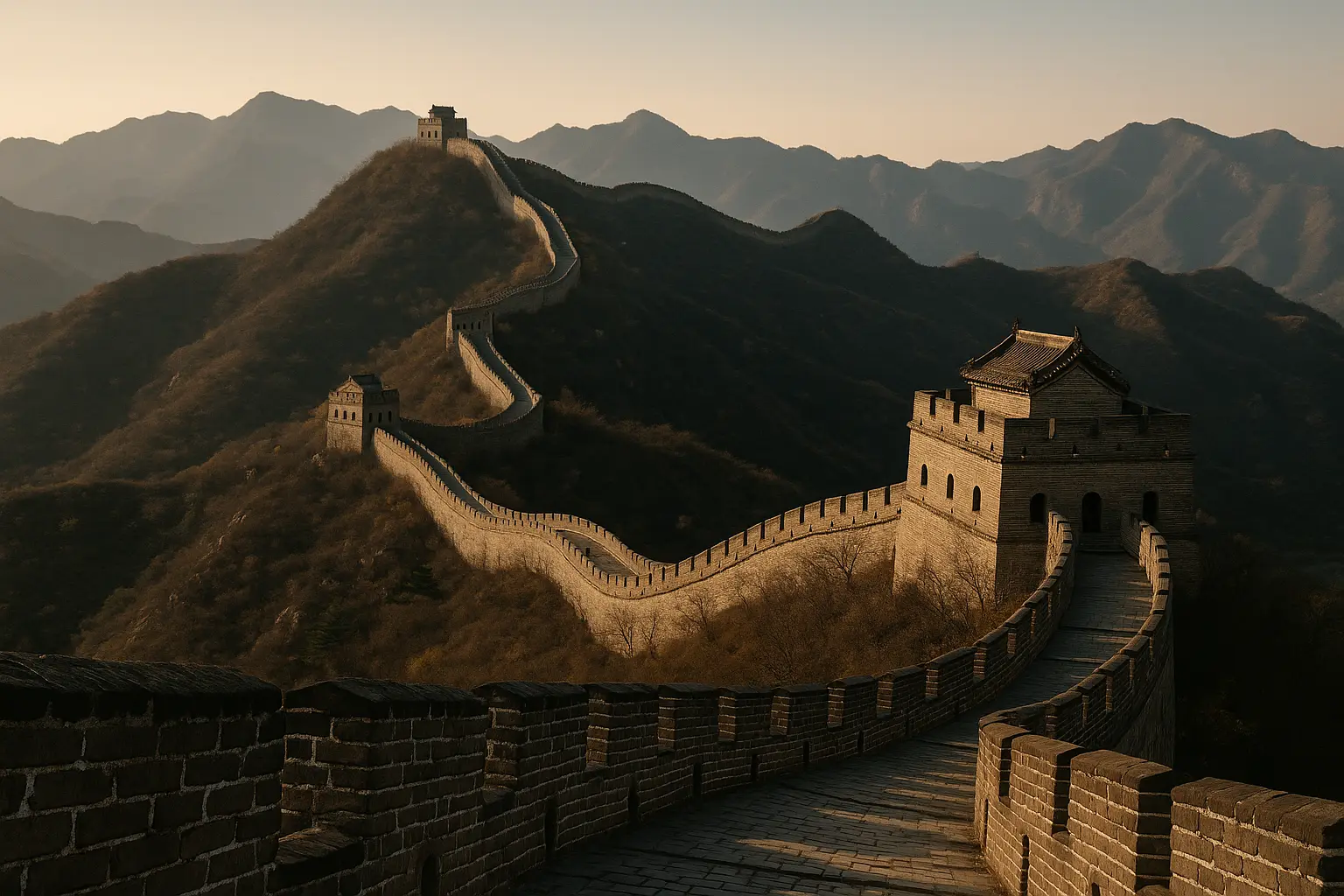
Great Wall of China Badaling Travel Guide 2026: Iconic Fortification
Chinese ImperialVisit Badaling, the most famous section of the Great Wall of China. Our guide covers tickets, cable ...
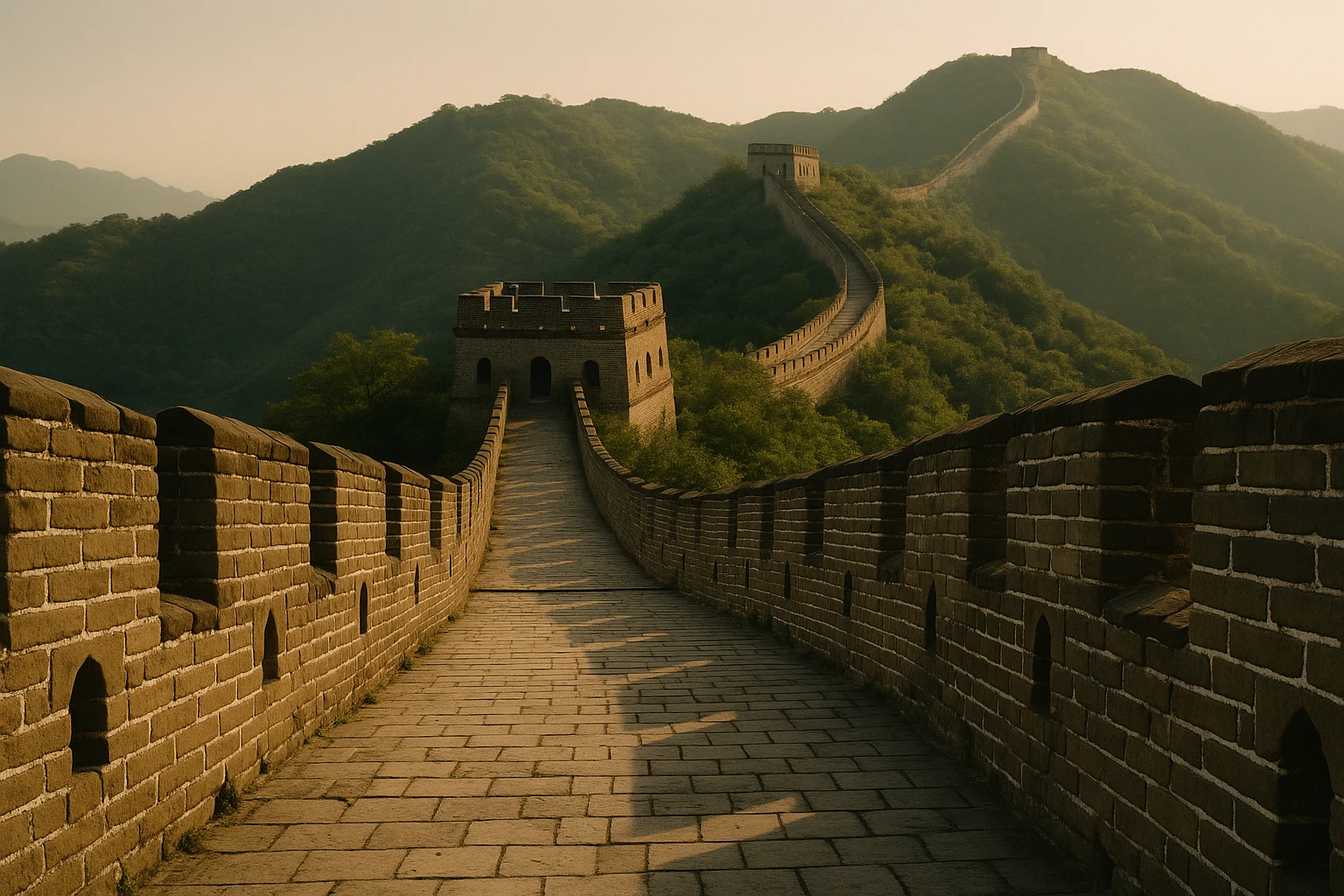
Great Wall of China (Mutianyu)
Explore Mutianyu — the Great Wall's most dramatic restored section, with 22 Ming-era watchtowers, mo...
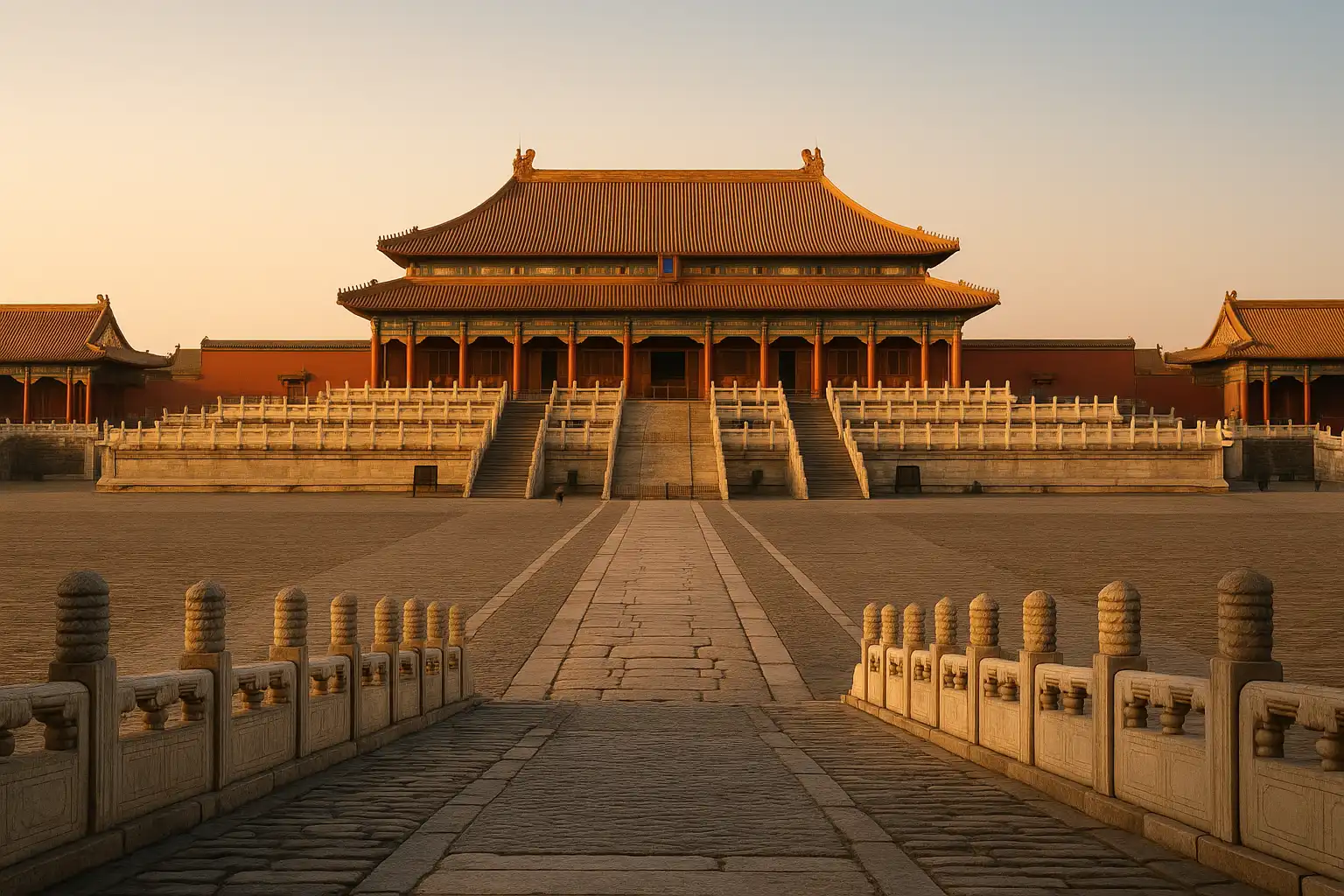
Forbidden City China Travel Guide 2026: Imperial Palace of Beijing
Chinese ImperialExplore the Forbidden City, China's imperial palace for 500 years. Discover the Hall of Supreme Harm...
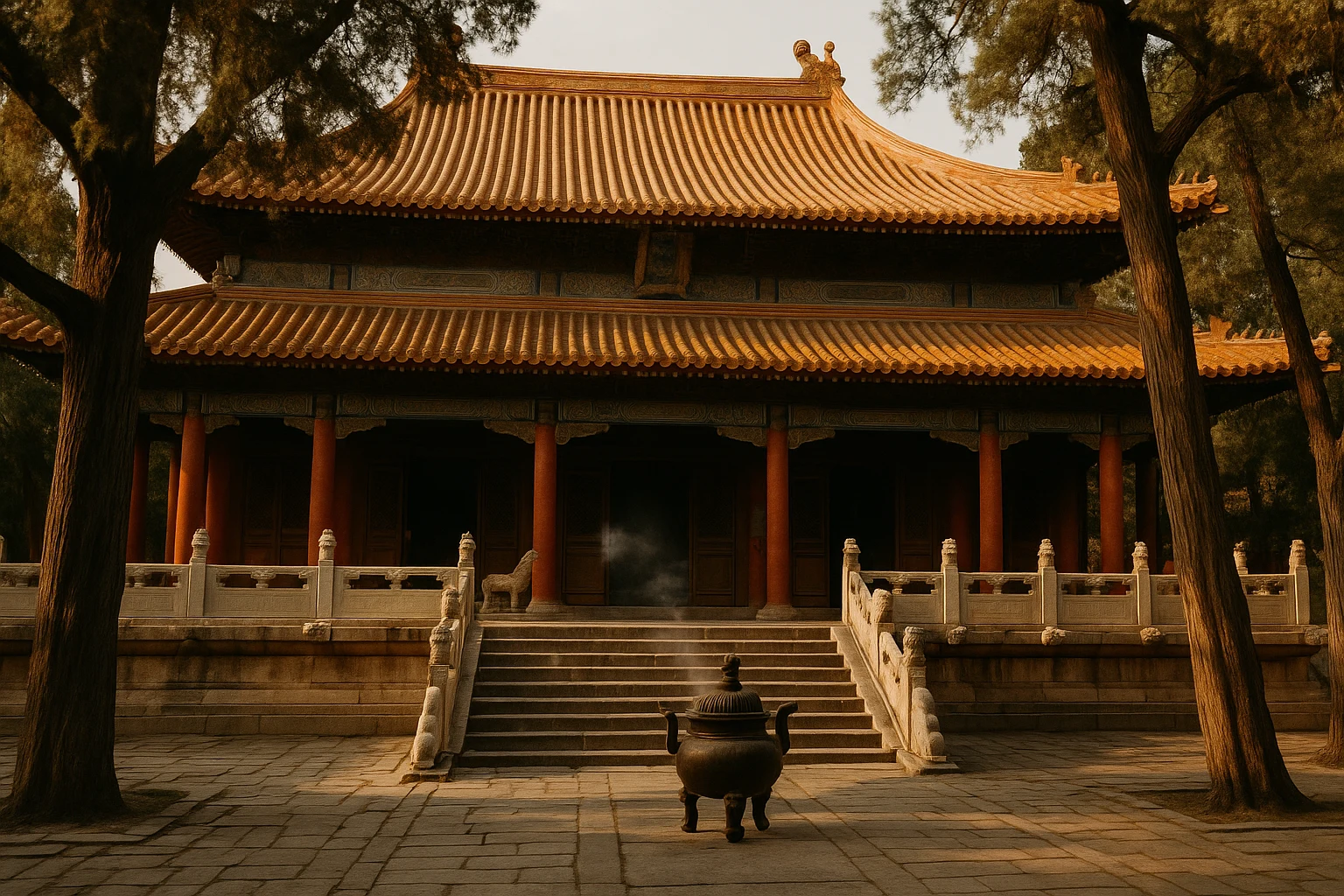
Confucius Temple (Qufu)
The ancient Temple of Confucius in Qufu, Shandong, is China's largest Confucian temple complex, a UN...
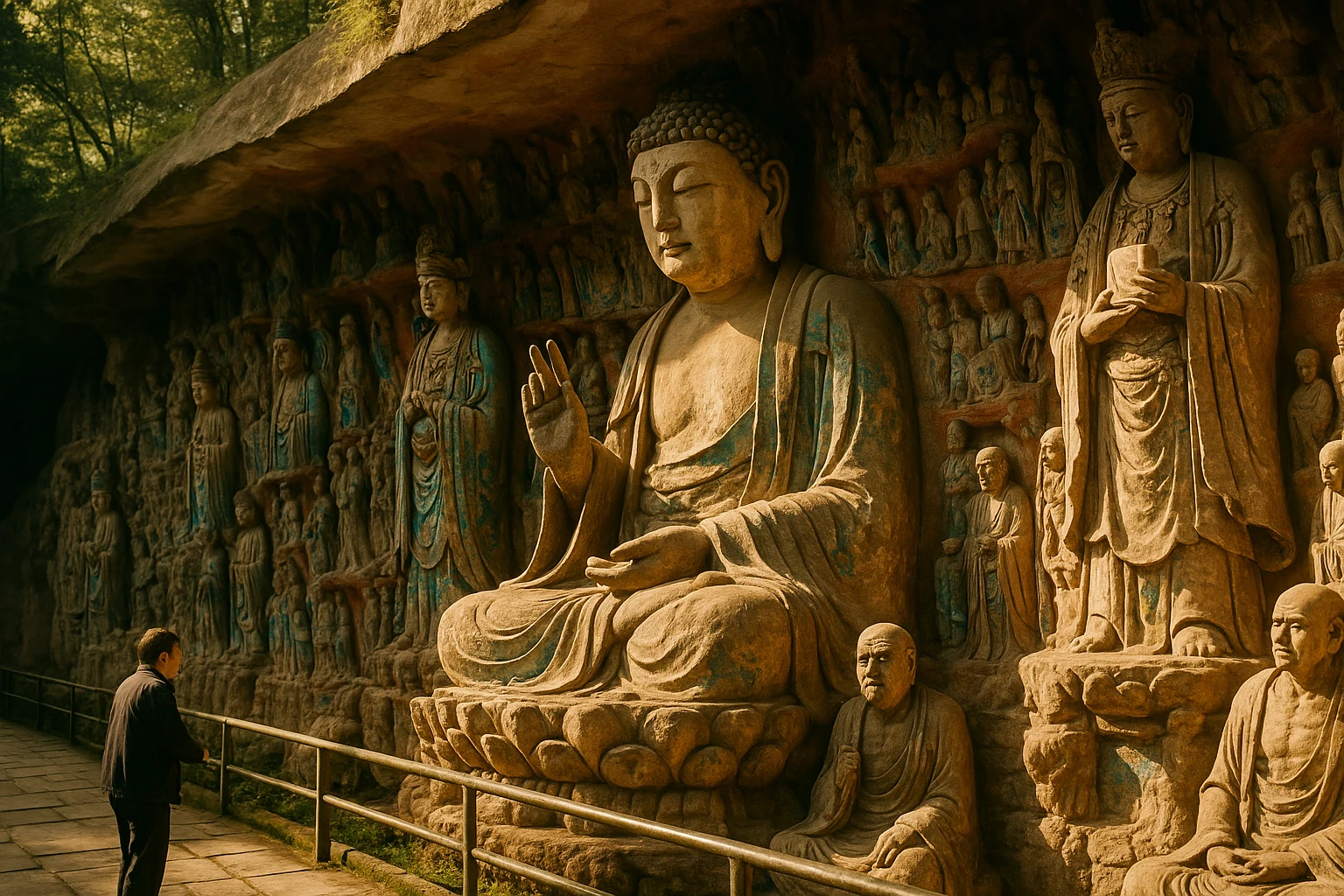
Dazu Rock Carvings
Tang and Song Dynasty ChinaAncient Buddhist, Taoist, and Confucian rock sculptures carved into cliffsides across Dazu District,...