Quick Info
Curated Experiences
Yanmen Pass Day Tour from Taiyuan
Shanxi Ancient Sites & Cultural Heritage Tour
Northern China Great Wall & Fortress Tour
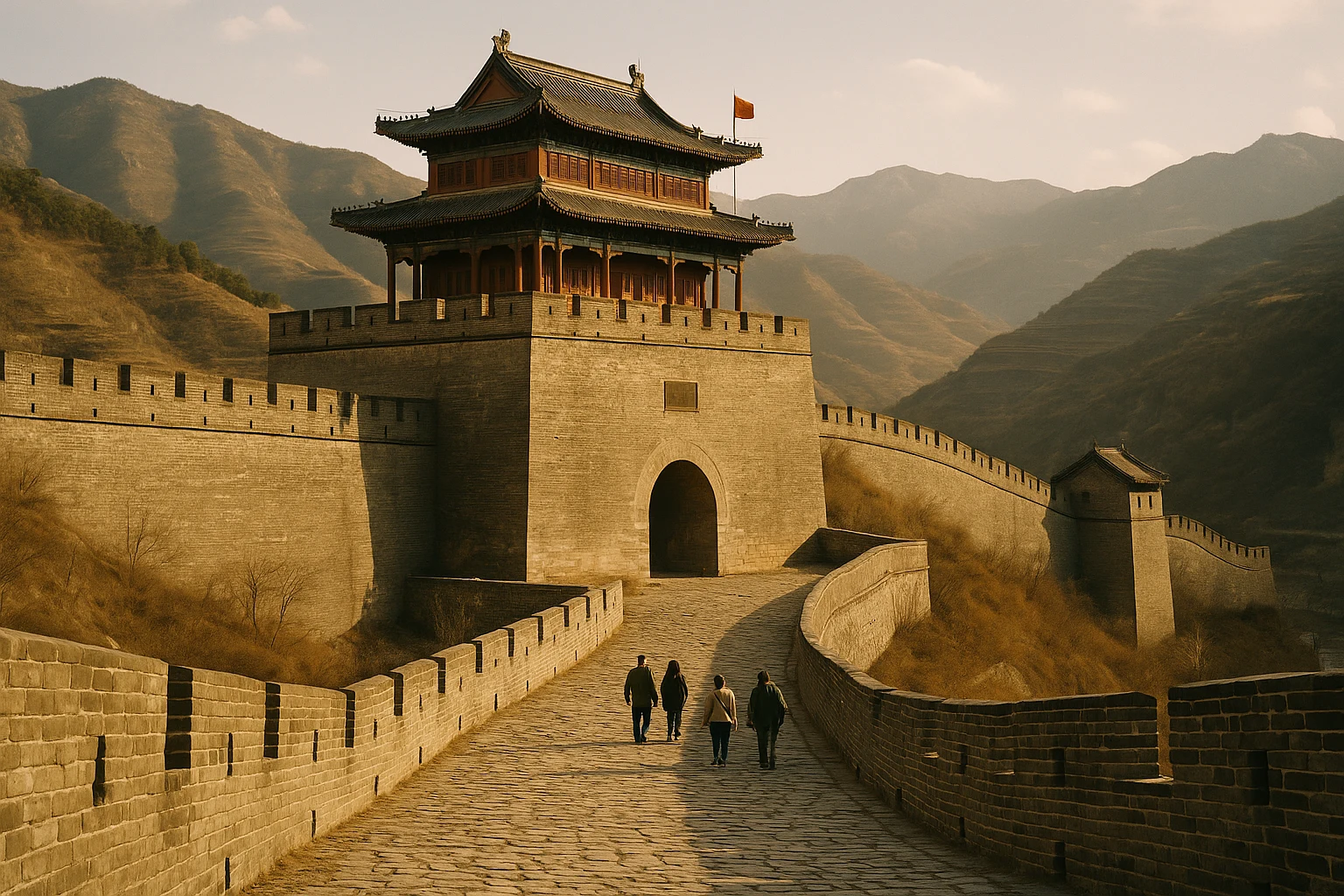
High in the Yanmen Mountains of northern Shanxi, China, a stone gate pierces a jagged ridgeline where the Great Wall clings to the cliffs like an outstretched arm. This is Yanmen Pass — Yànmén Guān, the Gate of the Wild Geese — one of the most storied chokepoints in all of Chinese history. The name itself comes from the flocks of geese that migrate through the narrow valley each autumn, a spectacle that ancient poets took as an emblem of the frontier’s raw, melancholic beauty. For more than two thousand years, emperors, generals, nomadic raiders, silk-road merchants, and exiled court ladies all passed beneath these towers, making Yanmen Pass far more than a military installation. It is a palimpsest of Chinese civilization: a place where the agricultural heartland ended and the steppe began, where dynasty after dynasty staked its northern boundary and its sense of self. Today the restored Ming-era walls and gate complexes draw visitors who come for the dramatic mountain scenery, the weight of history, and the rare sense of standing precisely on the fault line between China’s settled south and its nomadic north.
History
Origins in the Warring States Era
The strategic importance of the Yanmen valley was recognized as early as the fourth century BCE, during the Warring States period, when the kingdom of Zhao controlled this corner of what is now Shanxi. General Li Mu stationed his forces at Yanmen for years, drilling cavalry, stockpiling grain, and refusing battle with the Xiongnu confederacy until the moment was right. When he finally struck — reportedly around 244 BCE — he annihilated a Xiongnu force numbering in the hundreds of thousands according to traditional accounts, a victory celebrated by Chinese historians as one of the greatest defensive campaigns in the pre-imperial era. The earliest earthen ramparts at Yanmen date to this period, though nothing visible today survives from Zhao construction.
The Han Dynasty Frontier
After the Qin unification, the First Emperor extended the Great Wall eastward and westward, but it was the Han dynasty (206 BCE–220 CE) that transformed Yanmen into a fully institutionalized frontier system. The Han faced an existential struggle against the Xiongnu, and Yanmen Pass became the hinge around which that struggle turned. Emperor Wu dispatched successive armies through the gate, including the campaigns of the legendary General Wei Qing and his nephew Huo Qubing, who pushed the Xiongnu far into the Gobi. Meanwhile, the gate witnessed one of the most poignant scenes in Chinese cultural memory: the departure of Wang Zhaojun, a Han palace beauty selected to marry the Xiongnu Chanyu (supreme chieftain) as part of a peace treaty in 33 BCE. Classical poets from the Tang onward returned obsessively to the image of Wang Zhaojun’s palanquin passing through the cold northern gate, her lute playing fading into the wind, and her tears mixing with the dust of the steppe road.
Tang, Song, and the Weight of Repeated Conflict
The Tang dynasty (618–907 CE) regarded Yanmen as the anchor of its northwestern defense network. The great frontier poets — Wang Changling, Cen Shen, Wang Wei — wrote their most celebrated works about soldiers shivering through Yanmen winters and longing for the peach blossoms of the south. The pass changed hands repeatedly during the chaotic Five Dynasties period (907–960 CE), and the Song dynasty, chronically outmatched by the Khitan Liao and later the Jurchen Jin, fortified the region repeatedly without being able to hold the steppe beyond it. The folk hero Yang Ye, a Song general said to have fought the Liao at Yanmen, became the subject of an entire cycle of popular novels and operas still performed today — the Generals of the Yang Family — in which the pass plays a central dramatic role.
Ming Reconstruction and the Form Visitors See Today
Following the chaos of the Yuan dynasty (1271–1368), the Ming emperors embarked on the most ambitious Great Wall construction project in history, and Yanmen Pass was rebuilt substantially between the fourteenth and seventeenth centuries. The main gate complex, beacon towers, garrison barracks, and connecting walls that define the site’s current appearance all reflect Ming engineering. Workers cut enormous stone blocks from local quarries and integrated them with rammed-earth cores, producing a structure designed to withstand artillery as well as mounted assault. Inscriptions carved into the gates during this era — including the famous characters reading “Heaven’s Strategic Pass” (天险) — survive today and give visitors a direct connection to the craftsmen and soldiers who rebuilt the fortress after centuries of neglect.
Key Features
The Main Gate Towers
The heart of Yanmen Pass is its pair of primary gate towers, rising from a long stone wall that crosses the mountain saddle at roughly 1,800 meters above sea level. The towers are built in the distinctive Ming style: a lower platform of precisely fitted limestone blocks supporting a timber-framed upper story with overhanging eaves, arrow windows, and crenellated parapets. From the upper story, the views extend north across the tawny Yanmen valley into what feels like the beginning of inner Asia, and south over the green terraces and loess hills of Shanxi’s agricultural heartland. The contrast is immediate and physical — the mountain ridge functions exactly as a visual and atmospheric boundary, the settled world on one side and the open steppe world on the other.
The Connecting Wall and Beacon Towers
From the main gate, sections of restored wall run east and west along the ridgeline, connecting a series of square beacon towers spaced at intervals that allowed signal fires to relay warnings from tower to tower across dozens of kilometers. The masonry quality along these stretches varies — some sections have been heavily restored with new stone, while others retain older, weathered blocks that give a more authentic sense of what Ming garrison soldiers inhabited. Walking the wall between towers requires a reasonable level of fitness; the ridge is uneven and the path climbs steeply in places, but the reward is a panorama that makes the defensive logic of the site immediately legible. A commander standing on any of these towers could see an approaching cavalry force while it was still many minutes’ ride away.
The Garrison Town and Museum
Below the main ridge, the restored garrison town of Guangwu preserves a grid of Ming-era streets lined with traditional courtyard buildings that once housed soldiers, officers, merchants supplying the garrison, and the civilian population that inevitably gathered around any permanent military installation. Several of these buildings have been converted into a museum documenting the military and cultural history of the pass, with exhibits covering the Zhao-era earthworks, Han dynasty bronze weapons found in the vicinity, and Tang and Song frontier poetry — presented with enough English-language signage that international visitors can follow the narrative without a guide. Scale models of the Ming fortification system help visitors understand how Yanmen connected to the wider Great Wall network.
The Yang Family Temple
One of the most visited features within the scenic area is a temple dedicated to the Yang family generals, the semi-legendary Song dynasty heroes whose battles in and around Yanmen became China’s answer to the Arthurian cycle — stories of martial loyalty, family sacrifice, and national resistance. The temple complex includes painted statues of Yang Ye and his sons in full armor, votive offerings left by visitors from across China, and carved stone panels depicting battle scenes from the Yang family cycle. For many Chinese visitors, this is the emotional center of the site: a place where popular history, opera, and nationalist sentiment converge in a genuinely ancient landscape.
The Wild Geese View Platform
Near the eastern gate, a viewpoint platform has been constructed to face the narrow valley gap through which the Yanmen River flows northward. In late September and October, this is where the geese that gave the pass its name actually appear, moving in loose formations through the mountain cleft. Watching a skein of geese pass through the same gap that Han dynasty poets described in the first century BCE produces one of those rare experiences in which landscape, natural history, and literature achieve genuine unity. Even outside migration season, the platform offers one of the finest compositional views of the pass: foreground of stone battlements, middle distance of valley floor, background of receding mountain ranges fading into haze.
Getting There
Yanmen Pass is accessible from Taiyuan, Shanxi’s provincial capital, which is connected to Beijing by high-speed rail in roughly two and a half hours (fares from ¥170–220 CNY second class). From Taiyuan’s railway station, take an intercity train or long-distance bus to Xinzhou (about 1.5 hours, ¥30–50 CNY) and then a local bus or taxi onward to Dai County (an additional 1 hour, approximately ¥20 by bus or ¥80–100 by private taxi). From Dai County, the pass is about 30 km to the north; hire a local taxi for roughly ¥60–80 CNY for the round trip, with the driver waiting while you explore. There is no reliable public bus service from Dai County directly to the scenic area entrance.
Tour buses from Taiyuan run on weekends and holidays during the peak season (April–October), typically departing from the main long-distance bus station early in the morning and returning in the late afternoon for around ¥120–150 CNY per person including entrance. Private car hire from Taiyuan for a full-day Yanmen Pass excursion costs approximately ¥500–700 CNY depending on negotiation. Visitors arriving from Beijing may find it most efficient to take the high-speed rail to Taiyuan and join a day tour rather than attempting the journey by public transport independently. Parking is available for those driving their own vehicles, with a fee of ¥20 CNY.
When to Visit
The optimal windows for visiting Yanmen Pass are late spring and early autumn, when the mountain climate is forgiving and the landscape at its most photogenic. From mid-May through June, the hills surrounding the pass are green from snowmelt and spring rains, wildflowers appear in the valley below, and daytime temperatures at the 1,800-meter elevation rarely exceed 25°C, making wall-walking comfortable even at midday. Crowds are moderate during this period — busy on weekends but manageable on weekdays.
September and October bring the year’s most compelling reason to visit: the wild goose migrations that gave the pass its name. Flocks move through the mountain gap in the mornings and evenings, often in dramatic numbers, and the autumn light on the stone walls achieves a warm golden quality that photographers prize. Temperatures begin to drop sharply by late October, and the first frosts arrive, but this shoulder period — before the cold sets in fully — offers the best combination of atmosphere and accessibility.
Summer (July–August) is warm and occasionally humid, with temperatures sometimes reaching the low 30s°C even at altitude. This is also the rainiest period, which can make wall paths slippery but lends the site a moody, atmospheric character on overcast days. Chinese school holidays in late July and August bring the year’s heaviest crowds.
Winter at Yanmen Pass is cold — temperatures drop well below freezing and significant snowfall is common — but the snow-covered battlements and frozen valleys have a stark grandeur that rewards hardy visitors. Check seasonal closures before traveling, as some sections of the scenic area reduce access during the coldest months.
Quick Facts
| Detail | Information |
|---|---|
| Location | Dai County, Xinzhou, Shanxi Province, China |
| Elevation | ~1,800 m (5,905 ft) above sea level |
| Established | 3rd century BCE (Zhao state earthworks) |
| Current structures | Primarily Ming dynasty (14th–17th century) |
| Admission | ~¥80–100 CNY (~USD $11–14) |
| Opening hours | Approximately 8:00 AM – 6:00 PM (seasonal variation) |
| Nearest city | Xinzhou (~60 km south); Taiyuan (~180 km south) |
| Nearest rail station | Xinzhou or Dai County (regional rail) |
| UNESCO status | Not individually inscribed; part of Great Wall WHS context |
| Best season | May–June and September–October |
Frequently Asked Questions
Where exactly is Yanmen Pass located?
Yanmen Pass sits in Dai County, Xinzhou City, Shanxi Province, in northern China. It is roughly 180 km north of Taiyuan, Shanxi's provincial capital, and approximately 300 km southwest of Beijing.
How do I get to Yanmen Pass from Taiyuan?
Take a high-speed train or long-distance bus from Taiyuan to Xinzhou or Dai County, a journey of two to three hours. From Dai County, hire a local taxi or join an organised tour for the final 30 km to the pass. There is no direct public bus service to the gate itself.
Is Yanmen Pass part of the Great Wall of China?
Yes. Yanmen Pass is one of the most celebrated strategic gates along the Great Wall defensive network. The walls, towers, and gates that visitors explore today largely date to Ming dynasty reconstructions that integrated the pass into the broader fortification system stretching across northern China.
What is the admission fee for Yanmen Pass?
Entrance typically costs around ¥80–100 CNY (approximately USD $11–14). Prices can vary seasonally and are subject to change, so check with local tourism offices or the official scenic area website for current rates before you travel.
What is the best season to visit Yanmen Pass?
Late spring (May–June) and early autumn (September–October) offer the most comfortable temperatures, cleaner mountain air, and thinner crowds. Summer is warm but green and rewarding. Winter brings heavy snow that dramatically transforms the battlements, though some paths become slippery and facilities may be reduced.
Which famous historical figures are associated with Yanmen Pass?
The pass is linked to General Li Mu of the Zhao state, who repeatedly repelled Xiongnu invasions, and to the Han dynasty frontier hero Li Guang. Wang Zhaojun, the Han court beauty sent to marry a Xiongnu chieftain as a peace offering, is said to have passed through this gate on her melancholy journey north — a scene that became one of the most enduring images in Chinese classical poetry.
Nearby Ancient Sites
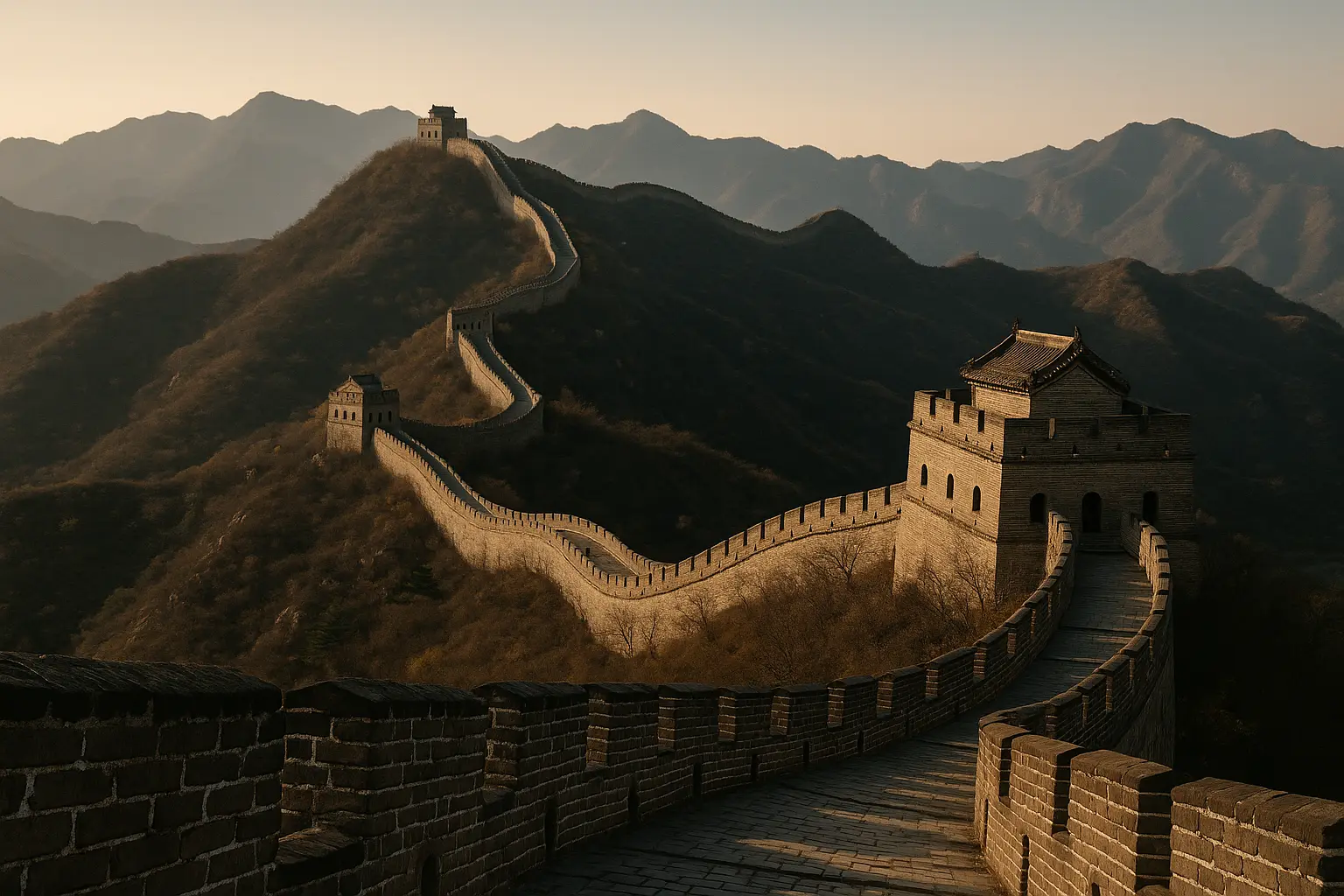
Great Wall of China Badaling Travel Guide 2026: Iconic Fortification
Chinese ImperialVisit Badaling, the most famous section of the Great Wall of China. Our guide covers tickets, cable ...
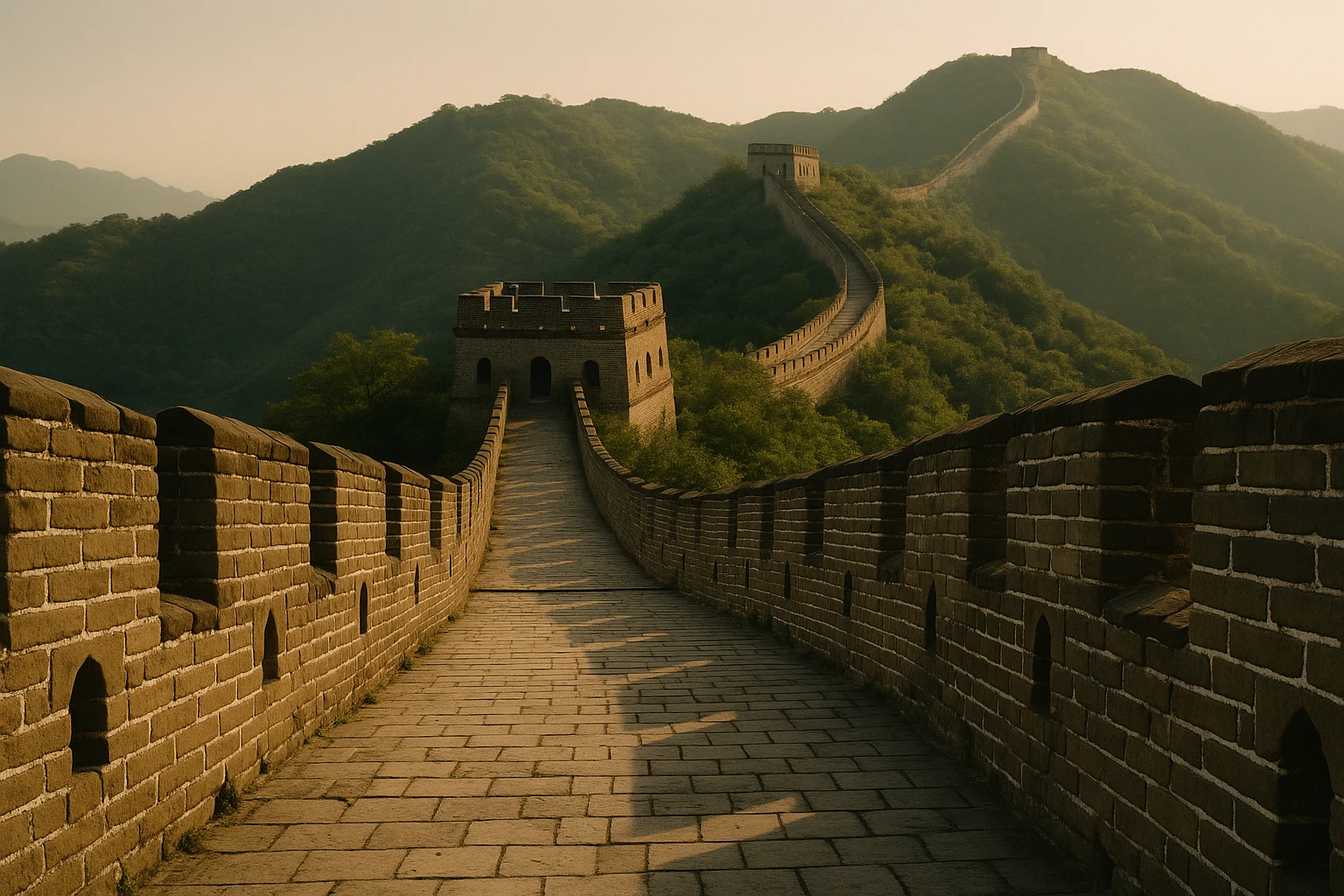
Great Wall of China (Mutianyu)
Explore Mutianyu — the Great Wall's most dramatic restored section, with 22 Ming-era watchtowers, mo...
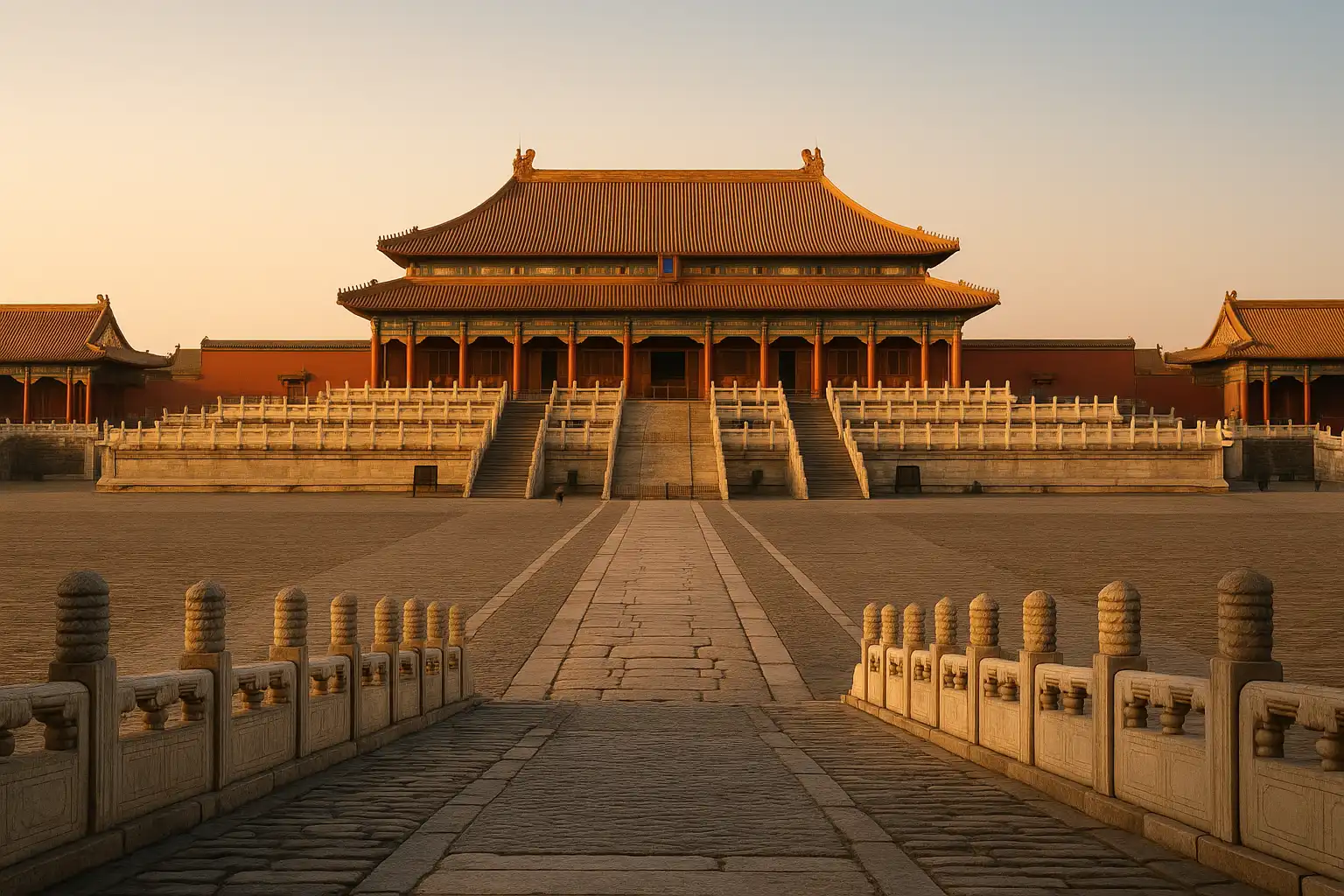
Forbidden City China Travel Guide 2026: Imperial Palace of Beijing
Chinese ImperialExplore the Forbidden City, China's imperial palace for 500 years. Discover the Hall of Supreme Harm...