Quick Info
Curated Experiences
Yinxu Ruins Day Tour from Anyang
Private Shang Dynasty Heritage Tour to Yinxu
Anyang Historical Tour Including Yinxu and Oracle Bone Museum
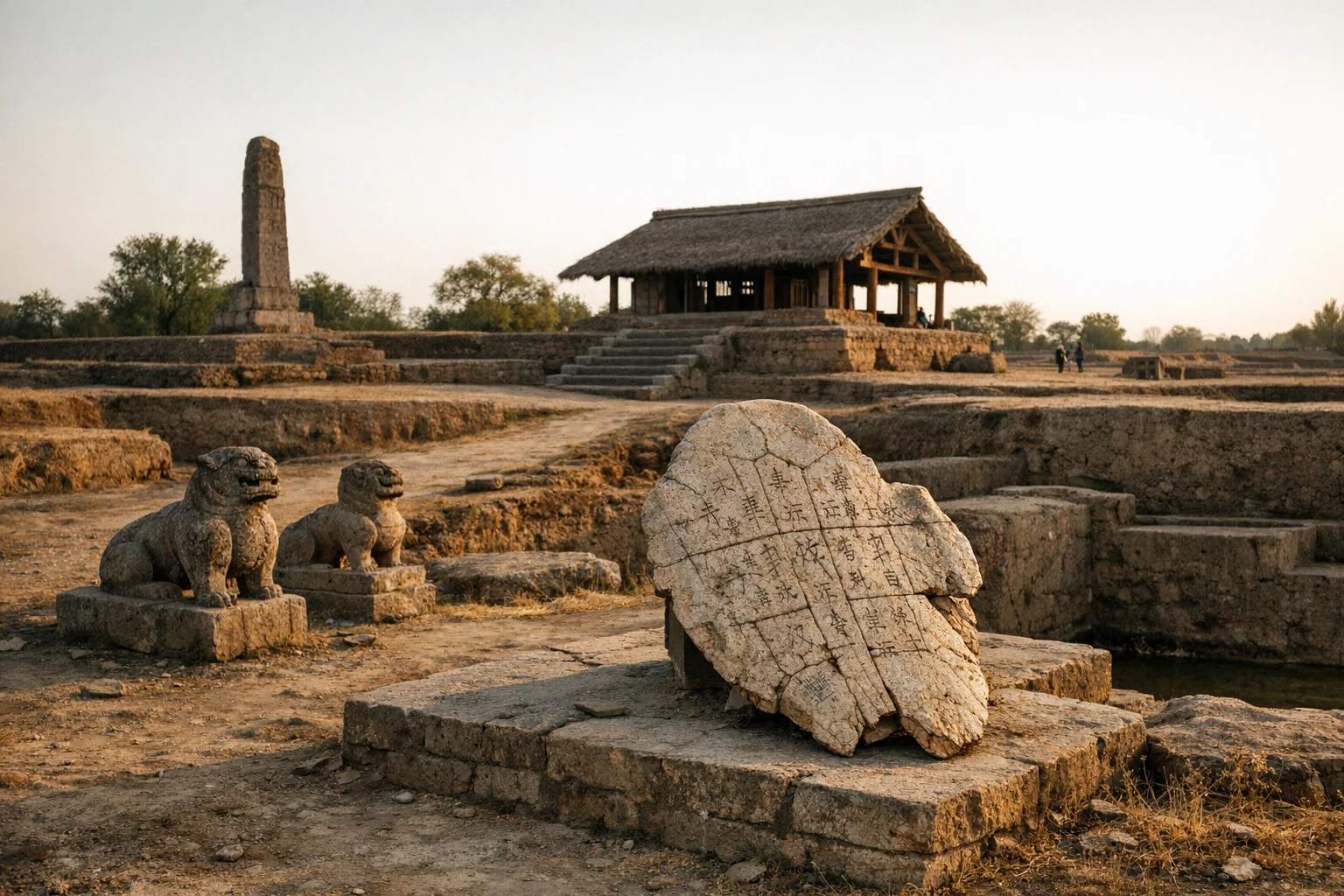
Yinxu Ruins in China are one of those sites whose importance is so great that the landscape can initially seem quieter than expected. Near modern Anyang in Henan Province, the remains of the last capital of the Shang dynasty do not overwhelm visitors with towering stone walls or intact palaces. Instead, Yinxu asks for a different kind of attention. Its significance lies in foundations, tombs, sacrificial pits, workshop areas, museum collections, and above all in the discovery of oracle bones that preserve the earliest known mature form of Chinese writing. Standing here, you are not just visiting an archaeological park. You are entering a place where the political, ritual, and textual history of early China became materially legible.
That shift in perspective is what makes Yinxu so compelling. Many ancient sites impress through monumental survival. Yinxu impresses through revelation. It gives substance to the late Shang world that had long lived in transmitted texts, legend, and dynastic memory, and it does so through evidence of remarkable richness: royal tombs, bronze production, divination inscriptions, palace foundations, chariot pits, and traces of highly structured ritual life. The site can feel spare at first because so much of its importance lies below ground or in the interpretive connection between excavated remains and the objects displayed nearby. But once that connection clicks, Yinxu becomes one of the most intellectually exciting places in China. It is where early kingship, bronze-age power, ritual violence, and the origins of written record all converge in one landscape.
History
The Late Shang and the Rise of Yin
Yinxu is associated with the final phase of the Shang dynasty, one of the earliest historically and archaeologically secure dynasties in Chinese civilization. The Shang are usually dated to the second millennium BCE, and by the time the dynasty established its late capital at Yin, the state had already developed a powerful political and ritual system centered on kingship, bronze production, warfare, divination, and ancestral cult. Ancient textual tradition preserved the memory of Shang rulers, but for many centuries the material proof of their capital remained uncertain. Yinxu changed that completely.
The capital at Yin, near present-day Anyang, flourished roughly from the 14th to the 11th century BCE. It was not the dynasty’s first capital, but it became its most archaeologically consequential one. Here, the Shang court organized ritual, military campaigns, craft specialization, and political authority on a scale that left a profound material record. The city’s importance comes not only from its size, but from the range of activities concentrated there: palace construction, bronze casting, elite burial, animal and human sacrifice, and divinatory consultation with royal ancestors and powers.
Kingship, Ritual, and Writing
The Shang state was built on an unusually close connection between political authority and ritual communication. At Yinxu, kings did not simply govern; they also mediated between the living court and the ancestral or divine powers on whom political legitimacy depended. This is where oracle bones become so essential. Turtle plastrons and ox scapulae were inscribed with questions addressed to higher powers, then heated until cracks formed, which were interpreted divinationally. These inscriptions record concerns ranging from warfare and weather to childbirth, hunting, agriculture, sacrifice, and royal well-being.
The discovery of these oracle bones at Yinxu was revolutionary because it confirmed the Shang not as semi-legendary figures but as historical actors using an already highly developed writing system. The inscriptions preserve names of kings, rituals, and events that tie directly into later historical tradition. In other words, Yinxu is one of the rare sites where archaeology and the earliest written record of a civilization lock together with extraordinary force. The capital was therefore not just a political center. It was also a textual and ritual machine, one in which writing, divination, and state power were inseparable.
Decline and the End of the Shang
The late Shang state centered at Yinxu eventually fell to the Zhou, who replaced it as the dominant political power in northern China. The transition, traditionally associated with the conquest of the last Shang ruler, was remembered in later historical literature as a moral and dynastic turning point. However simplified later accounts may be, the archaeological record at Yinxu preserves the final great phase of Shang civilization before that collapse. The city was not continuously transformed into the next dynastic capital. Its political life ended, and over time the remains of its palaces, tombs, and ritual grounds fell into the soil.
That end is one reason Yinxu remained archaeologically powerful. The site was not endlessly built over by later capitals on the same scale. As its political centrality faded, its buried remains survived in the landscape. What had once been the nerve center of a bronze-age kingdom became an archaeological archive waiting to be rediscovered.
Rediscovery and the Birth of Modern Chinese Archaeology
The modern importance of Yinxu begins in the late 19th and early 20th centuries, when oracle bones began to circulate as so-called “dragon bones” used in traditional medicine before scholars recognized the inscriptions on them. This realization led researchers to trace the source of the bones back to the Anyang region. Excavations beginning in the 1920s, especially under Li Ji and other pioneers, marked a foundational moment in modern Chinese archaeology. Yinxu became one of the first great scientifically excavated sites in China and transformed the study of early Chinese history.
The discoveries were spectacular. Archaeologists uncovered palace foundations, workshops, royal tombs, chariot pits, sacrificial remains, bronzes, jades, and inscribed oracle bones in huge numbers. The tomb of Fu Hao, a royal consort and military leader, became one of the most famous finds because it was found largely undisturbed and contained extraordinary grave goods. These excavations did more than enrich museum collections. They provided the first secure archaeological proof of the Shang dynasty and created a baseline for the scientific study of early Chinese civilization. Yinxu is therefore historically important twice over: first as a Shang capital, and second as a cradle of Chinese archaeology itself.
Key Features
The most intellectually famous feature of Yinxu is the oracle bone material, and even though many visitors encounter it through museum display rather than in situ excavation surfaces, it shapes the meaning of the entire site. These inscribed bones and shells are not just early texts. They are records of the Shang mind at work: questions posed to ancestors, rituals prepared, anxieties recorded, and outcomes sometimes noted. The writing is already recognizably ancestral to later Chinese script, which gives the site a singular importance. Few archaeological places let you connect physical remains so directly to the emergence of writing, political ritual, and state administration.
The royal tomb areas are another major highlight, especially because they reveal the scale and intensity of Shang elite burial culture. Tomb pits, grave goods, and sacrificial evidence show a world in which death, hierarchy, and ritual power were tightly intertwined. The tomb of Fu Hao stands out because it offers a particularly vivid snapshot of elite Shang life and death. Her burial included bronzes, jade, weapons, bone objects, and human sacrifices, demonstrating both her rank and the sophistication of Shang material culture. For many visitors, Fu Hao’s tomb is the moment when the Shang stop feeling distant and become sharply real.
Palace foundations and habitation zones add a different but equally important layer. Because little rises dramatically above ground compared with later stone monuments, these remains demand a more interpretive mode of seeing. Once understood, however, they become powerful. Foundation outlines reveal how royal and administrative areas were laid out, how labor was organized, and how the capital structured space. Yinxu was not merely a cemetery or a ritual ground. It was a functioning urban and political center, with workshops, living areas, ceremonial zones, and infrastructure supporting a highly stratified society.
The bronze culture associated with Yinxu is one of the site’s most impressive features, even when encountered partly through museum interpretation. Shang bronze vessels are among the masterpieces of ancient world metallurgy, and Yinxu provides context for how such objects were made, used, and understood. They were not decorative luxuries alone. They belonged to sacrificial ritual, ancestor veneration, political legitimacy, and elite display. To see Yinxu properly is to understand that bronze was not merely material wealth; it was ideological technology.
The archaeological presentation of the site also matters. Yinxu is not a ruin of obvious visual drama on every step, so the relationship between excavated remains and curated interpretation is essential. Museums, reconstructions, explanatory signage, and preserved pits all help visitors read the site as a coherent ancient capital rather than a scattering of difficult traces. That educational richness is part of Yinxu’s value. It is a site that rewards curiosity and concentration, and for visitors willing to engage with context, it becomes one of the most revealing ancient places in East Asia.
Getting There
Yinxu Ruins are located near Anyang in northern Henan Province, and Anyang serves as the main gateway for most visitors. The city is well connected by high-speed rail and conventional trains, especially from Zhengzhou, Beijing, and other major cities in northern China. From Zhengzhou, the high-speed train journey is relatively quick, making Yinxu feasible even as a focused overnight trip if planned carefully. Train fares vary by class and route, but China’s rail network generally makes arrival straightforward.
Once in Anyang, the site can usually be reached by taxi, rideshare, or local bus depending on your preference and Chinese-language navigation comfort. A taxi from Anyang East railway station or central city areas to the Yinxu archaeological zone is usually manageable in both time and cost, often taking around 20 to 40 minutes depending on traffic. Many domestic travelers and some international visitors opt for a private guide or day driver, especially if combining Yinxu with museums or nearby Shang-related sites.
Because Yinxu includes multiple areas and benefits greatly from interpretation, many travelers find a guided visit worthwhile. Independent travel is still entirely possible, but having enough time for the museum components is essential. This is not a site to rush. Plan for transport to and around Anyang in a way that leaves mental space for the archaeology itself.
When to Visit
The best time to visit Yinxu is generally spring or autumn, when temperatures in Henan are more comfortable for walking the outdoor archaeological grounds. April to May and September to October are especially pleasant, with milder weather, less oppressive heat, and better conditions for moving between open excavation areas and museum spaces. These seasons also make it easier to spend several hours on site without fatigue flattening the experience.
Summer can be hot and humid, and while Yinxu remains visitable, the outdoor sections can feel more demanding than their understated appearance suggests. Winter is quieter and may appeal to travelers who prefer fewer crowds, but temperatures can be cold and the atmosphere more austere. The site itself does not depend on lush seasonal scenery, so in visual terms it can still be rewarding in colder months; the main question is personal comfort.
Whenever you visit, morning or early afternoon generally works best. Yinxu is a site that benefits from mental energy as much as physical comfort. It rewards reading, comparing, and connecting different parts of the archaeological story. Going early helps preserve that attention. If possible, pair the outdoor ruins with museum displays on the same day, since the intellectual impact comes from seeing the landscape and the objects together.
| Quick Facts | Details |
|---|---|
| Location | Near Anyang, Henan Province, China |
| Best Known For | Late Shang capital and oracle bone inscriptions |
| Civilization | Shang |
| Main Period | c. 14th-11th century BCE |
| UNESCO Status | World Heritage Site |
| Signature Discovery | Oracle bones with the earliest known mature Chinese writing |
| Key Archaeological Highlights | Royal tombs, palace foundations, sacrificial pits, Fu Hao’s tomb |
| Recommended Visit Length | Half day minimum, full day ideal |
| Best Season | Spring and autumn |
| Practical Tip | Combine the outdoor ruins with museum exhibits to fully understand why Yinxu matters so much in early Chinese history |
Frequently Asked Questions
What are the Yinxu Ruins best known for?
The Yinxu Ruins are best known as the last capital of the Shang dynasty and for the discovery of oracle bones bearing the earliest known mature Chinese writing.
Why is Yinxu so important in Chinese history?
Yinxu provides crucial archaeological evidence for the Shang dynasty, including royal tombs, palatial foundations, bronze culture, ritual practices, and early written records.
Where are the Yinxu Ruins located?
The site is located near Anyang in Henan Province, China, in the Yellow River cultural heartland.
How much time should you spend at Yinxu?
Most visitors should allow at least half a day, and ideally a full day, to explore the palace areas, royal tombs, museums, and oracle bone exhibits properly.
What are oracle bones at Yinxu?
Oracle bones are inscribed animal bones and turtle shells used in Shang divination, and the inscriptions on them preserve some of the earliest known Chinese script.
When is the best time to visit the Yinxu Ruins?
Spring and autumn are generally the best seasons, with more comfortable temperatures for walking the large archaeological grounds and visiting outdoor remains.
Nearby Ancient Sites
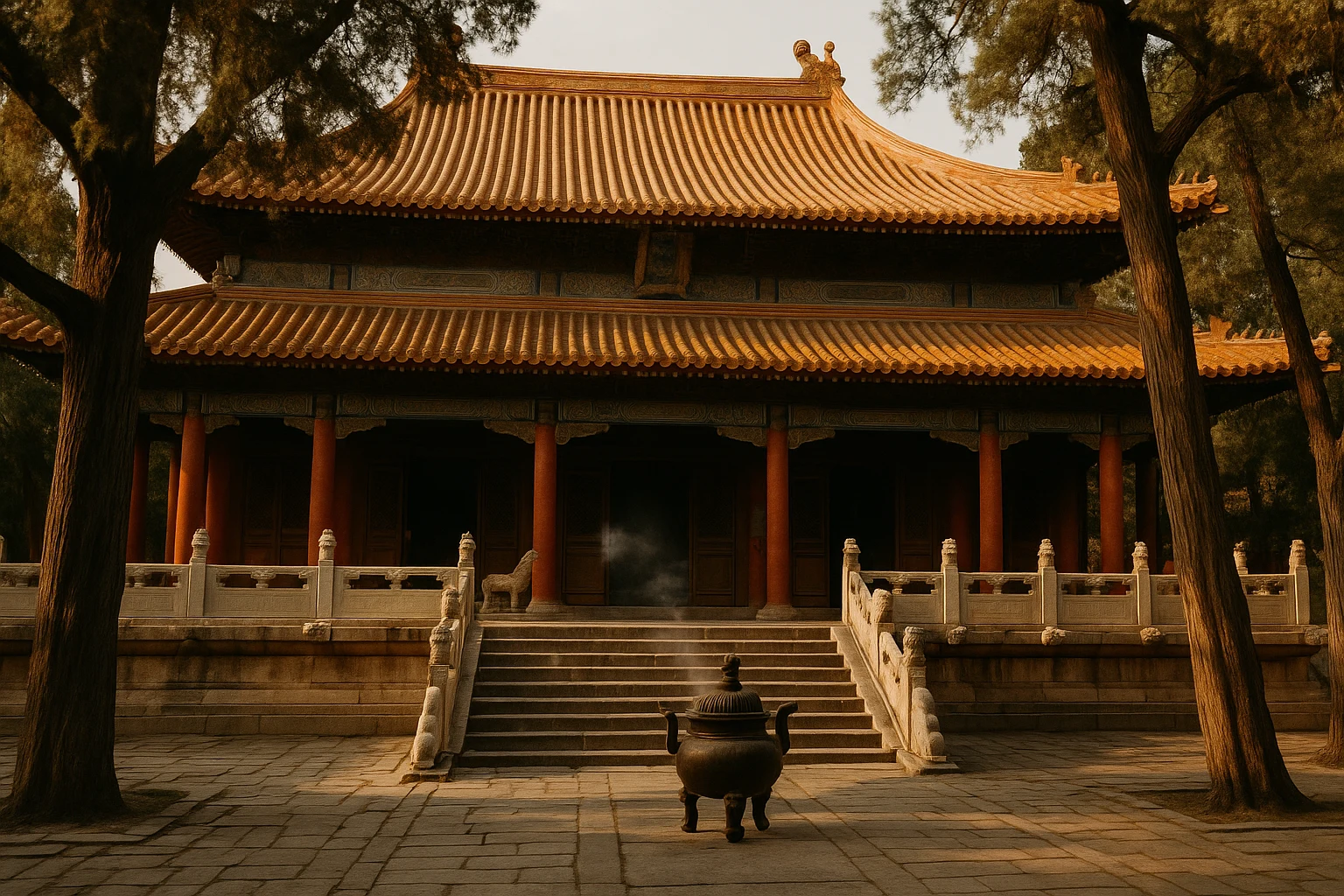
Confucius Temple (Qufu)
The ancient Temple of Confucius in Qufu, Shandong, is China's largest Confucian temple complex, a UN...
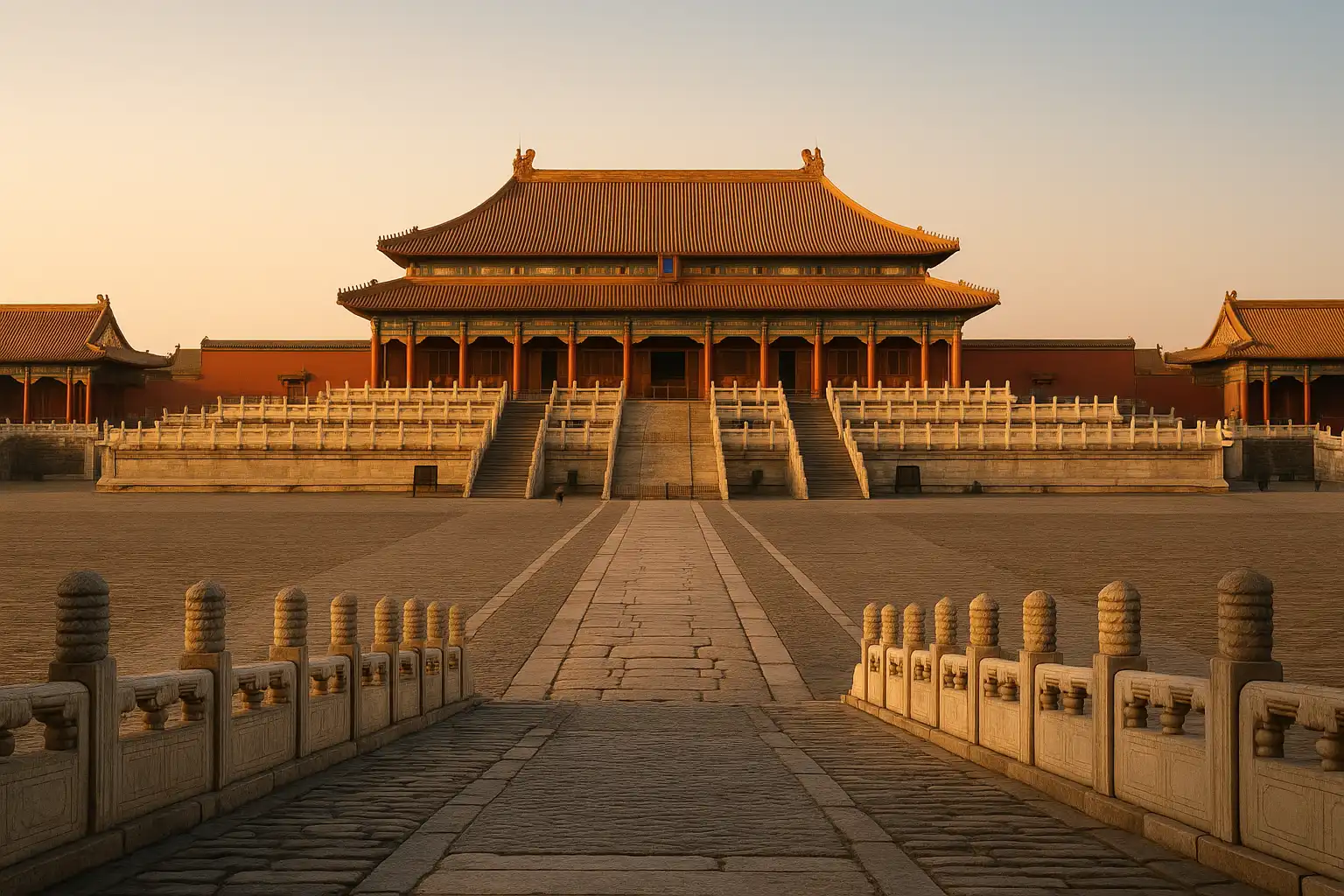
Forbidden City China Travel Guide 2026: Imperial Palace of Beijing
Chinese ImperialExplore the Forbidden City, China's imperial palace for 500 years. Discover the Hall of Supreme Harm...
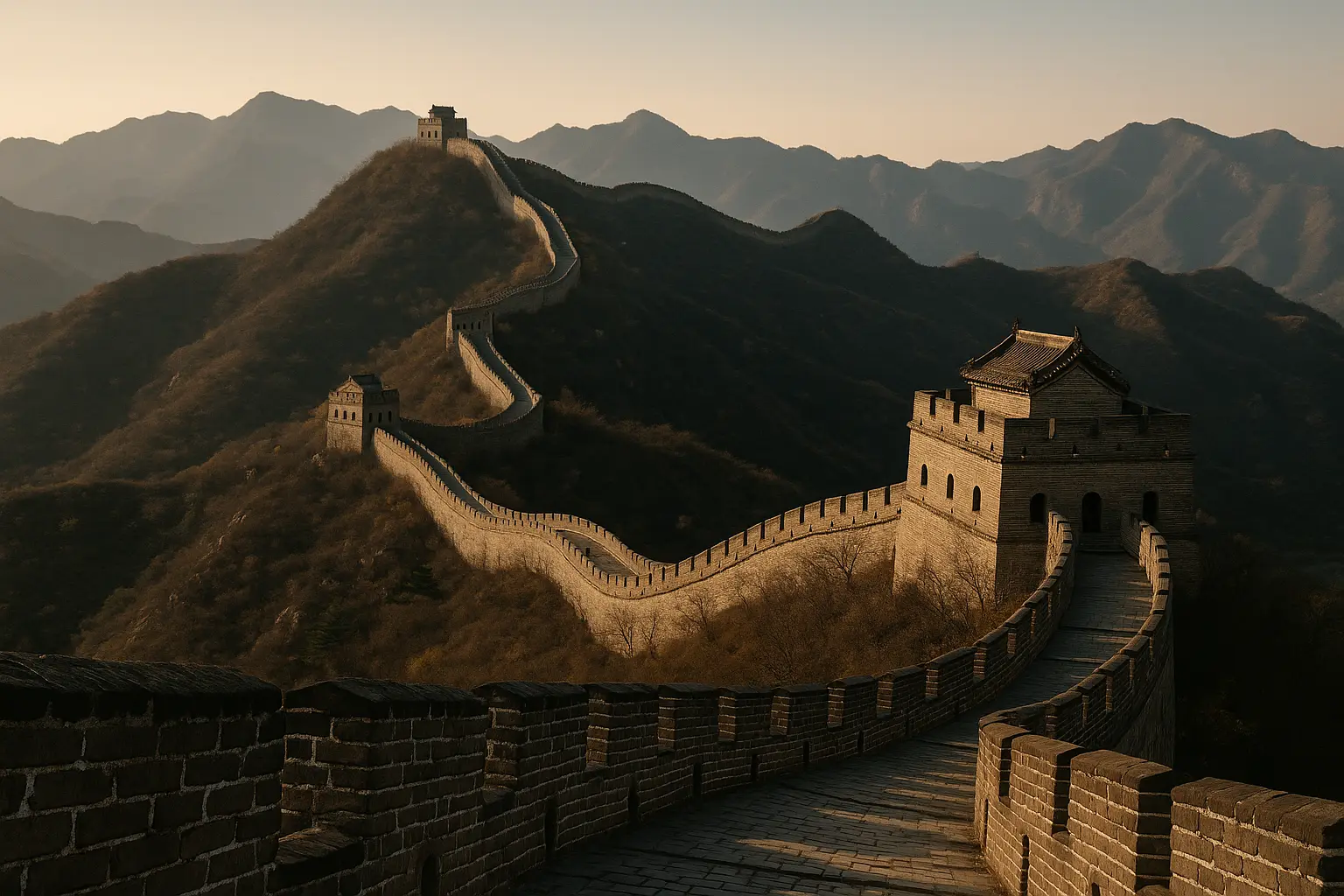
Great Wall of China Badaling Travel Guide 2026: Iconic Fortification
Chinese ImperialVisit Badaling, the most famous section of the Great Wall of China. Our guide covers tickets, cable ...
Bingling Temple Grottoes
Chinese BuddhistExplore China’s Bingling Temple Grottoes, a dramatic cliffside Buddhist cave complex of statues, mur...