Quick Info
Curated Experiences
Yoshinogari Historical Park Guided Tour
Saga Prefecture Cultural Heritage Day Trip
Yayoi Period Japan Ancient History Tour
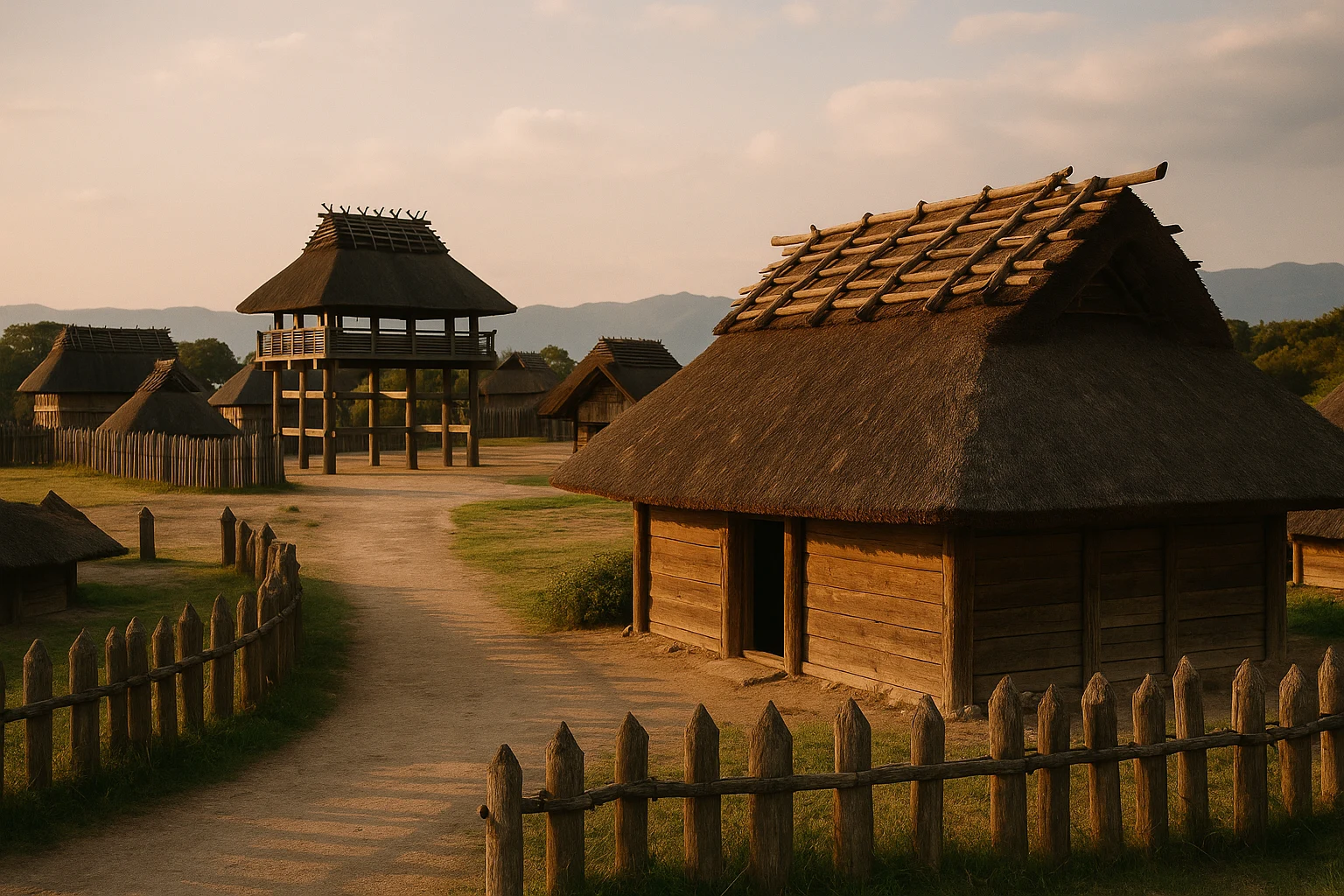
Stepping through the reconstructed north gate of Yoshinogari Historical Park in Saga Prefecture, Japan, is like crossing a threshold between centuries. Thatched watchtowers rise against the low Kyushu hills, their silhouettes unchanged in form from the ones that once guarded this settlement more than two thousand years ago. The deep double moat that encircles the inner village still holds water, and the ring of pointed timber palisades still encloses a world that was, during the Yayoi period, among the most sophisticated communities on the Japanese archipelago. Yoshinogari is not a museum in the conventional sense. It is a living reconstruction — the largest Yayoi period archaeological site in Japan — where visitors walk through rebuilt pit dwellings, peer into granary platforms raised on stilts, and stand in a ceremonial hall where ancient elites once presided over ritual and politics. Spread across roughly 117 hectares of gently rolling land in the Kanzaki District, the park offers an immersive encounter with the society that transformed Japan from a hunter-gatherer culture into a rice-farming civilization with stratified classes, long-distance trade, and organized defense. For anyone curious about the deep roots of Japanese culture, Yoshinogari is an essential and surprisingly dramatic destination.
History
The Yayoi Transformation
The Yayoi period, lasting roughly from 400 BCE to 300 CE, represents one of the most consequential cultural transitions in Japanese prehistory. Wet-rice agriculture arrived in Kyushu from the Korean Peninsula and continental East Asia, bringing with it not only a new food system but entirely new social arrangements. Villages grew larger and more permanent. Surplus grain required storage and defense. Social hierarchies emerged to organize labor and adjudicate disputes. Bronze and iron technologies appeared, and ritual life became more elaborate. Yoshinogari sits at the center of this transformation, and its archaeological record documents the process with exceptional clarity.
Discovery and Excavation
The site’s modern history began in 1986, when Saga Prefecture initiated surveys of the area ahead of a planned industrial development. Archaeologists quickly recognized the scale of what lay beneath the fields. Excavations over the following years uncovered the remnants of a vast moated settlement, hundreds of burial jar graves, bronze artifacts, carbonized rice grains, weaving tools, and the post-hole patterns of dozens of structures. By 1989, the national government had designated the site a Special Historic Site, the highest level of protection available under Japanese heritage law, and plans for industrial development were abandoned. Full-scale archaeological investigation and reconstruction began in the early 1990s, and the park opened to the public in 1992.
The Chiefdom of Yoshinogari
What archaeologists have pieced together from the evidence is a picture of a powerful, politically organized chiefdom that flourished between roughly 200 BCE and 200 CE. At its peak, the inner settlement — the fortified core now reconstructed for visitors — was home to a ruling elite who controlled the surrounding agricultural villages. The double moat system and timber palisades were not merely symbolic; they reflect real threats and real military capacity. Bronze daggers and weapons found on site suggest that Yoshinogari participated in the same exchange networks that connected Kyushu to the Korean Peninsula and, through it, to Han dynasty China. Burial jars uncovered in the northern ceremonial district show clear evidence of social stratification: the graves of elites are larger, more elaborately constructed, and positioned separately from those of commoners.
Yamatai and Historical Speculation
Yoshinogari has attracted considerable attention from scholars interested in the legendary kingdom of Yamatai, a powerful Yayoi-era polity described in the Chinese chronicle Weizhi, compiled around 280 CE. The chronicle describes Yamatai as ruled by a shamanistic queen named Himiko who held sway over dozens of subordinate communities. The location of Yamatai has been debated for centuries, with scholars divided between Kyushu and the Kinai region of central Honshu. Some researchers have argued that Yoshinogari’s scale, defensive sophistication, and ceremonial architecture make it a plausible candidate, though no scholarly consensus exists. The park’s interpretive materials engage with this debate honestly, presenting the evidence without overclaiming. The ambiguity itself is historically instructive: the fragmentary Chinese records and the archaeological evidence together reveal a Japan that was already engaging with a wider world while remaining largely invisible to written history.
From Agricultural Village to National Monument
After the Yayoi period ended around 300 CE, the site gradually fell into disuse and was eventually covered by agricultural fields. The reconstruction effort that began in the 1990s drew on postholes, artifact distributions, and comparisons with other Yayoi sites across Kyushu to produce the buildings visitors see today. Ongoing excavation continues in portions of the park not yet reconstructed, meaning Yoshinogari remains an active archaeological site as well as a heritage destination.
Key Features
The Inner Settlement and Defensive Architecture
The heart of Yoshinogari is its reconstructed inner settlement, enclosed within a formidable system of two concentric moats separated by an earthen embankment and topped with timber palisades. The outer moat alone is several meters wide and was originally deeper still. Entering through the north gate, visitors find themselves within a ring of watchtowers — two-story structures on raised platforms from which guards could survey the surrounding countryside. These towers are among the most visually striking elements of the park, their thatched roofs and timber frames evoking the anxious alertness of a community that knew threats were real. The gate complex itself is substantial, with a formal entrance chamber that controlled and announced access to the ruling elite’s domain.
Pit Dwellings and Daily Life Zones
Beyond the inner palisade, the settlement opens into a landscape of pit dwellings — semi-subterranean homes with thatched roofs extending nearly to the ground. These structures are furnished with period-appropriate reproductions: woven mats, clay vessels, stone tools, and the low hearths around which Yayoi families cooked and gathered. The reconstructions are the product of careful archaeological inference, and the effect inside each dwelling is one of genuine intimacy with the past. Raised granaries stand nearby on their distinctive stilted platforms, the underside gaps designed to deter vermin and allow air circulation — a practical solution that remained in use in rural Japan for centuries after the Yayoi period ended. The scale of the granary zone makes clear how central rice storage was to the political economy of the chiefdom.
The Ceremonial Northern District
The northern section of the park is set aside for ceremonial and elite functions. Here stands the reconstructed main building of the ruling class: a large, gabled hall raised on a platform, its interior designed for the kind of ritual activity that consolidated political authority in pre-literate societies. Adjacent to this hall, the burial jar cemetery is one of the most affecting features of the entire site. Hundreds of large ceramic jars, each containing the remains of a single individual, are arranged in rows across an open hillside. The jars range in size and elaborateness, and the spatial organization of the cemetery reflects the social hierarchies of the living community. Walking among them, particularly in the slanting light of late afternoon, conveys the depth of Yoshinogari’s human history with quiet force.
The Outer Settlement and Agricultural Landscape
Outside the main fortified zone, the park reconstructs the broader agricultural community that supported the inner chiefdom. Farmsteads, workshops, and communal areas spread across the wider site, giving a sense of how the majority of Yayoi people actually lived. Paddy field demonstrations are conducted seasonally, and visitors can sometimes observe rice planting or harvesting activities that use period-appropriate methods. The visual contrast between the defended inner settlement and the open agricultural zone beyond it encapsulates the social structure of the chiefdom: power concentrated at the center, labor distributed across the periphery.
Museum and Interpretive Facilities
The park’s main visitor center houses an archaeological museum with a strong collection of Yayoi artifacts recovered from the site: bronze mirrors, iron tools, bronze weapons, ceramics, carbonized rice, wooden implements, and burial goods. The displays contextualize Yoshinogari within the broader Yayoi world and address the Yamatai question with appropriate scholarly nuance. English-language panels and audio guides make the museum fully accessible to international visitors.
Getting There
Yoshinogari Historical Park is accessible by rail from both Fukuoka and Saga City, making it a straightforward day trip from either urban base. From Fukuoka’s Hakata Station, take the JR Nagasaki Line bound for Nagasaki or Hizen-Yamaguchi; the journey to Yoshinogari-Koen Station takes approximately 40–50 minutes depending on the service type, with fares around ¥780 for unreserved seats. Limited express trains reduce travel time to roughly 30 minutes but carry a surcharge. From Saga Station, local trains reach Yoshinogari-Koen Station in about 15 minutes, with fares around ¥200. The park entrance is a five-minute walk from the station, clearly signposted in both Japanese and English.
Buses from Saga City’s bus terminal also serve the park, with journey times of approximately 30–40 minutes depending on traffic. The bus fare is roughly ¥500. Taxis from Saga Station cost around ¥2,000–¥2,500 and take about 15 minutes.
Visitors arriving by car can use the park’s ample parking facilities, which charge a modest fee of around ¥200–¥300 per vehicle. The park sits just off Route 31, and signage from the Nagasaki Expressway’s Kanzaki interchange is clear. From Fukuoka, the drive takes approximately 50–60 minutes via the expressway. Bicycle rental is available at the park entrance for ¥300 per hour, and given the site’s scale, renting one is strongly recommended.
When to Visit
Yoshinogari Historical Park is open year-round, and each season offers a distinct character. Spring — specifically late March through early April — is the most popular time to visit, when cherry blossoms soften the reconstructed palisades and watchtowers with clouds of pink and white. The combination of ancient architecture and spring bloom is genuinely beautiful and draws steady crowds, though the park is large enough that it rarely feels congested.
Autumn, from October through mid-November, brings cooler temperatures, lower humidity, and the warm color of turning foliage on the hillsides surrounding the site. This is arguably the most comfortable season for extended walking, and the light in autumn afternoons is particularly flattering to the thatched structures and earthen mounds.
Summer in Kyushu is hot and genuinely humid, with temperatures regularly exceeding 32°C and significant rainfall during the June–July rainy season. Visiting early in the morning or on overcast days mitigates the heat somewhat, but summer is the least comfortable season for the park’s outdoor-heavy itinerary. That said, summer also brings seasonal events and demonstrations, including rice planting activities, that add an experiential dimension unavailable at other times.
Winter (December through February) is cool and occasionally cold, with sparse crowds and a spare, quiet atmosphere that suits the site’s contemplative character. The reconstructed buildings with their thick thatched roofs look particularly authentic in winter light. The park remains fully open and operational through the colder months.
The park is closed on Mondays (or the following Tuesday if Monday falls on a public holiday) and during the year-end holiday period from late December to early January. Opening hours are generally 9:00 AM to 5:00 PM, with extended hours during peak cherry blossom season.
| Quick Facts | |
|---|---|
| Location | Kanzaki District, Saga Prefecture, Japan |
| Coordinates | 33.3159° N, 130.4047° E |
| Period | Yayoi (c. 400 BCE – 300 CE) |
| Park Area | ~117 hectares |
| Designation | National Special Historic Site |
| Opened to Public | 1992 |
| Admission | Adults ¥600; High school students ¥120; Under 15 free |
| Hours | 9:00 AM – 5:00 PM (closed Mondays) |
| Nearest Station | Yoshinogari-Koen (JR Nagasaki Line) |
| Nearest City | Fukuoka (~50 min by train) |
| Language Support | English panels and audio guide available |
| Bicycle Rental | Available at entrance, ~¥300/hour |
Frequently Asked Questions
What is Yoshinogari Historical Park?
Yoshinogari Historical Park is Japan's largest Yayoi period archaeological site, spread across roughly 117 hectares in Saga Prefecture, Kyushu. It features extensively reconstructed settlements including moats, watchtowers, pit dwellings, and ceremonial buildings that bring to life a thriving community from around 300 BCE to 300 CE.
How do I get to Yoshinogari Historical Park?
The most convenient route is by train on the JR Nagasaki Line to Yoshinogari-Koen Station or Kanzaki Station, each about a 5-minute walk from the park entrance. From Fukuoka's Hakata Station, the journey takes roughly 40–50 minutes by limited express or local train. Buses also run from Saga City, taking approximately 30 minutes.
How much does it cost to enter Yoshinogari Historical Park?
General admission is ¥600 for adults, ¥120 for high school students, and free for children in middle school and below. Prices are subject to change, so check the official park website before visiting. Some special exhibitions or seasonal events may carry additional fees.
How long does it take to explore Yoshinogari Historical Park?
Most visitors spend between two and four hours exploring the site. The park is large, so comfortable walking shoes are essential. Renting a bicycle at the park entrance is a popular option and allows you to cover the full circuit, including the outer moat zone and the ceremonial northern district, in a single visit.
When is the best time to visit Yoshinogari Historical Park?
Spring (late March to early May) and autumn (October to November) offer the most comfortable weather and beautiful scenery. The cherry blossoms within the park grounds are a particular draw in late March. Summer can be intensely humid in Kyushu, though the park remains open year-round and is never overcrowded compared to major urban attractions.
Are there English-language resources at Yoshinogari Historical Park?
Yes. English-language explanatory panels are installed throughout the park, and an English audio guide is available for rent at the main visitor center. Some volunteer guides also offer tours in English on weekends, though availability varies by season. The park's official website has English-language content with maps and visitor information.
What makes Yoshinogari historically significant?
Yoshinogari provides the most complete picture anywhere in Japan of Yayoi society — the era that introduced wet-rice agriculture, bronze and iron technologies, and complex social hierarchies to the archipelago. Its scale, defensive moats, and burial jars suggest a politically organized chiefdom, and some scholars have proposed it as a candidate for the legendary kingdom of Yamatai described in ancient Chinese chronicles.
Nearby Ancient Sites
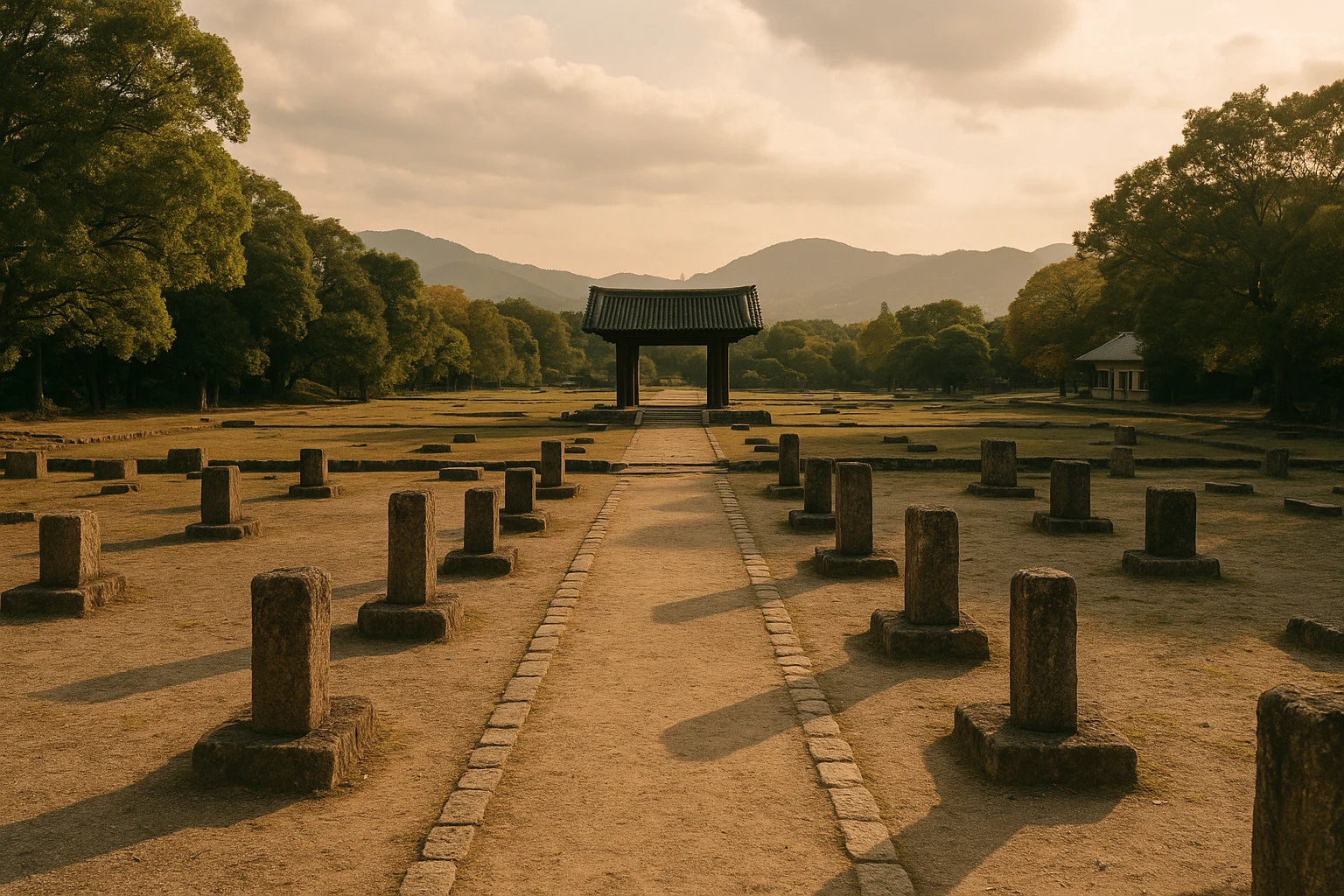
Dazaifu Government Office Ruins
Yamato Japan / Nara–Heian StateAncient administrative heart of Kyushu, the Dazaifu Government Office Ruins preserve Japan's 7th-cen...
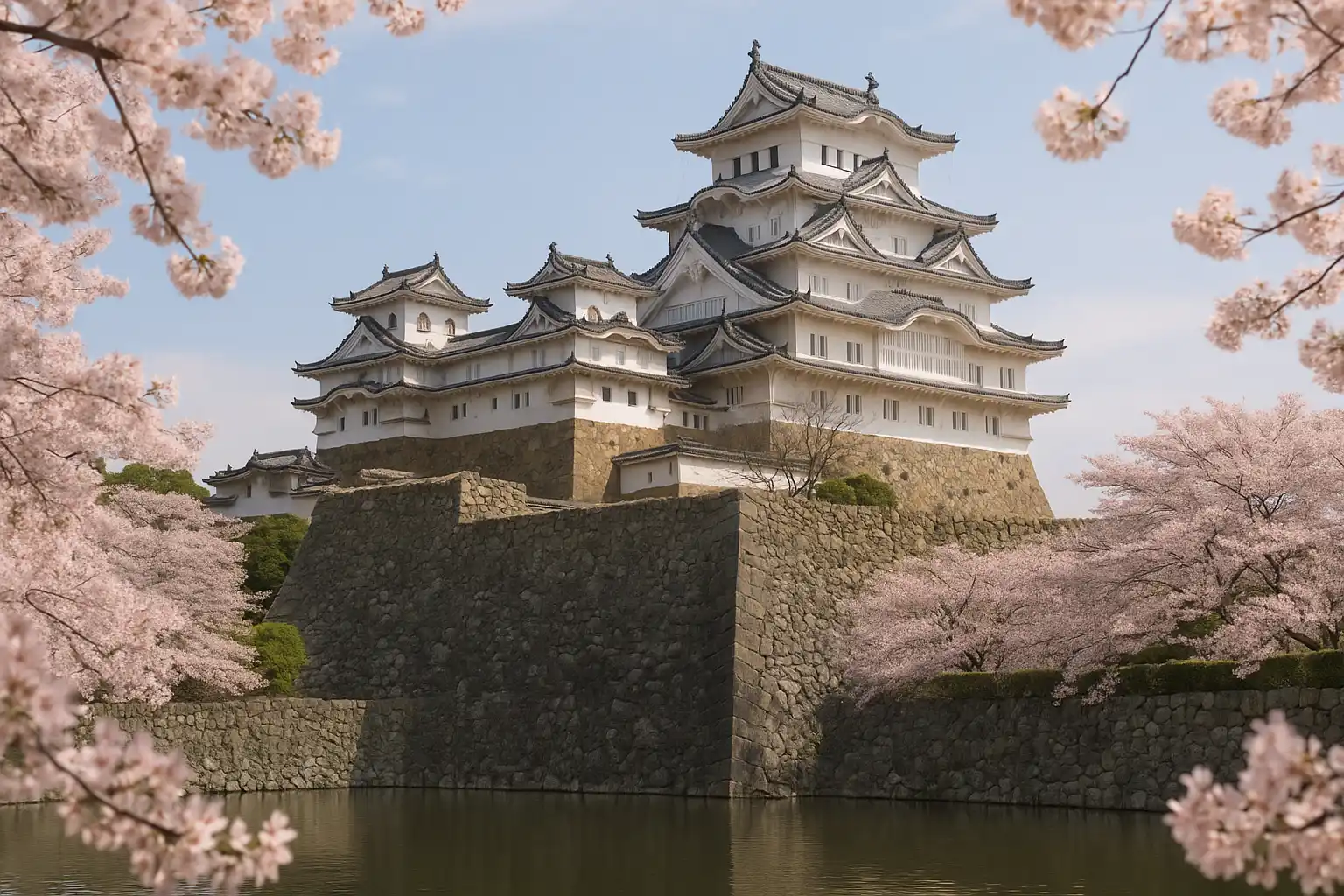
Himeji Castle Japan Travel Guide 2026: The White Heron Castle
Japanese FeudalVisit Himeji Castle, Japan's most beautiful original castle. Explore the White Heron keep, defensive...
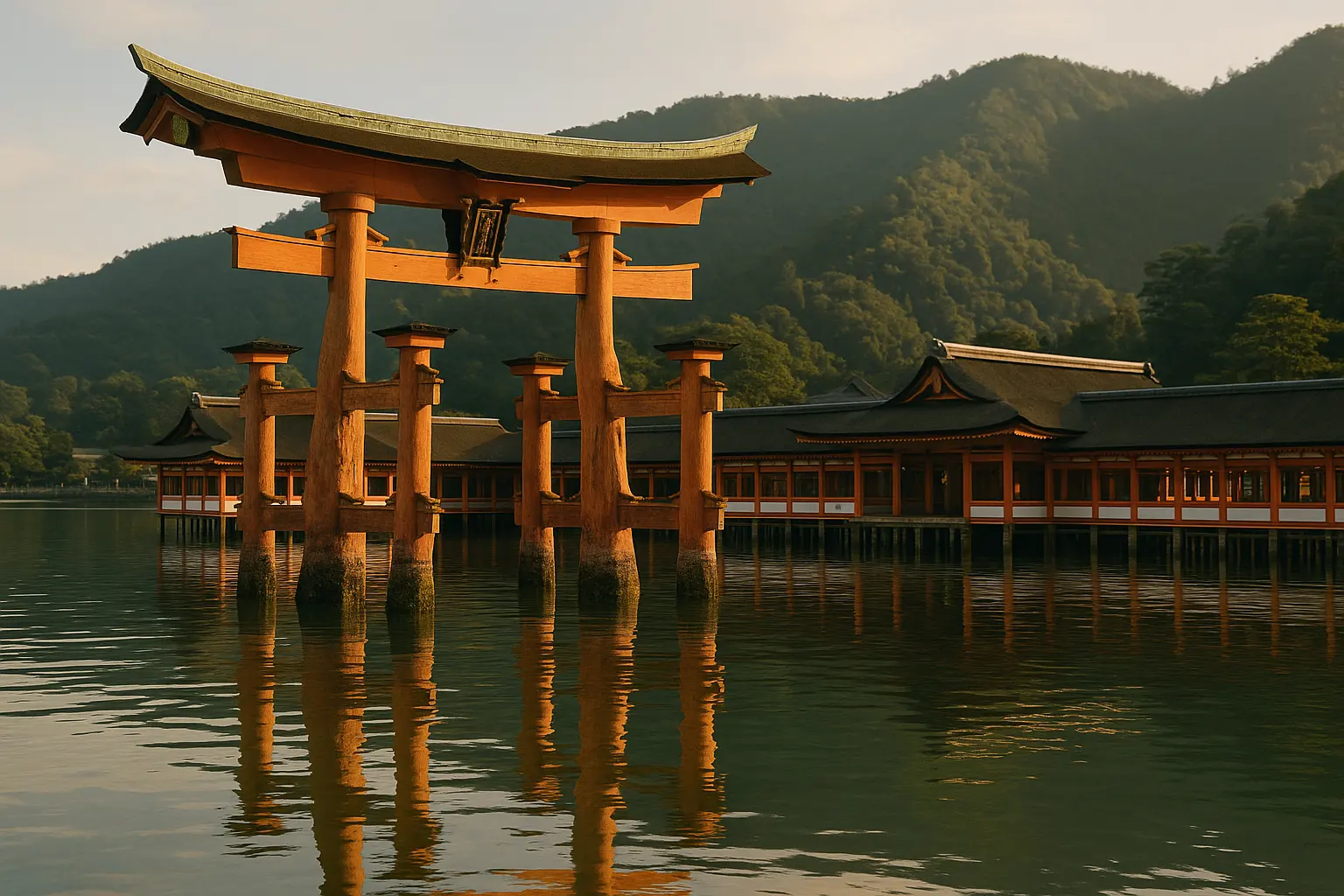
Itsukushima Shrine Japan Travel Guide 2026: The Floating Torii Gate
Japanese ShintoVisit Itsukushima Shrine on Miyajima Island, famous for its floating torii gate. Discover the shrine...
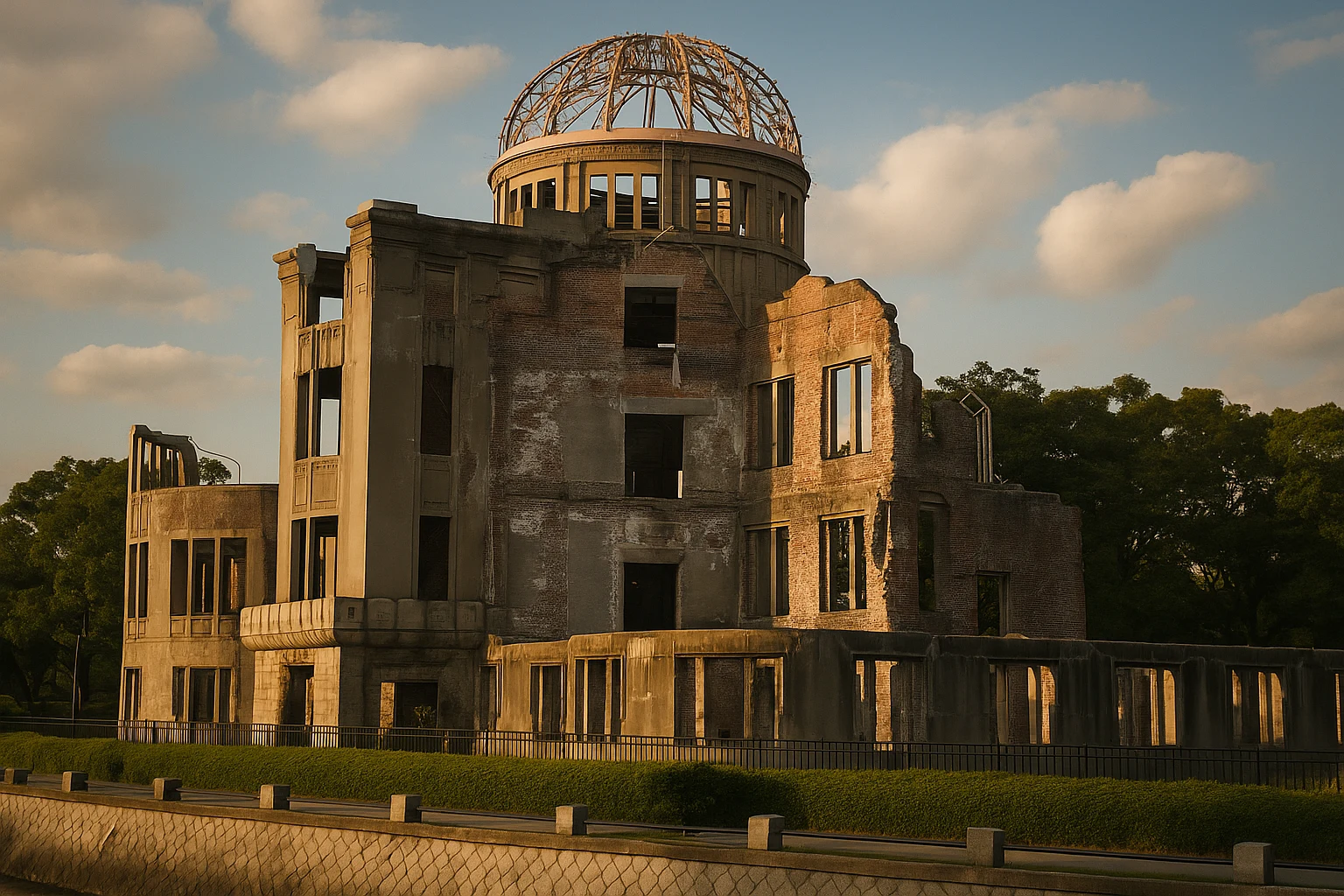
Hiroshima Peace Memorial (A-Bomb Dome)
Modern JapanThe UNESCO-listed A-Bomb Dome preserves the haunting ruins of the 1945 atomic bombing at Hiroshima P...
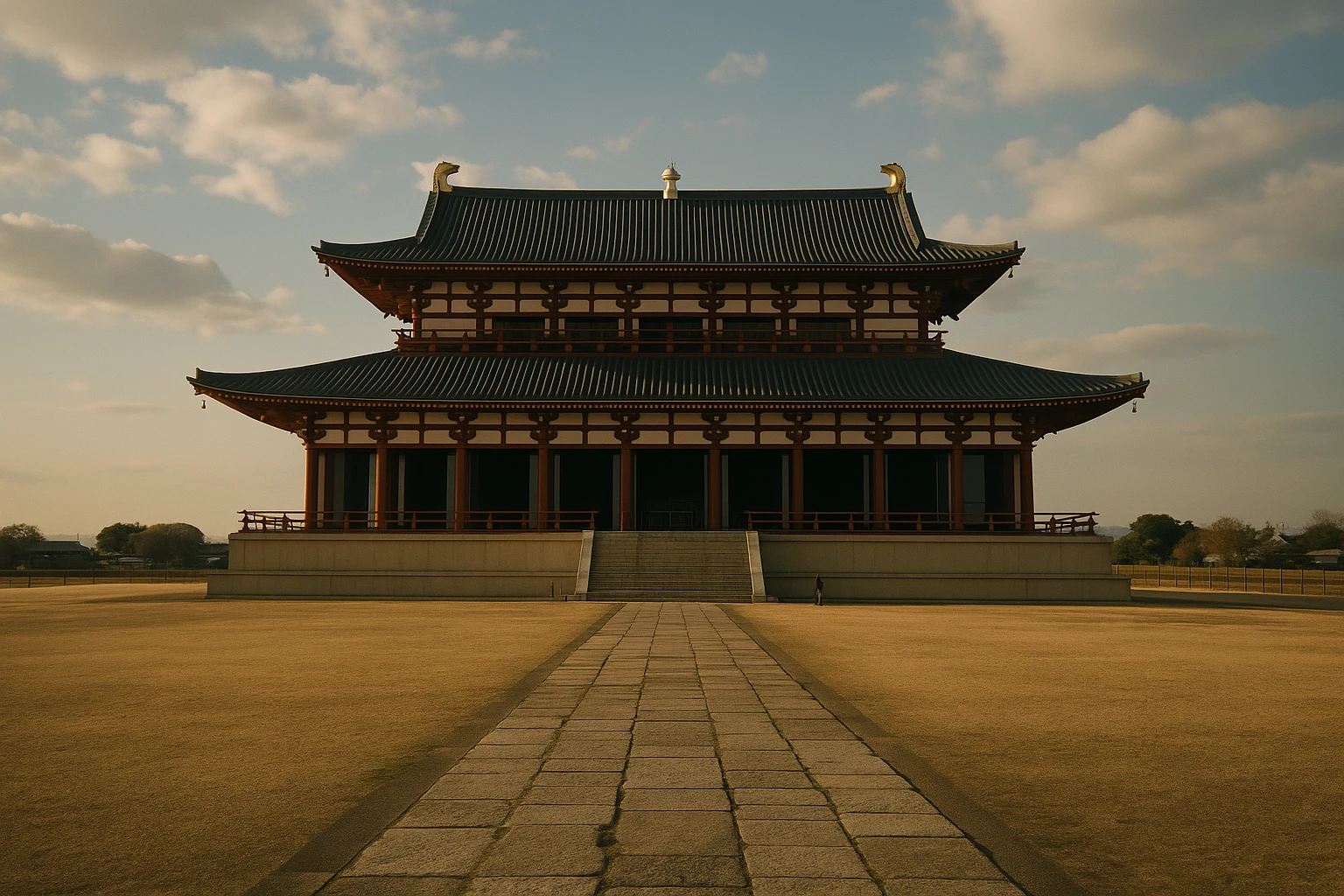
Heijo Palace Site
Nara Period JapanWalk the vast grounds of Japan's 8th-century imperial capital in Nara — a UNESCO World Heritage Site...