Quick Info
Curated Experiences
Yulin Grottoes Day Tour from Dunhuang
Private Yulin Grottoes and Western Thousand Buddha Caves Tour
Silk Road Buddhist Art Excursion to Yulin Grottoes
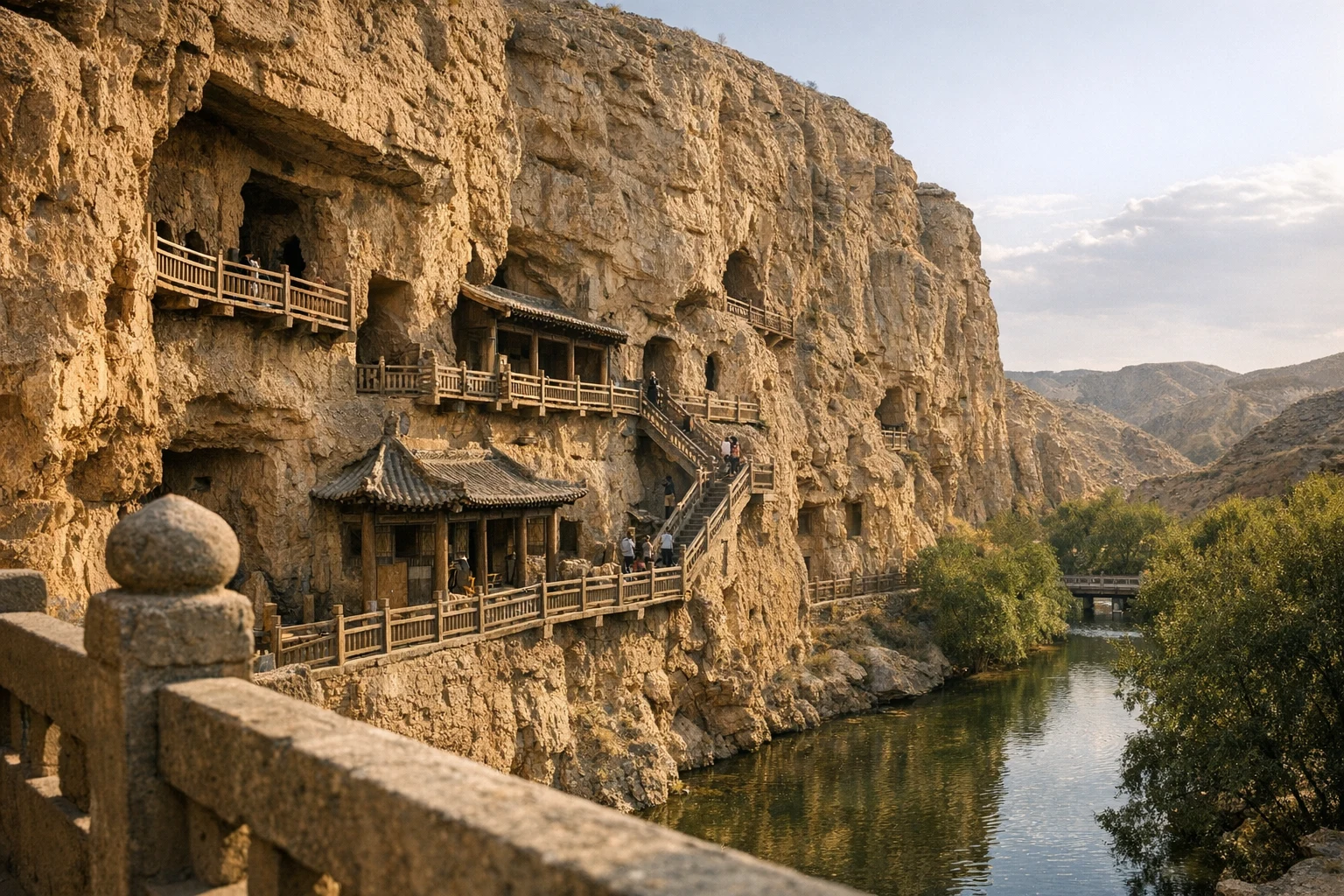
Yulin Grottoes in China are one of those places that reward travelers who are willing to leave the obvious route and follow the deeper logic of the Silk Road. Set in a ravine in Gansu Province near Guazhou and usually visited from Dunhuang, the grottoes do not announce themselves with the scale or fame of larger cave temple complexes. Instead, they wait in a quieter landscape of dry earth, cut cliffs, and sudden sacred interiors. The approach is part of the experience. A remote road leads into a river-carved valley, the land narrows, and then the cliffside caves begin to appear, modest from the outside but hiding painted worlds within. The effect is powerful precisely because it is understated. Yulin does not try to overwhelm. It draws you inward.
That inwardness is one of the site’s defining strengths. The grottoes preserve Buddhist murals and painted sculptures of exceptional quality, but they do so in a setting that still feels intimate and contemplative. Many visitors come expecting a minor companion to the better-known cave shrines of Dunhuang. What they find is something more focused: a place where the long visual history of Buddhism on the Silk Road can be read in chamber after chamber, through line, color, iconography, and the changing styles of dynasties that continued to renew the site over centuries. Yulin is not important because it is large. It is important because it condenses so much artistic, religious, and historical density into a landscape that still feels almost hidden. For anyone interested in the Silk Road as a world of ideas as much as of trade, Yulin Grottoes are one of northwestern China’s great rewards.
History
The Silk Road World of the Hexi Corridor
The Yulin Grottoes emerged in the broader cultural environment of the Hexi Corridor, one of the great east-west passageways of Inner Asia. This narrow corridor through modern Gansu linked the Chinese heartland with Central Asia, and along it flowed goods, armies, monks, diplomats, artistic ideas, and religious texts. Dunhuang became the most famous node in this network, but it was part of a wider sacred geography of cave shrines, monasteries, and oasis settlements. Yulin developed within that larger world and should be understood as one of its most important outlying sanctuaries rather than as an isolated anomaly.
The gorge setting was especially suitable for a cave temple site. The cliff provided both physical enclosure and symbolic drama, while the remoteness offered a degree of contemplative separation. Buddhism often flourished in such spaces, where religious patrons could create sacred interiors that transformed rock faces into enduring devotional environments. By the time Yulin’s earliest caves were excavated, the cave temple tradition was already well established along the Silk Road, but Yulin would develop its own character within that tradition.
Tang Foundations and the Making of the Site
The earliest surviving caves at Yulin are generally associated with the Tang period, when northwestern China was deeply integrated into wider trans-Eurasian networks and Buddhist art achieved extraordinary refinement. During the Tang, Dunhuang and the surrounding region became cosmopolitan cultural zones in which local elites, officials, monks, and donors supported the excavation and decoration of cave sanctuaries. Yulin’s earliest major painted programs likely belong to this world of active patronage and creative exchange.
This Tang foundation is crucial because it gives Yulin a strong historical anchor in one of the richest artistic eras of Chinese Buddhism. But the site did not simply imitate better-known centers. The caves at Yulin developed in relation to local ravine topography, patron communities, and workshop practices. Their murals show both participation in larger Buddhist artistic traditions and the specific evolution of a more intimate cave sanctuary. The caves were excavated, painted, and repainted not as one sudden project, but across generations of continued use.
Five Dynasties, Song, Western Xia, and Yuan Continuity
One of Yulin’s most important historical strengths is continuity. The site remained active through multiple dynastic periods, including the Five Dynasties, Song, Western Xia, Yuan, and later eras. This long use means that the caves preserve not one single artistic moment, but a layered history of changing styles, patrons, and religious emphases. Some caves were newly created in later centuries; others were repainted or revised. In this way, Yulin became a visual archive of the Silk Road’s long afterlife as much as its Tang brilliance.
The Western Xia period is particularly significant for the wider Dunhuang region, and Yulin preserves evidence of the artistic and political complexity of that frontier world. Under different states and shifting cultural conditions, the caves remained meaningful enough to justify sustained investment. That alone tells us something important. Yulin was not a short-lived cult site abandoned after one patronage cycle. It was a durable sacred place whose importance persisted despite political fragmentation and regional transformation.
This continuity also enriches the experience for modern visitors. Instead of encountering a frozen masterpiece from a single dynasty, you move through a sequence of chambers that reveal how Buddhist art and devotion evolved over time in one landscape.
Modern Study, Preservation, and Managed Access
Like many remote cave sites, Yulin remained relatively less visible internationally than larger counterparts until modern archaeological and art historical study expanded knowledge of the region. Scholars recognized that the grottoes preserved mural programs and sculptural material of exceptional importance, especially as a complement to better-known sites. Their remoteness helped spare them from some forms of overexposure, but it also meant that conservation and access required careful management.
Today, the Yulin Grottoes are protected within the broader heritage framework of northwestern Chinese Buddhist cave sites. Access is controlled in part because painted cave interiors are fragile. Light, humidity, crowding, and touch can all threaten their survival. This controlled entry sometimes surprises visitors, but it reflects a serious commitment to preservation. The result is that Yulin retains much of its contemplative character. It is still possible to feel that you are entering a site shaped by quiet concentration rather than one fully transformed into a mass-tourism stage set.
Key Features
The greatest feature of Yulin Grottoes is the mural painting. This is a site where interior walls and ceilings matter more than external monumentality. Once inside, the caves reveal painted universes of Buddhas, bodhisattvas, heavenly musicians, donor figures, narrative scenes, and decorative patterns arranged with remarkable confidence. The murals are not merely illustrations placed on cave walls; they transform the cave itself into a total devotional environment. This is one of the reasons Yulin can feel more intimate than larger cave complexes. The art surrounds you at close range, and the effect can be quietly immersive rather than grandly theatrical.
The painted sculptures add another dimension. In many caves, figures emerge into three dimensions from the painted setting, creating a dialogue between wall image and sacred presence. This combination of mural and sculptural work is one of the site’s great strengths, helping visitors understand how Buddhist cave temples functioned as integrated artistic worlds. The figures were not meant to stand isolated from the paintings. Together they shaped ritual space, visual hierarchy, and emotional focus.
The ravine setting is another essential feature. Yulin does not sit in a city or on an exposed plain but in a river-cut valley that gives the whole site a secluded mood. Moving between the cave entrances, you remain conscious of the cliff, the dry landscape, and the narrowing terrain. This topography heightens the transition between outside and inside, between open desert light and painted sacred interiors. The caves feel all the more concentrated because the natural setting is so austere.
Another key feature is the site’s layered chronology. Because Yulin remained active for centuries, the caves allow visitors to trace changing artistic styles and devotional priorities over time. This is not always obvious on a first visit, but it becomes one of the site’s most rewarding qualities. Some chambers preserve calmer, more classical visual rhythms; others show later developments in line, iconography, or patron representation. For anyone interested in Buddhist art history, Yulin offers rare depth in a relatively compact setting.
Finally, Yulin’s comparative quiet is itself a feature. Visitors often mention that the grottoes feel more focused and contemplative than some larger heritage sites. That calm is not incidental. It shapes how the paintings are seen and remembered. In a cave sanctuary, silence can be part of interpretation.
Getting There
Yulin Grottoes are most commonly visited from Dunhuang, which serves as the main tourism base for this part of Gansu. The grottoes lie near Guazhou and require a dedicated road trip rather than a casual city detour. By private car or organized tour, the journey from Dunhuang typically takes around 2.5 to 3 hours each way depending on route and conditions. For most travelers, this makes Yulin a substantial half-day or full-day excursion rather than a short add-on.
Private drivers and guided tours are the easiest options. Many visitors choose packaged trips because they simplify transport, timing, and ticket coordination, and some tours combine Yulin with nearby Buddhist cave sites or other Silk Road attractions. Taxis or chartered cars can also be arranged, though advance planning is wise because this is not a route best improvised at the last minute. Public transportation is limited and generally less convenient for travelers who want reliable schedules and site access.
Bring water, snacks, sun protection, and identification, and plan as if the travel time is part of the experience rather than an inconvenience. Because access to the caves is controlled, advance confirmation can be useful. Yulin rewards preparation. It is not difficult exactly, but it is definitely a site that works best when approached intentionally.
When to Visit
The best time to visit Yulin Grottoes is from late spring through autumn, especially May through October, when road conditions are easier and temperatures in the Dunhuang region are generally more comfortable. Spring and autumn are especially attractive because they avoid both the harshest summer heat and the colder, more logistically difficult winter period. These seasons also make it easier to combine Yulin with other Silk Road sites in the region without turning the day into an endurance exercise.
Summer remains a common travel season and can work well if you plan carefully, but heat and dryness can be intense. If traveling in summer, start early, carry enough water, and pace yourself through the site rather than trying to rush. Autumn often provides especially pleasant conditions, with clearer air and more comfortable temperatures for the long drive.
Winter visits are possible but less ideal for most travelers. The caves remain historically compelling, of course, but colder conditions, fewer services, and the long transport time can make the overall experience more demanding. Whatever season you choose, morning departure from Dunhuang is usually the best strategy, since Yulin is not a site you want to compress into the very end of a packed day. It rewards both time and attention.
| Quick Facts | Details |
|---|---|
| Location | Near Guazhou, Gansu Province, China |
| Best Known For | Buddhist murals, painted sculptures, and remote Silk Road cave temples |
| Cultural Context | Dunhuang-region Buddhist cave sanctuary |
| Main Artistic Periods | Tang, Five Dynasties, Song, Western Xia, Yuan |
| Signature Experience | Entering painted cave interiors in a secluded desert ravine |
| Nearby Base | Dunhuang |
| Recommended Visit Length | Half day to full day including transport |
| Access Style | Usually by private car or guided tour |
| Best Season | May to October |
| Practical Tip | Plan Yulin as a dedicated outing and give the cave interiors enough quiet time to appreciate their detail and atmosphere |
Frequently Asked Questions
What are the Yulin Grottoes best known for?
The Yulin Grottoes are best known for their remarkable Buddhist murals, painted sculptures, and quieter, more intimate Silk Road cave-temple atmosphere compared with larger sites.
How are the Yulin Grottoes different from the Mogao Caves?
Yulin is smaller, more remote, and usually less crowded than Mogao, but it preserves exceptionally important murals and cave interiors that many visitors find more contemplative.
Where are the Yulin Grottoes located?
They are located in Gansu Province, China, near Guazhou in a river-cut ravine southeast of Dunhuang.
Do you need to book ahead for the Yulin Grottoes?
Yes, advance planning is recommended because access is controlled, visitor numbers may be limited, and transport from Dunhuang is not especially casual.
How much time should you spend at the Yulin Grottoes?
Most travelers spend half a day to a full day including transport, with around 1.5 to 3 hours on site depending on which caves are open.
When is the best time to visit the Yulin Grottoes?
Late spring through autumn is usually best, when road conditions are easier and temperatures are more comfortable for long day trips in the Dunhuang region.
Nearby Ancient Sites
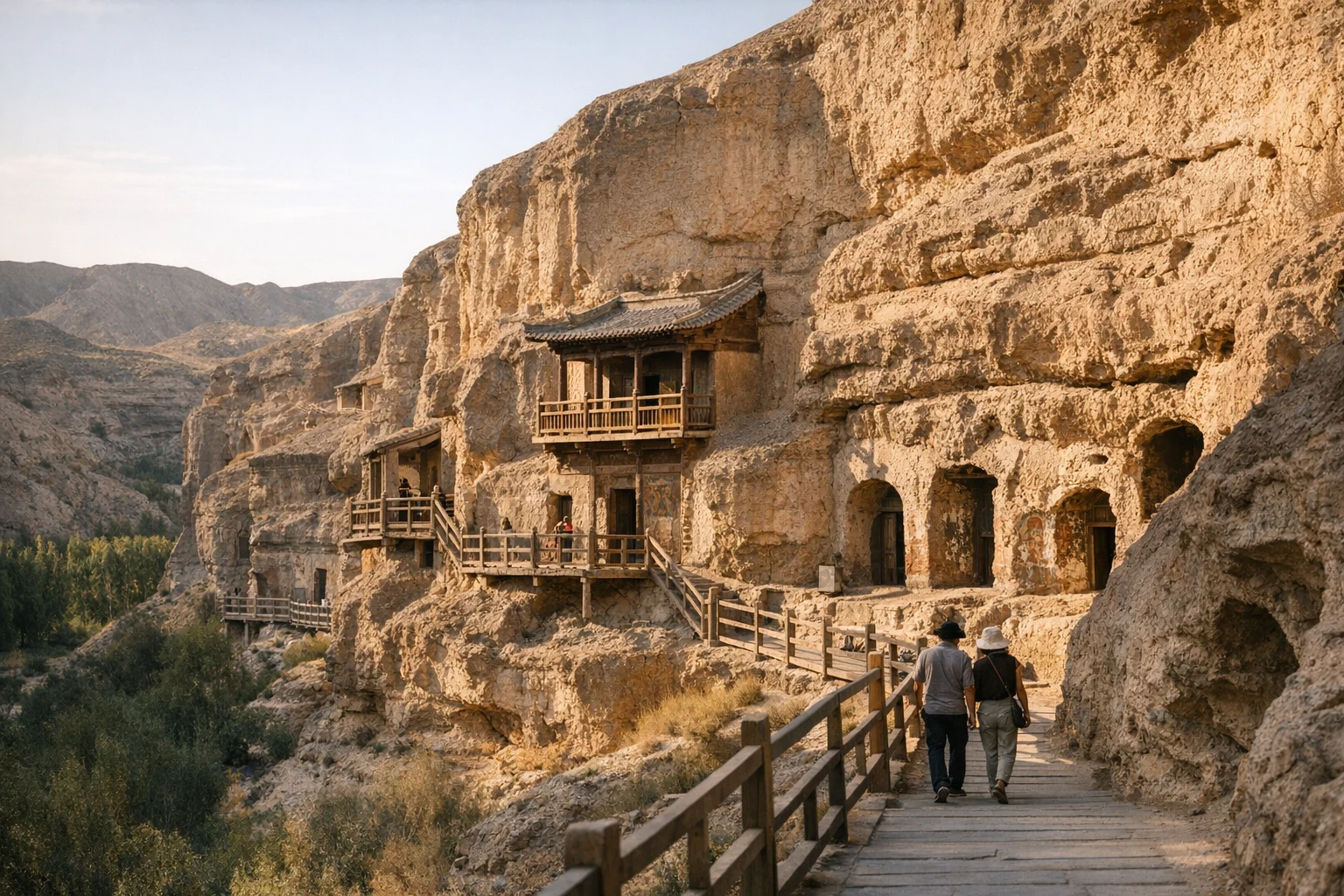
Dunhuang Yulin Caves
Chinese BuddhistExplore China’s Dunhuang Yulin Caves, a remote Silk Road sanctuary of Buddhist murals, sculptures, a...
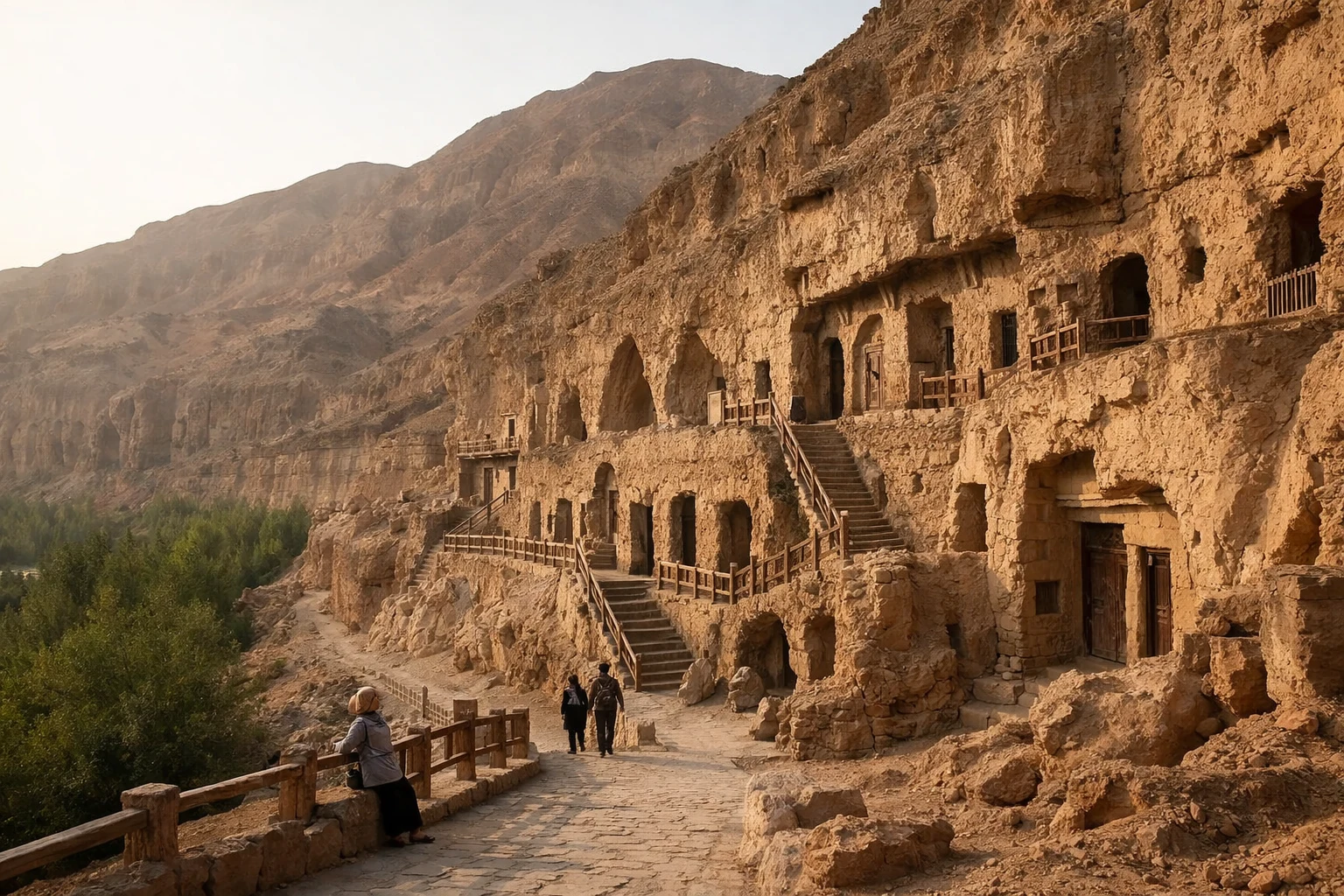
Bezeklik Thousand Buddha Caves
Silk Road BuddhistExplore China’s Bezeklik Thousand Buddha Caves, a dramatic Silk Road cave sanctuary of Buddhist mura...
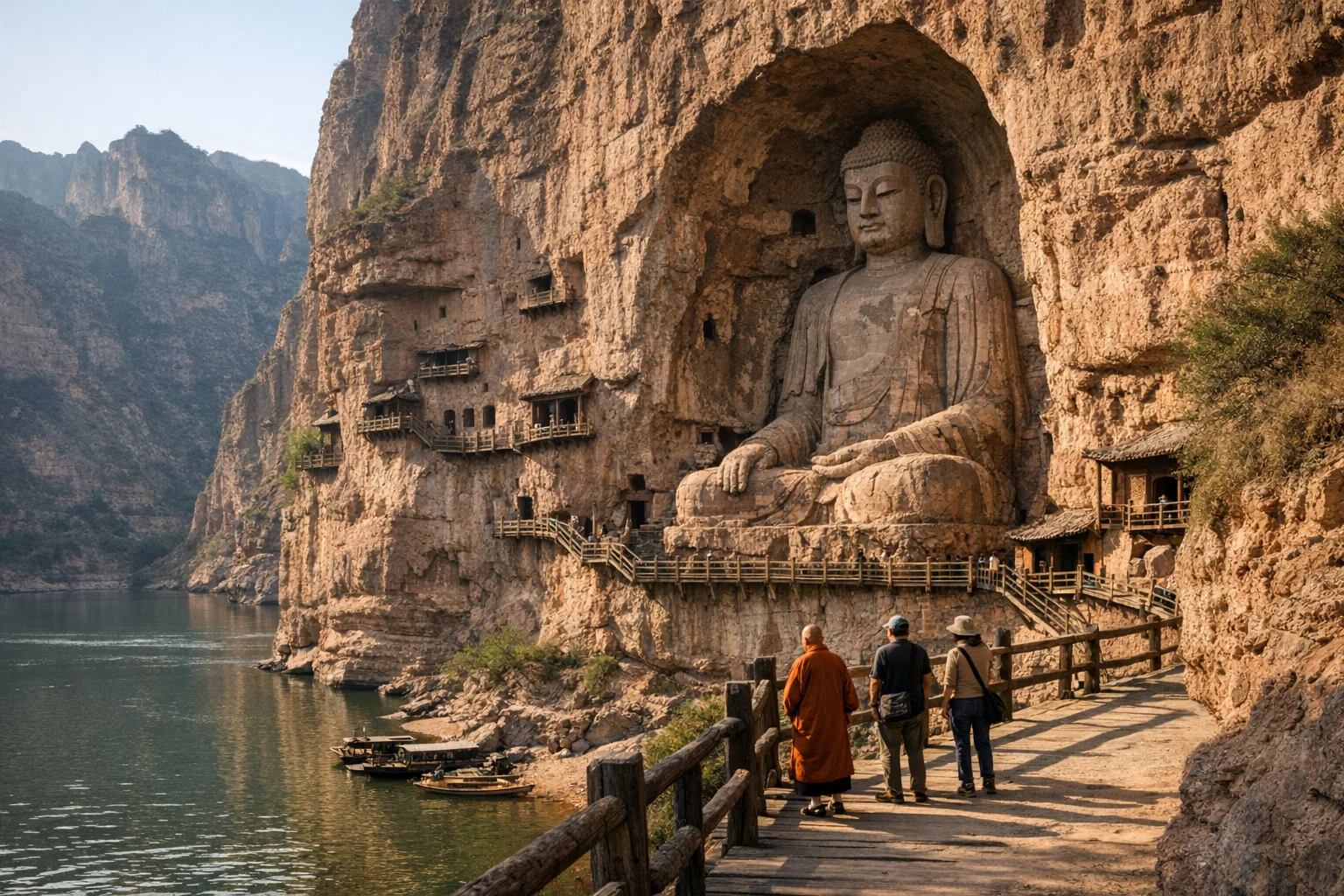
Bingling Temple Grottoes
Chinese BuddhistExplore China’s Bingling Temple Grottoes, a dramatic cliffside Buddhist cave complex of statues, mur...
Dazu Rock Carvings
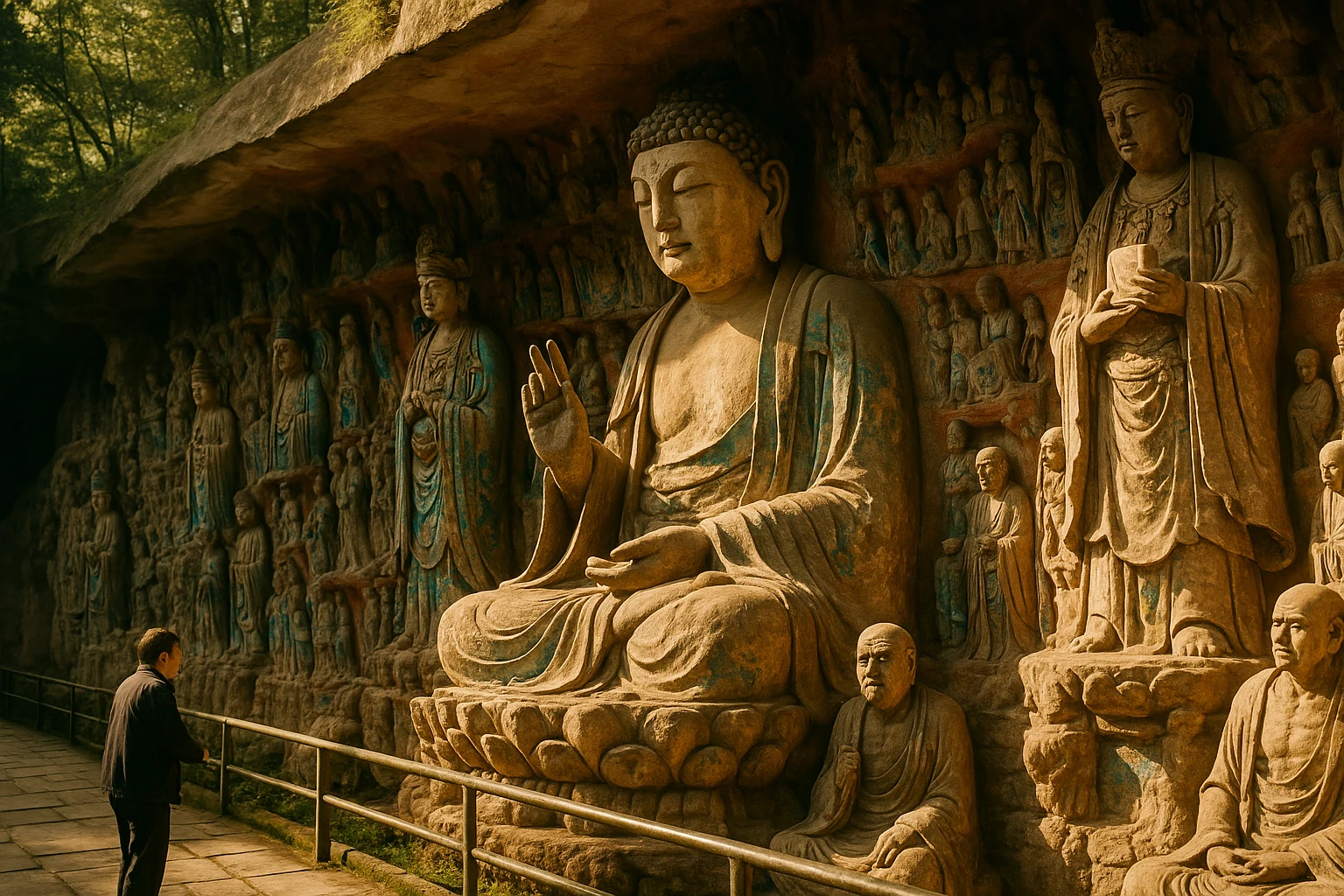
Tang and Song Dynasty ChinaAncient Buddhist, Taoist, and Confucian rock sculptures carved into cliffsides across Dazu District,...