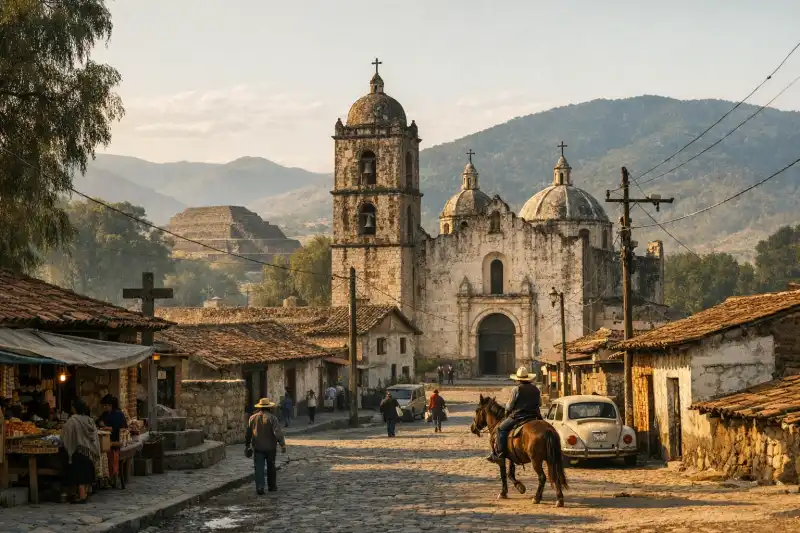
Quick Info
At a glance
Zempoala in Mexico is one of those archaeological places that feels both substantial and strangely quiet, a former regional capital whose broad plazas and weathered temples still suggest the political confidence it once held on the Gulf Coast. Located in Veracruz amid lowland landscapes that today are greener and calmer than the city’s dramatic history might imply, the site offers a different experience from Mexico’s most famous ancient destinations. Rather than towering pyramids on a vast monumental scale, Zempoala presents a more intimate urban plan: ceremonial platforms, circular and rectangular structures, compound walls, and open spaces where civic, religious, and diplomatic life unfolded.
For travelers interested in the moment when pre-Hispanic and colonial histories violently intersected, Zempoala is especially compelling. This was a Totonac city of consequence before the arrival of the Spanish, and it became one of the first places where local resentment toward Mexica imperial domination translated into alliance with Hernan Cortes in 1519. Yet the site is far more than a footnote to conquest narratives. It was a living center of Totonac culture, architecture, ritual, and regional exchange long before Europeans appeared on the horizon. Visiting today means walking through a place shaped by indigenous decisions, local building traditions, and Gulf Coast realities. Zempoala rewards patient attention: its significance lies not only in what happened here once, but in how much of the ancient city’s spatial logic still survives in stone.
History
Early Totonac development
Zempoala emerged as an important Totonac center in the centuries before the Spanish conquest, likely reaching prominence during the Late Postclassic period. The Totonacs occupied broad parts of the Gulf Coast and interior highland fringes, developing complex urban and ceremonial traditions that linked coastal agriculture, regional trade, and ritual life. Zempoala benefited from fertile lands and access to communication routes running through Veracruz, which helped transform it into a political and economic center rather than a merely local settlement.
Its growth was tied to the larger mosaic of Mesoamerican power. By the Late Postclassic era, central Mexico was home to competing and interconnected states, while Gulf Coast communities maintained their own identities and political strategies. Zempoala’s rulers oversaw tribute flows, market activity, and ceremonial obligations in a region where prestige came not just from military force but from the ability to organize labor and sponsor monumental construction. The city’s plazas and temples reflect that authority. Even in its surviving remains, the site suggests a highly ordered civic landscape where public display mattered.
Under Mexica pressure
Before the arrival of the Spanish, Zempoala was subject to the growing influence of the Mexica Empire, whose imperial network extended tribute demands over many regions of Mesoamerica. Like other conquered or pressured communities, Totonac centers had to negotiate subordination, resistance, and survival. Historical accounts indicate that resentment toward Mexica tribute extraction and political interference ran deep. This context is essential for understanding why Zempoala later played such a major role in the early conquest period.
Tribute in the Mesoamerican world was not only economic. It was political theater, proof of who commanded and who obeyed. For subject communities, demands could be materially heavy and symbolically humiliating. Zempoala therefore stood in a difficult position: significant enough to matter, but vulnerable enough to be constrained. Its leaders had to preserve local legitimacy while dealing with external imperial pressure. That tension helps explain both the city’s political sophistication and its later willingness to seek allies.
The encounter with Cortes in 1519
Zempoala entered world history in 1519 when Hernan Cortes and his expedition moved inland from the Gulf Coast. The local ruler, often referred to in Spanish sources as the “Fat Cacique,” received the newcomers and quickly recognized the possibility of using them against Mexica dominance. Whatever later colonial chroniclers chose to emphasize, this was not a passive surrender to foreign power. It was a strategic alliance made by local actors facing intense regional pressures.
For the Spanish, Zempoala became a crucial early base of support. For the Totonacs, the alliance promised relief from tribute burdens and a chance to reshape the political order. Thousands of indigenous allies from the region contributed labor, intelligence, and military support to the campaign that eventually brought down Tenochtitlan. In that sense, Zempoala was not a marginal stop on the route inland; it was one of the key settings where conquest became possible.
Yet the alliance also reveals the tragedy of historical contingency. Local leaders sought advantage within an existing Mesoamerican political landscape, but the consequences went far beyond a regional realignment. The collapse of indigenous sovereignty, epidemics, forced labor, and colonial restructuring soon followed. A decision made under one set of assumptions opened the door to a fundamentally different world.
Colonial decline and afterlife
After the Spanish consolidated control, Zempoala’s importance diminished. The colonial system redirected power toward new administrative centers and reorganized indigenous populations through resettlement, religious conversion, and economic extraction. Disease also devastated native communities across Mexico, and Gulf Coast populations suffered enormously. As demographic and political realities changed, older ceremonial centers lost their former roles.
Over time, the city’s buildings fell into ruin, though not into oblivion. Stones weathered, structures collapsed, and vegetation reclaimed parts of the site, but memory persisted in local landscapes and historical writing. Archaeological work in the modern era helped recover Zempoala’s plan and significance, identifying it as one of the most important Totonac centers tied to the first phase of Spanish-Indigenous alliance on the Gulf Coast.
Today, Zempoala stands at the meeting point of several histories: pre-Hispanic urbanism, imperial pressure, the politics of alliance, and the violent beginnings of colonial Mexico. To visit is to confront both the vitality of Totonac civilization and the irreversible transformations set in motion here.
Key Features
What makes Zempoala memorable is not a single colossal monument but the coherence of the site as a ceremonial and civic complex. The architecture is spread across spacious plazas and organized compounds, allowing visitors to appreciate how urban planning shaped movement, visibility, and public gathering. As you walk through the archaeological zone, the first impression is often of breadth rather than height. The site opens gradually, with structures arranged in ways that invite you to imagine processions, meetings, and ritual performances unfolding in shared spaces.
One of the defining visual elements of Zempoala is its use of rounded and circular forms alongside more familiar rectangular platforms. Some structures show decorative stonework and repeated geometric organization that distinguish the site from the monumental styles more commonly associated with central Mexican capitals. This gives Zempoala a local architectural personality rooted in the Gulf Coast. The masonry may appear modest when compared with larger imperial centers, but its precision and rhythm are striking at ground level, especially in morning or late-afternoon light.
Several temples and platform bases dominate the ceremonial core. These would once have supported superstructures, stairways, painted surfaces, and ritual installations that are now largely gone. Even so, the foundations communicate hierarchy. Elevated spaces separated sacred or official functions from the broader plaza, while stair access created formal points of approach. In Mesoamerican cities, architecture was performative: buildings directed the body, the gaze, and the social meaning of space. Zempoala preserves enough of that design logic to make the site intelligible without requiring a specialist’s imagination.
Another notable feature is the enclosure-like character of some sectors, where walls and bounded courtyards suggest administrative or elite use. These spaces help visitors understand that ancient cities were not simply religious centers but also places of governance, storage, negotiation, and status display. Zempoala’s political life would have depended on exactly such settings. Tribute, diplomatic receptions, and ceremonial affirmations of authority likely took place in and around these compounds.
The site is also associated with what is often called the Temple of the Chimneys, a structure identified by a series of small cylindrical elements that rise from its upper surface. Whether seen as decorative or symbolically charged, these distinctive forms are among the architectural details most often mentioned by visitors. They underline how varied Mesoamerican temple design could be outside the better-known examples of the Maya lowlands or the Basin of Mexico.
Walking the grounds, you also become aware of the relationship between monumentality and landscape. Zempoala is not isolated atop a mountain or hidden in jungle density; it belongs to a lower, more open environment that would once have supported agriculture and regional circulation. This matters because the site’s power came from connectivity as much as from sacred prestige. It controlled people, produce, and routes. The ancient city must be imagined as part of a lived countryside rather than a standalone ceremonial island.
Modern interpretation at Zempoala is usually relatively straightforward, which can be an advantage. The site often feels less crowded and less heavily staged than Mexico’s flagship archaeological attractions. That quiet allows you to notice textures: the roughness of stone, the curve of a platform edge, the width of a plaza, the distance between one temple and another. These details make the city legible as a human environment. Zempoala does not overwhelm; it accumulates meaning slowly, through layout and context.
For travelers with a broader interest in ancient Mexico, Zempoala is especially valuable because it represents a civilization and a region sometimes overshadowed in popular itineraries. The Totonac contribution to Mesoamerican history was substantial, and the site’s remains offer a rare chance to encounter that legacy directly. It is a place where architecture, politics, and historical consequence meet without losing their local specificity.
Getting There
Zempoala is most easily reached from Veracruz or Boca del Río, making it practical as a half-day or full-day excursion. By car, the drive usually takes around 45 minutes to 1 hour depending on traffic and your starting point. Renting a car in Veracruz can cost roughly MXN 700 to 1,400 per day before insurance, and this gives you the most flexibility if you want to combine Zempoala with La Antigua or other historical stops in the region.
Taxis and ride services can also work well. A one-way taxi from Veracruz to Zempoala may cost about MXN 500 to 900, though fares vary by season, negotiation, and exact pickup location. If you prefer not to arrange return transport on the spot, it is wise to hire the driver for a round trip with waiting time included. That can run from roughly MXN 1,000 to 1,800 total.
Budget travelers can look into local buses or colectivos toward the municipality of Úrsulo Galván or nearby areas, then continue by taxi. Combined public transport costs may stay in the MXN 100 to 250 range each way, but schedules can be irregular and the final connection may take extra time. If you are coming from Mexico City, buses to Veracruz generally take 5.5 to 7 hours and often cost between MXN 500 and 1,200 depending on class and booking time, followed by local transport onward to the site.
Bring cash, water, and sun protection, and confirm opening hours before departure. Signage in the wider area may be limited, so offline maps are useful.
When to Visit
The best time to visit Zempoala is generally during the drier months, roughly from November through April, when lower rainfall makes walking the site more comfortable and access roads more predictable. Daytime temperatures are still warm, but humidity is often more manageable than during the peak summer wet season. If you want the most pleasant experience for exploring exposed plazas and stone platforms, aim for early morning in these months.
From May through October, the landscape becomes lusher, but heat, humidity, and sudden rain showers are more common. This season can still be rewarding, especially if you enjoy greener scenery and fewer visitors, yet you should be prepared for slick surfaces and intense midday sun between storms. Lightweight clothing, a hat, and plenty of water become essential. If rain threatens, a compact poncho is more practical than an umbrella on uneven terrain.
Weekdays are usually calmer than weekends and Mexican holiday periods. A quieter visit makes it easier to appreciate the site’s layout and to linger in the plazas without noise or rush. Arriving soon after opening is ideal for photography, cooler temperatures, and softer light on the stonework. Midday can feel harsh, especially in warmer months, because there is limited shade in many parts of the archaeological zone.
If your main interest is historical context rather than just weather, consider combining your visit with nearby colonial-era sites around Veracruz. The region’s layered story—from Totonac power to Spanish arrival—becomes more vivid when seen across multiple locations in one trip.
| Quick Facts | Details |
|---|---|
| Site | Zempoala |
| Country | Mexico |
| State | Veracruz |
| Civilization | Totonac |
| Period | Late Postclassic to early Colonial contact period |
| Best for | Totonac history, conquest-era context, quieter archaeology |
| Nearest major city | Veracruz |
| Typical visit length | 1.5 to 3 hours |
| Best season | November to April |
| Access | Best reached by car, taxi, or day tour from Veracruz |
Zempoala may not have the instant name recognition of Mexico’s most visited ruins, but that is part of its appeal. Here, the visitor encounters a place where history remains textured rather than simplified: a Totonac urban center, a ceremonial landscape, a political capital under pressure, and one of the first major settings of alliance between indigenous rulers and the Spanish invaders. The stones do not merely recall a lost city; they frame one of the most consequential turning points in the history of the Americas.
What lingers after a visit is often the sense of balance between intimacy and significance. Zempoala is easy to walk, readable in a single outing, and close enough to Veracruz to fit comfortably into a broader itinerary. Yet its historical resonance is immense. It speaks to regional identities too often eclipsed by larger imperial narratives and reminds travelers that the conquest of Mexico was not a simple clash of two monolithic worlds, but a complex, deeply local process shaped by indigenous ambitions, grievances, and decisions.
For anyone interested in ancient Mexico beyond the standard circuit, Zempoala is worth the detour. It rewards attention not with spectacle alone, but with perspective.
Guided tours: worth it?
Self-guided works here, but a guide can add real value if you want the ruins explained as a living place rather than just a sequence of monuments.
Best for
- First-time visitors who want context, not just photos
- Short visits where a planned route saves time
When to go self-guided
Go independently if you prefer setting your own pace, reading as you go, and checking official hours or ticket rules directly before you arrive.
What I’d avoid
Skip paid tours that bundle unrelated stops you do not actually want. The best option should either save meaningful planning time or add historical context you would miss on your own.
Zempoala and La Antigua day tours
Useful when: you want to compare guided formats before deciding
Veracruz archaeological tours
Useful when: you want to compare guided formats before deciding
El Tajin and Veracruz history tours
Useful when: you want to compare guided formats before deciding
Some tour links are affiliate links, which may earn Ancient Travel a small commission at no extra cost to you. I try to surface options that make practical sense for the site—not just anything bookable.
Frequently Asked Questions
Where is Zempoala located?
Zempoala is in the state of Veracruz on Mexico’s Gulf Coast, not far from the city and port of Veracruz.
Why is Zempoala important?
Zempoala was a major Totonac city and is closely associated with the first alliance between local Indigenous rulers and Hernan Cortes in 1519.
How much time do you need at Zempoala?
Most visitors spend 1.5 to 3 hours exploring the plazas, temples, and museum area at a comfortable pace.
Can you visit Zempoala on a day trip from Veracruz?
Yes. Zempoala is commonly visited as a half-day or full-day excursion from Veracruz or Boca del Rio.
What should you bring to Zempoala?
Bring water, sun protection, light clothing, comfortable walking shoes, and cash for transport or small purchases.
Is Zempoala suitable for families?
Yes, the site is generally suitable for families, though surfaces can be uneven and shade is limited in exposed areas.
Nearby Ancient Sites
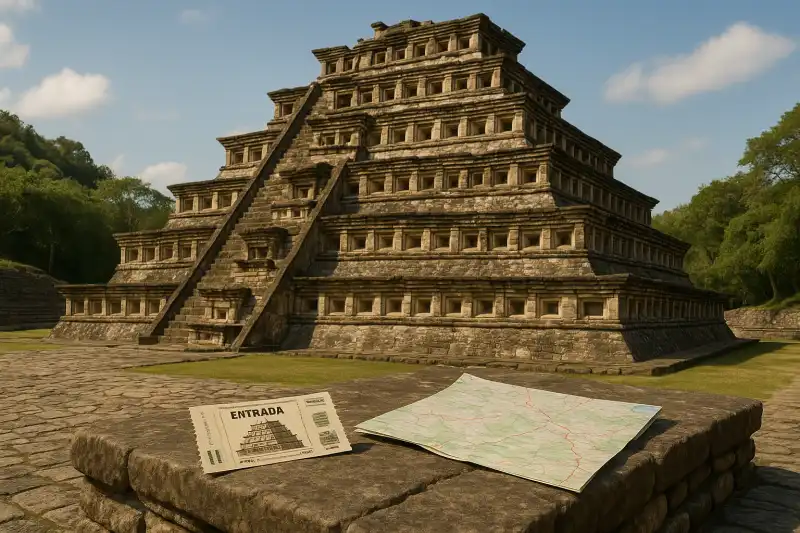
El Tajin Travel Guide 2026: Pyramid of the Niches, Tickets, and Route Planning
Classic VeracruzPlan a smoother El Tajin visit with practical transport timing, key structures to prioritize, and re...
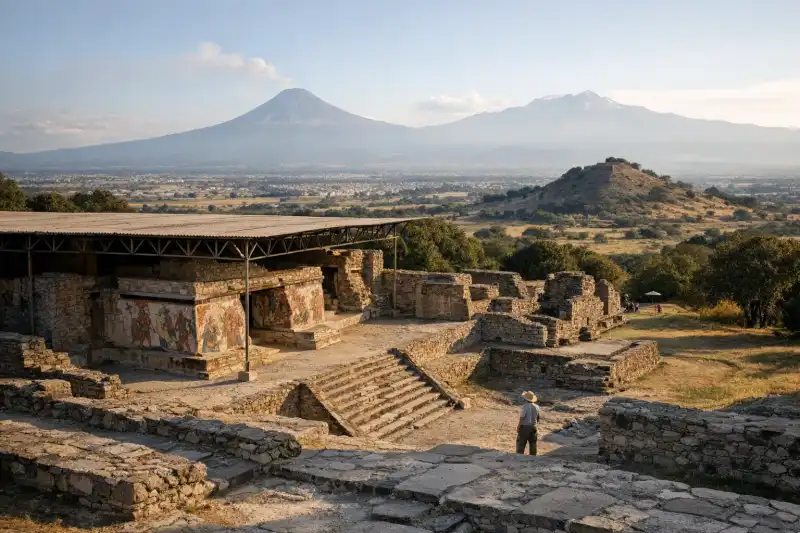
Cacaxtla
Olmeca-Xicalanca and broader Epiclassic Mesoamerican traditionsExplore Cacaxtla in Mexico, a hilltop archaeological site famed for vivid murals and Epiclassic hist...
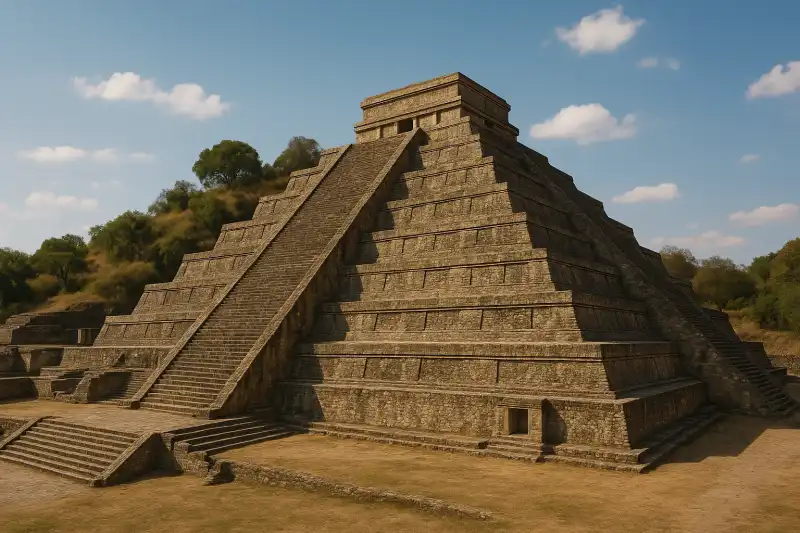
Great Pyramid of Cholula Travel Guide 2026: Tlachihualtepetl Essentials
Preclassic and Postclassic MesoamericanPlan a smart visit to the Great Pyramid of Cholula with key context, timing advice, and practical fi...