Quick Info
Curated Experiences
Tianmen Mountain Cable Car & Cave Day Tour from Zhangjiajie
Zhangjiajie National Forest Park & Tianmen Mountain Combo
Private Zhangjiajie Full-Day Tour with Tianmen Cave
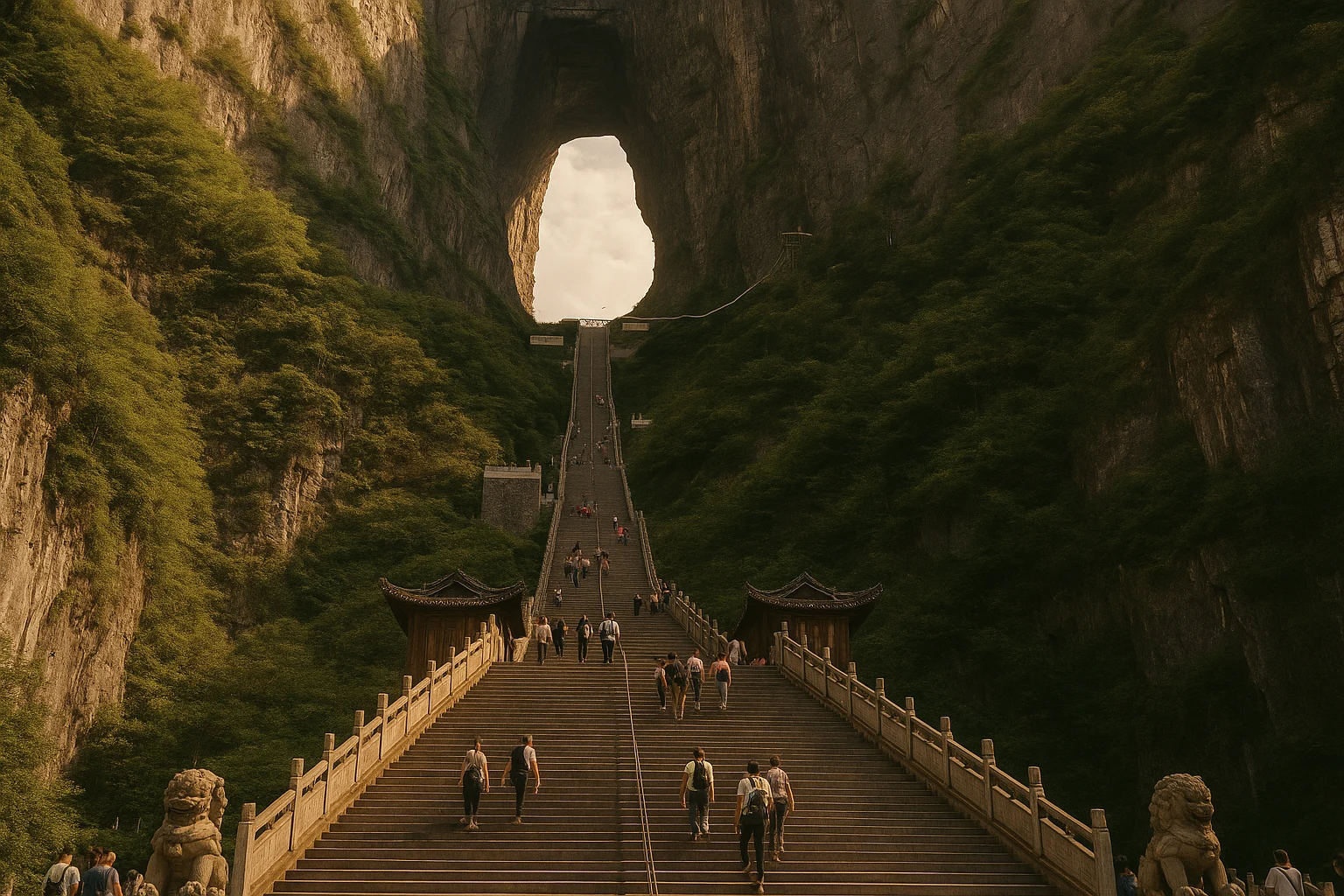
Rising from the subtropical forest of Hunan Province, Tianmen Mountain conceals one of China’s most breathtaking geological formations: a vast natural arch known as Tianmen Cave — Heaven’s Gate. The opening, located near Zhangjiajie city in northwest Hunan, frames a perfect rectangle of sky through near-vertical karst cliffs that soar to 1,518 metres above sea level. Ancient chronicles identified the moment this arch appeared — a cliff collapse in 263 CE — as a divine omen, and the mountain has been considered sacred ground in China ever since. Today, Zhangjiajie Tianmen Cave is one of the most visited natural and cultural landmarks in central China, drawing hikers, Taoist pilgrims, adventure travellers, and photographers from across the globe who come to walk the cliffside boardwalks, climb the 999-step stairway, and stare upward through a hole in the mountain that legend insists leads straight to heaven.
History
Ancient Sacred Ground
The name Tianmen — Heaven’s Gate — originated in the Three Kingdoms period, when the kingdom of Wu controlled this part of what is now Hunan. In 263 CE, a great section of the cliff face on the south side of the mountain collapsed, leaving behind the enormous natural arch that still exists today. Contemporary court historians interpreted the event as a celestial portent, and the mountain was formally renamed Tianmen Shan. This transformation from unnamed ridge to named sacred peak marks the earliest chapter in the site’s documented human history, though the mountain almost certainly held local spiritual significance well before any written record.
Taoist Devotion
Buddhism and Taoism both spread through Hunan during the Tang Dynasty (618–907 CE), and Tianmen Mountain attracted Taoist hermits who prized its sheer inaccessibility. The founding of Tianmen Temple is traditionally attributed to Tang-era monks, making it one of the oldest surviving religious complexes in the province. Over the following centuries, successive dynasties — Song, Yuan, Ming, and Qing — sponsored temple expansions and repairs. The Qing-era structures that still stand today were rebuilt after earlier halls burned, a common fate of wooden temple complexes in a region prone to lightning strikes and seasonal storms.
Pilgrims historically reached the mountain by a gruelling path that combined steep stone staircases with sections of vertical iron-chain ladders hammered into the rock face. The 999-step stairway that modern tourists climb to reach the cave mouth follows the approximate alignment of this ancient pilgrimage route, though the current stone steps are a 20th-century reconstruction on a safer grade.
Modern Recognition and Infrastructure
Tianmen Mountain received national forest park designation in the 1990s as Hunan Province moved to develop its tourism sector around the extraordinary karst landscapes of northwest Hunan. Zhangjiajie National Forest Park — source of the pillar formations that inspired the floating mountains in the 2009 film Avatar — had already begun drawing international attention, and Tianmen Mountain was developed as a complementary destination with a distinct character centred on the cave arch rather than the pillar forests.
The Tianmen Mountain Cableway opened in 2005. At 7.5 kilometres it was, at the time of its construction, the longest passenger gondola in the world. The lower terminal sits near the centre of Zhangjiajie city itself, meaning riders travel from an urban street-level plaza to a mountain summit at more than 1,400 metres in a single unbroken cable ride — an extraordinary piece of engineering that reshaped the visitor experience entirely. The glass-floored Coiling Dragon Cliff skywalk was added in later years as the site developed its reputation for vertiginous adventure tourism, and a high-profile base-jump event broadcast internationally in the early 2010s brought Tianmen Cave to the attention of global adventure sports communities.
Cultural Resonance
Tianmen Cave occupies a particular place in Chinese symbolic imagination that extends well beyond regional tourism. The number 99 — appearing in the 99 hairpin bends of the mountain road and echoed in the 999 steps — is associated in Chinese numerology with the emperor and with celestial completion, reinforcing the mountain’s identity as a meeting point between the earthly and the divine. Contemporary Taoist practitioners continue to regard the arch itself as a liminal threshold, and offerings are still made at the base of the stairs on auspicious calendar dates.
Key Features
The Cave Arch
The cave itself is the defining feature of the entire mountain and the reason visitors come from every corner of the world. The opening measures approximately 131 metres in height and 57 metres across, dimensions that allow the arch to be seen with the naked eye from viewpoints in Zhangjiajie city far below on clear days. The rock that frames the arch is predominantly dolomitic limestone laid down during the Devonian period, and the regularity of the opening — nearly rectangular, with smoothly curved upper corners — is striking enough that first-time visitors often ask whether it is man-made. It is not: the arch formed through a combination of karst dissolution, structural fracturing along natural joint planes, and the dramatic collapse event of 263 CE.
Standing inside the arch and looking outward, you face a framed panorama of receding karst ridges, forested valleys, and — on days when mist sits in the low ground — a sea of cloud that earns the mountain its heavenly reputation. The scale of the opening means that even when dozens of people stand inside it simultaneously, the space does not feel crowded. Light conditions shift dramatically throughout the day as the sun tracks across the sky, making mid-morning and late afternoon the most photographically rewarding times to be inside the arch.
The 999-Step Stairway
The stone staircase climbing the final approach to the cave mouth is one of the most physically demanding and atmospherically memorable parts of any visit. Beginning from the shuttle bus drop-off point on the mountain road, the stairs rise steeply through subtropical forest before breaking into open rock as the cliff face becomes increasingly sheer. The ascent takes between 20 and 50 minutes depending on pace and fitness, and the effort is rewarded by increasingly dramatic upward views of the arch growing overhead. The top of the staircase deposits you directly inside the cave, where the drop in temperature and the echo of wind through the arch create an immediate and powerful sense of arrival.
Cliffside Boardwalks and the Glass Skywalk
From the cave and the summit plateau, a network of walkways follows ledges and notches cut or bolted into the vertical cliff face. The most famous section — the Coiling Dragon Cliff skywalk — consists of glass panels set into a cantilevered steel frame projecting from the cliff edge at roughly 1,400 metres. Looking down through the floor reveals not merely a steep slope but a true vertical drop to forest canopy hundreds of metres below. The boardwalk system connects the cave entrance, the skywalk, several natural viewpoints, and the terrace of Tianmen Temple in a circuit that most visitors complete in two to three hours.
Tianmen Temple
The Taoist temple compound on the summit plateau predates the modern tourist infrastructure by more than a millennium. The main hall houses representations of the Jade Emperor and several Taoist immortals associated specifically with this mountain. The temple courtyard is flanked by ancient ginkgo trees, and incense spirals from large bronze censers positioned before the entrance. The monks who maintain the temple are accustomed to tourists but the site functions as a working monastery: chanting and ritual observances continue on schedule regardless of visitor numbers. The contrast between the souvenir stalls at the cable car upper station and the austere interior of the prayer halls — separated by perhaps 200 metres of footpath — is one of the more striking juxtapositions at Tianmen Mountain.
The 99-Bend Mountain Road
The road that descends from the cave area to the base of the mountain follows 99 hairpin turns cut into the cliff, rising 1,300 vertical metres over roughly 10 kilometres of switchbacks. Tour buses run the route in the descent direction as part of the standard visitor circuit, and the drive — especially the upper section where the road clings to exposed ledges above sheer drops — has itself become a draw. A handful of international motorsport events have been held on the road, and the footage of vehicles navigating the tight bends against the backdrop of the karst landscape has been widely circulated online.
Getting There
Zhangjiajie Hehua International Airport (DYG) connects the city to Beijing, Shanghai, Guangzhou, Chengdu, and several other Chinese hubs, with flight times of roughly two to three hours from the major east-coast cities. International visitors most commonly fly into a hub city and connect; direct international routes are limited. High-speed rail reaches Zhangjiajie West Station from Changsha in approximately two hours (¥100–140 second class), and Changsha itself is served by many long-distance routes. From Beijing or Shanghai, a full high-speed journey takes roughly six to seven hours with a change at Changsha.
From central Zhangjiajie city, the lower terminal of the Tianmen Mountain Cableway is walkable from the main commercial streets and reachable by taxi in under ten minutes (¥10–15). The combined entrance and cable car ticket (approximately ¥258 in 2025) is purchased at the lower terminal. The cable car ride takes about half an hour each way. Visitors who wish to experience the 99-bend road typically ride the cable car up and take the bus down, or vice versa; the standard tour circuit is organised to accommodate both.
When to Visit
Spring (April–early June) is widely considered the best time. Temperatures on the plateau range from roughly 10°C to 20°C, humidity is manageable, and the surrounding forest is in full leaf without the oppressive heat of summer. Mist appears frequently in the mornings but tends to burn off by mid-morning, giving a good chance of clear views through the arch. Rhododendrons bloom at lower elevations in April, adding colour to the approach cable car ride.
Autumn (September–November) is the second peak season, with similar temperatures and often the clearest skies of the year. The forest turns through shades of gold and rust in October and early November, making this arguably the most photogenic period for landscape shots. This is also a popular domestic travel season, so queues for the cable car are longer than in spring but shorter than in the summer holiday period.
Summer (July–August) brings warmth and crowds. Chinese school holidays and the peak domestic travel season combine to produce very long cable car queues; arriving before the 8 a.m. opening is advisable. The mist and cloud that settle over the mountain in summer can be either frustratingly opaque or hauntingly atmospheric depending on how you approach them. Afternoon thunderstorms are common and occasionally close the glass skywalk.
Winter (December–March) offers solitude and, occasionally, snow that transforms the black-and-grey cliffs into something otherworldly. However, ice frequently closes the glass skywalk and upper boardwalk sections, and thick fog can obscure the cave arch entirely for days at a time. Travel to Zhangjiajie in winter is a gamble but can pay off for travellers with flexibility.
| Quick Facts | |
|---|---|
| Location | Tianmen Mountain, Zhangjiajie, Hunan Province, China |
| Cave Height | ~131 metres |
| Cave Width | ~57 metres |
| Mountain Summit | 1,518 m above sea level |
| Steps to Cave Mouth | 999 |
| Cableway Length | 7.5 km (world’s longest passenger gondola) |
| Temple | Tianmen Temple (Taoist, Tang Dynasty origins) |
| Combined Entry Ticket | ~¥258 (2025) |
| Nearest Airport | Zhangjiajie Hehua International (DYG) |
| Best Months | April–May, September–October |
| Nearest City | Zhangjiajie (city centre ~8 km) |
Frequently Asked Questions
What is Tianmen Cave?
Tianmen Cave, known in Chinese as Tianmen Dong (天门洞) or Heaven's Gate, is a massive natural arch punched through the peak of Tianmen Mountain near Zhangjiajie city in Hunan Province. The opening measures roughly 131 metres tall and 57 metres wide, making it one of the largest natural arches in the world. Local legend holds that it formed when a cliff face collapsed in 263 CE during the Three Kingdoms period — an event ancient chronicles recorded as a sign from heaven, giving the mountain its name.
How do you get up to Tianmen Cave?
Most visitors take the Tianmen Mountain Cableway, the world's longest passenger cable car at 7.5 kilometres, running from the city terminal near downtown Zhangjiajie up to the summit plateau. From the upper station, a shuttle bus ferries visitors to the start of the cliffside boardwalk that leads directly to the cave arch. Alternatively, you can descend from the cave to the base of the mountain via a steep road of 99 bends, often called the 'Avenue of Heaven,' either on foot or by tour bus.
How many steps lead up to Tianmen Cave?
A staircase of 999 stone steps climbs the final approach to the cave mouth from the lower access road. The number 999 is deliberately symbolic in Chinese culture, representing nearness to the divine number 1,000 and evoking eternity and heaven. The climb is steep but most reasonably fit visitors complete it in 20–40 minutes. Handrails line the entire stairway and rest platforms appear at intervals.
Is there a Taoist temple at Tianmen Mountain?
Yes. Tianmen Temple (天门山寺, Tianmen Shan Si) sits on the mountain plateau near the cave entrance. It is one of Hunan's oldest surviving Taoist complexes, with origins traceable to the Tang Dynasty. Monks still reside there, incense burns daily, and the temple's main hall enshrines the Jade Emperor alongside local mountain deities. The site remains an active place of worship, so visitors are expected to dress modestly and behave respectfully.
What is the glass walkway at Tianmen Mountain?
The Coiling Dragon Cliff skywalk is a glass-floored, cantilevered walkway bolted into the sheer face of Tianmen Mountain at roughly 1,400 metres above sea level. Stretching about 100 metres, it offers an almost vertigo-inducing view straight down the cliff to the forested valleys below. Non-slip booties are provided at the entrance and are mandatory to protect the glass panels. The walkway forms part of the broader cliffside boardwalk circuit around the summit plateau.
What is the best time of year to visit Tianmen Cave?
April through early June and September through November offer the most reliable weather — moderate temperatures, lower humidity than peak summer, and clearer skies than the winter fog season. Summer (July–August) is hot and crowded but lush; the mist and cloud effects can be spectacular, though the cave arch may be completely socked in for hours at a time. Winter brings ice and occasional snow that close sections of the boardwalk and the glass skywalk. Weekdays outside Chinese public holidays see dramatically shorter cable car queues.
How much does it cost to visit Tianmen Mountain and the cave?
The combined ticket covering the cable car (round-trip), shuttle bus, and mountain entrance was priced at approximately ¥258 (around US $36) as of 2025. The glass skywalk costs an additional ¥20 rental fee for the mandatory shoe covers. Children under 1.2 metres and seniors over 70 receive significant discounts. Prices have increased gradually over recent years, so confirm current rates at the official ticket booth or authorised booking platforms before your visit.
Nearby Ancient Sites
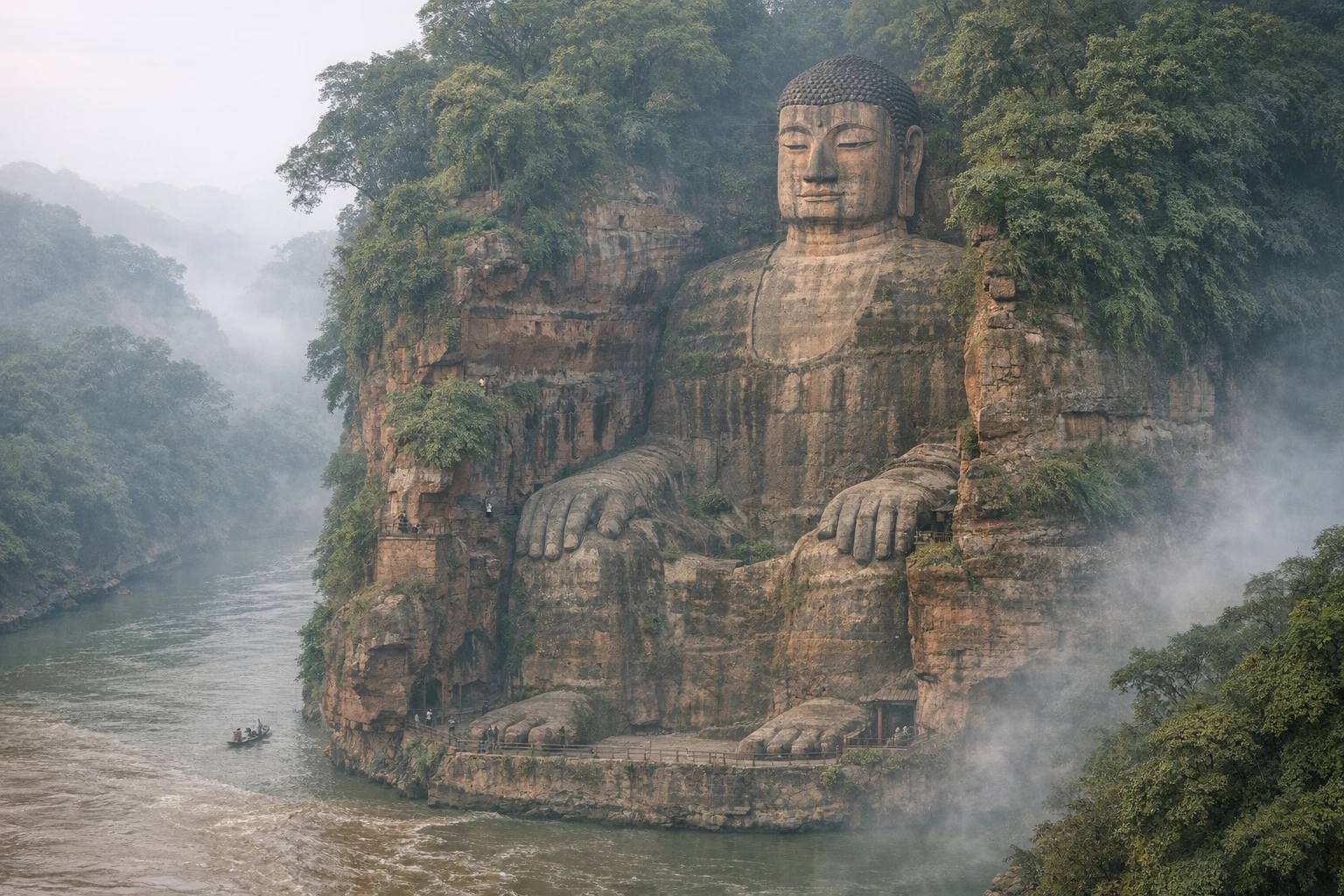
Leshan Giant Buddha
Tang Dynasty ChinaThe world's tallest pre-modern stone Buddha, carved into a clifftop in Sichuan, China, overlooking t...
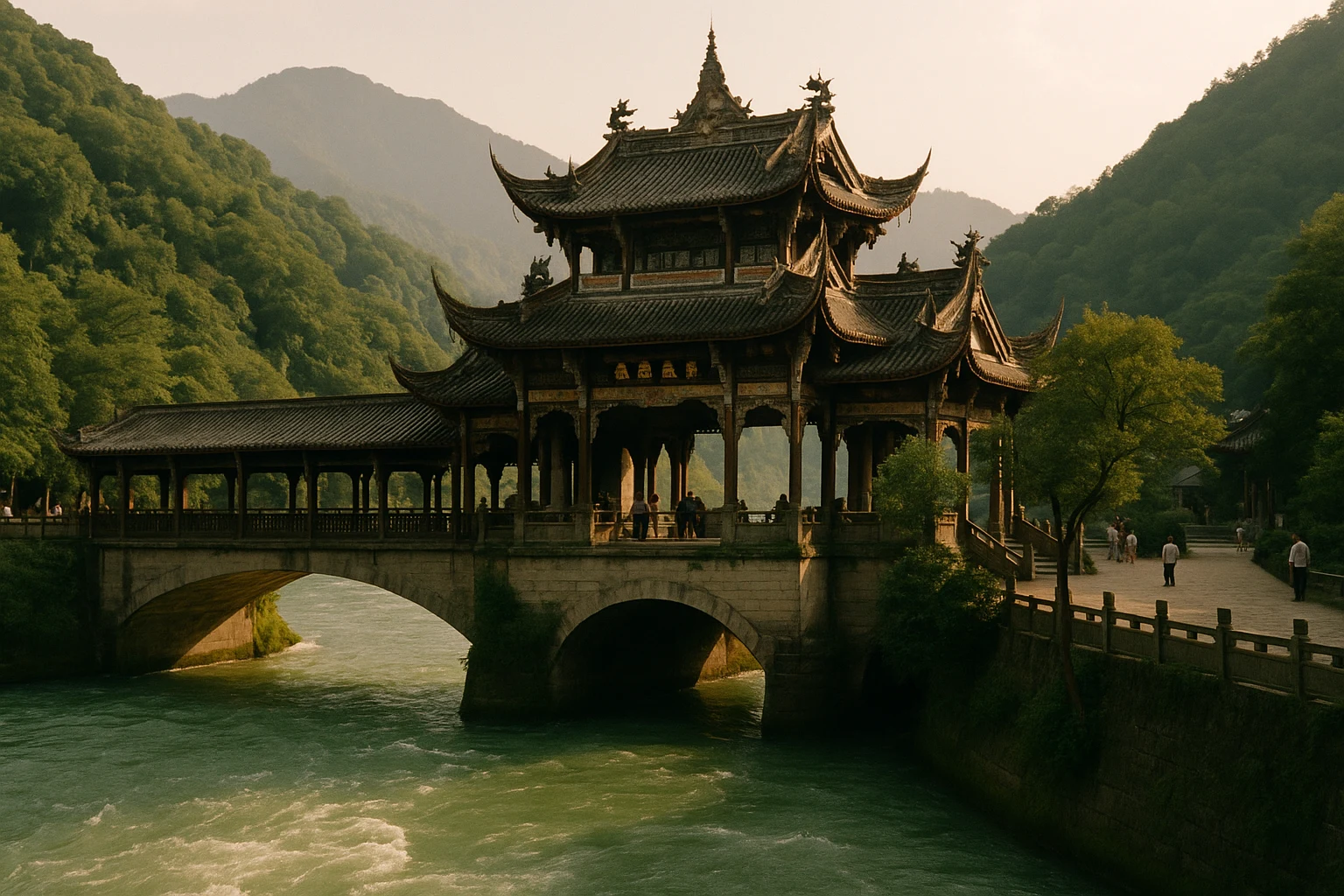
Dujiangyan Irrigation System
Explore Dujiangyan, the world's oldest functioning irrigation system, built in 256 BCE by engineer L...
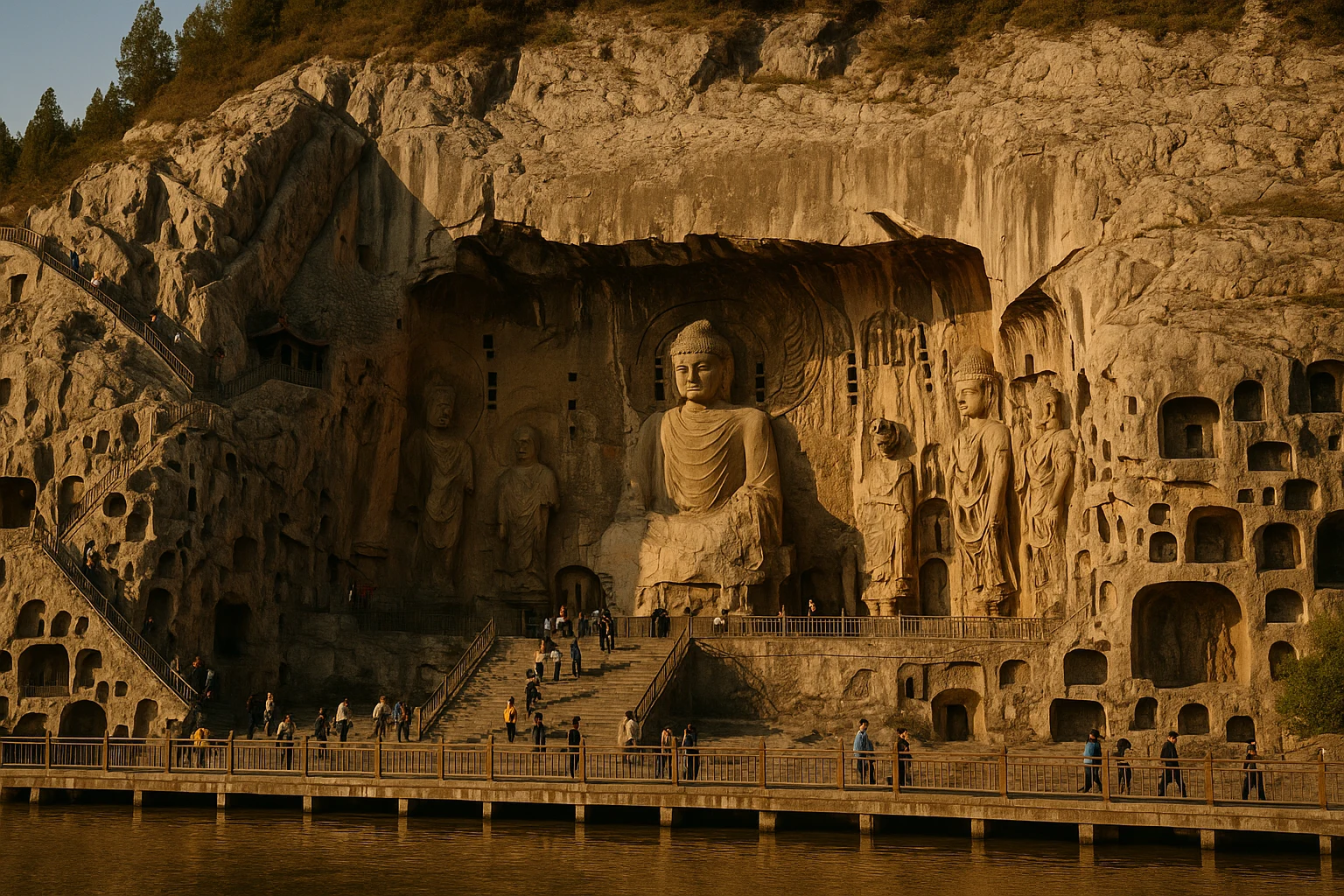
Longmen Grottoes
Chinese BuddhistA UNESCO World Heritage Site near Luoyang, China, featuring over 100,000 Buddhist carvings and statu...
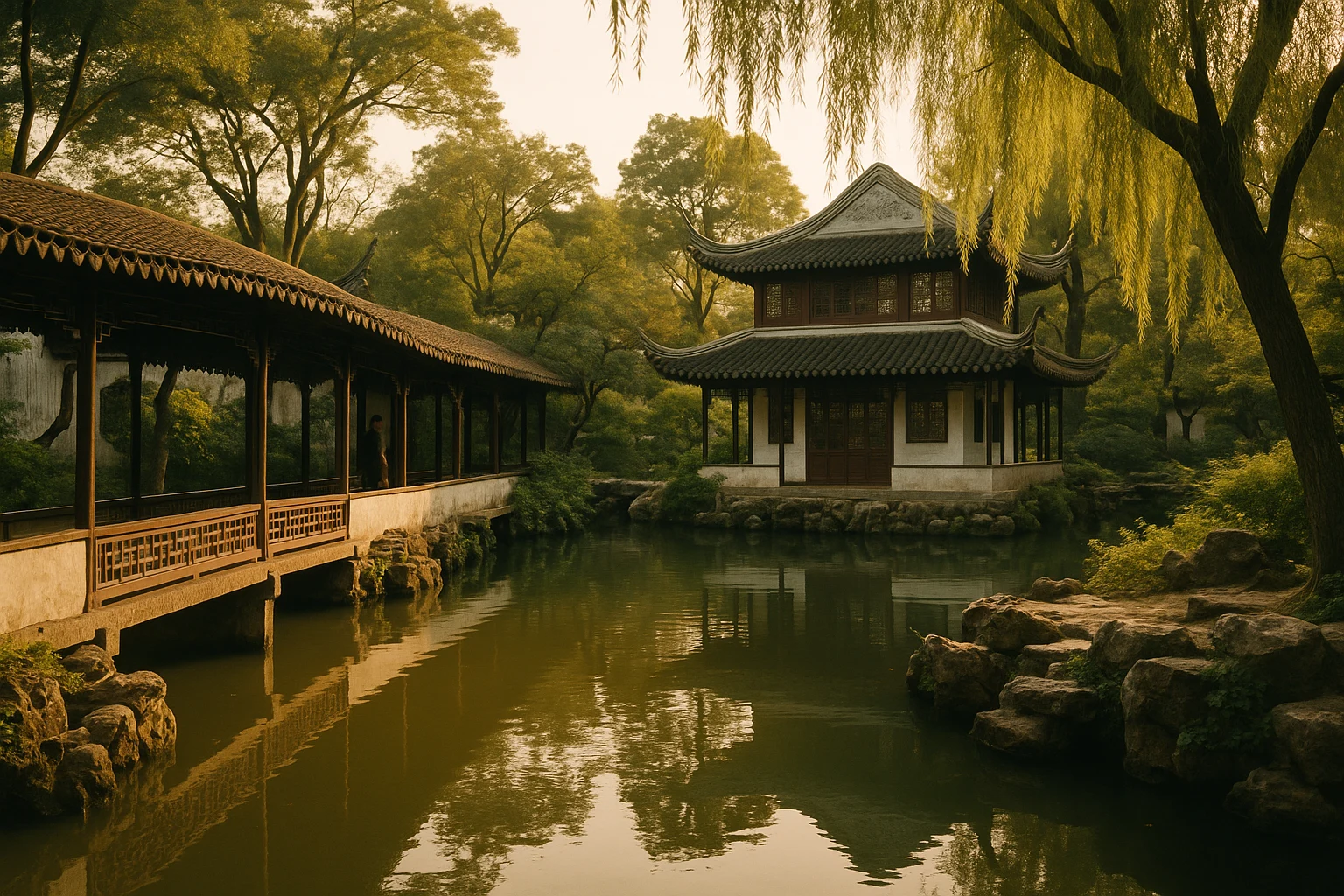
Humble Administrator's Garden
Chinese ImperialSuzhou's largest classical garden, a UNESCO World Heritage masterpiece of water, stone, and pavilion...