Quick Info
Curated Experiences
Zhoukoudian Caves Day Tour from Beijing
Private Peking Man Site and Beijing Prehistory Tour
Beijing Heritage Excursion to Zhoukoudian Caves
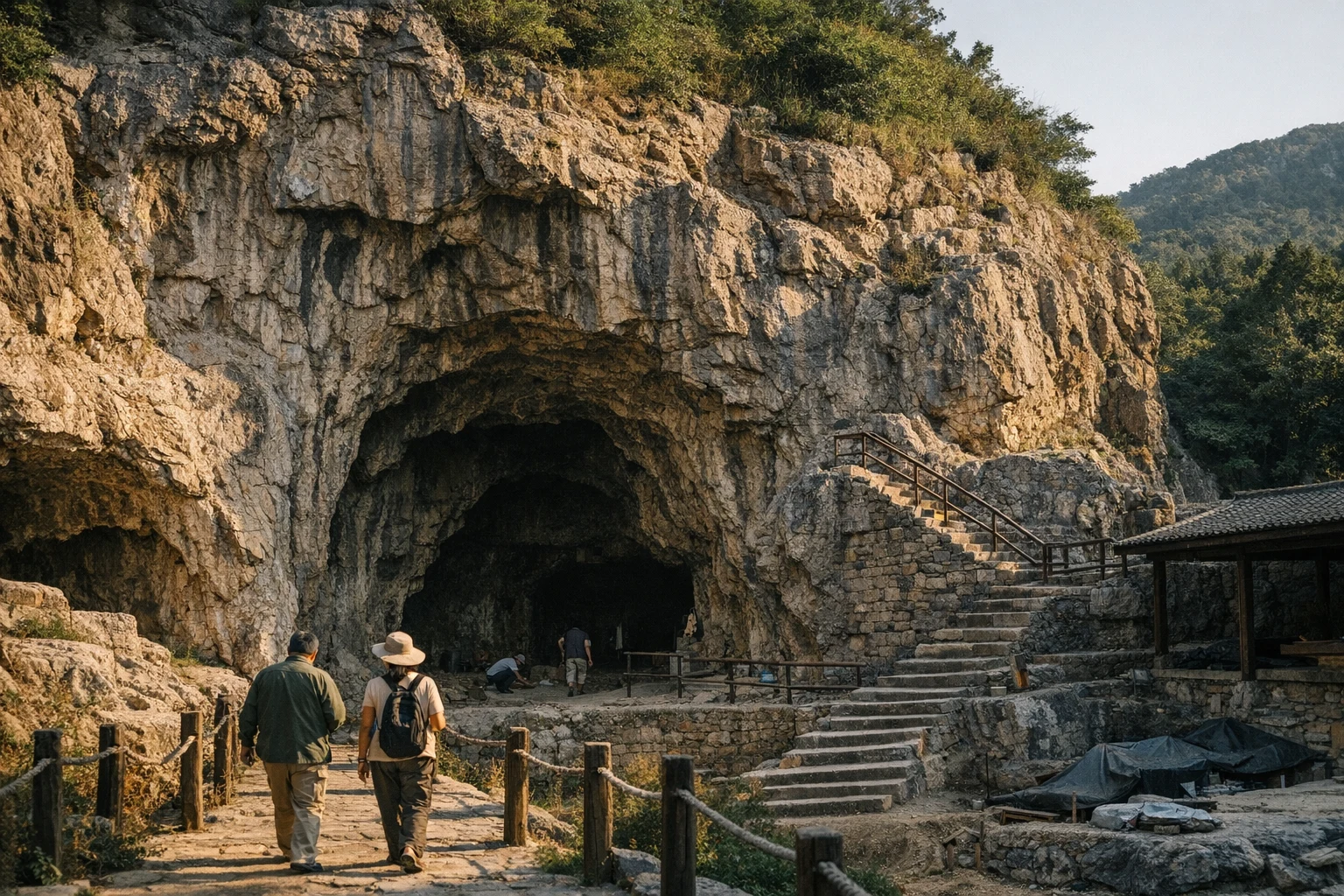
Zhoukoudian Caves in China are one of those rare places where the scale of history feels almost difficult to absorb. Southwest of central Beijing, in a limestone hill landscape that can seem modest at first glance, lies one of the most important prehistoric sites ever excavated. This is the place most famously associated with Peking Man, the Homo erectus fossils that transformed scientific understanding of human evolution in East Asia and made Zhoukoudian a landmark of global paleoanthropology. Visitors do not come here for towering architecture or dramatic temple ruins. They come for something older and stranger: the material traces of deep human time, preserved in caves, excavation layers, fossil finds, and the hard-won history of scientific discovery.
That difference shapes the whole experience. Zhoukoudian is not a site of immediate monumental spectacle. Its power comes through context, imagination, and the realization that the ground beneath your feet preserves evidence of humans and human relatives living here across vast stretches of the Pleistocene. The caves and deposits revealed not only skullcaps and bones, but tools, animal remains, traces of habitation, and one of the most influential narratives in the early study of human evolution. The site also carries the drama of modern history: international collaboration, wartime loss, and the persistence of research in the face of uncertainty. For travelers interested in archaeology beyond the usual dynastic and monumental stories, Zhoukoudian offers something much rarer. It is a place where the history of China opens onto the history of humanity itself.
History
Before Archaeology: A Deep Prehistoric Landscape
Long before Zhoukoudian became famous to science, the limestone hills and cave systems of the area had already accumulated a record of habitation stretching back into the Pleistocene. The site preserves evidence not only of Homo erectus, but of multiple phases of prehistoric occupation, fauna, and environmental change over immense periods of time. This is one of the reasons Zhoukoudian matters so much. It is not just a single discovery point. It is a stratified archive of life, climate, adaptation, and habitation in northern China.
The landscape itself helped preserve this record. Caves and fissures trapped sediments, bones, tools, and other remains in layered deposits that later archaeologists could study. To modern visitors, this can seem abstract compared with the immediacy of a standing building, but it is precisely this geological and depositional complexity that makes Zhoukoudian so powerful. The site is a reminder that some of the most important human stories are buried not in palaces or tombs, but in stratified earth.
Discovery of Peking Man
Zhoukoudian’s global importance emerged in the early 20th century, when fossil discoveries in the area began attracting serious scientific attention. The site became famous through the discovery of Homo erectus remains, later known widely as Peking Man. These finds included skullcaps, teeth, and other skeletal material that provided crucial evidence for early human evolution in East Asia. At a time when the human story was still being reconstructed through fragmentary discoveries across the world, Zhoukoudian became one of the major anchor points in that effort.
The discoveries were not the work of one individual alone. They emerged through a period of intensive international and Chinese scientific collaboration involving paleontologists, geologists, archaeologists, and anatomists. This collaborative dimension is important because Zhoukoudian belongs not only to prehistory, but also to the modern history of science. The site helped establish China as a central place in paleoanthropological research, and it played a major role in the global effort to understand where and how early humans and human relatives lived.
Excavation, Interpretation, and Debate
As excavations expanded, Zhoukoudian yielded more than just famous fossils. Researchers found evidence of stone tools, animal bones, and possible traces related to fire use, though the interpretation of some of this evidence has been debated over time. Such debates are a normal part of paleoanthropology, especially at sites excavated over long periods with evolving methods. What matters is that Zhoukoudian became a central laboratory for thinking about human behavior, adaptation, and technological development in the Pleistocene.
The Homo erectus remains from Zhoukoudian showed that early humans or close human ancestors had occupied this part of northern China hundreds of thousands of years ago. This challenged simplistic geographical models and helped widen the scientific understanding of early human dispersal. The site also demonstrated the importance of cave settings for long-term habitation and preservation. Over time, Zhoukoudian came to include multiple localities, some associated with later prehistoric and even early modern human evidence, making the area important across more than one phase of human prehistory.
War, Loss, and World Heritage Recognition
One of the most poignant chapters in Zhoukoudian’s modern history concerns the loss of the original Peking Man fossils during World War II. As conflict spread and efforts were made to move the specimens to safety, the original fossils disappeared and have never been recovered. Their loss remains one of the great tragedies in the history of archaeology and paleoanthropology. Yet their scientific impact did not vanish. Casts, field notes, photographs, published descriptions, and the continuing archaeological value of the site itself ensured that Zhoukoudian remained foundational.
Postwar and later research continued to build on earlier discoveries, and the site’s importance was increasingly recognized internationally. Zhoukoudian was inscribed as a UNESCO World Heritage Site because of its outstanding significance for the study of human evolution and prehistoric occupation. Today it stands both as a key paleoanthropological locality and as a memorial to the fragile history of scientific evidence itself. What survives at Zhoukoudian is not only ancient. It is also a reminder of how precarious our knowledge can be.
Key Features
The central feature of Zhoukoudian is Locality 1, the cave area most famously associated with Peking Man. For visitors, this is the heart of the site’s significance, even though much of what gives it meaning lies in interpretation rather than immediately dramatic visual form. Standing near the excavated zones, viewing the stratified deposits and cave setting, and seeing how the site has been exposed for study helps make the discoveries more real. This is not simply a commemorative place with a label on it. It is the actual geological and archaeological context from which some of the world’s most significant Homo erectus fossils emerged.
The museum and interpretation center are another essential feature, and arguably as important as the cave areas themselves. Because the original fossils are lost, the museum’s role in presenting casts, reconstructions, excavation history, faunal remains, tools, and research context becomes central to the visit. Good interpretation is what transforms Zhoukoudian from a hillside excavation into a coherent encounter with prehistoric humanity. Displays often help explain not only what was found, but why those finds mattered scientifically. For visitors unfamiliar with paleoanthropology, the museum is where the scale of the site’s importance usually becomes clear.
Another striking feature is the sense of layered time preserved across the wider Zhoukoudian area. The site is not limited to one single fossil cave. Multiple localities in the region have yielded evidence from different prehistoric periods, including later remains associated with other phases of human occupation. This broader archaeological landscape helps visitors understand Zhoukoudian as a complex prehistoric zone rather than a one-discovery headline. It also makes the site richer intellectually, because it shows long-term environmental and human continuity in one region.
The site’s scientific history is also a feature in its own right. Few archaeological places are so closely tied to the development of an entire field of study. Zhoukoudian is not just where fossils were found; it is where modern ideas about human antiquity in East Asia took shape through excavation, classification, debate, and publication. The story of discovery, international collaboration, and wartime loss adds unusual emotional depth. Visitors are not only seeing deep prehistory. They are seeing one of the places where modern humanity tried to understand its own deep past.
Finally, the contrast between modest landscape and immense significance is part of what makes Zhoukoudian memorable. It teaches visitors to look beyond spectacle and trust evidence. The caves may not announce themselves with grandeur, but their importance is vast. This shift in how one learns to see is one of the site’s greatest gifts.
Getting There
Zhoukoudian Caves are located in the Fangshan District of Beijing Municipality, southwest of central Beijing. Most visitors reach the site as a day trip from the city. By car or private driver, the journey typically takes around 1.5 to 2.5 hours depending on traffic and starting point. Private transport is the simplest option, especially for travelers who want a direct route and enough flexibility to spend time at both the excavation area and museum.
Organized day tours from Beijing are available and can be useful if you prefer a guided introduction to the paleoanthropological significance of the site. Taxi or app-based car hires may also work, though for a round trip it is usually better to arrange return transport in advance. Public transport is possible in principle using combinations of metro, bus, and local transit, but it can be time-consuming and less convenient for visitors unfamiliar with Beijing’s outer district logistics.
Because Zhoukoudian is not a casual central-city attraction, it helps to treat it as a dedicated excursion rather than squeezing it between urban landmarks. Bring water, comfortable shoes, and enough time for the museum. The interpretive material matters a lot here, so the trip is most rewarding when you allow for both the cave localities and the exhibits that explain them.
When to Visit
The best time to visit Zhoukoudian Caves is usually in spring or autumn, when Beijing’s weather is milder and the outdoor walking portions of the site are more pleasant. April to May and September to October are especially good, offering more comfortable temperatures and usually clearer conditions for a longer day trip. These seasons also make it easier to move between the cave areas and museum without the discomfort of peak summer heat or winter cold.
Summer is possible, but heat and humidity can make the outdoor sections more tiring than expected. If visiting in summer, starting early is wise. Winter visits can be quieter and atmospheric in a stark way, but colder temperatures may make the site feel more exposed. Because much of Zhoukoudian’s power lies in concentration and interpretation rather than quick sightseeing, comfort matters more than at some urban attractions. You want enough physical ease to actually absorb the story being told.
Morning departures from Beijing are generally the best plan, leaving plenty of time on site and avoiding the feeling of rushing through an important scientific landmark. If possible, pair the museum visit closely with time at the excavation localities, since Zhoukoudian makes the most sense when the landscape and the evidence are read together.
| Quick Facts | Details |
|---|---|
| Location | Fangshan District, Beijing Municipality, China |
| Best Known For | Peking Man fossils and world-famous paleoanthropological discoveries |
| Scientific Importance | Key site for the study of Homo erectus and human evolution in East Asia |
| Main Period | Pleistocene, with multiple prehistoric occupation phases |
| UNESCO Status | World Heritage Site |
| Signature Discovery | Peking Man Homo erectus remains |
| Recommended Visit Length | Half day minimum, often a full day from Beijing |
| Best Season | Spring and autumn |
| Nearby Base | Beijing |
| Practical Tip | Do not skip the museum, since the site’s full significance becomes much clearer when the cave localities and scientific interpretation are experienced together |
Frequently Asked Questions
What are Zhoukoudian Caves best known for?
Zhoukoudian Caves are best known as the site where Peking Man fossils were discovered, making them one of the most important paleoanthropological sites in the world.
Who was Peking Man?
Peking Man refers to Homo erectus fossils found at Zhoukoudian, providing crucial evidence for early human occupation in East Asia.
How old are the Zhoukoudian finds?
The fossils and archaeological evidence span a very long timeframe, with some of the most famous Homo erectus remains dating hundreds of thousands of years into the Pleistocene.
Can you see the original Peking Man fossils at Zhoukoudian?
Most of the original fossils were lost during World War II, but the site museum and interpretation center present casts, research history, and archaeological context.
How much time should you spend at Zhoukoudian Caves?
Most visitors should allow at least half a day, especially if combining the cave area with the site museum and interpretive exhibits.
When is the best time to visit Zhoukoudian Caves?
Spring and autumn are usually the best times, with milder weather for walking the outdoor site and clearer conditions for a day trip from Beijing.
Nearby Ancient Sites
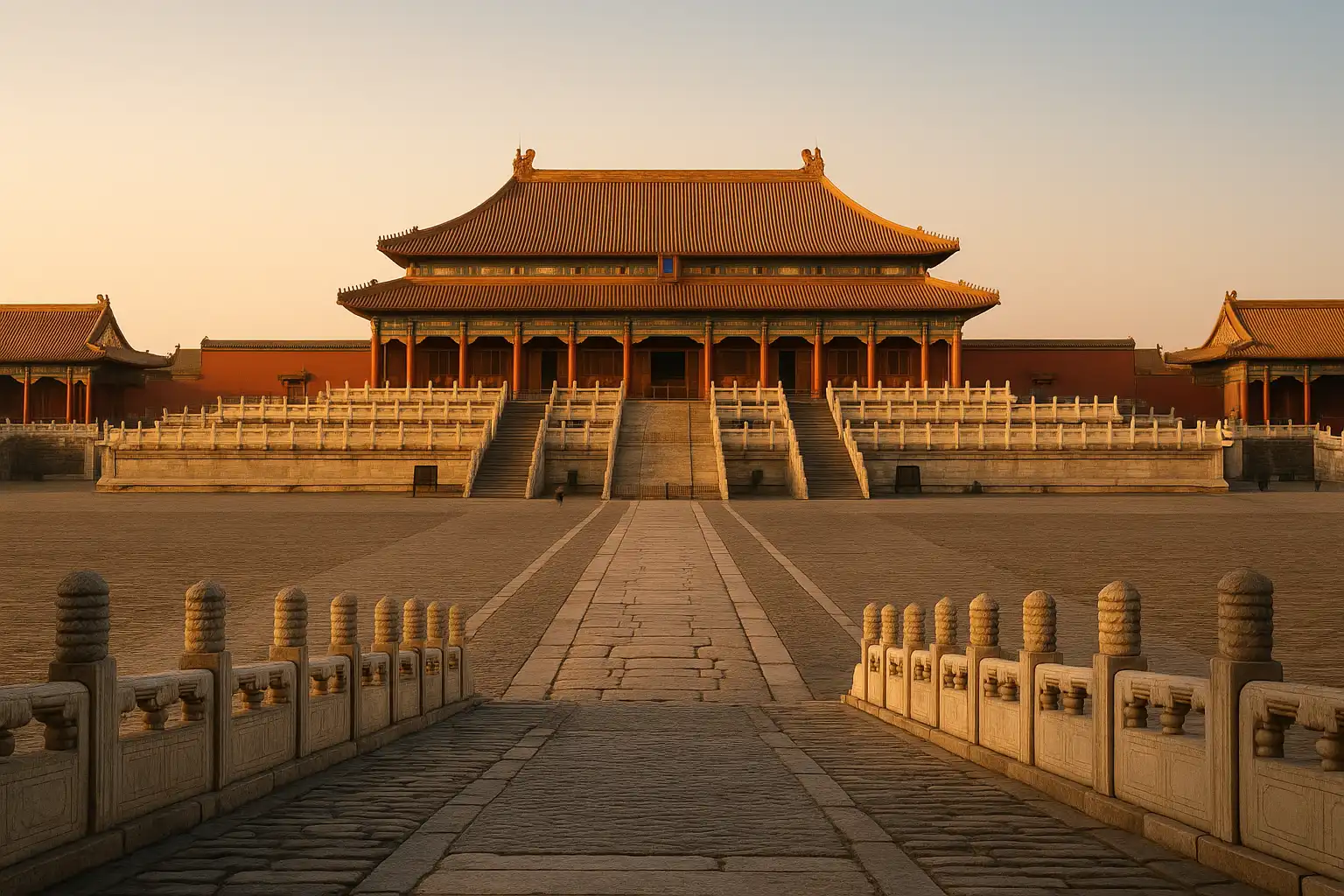
Forbidden City China Travel Guide 2026: Imperial Palace of Beijing
Chinese ImperialExplore the Forbidden City, China's imperial palace for 500 years. Discover the Hall of Supreme Harm...
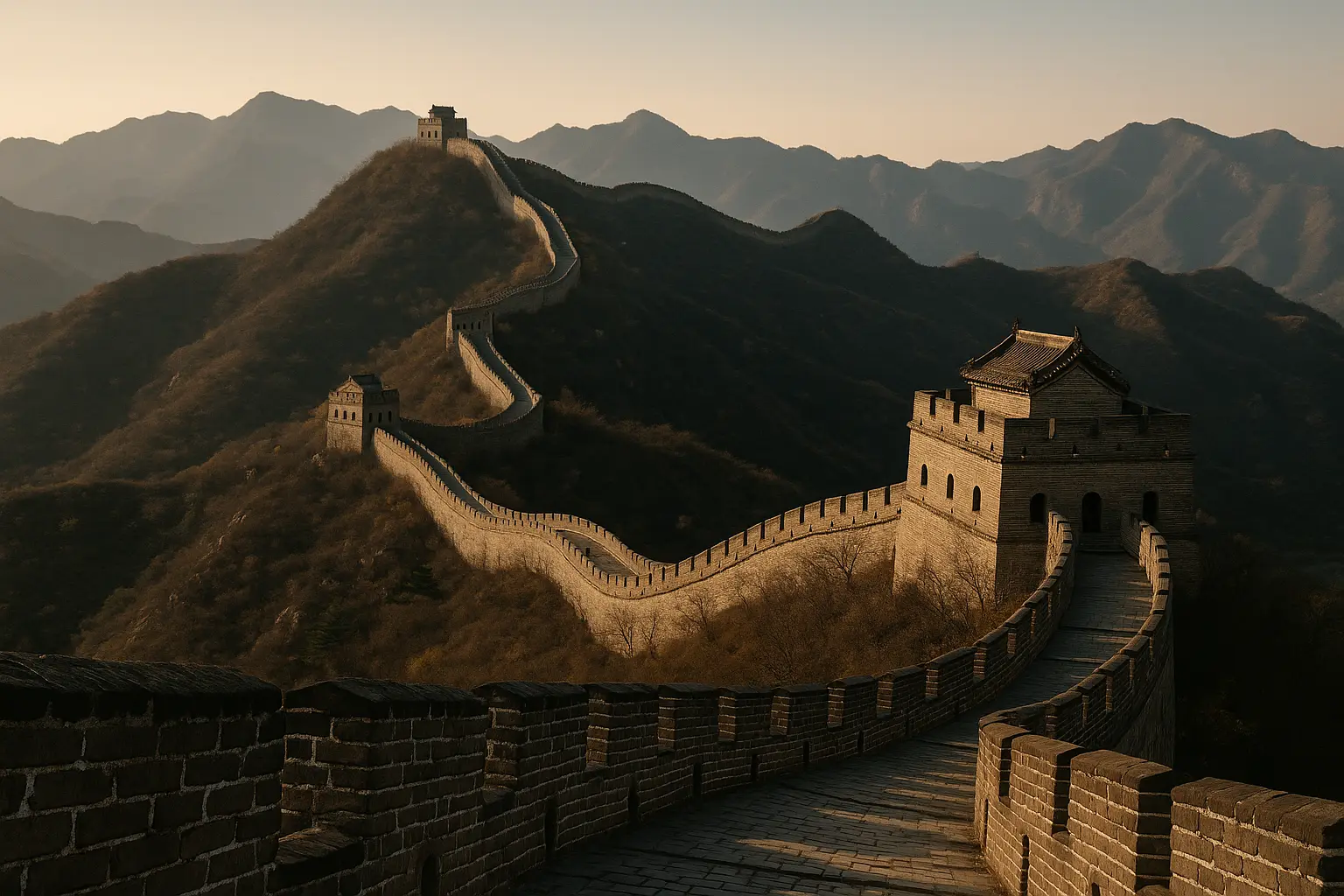
Great Wall of China Badaling Travel Guide 2026: Iconic Fortification
Chinese ImperialVisit Badaling, the most famous section of the Great Wall of China. Our guide covers tickets, cable ...
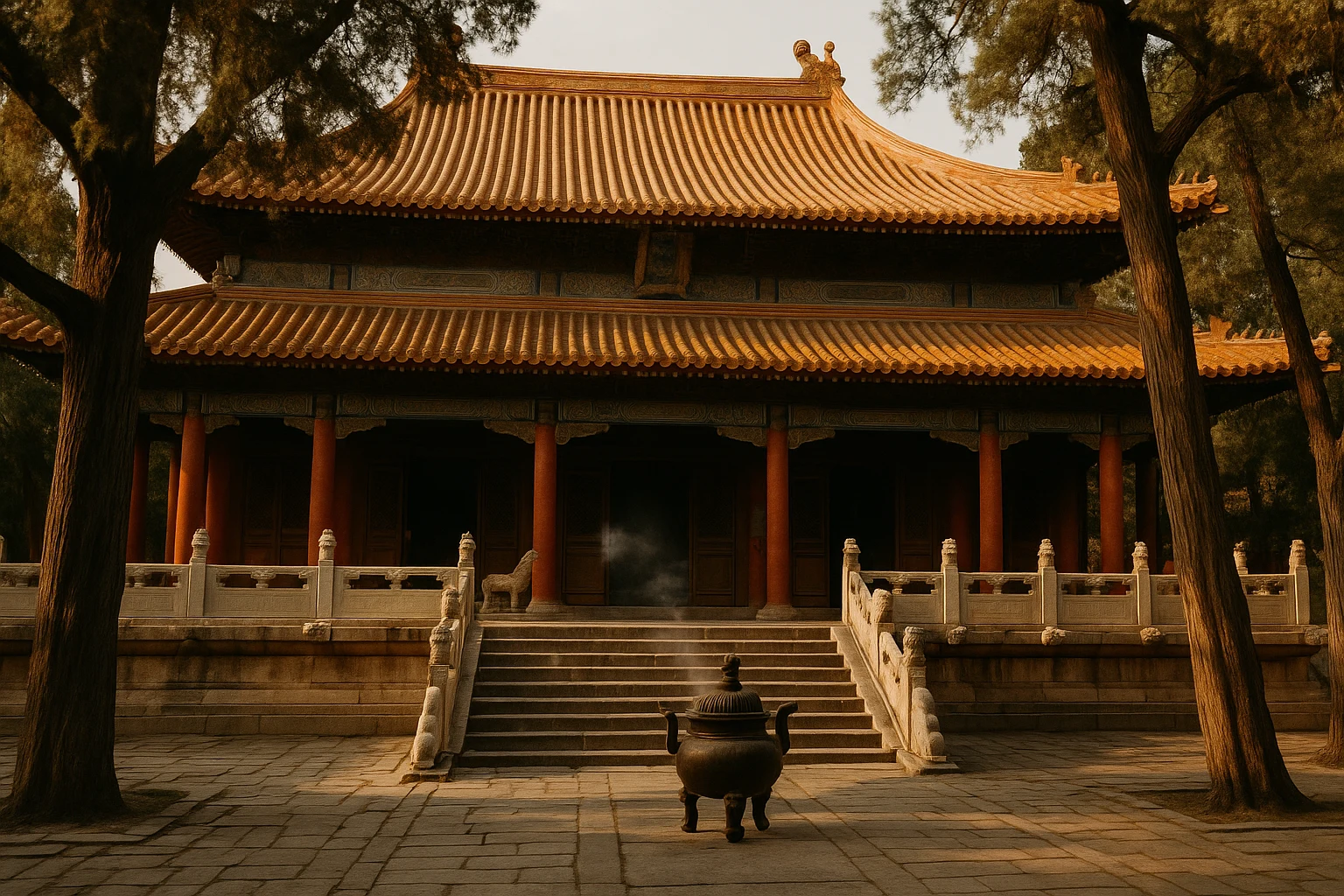
Confucius Temple (Qufu)
The ancient Temple of Confucius in Qufu, Shandong, is China's largest Confucian temple complex, a UN...
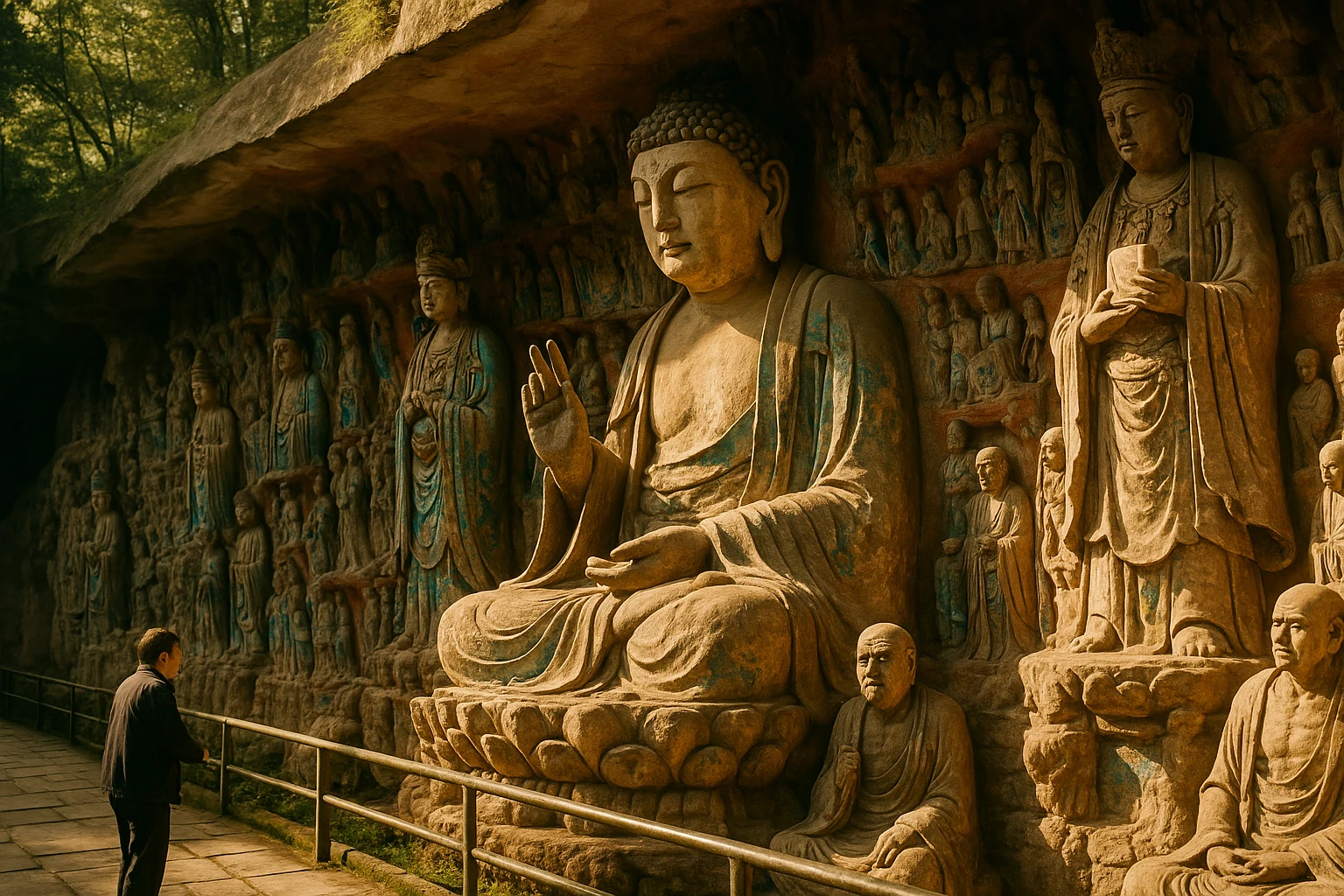
Dazu Rock Carvings
Tang and Song Dynasty ChinaAncient Buddhist, Taoist, and Confucian rock sculptures carved into cliffsides across Dazu District,...