Bodrum’s white houses, marina, and beach traffic can make the ancient city feel like an afterthought. It was Halicarnassus, however, and its Mausoleum gave the world a word. The useful way to visit is not to chase every classical name on the map. It is to let the town explain its own layers, then use the coast for one carefully chosen outward day at a time.
Begin with Halicarnassus
Start at Halicarnassus, where the remains of the Mausoleum are necessarily quieter than the building’s reputation. The seventh-century BCE city and the fourth-century BCE monument sit beneath a modern resort town, so the visit is about reading evidence rather than expecting a complete ancient skyline. Give the site time, then use Bodrum Castle and its museum collections to supply context for the coast and sea routes that shaped the region.
Do not force a long drive onto this first day. Walk the harbor, note the slopes and fortification logic, and save the road for the next morning. It is a more intelligent introduction than arriving at a distant sanctuary before you understand why this shore mattered.
Choose Knidos or the inland sanctuaries
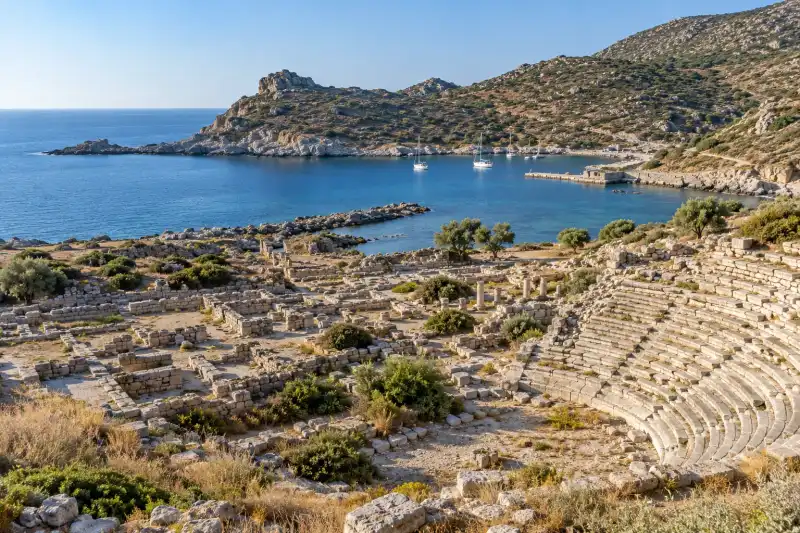
Knidos is the big coastal commitment. Its position on a peninsula makes the approach part of the experience, and the site is best treated as a destination rather than an add-on after lunch. Plan for exposed walking, bring water, and check the official operator’s current access terms before departure. The double-harbor setting explains more about ancient maritime life than a quick photograph ever will.
For a different kind of day, Didyma and Miletus pair well conceptually: an immense oracle sanctuary and a city whose harbor history changed with the landscape. They are not a casual extension of a Bodrum beach day. Start early, decide whether you have enough energy for both, and make the longer return transfer the final task of the day.
Build a sensible three-day rhythm
Day one: Bodrum and Halicarnassus. Visit the Mausoleum area in the cooler part of the day, use the castle museum for interpretation, and keep the evening in town. This is the day to organize maps, water, and the next day’s transport rather than improvising them in a car park.
Day two: Knidos. Give the site the full day. Walk slowly through the civic and harbor areas, take shade breaks, and resist adding a second far-flung ruin. The return journey is easier when you are not treating sunset as a racing flag.
Day three: Didyma and Miletus, or a rest day. This is the right place for an inland archaeological pair if you have arranged transport you trust. Otherwise, use the day in Bodrum and save the larger Aegean route for a new base farther north.
Transport and access without fake precision
A rental vehicle gives flexibility in this region, but it also brings navigation, parking, and fatigue. Public and private transport patterns change, especially outside the busiest months. Confirm the operator, pickup point, baggage policy, and final return before you commit to a distant site. This guide does not publish live timetables, fares, opening hours, or ticket availability.
The official UNESCO record for Xanthos-Letoon describes Letoon as the cult center of the Lycian province and League. If you extend south, make that a separate overnight route rather than a Bodrum day trip. Geography is stubborn. It has never cared about your browser tabs.
Practical field notes
The Aegean sun and pale stone amplify each other. Start outdoor archaeology early, carry more water than feels fashionable, and use shoes with grip on uneven paths. At monuments, stay on marked routes and do not climb masonry for the photo that will later look exactly like every other photo of somebody climbing masonry.
For more Turkey planning, pair this guide with Ephesus, Aphrodisias, and our southeastern Turkey ancient-sites itinerary.