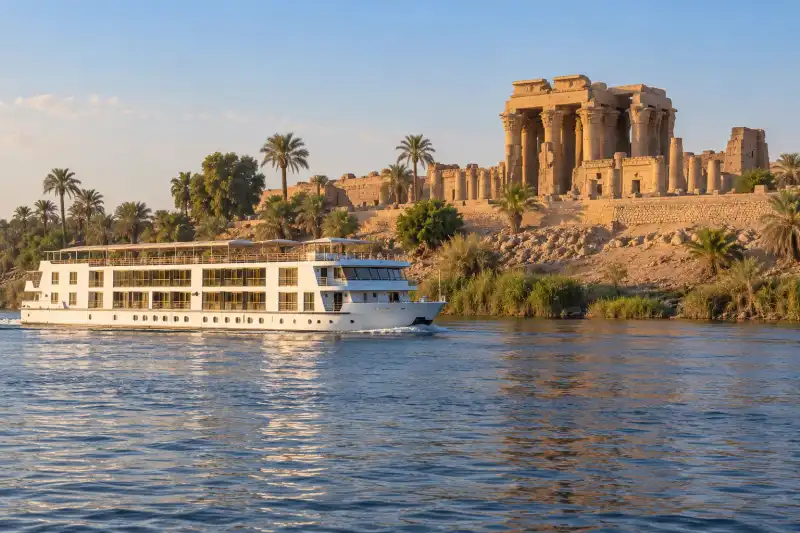
A Nile cruise is a way of traveling between temples, not a guarantee that you will see them in the way you imagined. The boat handles a lot: hotel changes, a substantial piece of the Luxor-Aswan transfer and the pleasure of waking beside the river. It also sets a schedule. Docking order, lock timing, guide groups and departure rules can turn a site into a short organized stop rather than an open-ended visit.
That is neither good nor bad. It just means the itinerary needs to be read like a transport contract, not like an illustrated promise.
Know what kind of trip you are booking
Most conventional Nile sailings use the Luxor-Aswan corridor. The exact direction, nights, included meals, transfers and site visits depend on the operator. Before booking, ask for the current day-by-day schedule in writing. You need the named sites, the planned sequence, whether admission is included, whether guiding is included, and whether any visit depends on an optional excursion.
Do not infer that a cruise covers the whole Upper Egypt archaeological map. Karnak and Luxor Temple are associated with a Luxor stay, but they may occur before or after embarkation. Edfu and Kom Ombo are corridor stops, yet the useful question is not merely whether their names appear. Ask when the group enters, how long it has, and whether the vessel can leave without you.
Separate the river schedule from the archaeology
UNESCO’s Ancient Thebes listing puts the East Bank temples and the large West Bank archaeological area in one World Heritage property. A cruise brochure may make them appear as consecutive checkboxes. They are not. The West Bank needs its own practical plan because it involves the river crossing, road movement and a different landscape of tombs and mortuary temples. If the West Bank is a priority, add a Luxor night before or after the sailing rather than hoping the first half-day feels generous.
Similarly, Philae is an Aswan-area visit with a water approach. A cruise may organize it, or it may list it separately. Confirm the actual arrangement. Abu Simbel is farther south and should be considered a dedicated excursion, not a footnote in an Aswan arrival or departure day.
Questions worth asking before paying
| Ask the operator | Why it changes the trip |
|---|---|
| Which exact sites are included in this sailing? | Names in a marketing overview may not match the booked departure |
| Are tickets, local transfers and a guide included? | ”Visit” can mean transport only, a guided entry, or an optional extra |
| What is the planned entry time and duration? | Heat, crowds and photography all feel different on a rushed stop |
| What happens if docking or river conditions change? | You need the operator’s actual substitution and refund terms |
| Can I arrange independent time at a stop? | Some itineraries cannot accommodate it without missing the vessel |
Do not rely on an agent’s shorthand answer. Save the written conditions, cancellation terms, pickup location and the emergency contact for the operating company.
When a cruise is the right fit
A cruise works well when you want a single moving base and accept that the itinerary is shared. It can also work as the middle of a broader Egypt trip: independent time in Luxor, a sailing south through the river corridor, then separate Aswan and Abu Simbel planning. That combination keeps the river part from swallowing everything else.
Independent travelers may prefer the Nile Valley temples route guide if they want longer site visits or different overnight bases. Neither approach is morally superior. One simply has more moving pieces and more control.
This article does not publish live sailing dates, prices, docking arrangements, entry times or availability. Read the operator’s current terms and use UNESCO’s Ancient Thebes record and Nubian Monuments record for the historical context around the route.