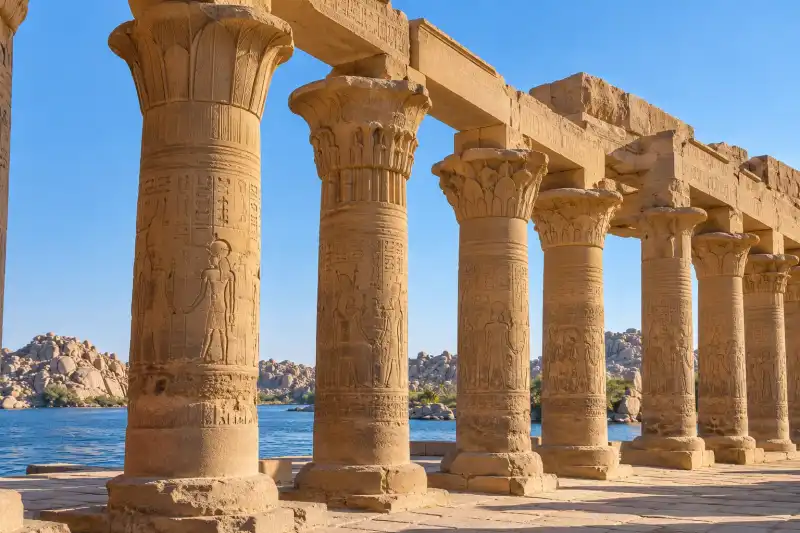
The Nile is useful as a map, but it is not an itinerary. The temple sites between Luxor and Aswan sit beside a working river, modern towns, roads, crossings and archaeological landscapes that do not behave like dots on a brochure. Start by deciding what you want from the route: temple architecture, royal necropolises, river travel, or a compact sequence of major sites. Then give each place enough time to be itself.
UNESCO groups the temples of Karnak and Luxor with the West Bank necropolis in its Ancient Thebes property. That is a useful historical frame, but a visitor still has to make practical decisions about where to sleep, when to cross the river, and whether a planned stop is a temple visit or a long transfer in disguise.
Use three archaeological zones
Luxor: temple city and necropolis
Luxor is the natural northern base. On the East Bank, Karnak and Luxor Temple are urban temple visits. They reward close looking at processional routes, gateways, courts and reused or rebuilt spaces. Do not treat one as a substitute for the other.
The West Bank is a different day. Its sites belong to a desert-edge funerary landscape: valleys, tombs and mortuary temples. Plan it as a geographic cluster with a deliberate return point, rather than squeezing it between two East Bank tickets. See our Luxor West Bank guide for a day plan built around that distinction.
Between Luxor and Aswan: river corridor temples
South of Luxor, Edfu and Kom Ombo work best as separate stops in a longer transfer sequence. Their appeal is not just that both are temples. Edfu is associated with Horus and Kom Ombo has a dual dedication to Horus and Sobek. Read the on-site interpretation and check current access with the operator or Egyptian authorities rather than relying on an old route diagram.
A cruise can make the corridor feel simple because the hotel moves with you. That convenience has trade-offs: the vessel’s stop order, docking time and guided schedule shape the day. If the boat is the priority, use our Nile cruise temple guide instead of assuming it offers the same freedom as a road itinerary.
Aswan and the southern extension
Aswan is another base, not merely a final night. Philae requires a water approach and should be planned as its own visit. UNESCO’s Nubian Monuments documentation is useful context here: many monuments were moved or protected during the international campaign associated with the High Dam. That history is part of the landscape, not a bit of trivia for the bus ride.
Abu Simbel is farther south and changes the logistics. Treat it as a dedicated excursion with a verified current operator, pickup point and return plan. Do not fold it into an Aswan arrival day or assume a historic timetable is still running.
Choose a direction and protect transfers
Luxor-to-Aswan is intuitive because it moves south along the river, but reverse travel can work just as well if flights or onward plans require it. The important part is to avoid stacking a long arrival, a major temple, a river crossing and a fixed departure in one fragile day.
For each transfer, record the exact departure point, the practical arrival point, baggage limits, cancellation terms and the contact route for your provider. Check current entry procedures and opening information directly with official Egyptian tourism or site authorities before paying. This guide deliberately does not publish live fares, hours or ticket availability.
A sensible level of ambition
A compact first route might use Luxor as a base for the East and West Banks, then move south with a full day reserved for the Edfu and Kom Ombo corridor before settling into Aswan. A longer route can add another Aswan day and a separate Abu Simbel excursion. Either version is stronger than collecting five named temples while remembering none of their setting.
The Nile Valley contains temples from different periods, later reuse, modern conservation work and living towns. Leave space for the parts that do not fit a clean checklist: museum time, a delayed crossing, a break in the heat, or a second look at a relief that suddenly makes the first visit feel rushed.
Before you go
- Confirm current access, tickets and photography rules with the official authority for each named site.
- Keep East Bank, West Bank, corridor temples and Aswan water access as separate planning problems.
- Carry water, sun protection and a downloaded copy of confirmations, but do not assume a hotel concierge can solve a missed fixed transport connection.
- Read UNESCO’s Ancient Thebes record and Nubian Monuments record for the historical geography behind the route.