Quick route summary
This 7-day route starts in Palermo and ends near Catania, using Palermo, Agrigento, Syracuse, and Taormina or Catania as practical bases. It links western Sicily’s Segesta and Selinunte with the Valley of the Temples at Agrigento, then crosses inland to Piazza Armerina and Villa Romana del Casale before finishing with Syracuse Archaeological Park, Necropolis of Pantalica, and the Taormina Ancient Theatre.
The pace is full, but not absurd if you drive and keep the route linear. Sicily punishes backtracking. The trick is to avoid treating the island like a small add-on to mainland Italy. Ancient Sicily has Greek temples, Roman mosaics, rock-cut tombs, theater landscapes, and local cultures that never fit neatly into one simple label.
Who this itinerary is for
This itinerary is for travelers who want Sicily as an archaeology route, not just Palermo, beaches, and a quick temple photo. It works best if you are comfortable renting a car, changing bases, and giving large outdoor sites the time they need.
It is not ideal if you want one relaxed base, no driving, or a food-and-coast first trip with ancient sites sprinkled around the edges. Those trips can be excellent. This one is built around Greek colonies, Roman villas, ancient theaters, and the practical reality that Sicily’s best archaeological sites are spread across the island.
Route at a glance
- Day 1: Overnight in Palermo. Visit Segesta by car or guided trip, with Erice only if you have enough time and energy.
- Day 2: Overnight in Agrigento. Drive from Palermo to Selinunte, then continue to Agrigento instead of returning west.
- Day 3: Overnight in Agrigento. Spend the main day at the Valley of the Temples, using early morning or late afternoon light if possible.
- Day 4: Overnight in Syracuse. Drive inland to Piazza Armerina and Villa Romana del Casale, then continue to Syracuse.
- Day 5: Overnight in Syracuse. Visit Syracuse Archaeological Park and leave time for Ortygia’s ancient layers.
- Day 6: Overnight in Syracuse. Use a car or guide for Pantalica, with realistic expectations for walking and rural access.
- Day 7: Overnight in Catania. Visit Taormina Ancient Theatre, then continue toward Catania for departure or a final night.
Practical logistics before you go
A rental car is the easiest way to make this itinerary work. Trains and buses can handle some individual legs, but they do not connect Segesta, Selinunte, Agrigento, Piazza Armerina, Pantalica, and Taormina with enough flexibility for a clean 7-day archaeology route.
Do not stay in Palermo all week. Palermo is useful for the western start, but Agrigento and Syracuse save hours later. Syracuse is the strongest eastern base because it works for both the archaeological park and Pantalica, while still keeping Taormina and Catania within reach at the end.
Book or check tickets and opening hours for the major archaeological parks before each visit. Sicily’s outdoor sites can have seasonal schedules, large zones, shuttle rules, museum closures, and heat exposure that do not show up clearly on a simple map.
Guides make sense at Agrigento, Syracuse, and Pantalica. They are less necessary at every stop, but these places benefit from someone who can connect temple building, urban planning, quarry landscapes, tomb zones, and local history without turning the day into guesswork.
This route intentionally skips Palermo’s museums, Morgantina, coastal resort time, the Aeolian Islands, and a full Mount Etna day. Those are not bad omissions. They are the cost of making a week in ancient Sicily feel like a route instead of a scramble.
Day 1: Segesta and western Sicily
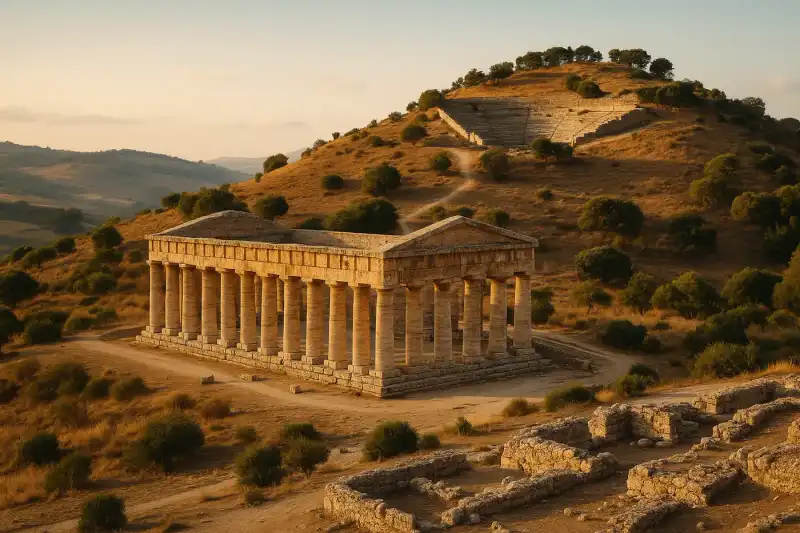
Start from Palermo and head to Segesta. The unfinished Doric temple is the famous image, but do not stop there. The hilltop theater matters because it changes how you read the place: not just a temple in a field, but a settlement landscape with Greek forms, local Elymian identity, and long contact with Phoenician and Greek neighbors.
A Segesta and Erice day trip from Palermo is useful if you do not want to drive on the first day. It also solves the awkward pairing with Erice, which is tempting but easier with organized transport.
If you add Erice, treat it as a historical hilltown layer rather than a simple scenic bonus. The site carries Elymian, Phoenician, Norman, and medieval traces, and its position above Trapani explains why this western corner of Sicily was always more connected than it might look on a modern itinerary.
Return to Palermo for the night. Do not add Selinunte today unless you are happy with a long road day and too little time at both sites.
Day 2: Selinunte and the road to Agrigento
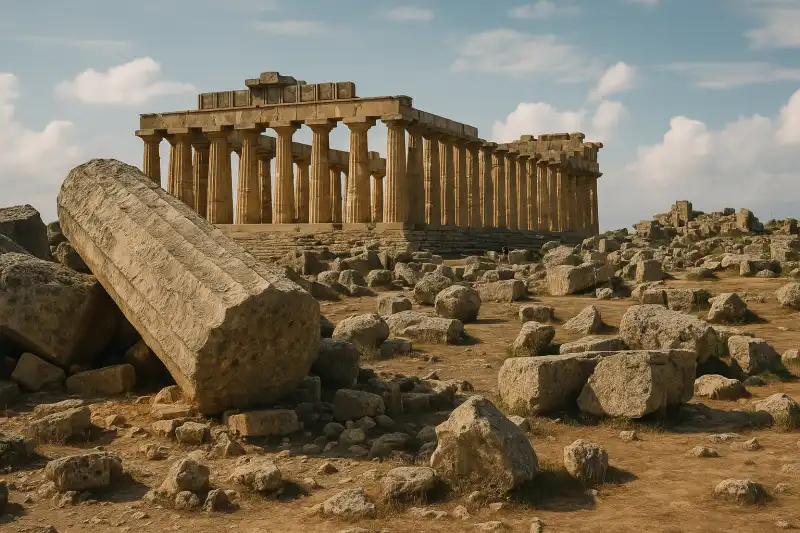
Leave Palermo and drive south to Selinunte. This is one of the days where a car changes the whole experience. Selinunte is large, spread out, and physically tiring, and the value of the visit comes from understanding scale: temple zones, acropolis, fortifications, sanctuaries, and the sense of a Greek colonial city facing the sea.
Give the site more time than the map suggests. Selinunte was destroyed by Carthaginian forces in 409 BCE, and the ruins still carry that fractured quality: huge temple blocks, partial reconstructions, open ground, and a city plan that feels both ambitious and broken. The stones are quiet now, but the political stakes here were not small.
Carry water, sun protection, and patience. Depending on site operations, internal movement can involve long walks or shuttle choices. This is not a good place for a rushed midday stop in high summer.
Continue to Agrigento for the night. Sleeping there is what makes the next day work. Returning to Palermo would waste the best part of the route.
Day 3: Valley of the Temples
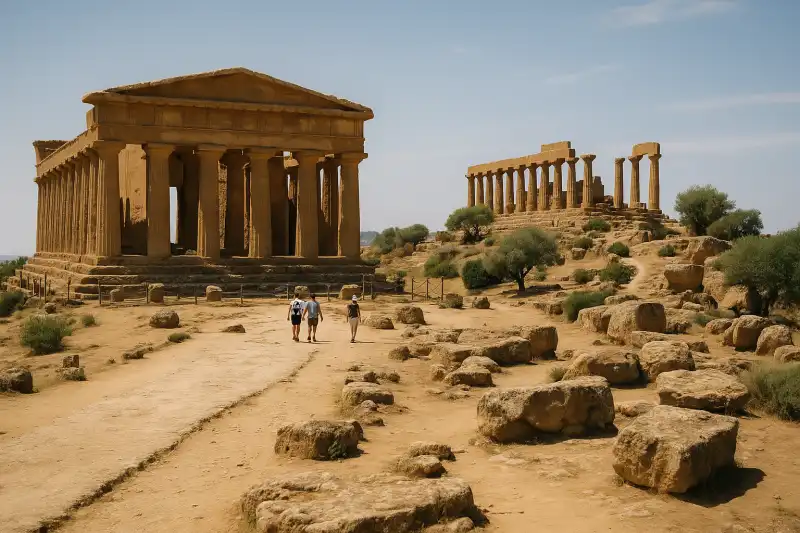
Spend the day at the Valley of the Temples at Agrigento. The name is slightly misleading because the temples stand along a ridge, not in a valley. That small correction helps you read the site properly: sanctuaries arranged with visibility, approach, and civic identity in mind.
The Temple of Concordia gets the attention because it is so well preserved, but give the wider park time. Akragas was one of the great Greek cities of Sicily, wealthy enough to build on a scale that still feels almost excessive. The temple ridge, city walls, necropolis areas, and museum material together show a city competing in stone.
A Valley of the Temples guided tour in Agrigento is worth considering, especially if you want the religious and urban context rather than a slow sequence of temple names.
Heat matters here. Visit early or late if you can, and use the middle of the day for the museum, lunch, or rest. Agrigento is rewarding, but it is exposed. The site will not be better because you pushed through it at the hottest hour.
Day 4: Piazza Armerina and Villa Romana del Casale
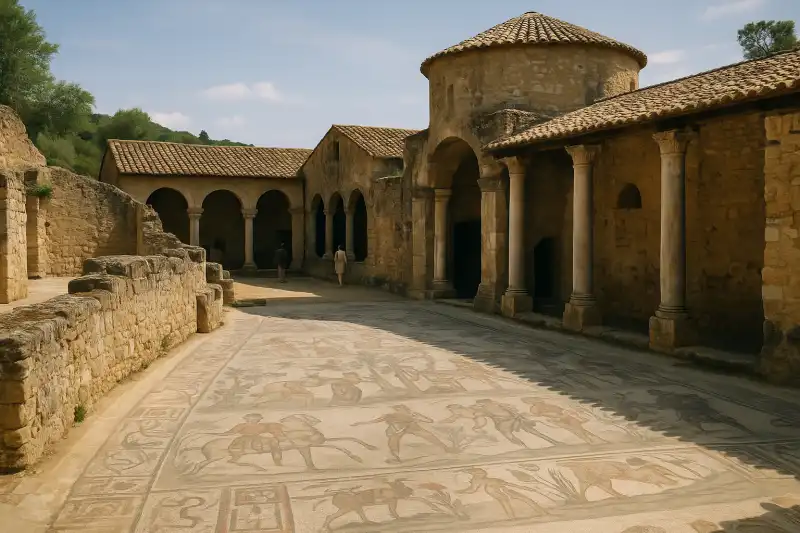
Leave Agrigento and drive inland toward Piazza Armerina. The main ancient target is Villa Romana del Casale, one of the strongest Roman villa visits in Sicily. This day shifts the route from Greek temple landscapes to late Roman elite life.
The mosaics are the reason to come, but try to see them as more than decoration. Hunting scenes, animals, mythological panels, geometric floors, bathing spaces, and reception rooms were part of how an elite residence presented wealth, education, leisure, and control over far-flung resources. The villa is domestic only in the loosest sense. It was a stage for status.
Arrive early if possible. Tour groups can build quickly, and the elevated walkways are easier to enjoy when you are not moving in a slow crowd. Give your eyes time to adjust to the detail. The famous bikini-like athletes are memorable, but the broader program is much richer.
Continue to Syracuse for the night. This is a long but useful transfer day because it prevents a second inland detour later.
Day 5: Syracuse Archaeological Park and Ortygia
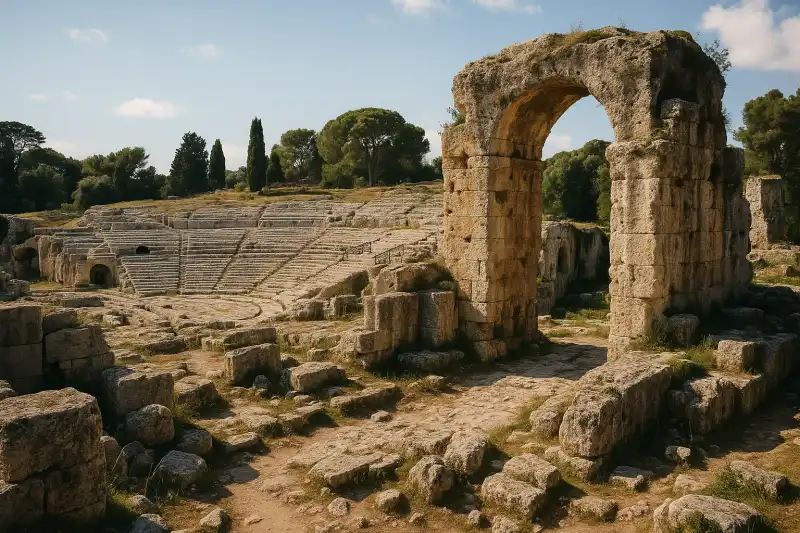
Base yourself in Syracuse and start at Syracuse Archaeological Park. The Greek theater is the anchor, but the site also asks you to think about quarrying, performance, Roman adaptation, and how a city used stone at enormous scale. The so-called Ear of Dionysius belongs to the quarry landscape, not just the tourist-photo version of Syracuse.
Syracuse was one of the major Greek cities of the Mediterranean, powerful enough to compete militarily and culturally far beyond Sicily. It was also the city of Archimedes, later taken by Rome in 212 BCE after a brutal siege. That mix of science, war, theater, and urban ambition gives the day real texture.
After the park, leave time for Ortygia if your energy holds. Even without a separate listed destination page here, the old island core helps the ancient city make geographic sense: harbor, springs, temples reused in later buildings, and the feeling of a city built in layers rather than clean periods.
Use taxis or local transport when needed. Syracuse is walkable in parts, but the archaeological park and Ortygia are not the same stop. Do not let a small transit hassle turn into a long hot march.
Day 6: Pantalica and the rocky inland landscape
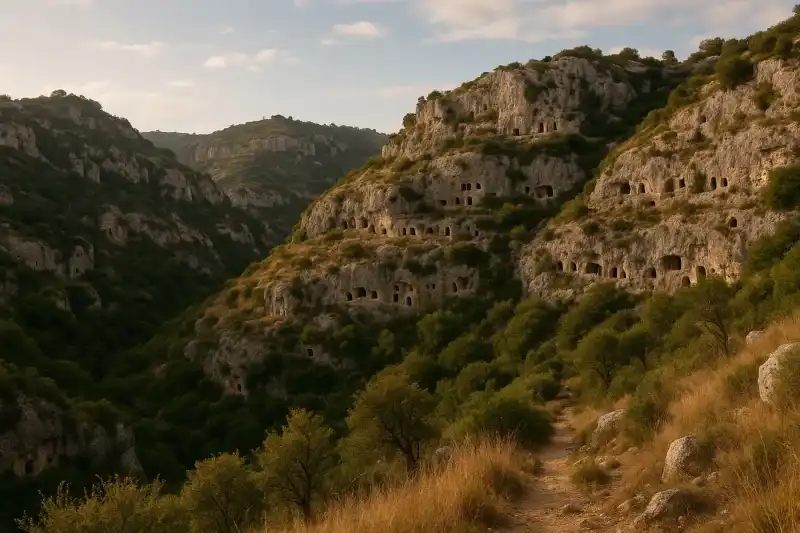
Use a car or guide for the Necropolis of Pantalica. This is not a normal city archaeology day. It is a landscape of rock-cut tombs, limestone valleys, paths, viewpoints, and uneven access. Wear proper shoes and check conditions before you go.
Pantalica’s thousands of tombs belong mainly to the Late Bronze Age and Early Iron Age, long before the Classical Greek cityscape that shapes much of this itinerary. That chronological shift is the point. Sicily’s ancient story does not begin with Greek temples. The island already had complex communities, burial traditions, and inland power centers.
The day is more physical than museum-like. You may not see every zone, and that is fine. Pick a practical route, respect heat and trail conditions, and let the landscape do some of the explaining. The tombs cut into the cliffs make memory feel geological.
Return to Syracuse for the night. Do not add Noto, Ragusa, or Etna today if the goal is ancient Sicily. They are tempting, but Pantalica deserves space and a clear head.
Day 7: Taormina Ancient Theatre and the road to Catania
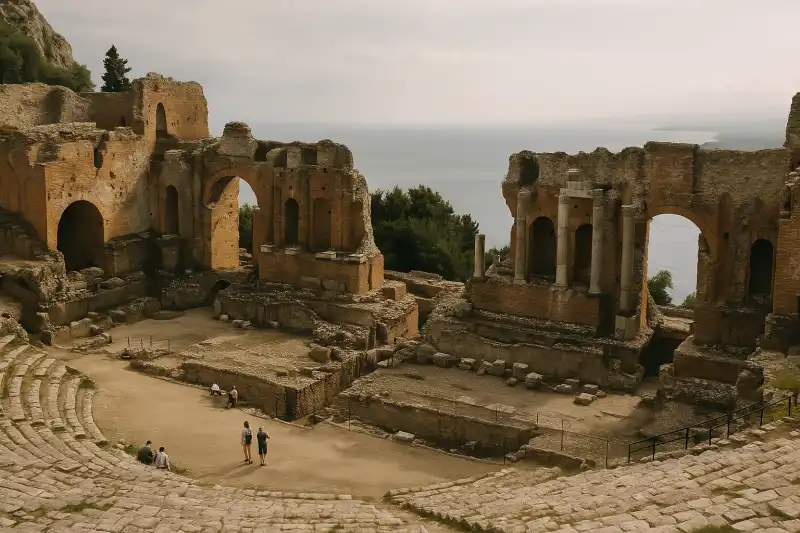
Leave Syracuse and head north toward Taormina Ancient Theatre, also listed as Teatro Greco Taormina. The setting is famous, but try not to let the view swallow the archaeology. The theater has Greek origins and Roman-period rebuilding, which makes it a fitting final stop for a route that keeps crossing cultural lines.
Taormina is logistically different from the open temple parks. Parking, crowds, hilltown movement, and cruise-day traffic can all slow you down. Arrive early if you can, and do not schedule a tight flight immediately after the visit.
The theater’s position above the sea and near Etna explains why ancient performance spaces were never only about seating and stage buildings. They framed civic identity, landscape, and memory. In Sicily, that frame often included the sea routes that brought Greeks, Phoenicians, Romans, merchants, armies, and ideas into contact.
Continue to Catania for the night or departure. If you are flying out, build in a buffer. Sicily has a way of making short drives feel negotiable until they are not.
The historical thread: Greek cities, Roman villas, and older island memories
Ancient Sicily is not just Greece transplanted westward or Rome extended southward. This route works because it keeps showing contact zones. Segesta brings Elymian identity into conversation with Greek architecture. Selinunte and Agrigento show Greek colonial cities building sanctuaries at monumental scale. Syracuse adds theater, military power, quarries, and one of the great urban centers of the Greek Mediterranean.
Then the route changes register. Villa Romana del Casale shows late Roman wealth through floors, rooms, baths, and images. Pantalica reaches further back, into burial landscapes that predate the Greek city network. Taormina closes the loop with a theater that looks out over sea, mountain, and centuries of rebuilding.
The island never gives you one clean story. That is the pleasure of it. Sicily’s ancient sites keep reminding you that the Mediterranean was a place of movement, competition, borrowing, violence, trade, and local stubbornness.
Transportation notes
Rent a car if you can. It is the most practical way to connect Palermo, Segesta, Selinunte, Agrigento, Piazza Armerina, Syracuse, Pantalica, Taormina, and Catania in one week. Public transport can work for pieces, but the full route becomes slow and awkward without wheels.
Avoid driving deep inside old city centers when possible. Pick hotels with parking advice or nearby garages, especially in Palermo, Agrigento, Syracuse, and Taormina. A badly chosen hotel can turn a good archaeology route into a nightly parking drama.
Do not compress this into a Palermo-only or Catania-only itinerary. The island is too large, and the ancient sites are too spread out. The overnight bases are not decorative. They are what keep the route humane.
If you dislike driving, combine guided day trips with private transfers. The most useful guided or driver-supported days are Segesta and Erice from Palermo, Agrigento with context, and Pantalica from Syracuse. Pantalica is the day where improvising without a plan is least wise.
Optional add-ons and swaps
If you want more western Sicily, add Erice properly rather than squeezing it into Day 1. Remove Pantalica or add a night. Erice works best when you are not racing between temple parks.
If mosaics are your priority, give Villa Romana del Casale more time and stay near Piazza Armerina. Remove Taormina or extend the trip. The villa is too detailed for a rushed walkthrough between long drives.
If you want a lighter final day, skip Taormina and finish in Catania after Syracuse. This is the practical choice if you have an early flight or you are already tired from the Pantalica day.
If Greek temples are the main reason you came, add a second night near Selinunte or Agrigento and slow the western half down. Remove Taormina or Pantalica. The western temple parks reward time more than checklist speed.
Shorter and longer itinerary options
For a shorter Sicily route, use five days: Palermo for Segesta, Selinunte, Agrigento, Piazza Armerina, and Syracuse. Cut Pantalica and Taormina first, not because they are weak, but because they add distance and terrain.
For a broader Italy route, use the 7 Days in Ancient Italy: Rome, Pompeii, Herculaneum, and Paestum itinerary. That gives Sicily less depth but connects it to Rome, Pompeii, Herculaneum, and Paestum.
For a mainland archaeology route before or after Sicily, use 7 Days in Ancient Italy: Rome, Pompeii, Naples, and Paestum. It pairs well thematically because Paestum and Sicily both show how Greek city culture shaped southern Italy before and during Roman power.
Related ancient sites
- Valley of the Temples Agrigento
- Selinunte
- Segesta
- Erice
- Syracuse Archaeological Park
- Piazza Armerina
- Villa Romana del Casale
- Necropolis of Pantalica
- Taormina Ancient Theatre
- Teatro Greco Taormina
FAQ
The most common planning questions for this route are answered below.