Quick route summary
This 3-day Beijing route uses one base in Beijing and focuses on the city’s strongest ancient and imperial sites. You start in the ritual and political center with the Forbidden City and Temple of Heaven, spend a slower second day at the Summer Palace, then leave the city for the Great Wall of China at Mutianyu.
The pace is firm but realistic. The mistake is trying to add too much: a full Forbidden City visit, a palace garden day, and a Great Wall trip already give you a dense look at Ming and Qing Beijing without turning the route into a checklist march.
Who this itinerary is for
This itinerary is for first-time Beijing travelers who want ancient sites, imperial architecture, and one strong Great Wall day without changing hotels. It works well if you can handle early starts, long walking days, security checks, timed tickets, and a full-day excursion outside the city.
It is not ideal if you want a slow food-focused Beijing trip or if you need very short sightseeing days. The Forbidden City and Summer Palace both involve a lot of walking, and the Great Wall day can be tiring even with cable-car help.
Route at a glance
- Day 1: Overnight in Beijing. Visit the Forbidden City in the morning, then continue to the Temple of Heaven by subway or taxi.
- Day 2: Overnight in Beijing. Spend most of the day at the Summer Palace, with a slower afternoon around Kunming Lake and Longevity Hill.
- Day 3: Overnight in Beijing. Travel to Mutianyu for a Great Wall day trip, using a driver, tour, or bus connection.
Practical logistics before you go
Base yourself in central Beijing, ideally near a subway line with easy access to Tiananmen, Qianmen, Dongcheng, or the hutong areas. You do not need to move hotels for this route. A single Beijing base saves time and avoids dragging bags through a huge city.
Timed tickets matter. The Forbidden City in particular needs advance planning, and passport details may be required when booking. Check current ticket rules before you build the rest of the day around it.
The subway is useful for Days 1 and 2, but the Great Wall is different. Mutianyu sits well outside the city, so a private driver or organized day trip can be worth the cost. If you prefer not to solve bus transfers in another language after a long day of walking, book transport ahead.
Be candid with your energy. The Forbidden City is physically larger than many visitors expect, and the Summer Palace rewards wandering rather than rushing. Wear shoes you trust, start early, and do not schedule a heavy evening after the Great Wall.
Day 1: Forbidden City and Temple of Heaven
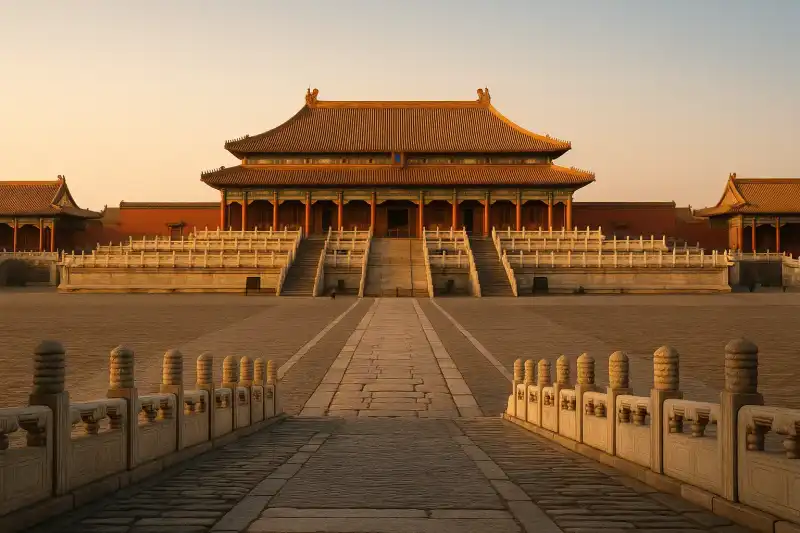
Start early at the Forbidden City. The palace was the ceremonial and residential heart of Ming and Qing rule for about five centuries, beginning after the Yongle emperor moved the capital to Beijing in the early 15th century. The scale is the point. Courtyard after courtyard turns power into architecture.
Give yourself time to move along the central axis, but do not treat the side halls as filler. The Hall of Supreme Harmony carries the grand throne-room drama, while quieter residential spaces show how tightly ritual, rank, and daily court life were arranged. This was not just a palace. It was a controlled world with gates, courtyards, offices, shrines, and rules about who could stand where.
A guided tour can help here, especially if you want the layout explained rather than just photographed. A Beijing Forbidden City and Temple of Heaven guided tour makes sense if it handles tickets and keeps the day moving.
After lunch, continue south to the Temple of Heaven. This is a good pairing because it shifts the story from imperial residence to imperial ritual. Ming and Qing emperors came here to pray for good harvests, and the Hall of Prayer for Good Harvests still has that theatrical round form set against a wide ritual landscape.
Do not rush the Temple of Heaven as an afterthought. The Circular Mound Altar and Echo Wall are part of a carefully planned ceremonial complex, not just supporting scenery. The day is walkable, but full. Use the subway or a taxi between sites, then keep the evening light.
Day 2: Summer Palace and imperial garden Beijing
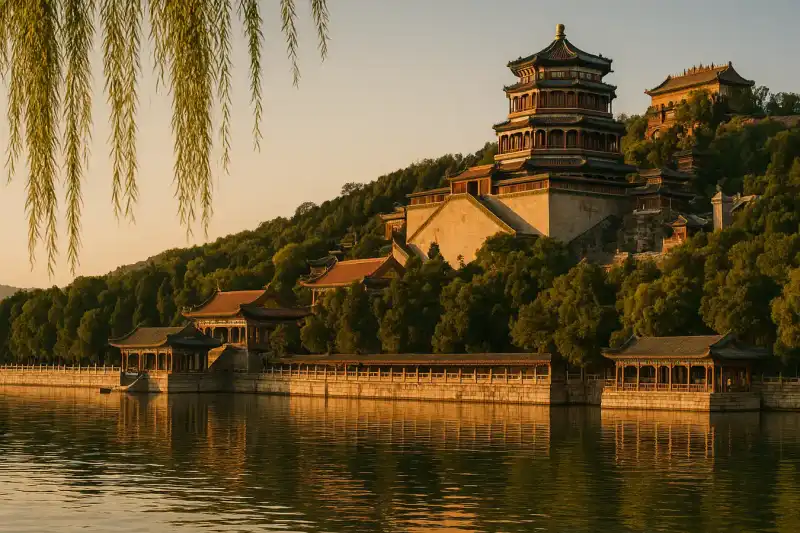
Make Day 2 slower on purpose. The Summer Palace is not a quick monument stop. It is an imperial garden landscape built around Kunming Lake and Longevity Hill, where architecture, water, painted corridors, and sightlines do a different kind of political work from the Forbidden City.
The Qing court used this area as a retreat, but “retreat” can be misleading. The Marble Boat, the Long Corridor, the hilltop temples, and the lake views all speak in the language of cultivated authority. The place is gentler than the Forbidden City, but it is not modest.
Arrive in the morning and plan your route before you start wandering. A good first visit usually includes the Long Corridor, the lakeside walk, views up Longevity Hill, and at least one stretch where you simply slow down and look across the water. The best part of this day is noticing how Beijing’s imperial world was designed to include controlled nature as well as controlled ceremony.
Logistically, take the subway toward the northwest or use a taxi if you want to save energy. The site is large, and your feet will notice. If the weather is hot, cold, or hazy, shorten the lake circuit rather than trying to prove a point.
This is also the day to resist overpacking. You could add another museum or palace site, but most travelers will enjoy Beijing more if they let the Summer Palace breathe. Use the late afternoon for a quiet meal or a hutong walk if you still have energy.
Day 3: Mutianyu Great Wall day trip
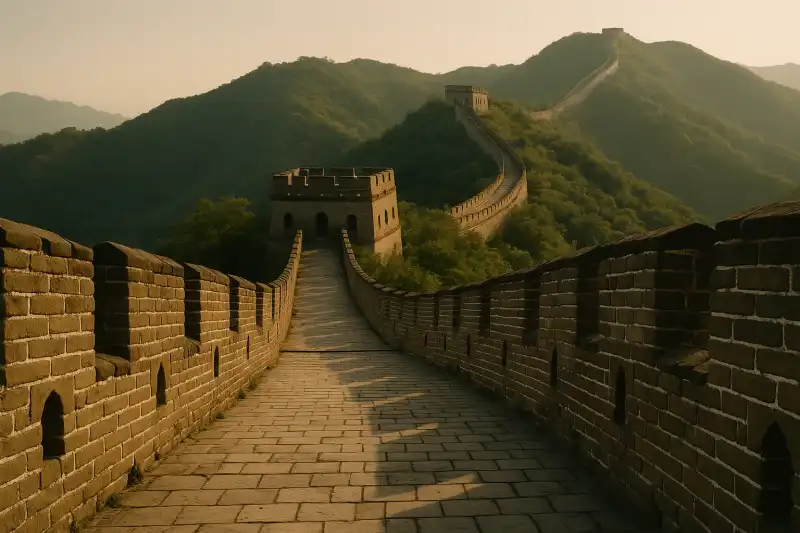
Use the final day for the Great Wall of China at Mutianyu. Mutianyu is a restored Ming-era section northeast of Beijing, with a strong sequence of watchtowers running across wooded ridges. It feels like a frontier system rather than a single monument, which is the right way to read it.
Leave early. The drive can take around 1.5 to 2.5 hours each way depending on traffic, pickup location, and season. A driver or tour is the simplest option for most visitors, and a Mutianyu Great Wall day trip from Beijing solves the awkward part of the day: getting there and back without losing half your patience.
Once there, use the cable car if you want to save energy for walking along the wall itself. The Wall is steeper than photos suggest, and the stone steps are uneven. Choose a manageable stretch between watchtowers rather than trying to cover too much. The reward is not distance. It is seeing how towers, ridges, and sightlines turn the mountains into a defensive network.
Historically, Mutianyu belongs mostly to the Ming reconstruction of the Wall, when northern frontier defense became a massive state project. The stones are quiet now, but the anxiety behind them was not small. Mongol pressure, border garrisons, signal systems, and imperial logistics all sit behind the scenic ridge walk.
Return to Beijing in the late afternoon. Do not plan another major site after this. If you still want one more ancient stop, save that ambition for a longer Beijing route.
The historical thread: imperial order, ritual space, and frontier anxiety
This route works because it moves through three versions of power. The Forbidden City shows imperial authority at the center, arranged along courtyards, gates, throne halls, and regulated movement. The Temple of Heaven shows the emperor acting as ritual mediator between heaven, earth, and harvest. The Summer Palace turns landscape into courtly display. Mutianyu pushes the story outward to the mountain frontier.
Together, these sites make Beijing feel less like a collection of famous landmarks and more like a system. Court ritual, garden design, and military defense all supported the same idea: the empire needed to look ordered, blessed, cultivated, and protected.
Transportation notes
Use Beijing as your base for all three nights. Changing hotels would waste time.
For Day 1, the subway is practical, though taxis can help if you are tired. Build in time for security checks and walking between entrances, exits, and transport stops. For Day 2, the subway reaches the Summer Palace area, but a taxi may be easier if you are staying far from the right line.
For Day 3, do not underestimate the Great Wall transfer. Mutianyu is close enough for a day trip but far enough that transport planning matters. A private driver, small-group tour, or well-researched bus plan all work. Self-driving is not the best choice for most short-stay visitors because parking, traffic, navigation, and ticket logistics add friction without much benefit.
Badaling is usually easier by public transport, but it is also more crowded. Mutianyu is the better balance for this itinerary if you want restored Wall scenery without the most intense crowd pressure.
Optional add-ons and swaps
If you want the easiest Great Wall logistics, swap Mutianyu for Great Wall of China Badaling. Remove Mutianyu rather than trying to visit both in one day. Badaling has strong transport connections and famous views, but it can feel busier and more managed.
If you want more imperial burial context, add the Ming Tombs as a longer Day 3 with a driver. Remove the slow evening back in Beijing, and do not combine it with an ambitious Wall hike. The Spirit Way and tomb valley add useful context for Ming royal power after seeing the Forbidden City.
If your interests lean toward deep prehistory, consider Zhoukoudian Caves instead of the Summer Palace. This changes the route’s theme sharply, moving from imperial Beijing to the paleoanthropological world of Peking Man. It is historically fascinating, but less elegant as a first Beijing itinerary.
Shorter and longer itinerary options
For a two-day version, keep Day 1 and Day 3. That gives you central imperial Beijing and the Great Wall, though you lose the garden landscape that makes the route feel more rounded.
For a longer route, use the planned 5 Days Beijing and Xi’an Ancient Sites itinerary when available. It adds Xi’an, where the story shifts from Ming and Qing Beijing to Qin imperial burial, Han and Tang urban memory, and the city wall of an older capital.
A deeper China route can continue toward Luoyang, the Longmen Grottoes, or the Silk Road sites in Gansu, but do not bolt those onto a 3-day Beijing trip. China rewards distance, and distance needs time.
Related ancient sites
- Forbidden City
- Temple of Heaven
- Summer Palace
- Great Wall of China at Mutianyu
- Great Wall of China Badaling
- Ming Tombs
- Zhoukoudian Caves
- Xanadu Ruins
FAQ
The most common planning questions for this route are answered below.