Quick route summary
This 5-day route starts in Beijing and ends in Xi’an, using two bases rather than trying to sprint across northern China. The first three days focus on imperial Beijing: the Forbidden City, the Temple of Heaven, the Summer Palace, and the Great Wall at Mutianyu. Then you take the high-speed train to Xi’an for the Xi’an City Wall, the Terracotta Warriors, and the wider Mausoleum of the First Qin Emperor.
The pace is full but sane. The main mistake is trying to add the Ming Tombs, Badaling, Huashan, and extra museums without adding time. Beijing and Xi’an reward early starts, but they punish overconfidence.
Who this itinerary is for
This itinerary is for first-time China travelers who want a tight ancient-sites route with two major historical centers and no domestic flight if possible. It works well if you are comfortable with timed tickets, metro rides, taxis, high-speed rail, and one or two guided day trips.
It is not ideal if you want a slow museum-heavy Beijing trip, a deep Silk Road route, or a relaxed one-base holiday. You will change cities once, handle large sites, and spend a full day outside Beijing at the Wall. The payoff is strong, but this is not a lazy five days.
Route at a glance
- Day 1: Overnight in Beijing. Visit the Forbidden City and keep the rest of the day close to central Beijing.
- Day 2: Overnight in Beijing. Pair the Temple of Heaven with the Summer Palace, using metro and taxis to manage the distance.
- Day 3: Overnight in Beijing. Make a full day trip to the Great Wall at Mutianyu.
- Day 4: Overnight in Xi’an. Take the high-speed train from Beijing to Xi’an, then walk or cycle the Xi’an City Wall.
- Day 5: Overnight in Xi’an. Visit the Terracotta Warriors and the Qin mausoleum landscape near Lintong.
Practical logistics before you go
Use Beijing for the first three nights and Xi’an for the last two if your onward plans allow it. In Beijing, staying near a central metro line saves time. In Xi’an, a base inside or near the old walled city makes the final two days much easier.
Book the Forbidden City ahead. Same-day improvisation is risky, especially in busy seasons and around Chinese public holidays. The Temple of Heaven and Summer Palace are easier, but both are large enough to tire you out if you treat them as quick stops.
The high-speed train from Beijing West to Xi’an North is usually the best transfer. It often takes around 4.5 to 6 hours depending on the service. Add time for station security, luggage, and the metro or taxi on both ends. A flight can work, but airport transfers often erase the advantage.
Guided tours make the most sense for the Great Wall and the Terracotta Warriors. You can do both independently, but a driver or organized day trip removes a lot of friction. For the Great Wall in particular, transport is the day’s main challenge, not the walking.
Day 1: Forbidden City and imperial Beijing
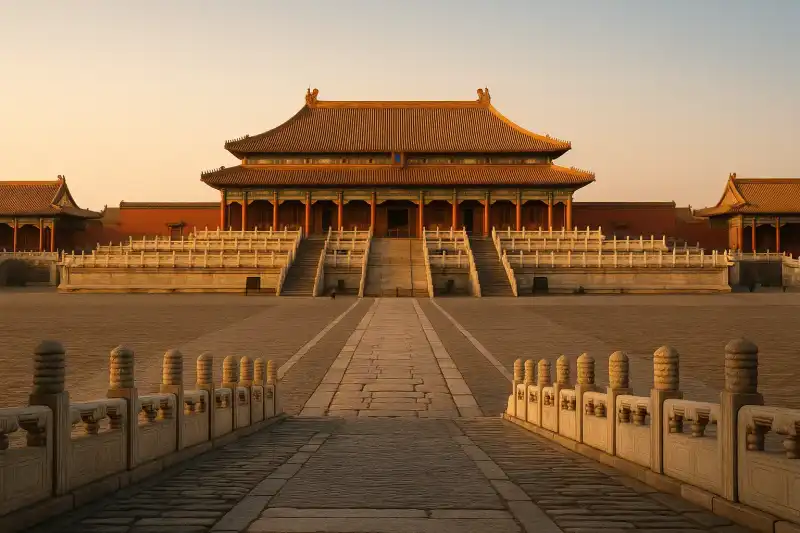
Start with the Forbidden City and give it the best part of the day. This was the working and ceremonial center of Ming and Qing rule for almost 500 years, from the early 15th century until the last emperor left the palace world behind. It is huge, formal, and intentionally controlling. The architecture keeps reminding you where power sat.
Enter with a timed ticket and resist the urge to rush straight down the central axis. The Hall of Supreme Harmony gets the attention, and fairly so, but the side courtyards help the palace feel less like one grand photo and more like a city of protocol. Look for how gates, courtyards, halls, and thresholds regulate movement. Imperial Beijing was not subtle about rank.
This is a good day to keep logistics simple. Use the metro or a taxi, arrive early, and plan a slow lunch afterward rather than another major ancient site. If you still have energy, stay in the central city and walk nearby historic streets, but do not try to add the Summer Palace today. The map makes Beijing look more compressible than it is.
The historical pleasure here is in the choreography. The Forbidden City was not just a residence. It was a machine for making imperial access rare, staged, and visible.
Day 2: Temple of Heaven and Summer Palace
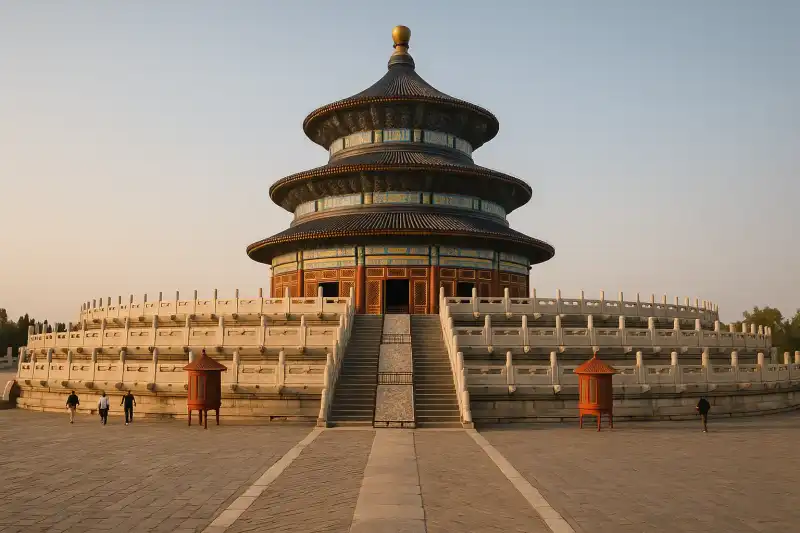
Begin at the Temple of Heaven, preferably early, when the surrounding park is active and the ritual buildings have not yet filled with tour groups. Ming and Qing emperors came here to pray for good harvests, and the layout is more cosmic than domestic. Round forms, square enclosures, cardinal directions, and carefully placed altars all point to a ruler mediating between heaven and earth.
The Hall of Prayer for Good Harvests is the famous structure, but do not skip the Circular Mound Altar. It is spare compared with the painted timber hall, which makes the ritual geometry easier to notice. Stand there a minute. This is imperial power stripped down to stone, sky, and ceremony.
After lunch, cross the city to the Summer Palace. This is not a quick garden stop. Kunming Lake, Longevity Hill, painted corridors, pavilions, and the Marble Boat take time, and the site shows another side of imperial life: retreat, display, collecting views, and turning landscape into politics. The Qing court rebuilt and expanded the grounds, and you can feel how much the place depends on water, sightlines, and controlled leisure.
Use the metro for parts of the day, but do not be precious about taxis if your energy drops. The two sites sit far enough apart that transfer time matters. This is a full day with lots of walking, so dinner should be easy.
Day 3: Great Wall at Mutianyu
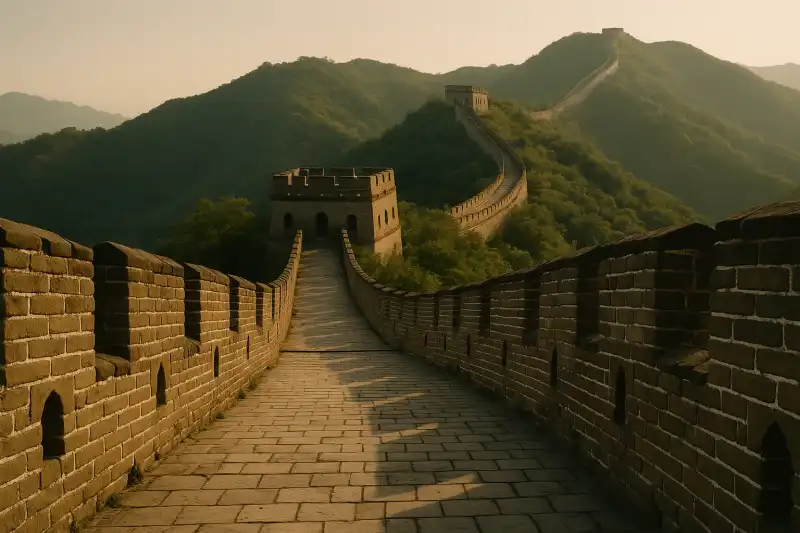
Make this the day you leave the city. The Great Wall at Mutianyu sits northeast of Beijing and works well for a first Wall visit because the restored masonry, watchtowers, and mountain setting are easy to understand without needing a specialist itinerary. It is still a long outing, so start early.
The Wall here belongs mainly to the Ming frontier system, when defenses north of Beijing were rebuilt and strengthened against steppe threats. The point was not one continuous magic barrier. It was a system of walls, passes, towers, garrisons, signals, and terrain. Mutianyu makes that clearer than a flat diagram ever could because the Wall climbs and drops with the ridges.
Most travelers should use a guided day trip, private driver, or shuttle. A Mutianyu Great Wall day tour from Beijing is useful here because it solves transport and ticket timing in one move. Cable car options help if you want the views without spending all your energy on the approach.
Do not add the Ming Tombs unless you are comfortable with a very long day. The combination is possible, but it changes the mood from a good Wall visit into a checklist. If the weather is clear, give Mutianyu time. Walk between towers, look at the angles, and notice how defense here depends on mountains as much as brick.
Day 4: High-speed train to Xi’an and the city wall
Travel from Beijing to Xi’an by high-speed train. Book a morning or late-morning departure if you want a usable afternoon. Beijing West and Xi’an North are both large stations, so leave more time than you think you need for security, platforms, luggage, and getting across the station concourse.
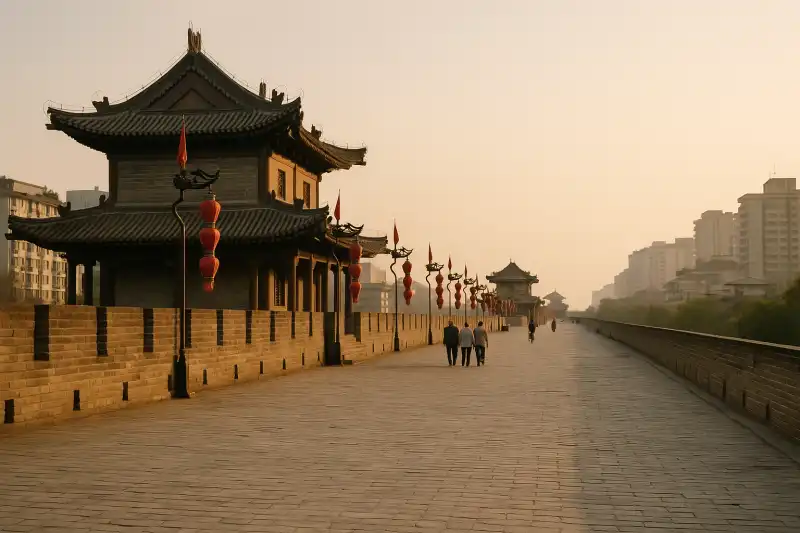
Once in Xi’an, keep the ancient-sites plan simple: check in, eat something, then go to the Xi’an City Wall. The wall you see today is mainly Ming dynasty, built over and around the older urban footprint of Chang’an, one of China’s great ancient capitals. It is not the Qin or Tang city in pure form, but it gives you the right scale. Xi’an’s past is urban, fortified, planned, and layered.
Walking a section is enough for many travelers. Cycling the top of the wall can be fun, but only if weather and energy cooperate. The full circuit is about 13.7 km, which sounds manageable until you remember you already had a train day. Do not turn this into an endurance test unless that is what you came for.
This day is a hinge. Beijing showed imperial ritual and Ming-Qing court power. Xi’an shifts the story toward earlier capitals, Qin unification, tomb landscapes, and the long memory of Chang’an.
Day 5: Terracotta Warriors and the Qin imperial landscape
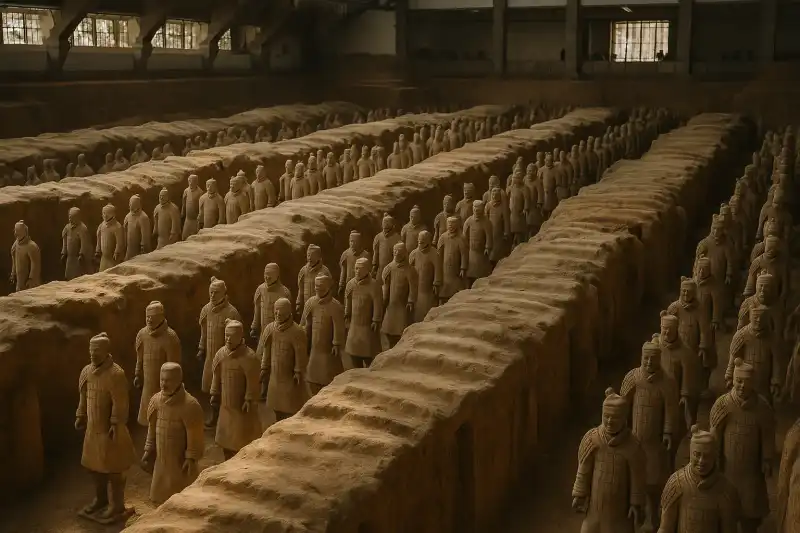
Spend your final day on the Terracotta Warriors and the Mausoleum of the First Qin Emperor area near Lintong. Go early if you can. The pits are popular for good reason, and crowding changes how much detail you can absorb.
Pit 1 gives the grand view: rows of infantry, horses, and officers arranged in an underground army. But the quieter details matter. Faces differ. Hairstyles and armor show rank. Many figures were originally painted, though much of the pigment has been lost after excavation. The army was not made as a simple display. It was part of a vast funerary project for Qin Shi Huang, the ruler who unified China in 221 BCE and tried to carry ordered power into the afterlife.
A Terracotta Warriors day tour from Xi’an can be worth it if you want transport and context handled together. Independent travel is possible by bus or taxi, but the site is busy, and a good guide helps connect the pits with the larger mausoleum landscape rather than treating the warriors as a stand-alone spectacle.
Do not plan a hard evening departure unless you have no choice. The museum, transfers, crowds, and walking make this a bigger day than it looks. If you have extra time in Xi’an, use the evening gently: food near the old city, a short walk, or nothing at all. The Qin emperor already asked plenty of everyone.
The historical thread: capitals, walls, and emperors who built in stone
This route works because Beijing and Xi’an show two different faces of Chinese imperial power. Beijing gives you the ritual order of the late imperial state: palace axes, sacrificial altars, garden retreats, and frontier defenses rebuilt under the Ming. Xi’an pulls you earlier, toward Qin unification and the older capital landscapes around Chang’an.
The sites also share a habit of making authority physical. The Forbidden City controls access through gates and courtyards. The Temple of Heaven turns rulership into ritual geometry. The Great Wall uses mountains, towers, and masonry to shape a frontier. The Terracotta Warriors bury military order underground, as if the first emperor expected bureaucracy and command to continue after death.
That is the thread to watch across the five days. These places are not only impressive structures. They are arguments about how power should move, where it should be seen, and how long it might last.
Transportation notes
Use the high-speed train between Beijing and Xi’an unless your wider trip makes flying easier. The train is usually simpler because it avoids airport transfers and lands you within reach of Xi’an by metro or taxi. Book seats ahead during holidays and busy travel periods.
Within Beijing, the metro is useful for the Forbidden City, Temple of Heaven, and Summer Palace, though taxis can save energy between large sites. For Mutianyu, use a driver, shuttle, or tour. Self-driving around Beijing is not worth the paperwork and stress for most visitors.
Within Xi’an, taxis, metro, and buses cover the basics. The Terracotta Warriors sit outside the city, so plan that day as a proper excursion. If you hire a driver, confirm whether they wait for you and whether the mausoleum area is included.
Do not compress this route into four days unless you cut something meaningful. The usual cut is the Summer Palace or the Great Wall, but either one changes the balance. Five days is already lean.
Optional add-ons and swaps
If you want more Ming imperial history near Beijing, add the Ming Tombs after the Great Wall only if you have an extra day. Do not squeeze it into Day 3 unless you are comfortable with a long, guided outing. If you add the Ming Tombs, remove the Summer Palace or add a sixth day.
If you prefer the most famous Wall section and easier conventional infrastructure, swap Mutianyu for Badaling Great Wall. Badaling is historically important and very accessible, but it can be crowded. This swap does not require adding time.
From Xi’an, Qianling Mausoleum is a strong add-on for Tang dynasty history, especially if you are interested in Empress Wu Zetian. Add it as a sixth day and keep the Terracotta Warriors separate.
For a mountain and temple day, consider Mount Huashan Ancient Temples. It is dramatic and historically rich, but it is not a casual add-on. Add a full day and do not combine it with the Terracotta Warriors.
Shorter and longer itinerary options
For a shorter trip, use a 3-day Beijing ancient sites itinerary and save Xi’an for another visit. A strong compact version would focus on the Forbidden City, Temple of Heaven, Summer Palace, and one Great Wall section.
For a longer route, the 7-day ancient China itinerary can add Luoyang and the Longmen Grottoes if the train timing works. That shifts the story toward Buddhist cave carving and another ancient capital region.
For a deeper cross-country version, the 10-day ancient China capitals and Silk Road itinerary can continue toward Dunhuang, Jiayuguan, and Silk Road cave temples. That is a different trip, not just this one with more stops.
Related ancient sites
- Great Wall at Badaling
- Ming Tombs
- Zhoukoudian Caves
- Qianling Mausoleum
- Mount Huashan Ancient Temples
- Longmen Grottoes
- Yinxu Ruins
- Pingyao Ancient City
FAQ
The most common planning questions for this Beijing and Xi’an route are answered below.