Quick route summary
This 7-day route starts in Beijing and ends in Luoyang, with bases in Beijing, Xi’an, and Luoyang. It is a country route, but it is not trying to cover all of ancient China. That would be a mistake in one week.
The route links imperial Beijing with the Forbidden City, Temple of Heaven, Summer Palace, the Mutianyu Great Wall, Xi’an’s Qin and Ming landscapes, the Terracotta Warriors, the Longmen Grottoes, and the Yinxu Ruins near Anyang.
The pace is full, with two high-speed train transfers and one ambitious final day. It works if you like early starts and do not mind using drivers or guided tours where the sites sit outside the city center. It does not work if you want a soft, cafe-heavy week with long hotel mornings.
Who this itinerary is for
This itinerary is for travelers who want a compact first route through several of China’s ancient capitals and sacred landscapes. It suits people who are comfortable booking trains, handling timed entries, and mixing independent city days with guided or driver-supported site days.
It is not ideal for travelers who want one base, minimal transfers, or a Great Wall visit plus nothing else. It also skips major ancient regions on purpose: the Silk Road caves around Dunhuang, the Buddhist cliffs of Shanxi and Gansu, Sichuan’s Bronze Age sites, and the old walled city of Pingyao. Seven days is enough for Beijing, Xi’an, Luoyang, and one Anyang reach. It is not enough for a greatest-hits map of China.
Route at a glance
- Day 1: Overnight in Beijing. Visit the Forbidden City with timed entry and a slow walk through the imperial axis.
- Day 2: Overnight in Beijing. Pair the Temple of Heaven with the Summer Palace by metro and taxi.
- Day 3: Overnight in Beijing. Use a driver or tour for Mutianyu Great Wall and the Ming Tombs.
- Day 4: Overnight in Xi’an. Take a morning high-speed train from Beijing, then walk or cycle the Xi’an City Wall.
- Day 5: Overnight in Xi’an. Visit the Terracotta Warriors and the First Emperor’s burial landscape east of the city.
- Day 6: Overnight in Luoyang. Take the train from Xi’an to Luoyang and spend the afternoon at Longmen Grottoes.
- Day 7: Overnight in Luoyang. Make an early day trip toward Anyang for Yinxu, or swap it for a slower Luoyang finish.
Practical logistics before you go
Beijing, Xi’an, and Luoyang are the right bases for this route. Do not try to sleep near every individual site. The Great Wall, Ming Tombs, Terracotta Warriors, Longmen, and Yinxu are better handled as day trips or half-day trips from larger transport hubs.
High-speed rail is the backbone. Beijing to Xi’an is long but comfortable by train if you book a morning departure. Xi’an to Luoyang is much shorter and makes Day 6 realistic. Yinxu is the awkward reach. Check current train schedules to Anyang before locking in Day 7, and be ready to cut it if connections turn the day into pure transport.
Guided tours make the most sense on Day 3 and Day 5. The Wall and Ming Tombs sit outside Beijing, and the Terracotta Warriors are east of Xi’an. A guide is not required, but a good one saves time and helps the day read as history instead of a sequence of parking lots.
Tickets and IDs matter in China more than many first-time visitors expect. Book major timed entries ahead where required, carry your passport, and leave buffers around train stations. This itinerary has enough moving parts already. Do not make it tighter by planning late departures, same-night long transfers, or two major museums after a full site day.
Day 1: Forbidden City and imperial Beijing
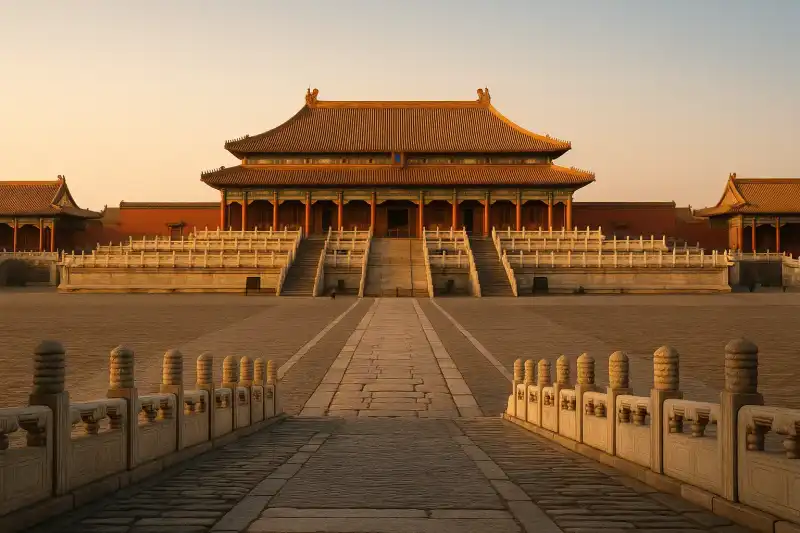
Start at the Forbidden City and keep the rest of the day simple. This is not just because the palace is large. It is because the site makes more sense when you follow the north-south axis slowly, from ceremonial power to more private court spaces.
The Ming emperor Yongle moved the capital to Beijing in the early 15th century, and the palace plan still speaks that language: gates, courtyards, halls, thresholds, and repeated reminders that access was controlled. The Hall of Supreme Harmony was not built for casual grandeur. It was where imperial ritual turned politics into choreography.
Book timed entry ahead and bring your passport. Arrive early, but do not sprint. The central halls draw the thickest crowds, while the side courtyards and palace museums often give you more room to think. The palace can be physically tiring because it is all stone, scale, and one-way movement.
Use the metro or a taxi back to your hotel, then stop. If you add anything else, make it a short walk near Jingshan or a quiet dinner. The first day should teach you Beijing’s imperial geometry, not exhaust you before the route has started.
Day 2: Temple of Heaven and Summer Palace
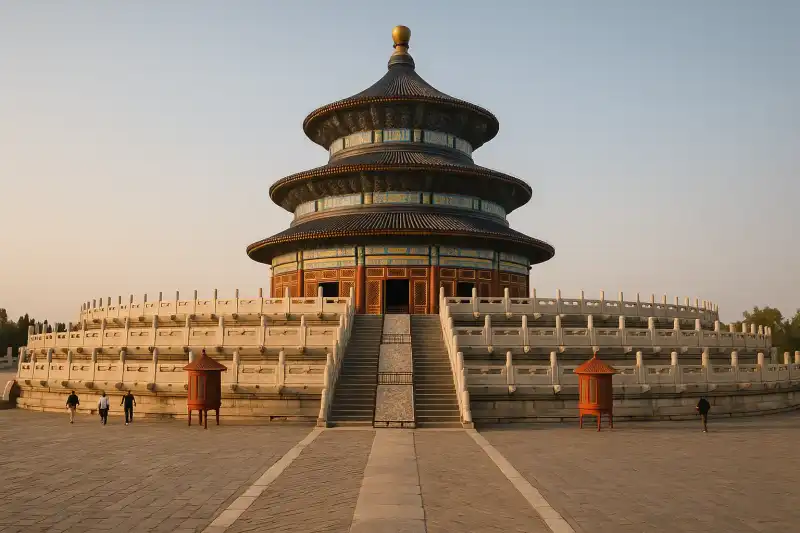
Begin at the Temple of Heaven, ideally in the morning when the surrounding park is active. The site was where Ming and Qing emperors performed rites for good harvests, and its layout is more cosmological than residential. Round heaven, square earth, measured movement, careful approach: the architecture is doing theology in timber and stone.
Give special time to the Hall of Prayer for Good Harvests and the Circular Mound Altar. The famous blue-roofed hall was built without nails, which sounds like a tourist fact until you stand below it and remember that ritual architecture also had to perform engineering.
In the afternoon, cross the city to the Summer Palace. This is a different kind of imperial power: garden, lake, painted corridor, hill, and controlled leisure. Kunming Lake may look natural at first glance, but the Qing court shaped it as part of an imperial landscape with views, movement, and symbolism built into the route.
Do not underestimate the transfer between the two sites. They are both in Beijing, but they do not sit next door to each other. Use the metro for part of the journey and a taxi if you are tired. If the weather is hot, cut the Summer Palace visit down to Longevity Hill, the Long Corridor, and the lakefront rather than pretending you can absorb every pavilion.
Day 3: Mutianyu Great Wall and the Ming Tombs
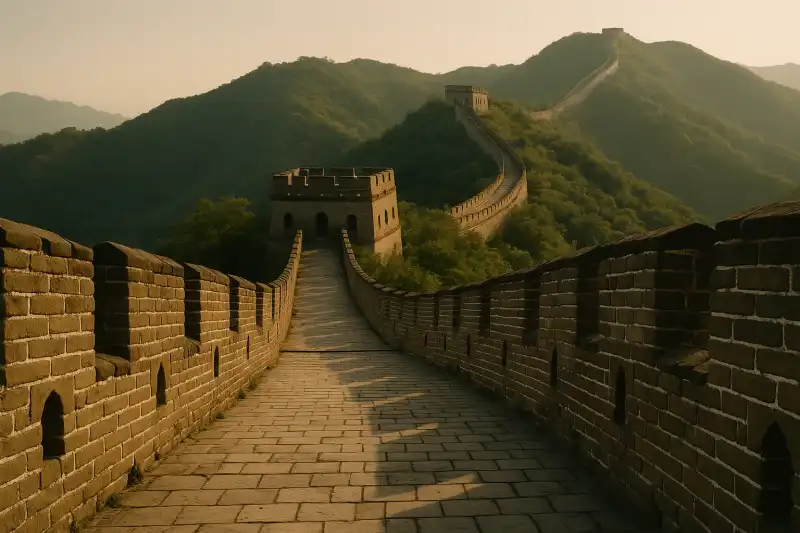
This is the day to leave central Beijing early. The Mutianyu Great Wall is a strong choice because the restored watchtowers and mountain ridges give you the Wall without quite the same pressure as the most crowded sections. It is still popular, so early arrival matters.
The Wall here is mostly Ming in its surviving form. That matters because the Ming frontier was not a single line of stone. It was a military system of walls, towers, passes, garrisons, signal points, and terrain. Walk a stretch rather than only taking the cable car up for photos. The rhythm of tower to tower is the point.
In the afternoon, pair the Wall with the Ming Tombs if you have a driver or guided tour. The tomb valley held thirteen Ming imperial mausoleums, and the Spirit Way gives a quieter counterpoint to the exposed Wall. Stone animals, officials, and guardians line a ceremonial approach that turns burial into statecraft.
A Mutianyu Great Wall and Ming Tombs day tour is useful here because public transport makes the combination slower than it looks. If you want a lighter day, visit only Mutianyu and return to Beijing. Do not force both sites if weather, crowds, or jet lag are already winning.
Day 4: High-speed train to Xi’an and the city wall
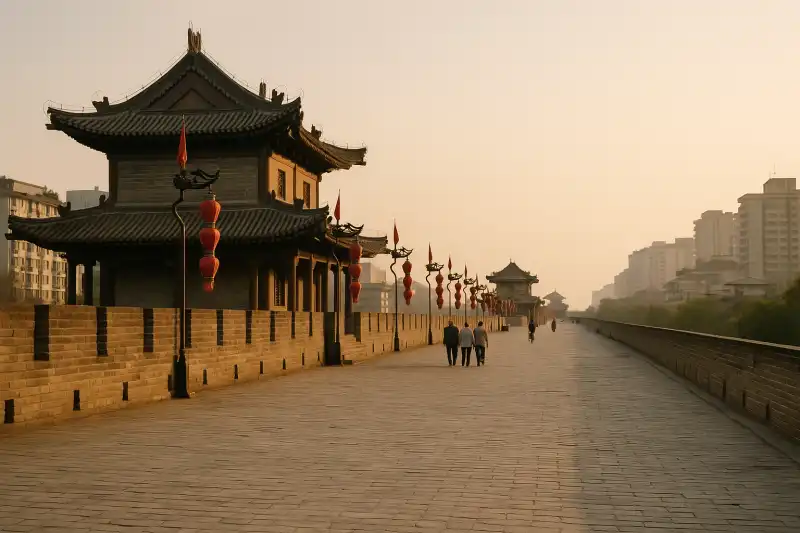
Take a morning high-speed train from Beijing to Xi’an. Book seats ahead, arrive at the station early, and treat the transfer as the main logistics event of the day. The train is comfortable, but station navigation and baggage still take energy.
Once in Xi’an, make the Xi’an City Wall your afternoon site. The wall is Ming dynasty in its present form, built over older capital layers. That layering is the reason Xi’an belongs in this itinerary. The city was Chang’an for several dynasties, including the Han and Tang, and it sat at the eastern end of Silk Road networks that carried goods, people, religions, and styles across Asia.
Walking a section is enough, but cycling the wall can be a good way to understand its scale if you are not too tired from the train. The full circuit is about 13.7 kilometers, which sounds easy until wind, sun, and stone paving join the conversation.
Keep the evening open in Xi’an. The next day goes east to the Qin imperial burial zone, and it deserves a fresh start. This is not the night to schedule a late show, a banquet, and a sunrise departure.
Day 5: Terracotta Warriors and the First Emperor
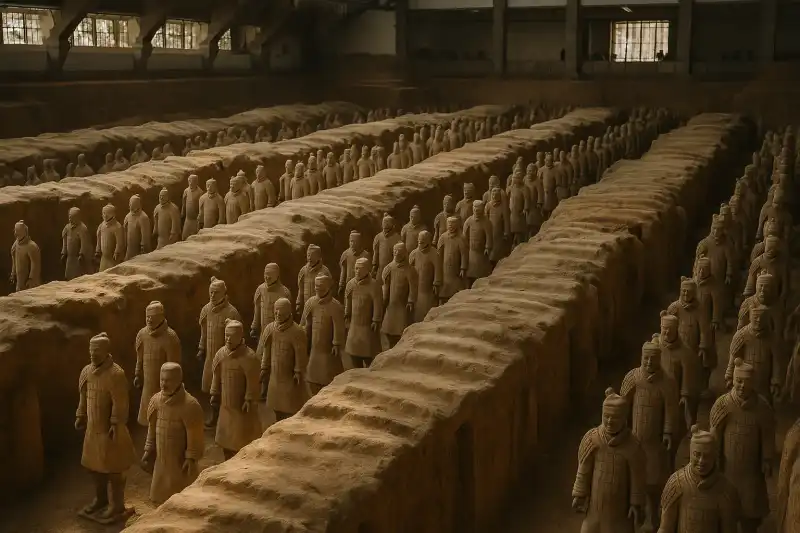
Visit the Terracotta Warriors early, before the main crowd swell if possible. Pit 1 is the famous view, but do not treat it as the whole story. The army was part of a much larger funerary project for Qin Shi Huang, the ruler who unified China in 221 BCE and then tried to carry imperial order into the afterlife.
The individual faces and hairstyles are easy to love, but the more interesting detail is the system behind them: mass production, modular bodies, individualized finishing, weapons, ranks, and formation. The army feels human at first glance, then bureaucratic, then unsettling.
Pair the warriors with the Mausoleum of the First Qin Emperor as a landscape, not just as a museum stop. The central tomb mound remains unexcavated, and ancient texts describe a subterranean world with palaces, rivers, and guarded cosmic order. Treat those accounts carefully, but they show the scale of ambition attached to the burial complex.
A Terracotta Warriors and Xi’an day tour can help if you want transport and context handled together. Independent travel is possible, but the day is smoother with a driver or organized transfer. Return to Xi’an for the night and resist adding another major site unless you are unusually energetic.
Day 6: Luoyang and the Longmen Grottoes
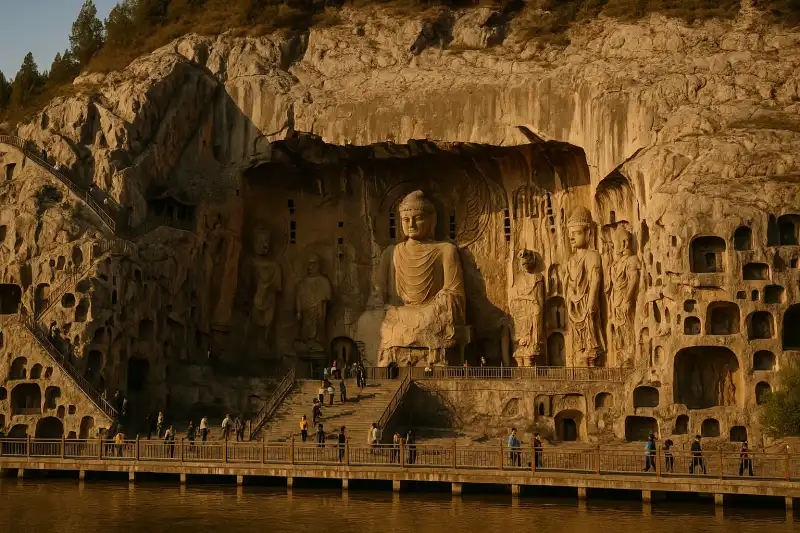
Take the high-speed train from Xi’an to Luoyang. This transfer is much easier than Beijing to Xi’an, which is why Longmen fits well on Day 6. Drop bags at your hotel or station storage if practical, then continue to the Longmen Grottoes.
Longmen is one of the great Buddhist cave landscapes of China, with carvings spread along limestone cliffs beside the Yi River. Work began under the Northern Wei and continued through later dynasties, especially the Tang. The result is not one monument, but a cliffside archive of devotion, patronage, style, and political confidence.
Spend enough time to see the way small niches and grand carvings talk to each other. The massive Vairocana Buddha at Fengxian Temple is the showstopper, but the smaller figures often make the site feel more intimate. Donors, monks, rulers, and workshops all left traces here.
Logistically, this is a half-day to full-afternoon site depending on heat and your pace. Wear comfortable shoes, expect stairs and uneven surfaces, and do not plan a tight onward connection. Longmen rewards slow looking, especially late in the day when the cliffs soften in the light.
Day 7: Yinxu Ruins day trip from Luoyang
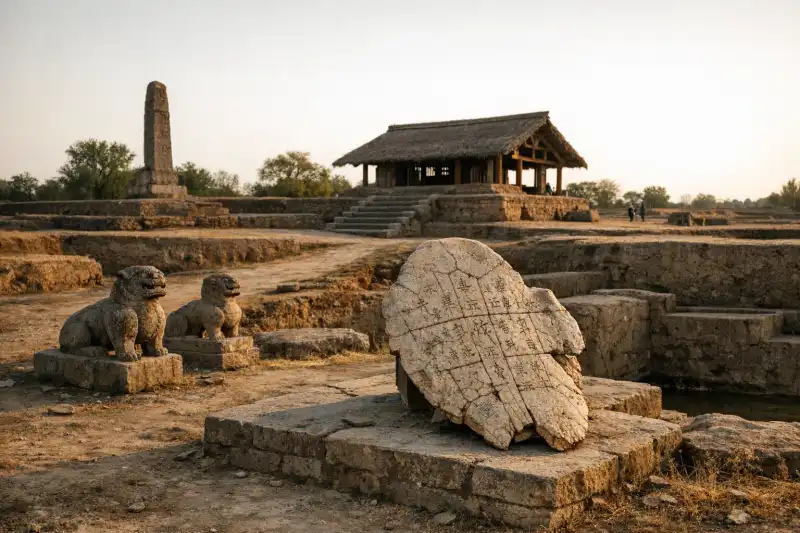
Day 7 is the stretch day. The Yinxu Ruins near Anyang are historically worth the effort, but they are not as logistically neat as the rest of the route. Check train times before you commit. If the connections are poor, skip Yinxu and give Luoyang a slower final day.
Yinxu was the last capital of the Shang dynasty, active in the late second millennium BCE. Its most famous finds are oracle bones, animal bones and turtle plastrons inscribed with divination records. They are among the earliest known forms of Chinese writing, and they make the site feel startlingly direct. Kings asked about harvests, warfare, childbirth, weather, and ancestors. The bureaucracy of anxiety is very old.
The site also connects nicely with the rest of the week. Beijing and Xi’an show later imperial systems with walls, palaces, ritual space, and tombs. Longmen shows Buddhist patronage carved into cliffs. Yinxu pulls the story back to Bronze Age kingship, sacrifice, writing, and ancestral power.
This is a day for an early train, a taxi or local transfer, and patience. If that sounds like too much after six full days, make the swap without guilt. A tighter itinerary is not automatically a better one.
The historical thread: capitals, frontiers, tombs, and carved belief
This route works because it keeps returning to the same question: how did power make itself visible?
In Beijing, power appears as axis, ritual, palace space, and controlled movement. At the Great Wall and Ming Tombs, it becomes frontier defense and imperial burial ceremony. In Xi’an, the story shifts to unification, military order, and the First Emperor’s attempt to organize death as thoroughly as life. At Longmen, rulers and donors carved Buddhist devotion into cliffs at a scale that made piety public. At Yinxu, the route reaches back to Shang kings asking ancestors and spirits for answers in written form.
The week is not a straight timeline. China’s ancient history is too broad for that. It is better read as a set of overlapping habits: build on axes, guard frontiers, bury rulers with care, write questions down, and use art to make belief durable.
Transportation notes
Use high-speed trains between Beijing, Xi’an, and Luoyang. They are usually the most practical way to connect these bases without losing whole days to airports. Book ahead, especially around holidays, and leave more station time than you think you need.
Within Beijing and Xi’an, metro, taxis, and rideshares can handle many movements. For the Great Wall plus Ming Tombs, use a driver or guided tour. For the Terracotta Warriors, a driver, taxi, or tour keeps the day clean. Longmen is easy from Luoyang by taxi or local transfer.
Do not self-drive this itinerary unless you already have experience driving in China and a clear reason to do it. Trains and local transfers are better for most travelers. The main compression warning is Day 7. Yinxu is rewarding, but if train times are awkward, it can turn into a logistics exercise. Cut it before you cut Longmen.
Overnight bases save the route. Stay three nights in Beijing, two in Xi’an, and two in Luoyang. Moving hotels more often would make the itinerary feel efficient on paper and irritating in real life.
Optional add-ons and swaps
If you want the most famous Great Wall access and do not mind bigger crowds, swap Mutianyu for Badaling Great Wall. Remove the Ming Tombs from Day 3 if you choose this and want a simpler day.
If you want more ancient human prehistory near Beijing, add Zhoukoudian Caves as a swap for the Summer Palace or Ming Tombs. It changes the route’s focus from imperial history to paleoanthropology, so it is best for travelers who specifically care about Peking Man and deep human time.
From Xi’an, Qianling Mausoleum is a strong Tang dynasty add-on. Remove the city wall afternoon or add an extra day. The Spirit Way and the joint tomb of Emperor Gaozong and Wu Zetian bring a very different kind of imperial memory into the route.
For a mountain and temple day, Mount Huashan Ancient Temples can replace Day 7 or become an extra day from Xi’an. Be honest about your legs. Huashan is not a casual add-on after several hard site days.
Shorter and longer itinerary options
For a shorter 3-day Beijing version, focus on the Forbidden City, Temple of Heaven, Summer Palace, and one Great Wall section. That route would stay entirely in Beijing and avoid the train transfers.
For a 5-day Beijing and Xi’an version, keep Days 1 through 5 and cut Luoyang and Yinxu. It is a cleaner first trip if your schedule is tight.
For a longer 10-day ancient China route, continue west toward Silk Road and Buddhist cave sites such as Mogao Caves, Jiayuguan Fort, Dunhuang Yulin Caves, and Maijishan Grottoes. That becomes a different trip, with flights or longer rail legs and a much stronger desert rhythm.
Related ancient sites
- Forbidden City
- Temple of Heaven
- Summer Palace
- Mutianyu Great Wall
- Badaling Great Wall
- Ming Tombs
- Xi’an City Wall
- Terracotta Warriors
- Mausoleum of the First Qin Emperor
- Qianling Mausoleum
- Mount Huashan Ancient Temples
- Longmen Grottoes
- Yinxu Ruins
- Zhoukoudian Caves
FAQ
The most common planning questions for this route are answered below.