Quick route summary
This 3-day route uses Hanga Roa as a single base and focuses on the Easter Island Moai across Rapa Nui’s main archaeological landscapes. You start gently with nearby coastal platforms around Hanga Roa, then spend the strongest day on the island’s eastern circuit, where Rano Raraku and Ahu Tongariki explain each other better than either site does alone. The final day adds Rano Kau, Orongo, Anakena, and selected coastal stops.
The pace is active but realistic. Rapa Nui is small on a map, yet the island rewards unhurried time at each ahu, quarry slope, and volcanic rim. Do not try to turn three days into a race around every named site. The better trip is slower, stranger, and more thoughtful.
Who this itinerary is for
This itinerary is for travelers who came to Rapa Nui for archaeology, landscape, and the moai rather than a beach-only island break. It works best if you are comfortable with early starts, guided site visits, short walks on uneven ground, and a little logistical friction.
It is not ideal if you want to improvise every day without bookings, avoid guided access rules, or spend most of the trip relaxing at one beach. You can build a softer Rapa Nui visit, but this route is written for people who want the statues, platforms, quarry, and ceremonial landscapes to make historical sense.
Route at a glance
- Day 1: Overnight in Hanga Roa. Settle in, sort park and guide logistics, then visit nearby coastal ahu around Tahai and Hanga Roa.
- Day 2: Overnight in Hanga Roa. Use a guide, rental car, or organized tour for Rano Raraku, Ahu Tongariki, and the eastern moai route.
- Day 3: Overnight in Hanga Roa. Visit Rano Kau and Orongo, then loop toward Anakena and selected north coast or inland stops if time and access allow.
Practical logistics before you go
Hanga Roa is the base. It has the airport, lodging, restaurants, rental agencies, guides, groceries, and fuel. Do not split bases on a 3-day trip.
Rapa Nui National Park access rules matter. Many archaeological areas require a valid park ticket and, under current systems, entry with an accredited local guide. Check the latest rules before arrival, then book at least one guided archaeological day rather than assuming you can simply drive up to every site.
A rental car gives flexibility, but a guide solves two problems at once: access and interpretation. That matters here because the moai are not just isolated statues. They belong to ahu platforms, clan territories, quarry routes, ancestor veneration, and later periods of social stress and ceremonial change.
Weather and fatigue also deserve respect. The island is exposed, windy, and sunny. Bring water, sun protection, and shoes that can handle volcanic ground. Avoid stacking sunrise at Ahu Tongariki, a full eastern circuit, and a late evening activity unless you know you handle long days well.
A guided tour is especially useful on the main archaeology day. A Rapa Nui moai and archaeological sites tour can make sense if it includes Rano Raraku, Ahu Tongariki, and enough time outside the vehicle.
Day 1: Hanga Roa, Tahai, and the first moai context
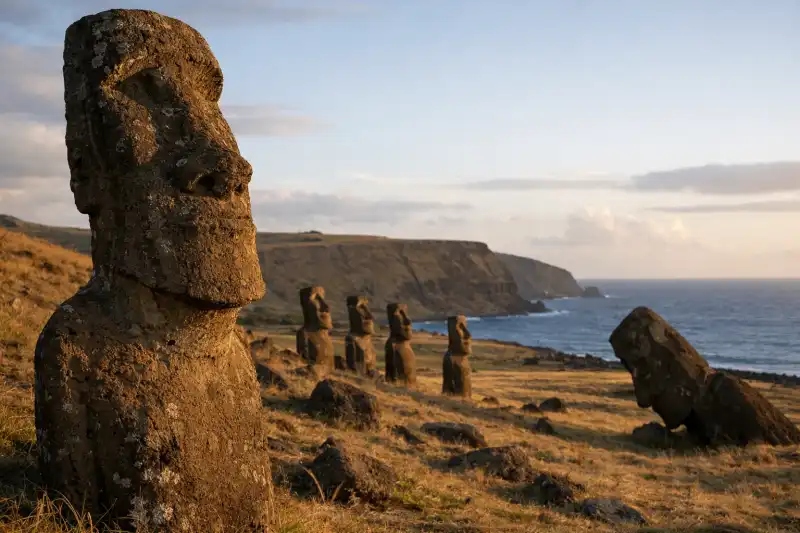
Start in Hanga Roa and keep the first day practical. Use the arrival window to confirm your park ticket, guide arrangements, rental car timing, and any site access rules. Rapa Nui is not a place where you want to discover a permit problem at the gate to the quarry.
For a gentle first encounter with the Easter Island Moai, head to the coastal ahu near town, especially the Tahai area if access and conditions fit your schedule. This is the right first stop because it introduces the basic grammar of the island: stone figures, raised ceremonial platforms, sea-facing landscapes, and the village life of modern Hanga Roa just behind you.
The moai are often described as mysterious, but do not let that word do all the work. They were carved representations of ancestors, set on ahu platforms that were tied to communities and authority. Most faced inland toward the living, not out to sea. That one detail changes the mood of the whole island. The statues were not just watching the horizon. They were facing people.
Keep this day short if you arrived by flight. Walk, take a taxi, or use a local transfer rather than beginning with a rushed island circuit. If sunset is clear, the Tahai coastline can be lovely, but do not make the photo the whole point. The better value today is getting your bearings before the heavier archaeology day.
Day 2: Rano Raraku and Ahu Tongariki
This is the main day of the route and the one most worth doing with a guide. Leave Hanga Roa early for the eastern side of the island, where the quarry at Rano Raraku and the great platform at Ahu Tongariki turn the Easter Island Moai from a symbol into a process.
Rano Raraku is the island’s great moai quarry, cut into the slopes of a volcanic crater. Many statues remain there in different stages of completion, transport, or abandonment. Some are buried up to their shoulders by accumulated soil, which is why old photos can make them look like heads alone. They are not. The bodies continue below the surface, and the quarry preserves a workshop frozen in a very odd kind of mid-sentence.
Give Rano Raraku more time than the map suggests. Look for differences in size, carving stage, and posture. The site helps explain how ambitious the carving tradition became, especially in later periods when statues grew larger and harder to move. The logistics of making them are part of the history, not a side question.
Continue to Ahu Tongariki, the largest restored ahu on the island. Its line of moai is now one of the most photographed views on Rapa Nui, but the restoration story matters too. A 1960 tsunami scattered the platform’s statues inland, and the ahu was later re-erected through a major restoration effort. What you see is ancient sacred architecture, modern conservation, and community memory sharing the same horizon.
Do not overload the day with every possible side stop. If your guide includes other places, choose a few that deepen the eastern circuit rather than turning the route into a checklist. Anakena can fit today for some travelers, but if you want a cleaner pace, save it for Day 3.
Day 3: Orongo, Rano Kau, Anakena, and the island circuit
Use the final day to widen the story beyond the moai without losing the island’s archaeological thread. Start with Rano Kau, the large volcanic crater near Hanga Roa, then continue to Orongo if access rules and guide arrangements allow. The setting alone explains why this was not just another stop: crater, sea cliffs, islets, wind, and ceremonial architecture all crowd together.
Orongo is associated with the Birdman ceremony, a later Rapa Nui religious and political tradition centered on competition, status, and the offshore islet of Motu Nui. This part of the island’s history is useful because it prevents the common mistake of treating Rapa Nui as if everything began and ended with moai carving. The culture changed. Power shifted. Ritual forms changed with it.
After the southwest circuit, turn north if time allows. Anakena is often treated as the island’s beach day, but it also has archaeological weight, with restored moai and traditions connected to early settlement narratives. It is a good place to slow down after the more exposed crater and quarry sites.
If you still have energy, add selected coastal or inland stops based on your guide’s advice and current access rules. If not, return to Hanga Roa and finish well. Three days on Rapa Nui can feel deceptively full because every stop asks you to hold landscape, ancestry, collapse narratives, restoration, and modern island life together. Leave space for that.
The historical thread: ancestors, platforms, and a small island with large ambitions
The moai make the strongest first impression, but the route is really about relationships: statues and platforms, quarries and roads, ancestors and descendants, local communities and shared sacred landscapes. Rano Raraku shows production. Ahu Tongariki shows display and restoration. Tahai and Anakena show how ceremonial platforms sit within lived coastal places. Orongo shows that Rapa Nui ritual life kept changing after the main moai period.
The island also deserves more care than the old collapse story usually gives it. Rapa Nui history includes environmental pressure, resource use, social competition, European contact, disease, enslavement raids, missionary activity, Chilean annexation, and modern cultural renewal. No three-day itinerary can unpack all of that. It can, however, keep the moai from becoming stone props in a simplified morality tale.
Transportation notes
Base in Hanga Roa for all three nights. The island is compact, but site access, road conditions, weather, and guide requirements shape the day more than distance.
For Day 1, walking and taxis can be enough if you stay near town. For Days 2 and 3, use a rental car with a guide, an accredited guide’s vehicle, or an organized tour. Do not rely on public transport for the archaeological circuit.
Self-driving can work for confident travelers, but it does not replace site interpretation or access compliance. If you rent a car, confirm insurance, fuel availability, and where you are allowed to drive. Some roads are rough, and after rain you should be more conservative.
Do not compress the island into one monster circuit unless your only goal is coverage. Rapa Nui is better with fewer stops and more attention. Overnighting anywhere outside Hanga Roa is unnecessary for this route.
Optional add-ons and swaps
If you have more time, add a cave-focused half day with a local guide. Caves on Rapa Nui can connect geology, shelter, gardens, and periods of conflict, but access varies and some places are sensitive. Remove a beach-heavy afternoon rather than cutting Rano Raraku or Orongo.
If you want more walking, add a longer coastal hike where permitted and guided. This is best for travelers who care about landscape context and do not mind wind, sun, and uneven footing. Remove some minor roadside stops to keep the day from becoming too scattered.
If you need a lighter version, keep Day 2 intact and simplify Day 3. Rano Raraku and Ahu Tongariki are the hardest pieces to replace. Anakena is the easiest cut if weather, fatigue, or access rules tighten your plan.
Shorter and longer itinerary options
For a shorter trip, make it a two-day route: one guided day for Rano Raraku and Ahu Tongariki, then one mixed day for Tahai, Rano Kau, Orongo, and Hanga Roa. It works, but it is tight.
For a longer trip, stretch this into four or five days by adding a dedicated cave or hiking day, a slower Anakena and north coast day, and more time with local museums or cultural interpretation in Hanga Roa. There are no related Ancient Travel route pages for Rapa Nui yet, so use this 3-day plan as the compact version.
Related ancient sites
FAQ
The most common planning questions for this route are answered below.