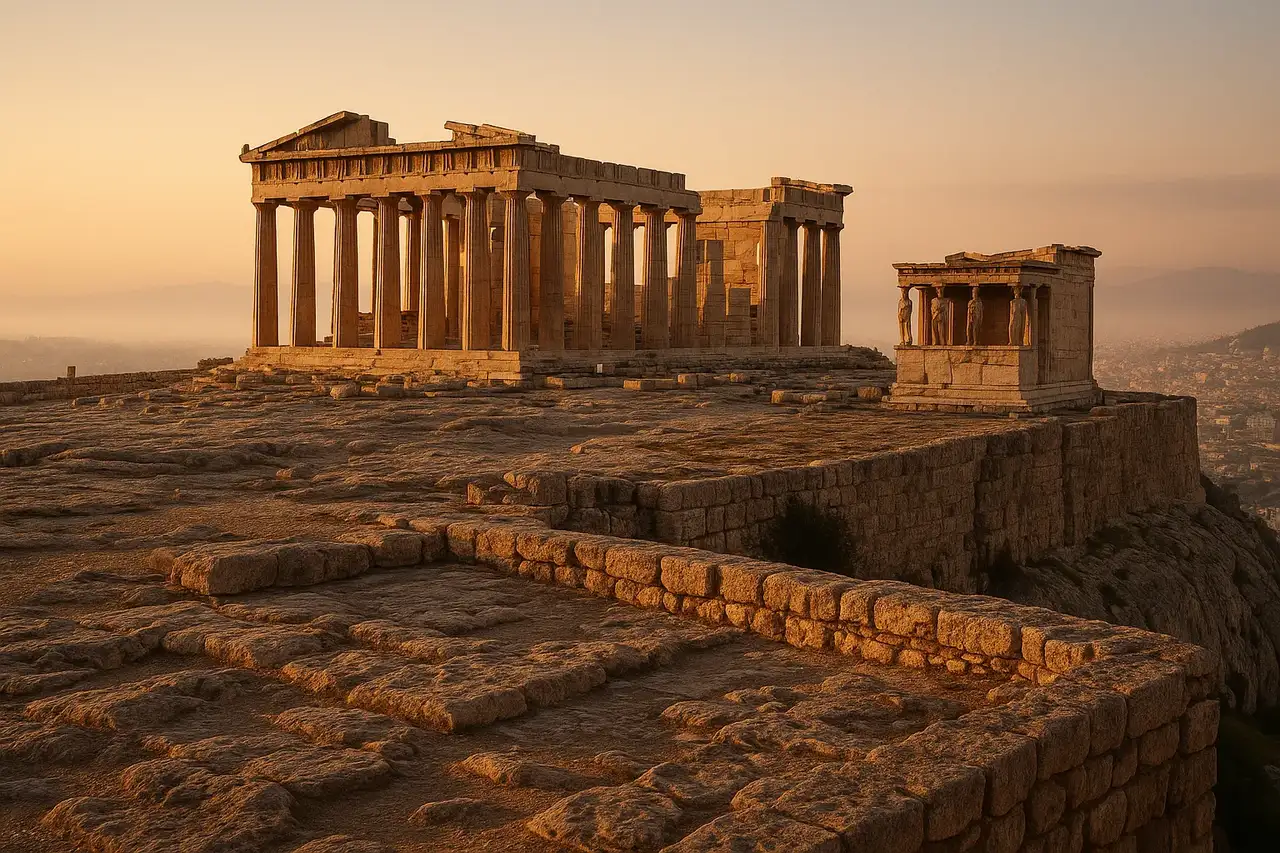
Quick Info
Curated Experiences
Acropolis and Parthenon Guided Walking Tour
Acropolis of Athens and Acropolis Museum Tour
Athens: Acropolis, Parthenon and Acropolis Museum Guided Tour
Standing atop the sacred rock of Athens, the Acropolis rises above the modern city like a crown of marble and memory. For nearly 2,500 years, this limestone plateau has borne witness to the heights of human achievement—and the Acropolis remains the definitive symbol of ancient Greece’s golden age.
Whether you’re a first-time visitor tracing the footsteps of Pericles or a returning traveler seeking deeper connection with classical antiquity, this comprehensive guide will help you navigate the Acropolis with confidence. From securing the best tickets to finding the perfect photo angle of the Parthenon, we’ve compiled everything you need for an unforgettable visit to Athens’ most treasured landmark.
The Pinnacle of Ancient Greece
The word “Acropolis” simply means “high city” in Greek, but this particular elevated plateau has come to embody something far greater: the birth of democracy, the flowering of classical art and architecture, and the enduring legacy of Western civilization.
The structures you see today were largely built during the 5th century BCE under the leadership of Pericles, following the Persian destruction of earlier temples. This ambitious building program—the Parthenon, the Erechtheion, the Propylaea, and the Temple of Athena Nike—transformed the Acropolis into a religious and civic center unlike any other in the ancient world.
Walking these marble paths, you’re treading on stones that have witnessed millennia of history. Philosophers debated here. Democracy was practiced in the shadow of these temples. The concepts of citizenship, philosophy, and artistic excellence that define Western thought were forged within view of these very monuments.
For modern travelers, the Acropolis offers something rare: the chance to stand where history was genuinely made. The Parthenon may be weathered, and the Erechtheion’s caryatids may be replicas (the originals safely housed in the museum below), but the power of this place remains undimmed.
Essential Planning: Tickets, Timing, and Entrances
The €30 Combo Ticket: Your Key to Seven Ancient Sites
If you’re planning to explore Athens beyond just the Acropolis—and you absolutely should—the combination ticket is essential. For €30, you gain entry not only to the Acropolis but to six additional archaeological sites across the city:
- The Acropolis and its slopes (your main destination)
- The Ancient Agora (Athens’ commercial and political heart)
- The Roman Agora (the marketplace of imperial Athens)
- Hadrian’s Library (an elegant ruin near Monastiraki)
- Olympieio (the colossal Temple of Olympian Zeus)
- Kerameikos (the ancient cemetery and city walls)
- Aristotle’s Lyceum (where the philosopher taught)
The ticket is valid for five consecutive days from first use, giving you flexibility to spread your ancient Athens exploration across your trip. Even if you only visit the Acropolis and Ancient Agora—our top two recommendations—you’ll save money with the combo ticket.
Purchase online in advance through the official Greek Ministry of Culture website. During peak season (June-August), tickets can sell out for popular time slots, so booking at least a week ahead is wise.
Best Time: Sunrise or Late Afternoon
Athens’ summer heat is legendary, and the Acropolis offers minimal shade. For the most comfortable and visually spectacular experience, plan your visit for either:
Early Morning (8:00-9:30 AM): The site opens at 8:00 AM year-round, and the first hour offers cooler temperatures, softer light for photography, and significantly fewer crowds. The morning golden hour bathes the Parthenon in warm honey-colored light that photographers dream of.
Late Afternoon (5:00 PM to closing): Closing times vary seasonally (7:30 PM in summer, 5:00 PM in winter), but the final two hours before closing provide the magical “blue hour” potential. The white marble structures glow against the deepening Athenian sky, and the crowds thin considerably.
Avoid midday visits between 11:00 AM and 3:00 PM, especially from June through September. Temperatures regularly exceed 35°C (95°F), and the sun reflecting off white marble creates an intense, exhausting environment.
Which Entrance? North vs. West Gate Strategy
The Acropolis has two main entrances, and choosing the right one can save you significant time and energy.
The West Entrance (Main Gate): This is the grand approach, following the path ancient processions took up to the Propylaea. If you’ve purchased the combination ticket or any skip-the-line ticket, this is your entrance. The dramatic reveal of the Propylaea and Parthenon as you crest the final stairs is worth experiencing at least once.
The North Entrance (Dionysiou Areopagitou): Located near the Acropolis Museum, this entrance typically has shorter lines and is ideal if you haven’t purchased tickets in advance. However, it offers a less dramatic approach—you enter near the top of the site rather than ascending through the Propylaea.
Strategy Tip: First-time visitors should use the West Entrance for the full theatrical approach. Return visitors or those with limited mobility may prefer the North Entrance for quicker access.
The Crown Jewels: Must-See Monuments
Parthenon: Glory of Pericles’ Athens
Dominating the Acropolis summit, the Parthenon is the definitive temple of classical Greece. Dedicated to Athena Parthenos (Athena the Virgin), this Doric masterpiece was completed in 438 BCE after nine years of construction.
The temple’s perfect proportions—the width is precisely half the length, and the column count is mathematically harmonious—create an impression of calm, rational beauty. What appears to be rigid geometry actually contains subtle curves: the platform rises slightly in the center, and the columns swell at mid-height to correct optical illusions that would make straight lines appear concave.
Today, the Parthenon is undergoing extensive restoration. Scaffolding may obstruct some views, but don’t let this diminish your experience. The ongoing work preserves the temple for future generations, and even partially restored, the Parthenon’s power remains undimmed.
Stand at the southeast corner at sunset for the classic photograph—the temple silhouetted against the Athenian sky, the modern city sprawling below.
Erechtheion: Caryatids and Sacred Olive Tree
The Erechtheion is the Acropolis’ most architecturally complex building, designed to accommodate multiple sacred sites on uneven terrain. Dedicated to both Athena and Poseidon, it marks the legendary location of their contest for patronage of Athens.
The temple’s south porch features the famous Caryatids—six draped female figures serving as architectural columns. These are replicas; five originals reside in the Acropolis Museum (the sixth is in the British Museum). Even as copies, they embody the graceful elegance that defines classical Greek sculpture.
According to myth, the Sacred Olive Tree nearby sprang from the earth when Athena struck her spear into the rock, providing the Athenians with the olive that became their economic foundation—and winning her the city over Poseidon’s salt spring.
Propylaea: The Grand Gateway
The Propylaea was the monumental gateway to the Acropolis, and though never fully completed due to the outbreak of the Peloponnesian War, it remains one of the most sophisticated classical buildings ever constructed.
The central passage is flanked by smaller chambers: one housed a pinacotheca (picture gallery), one of the world’s first public art museums. The design employs Doric columns on the exterior and lighter Ionic columns within, demonstrating the Greek mastery of proportional systems and spatial experience.
Pause here before entering the sanctuary proper. The Propylaea was designed to create anticipation—to frame the first glimpse of the Parthenon through its central doorway. Architects still study this masterful manipulation of perspective and expectation.
Temple of Athena Nike: Victory’s Tiny Marvel
Perched on a bastion overlooking the entrance, the Temple of Athena Nike is small but exquisite. The temple celebrates Athena as the bringer of victory, and the parapet that once surrounded it featured sculpted reliefs of Nike adjusting her sandal—among the finest surviving works of classical Greek art.
The temple’s position offers stunning views across Athens and, like everything on the Acropolis, was perfectly oriented to catch the light at dawn. It represents the complete flowering of the Ionic order in miniature.
Views, Photos, and Pro Tips
The Acropolis offers numerous vantage points for spectacular photographs and contemplative moments:
Best Classic Parthenon Shot: The southeast corner at sunset, with the temple framed against the sky and the modern city below.
Best Panoramic View: The viewing platform near the flagpole at the west end offers 360-degree views of Athens, from the Saronic Gulf to Mount Lycabettus.
Best Detail Photography: The Caryatids on the Erechtheion and the remaining sculptural fragments on the Parthenon pediments reward close inspection.
Pro Tips for Your Visit:
- Wear sturdy shoes with good grip—the marble paths are slippery, especially if wearing smooth-soled footwear
- Bring water, especially in summer; there’s no shade and no water fountains on the summit
- Apply sunscreen liberally—the white marble reflects UV intensely
- Visit on Friday evenings in summer for extended hours and magical sunset lighting
Beyond the Acropolis Walls
Acropolis Museum (Don’t Skip)
The Acropolis Museum is not an afterthought—it’s an essential companion to your Acropolis visit. This stunning modern building houses the original sculptures that once adorned the Parthenon, the Erechtheion, and other Acropolis monuments, protected from Athens’ pollution and weather.
The top-floor Parthenon Gallery is the highlight: the marble friezes and metopes are displayed in the same orientation as they appeared on the temple, with floor-to-ceiling windows offering views of the actual Parthenon on the hill above. This dialogue between ancient temple and modern museum creates one of the most profound museum experiences in the world.
Plan 1.5 to 2 hours for the museum, ideally visiting after the Acropolis itself when you can appreciate what you’re seeing with fresh context.
Ancient Agora and Plaka Stroll
Descend from the Acropolis through the Anafiotika neighborhood, a charming maze of white-washed houses reminiscent of the Cyclades islands. This leads naturally into Plaka, Athens’ historic district of narrow streets, neoclassical architecture, and tavernas.
The Ancient Agora, located northwest of the Acropolis at the base of the hill, was Athens’ commercial and political heart. Here, Socrates debated philosophy in the Stoa, and democracy’s earliest assemblies gathered. The remarkably preserved Temple of Hephaestus—the best-preserved Greek temple in the world—awaits within.
A perfect half-day itinerary: Acropolis at 8:00 AM, museum visit, then lunch in Plaka before exploring the Agora in the cooler afternoon hours.
Standing Where History Was Made
The Acropolis is more than an archaeological site—it’s a touchstone for Western civilization, a place where the concepts of democracy, philosophy, and artistic excellence first found their most perfect expression. Walking these marble paths, surrounded by monuments that have witnessed 2,500 years of human history, you understand why this small hill has captured the world’s imagination for millennia.
Visit at dawn when the Parthenon glows golden against the awakening city. Contemplate the Caryatids’ eternal grace. Stand in the Propylaea and imagine ancient processions passing through. The Acropolis rewards those who arrive prepared, who take their time, and who remember that they’re walking on sacred ground.
Your journey to ancient Athens begins here—but it certainly doesn’t end here. The Agora awaits below, the Museum holds treasures yet unseen, and the wider world of classical Greece extends far beyond this limestone plateau. But there is no better place to begin than where democracy, philosophy, and art first achieved their classical perfection.
Welcome to the Acropolis. Welcome to the heart of ancient Greece.
Quick Facts
| Attribute | Details |
|---|---|
| Location | Athens, Attica, Greece |
| Country | Greece |
| Region | Attica |
| Civilization | Ancient Greece |
| Historical Period | c. 5th century BCE |
| Established | c. 438 BCE |
| Coordinates | 37.9715, 23.7265 |
Explore More of Ancient Greece
The Acropolis is just the beginning of your journey through classical antiquity. Discover more of Greece’s archaeological treasures:
- Delphi: The mystical oracle sanctuary on Mount Parnassus
- Mycenae: The legendary city of Agamemnon and the Lion Gate
- Knossos: Europe’s oldest palace complex on Crete
For comprehensive trip planning, see our Greece Ancient Sites Travel Guide and our 10-Day Greece Archaeological Itinerary.
Frequently Asked Questions
How long do you need at the Acropolis?
Plan 2-3 hours for the archaeological site itself, plus 1.5-2 hours for the Acropolis Museum if visiting. A thorough exploration of the Acropolis slopes and caves could extend this to a full day.
Which entrance should I use at the Acropolis?
First-timers should use the West Entrance for the dramatic approach through the Propylaea. The North Entrance is faster if you haven't purchased tickets in advance.
Are there stairs at the Acropolis? Is it steep?
Yes, the paths are slippery marble and involve significant stair climbing. The ascent from the West Entrance includes approximately 80 steps to reach the Propylaea. Good footwear is essential; the site is not recommended for those with mobility challenges.
Is the Acropolis combo ticket worth it?
Absolutely if visiting multiple ancient sites in Athens. The €30 ticket pays for itself with the Acropolis (€20) plus just one other major site like the Ancient Agora (€10).
When is the Acropolis least crowded?
Late November through February sees minimal crowds, though weather can be cool and rainy. Within a day, early morning (8:00-9:00 AM) and late afternoon (after 5:00 PM in summer) offer the most peaceful experience.
Nearby Ancient Sites
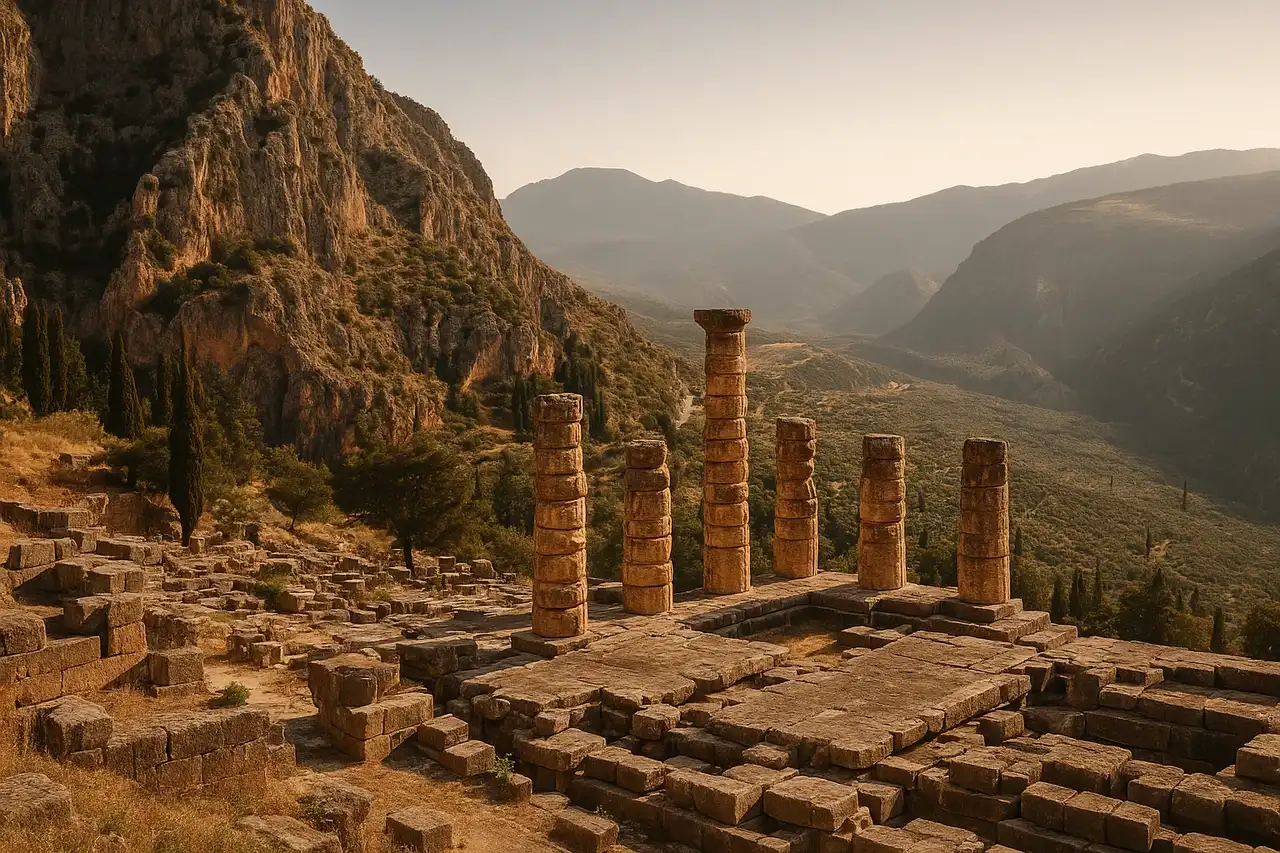
Delphi: The Navel of the Ancient World and Greece's Most
Ancient GreeceExplore Delphi, Greece's most mystical archaeological site. Walk the Sacred Way, discover the Oracle...
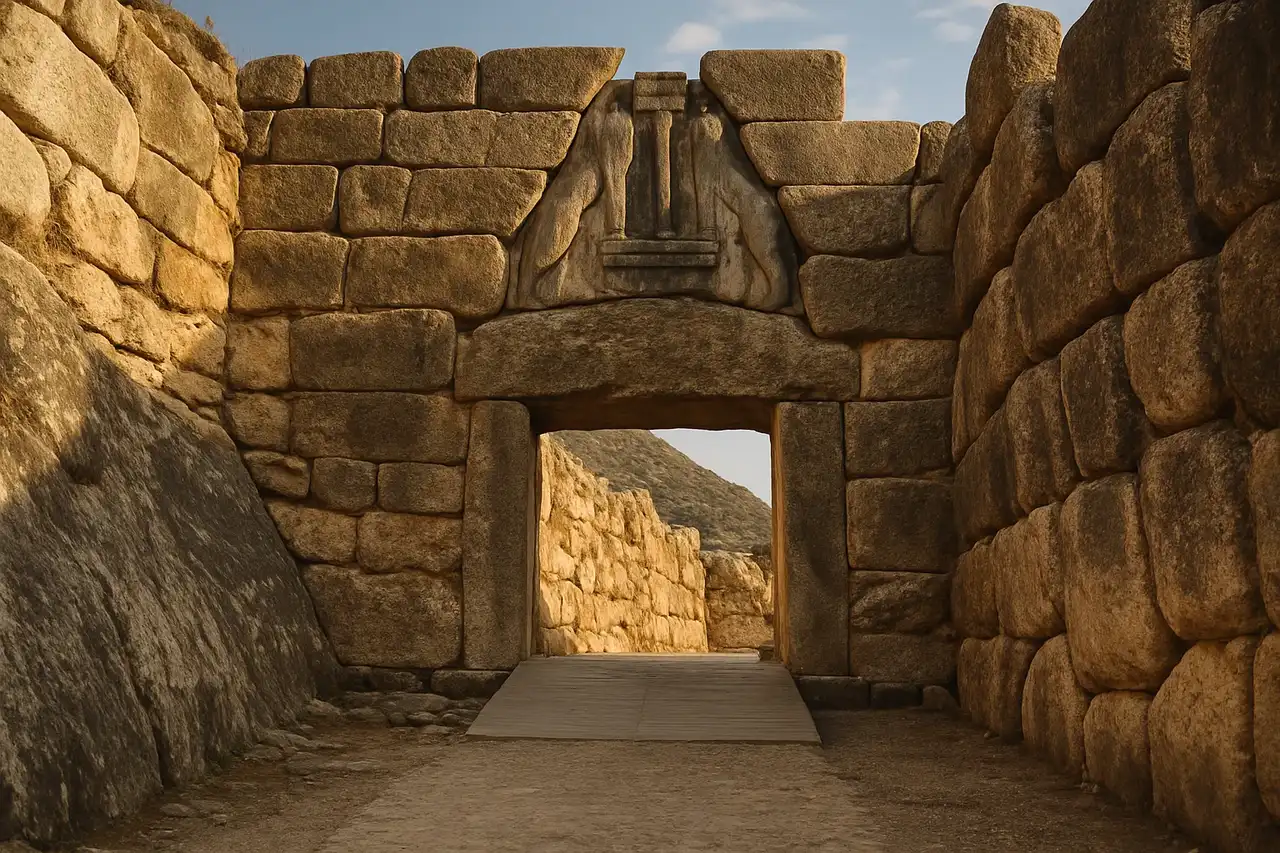
Mycenae, Greece: The Citadel of Legend and Home of Agamemnon
Mycenaean GreeceExplore Mycenae, the legendary citadel of King Agamemnon and one of Greece's most important archaeol...
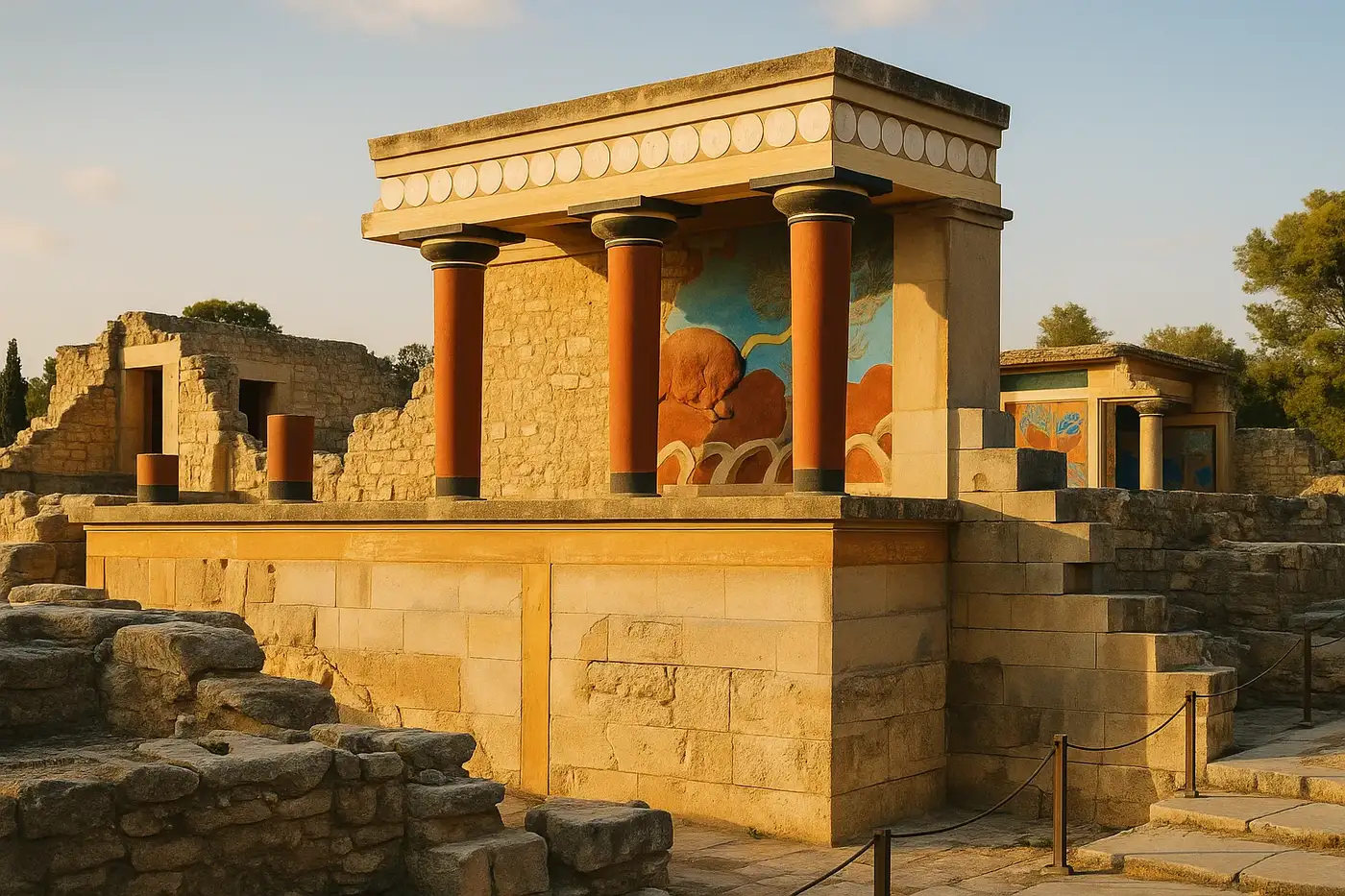
Knossos: Europe's Oldest Palace and the Birthplace of
MinoanExplore the legendary Palace of Knossos, center of Minoan civilization. Discover the Labyrinth myth,...