Quick Info
At a glance
Alesia in France is one of those rare places where landscape and memory seem inseparable. Set on the commanding height of Mont Auxois in Burgundy, the site is quiet today: fields roll away from the hill, village roofs gather below, and the wind crosses the plateau with little to interrupt it. Yet this calm belies the immense historical weight of the place. Here, in 52 BCE, one of antiquity’s most consequential confrontations unfolded when Julius Caesar besieged the Gallic stronghold associated with Vercingetorix. The result shaped the future of Gaul and, by extension, the Roman West.
For modern travelers, Alesia is compelling not because it offers a single spectacular monument, but because it preserves a layered historical landscape. It was first a fortified oppidum of the Gauls, then a Romanized town with streets, public buildings, and sanctuaries, and finally a site transformed into a symbol of resistance, conquest, and national memory. Visiting Alesia means walking through an archaeological setting that is as much about interpretation as ruins. The remains on the hill are meaningful in themselves, but they are even more powerful when read together with the surrounding terrain, where Caesar’s armies built rings of fortifications and where relief forces fought to break the siege. If you are interested in Roman warfare, Gallic culture, or the long afterlife of famous battlefields, Alesia rewards slow attention and a little imagination.
History
The Gallic Oppidum Before Caesar
Long before the Roman conquest, Mont Auxois was already a place of strategic value. The elevated plateau, with its defensible slopes and broad views over the surrounding countryside, made it a natural center for settlement. By the late Iron Age, Alesia had developed into an oppidum, a fortified town of the Gallic world that functioned not merely as a refuge, but also as a political and economic hub. The people associated with the region were the Mandubii, though Alesia’s significance appears to have extended beyond a single tribe.
Like other major oppida in Gaul, Alesia likely combined defensive walls, habitation areas, craft activity, trade, and elite presence. Archaeology suggests a settlement integrated into wider exchange networks, not an isolated hillfort. The high ground offered security, but it also signaled authority. In a world of shifting alliances among Gallic groups and increasing pressure from Rome, such centers became focal points for power and identity.
The Siege of 52 BCE
Alesia entered history indelibly during the great revolt against Rome led by Vercingetorix in 52 BCE. After setbacks elsewhere, Vercingetorix withdrew to Alesia, where the hilltop position offered defensive advantages. Caesar, however, chose not to rely on direct assault alone. Instead, he initiated one of the most remarkable siege operations of the ancient world.
Roman forces constructed an immense ring of circumvallation around the hill to contain the defenders. Anticipating a relief army from other Gallic forces, Caesar then built a second outer line, known as contravallation, facing outward. These fortified systems included ditches, ramparts, towers, traps, and controlled access points. Ancient literary sources, especially Caesar’s own Commentarii de Bello Gallico, emphasize both the scale of the engineering and the desperate intensity of the struggle.
The siege became a contest of endurance and timing. Inside Alesia, food supplies dwindled. Outside, the Gallic relief army eventually arrived and launched attacks against the Roman lines, coordinating with sorties from the besieged stronghold. For a moment, the outcome was uncertain. Yet Caesar’s disciplined troops, carefully prepared defenses, and tactical flexibility carried the day. Vercingetorix ultimately surrendered, traditionally said to have given himself up to save his followers. The fall of Alesia marked the collapse of large-scale organized resistance in Gaul and stands as one of the decisive episodes in Caesar’s rise.
Roman Alesia
After the conquest, Alesia did not vanish. Like many formerly independent centers in Gaul, it was drawn into the Roman imperial system and transformed over time into a Gallo-Roman town. This later phase is essential to understanding the site today. The famous siege is only one layer; the Romanized settlement that followed demonstrates how conquest was followed by adaptation, urbanization, and cultural blending.
Archaeological remains point to a town with formal streets, public monuments, craft areas, and religious spaces. Temples and civic buildings indicate integration into Roman urban habits, while local traditions likely persisted in language, worship, and identity. Alesia’s development reflects a broader process visible across Gaul: Roman power remade landscapes not simply through military occupation, but through infrastructure, administration, and the attraction of urban life.
The settlement prospered most during the early imperial centuries. Although it never became one of the greatest cities of Roman Gaul, it was substantial enough to leave a meaningful archaeological footprint. The remains visible now largely belong to this later period rather than to the siege itself, which is one reason a visit to Alesia can be unexpectedly nuanced.
Decline, Rediscovery, and Modern Interpretation
As with many ancient towns in western Europe, Alesia declined in late antiquity and the early medieval period. Buildings were abandoned, materials were reused, and memory of the exact ancient topography blurred. Yet the fame of Caesar’s victory ensured that Alesia was never entirely forgotten. The real question that occupied scholars for centuries was where, exactly, it had been.
That debate intensified in the modern era. During the 19th century, excavations strongly supported the identification of Alise-Sainte-Reine and Mont Auxois as the historical Alesia. This interpretation was promoted especially under Napoleon III, who had a personal interest in Caesar and sponsored archaeological work. Finds relating to Roman occupation and siege lines in the wider area strengthened the case.
Today, Alesia is presented as both an archaeological site and an interpretive landscape. The MuséoParc Alésia helps visitors understand the military events, the settlement history, and the later cultural significance of the place. This modern layer of interpretation matters because Alesia has become more than an ancient site: it is also part of France’s historical imagination, tied to ideas of Gallic identity, resistance, and the origins of the nation.
Key Features
The first feature that defines Alesia is its setting. Mont Auxois is not a dramatic mountain, but it rises decisively above the surrounding terrain, and that relationship between summit and plain is central to the site’s meaning. Standing on the hilltop, you can immediately grasp why the location mattered in antiquity. The broad views make the military logic of the oppidum visible even before you look at any ruin. Alesia is one of those destinations where topography itself is a monument.
The archaeological remains of the Gallo-Roman town form the core of the visit. Rather than one intact structure, you encounter traces of an urban fabric: foundations, street lines, and the outlines of public spaces. These fragments require a little patience, but they reward it. The site reveals how a once-defiant Gallic stronghold was absorbed into Roman civic life. You are not just seeing stones in the ground; you are seeing the imprint of historical transformation. Temples, domestic areas, and public constructions suggest a settlement that had become thoroughly engaged with the rhythms of Roman provincial society.
Particularly notable are the remains of monumental buildings and sanctuaries, which hint at the ceremonial and communal life of Roman Alesia. Even where only foundations survive, the scale is often enough to convey their importance. The site’s interpretive signage helps connect the visible remains to the ancient town plan, allowing visitors to reconstruct mentally the spaces where people worshipped, traded, walked, and governed. This is a site where imagination, guided by archaeology, becomes part of the experience.
Another essential feature is the wider siege landscape. Unlike many ancient battlefields, Alesia can still be read in relation to its terrain. The Roman lines of circumvallation and contravallation do not stand as complete walls today, but archaeological research has mapped their positions, and reconstructions at the museum help make sense of them. Understanding Alesia requires looking beyond the hilltop ruins toward the valleys and ridges around it. The battle was not confined to one point; it was a huge engineered enclosure spread across the countryside. This wider setting distinguishes Alesia from sites that preserve only an urban center.
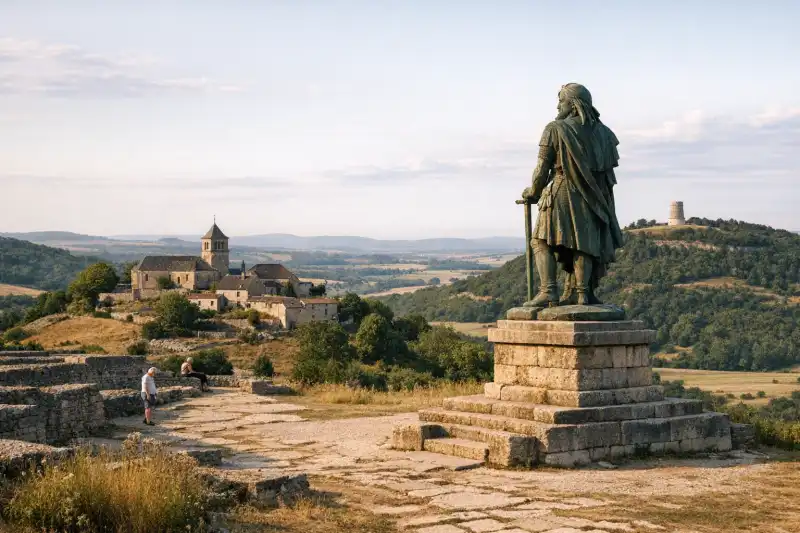
The statue of Vercingetorix near the summit adds another dimension. Although modern rather than ancient, it reflects the site’s afterlife in national memory. Created in the 19th century, it embodies the way Alesia was reimagined in France as a place of heroic resistance. Some travelers may come primarily for archaeology, but this symbolic layer is worth attention. It shows how ancient history is continually reused by later societies for their own purposes.
The MuséoParc Alésia, while separate from the ancient ruins themselves, is also one of the destination’s defining features. Architecturally modern and interpretively ambitious, it bridges the gap between sparse remains and dramatic historical narrative. Exhibitions, models, reconstructions, and multimedia displays explain Caesar’s siege techniques, Gallic society, and the evolution of the site after conquest. For many visitors, the museum is what turns Alesia from an abstract historical name into a coherent place. It is especially helpful if you arrive without a deep prior knowledge of the Gallic Wars.
Finally, Alesia’s atmosphere deserves mention. Some famous ancient sites impress through sheer monumentality. Alesia works differently. Its power comes from spaciousness, silence, and context. There is room here to think. You can move from excavated remains to viewpoints, from museum interpretation to open landscape, and piece the story together for yourself. That slower, more reflective quality is one of the site’s greatest strengths.
Getting There
Alesia is most easily reached from Dijon, which is the main practical gateway for most travelers. By car, the journey from Dijon to Alise-Sainte-Reine takes about 1 hour 15 minutes, depending on traffic. Rental cars from Dijon commonly start around €40-€70 per day, and driving is the most flexible option if you want to combine Alesia with other Burgundy sites. Parking near the museum and archaeological areas is generally straightforward.
Public transport is possible but requires more planning. The nearest major rail stop for regional access is usually Les Laumes-Alésia station, served by trains on routes connecting Dijon and Paris via Burgundy. From Dijon, TER fares often range from about €10 to €20 each way depending on timing and booking conditions. From Paris, rail fares can vary widely, but advance bookings on the route toward Montbard or Les Laumes can begin around €25-€60 one way. From the station, a taxi to the site may cost roughly €15-€30 depending on distance and availability. In some seasons or local schedules, bus links may exist, but they are not always frequent enough for a carefree day trip, so check current timetables in advance.
If you prefer a guided outing, organized day tours from Dijon or broader Burgundy excursions are worth considering. These can be especially useful because Alesia is a site where interpretation adds a lot to the visit. Expect private or small-group historical tours in the region to start roughly from €120 per person and go upward depending on transport and inclusions.
When to Visit
The best time to visit Alesia is from late spring through early autumn, when the hilltop setting and surrounding landscape are easiest to appreciate. From May to September, temperatures are generally pleasant, often ranging from about 18°C to 28°C, and the longer daylight hours make it easier to combine the museum with time spent walking the archaeological grounds. Summer offers the fullest visitor services and, in many years, added programming or family-focused interpretation.
Spring is particularly rewarding if you prefer a quieter atmosphere. The countryside around Mont Auxois is green, visibility is usually good, and temperatures are comfortable for walking. April and May can bring cool mornings and occasional rain, so a light waterproof jacket is sensible. Autumn, especially September and early October, is another excellent choice. The heat softens, the site feels calm, and the golden tones of the Burgundy landscape give the hill an especially evocative character.
Winter visits are possible, and there is a certain austere power in seeing Alesia under gray skies or frost, but conditions are less predictable. Wind on the plateau can make the exposed areas feel colder than the thermometer suggests, and some services or opening hours may be reduced. If you come in the colder months, check museum schedules carefully and dress for an open, elevated site.
Whenever you visit, try to avoid rushing. Alesia is better in clear weather, when views over the siege landscape are visible. Arriving earlier in the day is also a good idea, especially in summer, when you can explore the archaeological remains before the warmest hours and then continue with the museum.
| Quick Facts | Details |
|---|---|
| Location | Alise-Sainte-Reine, Bourgogne-Franche-Comté, France |
| Ancient Significance | Site of Caesar’s siege of Alesia in 52 BCE |
| Associated Figures | Julius Caesar, Vercingetorix, the Mandubii |
| Main Historical Periods | Late Iron Age and Roman Imperial period |
| Best Gateway City | Dijon |
| Time Needed | Half day to full day |
| Top Experience | Combining the ruins with the MuséoParc Alésia |
| Landscape Type | Hilltop oppidum overlooking valleys and plains |
| Best Season | Late spring to early autumn |
| Family Friendly | Yes, especially with museum exhibits and reconstructions |
Alesia is not a destination for travelers seeking a single towering ruin or postcard-famous monument. Its appeal lies in something richer: the chance to stand in a place where military history, cultural change, archaeology, and national memory overlap. The hill of Mont Auxois still explains the logic of the ancient stronghold; the excavated remains tell of Roman urban life after conquest; the museum reveals the extraordinary scale of the siege; and the modern commemorative elements show how later generations shaped the story to fit their own identities. That combination makes Alesia unusually satisfying. It is both a battlefield and a town, both a site of defeat and a site of transformation. For anyone interested in the ancient world in France, it remains one of the most intellectually rewarding places to visit.
Guided tours: worth it?
Most travelers can visit Alesia independently. Compare a tour only if you want a tighter history-focused visit, easier logistics, or a guide who can answer questions on the spot.
Best for
- Short visits where a planned route saves time
When to go self-guided
Go independently if you prefer setting your own pace, reading as you go, and checking official hours or ticket rules directly before you arrive.
What I’d avoid
Skip paid tours that bundle unrelated stops you do not actually want. The best option should either save meaningful planning time or add historical context you would miss on your own.
Alesia and Burgundy History Tours
Useful when: you want to compare guided formats before deciding
Dijon Day Trips to Alesia
Useful when: transport or pickup logistics matter
Burgundy Roman Sites Tours
Useful when: you want to compare guided formats before deciding
Some tour links are affiliate links, which may earn Ancient Travel a small commission at no extra cost to you. I try to surface options that make practical sense for the site—not just anything bookable.
Frequently Asked Questions
What is Alesia famous for?
Alesia is best known as the site of the decisive siege of 52 BCE, where Julius Caesar defeated Vercingetorix, a turning point in the Roman conquest of Gaul.
Where is Alesia located?
Alesia is located on Mont Auxois near Alise-Sainte-Reine in the Bourgogne-Franche-Comté region of eastern France.
Can you still see ancient remains at Alesia?
Yes. Visitors can see the remains of the Gallo-Roman town, monumental public buildings, street layouts, and the broader archaeological landscape associated with the siege.
Is there a museum at Alesia?
Yes. The MuséoParc Alésia provides exhibitions, reconstructions, and interpretation that help explain both the Gallic oppidum and Caesar’s siege works.
How much time should I allow for visiting Alesia?
Most visitors should allow at least half a day to see the museum and the archaeological site, though history enthusiasts can easily spend a full day.
Is Alesia suitable for families?
Yes. The site combines open-air ruins, panoramic views, and an interpretive museum with reconstructions that can make the history accessible for children.
Nearby Ancient Sites
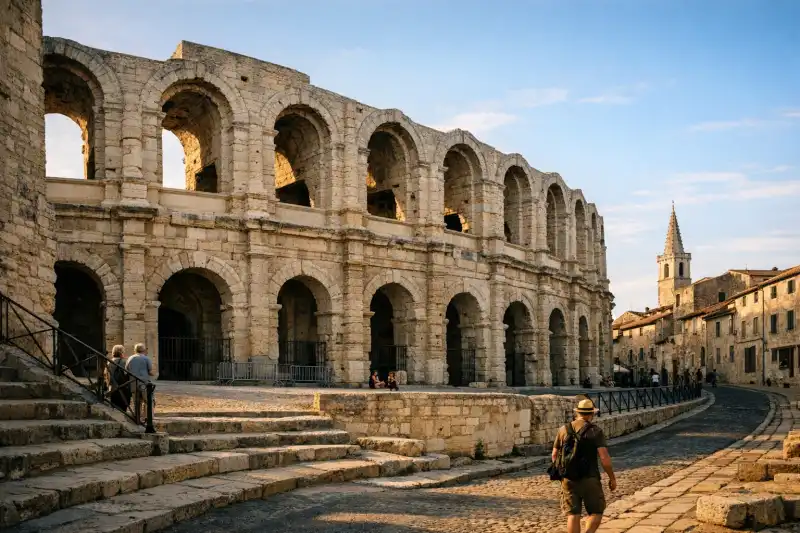
Arles Amphitheatre
The Arles Amphitheatre in France is a magnificent Roman arena renowned for its impressive architectu...
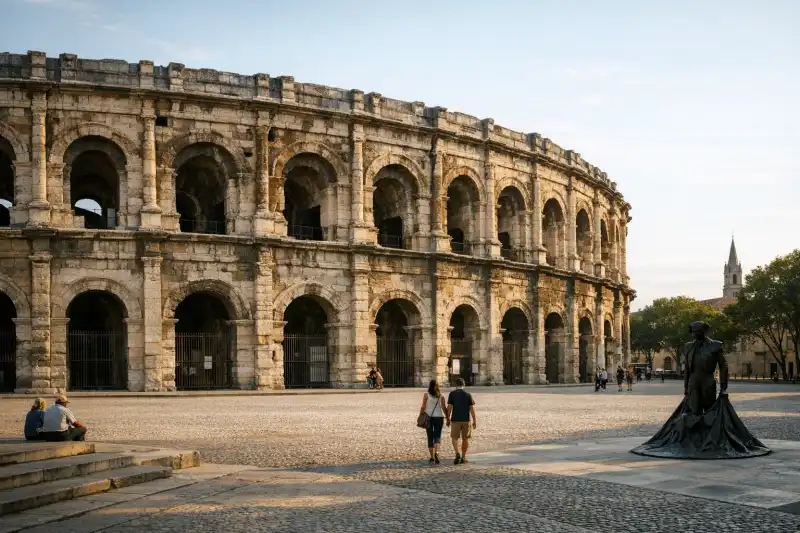
Nîmes Roman Arena
RomanExplore France’s Nîmes Roman Arena, one of the best-preserved amphitheaters in the Roman world and s...
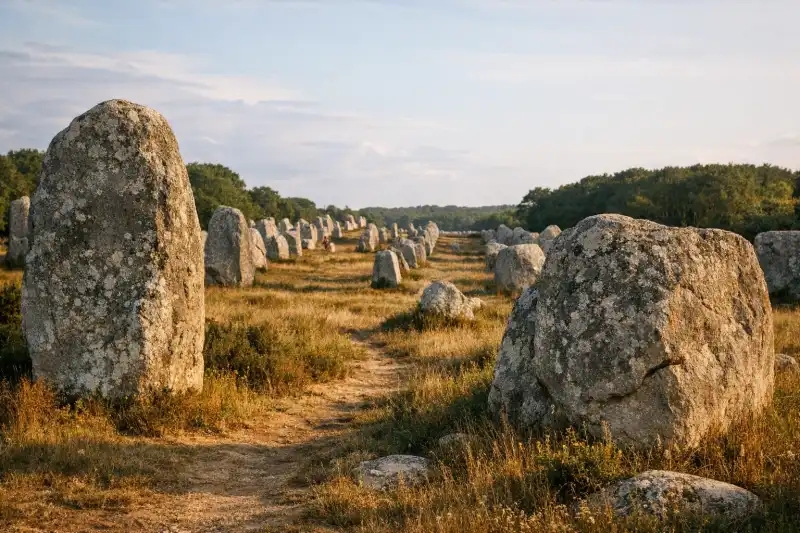
Carnac Stones
The Carnac Stones in Brittany, France, are a vast collection of Neolithic standing stones shrouded i...