Quick Info
Curated Experiences
Santorini Highlights and Akrotiri Excavations Tour
Minoan Magic: Akrotiri Guided Archaeological Tour
Santorini Private Tour: Akrotiri, Red Beach, and Villages
In the shimmering heart of the Aegean Sea, where volcanic landscapes meet sugar-white buildings and cobalt-domed churches, lies the legendary island of Santorini. Its southern tip shelters a hidden window into the ancient world: the archaeological site of Ancient Akrotiri. Revered as the “Bronze Age Pompeii,” Ancient Akrotiri in Greece offers an immersive voyage through time, drawing visitors from across the globe to unravel the secrets of a Minoan-era civilization preserved in volcanic ash. Unlike anywhere else on earth, Akrotiri is a place where millennia-old frescoes burst with color, paved streets and towering multi-story buildings whisper of sophisticated city life, and each stone echoes the ingenuity, artistry, and resilience of its former inhabitants.
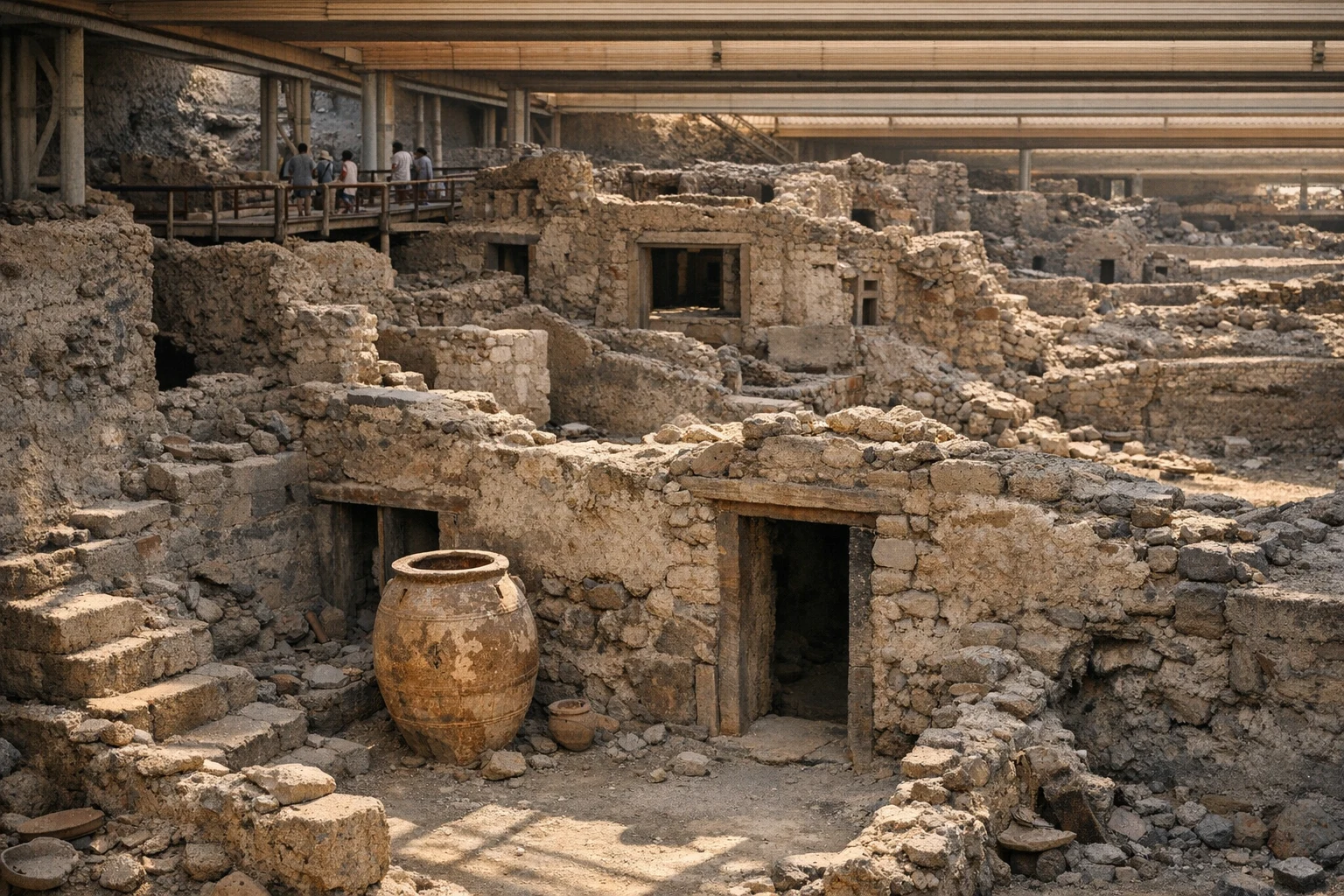
Standing within the vast, sheltered expanse of the Akrotiri excavation, you become part of a story frozen for nearly 3,700 years. In 1600 BCE, a catastrophic volcanic eruption buried this thriving port town, sealing its homes, workshops, and art beneath meters of ash. But what nature destroyed, it also protected. When excavation began in the late 1960s, archaeologists unearthed a city as advanced as any in the ancient Mediterranean—complete with a complex drainage system, elaborate murals, and evidence of bustling trade from Crete, Cyprus, Egypt, and across the ancient world. Today, a biospheric shelter covers the remains, allowing visitors to walk ancient streets and gaze upon vivid frescoes, ceramics, and architectural marvels. Ancient Akrotiri is not just a relic; it is a living testament to human creativity and the tenacious spirit of a lost civilization on the dramatic cliffs of Santorini, Greece.
History
Prehistoric Beginnings: Early Settlement and Growth
Akrotiri’s origins date to the Neolithic period (around 5000 BCE), when the first farming communities settled on what was then a much larger island, known as Stronghyle. These early settlers grew crops and raised livestock, leaving behind the rudimentary tools and pottery shards that mark the foundation of human activity on Santorini. Over the centuries, the community expanded and flourished, evolving into a prosperous Bronze Age town by around 2000 BCE.
The Minoan Influence: A Cultural Crossroads
During the early second millennium BCE, Akrotiri experienced rapid urbanization spurred by trade and interaction with the Minoan civilization of Crete, located just to the south. Artifacts reveal that Akrotiri was deeply influenced by Minoan culture, adopting their advanced technologies, writing systems (such as Linear A), and elaborate art styles. The blossoming city boasted paved streets, multi-story dwellings with indoor plumbing, and vibrant frescoes depicting the natural world, daily life, and religious ceremonies. As Akrotiri transformed into a bustling port, its warehouses filled with spices, crafted pottery, copper, and goods from Egypt, Cyprus, Syria, and Anatolia. This cosmopolitan profile made it one of the major centers in the Aegean basin and a crucial node in Bronze Age trade networks.
The Great Eruption: Destruction and Preservation
The end of Akrotiri was sudden and dramatic. Sometime between 1646 and 1500 BCE (most commonly dated to circa 1600 BCE), one of the largest volcanic eruptions in recorded history shook the island and the wider region. The explosion obliterated much of the original island, sending ash clouds as far as Asia Minor and the Nile Delta. Akrotiri itself was buried beneath a thick mantle of pumice and ash, halting all life but simultaneously creating a time capsule. Unlike Pompeii, no human remains have been found in the ruins, supporting the theory that residents had advance warning and evacuated before the disaster struck. The great eruption’s impact went well beyond Akrotiri, contributing to the eventual decline of the Minoan civilization and inspiring later legends, including the story of Atlantis.
Rediscovery and Excavation
Ancient Akrotiri remained lost for centuries, shrouded by the volcanic landscape and local lore. Sporadic finds by 19th-century explorers led to the formal excavations initiated in 1967 under the direction of Greek archaeologist Spyridon Marinatos. What he and his team uncovered astonished the world: entire buildings with preserved walls, stunningly detailed murals, storage rooms packed with artifacts, and infrastructure far ahead of its time. The site is still being explored and studied today, as new technologies shed light on Akrotiri’s inhabitants and their connections across the Mediterranean.
Key Features
Walking into the covered expanse of Ancient Akrotiri is an experience that transcends time. The modern bioclimatic shelter, designed to protect the ruins from the elements, creates an atmosphere that is at once reverent and awe-inspiring. Visitors navigate raised pathways that travel through the heart of the city, allowing close-up views of the intricate urban layout and the remarkable preservation offered by the volcanic ash.
The heart of Akrotiri is its network of multi-story buildings, some rising as high as three stories, showcasing sophisticated architectural techniques such as timber reinforcements, advanced stone masonry, and decorative facades. The city’s infrastructure is astonishingly modern for its era. Among the site’s most celebrated features is an elaborate drainage and sewage system, with clay pipes running between houses and under the streets—a testament to the Minoans’ engineering prowess and concern for public health.
What sets Akrotiri apart isn’t just its urban planning but the blossoming of art and culture. Perhaps the most breathtaking relics are the wall frescoes that once adorned the townhouses and public buildings. Paintings such as the “Spring Fresco,” with its lively swallows flitting among blooming lilies, and the “Fisherman,” striking for its vivid colors and naturalistic style, offer precious insights into Bronze Age life, beliefs, and the surrounding environment. Though many of the original frescoes are now housed in the Museum of Prehistoric Thera in Fira, careful reconstructions and reproductions give a vivid sense of their impact within the excavated buildings.
Another highlight is the abundance of pottery and household goods. Fine ceramics—both imported and locally made—reflect the wealth and connections of Akrotiri’s people, featuring decorative motifs from the broader Aegean world. Storage jars, cooking pots, weaving tools, and bronze implements dot the rooms, painting a cohesive picture of daily life. The ongoing excavations have even revealed objects like looms and millstones, further enriching our understanding.
Central squares, communal gathering spaces, and streets that were once lively with merchants and residents can still be discerned in the layout. The famed “West House” is especially notable, with its well-preserved rooms, ceremonial installations, and frescoes illustrating a seafaring procession—evidence of Akrotiri’s strong maritime tradition and perhaps religious rituals celebrating the sea’s bounty.
All of these wonders exist within easy reach, as pathways and signage allow visitors to delve into the main city core, gaze into open rooms, and marvel at construction details that endured through millennia. The layout offers a sweeping view of the ancient settlement, and at every turn, there is something unexpected: a wall mural fragment, a perfectly aligned window, a street carved by ancient footsteps.
Getting There
Reaching Ancient Akrotiri is straightforward and forms part of many visitors’ Santorini adventure. The site is located near the modern village of Akrotiri, about 12 kilometers southwest of Fira, Santorini’s main town. The journey to Akrotiri weaves through the iconic volcanic landscape, past traditional villages and vineyards, offering glimpses of the dramatic caldera and the sparkling Aegean Sea.
Public transportation is both affordable and convenient. Regular local buses (KTEL Santorini) depart frequently from the central bus station in Fira to Akrotiri village. The route takes around 20–30 minutes, with a ticket costing approximately €2.00 one way. From the village bus stop, it’s an easy 10-minute walk to the archaeological site, well-signposted and largely flat.
For those preferring flexibility, taxis are readily available across Santorini. A taxi ride from Fira to Akrotiri typically costs €20–25 and takes just under 20 minutes, depending on seasonal traffic. Private drivers and transfer companies also operate on the island, and many hotels will arrange transfers to and from the site upon request.
Rental cars, quad bikes, and scooters are popular options for independent travelers wanting to combine Akrotiri with other island sites such as Red Beach, the Akrotiri Lighthouse, or Santorini’s renowned wineries. Parking is available near the entrance to the archaeological site, usually free or with a small local fee during peak season.
Another appealing option is joining a guided tour, which provides direct transport, the expertise of professional guides, and often includes stops at additional attractions. Combination tours—for instance, pairing Akrotiri with wine tastings or a visit to Santorini’s beaches—are widely available and offer excellent value.
However you arrive, the road to Ancient Akrotiri offers panoramic island views and a prelude to the extraordinary experience that awaits within the sheltering embrace of Santorini’s most ancient city.
When to Visit
Santorini dazzles year-round, but certain seasons enhance the experience of Ancient Akrotiri. The Mediterranean climate gifts the island with long, warm summers and mild, pleasant winters, making visiting possible at almost any time.
The peak tourist season spans June through September, when Santorini buzzes with visitors, cruise ships, and lively festivities. During these months, Akrotiri’s archaeological site maintains extended opening hours—often from 8:00 AM to 8:00 PM—providing plenty of time for exploration. The modern protective roof keeps temperatures relatively cool inside, shielding guests from the midday sun, although early morning or late afternoon visits are still advised to avoid the biggest crowds and for softer natural light within the site.
Shoulder seasons in late spring (April–early June) and autumn (late September–October) often provide the most rewarding experience. The weather is comfortably warm, daylight is plentiful, and visitor numbers significantly decrease, ensuring a more tranquil and intimate visit. These are also the best periods for combining Akrotiri with the island’s vineyards, hiking trails, and the vivid beauty of Red Beach, without the crush of peak season crowds. Entrance fees remain €12 for adults (discounts for students and seniors), with shorter lines and more time to linger over the ruins.
Visiting between November and March is possible, though the site operates on reduced hours (usually 8:00 AM to 3:00 PM), and certain facilities or tours may pause during the winter. The upside: you’ll find Santorini at its quietest and most serene, with the ruins echoing a tranquil, timeless silence.
Regardless of season, dress comfortably for walking and variable temperatures, and check the official Santorini Archaeological Sites website for updated hours and any holiday closures before planning your trip.
Quick Facts
| Fact | Detail |
|---|---|
| Location | Akrotiri, Santorini, South Aegean, Greece |
| Civilization | Minoan / Cycladic |
| Period | Bronze Age (c. 2000–1600 BCE) |
| Size of Excavated Area | ~1 hectare (more remains unexcavated) |
| Famous For | Frescoes, advanced architecture, drainage system |
| Discovery | Systematic excavation began in 1967 |
| Admission Fee | €12 adults; discounts available |
| Opening Hours | 8:00–20:00 (summer), 8:00–15:00 (winter, subject to change) |
| Accessibility | Wheelchair-accessible pathways |
| Nearby Attractions | Red Beach, Akrotiri Lighthouse, Santorini wineries |
| Closest Town | Akrotiri village (~10 min walk from site) |
| Distance from Fira | 12 km (20–30 min by bus or car) |
Frequently Asked Questions
What are the opening hours for Ancient Akrotiri?
Ancient Akrotiri is typically open from 8:00 AM to 8:00 PM in the summer, and from 8:00 AM to 3:00 PM in the winter. Check ahead for updates.
Is Akrotiri accessible by public transport?
Yes, regular buses run from Fira and other parts of Santorini to Akrotiri village, a short walk from the site.
How long does it take to tour Ancient Akrotiri?
Allow 1-2 hours to explore the site comfortably, though history enthusiasts may want more time.
Is photography allowed at Akrotiri?
Non-flash photography for personal use is allowed, but tripods, drones, and commercial photography require special permission.
Are there facilities or amenities onsite?
Yes, the site has restrooms, a café/shop, shaded walkways, and information boards, plus guided tours are available.
What should I wear when visiting Akrotiri?
Wear comfortable footwear, bring a hat and sunscreen—even though the site is roofed, parts are exposed.
Can I combine a visit to Akrotiri with nearby attractions?
Definitely! Many tours combine Akrotiri with Red Beach, the Akrotiri Lighthouse, and Santorini’s wineries.
Nearby Ancient Sites
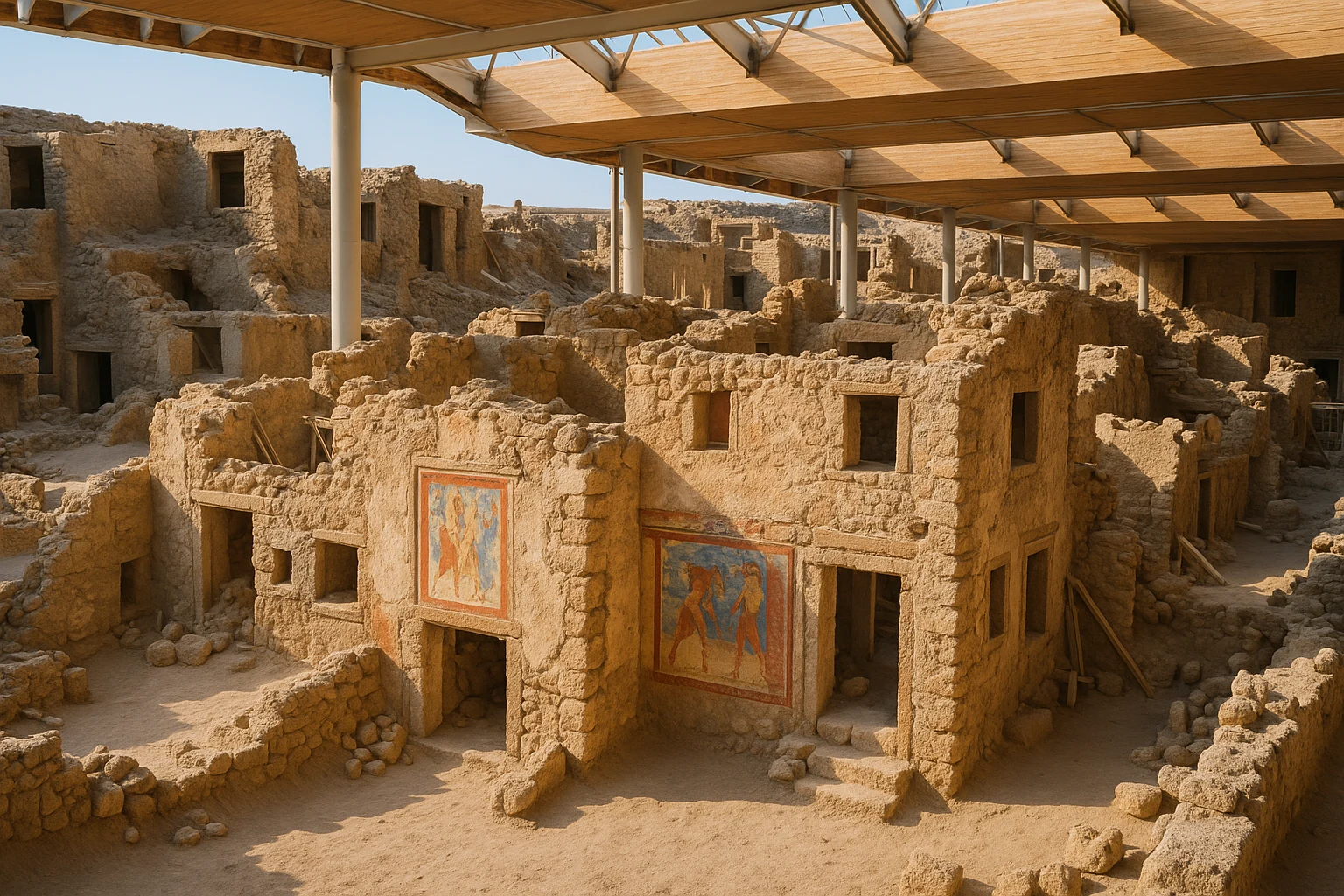
Akrotiri
Minoan / CycladicExplore Akrotiri, the Bronze Age Minoan city buried under volcanic ash on Santorini around 1613 BCE ...
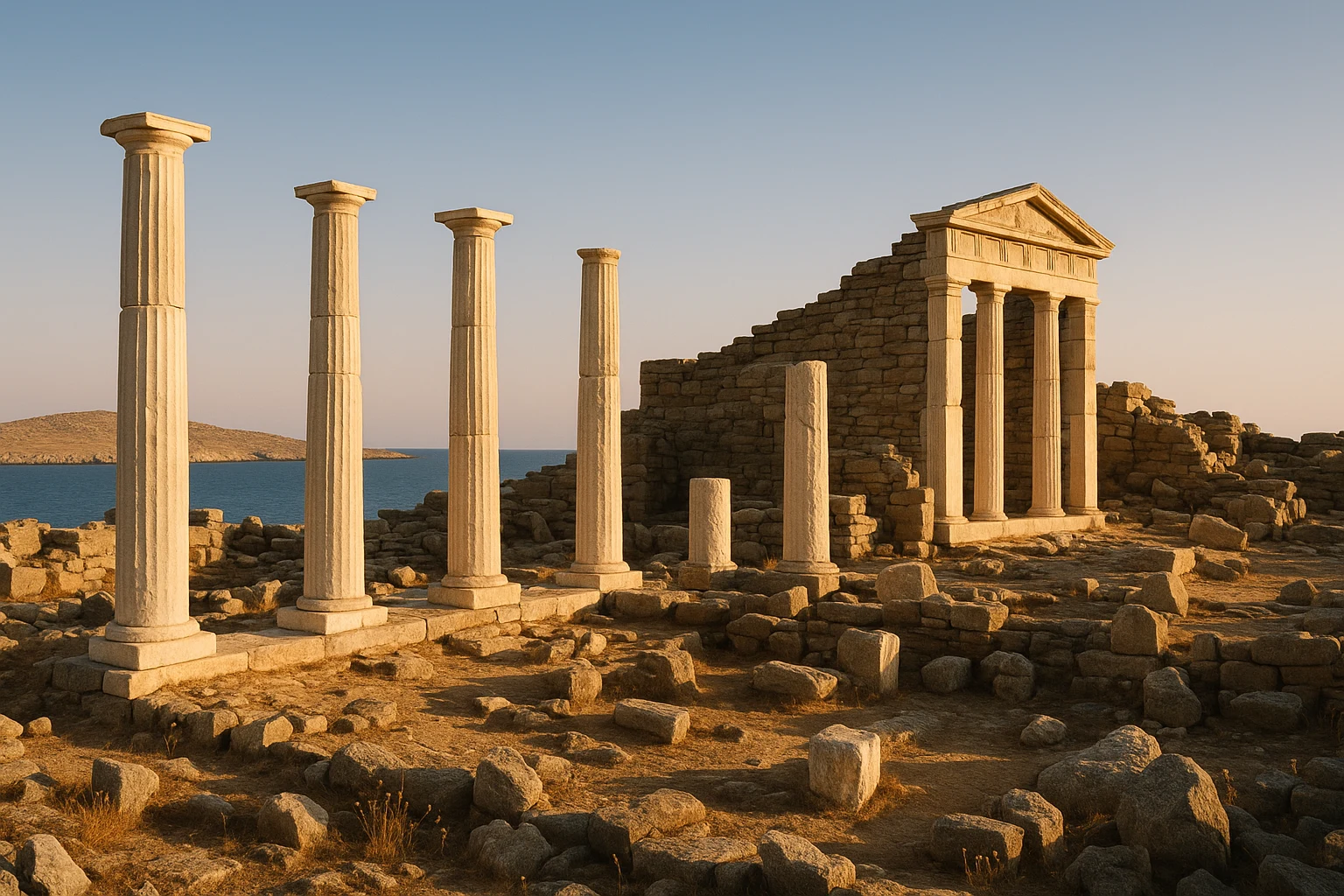
Delos: Sacred Island of Apollo at the Heart of the Aegean
Ancient GreekExplore Delos, the mythological birthplace of Apollo and Artemis, now an uninhabited open-air museum...
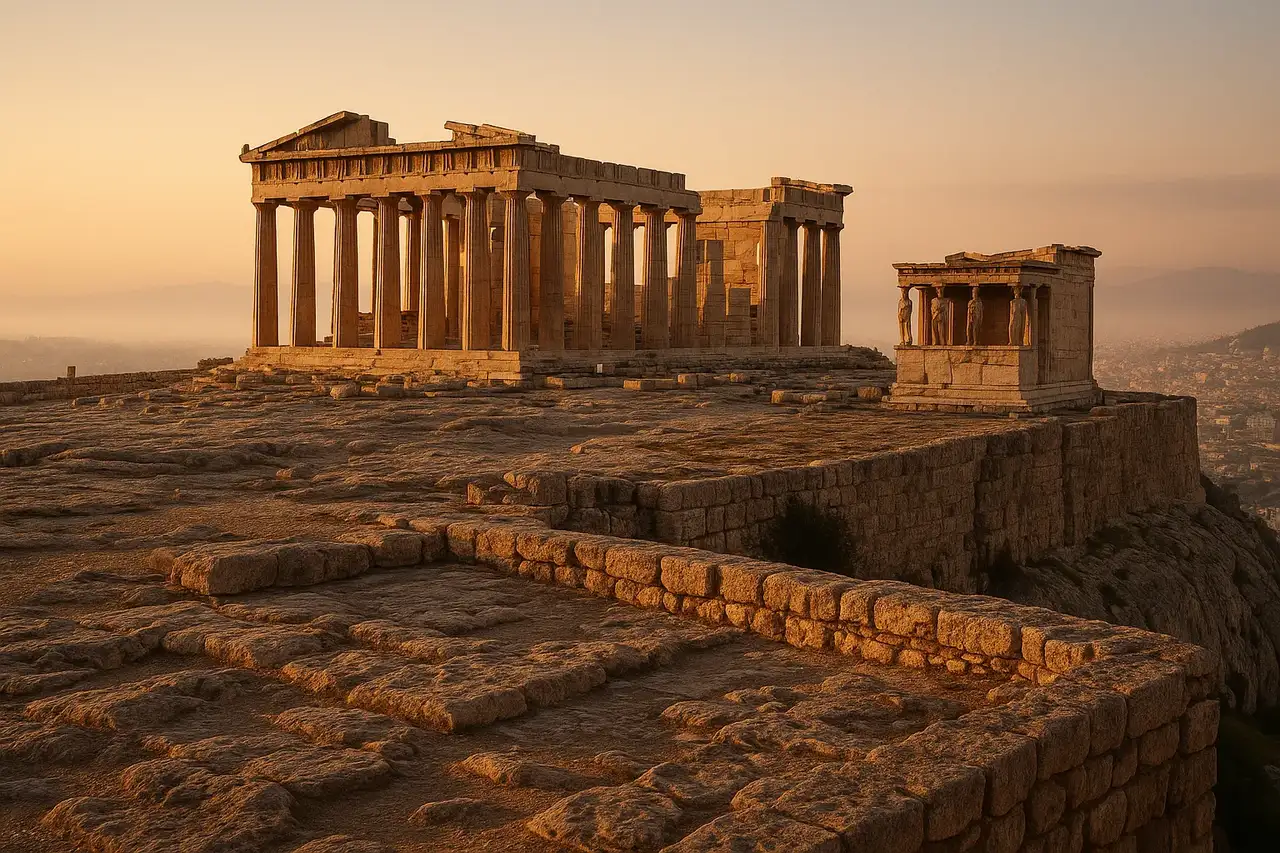
The Complete Acropolis Athens Travel Guide: Temples
Ancient GreecePlan the perfect visit to the Acropolis of Athens with our 2026 guide. Discover the Parthenon, best ...
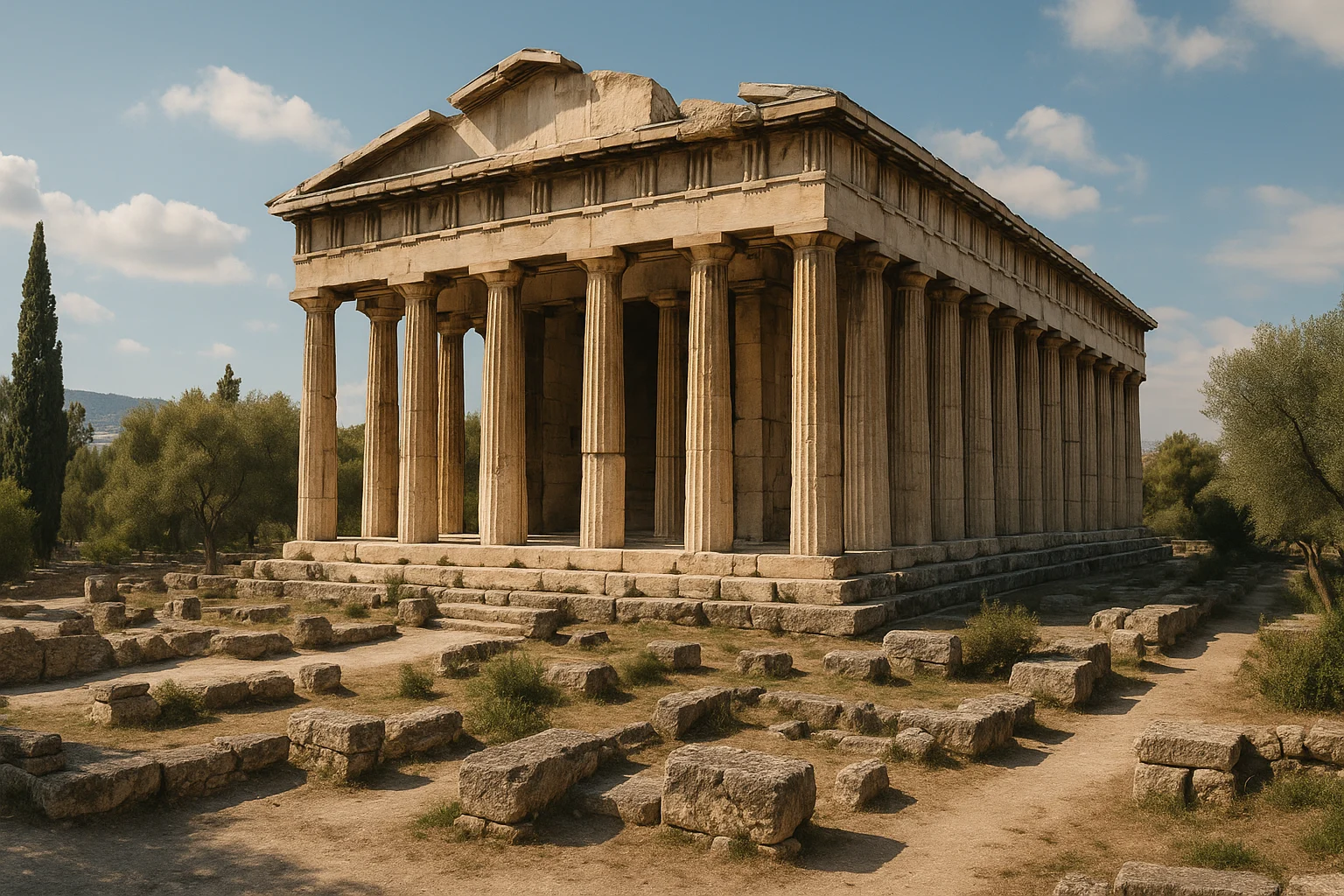
Ancient Agora of Athens Travel Guide 2026: Route, Tickets, and Context
Classical GreekPlan a better Ancient Agora visit with practical timing, monument priorities, and clear historical c...
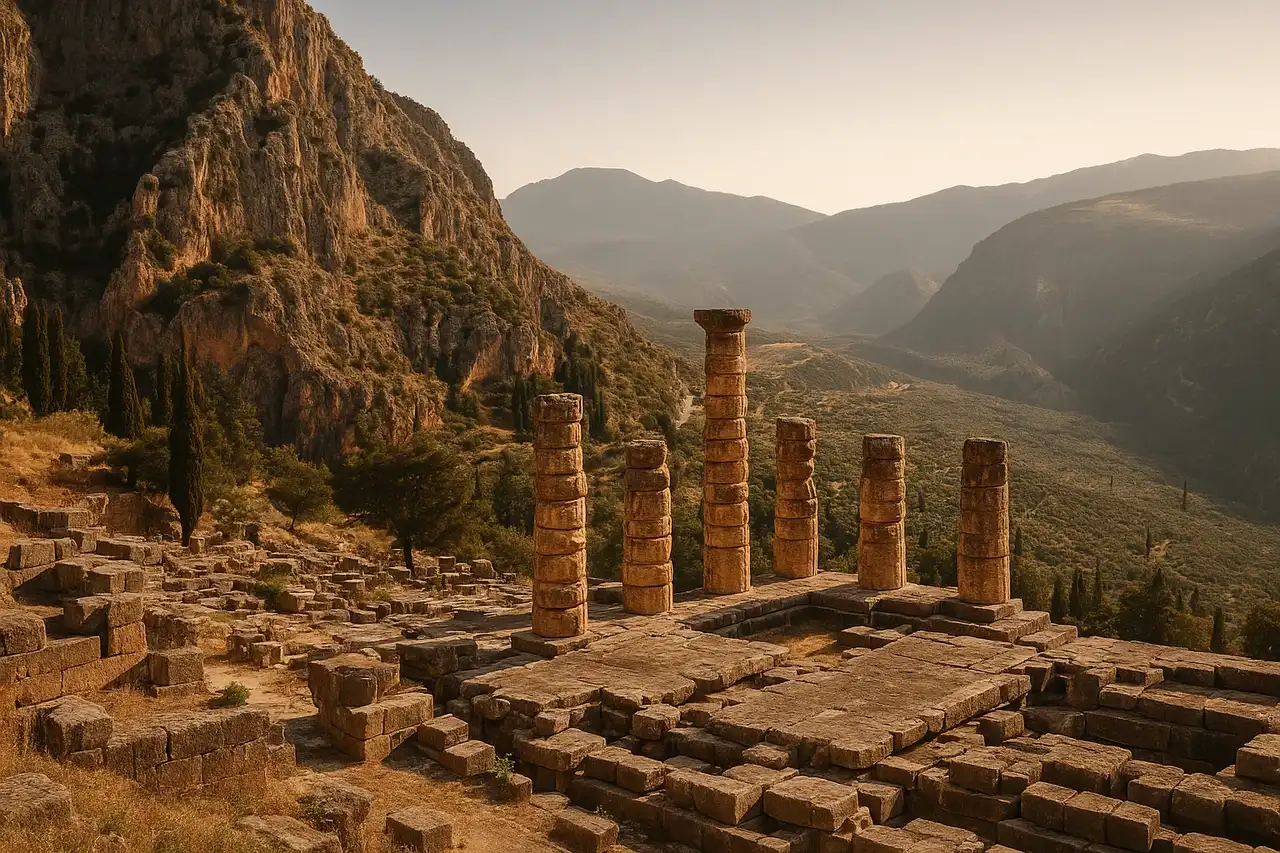
Delphi: The Navel of the Ancient World and Greece's Most
Ancient GreeceExplore Delphi, Greece's most mystical archaeological site. Walk the Sacred Way, discover the Oracle...