Quick Info
At a glance
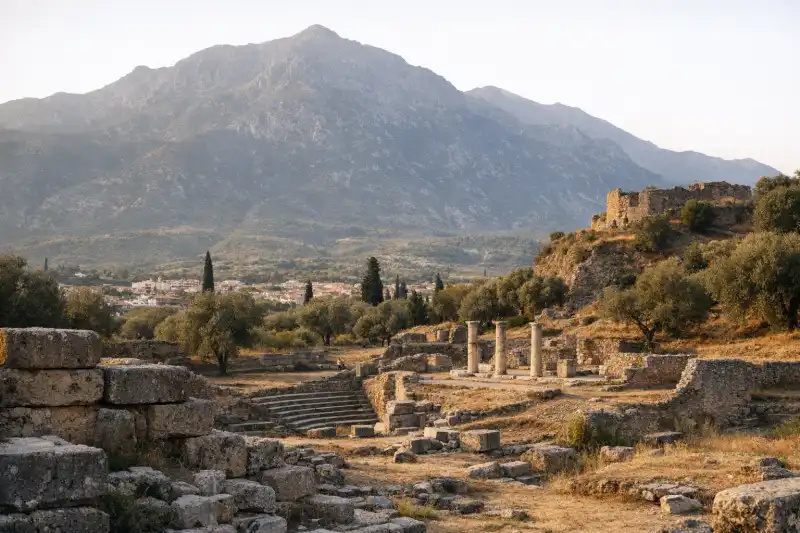
Ancient Sparta in Greece occupies a curious place in the imagination: at once one of the most famous cities of the ancient world and, for many visitors, one of the most surprising archaeological sites in the Peloponnese. Travelers often arrive expecting monumental marble grandeur on the scale of Athens, only to find something quieter, more dispersed, and in some ways more evocative. Near modern Sparti, in the broad and fertile Eurotas valley beneath the rugged ridges of Mount Taygetus, the remains of the Spartan city invite a different kind of encounter with antiquity. Here, the landscape matters as much as the masonry. The river plain, the distant mountains, and the open terrain help explain why Sparta became both powerful and self-assured, a city-state shaped by geography, discipline, and rivalry.
Visiting Ancient Sparta is less about admiring one single spectacular monument and more about piecing together a historical puzzle. The theater, the acropolis, sanctuaries, stretches of Roman and Hellenistic remains, and traces of civic life all speak to a city whose fame far exceeded the splendor of its surviving ruins. This is a destination for travelers who enjoy reading history into place, imagining the agoge, the assemblies, the rites and festivals, and the political system that made Sparta both admired and feared across the Greek world. Combined with nearby Mystras and the museums of modern Sparti, Ancient Sparta becomes one of southern Greece’s most rewarding destinations for those interested in how legend, ideology, and archaeology intersect.
History
Early Settlement and the Rise of Sparta
The area of Sparta was inhabited long before the city became a dominant power in Greek history. In the fertile plain of Laconia, communities benefited from agricultural productivity and strategic access to inland routes across the Peloponnese. By the early first millennium BCE, the settlement that would become Sparta had emerged from the convergence of several villages rather than from a single, compact urban foundation. This loose structure remained a defining characteristic of the city, distinguishing it from many other Greek poleis.
Sparta’s growth was tied to the Dorian-speaking populations that came to dominate Laconia after the upheavals following the Bronze Age collapse. Over time, Sparta consolidated control over neighboring communities and developed a political system that balanced kingship, aristocratic authority, and collective institutions. Unlike many Greek cities that celebrated individual wealth and artistic display, Sparta cultivated an identity rooted in discipline, military readiness, and communal obligation.
A turning point came with Sparta’s conquest of Messenia, to the west, in a series of conflicts traditionally dated to the early Archaic period. The subjugation of the Messenians transformed Spartan society. Their reduction to helot status, a dependent population tied to the land, gave Sparta access to agricultural surplus while also creating a permanent internal threat. Much of Spartan social organization, including military training and strict civic control, can be understood as a response to this imbalance.
Classical Sparta and Greek Power Politics
By the 6th and 5th centuries BCE, Sparta had become one of the leading powers of Greece. It presided over the Peloponnesian League and projected influence far beyond Laconia. Although conservative in many respects, it was not isolated. Spartan diplomacy, warfare, and prestige shaped the political landscape of the Greek world.
Sparta’s reputation was strengthened during the Persian Wars, particularly by the stand of King Leonidas and his forces at Thermopylae in 480 BCE. While the battle itself was a defeat, it became a defining moment in the construction of Spartan memory and wider Greek ideals of courage and sacrifice. In the decades that followed, tensions between Sparta and Athens intensified as both cities pursued competing visions of power.
The Peloponnesian War, fought from 431 to 404 BCE, brought Sparta to the height of its influence. After a long and destructive conflict, Sparta emerged victorious over Athens and briefly became the dominant state in Greece. Yet this supremacy proved difficult to sustain. Spartan leadership often generated resentment among allies, and the rigid structures that had once underpinned its strength made adaptation difficult in a rapidly shifting political world.
Decline, Transformation, and Roman Sparta
Sparta’s decisive setback came in 371 BCE at the Battle of Leuctra, when the Theban general Epaminondas shattered the myth of Spartan invincibility. The consequences were profound. Messenia was freed, depriving Sparta of crucial labor and economic support, and the city’s regional dominance rapidly eroded. Although Sparta remained symbolically important, it never fully recovered its former position.
In the Hellenistic period, Sparta oscillated between reform efforts, internal strife, and attempts to reclaim influence. Kings such as Agis IV and Cleomenes III sought to address social inequality and demographic decline, but their efforts met fierce resistance and only partial success. Eventually Sparta was drawn into the orbit of larger political powers, including Macedon and later Rome.
Under Roman rule, Sparta underwent a new phase of development. It became, in some respects, a city of memory, valued for its legendary past. Visitors in antiquity already came to see a place famous for ancient customs. Public buildings were renovated, the theater was expanded, and sanctuaries remained active. The surviving archaeological remains visible today often belong substantially to this later period, reminding modern visitors that Sparta did not simply vanish after the Classical age. Instead, it adapted, reinterpreting its identity while continuing to occupy an important place in the cultural geography of Greece.
Key Features
Ancient Sparta rewards slow exploration. Its archaeological zone is not overwhelmingly dense, and that is part of its appeal. The site unfolds through fragments of civic, religious, and public architecture spread across a broad area, allowing the surrounding landscape to remain an active part of the experience. You are not just looking at ruins; you are walking through the setting that shaped one of antiquity’s most distinctive societies.
One of the principal highlights is the ancient theater, among the most impressive remains at the site. Although much of what is visible today reflects Roman-era rebuilding and use, its scale conveys the continued importance of Sparta in later centuries. The theater once ranked among the largest in Greece, and even in ruin it offers a strong sense of the city’s public life. Looking across its surviving structure, it is easy to imagine performances, civic gatherings, and ceremonial events that linked Roman Sparta to its older traditions.
Nearby lies the acropolis area, less monumental than the famous citadels of other Greek cities but historically significant. This elevated zone preserves remains of temples and civic buildings associated with the religious and political life of Sparta. The Temple of Athena Chalkioikos, once one of the city’s most revered sanctuaries, stood here. Though little survives above ground, the site carries real historical resonance. Ancient writers associated it with Spartan identity, and the goddess Athena in this local form was central to the city’s public religion.
Another important feature is the sanctuary of Artemis Orthia, slightly apart from the central urban remains. This was one of Sparta’s best-known religious centers, associated with rites of passage and traditions that fascinated ancient observers. Archaeological finds from the sanctuary, including votive offerings, have helped scholars understand the complexity of Spartan culture beyond its military stereotype. The site suggests a society deeply invested in ritual performance, local identity, and religious continuity.
Scattered remains of stoas, fortifications, tomb structures, and later additions from the Hellenistic and Roman periods further enrich the visit. Ancient Sparta is especially valuable because it reveals historical layering. The city most travelers come seeking is the stern Classical Sparta of schoolbook fame, but the archaeology often speaks more loudly about subsequent centuries: periods of adaptation, commemoration, and civic reinvention.
The landscape itself is one of the site’s defining features. The Eurotas valley is broad, green, and unexpectedly gentle in contrast to the harsher image often projected onto Sparta. Beyond it rise the mountains of Taygetus, which frame the horizon with dramatic effect. This setting helps explain both Sparta’s wealth and its military preoccupations. Fertile land supported the population, while the enclosing geography gave shape to a society that saw itself as distinct and self-contained.
Visitors should also consider the nearby Archaeological Museum of Sparta, which complements the ruins with sculptures, inscriptions, and finds from local sanctuaries. Although the open-air site can seem understated at first glance, museum collections help animate what is now fragmentary on the ground. Together, the ruins and the artifacts offer a fuller picture of a city-state that was never only about war, but also about religion, social order, memory, and representation.
What makes Ancient Sparta memorable is precisely this tension between expectation and reality. There is no single surviving monument that “explains” Sparta. Instead, the place asks visitors to think historically. The broken stones, the open spaces, and the dispersed layout all suit a city whose power lay not in decorative display but in institutions, discipline, and myth. For travelers willing to look beyond surface grandeur, that makes Sparta one of Greece’s most intellectually rewarding archaeological destinations.
Getting There
Ancient Sparta is reached via modern Sparti, the main city of Laconia in the southeastern Peloponnese. From Athens, the simplest route is by car. The drive typically takes around 3 to 3.5 hours, depending on traffic and your starting point. You will usually travel via Corinth and Tripoli before continuing south toward Sparti. Tolls on the route can add up to roughly €15 to €20 each way, and fuel costs for a standard car may come to about €30 to €45 one way depending on prices and vehicle efficiency.
Public transport is also possible. KTEL intercity buses connect Athens with Sparti, usually departing from the Kifissos Bus Station. One-way fares are commonly in the range of €20 to €25, and the journey takes approximately 3.5 to 4.5 hours. Once in Sparti, the archaeological site is reachable by taxi, local bus if available, or on foot depending on your accommodation and tolerance for walking. A taxi within town or from the bus station to the site may cost around €5 to €10.
If you are touring the Peloponnese, Ancient Sparta fits well into a broader itinerary with Mystras, Ancient Messene, or the Mani region. Organized day tours from Athens exist but can be limited compared with more famous Greek destinations. For many travelers, renting a car offers the greatest flexibility, especially if you want to pair the ruins with museums, Byzantine monuments, and scenic mountain drives.
Entry fees and opening times for the site can vary by season, so it is wise to check current official information before traveling. Bring water, sun protection, and comfortable footwear, particularly in warmer months when shade can be limited.
When to Visit
The best times to visit Ancient Sparta are spring and autumn, when southern Greece is bright, green, and comfortable for walking. From March to May, the Eurotas valley often looks especially attractive, with milder temperatures, clear light, and seasonal vegetation softening the archaeological landscape. Daytime highs typically range from about 16°C to 25°C, making this an excellent period for combining the site with longer explorations of modern Sparti and nearby Mystras.
Autumn, especially September through early November, is another strong option. Summer heat begins to ease, the countryside remains pleasant, and tourist crowds are generally lighter than at Greece’s most famous sites. Temperatures often sit between 18°C and 28°C, which is far more forgiving than midsummer conditions. The low-angle light can also be particularly good for photography, giving the ruins and surrounding hills a warm, textured appearance.
Summer is entirely feasible, but visitors should prepare for serious heat. In June, July, and August, temperatures in Laconia frequently exceed 30°C and can climb higher during heatwaves. Because Ancient Sparta is relatively open and less shaded than some archaeological sites, early morning or late afternoon visits are strongly recommended. Carry ample water and avoid the hottest part of the day if possible.
Winter has its own appeal for travelers who prefer quieter conditions and cooler air. From December to February, temperatures are usually mild compared with much of Europe, often around 10°C to 16°C during the day, though rain is more likely. The site can feel contemplative and atmospheric at this time of year, especially with cloud moving over Taygetus. If your priority is comfortable walking and a richer landscape, however, spring remains the standout season.
| Quick Facts | Details |
|---|---|
| Location | Near modern Sparti, Laconia, Peloponnese, Greece |
| Best For | Ancient Greek history, archaeology, landscape, paired visits with Mystras |
| Main Periods | Archaic, Classical, Hellenistic, Roman |
| Famous For | Spartan military culture, Leonidas, Peloponnesian War, civic austerity |
| Typical Visit Length | 1.5 to 3 hours |
| Nearest City | Sparti |
| Best Season | Spring and autumn |
| Access | Car, intercity bus to Sparti, taxi/local transfer to site |
| Combine With | Mystras, Sparta Archaeological Museum, wider Peloponnese touring |
Ancient Sparta is not a destination of instant spectacle; it is a destination of historical depth. Its surviving remains are quieter than its name, but that quietness is part of what makes a visit so compelling. Here, among the low ruins and open ground of Laconia, the visitor encounters not just the fragments of a city but the afterlife of an idea. Sparta’s political system, military discipline, social hierarchy, and cultural myth have echoed across centuries of literature and memory, often obscuring the real place behind the legend. Walking the archaeological site helps correct that imbalance. You begin to see Sparta as an evolving city with sanctuaries, theaters, ceremonies, and later Roman reinventions, not simply as a symbol of stern warriors.
For travelers exploring southern Greece, Ancient Sparta offers a distinctive experience: intellectually rich, scenically beautiful, and best appreciated in combination with nearby sites. It may not overwhelm at first glance, but it lingers in the mind. The valley, the mountains, and the scattered stones work together to create a powerful sense of continuity between landscape and history. If you are interested in how ancient reputation is built, preserved, and challenged by archaeology, Sparta is one of the most rewarding places in Greece to visit.
Guided tours: worth it?
Self-guided works here, but a guide can add real value if you want the ruins explained as a living place rather than just a sequence of monuments.
Best for
- First-time visitors who want context, not just photos
- Short visits where a planned route saves time
When to go self-guided
Go independently if you prefer setting your own pace, reading as you go, and checking official hours or ticket rules directly before you arrive.
What I’d avoid
Skip paid tours that bundle unrelated stops you do not actually want. The best option should either save meaningful planning time or add historical context you would miss on your own.
Sparta Archaeological Site Tours
Useful when: you want to compare guided formats before deciding
Mystras and Sparta Day Trips
Useful when: transport or pickup logistics matter
Peloponnese Historical Tours
Useful when: you want to compare guided formats before deciding
Some tour links are affiliate links, which may earn Ancient Travel a small commission at no extra cost to you. I try to surface options that make practical sense for the site—not just anything bookable.
Frequently Asked Questions
Where is Ancient Sparta located?
Ancient Sparta is located near the modern city of Sparti in Laconia, in the Peloponnese region of southern Greece.
Is there much to see at Ancient Sparta?
Yes, though the site is more understated than places like Athens or Delphi. Visitors can explore the theater, sanctuary remains, the acropolis area, and traces of the city that once dominated Laconia.
How long should I spend at Ancient Sparta?
Most travelers spend 1.5 to 3 hours at the archaeological site, though those combining it with the Sparta Archaeological Museum or nearby Mystras often allow a full day.
What is Ancient Sparta famous for?
Ancient Sparta is famous for its military society, austere lifestyle, rigorous education system, and major role in Greek history, especially during the Classical period and the Peloponnesian War.
Can I visit Ancient Sparta and Mystras on the same trip?
Yes. Ancient Sparta and the UNESCO-listed site of Mystras are very close to one another, making them one of the easiest and most rewarding same-day combinations in the Peloponnese.
When is the best time to visit Ancient Sparta?
Spring and autumn are generally the best seasons, with warm but manageable temperatures, clearer light for photography, and more comfortable walking conditions than midsummer.
Nearby Ancient Sites
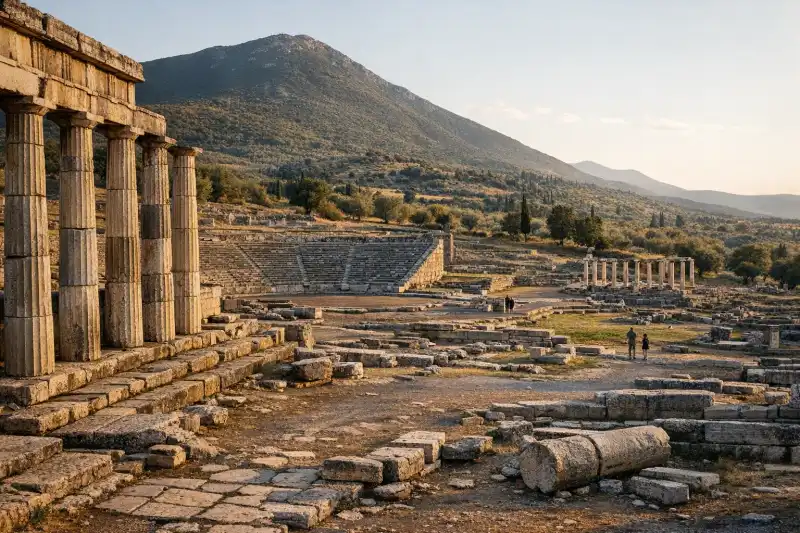
Ancient Messene
Ancient GreekExplore Ancient Messene, a remarkably preserved Greek city with grand stadium, theater, and fortific...
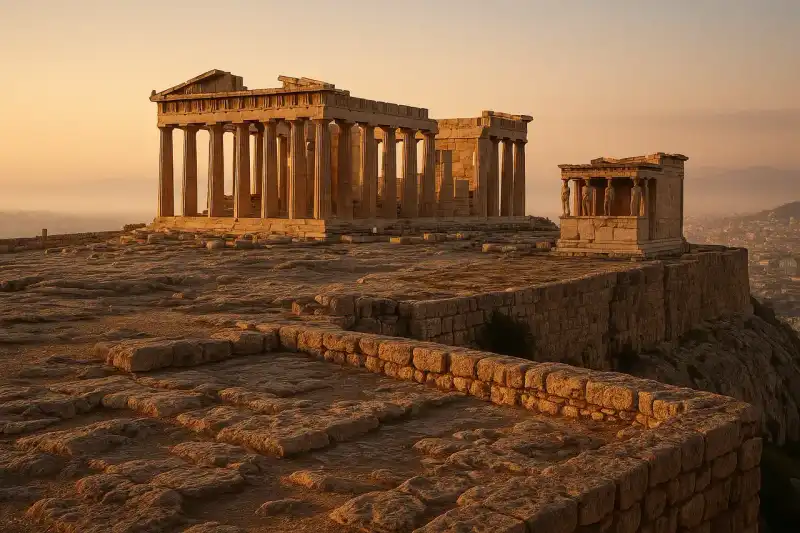
Acropolis Travel Guide 2026: Parthenon, Tickets, and Best Time
Ancient GreecePlan an efficient Acropolis visit with practical ticket timing, key monuments, and museum pairing ti...
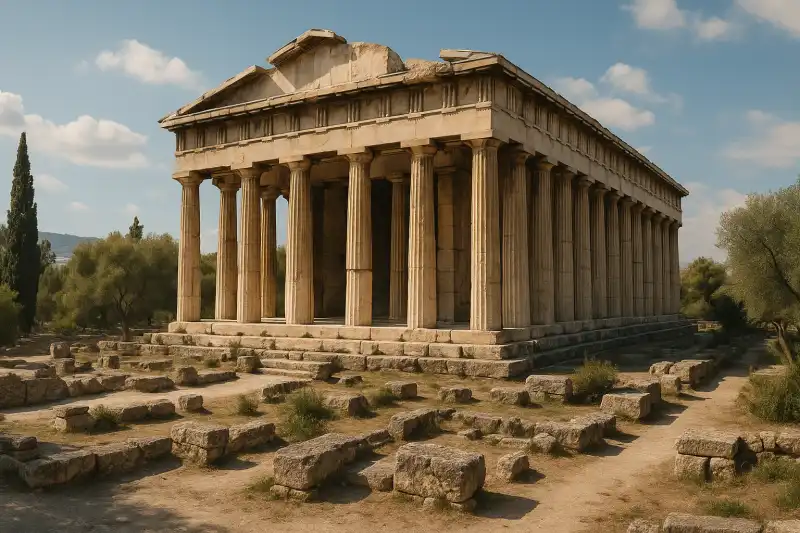
Ancient Agora of Athens Travel Guide 2026: Route, Tickets, and Context
Classical GreekPlan a better Ancient Agora visit with practical timing, monument priorities, and clear historical c...