Quick Info
Curated Experiences
Aosta Roman City Walk
Aosta Valley History Day
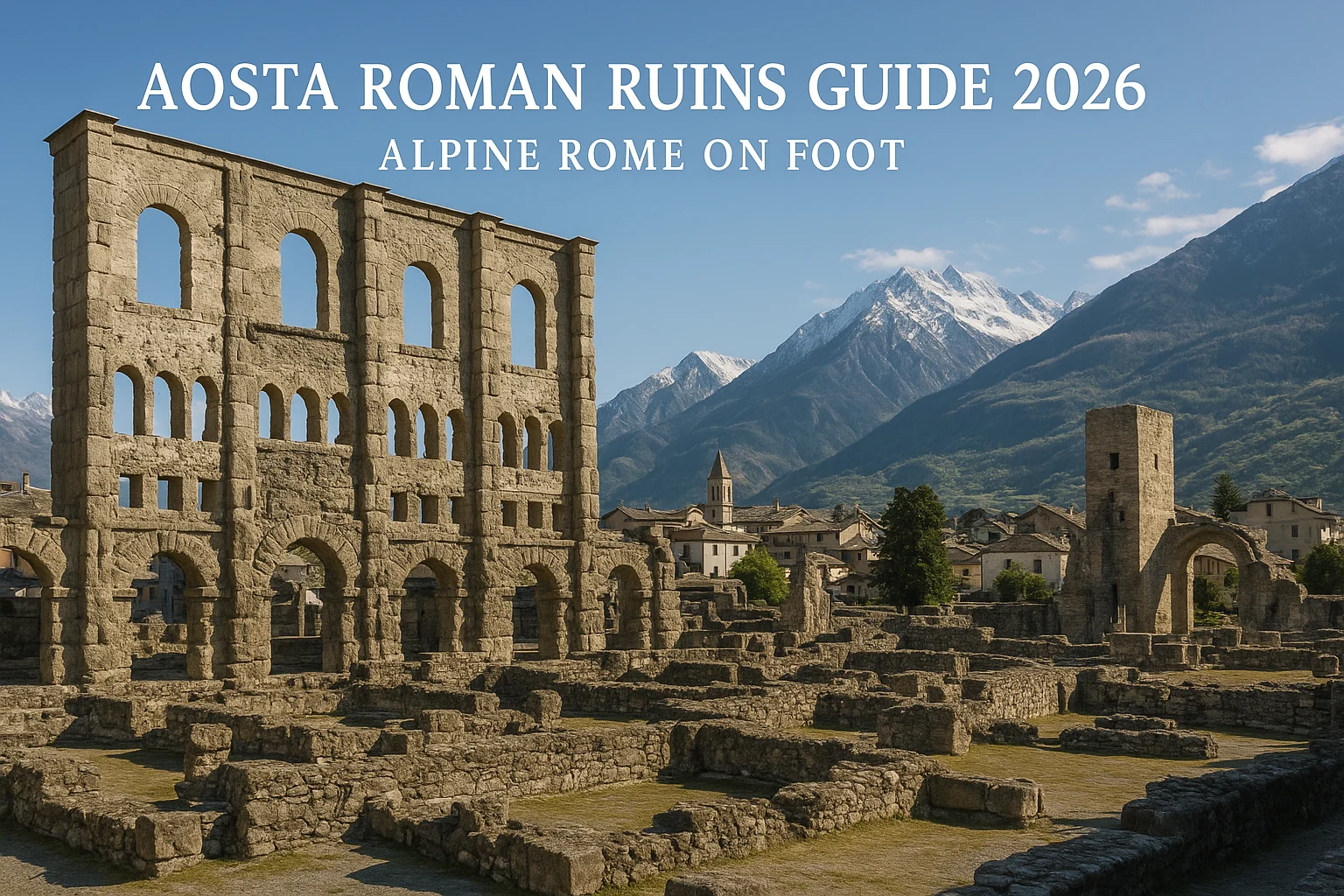
Aosta sits in a tight Alpine valley where two major mountain corridors converge, and the Romans knew exactly what that meant. When Augustus sent 3,000 Praetorian veterans here in 25 BCE, they did not build a resort. They built a control point - a fully planned colonial city designed to lock down the routes over the Great and Little St. Bernard passes. What survives today is remarkable: a nearly complete Roman urban footprint compressed into a walkable town center, with monuments that still define the street grid two thousand years later.
For travelers working through Italy’s archaeological sites, Aosta offers something rare. This is not a sprawling excavation zone requiring a car and a full day of logistics. It is a compact, legible Roman city where you can read military planning, civic ambition, and infrastructure engineering in a single morning walk.
Why Aosta Matters
Most Roman cities in Italy have been buried under centuries of medieval and modern construction. Aosta is different. The colonial plan of Augusta Praetoria remains structurally visible in the modern town. Streets still follow the original cardo and decumanus. The defensive walls survive in long stretches. The monumental gateway still stands where Roman travelers entered from the east.
This matters because Aosta lets you understand Roman urbanism as a system rather than as isolated monuments. You are not looking at a theater here and an arch there with modern city filling every gap. You are walking through a place where the entire Roman logic of city-building - entry sequence, defensive perimeter, civic core, entertainment district - remains coherent and traceable on foot.
For anyone coming from sites like the Colosseum or Ostia Antica, Aosta adds a critical dimension: what Roman planning looked like at the frontier, in hostile mountain terrain, built from scratch to serve a military and administrative purpose.
Historical Context
Foundation and Strategic Purpose
Augustus founded Augusta Praetoria Salassorum in 25 BCE after a decisive military campaign against the Salassi, the Celtic-Ligurian people who controlled the valley. The campaign was brutal and deliberate. Roman sources record that thousands of Salassi were sold into slavery at Eporedia (modern Ivrea), and the valley was cleared for colonial settlement.
The location was chosen for one reason: passage control. The Aosta Valley funnels traffic moving between the Po Plain and the transalpine routes to Gaul and the Germanic territories. Whoever held this valley controlled two of the most important Alpine crossings in the ancient world. The colony was staffed with veteran soldiers who understood fortification and could maintain order in contested mountain territory.
Urban Design
The city followed a standard Roman colonial grid, roughly 725 by 575 meters, enclosed by walls with towers at regular intervals. The plan included all the standard civic elements: forum, theater, amphitheater, baths, and a cryptoporticus (underground gallery) that likely supported a temple complex. The orthogonal street layout was oriented to the cardinal points, with the main east-west road (decumanus maximus) aligned with the valley floor and the approach from the east.
Continuity and Survival
Unlike many Roman cities that were abandoned or radically rebuilt, Aosta maintained continuous occupation. The medieval town grew within and around the Roman framework rather than replacing it. This is why so much survives. The walls were useful, so they were maintained. The gates controlled access, so they stayed. The theater’s massive facade became part of later construction rather than being quarried for stone.
What to Prioritize Onsite
Arch of Augustus
Start here. The triumphal arch stands just east of the old city, marking the original approach from the road connecting to Eporedia and the Po Plain. Built in 25 BCE to commemorate the victory over the Salassi, it is a single-vault arch with Corinthian half-columns. The proportions are military and restrained rather than decorative. A medieval roof was added in the 12th century, which ironically helped preserve the structure.
Porta Praetoria
Walk west from the arch and you reach the main city gate within a few minutes. This is one of the best-preserved Roman gateways in existence - a double-curtain structure with three arches (one large central passage for vehicles, two smaller ones for pedestrians) flanked by defensive towers. The scale of the stonework communicates the seriousness of the fortification. Stand in the central passage and look at the depth of the walls to understand what “defended entry point” actually meant in Roman engineering.
Roman Theater
Just inside the walls near the Porta Praetoria, the theater preserves its southern facade to a height of roughly 22 meters. The structure originally seated 3,000 to 4,000 spectators. What survives is enough to grasp the massing and relationship to the surrounding urban grid. The adjacent amphitheater is partially excavated and less visually dramatic but worth a look for completeness.
City Walls and Towers
Follow the walls along the north and east sides where the longest continuous stretches survive. The circuit originally included 20 towers. Several remain standing, including the Tour Fromage and the Torre dei Balivi, which were incorporated into medieval structures. Walking the perimeter takes roughly 30 to 40 minutes and gives you the clearest sense of the colony’s footprint and defensive geometry.
Cryptoporticus and Forum Area
Beneath the modern city center, an underground gallery (cryptoporticus) runs in a U-shape around what was the forum area. This semi-subterranean corridor likely served as a foundation platform for a temple complex above. It is atmospheric, well-preserved, and helps you visualize the scale of the civic center. Access is through a small entrance near the cathedral.
Practical Visit Strategy
Timing
A focused visit covering the arch, gate, theater, walls, and cryptoporticus takes 2 to 3 hours at a comfortable pace with time to read signage and take photographs. Add another hour if you want to include the Regional Archaeological Museum (Museo Archeologico Regionale), which provides context and houses smaller finds.
Morning starts are strongly recommended, especially from June through September. The valley traps heat by midday, and the open-air monuments offer limited shade. Winter visits are viable but check museum hours, which may be reduced.
Logistics
Aosta is reachable by car from Turin in roughly 90 minutes via the A5 motorway, or from Milan in about 2.5 hours. Train service connects Aosta to Turin with regular departures. The historic center is entirely walkable - no local transport needed once you arrive.
The combined ticket (biglietto cumulativo) covers the theater, cryptoporticus, and other municipal sites. Purchase it at the first monument you enter. Signage at the outdoor monuments is adequate in Italian and French, with some English.
What to Bring
Comfortable walking shoes with good grip - some wall sections involve uneven ground and stone surfaces. A refillable water bottle for summer visits. A small flashlight or phone light improves the experience in the cryptoporticus, which is dimly lit in sections.
Route Pairing and Nearby Sites
Aosta fits naturally into several Italian travel routes:
- Turin connection: Combine Aosta with a day or two in Turin for a north-Italian archaeology and culture sequence. The drive between them is short and scenic.
- Alpine transit stop: If you are crossing into France or Switzerland via the Mont Blanc tunnel or Great St. Bernard Pass, an overnight in Aosta lets you split the driving and adds genuine historical substance to a transit day.
- Northern Italy loop: Pair with Aquileia and Verona Arena for a route covering Roman frontier and urban sites across the north.
- Full Italy itinerary: Aosta works as a northern anchor before heading south through Ostia Antica, the Colosseum, and onward to southern sites like Villa Romana del Casale or Selinunte.
For broader Italy planning, see the Italy Ancient Sites Hub.
Final Take
Aosta delivers a disproportionate return on time invested. In two to three hours of easy walking, you get a legible Roman colonial plan, a monumental gateway that ranks among the best surviving anywhere, a theater facade with real visual impact, and a cryptoporticus that adds an unexpected underground dimension. The Alpine setting sharpens everything - this was not comfortable Mediterranean expansion but deliberate infrastructure in contested mountain territory. For travelers building an Italy itinerary with archaeological depth, Aosta earns its place and asks very little of your schedule to do it.
Quick Facts
| Attribute | Details |
|---|---|
| Location | Aosta, Aosta Valley, Italy |
| Country | Italy |
| Region | Aosta Valley |
| Civilization | Roman |
| Historical Period | Imperial Roman |
| Established | Founded as Augusta Praetoria in 25 BCE |
| Best Time to Visit | May through October; mornings recommended |
| Minimum Visit Time | 2 to 3 hours for core monuments |
| Getting There | 90 min drive from Turin; regular train service |
| Coordinates | 45.7370, 7.3201 |
Frequently Asked Questions
Is Aosta worth visiting for Roman history if you've already seen Rome?
Yes. Aosta offers a compact, walkable Roman urban layout with major remains integrated into daily city life, giving a different perspective from large capital monuments.
How much time do you need for Aosta's Roman ruins?
Most travelers can cover the main monuments in 2 to 4 hours, with extra time for museums and slower interpretation.
Can you visit Aosta as a day trip?
Yes, from Turin or Milan it can work as a long day, though an overnight stay gives a better pace and easier mountain-weather flexibility.
Which ruins should first-time visitors prioritize?
Start with the Arch of Augustus, Porta Praetoria, Roman theater, and surviving city wall segments, then add museum stops if time allows.
Nearby Ancient Sites
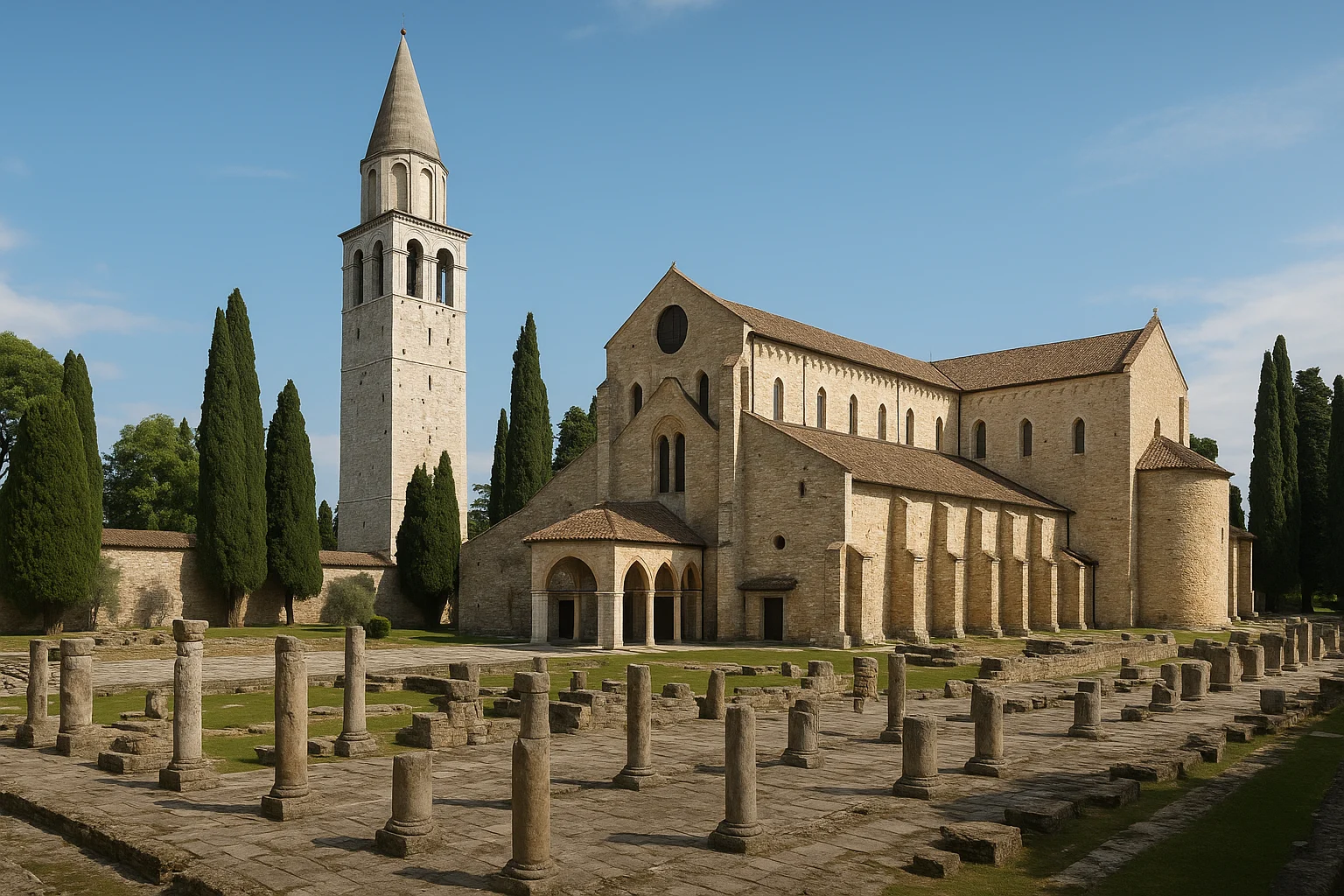
Aquileia Guide 2026: Roman Port City, Basilica Mosaics, and Forum Context
RomanPlan a focused archaeology visit to Aquileia in Friuli-Venezia Giulia with key Roman zones, basilica...
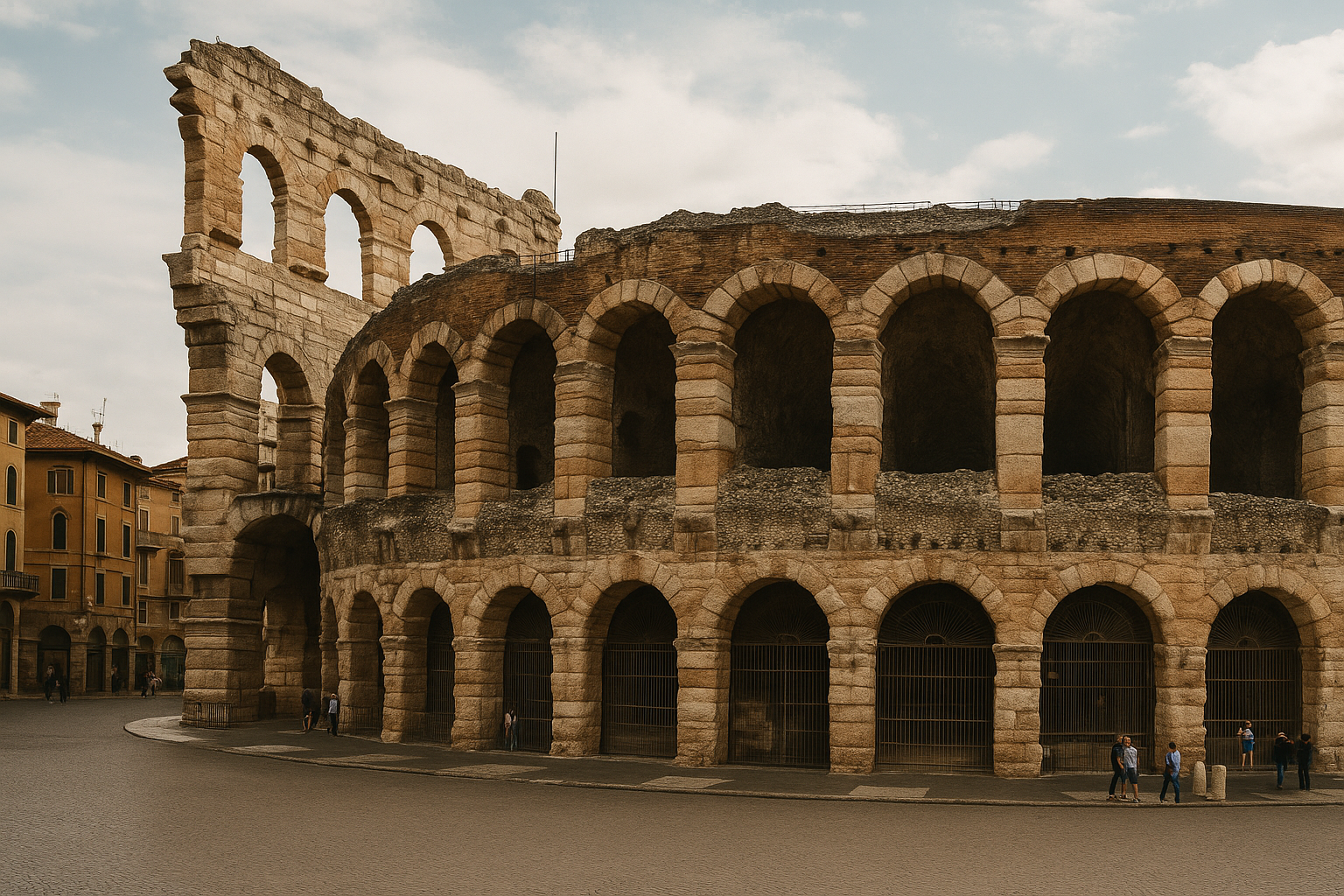
Verona Arena: Complete Guide to Italy's Best-Preserved Roman Amphitheater
Roman EmpirePlan your Verona Arena visit with Roman history, opera season tips, ticket strategy, and practical a...
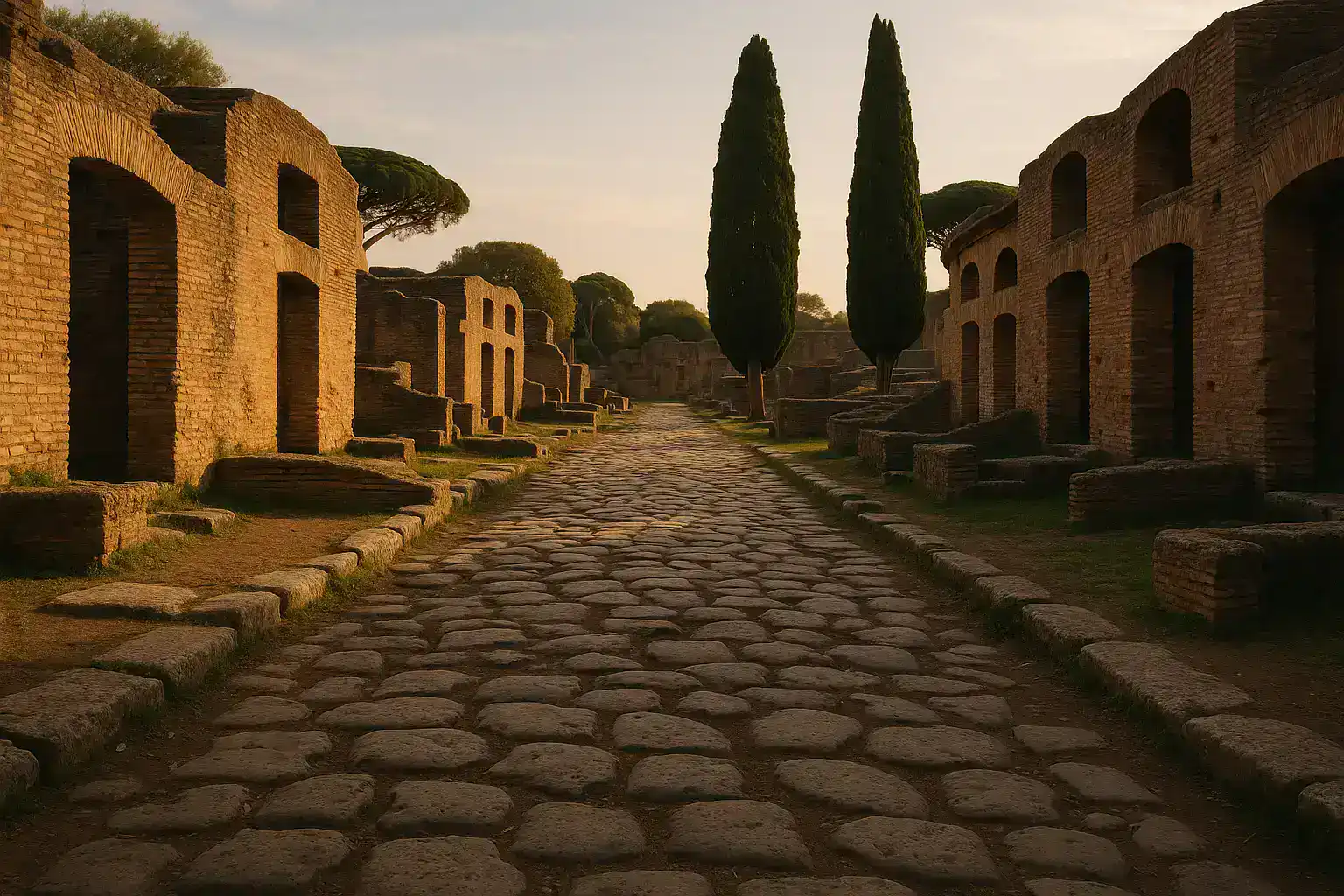
Ostia Antica Italy Travel Guide 2026: Rome's Ancient Port City
Roman EmpireExplore Ostia Antica, the best-preserved ancient Roman city after Pompeii. Walk intact streets, see ...
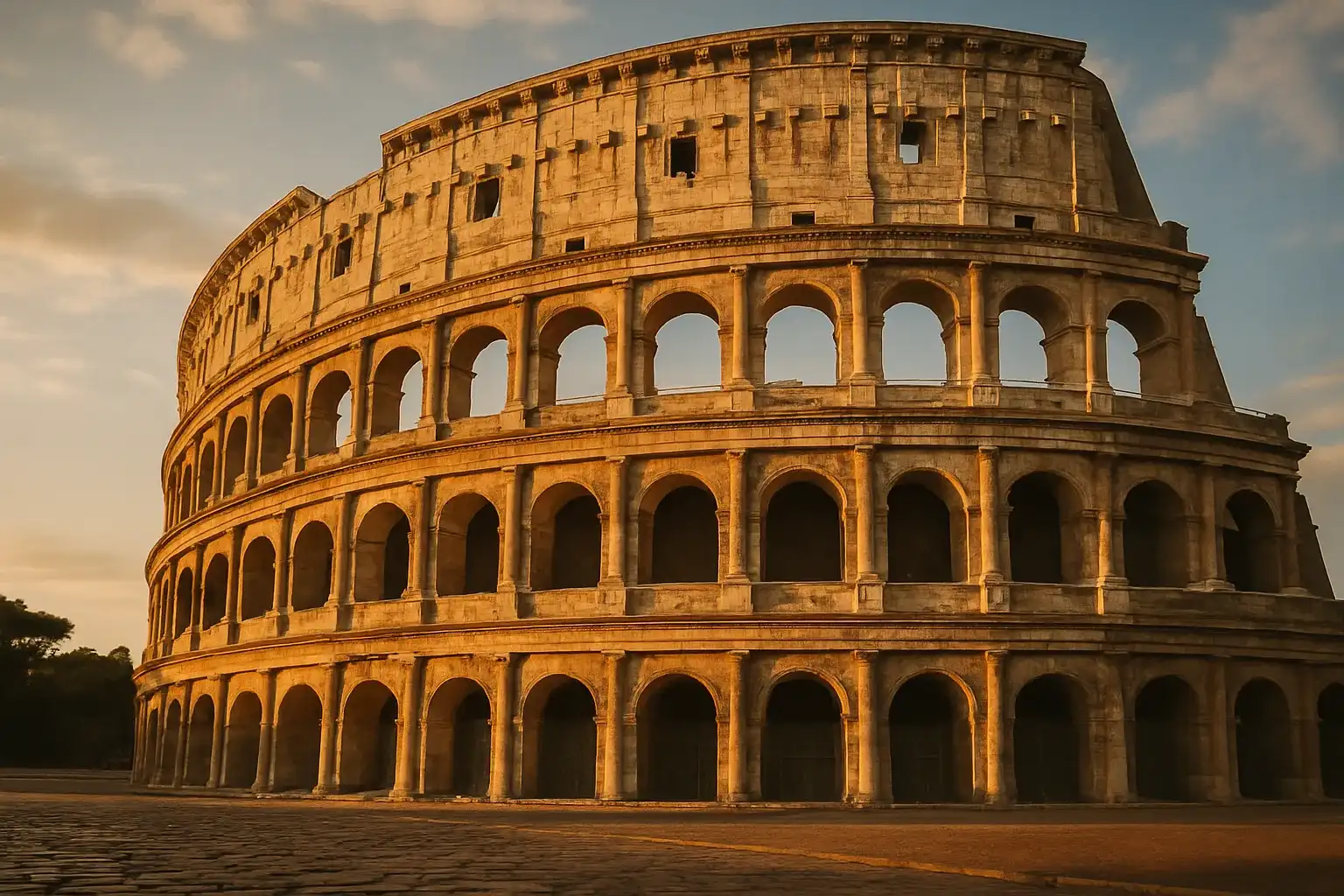
Colosseum Rome: Complete 2026 Guide to Arena Floor, Tickets, and Timing
Roman EmpirePlan the perfect Colosseum visit with timed-entry strategy, Arena Floor and underground access tips,...