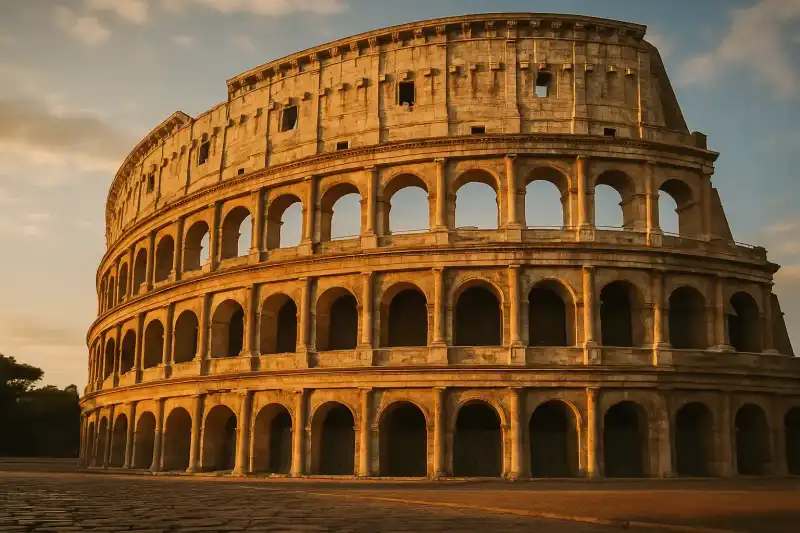
Quick Info
At a glance
The Colosseum is one of those places that feels familiar before you arrive, then unexpectedly bigger and stranger in person. Photos flatten it. Standing under the arches gives you scale, acoustics, and the uneasy realization that this was not just architecture, but infrastructure for mass spectacle.
It is the most famous amphitheater in the world for good reason: design ambition, political messaging, and technical execution all meet in one structure that still reads clearly two millennia later.
If you plan it right, your visit is far more than a quick photo stop. It becomes the anchor of an entire Ancient Rome day.
Why the Colosseum Still Matters
Built in the Flavian period and inaugurated in 80 CE, the Colosseum was designed as a public monument with imperial branding baked into every stone. It sat on land reclaimed from Nero’s private complex and reframed that space as entertainment for the people.
At full use, the amphitheater held tens of thousands of spectators sorted by strict social hierarchy. The building was a machine for movement: entry arches, seating zones, circulation corridors, and stage systems below all supported fast turnover and high-intensity events.
What survives today is partial, but legible. You can still read how Romans solved crowd logistics, structural loading, visibility, and spectacle choreography in a single venue.
Ticket Strategy That Actually Works
The main mistake travelers make is treating Colosseum entry like a casual museum stop. It is timed, capacity-controlled, and highly seasonal.
Choose the access you actually want
Start with the Colosseum archaeological park’s official ticket comparison, then use its official booking portal to check your date. A more expensive ticket is not automatically a better fit: choose the spaces you want to see, not just the words “Full Experience.”
- Colosseum, Roman Forum and Palatine: the standard 24-hour ticket includes the Colosseum’s first and second levels plus one entry to the Forum-Palatine area, but not the arena or underground.
- Full Experience Arena: adds the arena to the regular Colosseum route. It does not include the underground.
- Full Experience Underground and Arena: explicitly includes both those spaces. Choose this option if seeing the hypogeum is the reason for your visit; do not assume another Arena ticket includes it.
- Full Experience Attic: a different option focused on the upper levels and panoramic lift, not a synonym for an underground visit.
- Forum Pass SUPER: covers the Forum-Palatine area and specified additional sites, but does not include the Colosseum. It is not a substitute for Colosseum admission.
The listed Full Experience options allow one Colosseum entry and one Forum-Palatine entry over two consecutive days. That validity is not permission to enter the Colosseum whenever you like: keep its booked time slot and check the selected ticket’s route and conditions. For an arena-only visit, compare the separately listed Only Arena ticket rather than assuming it includes the regular interior route.
Booking window and names
The park states that ticket sales open 30 days before the visit, with a compulsory Colosseum entry-time reservation. Tickets are issued in the holder’s name, and an identification document must be shown with the ticket at entry. Check the current name-change rules before paying, especially when booking for someone else. No particular slot or ticket type is guaranteed to be available.
Ticket comparison and entry requirements checked against the park’s official visitor page on 12 September 2026. Recheck the official listing for current conditions, closures and prices before booking.
Guided or self-guided?
- Guided works best if you want historical context fast and minimal planning friction.
- Self-guided is ideal if you prefer slower pacing and independent photography stops.
There is no wrong answer. The better choice is the one that fits your energy level and schedule.
Timing: Beat Heat and Crowds
Best slot: early morning
First-entry windows usually provide the best experience balance: cooler weather, clearer movement through checkpoints, and fewer bottlenecks on stairs and upper paths.
Strong backup: late afternoon
Late-day visits can be excellent for softer light and reduced crowd pressure. The tradeoff is less total time before closing.
Midday reality
From late morning into early afternoon, the site is often hottest and busiest. If you must go midday, bring water, pace yourself, and expect slower circulation.
Reading the Monument While You Walk
The exterior shell
The arcaded façade is not decoration alone; it encodes structural logic and circulation. Distinct levels, repetitive openings, and clear rhythm made crowd processing efficient at massive scale.
The arena view
From the Arena Floor, the architecture makes immediate sense. Sightlines, wall heights, and audience positioning all reveal the building’s theatrical intent.
The hypogeum below
Underground galleries held equipment, animals, and mechanical systems for staged entrances. Even in reconstructed form, the space shows the operational complexity behind events above.
Upper levels
The upper vantage points are where overall geometry becomes easiest to read. They also provide strong views toward the Forum valley and Palatine ridge.
Pairing with Forum + Palatine Hill
Most visitors should treat the Colosseum as one-third of a larger archaeological sequence.
A practical order is:
- Colosseum timed entry first
- Palatine Hill second (more shade and broader viewpoints)
- Roman Forum last (denser ruins and slower interpretive walking)
This flow reduces stress and keeps the day coherent historically: spectacle, imperial residence, then civic-political core.
Practical Tips for a Better Day
- Arrive early enough for security checks; queues are variable.
- Wear shoes with grip for worn stone and uneven transitions.
- Carry water and sun protection in warmer months.
- Keep your ID and ticket confirmation handy.
- Build buffer time between major bookings elsewhere in Rome.
If you’re combining with Vatican sites, avoid overpacking. Two major archaeological/museum blocks in one day is usually plenty.
Common Mistakes to Avoid
- Showing up without a timed ticket during peak periods
- Underestimating walking distance across the archaeological zone
- Booking too many fixed-time activities on the same day
- Treating Forum/Palatine as optional afterthoughts
The Colosseum is at its best when you give it room in the schedule.
A Realistic Half-Day Colosseum Itinerary
If your Rome schedule is packed, this sequence consistently works:
0:00-0:30 — Security + orientation
Arrive early, clear security, and use your first few minutes to map exits, water points, and directional flow. That short orientation prevents backtracking later.
0:30-1:20 — Colosseum interior focus
Prioritize your highest-value zone first (Arena Floor or upper levels), then work the standard circulation path. Don’t burn your best energy on perimeter photos before entering.
1:20-2:10 — Palatine Hill transition
Walk Palatine second while legs are still fresh. The hill offers breathing room, views, and context for imperial urban planning.
2:10-3:30 — Roman Forum close
Finish in the Forum once sunlight softens and temperatures ease. This is usually the best part of the day for slower reading of structures and inscriptions.
Accessibility, Families, and Pace Management
The Colosseum area is rewarding but physically demanding in ways first-time visitors often underestimate.
- With kids: Bring snacks, water, and structured breaks. Fatigue hits fast on warm days, especially if you stack Forum + Palatine without pauses.
- With older travelers: Book the easiest time slot (typically first entry), reduce stairs where possible, and keep a flexible route that can shorten if needed.
- With mobility limitations: Accessibility has improved, but route quality varies by zone. Check current lift/path availability before your date rather than relying on older blog posts.
In every case, the winning strategy is slower pacing and fewer fixed commitments before and after the archaeological block.
Ticket Confusion and How to Avoid It
Colosseum planning gets messy because many products sound similar while including different access levels.
Read inclusions line by line
Before purchase, verify whether your ticket includes:
- Colosseum timed entry
- Arena Floor access
- Underground access (if desired)
- Roman Forum + Palatine entry window
“Skip-the-line” language is often marketing shorthand for prebooked timed access, not a guarantee of zero waiting at security.
Check the exact access option
If underground access matters, look for it explicitly in the selected ticket or tour inclusions. Arena access alone does not establish underground access. Use the official comparison above before choosing.
Confirm identity requirements
The park issues named tickets and requires an identification document with the ticket at entry. Confirm each traveler’s name and the current correction rules before paying, and keep the ticket easy to access offline.
What Most Visitors Miss About the Colosseum
The amphitheater is easy to frame as a single iconic ruin, but its real value appears when you connect systems.
- The Colosseum explains Roman spectacle logistics.
- Palatine Hill explains elite residence and imperial symbolism.
- The Forum explains political and civic performance.
Seen together, they function like a complete urban argument about power: entertainment, authority, and public life arranged within walking distance.
This is why the Colosseum still matters. It is not only photogenic; it is legible evidence of how Rome organized society at scale.
Why This Site Endures
The Colosseum remains iconic because it is not just old; it is intelligible. Even in fragmentary form, you can still see the engineering discipline and the social logic of Roman power.
It is a monument to technical confidence, but also to the moral contradictions of empire. That tension is part of what makes a visit memorable.
Give it a half day, not an hour. Walk it with intention. You will leave with a much sharper understanding of how Rome presented itself to the world.
Quick Facts
| Attribute | Details |
|---|---|
| Location | Rome, Lazio, Italy |
| Country | Italy |
| Region | Lazio |
| Civilization | Roman Empire |
| Historical Period | 72-80 CE |
| Established | 80 CE |
| Coordinates | 41.8902, 12.4922 |
Explore More Ancient Wonders
Guided tours: worth it?
Self-guided works here, but a guide can add real value if you want the ruins explained as a living place rather than just a sequence of monuments.
Best for
- First-time visitors who want context, not just photos
- Short visits where a planned route saves time
When to go self-guided
Go independently if you prefer setting your own pace, reading as you go, and checking official hours or ticket rules directly before you arrive.
What I’d avoid
Skip paid tours that bundle unrelated stops you do not actually want. The best option should either save meaningful planning time or add historical context you would miss on your own.
Colosseum Underground & Ancient Rome Guided Tour
Useful when: historical context matters
Explore the hypogeum, Arena Floor, and key Roman Forum highlights with a licensed guide
Colosseum with Arena, Roman Forum and Palatine Guided Tour
Useful when: historical context matters
Priority Colosseum entry with Arena Floor plus a compact Ancient Rome circuit
Colosseum & Ancient Rome Semi-Private Tour (Max 6)
Useful when: you want flexible timing or a private guide
Small-group format with deeper guide attention and Arena Floor option
Some tour links are affiliate links, which may earn Ancient Travel a small commission at no extra cost to you. I try to surface options that make practical sense for the site—not just anything bookable.
Frequently Asked Questions
How far in advance should I book Colosseum tickets?
The park states that ticket sales open 30 days before the visit, with a compulsory Colosseum time slot. Check the official ticket listing for your chosen access option and date; availability is not guaranteed.
Is Arena Floor access worth it?
Yes. It gives the most dramatic perspective in the monument and a much clearer understanding of how the amphitheater functioned as a performance space.
Can I do Colosseum, Forum, and Palatine in one day?
Absolutely. Most visitors need 3.5 to 5 hours total depending on pace, heat, and whether you use a guided tour.
What's the best time of day to visit the Colosseum?
First entry in the morning is usually best for cooler temperatures and lower crowd pressure. Late afternoon can also be excellent for light and photos.
How do I get to the Colosseum by transit?
Metro Line B to Colosseo is the easiest option. From central Rome, many areas are also walkable in 20-30 minutes.
Nearby Ancient Sites
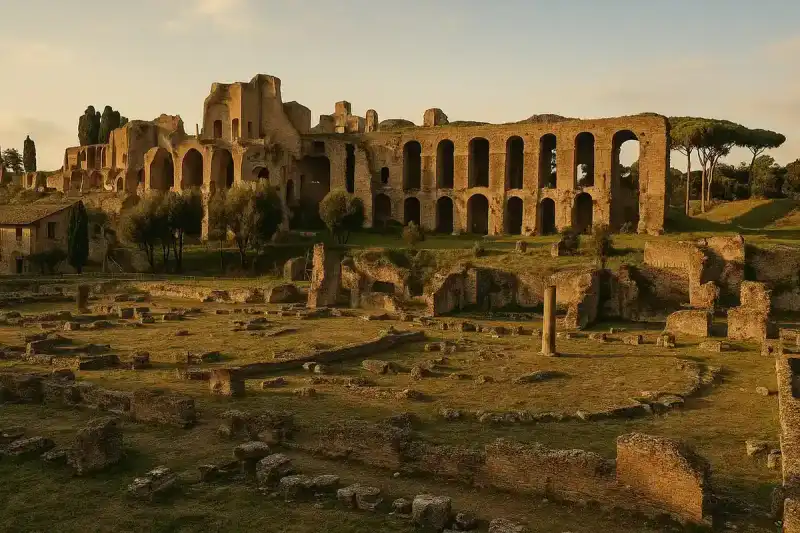
Palatine Hill Rome: Emperors' Palaces & Birthplace of Rome Guide
Roman EmpireExplore Palatine Hill, Rome's oldest neighborhood and imperial palace complex. Complete 2026 guide t...
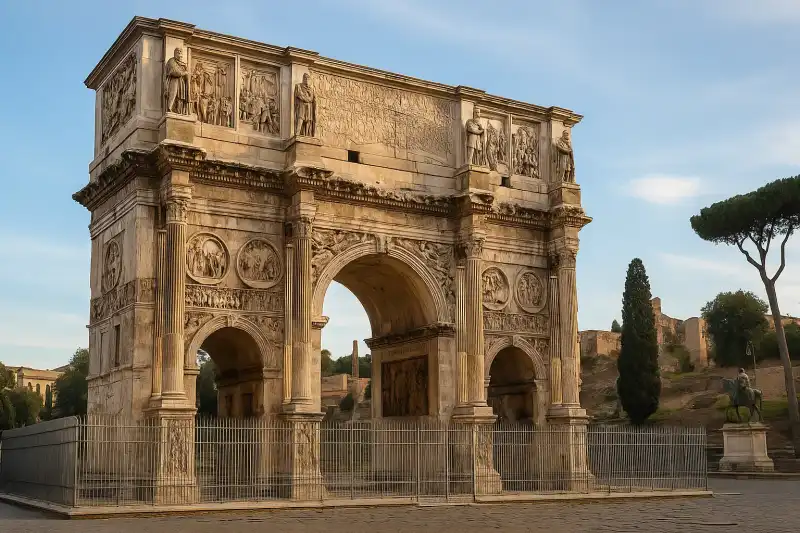
Arch of Constantine Rome: Triumph Over Maxentius Guide
Roman EmpireThe Arch of Constantine commemorates Constantine's 312 CE victory. Spolia details, best photo angles...
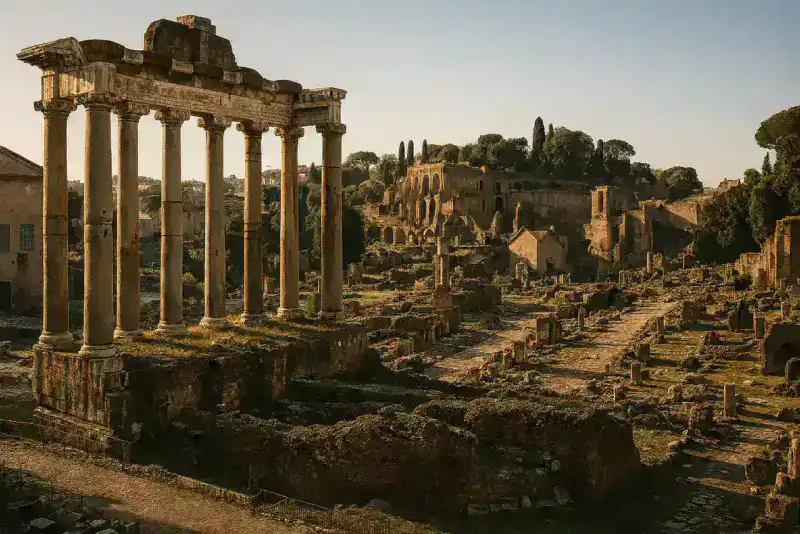
Roman Forum Rome: Heart of Ancient Republic Guide
Roman Republic/EmpireNavigate the Roman Forum's temples, basilicas, triumphal arches. Complete layout, highlights, Palati...