Quick route summary
This 3-day route uses Rome as a single base and keeps the focus on the ancient city and its working edges. Start with the Colosseum, Roman Forum, and Palatine Hill, then spend a day linking the Pantheon, Largo Argentina, the Circus Maximus, and the Baths of Caracalla. The final day moves outward to the Appian Way and Ostia Antica, where Rome feels less like a capital of monuments and more like a city that needed roads, ports, tombs, warehouses, and water systems to function.
The pace is busy, but not foolish. You can see Rome’s greatest ancient cluster in three days, but you cannot see every ruin well. This itinerary deliberately skips Tivoli, the Etruscan day trips, and most museum-heavy plans so the ancient route stays readable.
Who this itinerary is for
This itinerary is for travelers who want ancient Rome as the spine of a short city stay. It works well if you like walking, can start early, and care about how the city actually operated: spectacle, courts, temples, palaces, baths, roads, and ports.
It is not the best plan if you want a slow food-and-neighborhood trip, a Vatican-heavy itinerary, or long museum days. Those can be excellent, but this route is built around ancient urban power and the infrastructure that held it up. Rome rewards curiosity, but it punishes overpacking.
Route at a glance
- Day 1: Overnight in Rome. Visit the Colosseum, Roman Forum, Palatine Hill, and Arch of Constantine with timed entry and a slow walking pace.
- Day 2: Overnight in Rome. Walk central ancient sites around the Pantheon and Largo Argentina, then continue to the Baths of Caracalla and Circus Maximus.
- Day 3: Overnight in Rome. Use the morning for the Appian Way, then visit Ostia Antica if transport, heat, and energy line up.
Practical logistics before you go
Stay central for all three nights. Monti, the historic center, Celio, Testaccio, Trastevere, or areas with easy metro or tram access can all work. The main point is not changing hotels. Rome already gives you enough movement.
Book Colosseum tickets in advance, especially if you want the Arena Floor or underground areas. The Forum and Palatine Hill are large, uneven, and exposed, so wear real shoes and carry water. Do not judge the day by distance on a map. Ancient Rome is compact, but stone, stairs, sun, and crowds add up.
The Pantheon now requires more planning than it once did, so check current ticket and timing rules before Day 2. Baths of Caracalla is much easier if you pair it with a taxi, bus, metro, or a route that also includes Circus Maximus. It is walkable for some travelers, but not everyone wants that walk after a full morning.
For the Appian Way, decide in advance whether you want to walk, bike, or take a guided route. The road is wonderful, but logistics can get messy if you improvise. Ostia Antica is easier by public transport than many Rome-area ancient sites, but it still deserves several hours. In summer, start early and be ready to cut the Appian Way short rather than turning the final day into a heat test.
Day 1: Colosseum, Roman Forum, and Palatine Hill
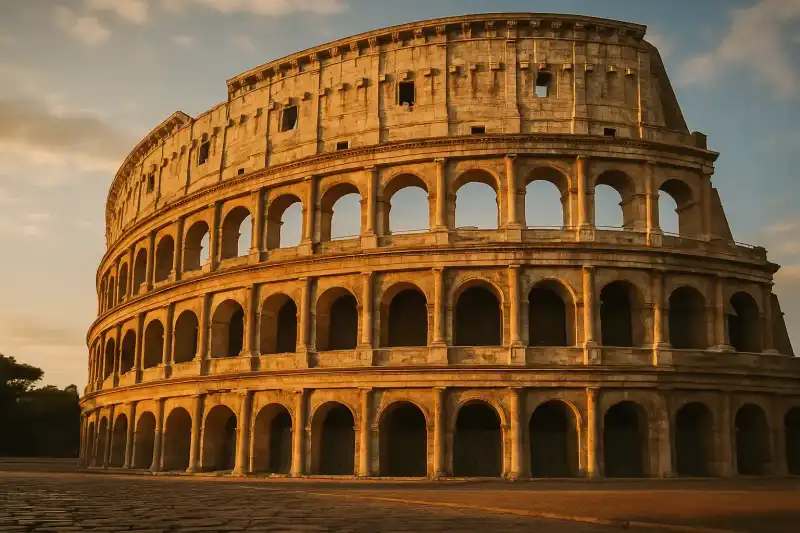
Start with the Colosseum, using timed entry and a realistic arrival buffer. The building opened under Titus in 80 CE, after Vespasian began construction on land once tied to Nero’s private palace. That choice mattered. The Flavian emperors turned a hated imperial pleasure zone into public spectacle, with animal hunts, executions, gladiatorial contests, and carefully managed crowd movement.
A guide can be useful here because the Colosseum, Forum, and Palatine form one historical cluster, not three unrelated ticket items. A Colosseum, Roman Forum, and Palatine Hill guided tour can help if you want the day’s sequence explained without spending half your time decoding ruins in the sun.
Pause at the Arch of Constantine before entering the Forum area. It commemorates Constantine’s victory over Maxentius in 312 CE, but look closely at the reused reliefs from earlier imperial monuments. Late Roman power often spoke by borrowing the visual language of admired emperors. The arch is not just a victory marker. It is a carefully assembled political argument.
Continue into the Roman Forum. This was the messy civic heart of Rome: temples, basilicas, speaker platforms, law courts, triumphal routes, memorials, and political theater crowded into one valley. It is easy to get lost in names. Focus instead on function. People came here to argue, worship, judge, trade, remember victories, and watch elites compete for public visibility.
Finish on the Palatine Hill, where Rome’s origin legends and imperial palace landscapes overlap. The hill was tied to the story of Romulus, then later became elite real estate and finally a stage for imperial residence. The views over the Forum and Circus Maximus help the whole day click into place: Rome’s power was built vertically as well as politically.
Day 2: Pantheon, Largo Argentina, and Baths of Caracalla
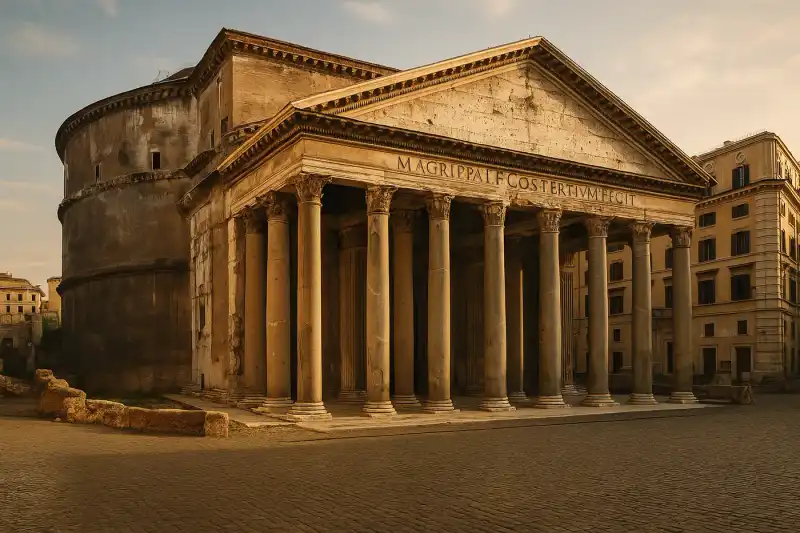
Begin at the Pantheon before the area gets too crowded. The present building is usually associated with Hadrian’s rebuilding in the 2nd century CE, though its inscription preserves Agrippa’s name from the earlier Augustan project. The dome is still the thing to notice. Its concrete coffers, oculus, and changing aggregate show Roman engineering solving weight and space with quiet confidence.
Walk to the Temples of Largo Argentina. The site is often treated as a quick viewpoint, but it is useful for seeing Republican sacred architecture below the modern street level. It also sits near the area linked to Julius Caesar’s assassination in 44 BCE, which makes the neighborhood feel less like a postcard and more like a political landscape layered under traffic.
From there, continue toward the Circus Maximus if you want the scale of Roman mass entertainment without another ticketed monument. Most of the ancient structure is gone, but the shape of the valley still does some work. Chariot racing was not a side hobby in Roman culture. It drew enormous crowds, factional loyalties, and imperial attention.
Spend the afternoon at the Baths of Caracalla. Built in the early 3rd century CE, the baths were not just a place to wash. They were a vast public complex with heated rooms, pools, exercise areas, libraries, gardens, service corridors, and water demands on a scale that makes imperial Rome feel intensely practical. The ruins are huge, but the best part is imagining the maintenance: furnaces, aqueduct supply, slaves, workers, cleaning, crowds, and social routines.
Do not add the Appian Way today unless you are skipping Ostia tomorrow. The Baths of Caracalla deserve more time than many visitors give them, and Day 1 will still be in your legs.
Day 3: Appian Way and Ostia Antica
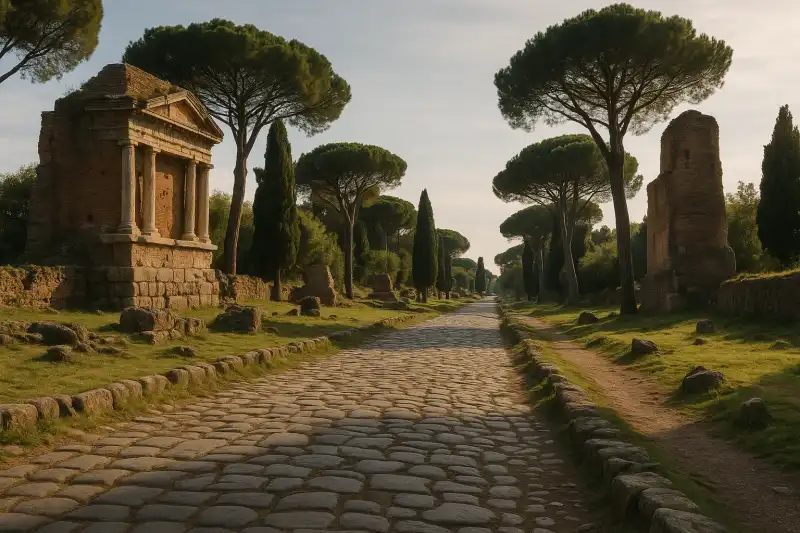
Use the final day to leave the monumental center. Start with the Appian Way, Rome’s great road south. Begun in 312 BCE under Appius Claudius Caecus, the road carried soldiers, merchants, officials, funerary processions, and later Christian memory. The stones are uneven, the logistics can be awkward, and that is partly the point. Ancient Rome was not only arches and marble. It was movement.
Decide whether to walk, bike, or take a guided route before you go. A guided Appian Way bike tour from Rome can be useful because the road, catacomb zones, aqueduct views, and traffic transitions are not always intuitive. If you go independently, keep the route short and focused rather than trying to cover every tomb and side road.
Then continue to Ostia Antica if you still have the energy and the weather is reasonable. Ostia was Rome’s port city at the mouth of the Tiber, and it gives you something central Rome rarely can: a sense of ordinary urban fabric. Streets, apartment blocks, baths, warehouses, latrines, taverns, shrines, mosaics, and a theater all sit within a walkable ancient town.
Ostia is where Rome’s appetite becomes visible. Grain, oil, wine, people, goods, records, sailors, freedmen, officials, and merchants all moved through systems like this. The capital’s monuments were impressive, but they depended on ports, roads, storage, and labor. Give Ostia more time than the map suggests.
If combining the Appian Way and Ostia feels too much, choose one. Pick the Appian Way for roads, tomb landscapes, and the edge of the city. Pick Ostia for urban life, trade, and a better sense of how Roman society worked below the level of emperors.
The historical thread: spectacle, civic space, and the machinery of empire
This route works because it moves from Rome’s most visible power to the systems that made that power possible. Day 1 shows spectacle, civic authority, and imperial self-presentation: the Colosseum, Forum, Palatine Hill, and Constantine’s arch all used stone to organize memory and status.
Day 2 shifts to engineering and urban life. The Pantheon makes Roman concrete feel almost elegant. Largo Argentina gives you Republican sacred space under the modern city. The Baths of Caracalla show the labor and water systems behind public luxury.
Day 3 leaves the center. The Appian Way and Ostia Antica make Rome feel connected, supplied, and constantly in motion. Roads and ports are less glamorous than amphitheaters, but they are the reason the city could act like the center of a Mediterranean empire.
Transportation notes
Use walking and public transport for the central days, but do not underestimate how much walking the Forum and Palatine require. Distances are short, surfaces are uneven, and shade is limited.
For Day 1, book the Colosseum, Forum, and Palatine as one cluster. Do not schedule the Vatican Museums afterward. That is not efficient. That is just exhausting.
For Day 2, taxis or public transport can save energy between the historic center and the Baths of Caracalla. Walking is possible, but it may not be the best use of your legs after Day 1.
For Day 3, the Appian Way needs a transport plan. Buses, taxis, bikes, and guided tours can all work, but improvising often wastes time. Ostia Antica is reachable by train from Rome, though service patterns can change, so check current routes before you go.
Optional add-ons and swaps
If you want a Rome-area imperial day, swap Day 3 for Hadrian’s Villa or Hadrian’s Villa in Tivoli. This is a full day, not a quick add-on. Remove Ostia and the Appian Way if you choose Tivoli.
For an Etruscan swap, visit Cerveteri or Tarquinia instead of Ostia. Cerveteri is better for urban-feeling tomb landscapes. Tarquinia is better for painted tombs. Both need more planning than central Rome.
If you want one more ancient site inside Rome, add Trajan’s Market or Trajan’s Market on Day 2. Remove Circus Maximus or shorten the Pantheon area walk to make room.
If weather is hot, cut the Appian Way and keep Ostia Antica. Ostia has exposed areas too, but it gives you more shade breaks, clearer site flow, and a stronger payoff for many first-time visitors.
Shorter and longer itinerary options
For a two-day ancient Rome route, keep Day 1 and Day 2. You will miss the road and port story, but you will cover the strongest central ancient sites.
For a longer Rome stay, add one day for Ostia Antica if you skipped it, one day for Hadrian’s Villa, and one day for Cerveteri or Tarquinia. That gives the route a wider Lazio frame without pretending Rome itself is all of ancient Italy.
For a regional itinerary, continue south to Pompeii, Herculaneum, Paestum, or Baia. That becomes a Rome to Campania ancient-sites route, not a 3-day Rome itinerary.
Related ancient sites
- Arch of Constantine
- Circus Maximus
- Temples of Largo Argentina
- Trajan’s Market
- Trajan’s Market Guide
- Castel Sant’Angelo
- Temple of Minerva Medica
- Hadrian’s Villa
- Cerveteri
- Tarquinia
FAQ
The most common planning questions for this route are answered below.