Quick Info
At a glance
The Roman Forum is where Rome learned how to stage power in public. Long before the empire reached three continents, this valley became the city’s civic engine: a place for law, religion, politics, finance, ceremony, and social theater.
For modern visitors, the challenge is not a lack of monuments. It is the opposite. The Forum contains so many layers that first-time walks can feel like beautiful confusion. A temple here, a basilica there, an arch at one end, speeches once delivered somewhere in between.
This guide is built to make the site legible. If you understand the layout and sequence, the Forum shifts from ruin field to readable city center.
Why the Roman Forum Matters
The Forum was not one-function architecture. It was a civic operating system.
- Senators debated and negotiated power.
- Magistrates and legal actors ran public business.
- Priests managed ritual calendars tied to state legitimacy.
- Merchants, petitioners, and ordinary citizens moved through the same space.
That overlap is exactly why the Forum matters: it reveals how Roman public life fused religion, law, and politics rather than separating them cleanly.
Historical Arc in Four Phases
Early urban formation
The valley was gradually drained and organized from a low-lying area into a central civic zone.
Republican civic maturity
Temples, meeting spaces, and early basilicas multiplied as Rome’s political institutions hardened.
Imperial reframing
Emperors added or modified monuments to align their rule with republican memory while redirecting authority.
Late antique transition
Administrative priorities shifted, Christianity transformed ritual life, and maintenance patterns changed, but the Forum remained symbolically central long after peak use.
Orientation: How to Read the Site Quickly
Think in axes
Use the long processional line and major nodal points rather than trying to memorize every ruin immediately.
Use elevation deliberately
Slight changes in level help explain processions, visibility, and hierarchy.
Anchor to a handful of constants
Pick a few major structures as navigation anchors, then add detail in layers.
Core Monuments and What They Tell You
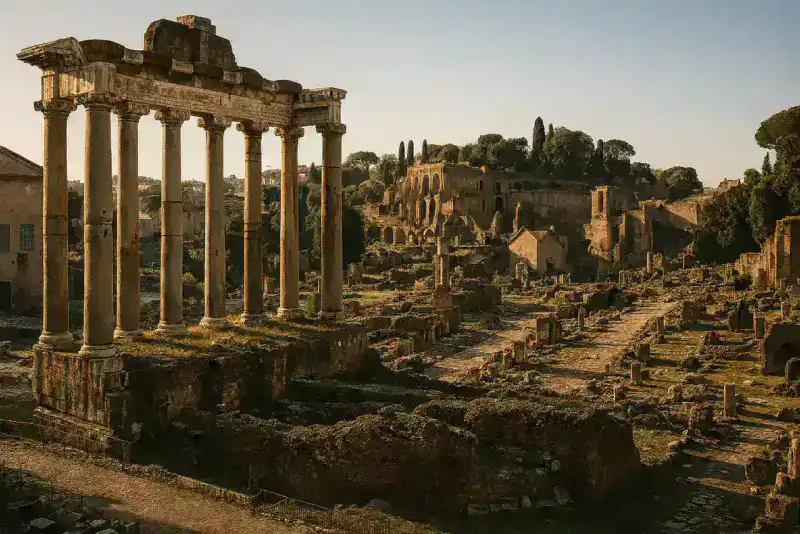
Temple of Saturn zone
Associated with state treasury functions and old republican prestige, this area signals how sacred and fiscal authority overlapped.
Basilica zones
Roman basilicas were administrative and legal workhorses, not churches in their original function. They demonstrate how civic architecture handled volume and procedure.
Temple of Vesta and adjacent sacred cluster
This region points to the intimate relationship between household cult symbolism and state continuity.
Rostra and speech space
Public speaking platforms mattered because persuasion in Rome was spatial, performative, and intensely visible.
Arches and commemorative endpoints
Triumphal and memorial structures framed movement through the valley and encoded political narratives in stone.
Suggested First-Time Route (High Clarity)
- Enter and pause for a broad orientation view.
- Walk the main axis without stopping at every marker.
- Return for focused monument reads in smaller loops.
- End with an elevated viewpoint to connect pieces.
This two-pass method is the fastest way to reduce overload.
Pairing the Forum with Palatine and Colosseum
The Forum is most coherent when paired with adjacent zones.
- Colosseum: spectacle and controlled mass entertainment
- Forum: civic and ritual administration
- Palatine: residential and imperial command geography
Seen together, these three areas explain how Rome balanced public theater, institutional governance, and elite power.
Practical Visit Planning (2026)
- Ticketing: Choose between combined Colosseum admission and Forum Pass SUPER; compare the access below.
- Time needed: 90-150 minutes in the Forum alone depending on depth
- Best timing: Earlier starts reduce heat and crowd compression
- Footing: Uneven surfaces require stable shoes
- Pacing tip: Schedule breaks; cognitive fatigue is real here
Always confirm current access rules before visiting.
Choose a Forum ticket before booking a tour
Decide whether you want to enter the Colosseum as well as the Forum. These are different admission choices, not interchangeable tour names:
- Colosseum, Roman Forum and Palatine: The standard ticket is valid for 24 hours, with one entry to the Colosseum (first and second levels, without the arena) and one entry to the Roman Forum-Palatine archaeological area. If you already hold this ticket, check its validity before buying another Forum admission.
- Forum Pass SUPER: Includes the Roman Forum, Palatine and Imperial Fora, plus the listed SUPER sites and exhibitions. It does not include the Colosseum. Check the operator’s current access list and individual site closures rather than assuming every interior will be open.
- Want special Colosseum access too? Compare the Arena, Underground and Attic ticket options before choosing a combined visit. A tour title mentioning ancient Rome is not proof that all three sites or special-access areas are included.
Use the archaeological park’s official ticket comparison and its official booking portal for current prices, conditions and availability. Tickets are issued in the holder’s name; bring your ticket and an identification document. Colosseum admission requires a reserved entry time, so build your Forum walk around that slot if visiting both.
For a guided tour, check that the actual itinerary enters the Forum, whether admission is included, which areas it covers, the meeting point and cancellation terms. Do not infer underground access from a generic listing title. An independent visit with official admission is an alternative if you prefer your own pace.
Ticket comparison and entry requirements checked against the official archaeological park page on 13 September 2026. This source check applies to this booking section, not every visitor or historical claim in the guide.
How to Avoid Information Overload
Focus by question, not by monument count
Choose one lens for each pass: politics, religion, engineering, or urban design.
Limit guidebook multitasking
Too many simultaneous references break spatial memory.
Reconstruct less, observe more
Instead of imagining every wall at full height, track circulation, sightlines, and relative placement.
Common Mistakes to Avoid
- Treating the Forum as a quick bridge between headline sites
- Ignoring context signs and orientation points
- Trying to memorize every named structure on one pass
- Visiting in peak heat with no hydration plan
Why the Roman Forum Is Worth Real Time
The Forum rewards methodical attention. It is not the most photogenic space in Rome at first glance, but it is one of the most explanatory. If you walk it with structure, you come away understanding how Roman public life actually functioned, not just what its monuments looked like.
That shift—from postcard recognition to civic comprehension—is what makes the Forum indispensable.
Quick Facts
| Detail | Info |
|---|---|
| Site type | Core civic-religious center of ancient Rome |
| Historical use | Politics, law, religion, finance, ceremony |
| Typical visit length | 90-150 minutes |
| Best paired sites | Palatine Hill and Colosseum |
| Terrain | Uneven archaeology paths and exposed sections |
| Best strategy | Two-pass walk: orientation first, details second |
| Ticketing | Combined Colosseum admission or Forum Pass SUPER; compare access above |
Nearby Sites to Pair
Quick Facts
| Attribute | Details |
|---|---|
| Location | Rome, Lazio, Italy |
| Country | Italy |
| Region | Lazio |
| Civilization | Roman Republic/Empire |
| Historical Period | 8th century BCE - 5th century CE |
| Established | 7th century BCE |
| Coordinates | 41.8924, 12.4852 |
Frequently Asked Questions
Roman Forum entry?
The standard Colosseum, Roman Forum and Palatine ticket includes the Forum. Forum Pass SUPER is an alternative for the Forum, Palatine and Imperial Fora but does not include the Colosseum. Check the official ticket comparison for current prices and access conditions.
Best Forum route?
Via Sacra east-west, uphill to Capitoline.
Where was Caesar cremated?
Rostra platform, now Temple of Julius Caesar site.
How large is Roman Forum?
200m x 150m valley, extensive ruins.
Nearby Ancient Sites
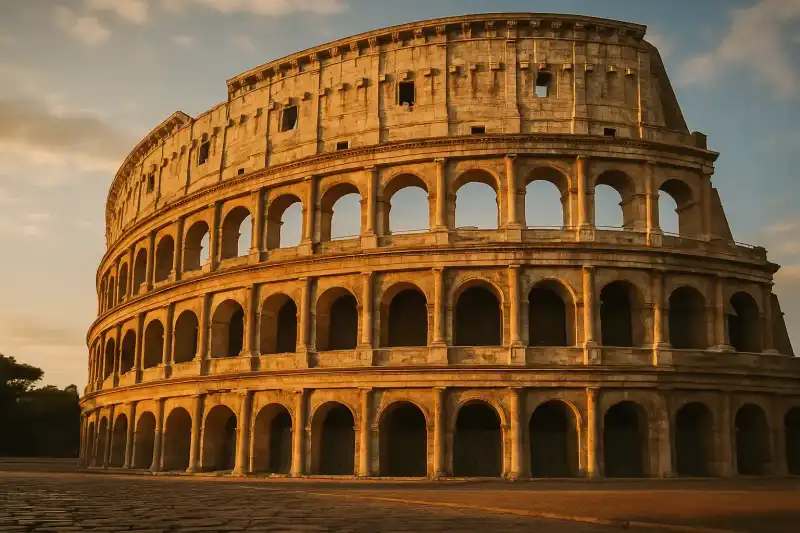
Colosseum Rome: Complete 2026 Guide to Arena Floor, Tickets, and Timing
Roman EmpirePlan the perfect Colosseum visit with timed-entry strategy, Arena Floor and underground access tips,...
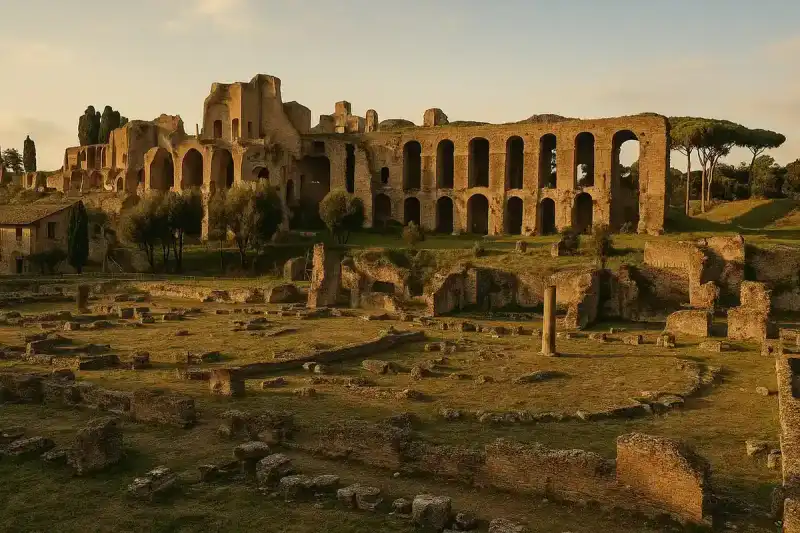
Palatine Hill Rome: Emperors' Palaces & Birthplace of Rome Guide
Roman EmpireExplore Palatine Hill, Rome's oldest neighborhood and imperial palace complex. Complete 2026 guide t...
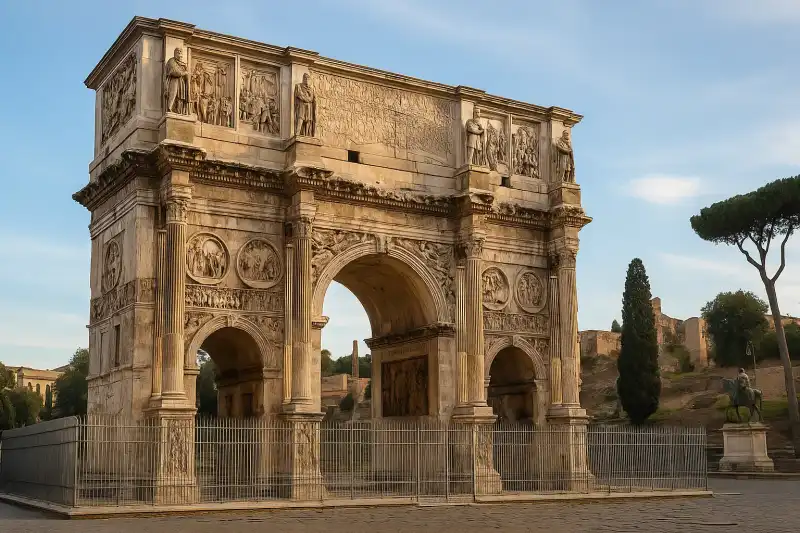
Arch of Constantine Rome: Triumph Over Maxentius Guide
Roman EmpireThe Arch of Constantine commemorates Constantine's 312 CE victory. Spolia details, best photo angles...
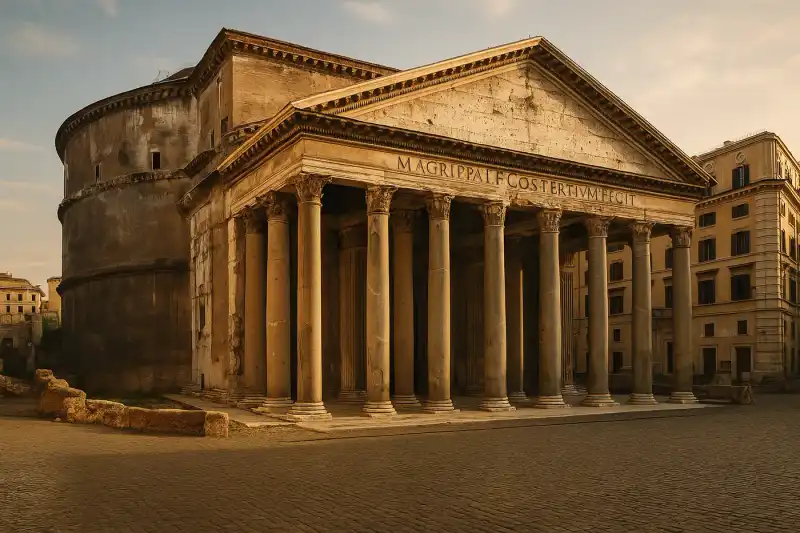
Pantheon Rome: Ultimate Guide to Rome's Best-Preserved Ancient Temple
Roman EmpireMaster your Pantheon visit with history, dome engineering secrets, visiting tips, skip-the-line opti...