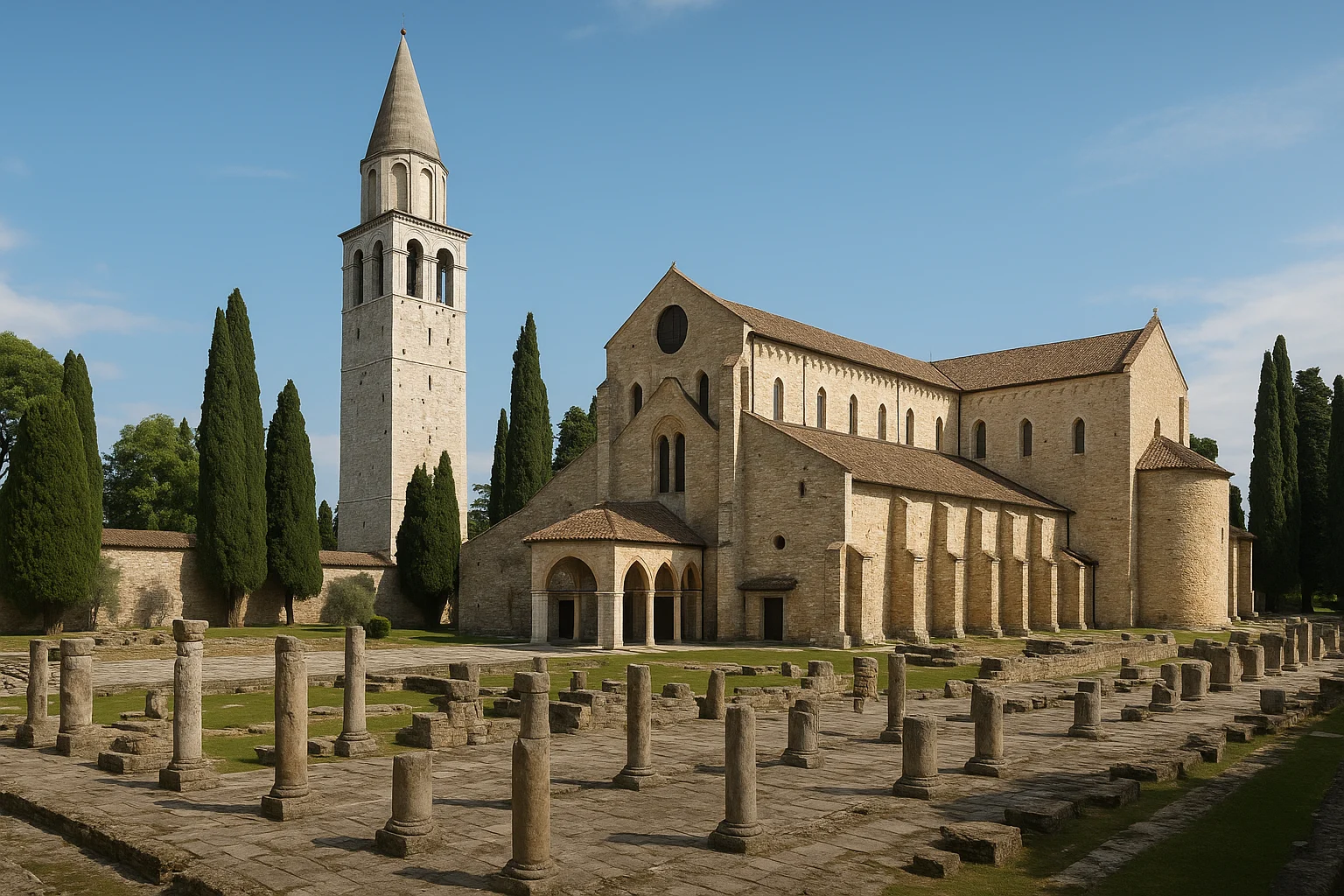
Quick Info
Aquileia sits in the flat agricultural plain of Friuli-Venezia Giulia, about ten kilometers from the Adriatic coast. Nothing about the landscape today suggests that this was once the fourth-largest city in the Roman Empire, a commercial hub that rivaled Milan and Carthage, or the site where early Christianity took root across northeastern Italy. That gap between present quiet and past significance is exactly what makes Aquileia worth the trip. This is one of Europe’s most undervisited major Roman sites, and it rewards anyone willing to look past the absence of towering monuments.
Why Aquileia Matters
Most travelers building a Roman Italy itinerary focus on spectacle: the Colosseum, the Pantheon, Pompeii. These are essential, but they tell a particular story - urban grandeur, imperial display, catastrophic preservation. Aquileia tells a different and equally important one: how Roman power actually functioned across territory.
Founded as a military colony in 181 BCE, Aquileia became the critical junction between the Mediterranean trading world and the continental interior. Goods from Egypt, North Africa, and the eastern Mediterranean arrived at its river port, then moved overland toward the Danube frontier and across the Alps. Amber came south from the Baltic. Glass, wine, and metalwork moved in every direction. At its peak in the second and third centuries CE, the city held an estimated 100,000 people and served as the administrative capital of the Tenth Augustan Region.
What survives today - extraordinary mosaic floors, a partially excavated forum, a river port, and one of the best archaeological museums in northern Italy - adds up to something rare. Aquileia lets you understand the connective tissue of Roman civilization: trade networks, frontier logistics, and the religious transformations of late antiquity. UNESCO recognized this in 1998 when it designated the archaeological area and the patriarchal basilica as a World Heritage Site.
Historical Context
Republican Origins and Strategic Positioning
Rome established Aquileia as a Latin colony to secure the northeastern frontier against Celtic and Illyrian incursions. The site was chosen for its position at the head of the Adriatic, where the Natissa River provided access to the sea while the flat terrain allowed road connections in multiple directions. Within decades, Aquileia became the staging point for Roman campaigns into Istria, Dalmatia, and the Danube region.
Imperial Apex
By the first century CE, Aquileia had evolved from military outpost to full commercial metropolis. The city’s river port handled long-distance Mediterranean trade, while overland routes connected it to Noricum (modern Austria), Pannonia (Hungary), and points east. The amber trade route from the Baltic terminated here. Emperor Augustus visited. Marcus Aurelius used the city as a forward base during the Marcomannic Wars in the 170s CE. Maximian made it an imperial residence in the late third century.
Christian Transformation and Decline
Aquileia’s importance in early Christianity is often underappreciated. Bishop Theodore built the first great basilica complex here around 313 CE, immediately after the Edict of Milan legalized Christian worship. The mosaic floors from this period are among the earliest and largest surviving examples of Christian art anywhere. The patriarchate of Aquileia became one of the most powerful ecclesiastical seats in the western church, rivaling Rome and Milan in influence.
The city suffered devastating sacks - most famously by Attila’s Huns in 452 CE - and gradually declined as populations shifted to better-defended sites like Grado and eventually Venice. By the medieval period, Aquileia was a village built over the bones of a metropolis.
What to Prioritize On Site
Basilica and Mosaic Floors
This is the centerpiece. The Patriarchal Basilica contains over 750 square meters of fourth-century mosaic flooring, discovered beneath later medieval construction. The imagery spans Jonah and the whale, the Good Shepherd, marine scenes, geometric patterns, and a remarkable depiction of the struggle between a rooster and a tortoise (interpreted as a contest between light and darkness). A glass floor allows you to walk above the mosaics and study them at close range. The adjacent crypt contains earlier frescoes and additional mosaic fragments. Plan at least 45 minutes here, more if the iconographic details interest you.
Roman Forum and River Port
The partially excavated forum gives a sense of Aquileia’s civic scale, though it requires some imagination - column bases, foundation outlines, and paving stones are the main visible elements. More evocative is the river port area along the old course of the Natissa, where you can see quay walls, warehouse foundations, and loading infrastructure. This is where you feel the commercial reality of the city most directly.
National Archaeological Museum
Do not skip this. The Museo Archeologico Nazionale contains one of Italy’s strongest provincial Roman collections: portrait busts, trade goods, amber objects, glassware, surgical instruments, funerary monuments, and inscriptions. The collection contextualizes everything you see outdoors. The gem and amber galleries alone justify a visit. Allow 60 to 90 minutes.
Early Christian Museum and Burial Grounds
The Museo Paleocristiano houses mosaic fragments and sculptural elements from the broader basilica complex. Nearby, the Sepolcreto (Roman cemetery along the old road) preserves funerary monuments in their original positions - a small but atmospheric stretch that gives a sense of the city’s arterial layout.
Practical Visit Strategy
Duration: A focused visit covering the basilica, forum area, and archaeological museum takes three to four hours. Adding the river port, early Christian museum, and cemetery stretch makes a full five-hour day. This is not a site that benefits from rushing.
Timing: Mornings are best, especially in summer when afternoon heat on the open archaeological areas becomes uncomfortable. The basilica opens at 9:00 AM (check seasonal hours, as winter schedules shift). Weekday mornings in shoulder season offer the best combination of good light and thin crowds.
Getting there: Aquileia is roughly 40 minutes by car from Trieste and about 90 minutes from Venice. Public transport exists (bus from Cervignano del Friuli, which has a train station on the Venice-Trieste line) but a car gives you far more flexibility, especially for pairing with nearby sites. Parking in the town is straightforward and mostly free.
What to bring: Comfortable walking shoes for uneven ground and gravel paths across the archaeological zones. Sun protection in summer - shade is limited outdoors. Binoculars or a zoom lens are useful for studying mosaic details in the basilica from the elevated walkway. A basic guide to Roman mosaic iconography adds depth if you have one.
Tickets: The basilica is free to enter, though the crypt may have a small fee. The archaeological museum charges a modest admission. A combined ticket may be available covering multiple sites.
Route Pairing and Nearby Sites
Aquileia sits in a region that most Italy itineraries skip entirely, which is a missed opportunity. Several strong pairings work well.
Aquileia and Grado (20 minutes): The island town of Grado was Aquileia’s successor as the patriarchal seat after the Lombard invasions. Its early Christian basilicas contain mosaics directly connected to Aquileia’s artistic tradition. This is a natural half-day extension with the bonus of a seafront lunch.
Aquileia and Trieste (45 minutes): Trieste’s Roman theater and Capitoline hill traces add another layer, and the Habsburg-era city center provides a striking chronological contrast. A full day combining both sites works well.
Aquileia and the Veneto Roman circuit: Travelers building a broader itinerary through northeastern Italy can connect Aquileia with the Verona Arena and the Roman Temples of Brescia across several days, tracing Roman power from frontier to provincial capitals.
Broader Italy connections: Aquileia functions as a systems-level complement to the monumental sites further south. Visiting here before the Colosseum or Pantheon in Rome reframes those buildings within the larger infrastructure that sustained them.
Final Take
Aquileia does not compete with Rome or Pompeii on visual drama. It competes on explanatory power. If you want to understand how the Roman world actually operated - how goods moved, how frontiers were managed, how Christianity spread through civic infrastructure - this site delivers with unusual clarity. The basilica mosaics alone rank among the most important early Christian artworks in Europe. Combined with a strong museum and an archaeological landscape that continues to yield new finds, Aquileia belongs on any serious ancient world itinerary. The fact that you will likely have most of it nearly to yourself only makes the experience better.
Quick Facts
| Attribute | Details |
|---|---|
| Location | Aquileia, Friuli-Venezia Giulia, Italy |
| Country | Italy |
| Region | Friuli-Venezia Giulia |
| Civilization | Roman |
| Historical Period | Roman Republic to Late Antiquity |
| Established | Founded as a Roman colony in 181 BCE |
| UNESCO Status | World Heritage Site (1998) |
| Coordinates | 45.7683, 13.3695 |
Frequently Asked Questions
What makes Aquileia historically important compared with bigger Italian Roman sites?
Aquileia was a major Roman frontier-port and commercial hub, so it reveals imperial logistics and trade networks rather than only monumental spectacle.
How much time do you need in Aquileia?
Most travelers should budget 3 to 5 hours for core archaeology, basilica mosaics, and museum context.
Is Aquileia suitable as a day trip from Venice?
Yes, especially with a car or organized transport, though routing from Trieste is often simpler and faster.
Should you prioritize the basilica even on an archaeology-focused day?
Absolutely. The floor mosaics are central to understanding Aquileia's late antique religious and civic continuity.
Nearby Ancient Sites
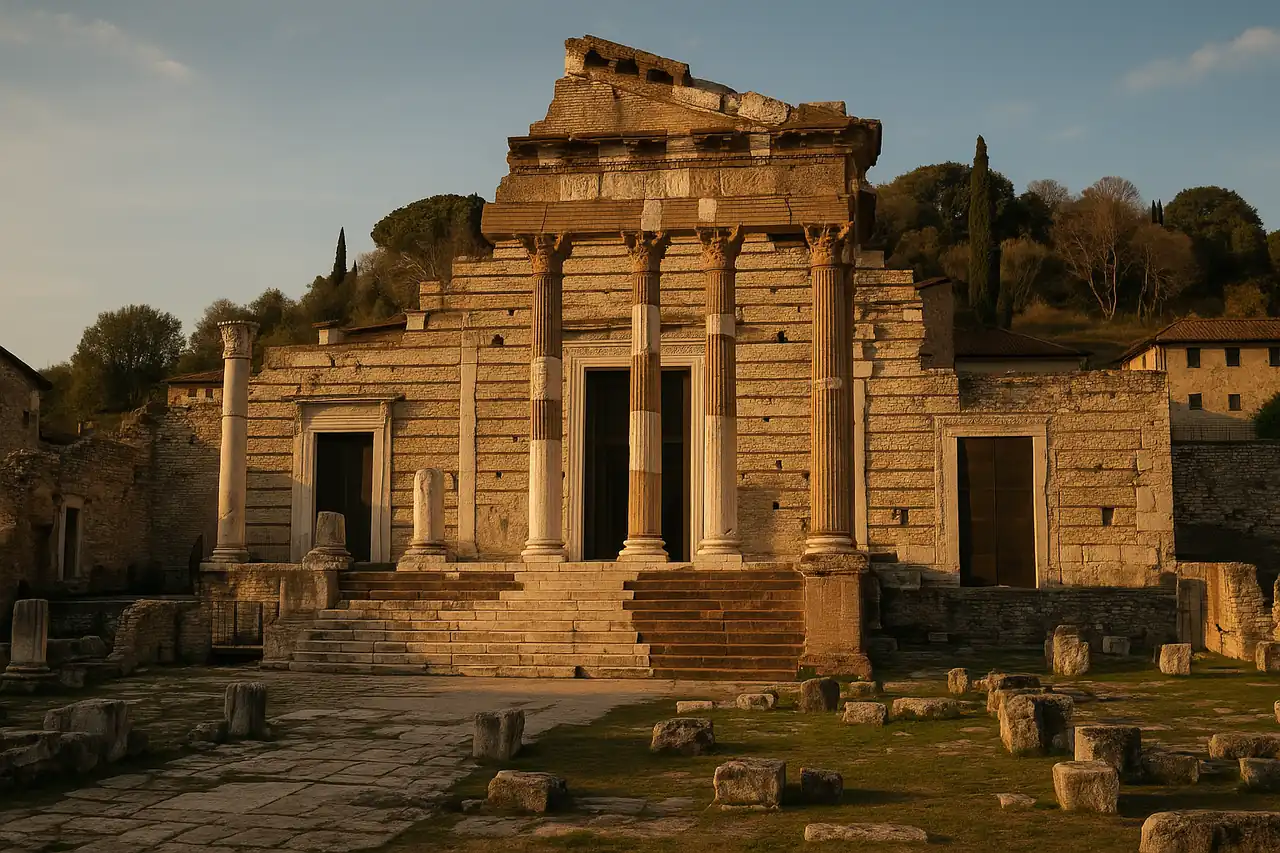
Roman Temples of Brescia Guide 2026: Capitolium Ruins, Museum Access, and Route Strategy
RomanPlan a smart visit to the Roman Temples of Brescia with practical timing, ticketing guidance, and co...
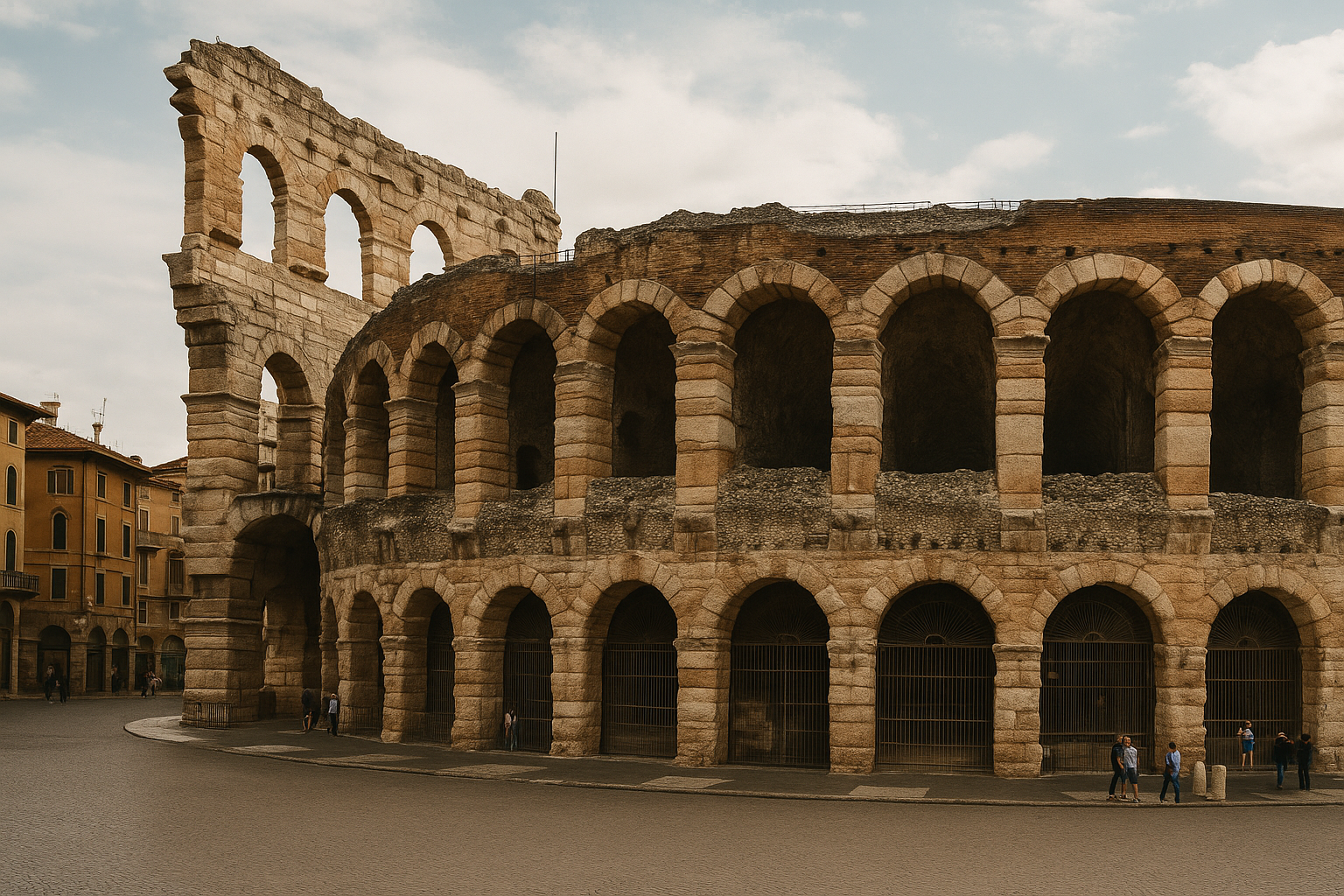
Verona Arena: Complete Guide to Italy's Best-Preserved Roman Amphitheater
Roman EmpirePlan your Verona Arena visit with Roman history, opera season tips, ticket strategy, and practical a...
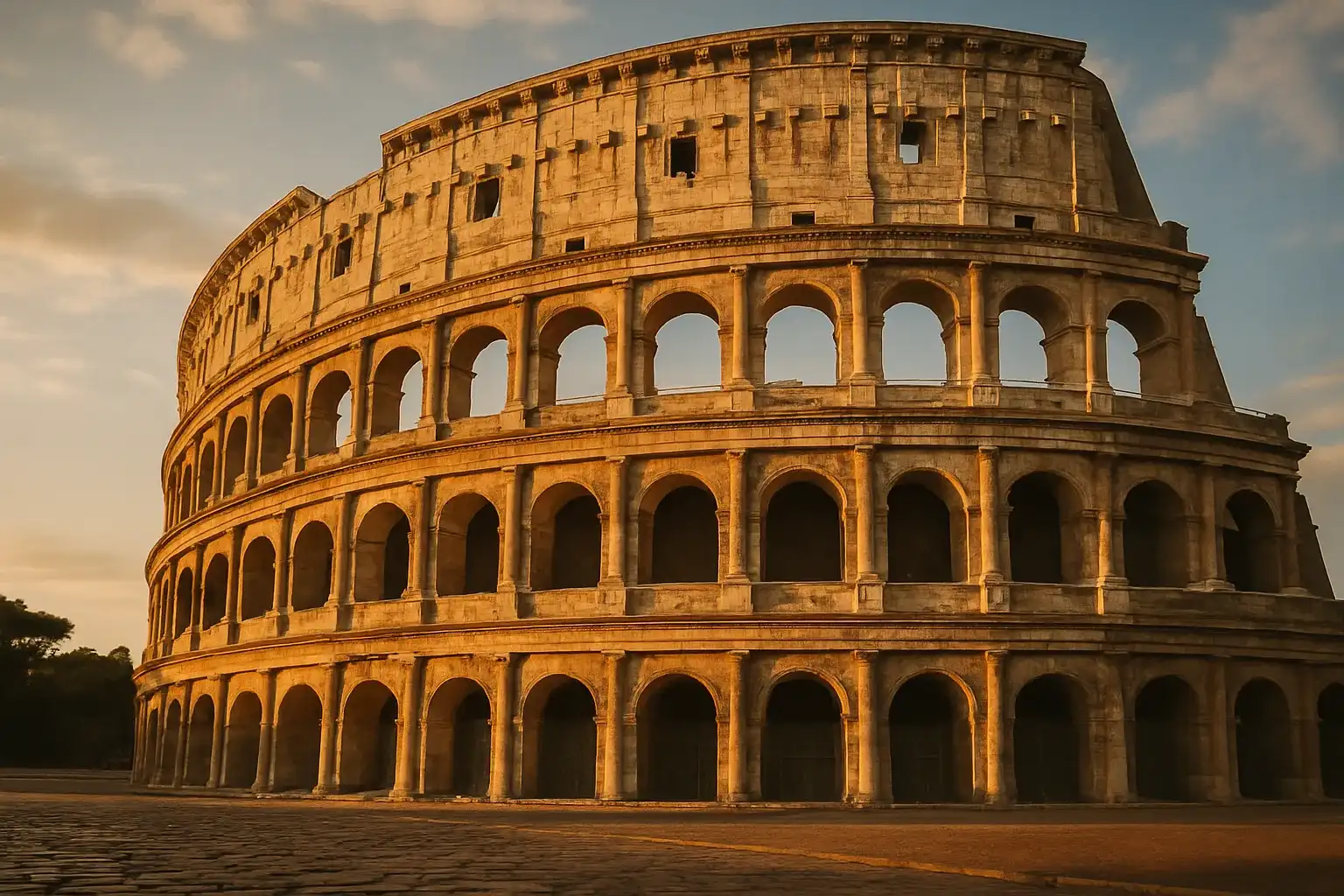
Colosseum Rome: Complete 2026 Guide to Arena Floor, Tickets, and Timing
Roman EmpirePlan the perfect Colosseum visit with timed-entry strategy, Arena Floor and underground access tips,...
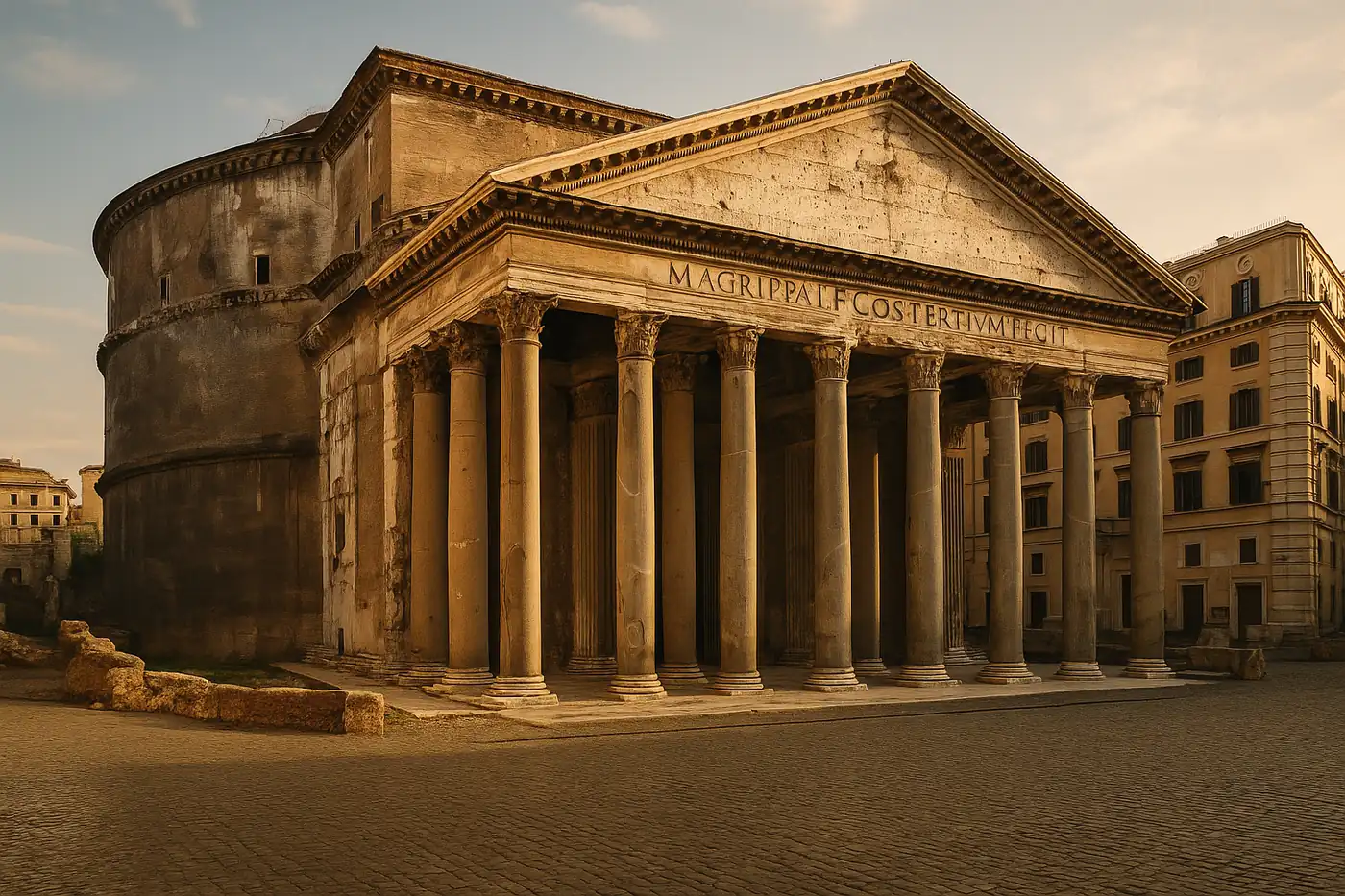
Pantheon Rome: Ultimate Guide to Rome's Best-Preserved Ancient Temple
Roman EmpireMaster your Pantheon visit with history, dome engineering secrets, visiting tips, skip-the-line opti...