Quick Info
At a glance
Arbor Low Stone Circle in the United Kingdom sits high on the limestone uplands of Derbyshire, where the Peak District opens into broad fields, dry-stone walls, and long views under a restless sky. It is one of those prehistoric places that feels larger than the map suggests. From a distance, the monument appears almost modest, set within working farmland and approached on foot through a simple gate. But once you stand beside its enormous encircling bank and ditch, and then look inward to the ring of great fallen stones, Arbor Low reveals itself as a site of deep age and unusual presence.
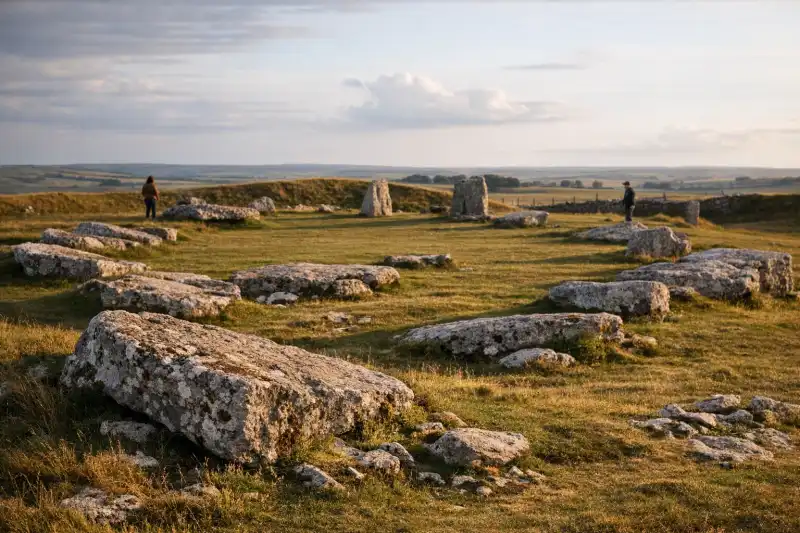
Unlike the upright silhouettes many travelers expect from famous megalithic monuments, the stones here mostly lie flat, scattered within the great henge enclosure like the remains of a ceremony whose meaning has been partly lost. That difference is part of the site’s power. Arbor Low does not present itself as polished heritage or theatrical ruin. Instead, it offers something quieter and more atmospheric: a chance to walk through a ceremonial landscape that still feels tied to the rhythms of weather, pasture, and open ground. Nearby lies Gib Hill, an important prehistoric mound, reminding visitors that Arbor Low was never just a circle in isolation but part of a broader sacred landscape. For anyone interested in Neolithic Britain, ritual architecture, or the ancient history of England’s uplands, Arbor Low is one of the most compelling places to visit in the Peak District.
History
H3: Building a ceremonial landscape in the Neolithic
Arbor Low was created during the Late Neolithic, probably around 2500 BCE, a time when communities across Britain were constructing monumental ceremonial sites on a remarkable scale. This was the era of henges, cursus monuments, and stone circles, when landscapes were being shaped not only for settlement and farming but also for gathering, ritual, and social display. At Arbor Low, people chose a prominent plateau in what is now Derbyshire and built an impressive circular enclosure defined by a ditch inside a large outer bank. This arrangement identifies it as a henge, even though modern visitors often focus first on the stone circle within.
The monument measures roughly 90 meters across internally, making it one of the largest henges in the region. The ditch was excavated using antler picks and other simple tools, then the spoil was piled to form the surrounding bank. Two opposed entrances, roughly to the northwest and southeast, structured movement into the sacred interior. At some stage, large limestone slabs were erected within the enclosure to form the stone circle. A central setting of stones may also have existed, adding another focal point within the site.
What exactly happened here remains uncertain, but scholars generally agree that Arbor Low was not an ordinary domestic place. It was a ceremonial center, perhaps used for gatherings that drew communities from across the surrounding uplands. The labor involved in building it suggests cooperation and planning on a significant scale.
H3: From stone circle to burial landscape
In the centuries after the henge was built, the surrounding area continued to be used and reinterpreted. This long life is typical of major prehistoric monuments. Sacred places often attracted new activity from later generations, who inserted their own burial practices and markers into landscapes already rich in memory. At Arbor Low, the nearby mound known as Gib Hill is particularly important. This earthen barrow appears to have originated in the Neolithic and was later reused in the Early Bronze Age for burial activity, indicating that the ceremonial significance of the site endured across different periods.
This shift from monument building to burial emphasis reflects a broader pattern seen elsewhere in prehistoric Britain. Places that may once have hosted communal rites or seasonal gatherings were later associated with ancestors, lineage, and commemoration. Arbor Low’s story is therefore not a single episode of construction but a sequence of meanings layered over time. The circle, henge, and adjacent barrow likely formed a connected ritual complex rather than separate landmarks.
The stones themselves add another layer of mystery. Today they are recumbent, lying within the enclosure rather than standing. Whether they were deliberately toppled in later prehistory, fell gradually, or were disturbed in more recent centuries is still debated. Their present state has become part of the site’s identity, but it also complicates attempts to reconstruct its earliest appearance.
H3: Antiquarian interest and archaeological study
By the eighteenth and nineteenth centuries, Arbor Low had begun to attract antiquarians and early researchers interested in Britain’s prehistoric past. These visitors described the visible earthworks and stones, often comparing the site to better-known monuments such as Stonehenge or Avebury. Such accounts helped establish Arbor Low as one of England’s most significant prehistoric monuments, though interpretation was often shaped by speculation as much as evidence.
Systematic archaeological work gradually clarified the nature of the site. Excavations and surveys identified the form of the henge, confirmed the importance of the bank and internal ditch, and documented associated finds, including evidence of burials and later reuse nearby. Scholars also came to understand Arbor Low within a wider network of Peak District prehistoric sites rather than as an isolated curiosity. Its location in a limestone landscape with access to routes across central England may have contributed to its regional importance.
Modern archaeology has emphasized context: the surrounding barrows, field systems, topography, and visibility all matter when interpreting the monument. Arbor Low is now understood not simply as a ring of stones but as the heart of a ritual landscape shaped over many generations.
H3: Arbor Low today
Today, Arbor Low is protected as a scheduled ancient monument and recognized as one of the Peak District’s most important prehistoric sites. Although less internationally famous than some British stone circles, it is highly regarded by archaeologists, walkers, and heritage travelers. Its appeal lies partly in this balance: significant enough to reward a dedicated visit, yet still atmospheric and relatively uncommercialized.
The monument remains on private land with managed public access, and that arrangement has preserved much of its rural character. Visitors arrive on foot and experience the site in a setting that still feels agricultural and open rather than urban or heavily developed. The weather, the calls of birds over pasture, and the sweep of the Derbyshire plateau all contribute to the experience. Arbor Low survives not as a museum piece but as a prehistoric place still embedded in the living landscape.
Key Features
The most striking feature of Arbor Low is its henge earthwork. Even before you examine the stones, the scale of the circular enclosure is impressive. The outer bank rises broad and grassy, enclosing a ditch that runs inside it, a defining feature of henges in Britain and Ireland. This arrangement is the reverse of a defensive fortification, which is one reason archaeologists interpret Arbor Low as ceremonial rather than military. The bank and ditch establish a boundary, separating the ordinary world outside from a distinctive interior space. Crossing into the monument through one of its original entrances still feels meaningful, as if movement itself formed part of the ancient experience.
Within that enclosure lie around 50 large limestone blocks, most of them now fallen. Their recumbent state gives the circle a visual character unlike the upright drama of Castlerigg or the formal grandeur of Avebury. Here the stones seem to rest in the grass, heavy and weathered, their surfaces shaped by centuries of exposure. Yet their arrangement still suggests order. You can trace the arc of the ring and imagine the monument as it may once have stood, each stone marking a deliberate position within a carefully planned ceremonial design. This tension between ruin and legibility is one of Arbor Low’s greatest strengths. It invites interpretation without dictating it.
Near the center of the enclosure, a cove-like grouping or central setting has often been noted, although its exact original form remains uncertain. Such central features can be important in Neolithic monuments, creating a focus for ritual action or symbolic orientation. Standing in the middle of Arbor Low and looking outward toward the bank, you get a strong sense of enclosure and spatial control. The monument was designed to shape experience, not merely to be seen from afar.
The entrances are another key part of the site. Positioned opposite one another, they organize movement through the henge and may have aligned with routes, processions, or symbolic directions. Entering by these gaps in the bank is one of the clearest ways to appreciate Arbor Low as architecture rather than just archaeology. The design channels bodies and attention. It turns a circular field into a place with thresholds and sequence.
Just beyond the main monument, Gib Hill adds depth to the visit. This barrow-like mound is often treated as a companion feature, and rightly so. Its presence suggests that Arbor Low belonged to a larger ritual landscape, one in which burial, remembrance, and ceremonial assembly may all have intersected. Walking between the henge and Gib Hill helps modern visitors understand that prehistoric monuments rarely stood alone. They formed clusters, routes, and relationships in the land.
The setting matters as much as the physical remains. Arbor Low occupies elevated pastureland in the White Peak, where the open limestone countryside creates a feeling of exposure and breadth. The monument does not dominate a dramatic mountain skyline; instead, it sits in a subtler topography that reveals itself slowly. This is a landscape of rolling fields, changing cloud, and long agricultural continuity. The rural simplicity sharpens the impact of the monument. There are no towering visitor structures or urban distractions. The ancient site emerges directly from the ground.
Another notable aspect is the atmosphere created by preservation without over-restoration. Arbor Low has not been reconstructed into a neat vision of prehistory. The stones remain fallen. The earthworks are grass-covered rather than heavily interpreted by built infrastructure. For many travelers, especially those who prefer quieter heritage experiences, that restraint is a virtue. The site allows room for imagination, silence, and close observation.
Taken together, these features make Arbor Low significant not because of a single spectacular object but because of its complete ceremonial composition: bank, ditch, entrances, circle, central area, neighboring mound, and upland setting. It is a place best understood by walking, pausing, and looking across the whole arrangement.
Getting There
Arbor Low Stone Circle is located in rural Derbyshire, between Bakewell and Buxton in the Peak District. The easiest way to visit is by car. From Bakewell, the drive usually takes around 20 to 25 minutes, while from Buxton it is about 20 minutes. From Manchester, allow roughly 1 hour 15 minutes depending on traffic. Parking is typically available near the access point, often with an honesty box or small admission charge for crossing the farmland to the monument. Budget around £1 to £3 per person for access if fees are being collected locally.
If you are using public transport, the trip requires more planning. Trains from Manchester to Buxton often cost about £8 to £15 each way if booked in advance, while rail fares from Sheffield to nearby stations can vary similarly. From Buxton or Bakewell, you may be able to connect by local bus toward villages such as Monyash or Youlgreave, though services in this part of the Peak District can be limited and infrequent, especially on Sundays. A taxi from Bakewell or Buxton to the site area may cost approximately £20 to £35 one way.
Many travelers combine Arbor Low with a scenic walk or a broader Peak District day trip. Good footwear is strongly recommended, as the final approach crosses fields and can be muddy after rain. Bring cash just in case for parking or access, though local arrangements can change. Mobile signal can be patchy, so downloading directions in advance is wise.
When to Visit
Spring through early autumn is the most comfortable time to visit Arbor Low. In April and May, the surrounding Peak District fields are fresh and green, wildflowers begin to appear, and the weather is often cool but pleasant for walking. Summer brings the longest days and the best chance to combine the monument with nearby hiking, villages, and other heritage stops. On clear evenings, the open upland light can be especially beautiful, giving the stones and earthworks a softer, more reflective mood.
Autumn is another excellent season. September and October usually offer fewer visitors, lower vegetation, and rich color in the wider Derbyshire landscape. The monument can feel particularly atmospheric under shifting skies and cooler air. For photographers, these months often provide strong contrast and dramatic cloud formations over the henge.
Winter visits are possible and can be memorable, but they require more preparation. The site is exposed, and wind, mud, rain, or frost can make the walk less comfortable. Shorter daylight hours also reduce flexibility, especially if you are relying on public transport. If you visit between November and February, wear waterproof footwear and layered clothing.
In terms of time of day, mornings and late afternoons are often the most rewarding. Midday light can flatten the earthworks, while lower sun makes the banks, ditch, and recumbent stones easier to read. Because Arbor Low is an open-air monument in active countryside, it is best visited in dry weather when possible, though a moody sky certainly adds to its prehistoric atmosphere.
| Quick Facts | Details |
|---|---|
| Location | Near Monyash, Derbyshire, England |
| Country | United Kingdom |
| Monument Type | Neolithic henge and stone circle |
| Date | c. 2500–2000 BCE |
| Cultural Period | Late Neolithic to Early Bronze Age |
| Notable Feature | Large earthwork enclosure with mostly fallen limestone stones |
| Nearby Feature | Gib Hill prehistoric barrow |
| Best Base | Bakewell or Buxton |
| Visit Duration | 1–2 hours |
| Access | Short walk across farmland; small fee may apply |
Guided tours: worth it?
Most travelers can visit Arbor Low Stone Circle independently. Compare a tour only if you want a tighter history-focused visit, easier logistics, or a guide who can answer questions on the spot.
Best for
- Short visits where a planned route saves time
When to go self-guided
Go independently if you prefer setting your own pace, reading as you go, and checking official hours or ticket rules directly before you arrive.
What I’d avoid
Skip paid tours that bundle unrelated stops you do not actually want. The best option should either save meaningful planning time or add historical context you would miss on your own.
Peak District prehistoric sites tours
Useful when: you want to compare guided formats before deciding
Derbyshire day tours from Manchester
Useful when: transport or pickup logistics matter
Peak District private tours
Useful when: you want flexible timing or a private guide
Some tour links are affiliate links, which may earn Ancient Travel a small commission at no extra cost to you. I try to surface options that make practical sense for the site—not just anything bookable.
Frequently Asked Questions
What is Arbor Low Stone Circle?
Arbor Low is a major Neolithic henge monument in Derbyshire, made up of a large circular earthwork, a ring of fallen limestone stones, and nearby prehistoric features including Gib Hill.
Do you have to pay to visit Arbor Low?
Visitors usually pay a small admission fee because access is across private farmland. Fees and access arrangements can change, so check locally before you go.
How long do you need at Arbor Low Stone Circle?
Most visitors spend 1 to 2 hours exploring the earthworks, stone circle, nearby barrow, and surrounding Peak District scenery.
Can you reach Arbor Low without a car?
It is possible but less convenient. The nearest larger transport hubs are Buxton and Bakewell, and you may need a taxi plus a short rural walk to reach the site.
Why are the stones at Arbor Low lying flat?
The stones are now mostly recumbent, probably having fallen or been deliberately toppled at some point after prehistory, though the exact timing remains uncertain.
Is Arbor Low suitable for families?
Yes, families often enjoy the open landscape and prehistoric setting, but paths can be muddy and uneven, so sturdy footwear is recommended.
Nearby Ancient Sites
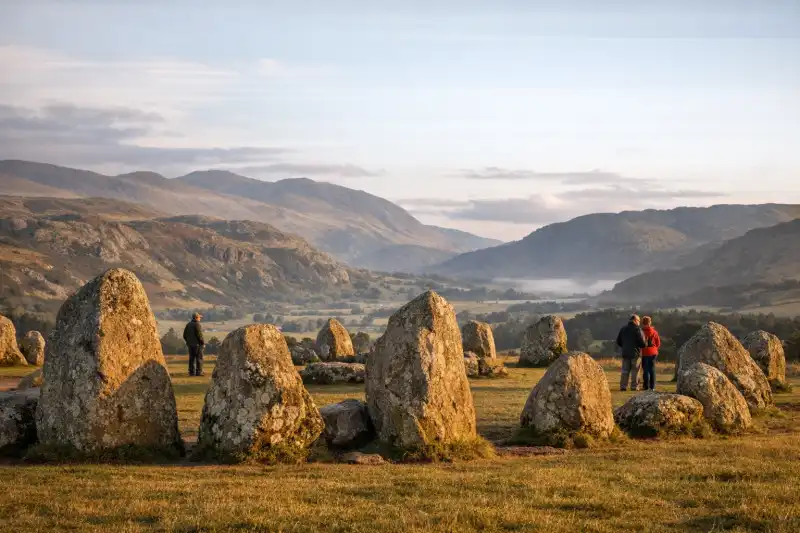
Castlerigg Stone Circle
Neolithic BritainAncient stone circle near Keswick in the United Kingdom, famed for dramatic mountain views and one o...
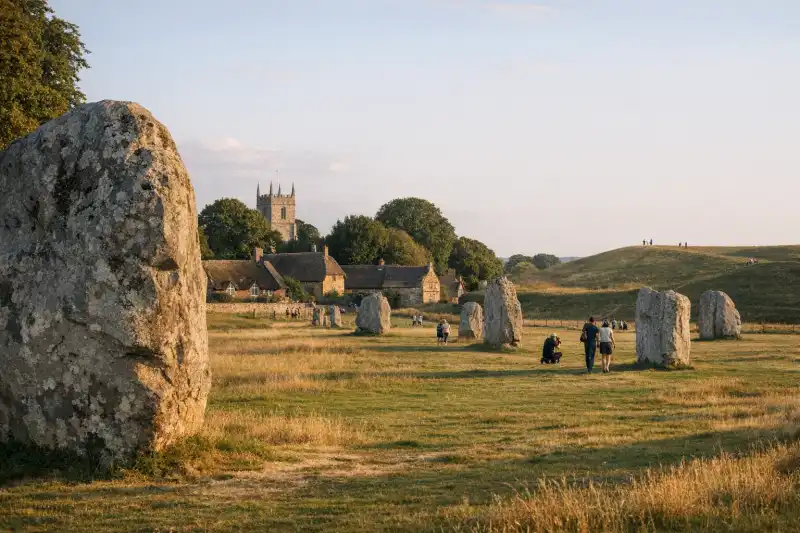
Avebury
Neolithic BritainExplore Avebury in the United Kingdom, a vast prehistoric stone circle and ritual landscape in the h...
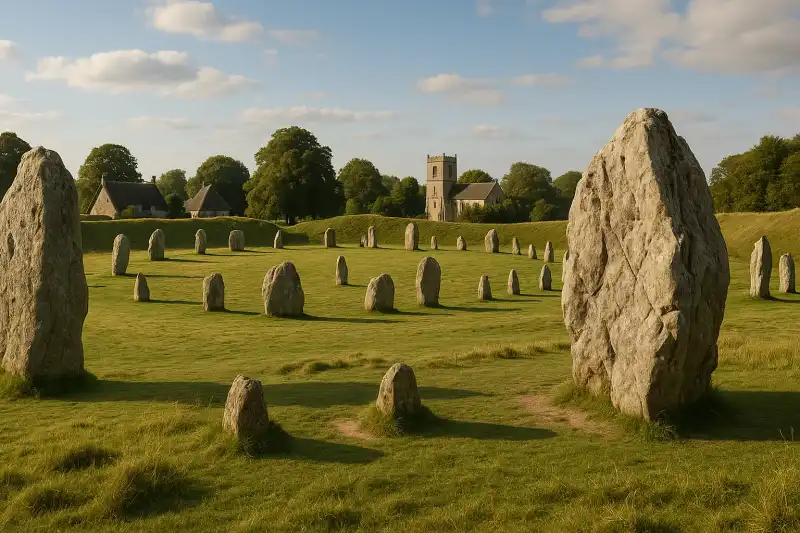
Avebury Stone Circle Travel Guide 2026: Best Walk Routes, History, and Visit Planning
Neolithic BritainPlan a stronger visit to Avebury Stone Circle with practical walking routes, landscape context, and ...