Quick Info
Curated Experiences
Asuka Historical Sites Day Tour from Osaka
Cycling the Ancient Asuka Countryside
Nara and Asuka Heritage Day Trip from Kyoto
On a quiet plateau south of Nara city, where rice paddies border ancient earthworks and weathered stone figures stand sentinel along country lanes, lies one of the most quietly extraordinary landscapes in all of Japan. The Asuka Historical Sites — scattered across Asuka Village in Nara Prefecture — preserve the physical remains of the Asuka period (538–710 CE), the pivotal era when the Japanese archipelago first took recognisable shape as a unified state with a centralised court, a written legal code, and a Buddhist culture that would define the nation for centuries to come. Within this compact rural valley, barely ten kilometres across, the founding decisions of Japanese civilisation were made, recorded in stone, bronze, and painted plaster, and left embedded in the earth for fourteen centuries.
The density of significant monuments here is improbable for such an unassuming setting. Colossal granite burial chambers reveal the engineering ambitions and political theatre of the Yamato royal clan. Japan’s oldest Buddhist temple still functions on the site where the faith first took organised root on Japanese soil. Mysterious carved stone sculptures whose exact ceremonial purpose remains debated line the fields between paddies. Underground tombs harbour wall paintings so vivid they startled the archaeologists who unsealed them in 1972. Asuka is not a single monument but a layered landscape — every hillside deliberately shaped, every field concealing something beneath the surface.
Unlike the grand temple complexes of Nara city or the gilded pavilions of Kyoto, Asuka rewards a slower pace. Cyclists weave between sites along flat country roads. Farmers work plots of land cultivated continuously since the 7th century. The entire valley carries an atmosphere of deep, unhurried antiquity that is increasingly difficult to find anywhere in modern East Asia.
History
The Rise of the Yamato Court
The story of Asuka begins not with a single founding event but with the gradual consolidation of the Yamato clan into the dominant political force of the Japanese archipelago. By the late Kofun period — roughly the 4th through 6th centuries CE — the Yamato rulers had established themselves in the Asuka-Kashihara area of present-day Nara Prefecture, constructing enormous burial mounds to mark their status and sacred authority. These earthen monuments, some shaped like keyhole-form islands surrounded by water-filled moats, represent one of the defining expressions of elite culture in pre-Buddhist Japan. The labour required to move, cut, and position their stone chambers implies both a sophisticated command economy and a political ideology that centred power on the body of the deceased ruler.
Buddhism Arrives and a Dynasty Consolidates
The year 538 CE — or 552 CE according to an alternative historical account — marks the traditional beginning of the Asuka period proper, when Buddhism was formally introduced to the Japanese court by envoys from the Korean kingdom of Baekje bearing sutras, devotional images, and skilled craftsmen. The new faith arrived into a fractious political environment. The powerful Soga clan championed Buddhism as a vehicle for continental-style state-building, while rival clans defended traditional kami-based worship and the aristocratic privileges tied to it. A generation of factional violence followed, resolved by the Soga victory at the Battle of Shigisan in 587 CE. Buddhism’s permanent place in Japanese civilisation was thereby secured, and Asuka village became the site of the country’s first great Buddhist building campaign.
Prince Shōtoku and the Invention of the Japanese State
In 593 CE, Prince Shōtoku assumed the regency under Empress Suiko and transformed Asuka into the administrative and cultural capital of an emerging nation. His seventeen-article constitution of 604 CE — Japan’s first quasi-legal political code — articulated a Confucian-influenced vision of harmonious governance centred on an exalted emperor surrounded by a merit-based bureaucracy. Shōtoku dispatched successive diplomatic missions to Sui-dynasty China, absorbing Tang legal codes, architectural models, calendar systems, and Buddhist scholarship at a pace that compressed centuries of institutional development into a single generation. The court at Asuka became a cosmopolitan hub where Chinese, Korean, and Central Asian influences were absorbed, adapted, and given distinctly Japanese form.
The Taika Reform and the Close of an Era
The assassination of Soga no Iruka in 645 CE — carried out in the throne room before the reigning empress in one of the most dramatic coups in Japanese history — precipitated the Taika Reform, a sweeping reorganisation of land ownership, taxation, and governance along Chinese Tang-dynasty lines. The reform proclaimed imperial ownership of all land, abolished hereditary clan holdings, and constructed the administrative architecture of a centralised bureaucratic state. Successive emperors continued building palaces within and around the Asuka valley — the Asuka-Itabuki Palace, the Okamoto Palace — as the reform’s implementation unfolded across the provinces.
The Asuka period closed definitively in 710 CE when Emperor Genmei relocated the court to the newly planned capital of Heijō-kyō, modern Nara city. Asuka’s political importance faded almost immediately, but the physical legacy of temples, tombs, stone monuments, and palace foundations remained embedded in the valley’s soil, eventually earning the entire landscape protection as one of Japan’s most significant archaeological preservation zones.
Key Features
Ishibutai Kofun
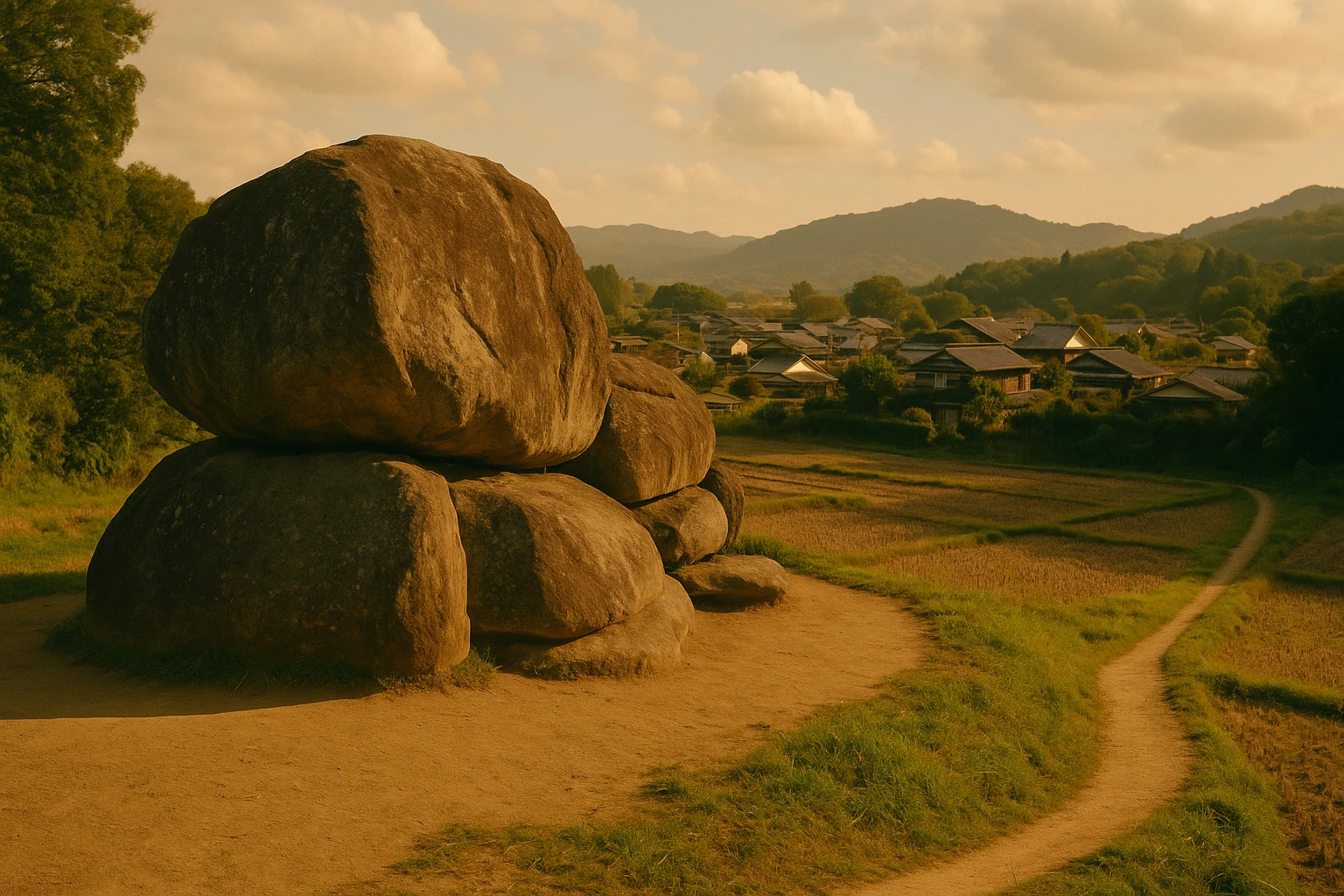
The most dramatic single monument in the Asuka landscape is Ishibutai Kofun, whose name translates as “stone stage tomb.” Dating to the early 7th century and traditionally attributed to the powerful minister Soga no Umako, the burial chamber consists of thirty massive granite slabs — the largest weighing approximately 77 tonnes — arranged to form a corbelled room roughly 7.7 metres high and nearly 8 metres long. The earthen mound that once buried the structure entirely has long since eroded away, leaving the raw exposed chamber open to the sky in a manner that feels almost theatrical. Visitors descend stone steps directly into the chamber itself, standing inside an architectural feat achieved without cranes, mortar, or metal fasteners in an age when the Japanese state was still being assembled from first principles. The surrounding parkland blooms with cherry blossoms in spring and cosmos flowers in autumn, and the quiet grounds make Ishibutai one of the most contemplative ancient sites anywhere in the Kansai region.
The Takamatsuzuka Mural Museum
Discovered by chance in 1972 during routine agricultural work, the Takamatsuzuka Tomb delivered one of the greatest archaeological revelations in postwar Japan. A modest, unassuming grassy mound concealed a stone burial chamber whose four walls were covered with vivid polychrome murals depicting court ladies in billowing Chinese-style robes, male attendants in formal dress, the Four Divine Beasts of the cardinal directions, and a detailed astronomical star map on the ceiling. The figures, rendered with technical sophistication clearly informed by Tang-dynasty Chinese court painting, transformed scholarly understanding of the cosmopolitan richness of Asuka-period aristocratic culture. The original murals deteriorated severely after the chamber was first unsealed, and the tomb itself is now permanently closed to prevent further damage. The adjacent Takamatsuzuka Mural Museum presents meticulous full-scale reproductions alongside the original stone panels removed during conservation — an informative, air-conditioned stop that provides indispensable context for the valley’s history.
Asuka-dera: Japan’s First Buddhist Temple
Founded in 596 CE by Soga no Umako on land the Soga clan donated for the purpose, Asuka-dera holds the distinction of being the oldest Buddhist temple in Japan. The original complex was immense — a seven-hall structure modelled on Baekje Korean temple architecture — and its construction absorbed the labour and resources of a generation. Only a modest hall of the original complex survives today, but it houses a figure of incalculable importance: the Asuka Daibutsu, a bronze seated Buddha cast around 609 CE by the sculptor Kuratsukuri no Tori. At over 2.7 metres in height, it is the oldest surviving large-scale Buddhist sculpture in Japan, its archaic frontal calm and elongated proportions carrying the unmistakable transmission of Northern Wei Chinese Buddhist aesthetic through Korean intermediaries. To sit in the presence of this figure — battered by earthquake and fire over fourteen centuries, worn and repaired and worn again — is to encounter something genuinely irreplaceable.
The Enigmatic Stone Monuments
Scattered across the valley are carved stone objects unlike anything produced elsewhere in Japan. The Sakafuneishi is a horizontal granite block carved with channels, basins, and circular depressions whose purpose — drainage system, ceremonial platform, astronomical instrument, or ritual sake-pressing device — remains actively debated. The Nimen-Seki presents two carved faces back to back. The Kameishi is a large stone carved in the rough form of a tortoise. Most scholars interpret these objects as ceremonial installations connected to Taoist geomantic traditions imported from Tang China, possibly marking sacred boundaries or serving ritual purification functions, but no consensus has been reached. Their mystery is an intellectual pleasure entirely appropriate to a valley that has been puzzling over itself for over a millennium.
Getting There
Asuka Village is most conveniently reached by rail from Osaka or the wider Kintetsu network. From Osaka’s Kintetsu Tennoji (Abenobashi) Station, take the Kintetsu Minami-Osaka Line express toward Yoshino to Kashiharajingu-mae Station (approximately 50 minutes, ¥680), then transfer to the Kintetsu Yoshino Line for the two-stop ride to Asuka Station (10 minutes, ¥230). Total journey time from central Osaka is approximately 70–80 minutes. From Kyoto, take a Kintetsu Ltd. Express to Yamato-Saidaiji Station and change for Kashiharajingu-mae; allow approximately 90 minutes and ¥1,110. Nara city connects to Kashihara via Kintetsu rail, making it straightforward to combine both areas on a multi-day trip.
Once at Asuka Station, bicycle rental is the overwhelmingly preferred option for exploring the dispersed sites. Several rental shops operate immediately outside the station exit, charging ¥1,000–¥1,500 per day for standard bicycles and ¥1,500–¥2,000 for electric-assist models. Given the valley’s gentle but persistent undulation, the electric option is worth the modest premium for travellers less comfortable with sustained cycling. A full day’s circuit of the major sites covers approximately 12–15 kilometres. For those who prefer not to cycle, the Asuka Flying Tortoise bus — a local loop service — stops at most of the major monuments for ¥100–¥200 per journey, though its infrequent schedule rewards patience.
When to Visit
Spring — specifically late March through mid-April — is the most popular season in Asuka, when cherry blossoms frame the burial mounds and country lanes with pink canopies and the valley fills with day-tripping Japanese families. The combination of ancient stone chambers and flowering trees produces some of the most widely reproduced landscape photographs in the Kansai region. Advance reservations at the small restaurants clustered near Ishibutai are advisable on peak blossom weekends.
Autumn from mid-October through late November rivals spring for visual richness: the harvested rice fields glow golden-brown, and the surrounding hills shift through maple reds and ginkgo yellows. The Asuka Hikari festival, typically held over several November evenings, illuminates stone monuments, tomb mounds, and countryside paths with soft light — a uniquely atmospheric programme that draws visitors specifically for the after-dark experience.
Summer brings high humidity and temperatures in the mid-30s Celsius, but the saturated green of the rice paddies at their peak growth is genuinely beautiful, and visitor numbers drop significantly. Insect repellent and a wide-brimmed hat are essential. Winter is cold and occasionally frosty, but the stripped landscape reveals the engineered contours of the kofun earthworks with a clarity that summer vegetation obscures, making it the ideal season for visitors primarily interested in understanding the topographic scale of the ancient burial programme.
Combining with Other Sites
Asuka pairs most naturally with Nara city, 30 kilometres to the north, where Heijō-kyō — the imperial capital that formally replaced Asuka in 710 CE — survives as the Heijo Palace Site, alongside Tōdai-ji’s Great Buddha Hall, Kasuga Taisha Shrine, and the celebrated deer park. Spending one full day in Asuka and one in Nara creates a coherent chronological narrative of early Japanese history, tracing the emerging state from its formative valley roots to its first fully realised grid-plan capital. The Kintetsu railway makes moving between the two effortless.
Further afield, the Byōdō-in Temple at Uji, situated between Nara and Kyoto, represents the aesthetic refinement of a Buddhist tradition whose Japanese origins lie in Asuka-dera’s courtyard five centuries earlier — a compelling philosophical companion for heritage travellers willing to read the connections across time. Those with an interest in early administrative capitals on a broader regional scale can extend their itinerary southwest toward Dazaifu Government Office Ruins in Fukuoka, the westernmost administrative outpost of the same Yamato state whose heartland is Asuka.
Why Asuka Matters
Asuka occupies a position in Japanese cultural history roughly analogous to the role of archaic Athens in Western civilisation — not the largest or most powerful place, but the crucible where the foundational ideas were first formulated, contested, and given enduring physical form. The decisions made in this valley during the 7th century shaped the Japanese written language through the adoption of Chinese characters, institutionalised Buddhist practice alongside indigenous Shinto, established the legal and tax frameworks for a centralised imperial state, and introduced the architectural, sculptural, and pictorial traditions that would define Japanese aesthetics for a millennium. Every aspect of subsequent Japanese culture traces a line back to choices made by the Yamato court in this unassuming rural landscape.
For the heritage traveller, Asuka offers something increasingly rare in East Asia’s heavily visited ancient sites: a landscape of genuine rural quietude. There are no souvenir gauntlets, no ticketed queuing systems, no laser shows. There are rice paddies, granite chambers, a very old bronze Buddha, and the accumulated weight of fourteen centuries of continuous human memory pressing gently down on a long afternoon of cycling through the valley.
| Quick Facts | |
|---|---|
| Location | Asuka Village, Takaichi District, Nara Prefecture, Japan |
| Period | Asuka Period, 538–710 CE |
| Civilisation | Yamato Court |
| Key Sites | Ishibutai Kofun, Takamatsuzuka Tomb, Asuka-dera |
| Nearest Station | Asuka Station (Kintetsu Yoshino Line) |
| Nearest City | Kashihara (5 km); Nara City (30 km) |
| Getting There | ~70 min from Osaka Tennoji; ~90 min from Kyoto |
| Entry Fees | Ishibutai ¥250; Mural Museum ¥700; Asuka-dera ¥350 |
| Bicycle Rental | ¥1,000–¥2,000/day at Asuka Station |
| Best Season | Spring (late Mar–Apr) and Autumn (Oct–Nov) |
| Protection Status | Designated Special Historic Site of Japan |
Frequently Asked Questions
Where exactly are the Asuka Historical Sites located?
The Asuka Historical Sites are concentrated in Asuka Village, Takaichi District, Nara Prefecture, roughly 25 kilometres south of Nara city. The main cluster of tombs, temples, and stone monuments lies within a compact rural valley easily explored by bicycle or on foot in a single day.
What is the most important site to see in Asuka?
Ishibutai Kofun — a massive exposed granite burial chamber dating to the early 7th century — is the centrepiece of the area. The Takamatsuzuka Mural Museum, which displays vivid painted tomb murals, and Asuka-dera, Japan's oldest surviving Buddhist temple, are equally unmissable.
How do I get to Asuka from Nara or Osaka?
From Osaka's Kintetsu Tennoji (Abenobashi) Station, take the Kintetsu Minami-Osaka Line to Kashiharajingu-mae (about 50 minutes, ¥680), then transfer to the Kintetsu Yoshino Line for Asuka Station (10 minutes, ¥230). From Nara, take a Kintetsu train to Kashiharajingu-mae and transfer. Renting a bicycle at Asuka Station is the classic way to explore the scattered sites.
Is there an admission fee for the Asuka sites?
Most outdoor sites are free or charge modest entrance fees. Ishibutai Kofun charges around ¥250, the Takamatsuzuka Mural Museum around ¥700, and Asuka-dera around ¥350. Budget approximately ¥1,500–¥2,000 for a full day of admissions, plus ¥1,000–¥2,000 for bicycle rental.
When is the best time of year to visit Asuka?
Spring (late March–April) and autumn (October–November) offer the most pleasant weather and scenery. The Asuka Hikari light-up festival in autumn illuminates the stone monuments and tomb mounds at night. Summer is hot and humid but uncrowded; winter is cold with minimal visitors and exceptional visibility of the kofun earthworks.
Can I combine Asuka with a visit to Nara city on the same day?
It is possible but not ideal. Both areas are best explored over a full day each. A practical compromise is to spend the morning in Asuka — prioritising Ishibutai, the Mural Museum, and Asuka-dera — then take the Kintetsu train north to Nara for the late afternoon deer park and Tōdai-ji visit.
Are the Asuka Historical Sites a UNESCO World Heritage Site?
The Asuka sites are designated Special Historic Sites of Japan and are part of a proposed UNESCO inscription titled 'Asuka-Fujiwara: Archaeological Sites of Japan's Ancient Capitals and Related Properties.' Nearby Nara city sites are inscribed under 'Historic Monuments of Ancient Nara' (1998), which shares much of the same cultural lineage.
Nearby Ancient Sites
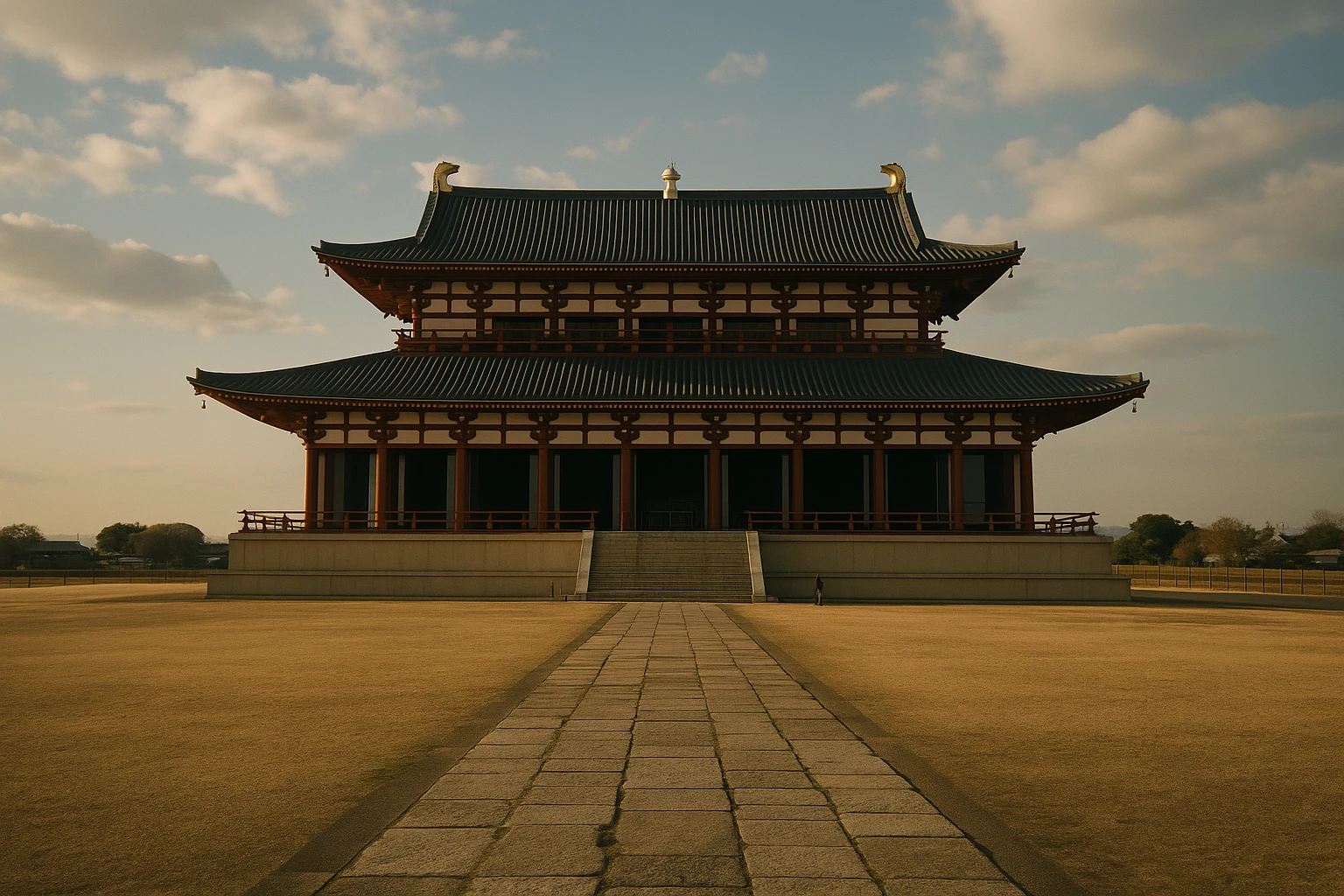
Heijo Palace Site
Nara Period JapanWalk the vast grounds of Japan's 8th-century imperial capital in Nara — a UNESCO World Heritage Site...
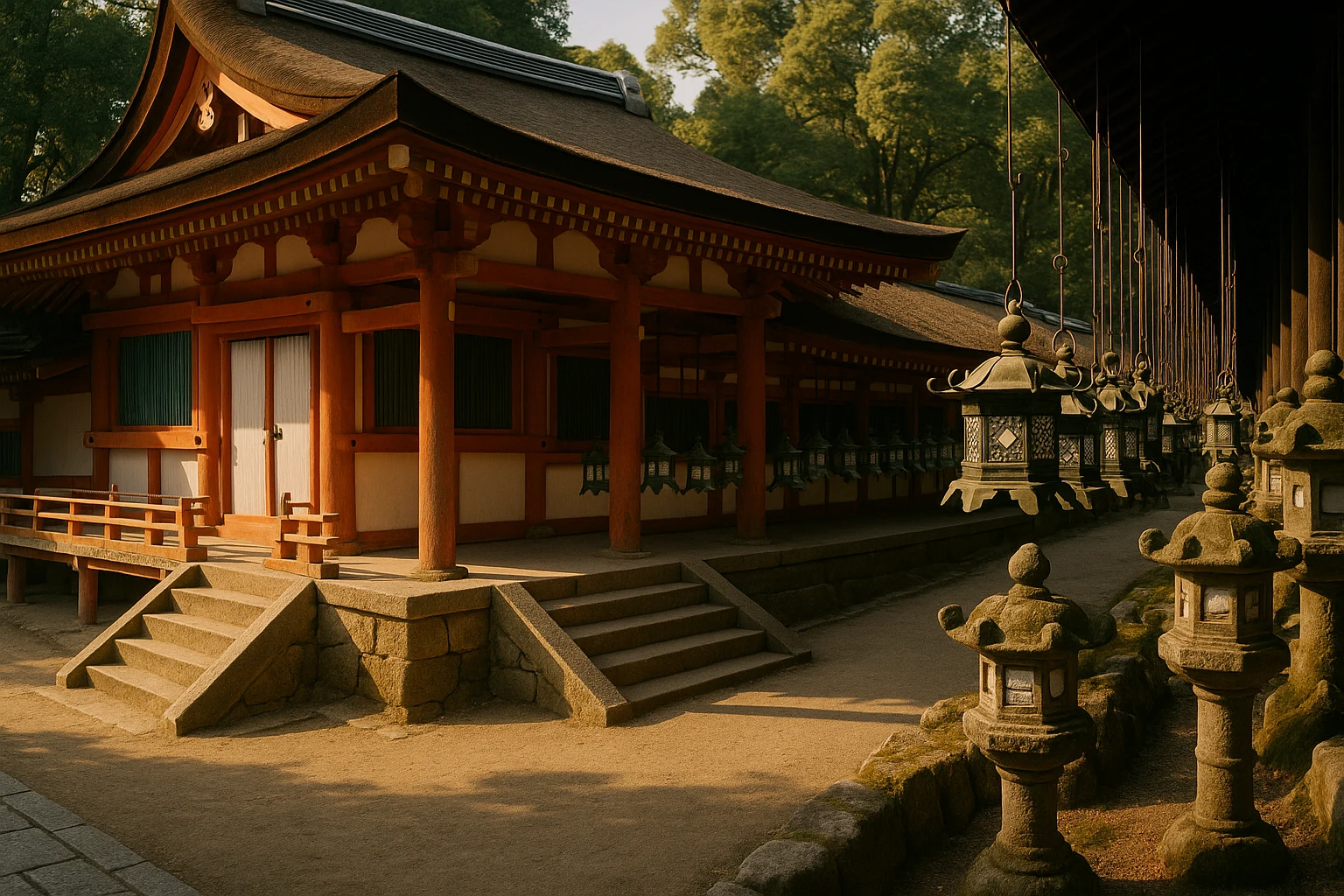
Kasuga Taisha Shrine
JapaneseSacred Shinto shrine in Nara, Japan, renowned for thousands of bronze and stone lanterns and UNESCO ...
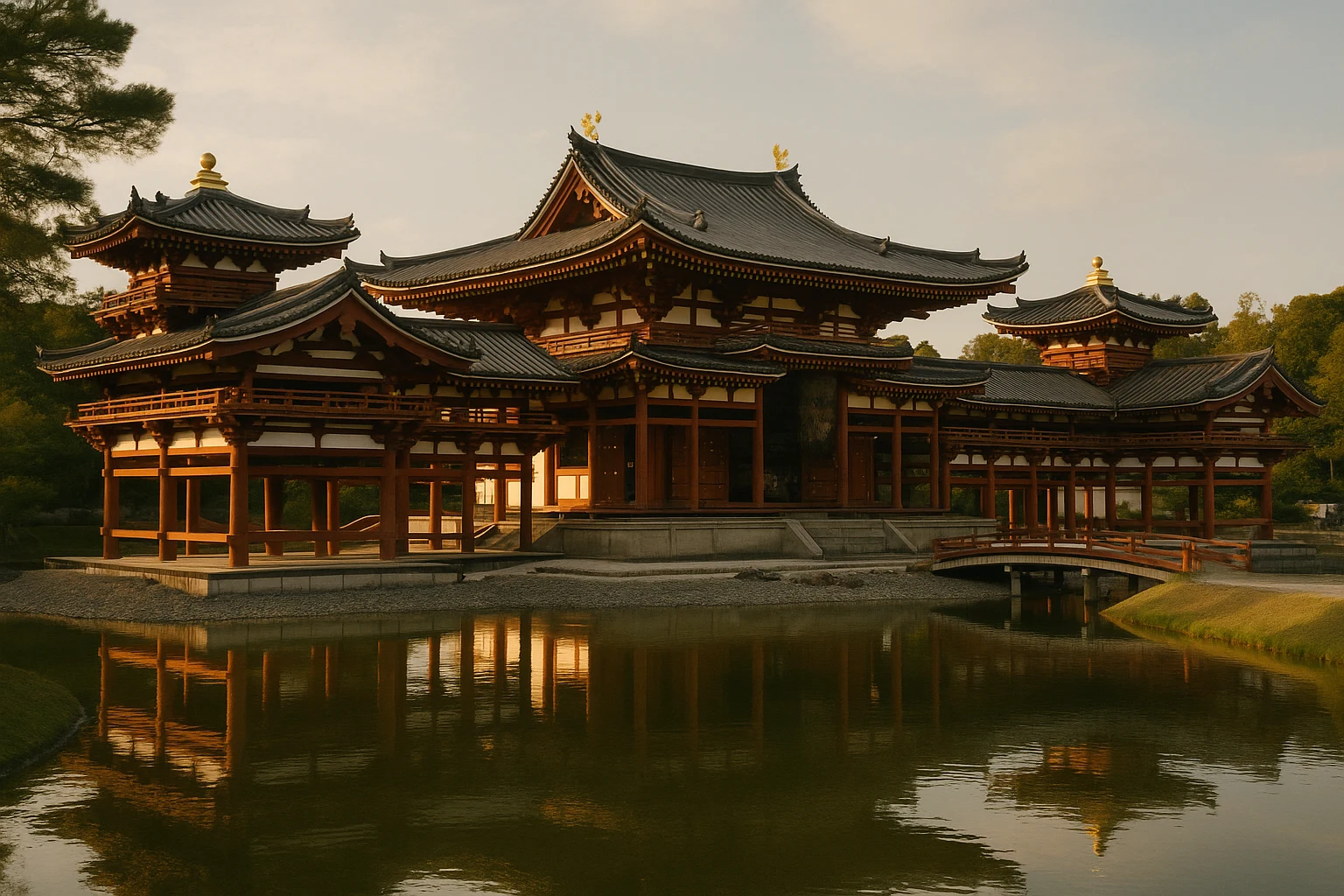
Byodoin Temple
Heian JapanA UNESCO-listed Heian-era masterpiece in Uji, Japan, renowned for its iconic Phoenix Hall reflected ...
Dazaifu Government Office Ruins
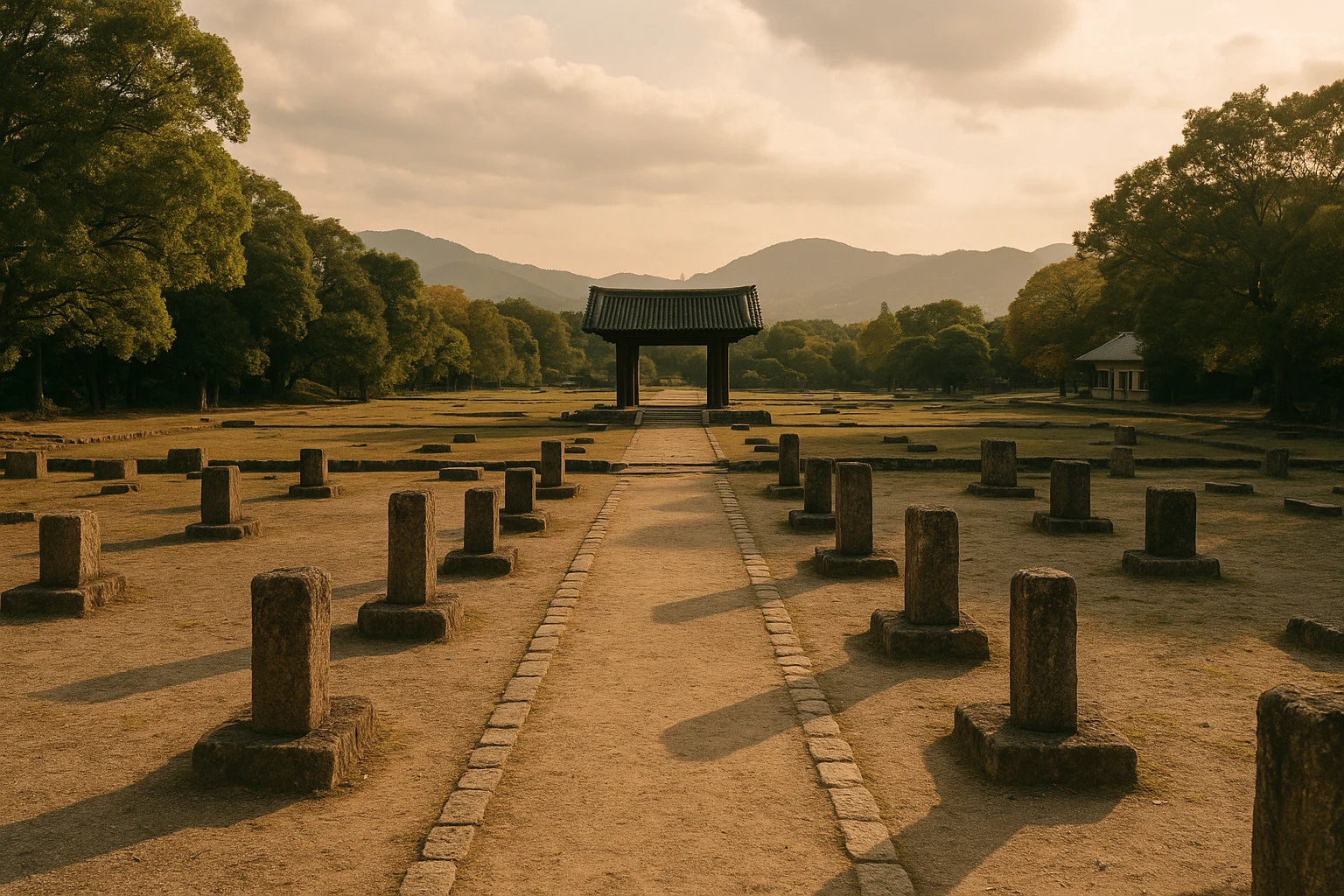
Yamato Japan / Nara–Heian StateAncient administrative heart of Kyushu, the Dazaifu Government Office Ruins preserve Japan's 7th-cen...