Quick Info
Curated Experiences
Su Nuraxi di Barumini Guided Visit from Cagliari
Barumini and Giara Plateau Archaeology Day Trip
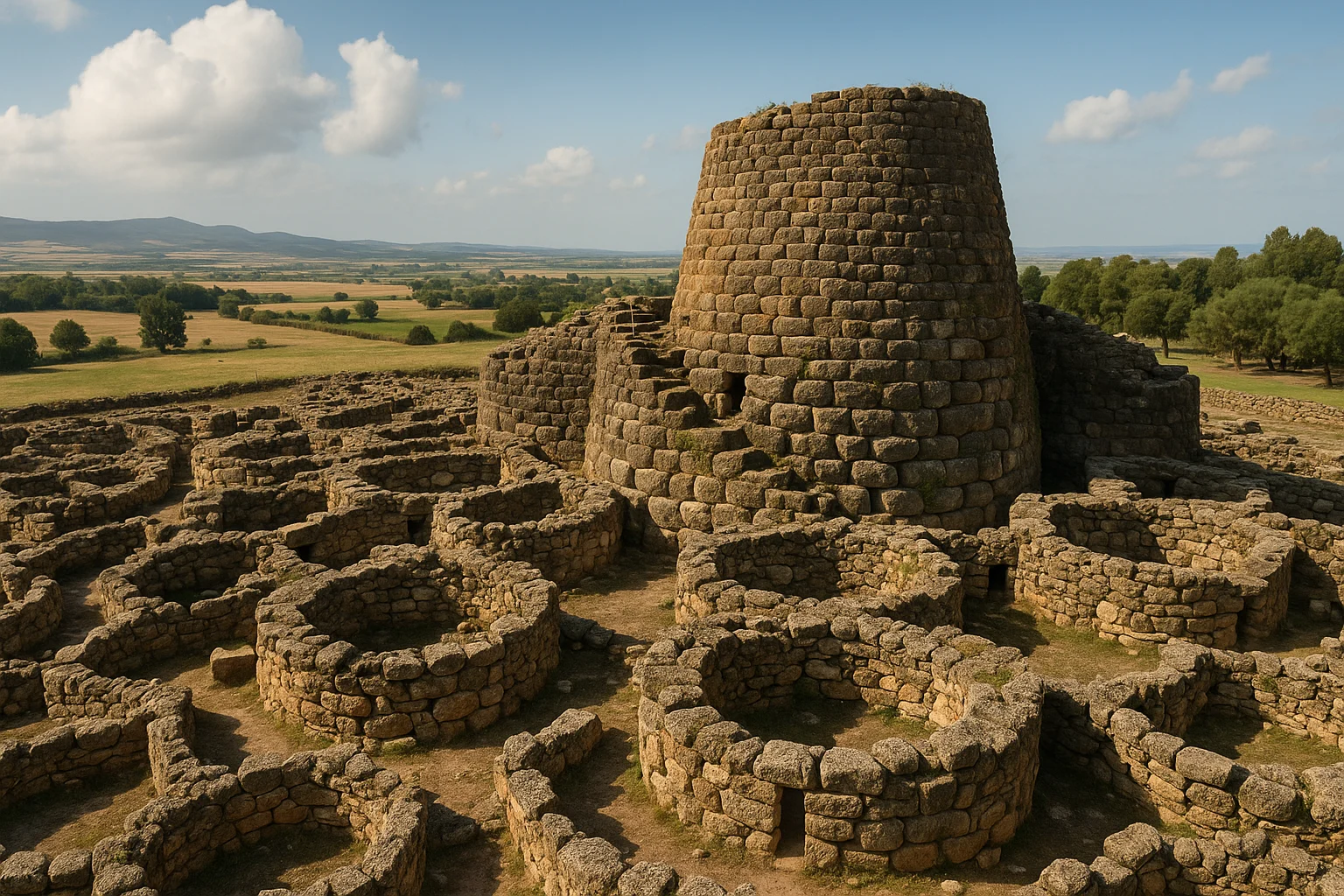
The first thing you notice at Barumini is that nothing about this place connects to the architectural vocabulary you have learned at every other ancient site in Italy. There are no columns, no pediments, no arches, no marble. Instead, a massive central tower of rough basalt blocks rises from a flat Sardinian plain, surrounded by four corner towers, a curtain wall, and the stone foundations of a village that once housed hundreds of people. The construction technique is dry-stone — no mortar, no cement, just enormous basalt blocks fitted together with a precision that has kept them standing for over three thousand years.
Su Nuraxi di Barumini is the single best place to encounter the Nuragic civilization, a Bronze and Iron Age culture unique to Sardinia that left behind more than 7,000 stone tower complexes scattered across the island. The Nuragic people built no cities in the Mediterranean colonial sense, left no written language, and borrowed little from the Greek and Phoenician cultures that surrounded them. What they did build — these massive, sophisticated stone towers and village compounds — represents one of the most distinctive architectural traditions in European prehistory.
For travelers whose understanding of “ancient Italy” begins with Rome and extends back through Greece, Barumini is a necessary corrective. It introduces an entirely different civilization, older than any classical monument on the Italian mainland, and forces you to reckon with a past that does not fit into the Mediterranean narrative you thought you knew.
Historical Context
The Nuragic civilization takes its name from the nuraghi, the stone tower structures that are its most visible legacy. These buildings appeared in Sardinia during the Middle Bronze Age, around the 18th to 16th century BCE, and continued to be built and expanded through the Late Bronze Age and into the Iron Age. At their peak, the nuraghi numbered in the thousands, forming a dense network of towers, settlements, sacred wells, and ceremonial sites that covered virtually the entire island.
Su Nuraxi di Barumini was constructed in stages beginning around 1500 BCE. The original structure was a single central tower (the keep), built of basalt blocks and standing roughly 60 feet tall at its peak. Over the following centuries, four corner towers were added, connected by a curtain wall to create a fortified compound. A second outer wall with additional towers was later built around the first, and a village of circular stone huts grew up around the fortress. At its most developed, the complex combined military, residential, and possibly ceremonial functions in a layout that suggests sophisticated social organization.
The Nuragic civilization did not exist in isolation. Archaeological evidence shows contact with Mycenaean Greeks, Phoenicians, Cypriots, and other Mediterranean trading cultures. Bronze figurines, ceramic imports, and metalwork found at Nuragic sites demonstrate that Sardinia participated in wider Bronze Age exchange networks. But the Nuragic people maintained their own architectural and cultural traditions rather than adopting Greek or Phoenician forms. The nuraghi are not derived from any known Mediterranean prototype. They are indigenous inventions.
By the Iron Age, Nuragic culture was declining under pressure from Phoenician colonization along the Sardinian coast and, later, Carthaginian expansion. The Romans completed the process, incorporating Sardinia into their provincial system by the mid-3rd century BCE. Su Nuraxi itself shows evidence of reuse and modification during these later periods, but the core Bronze Age structure remains dominant.
The site was excavated in the 1950s under the direction of Giovanni Lilliu, Sardinia’s most prominent archaeologist, whose work transformed understanding of the Nuragic world. UNESCO inscribed Su Nuraxi as a World Heritage Site in 1997, recognizing it as the finest and most complete example of this remarkable architectural form.
What to See
The Central Tower (Keep)
The central tower is the oldest and most impressive element of the complex. Originally standing roughly 60 feet tall (now reduced to about 45 feet by collapse and erosion), it was built of massive basalt blocks in a corbelled construction technique where each successive course of stone projects slightly inward, gradually narrowing the interior space to form a domed ceiling without mortar or a true arch. The interior is divided into at least three chambers stacked vertically, connected by an internal spiral staircase built within the thickness of the walls. The engineering is remarkable: the walls are over 10 feet thick at the base, providing both structural strength and thermal regulation. Stand inside the ground-floor chamber and look up at the corbelled vault. The technique is entirely different from anything in the classical Mediterranean, and the fact that it has endured over 3,000 years speaks to the builders’ material knowledge.
Practical tip: The interior staircase is narrow and can be dark. Bring a small flashlight or use your phone light. Take your time on the uneven stone steps.
The Four-Tower Compound
The four corner towers were added to the central keep during a second construction phase, connected by straight curtain walls to form a roughly square fortified compound with the original tower at its center. Each corner tower is smaller than the keep but follows the same corbelled construction technique. The compound created a defensive perimeter with controlled access points, line-of-sight between towers, and internal courtyard space. Walk the full perimeter of the compound and note how the towers are positioned to cover each approach direction. Whether this was purely military or served broader social and ceremonial functions remains debated, but the defensive logic is clear.
Practical tip: Your guided tour will walk you through the compound interior. Listen for explanations of the construction phases — the visual differences between the original keep masonry and the later corner tower stonework are visible once you know what to look for.
The Village Settlement
Surrounding the fortified compound, the foundations of approximately 200 circular stone huts constitute the village that served the nuraghe complex. These structures date to various periods and show different construction techniques, from simple single-room dwellings to more complex multi-room compounds with shared courtyards. Some huts preserve stone benches, hearth foundations, and storage features that help archaeologists reconstruct daily life. The village is where Barumini shifts from military architecture to social history. You see where people cooked, stored grain, worked materials, and organized domestic space in a community that may have numbered several hundred residents.
Practical tip: The village foundations are low and can be difficult to read without guidance. This is where the mandatory guided tour pays its greatest dividend — the guide’s commentary transforms what looks like scattered stone circles into a legible neighborhood.
Casa Zapata Museum
Located in the village of Barumini itself, about a 5-minute drive from the archaeological site, Casa Zapata is a 16th-century Spanish-era noble house built directly on top of another nuraghe. The museum preserves the excavated nuraghe beneath a glass floor, allowing visitors to walk above the Bronze Age structure while viewing it from above. The upper floors house exhibits on Nuragic culture, local history, and archaeological methodology. The museum provides valuable contextual information and a different visual perspective on nuraghe architecture that complements the outdoor experience at Su Nuraxi.
Practical tip: Visit Casa Zapata after Su Nuraxi, not before. The exhibits make much more sense once you have walked through the actual archaeological site. Entry is approximately $5 to $8 USD and takes about 45 minutes.
Timing and Seasons
Spring (April through June) is the best season for visiting Barumini. Temperatures range from 59 to 79°F (15 to 26°C), the surrounding Sardinian countryside is green and wildflower-dotted, and walking conditions around the exposed stone site are comfortable. Spring also brings longer daylight hours that give you flexibility with tour scheduling.
Summer (July through August) is hot, with temperatures regularly reaching 86 to 97°F (30 to 36°C). The nuraghe complex has essentially no shade, and the basalt stone absorbs and radiates heat. If visiting in summer, book the earliest available tour slot and bring substantial water and sun protection. Afternoon visits in peak summer are genuinely uncomfortable.
Autumn (September through October) is excellent, with temperatures settling into the 64 to 82°F (18 to 28°C) range and declining tourist numbers. The light is warm and photogenic, and the site feels quieter and more contemplative.
Winter (November through March) is mild by continental standards, with daytime highs around 50 to 61°F (10 to 16°C), but wind and occasional rain can make the exposed site chilly. The upside is very small visitor numbers and an atmospheric solitude that suits the site’s ancient character.
The best time of day is the first morning tour slot, which typically departs between 9:00 and 10:00 AM. Afternoon tours in warm months can be tiring on the exposed terrain.
Tickets, Logistics, and Getting There
Admission: Approximately $10 to $14 USD (8 to 12 euros) for the guided tour of Su Nuraxi. Visits are by guided tour only, departing at scheduled intervals (typically every 30 to 60 minutes). Tour duration is approximately 60 to 90 minutes. Combined tickets with Casa Zapata are sometimes available for roughly $14 to $18 USD.
Language: Guided tours are offered in Italian, with English-language tours available at less frequent intervals. Confirm English tour times when booking or upon arrival. During busy periods, English tours may be offered 2 to 4 times daily.
From Cagliari: The drive takes approximately 1 hour via the SS131 highway north toward Sanluri, then local roads east to Barumini. This is the most common approach and rental car is strongly recommended. Public bus service exists (ARST regional buses) but runs infrequently and can add significant time to the journey.
Organized tours from Cagliari: Half-day and full-day guided excursions run regularly from Cagliari, typically including transport, guide, and entrance fees for $80 to $130 USD per person. These are a good option for travelers without rental cars.
From Oristano/western Sardinia: About 1 hour by car, making Barumini a feasible side trip from a western Sardinia coastal base.
Parking: Free parking is available at the Su Nuraxi site. The lot is rarely full except on peak summer weekends and Italian holidays.
Pre-booking is not always required but is recommended in spring and summer, especially for English-language tours. Contact the site directly or book through the Fondazione Barumini Sistema Cultura website.
Practical Tips
- Wear sturdy, closed-toe walking shoes. The site includes uneven terrain, rough stone surfaces, and the interior staircase of the central tower, which has worn stone steps.
- Sun protection is critical from April through October. There is no shade at the nuraghe complex itself, and tours spend the full duration outdoors.
- Carry at least 1 liter of water per person. There is a small visitor center near the parking area with basic refreshments, but nothing at the archaeological site.
- Photography is permitted and the site is highly photogenic. The contrast between the dark basalt stonework and the green or golden Sardinian landscape makes for striking images.
- Bring a light jacket even in warm months. The Sardinian interior can be windier than the coast, and the exposed hilltop site is unprotected.
- The guided tour format means you cannot linger at specific points as long as you might like. If a particular section fascinates you, ask your guide for additional explanation or return to that area after the tour if access permits.
- If traveling with children, the site works well for ages 8 and up. Younger children may find the guided tour pace challenging, though the tower interior and “fortress” concept tend to engage them.
Suggested Itinerary
Morning Su Nuraxi Visit (2 to 2.5 hours): Arrive by 9:30 AM and join the first available English-language guided tour. The tour covers the central tower interior, the four-tower compound, and the village settlement in approximately 60 to 90 minutes. After the tour, spend an additional 30 minutes walking the site perimeter independently for photography and to absorb the landscape context.
Late Morning Casa Zapata (45 minutes to 1 hour): Drive 5 minutes to the village of Barumini and visit the Casa Zapata museum. View the excavated nuraghe beneath the glass floor and browse the Nuragic culture exhibits on the upper levels.
Midday Lunch in Barumini Village (1 hour): Eat at one of the small restaurants or agriturismi in or near Barumini. Sardinian inland cuisine is distinctive: culurgiones (stuffed pasta), roast suckling pig, pecorino cheese, and pane carasau (paper-thin flatbread) are regional staples worth seeking out.
Afternoon Extension — Giara di Gesturi (2 to 3 hours): If you have a full day, drive 20 minutes to the Giara di Gesturi, a basalt plateau that rises above the surrounding plain and supports a unique ecosystem including the last wild horses in Europe (Cavallini della Giara). The plateau is walkable with trails and provides a dramatic landscape contrast to the archaeological morning. The combination of Nuragic architecture and Sardinian natural heritage makes for a complete day.
Nearby Sites
Tharros is approximately 1.5 hours west by car, on the Sinis Peninsula near Oristano. This Phoenician and later Roman coastal settlement preserves temple foundations, Roman baths, and a necropolis on a dramatic headland. The combination of Nuragic inland architecture at Barumini and Phoenician-Roman coastal settlement at Tharros provides the clearest possible contrast between Sardinia’s indigenous and imported civilizations.
Nora, near Pula on the southern coast, is about 1.5 hours south of Barumini by car. One of Sardinia’s oldest urban sites, with Phoenician, Carthaginian, and Roman layers, it sits on a coastal promontory and includes a Roman theatre, baths, and mosaic fragments. Nora adds Mediterranean colonial context to the indigenous Nuragic story at Barumini.
The Santa Cristina Sacred Well, about 1 hour northwest near Paulilatino, is one of the finest examples of Nuragic sacred architecture. The precisely cut stone staircase descending to the spring chamber demonstrates engineering sophistication that rivals the tower complexes and provides the religious dimension that Su Nuraxi, as primarily a secular settlement, does not fully supply.
Cagliari, about 1 hour south, is the most practical base city and offers its own archaeological layers: the Roman amphitheatre, the Museo Archeologico Nazionale (with the finest collection of Nuragic bronzetti figurines in Sardinia), and the historic Castello quarter.
Final Take
Barumini does something that no amount of Greek temples or Roman forums can do: it introduces you to an entire civilization you probably did not know existed. The Nuragic world is not a footnote in Mediterranean prehistory. It produced one of the densest concentrations of monumental stone architecture in Bronze Age Europe, sustained complex communities for over a millennium, and maintained cultural independence in the face of Phoenician, Carthaginian, and Roman pressure. Su Nuraxi is where all of this becomes physically real — where the abstract phrase “Nuragic civilization” turns into a 3,500-year-old basalt tower you can walk inside.
Standing in the central chamber, looking up at the corbelled vault built by people who never saw a Greek column or a Roman arch, you understand that the ancient Mediterranean was far more diverse than the classical narrative suggests. Barumini is the proof.
Discover More Ancient Wonders
- Tharros — Phoenician-Roman coastal settlement on Sardinia’s Sinis Peninsula
- Valley of the Temples, Agrigento — Monumental Greek sacred architecture in Sicily
- Syracuse Archaeological Park — Greek theatre and Roman amphitheatre in eastern Sicily
- Italy Ancient Sites Hub — Plan your complete Italian archaeology route
- Budget Travel Guide — Practical strategies for affordable ancient-world travel
Quick Facts
| Attribute | Details |
|---|---|
| Location | Barumini, Sardinia, Italy |
| Country | Italy |
| Region | Sardinia |
| Site Name | Su Nuraxi di Barumini |
| UNESCO Status | World Heritage Site (1997) |
| Civilization | Nuragic |
| Historical Period | Middle Bronze Age to Iron Age |
| Established | Main complex from around the 16th century BCE |
| Entry Fee | ~$10-$14 USD (€8-12); guided tour only |
| Tour Duration | 60-90 minutes |
| Best Time | Spring or autumn; first morning tour slot |
| Suggested Visit | 2-3.5 hours (with Casa Zapata) |
| Nearest Base | Cagliari (1 hour by car) |
| Coordinates | 39.7059, 8.9921 |
Frequently Asked Questions
Why is Barumini important in Italian archaeology?
Su Nuraxi at Barumini is the best-known and most comprehensively interpreted Nuragic site, giving rare, large-scale evidence of Bronze and Iron Age society in Sardinia.
Do you need a guide to enter Su Nuraxi?
Most visits are structured around guided entry slots, which is useful because the architecture is complex and context-heavy without on-site interpretation.
How much time should I plan for Barumini?
Plan about 1.5 to 2 hours for the core Su Nuraxi visit, then add more time if you also include the Casa Zapata museum area or nearby stops.
Can Barumini be done as a day trip from Cagliari?
Yes. It is one of the most practical archaeology day trips from Cagliari, whether self-driving or joining a guided excursion.
What season is best for visiting Su Nuraxi?
Spring and autumn are usually best for comfort and pacing; summer is possible but can be hot with limited shade around exposed stone sectors.
Nearby Ancient Sites
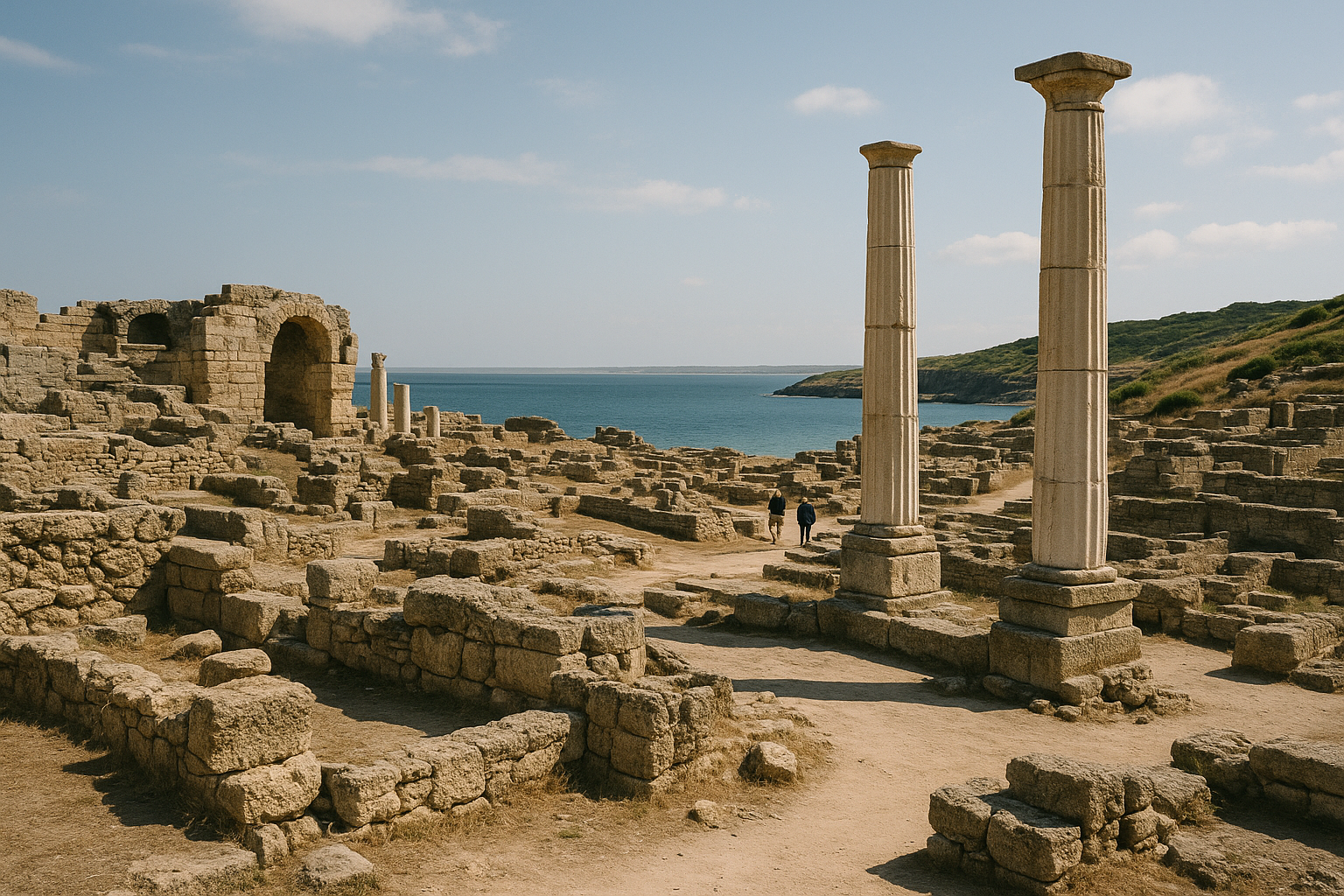
Tharros Guide 2026: Phoenician-Roman Ruins on Sardinia's Sinis Peninsula
Phoenician, Punic, and RomanPlan a smart visit to Tharros with route strategy, ticket logistics, and context for its Phoenician,...
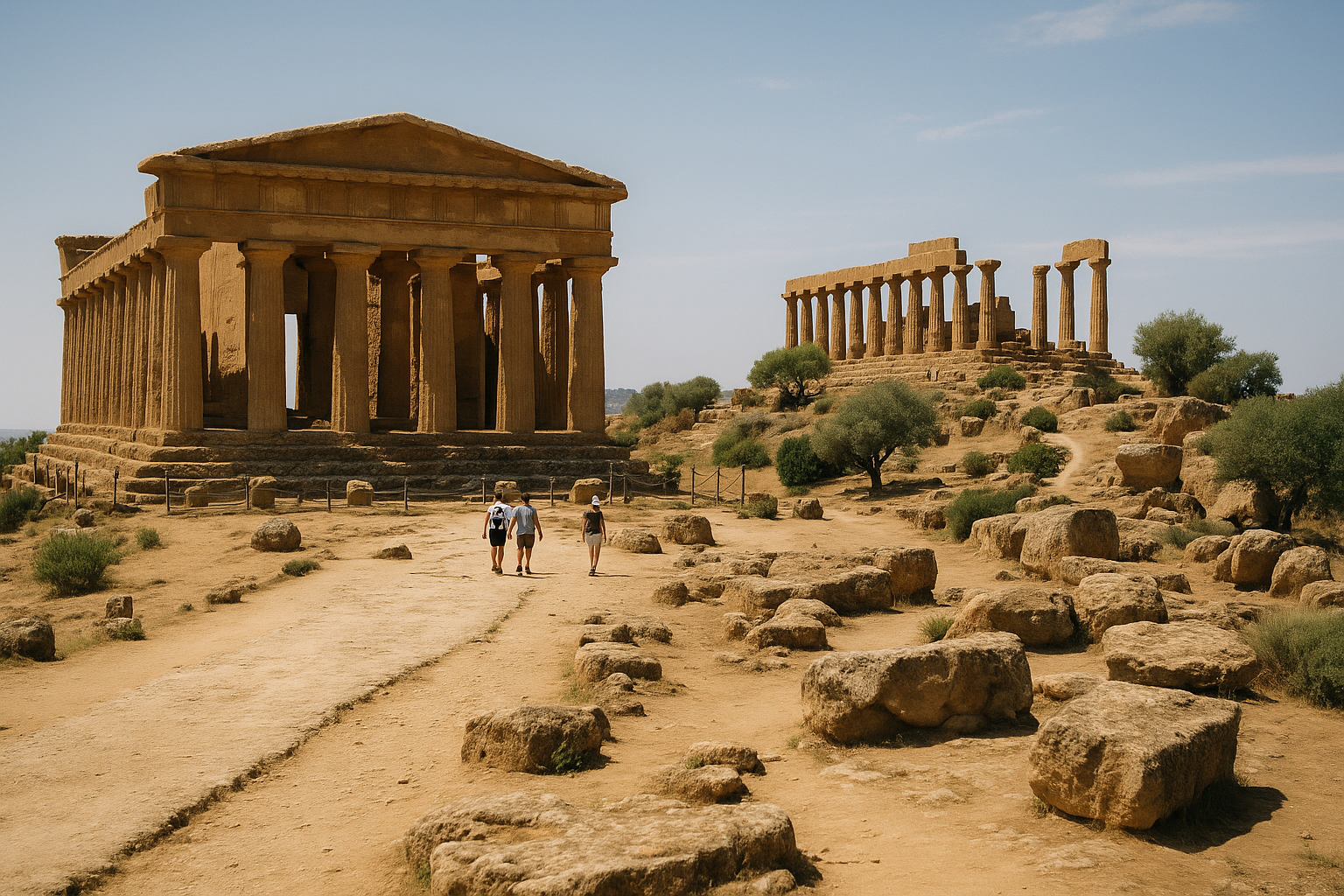
Valley of the Temples Agrigento Guide 2026: Concordia & Juno
Greek-Roman-NormanPlan your Agrigento Valley of the Temples visit with temple highlights, tickets, transport, and prac...
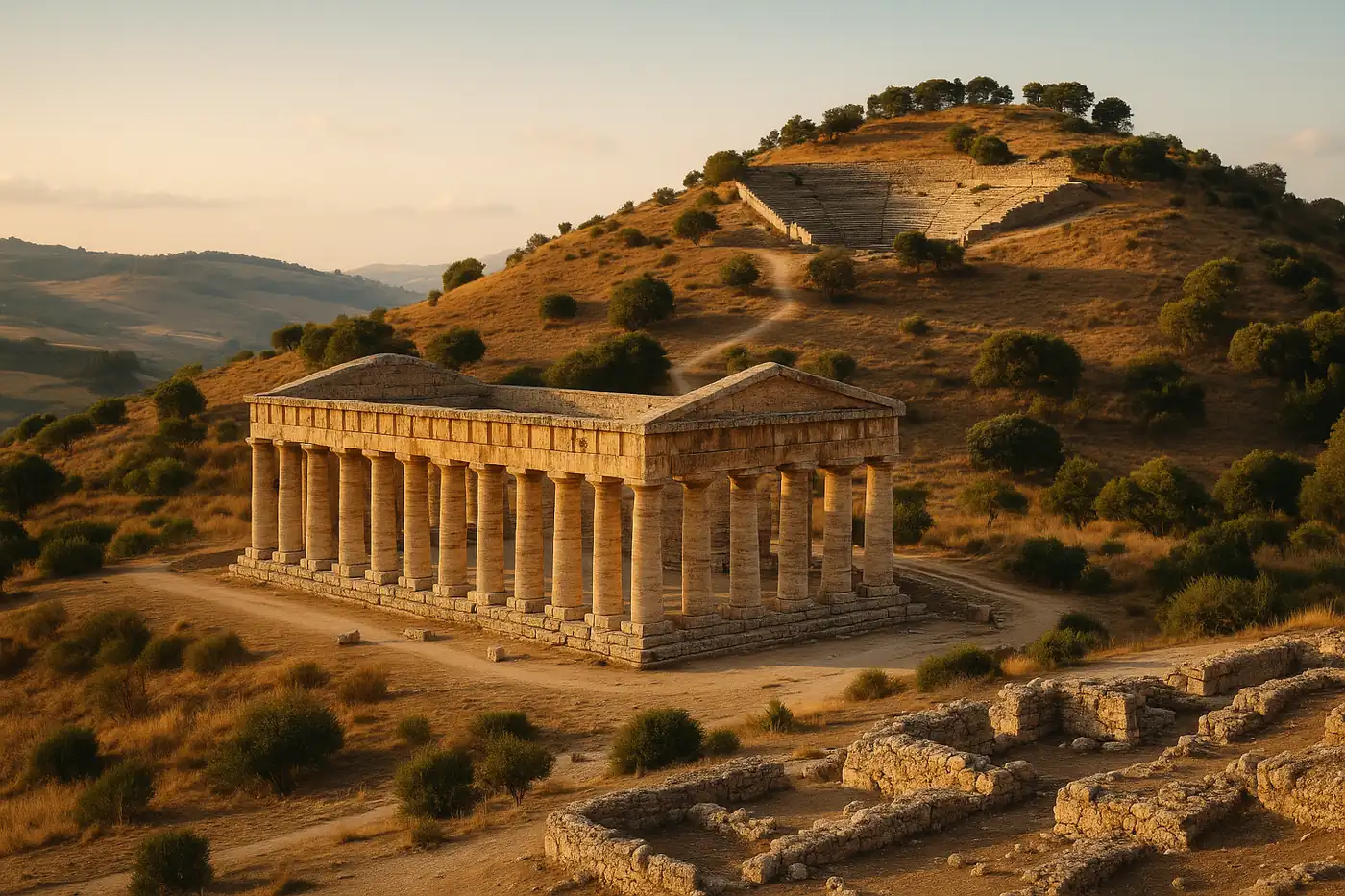
Segesta Archaeological Site: Sicily's Unfinished Temple and Hilltop Theatre
Elymian / Greek / RomanPlan your visit to Segesta in western Sicily: temple, theatre, shuttle logistics, timing, and practi...
Syracuse Archaeological Park (Neapolis) Guide 2026
Greek-Roman-ByzantinePlan your visit to Syracuse Archaeological Park in Sicily with theatre highlights, Ear of Dionysius ...
Colosseum Rome: Complete 2026 Guide to Arena Floor, Tickets, and Timing
Roman EmpirePlan the perfect Colosseum visit with timed-entry strategy, Arena Floor and underground access tips,...
Pantheon Rome: Ultimate Guide to Rome's Best-Preserved Ancient Temple
Roman EmpireMaster your Pantheon visit with history, dome engineering secrets, visiting tips, skip-the-line opti...