Quick Info
Curated Experiences
Royal Palace of Caserta and Campania Roman Sites Day Tour
Private Campania Heritage Tour from Naples
Naples and Campania Archaeology Private Day Trip
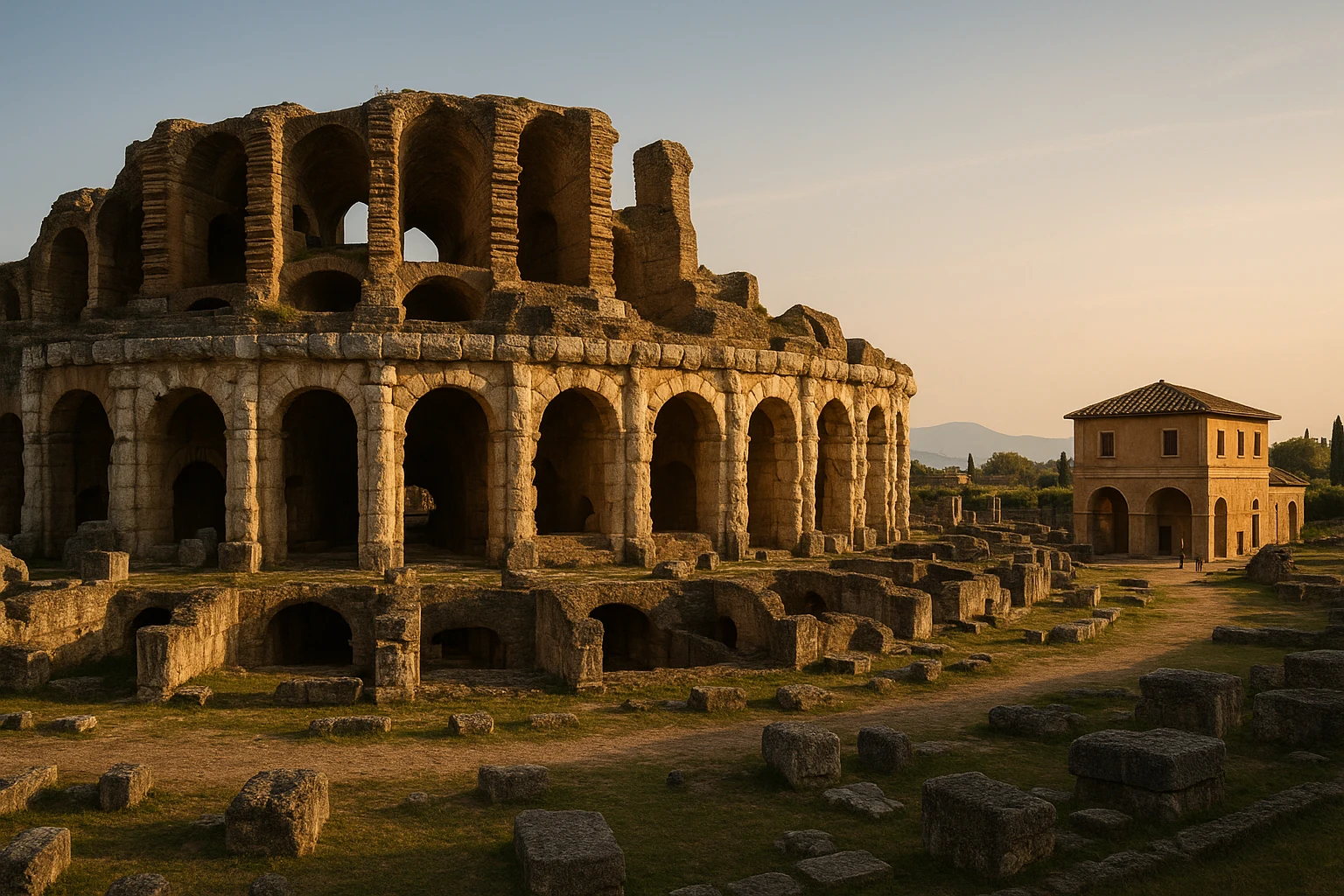
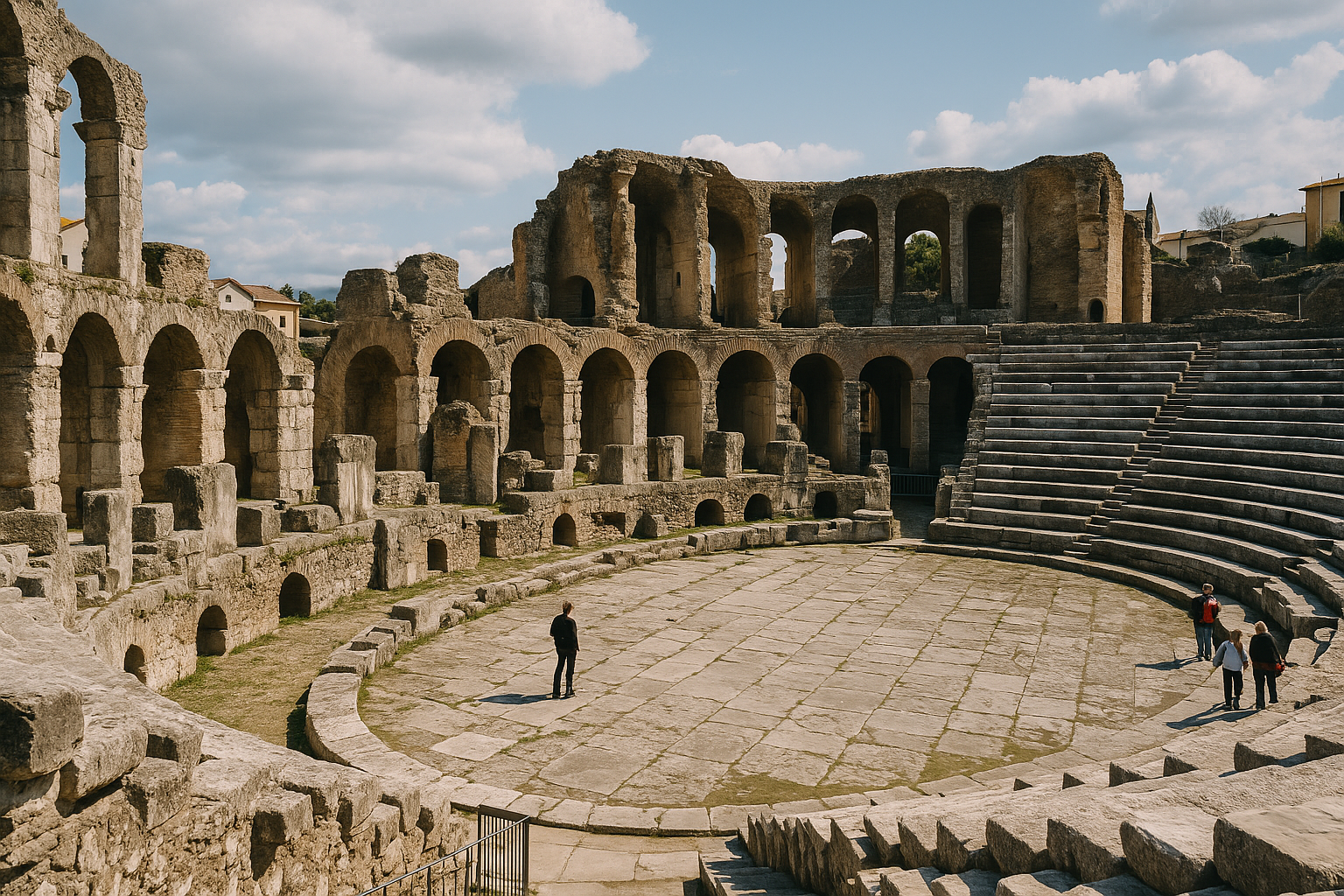
The first thing that surprises most visitors at the Capua Amphitheater in Italy is scale. You arrive expecting a provincial ruin and instead stand before a massive Roman arena that once rivaled the Colosseum itself in capacity and ambition. The surviving outer ring of arches still carries the authority of imperial engineering, while the underground passages preserve the machinery of spectacle: corridors, service rooms, and holding spaces where gladiators, animals, and stage crews waited for their cue. In Santa Maria Capua Vetere, north of Naples, the stone feels less curated than Rome and therefore closer to the original texture of Roman entertainment culture.
This is also one of the most emotionally charged sites in Campania. Ancient Capua was a major gladiator center, and literary tradition ties it directly to Spartacus, whose revolt began in a local training school before exploding into one of the largest slave uprisings in Roman history. That association gives every corridor an added tension: this was not just architecture, but a social system made visible in stone. At Ancient Travels, we recommend Capua as a counterpoint to Rome’s headline monuments. This guide covers history, highlights, transport from Naples and Caserta, seasonal timing, and how to combine Capua with nearby Campania destinations.
History: Arena of Empire and Rebellion
Campanian roots and early games (4th-2nd century BCE)
Before Roman imperial rebuilding transformed the site, Capua was already one of the richest urban centers in southern Italy. Settled in a region influenced by Campanian, Etruscan, and Samnite cultures, the city developed around fertile plains and strategic routes connecting inland Campania to the coast. Public spectacles, including combat games, had deep roots in Italic funerary and civic traditions long before they became fully Romanized. Archaeological evidence suggests that an earlier arena phase existed here before the monumental imperial form we see today, likely in timber or less durable masonry. Even in this early period, Capua’s wealth allowed elites to sponsor increasingly elaborate games that bound politics, religion, and public identity together.
Roman Capua and the rise of gladiator culture (2nd-1st century BCE)
As Roman influence consolidated after the Samnite Wars, Capua became a key allied city with broad economic significance. Grain, trade, and strategic military location gave it unusual weight in the republican era, and entertainment architecture expanded accordingly. The city became famous for gladiatorial schools, where enslaved and condemned men were trained as professional fighters for public events across Italy. Ancient writers repeatedly link Capua’s schools to the discipline and brutality that made Roman spectacle possible. By the 1st century BCE, the name of Capua signaled not just a city, but an institution of arena culture within the wider Roman world.
Spartacus and the revolt that shook Rome (73-71 BCE)
In 73 BCE, approximately seventy gladiators escaped from a school in Capua under leaders including Spartacus, Crixus, and Oenomaus. What began as a breakout evolved into a full-scale insurgency that defeated multiple Roman forces and drew tens of thousands of followers. The revolt exposed vulnerabilities in Roman manpower systems and triggered deep fear among the elite, especially because it challenged the social order underlying slavery and military prestige. Although Spartacus was ultimately defeated in 71 BCE, his rebellion permanently altered Roman political memory. Capua’s amphitheater district remains one of the few places where that story is grounded in physical space rather than myth alone.
Imperial rebuilding and monumental form (1st-2nd century CE)
The standing amphitheater took shape through major imperial interventions, traditionally associated with programs under Augustus and later enhancements under Hadrian and Antoninus Pius. Built in travertine and local stone with a multi-level arcaded exterior, it could accommodate tens of thousands of spectators and was among the largest amphitheaters in Italy outside Rome. The design followed familiar Roman principles: controlled circulation, tiered seating by social rank, service passages below, and engineered access points for rapid crowd movement. Decorative sculpture and relief programs once enriched the facade, signaling not only civic pride but participation in the visual language of empire.
Late antiquity, spoliation, and archaeological recovery (4th century CE-modern era)
Like many Roman monuments, the amphitheater entered a long phase of decline in late antiquity as political and economic structures changed. Earthquakes, reduced patronage, and stone reuse led to partial collapse and systematic spoliation. Blocks were removed for medieval and early modern construction in surrounding settlements, stripping the monument of much of its exterior finish while preserving core structural shells. Scholarly interest intensified between the 18th and 20th centuries, when excavations and conservation campaigns clarified the amphitheater plan, uncovered subterranean systems, and integrated nearby museum collections. Today’s site reflects both ancient grandeur and modern archaeological practice, with preservation efforts focused on legibility, safe access, and interpretation.
The Key Monuments: What to See at Capua Amphitheater
The arena bowl and surviving exterior arches
The amphitheater’s surviving ring is your best first read of Roman mass architecture at work. Even in fragmentary condition, the sequence of arches conveys how the building once controlled access for enormous crowds while maintaining structural rhythm around the oval plan. Estimates vary, but the full complex likely seated around 40,000 spectators, placing it among the largest entertainment structures in Roman Italy. As you walk the perimeter, look for differences in masonry texture that reveal restoration phases, collapse zones, and later interventions. This is a useful reminder that Roman monuments are never frozen in one date; they are cumulative objects, patched and reworked over centuries. For photography, late-afternoon side light from the west gives the arches stronger depth and reveals tooling marks in the stone.
The underground passages and service machinery
One of Capua’s strongest advantages over larger, more crowded amphitheaters is how clearly you can read the substructure. The underground corridors, chambers, and service routes make visible the backstage system that converted architecture into performance. Here, animals were held, props were staged, and fighters prepared before entering the arena level above. Drainage and ventilation features also become legible in these lower spaces, showing Roman attention to operational details often ignored in postcard views. You begin to understand that spectacles were not spontaneous events but tightly managed productions requiring logistics, labor hierarchies, and technical planning. If you only have limited time, prioritize this section: it gives Capua its distinctive interpretive power.
The Gladiator Museum (Museo dei Gladiatori)
Close to the amphitheater, the Gladiator Museum deepens the story from architecture to lived experience. Relief fragments, inscriptions, and reconstructed display elements explain combat categories, equipment styles, and iconography associated with Roman games. Instead of treating gladiators as cinematic caricatures, the museum frames them within legal status, training systems, patronage, and audience expectations. You see how memory was curated through funerary monuments and commemorative carving, and how victory narratives could coexist with extreme violence and social coercion. The museum visit also helps decode details you will see outside: symbolic motifs, decorative fragments, and spatial cues in the arena itself. Plan at least 30-45 minutes here for a meaningful pass rather than a quick walk-through.
The mithraeum and sacred layers nearby
The broader Santa Maria Capua Vetere archaeological zone includes evidence of religious life that ran parallel to civic spectacle, including a notable mithraeum associated with the cult of Mithras. Though separate from the main arena interior, this context matters because it reveals how Roman urban life layered ritual, politics, and entertainment in close proximity. The mithraeum’s symbolic imagery and enclosed spatial character contrast sharply with the amphitheater’s public scale, reminding you that Roman identity was built across very different kinds of spaces. If opening schedules align, adding this stop turns your visit from a single-monument outing into a richer urban archaeology experience.
The site as a whole: texture, silence, and proportion
Capua rewards slow walking. Without the constant compression of major flagship sites, you can pause and study proportion: stair gradients, corridor widths, sightline logic, and the choreography of movement from outside to seating to arena edge. The monument feels both powerful and unfinished, with surviving masonry framed by sky rather than complete facade. That partial state is not a weakness; it is part of the site’s honesty. You are seeing a building that lived many lives after Rome, including abandonment, reuse, excavation, and conservation. Arrive with that mindset and the site becomes less a checklist and more an architectural conversation across two thousand years.
Getting There: Transportation and Access
Capua is straightforward to reach from Naples and easy from Caserta, making it one of Campania’s best archaeological day trips.
From Naples
Most visitors start from Napoli Centrale and travel north by regional rail toward Santa Maria Capua Vetere. Depending on train choice and connections, expect around 35-55 minutes on rail plus local transfer time.
- Regional train + short taxi: Usually the simplest option. From Santa Maria Capua Vetere station, taxis to the amphitheater area are typically around 8-12 EUR ($9-13 USD), with a ride of about 8-12 minutes.
- Regional train + local walk/bus: Budget-friendly if weather is mild; allow 20-30 minutes on foot depending on route and pace, or use local transit where available for roughly 1.50-2.00 EUR ($1.60-2.20 USD).
- Rental car: Around 35-50 minutes in light traffic from Naples. Parking availability is generally better than in central Naples, though weekday local traffic can slow final approaches.
From Caserta
Caserta province surrounds the Capua area, so distances are short and logistics are easy to combine with a Royal Palace day.
- Taxi: A practical direct transfer, often around 20-30 EUR ($22-33 USD) each way depending on exact pickup point and time.
- Train + local transfer: Fast and economical. Rail segments are brief, with total journey commonly 25-40 minutes door to door.
- Rental car: Useful if pairing multiple rural or secondary sites in one day; road access is straightforward, and you avoid waiting for return connections.
Admission and Hours
Ticketing at Capua is usually inexpensive compared with major Italian flagships, with standard entry commonly in the lower single-digit euro bracket and combined options available for linked archaeological venues in Santa Maria Capua Vetere. As a practical planning assumption, budget approximately 6-10 EUR ($7-11 USD) for combined museum-and-site access, then verify current rates on official channels before travel day. Opening windows often follow a daytime archaeological schedule with reduced winter hours and final entry cutoffs before closing.
Card payments are increasingly accepted, but carrying small cash is smart for secondary counters or temporary system outages. For the best experience, visit early morning or late afternoon: light is better on stone surfaces, and the site is noticeably more comfortable in warmer months.
When to Visit: Seasonal Considerations
Spring (March-May)
Spring is the strongest all-around season, with typical daytime temperatures around 14-24°C (57-75°F). Light is soft, vegetation adds color around the masonry, and crowd levels are moderate compared with peak summer. This is an excellent period for visitors who want balanced conditions for both outdoor walking and museum time. A light jacket in the morning is usually enough.
Summer (June-August)
Summer brings heat and stronger midday sun, often in the 27-35°C (81-95°F) range. Crowd pressure is still lower than marquee Campania sites, but thermal load can be real on exposed stone and open pathways. If traveling in summer, arrive at opening or target late afternoon, carry water, and build shade breaks into your route. Breathable clothing and sun protection are essential.
Autumn (September-November)
Autumn is close to ideal, especially from late September through October. Temperatures generally settle between 16-27°C (61-81°F), with clearer air and comfortable walking conditions. Crowds thin after the main holiday peak, making this a strong choice for photographers and visitors who prefer quiet pacing. Early evening light can be particularly good on the surviving arches.
Winter (December-February)
Winter is cooler, often around 7-14°C (45-57°F), with occasional rain and fewer visitors. The atmosphere can feel dramatic, and you may have large sections of the site almost to yourself. Bring a waterproof layer and shoes with grip, as stone surfaces can be slick after rain. For travelers prioritizing space and calm over warm weather, winter is an underrated option.
Combining Capua Amphitheater with Campania
Capua works best as a half-day anchor inside a wider Campania circuit rather than a rushed stop between famous names. A reliable sequence begins by arriving at the amphitheater around 9:00 AM, when temperatures are mild and the stone corridors are still quiet. Spend your first hour reading the exterior ring and descending into the underground service passages, then move to the Gladiator Museum by 10:15 AM for context that reframes what you just saw outside. By 11:00 AM, you’ll have completed a full interpretive loop without feeling hurried.
From there, continue toward Caserta province for a contrast in scale and period. If you are pairing with the Royal Palace of Caserta, a taxi or private transfer can place you there around 11:45 AM-12:15 PM depending on traffic. This creates a compelling same-day narrative: Roman performance architecture in the morning, Bourbon royal urbanism in the afternoon. Break for lunch near Caserta’s historic center around 1:00 PM before entering the palace complex.
If you prefer an archaeology-only day, use Capua as the first stop and continue south toward Naples for museum time later in the afternoon, or build a two-site loop with another Roman-era destination in Campania. Either way, Capua’s key advantage is efficiency: you can see a lot in a short window while still having enough energy for a second major visit. Travelers with tight schedules can also keep Capua standalone and be back in Naples by early afternoon, with total out-and-back time around 4.5 to 6 hours including transit.
Practical Information
What to Bring
- Sun protection: Hat, sunglasses, and sunscreen are important in all but winter, especially during midday hours.
- Water: Carry at least 750 ml to 1 liter per person for a comfortable site circuit.
- Footwear: Wear stable shoes with grip for uneven masonry, stairs, and occasional damp surfaces.
- Camera: A wide lens helps capture arch sequences and underground spatial depth.
- Small cash: Useful backup for tickets, coffee bars, or local taxi flexibility.
Dress Code and Etiquette
There is no strict ceremonial dress code at the amphitheater, but respectful attire is recommended in line with local norms in smaller Campania towns. Avoid climbing on fragile masonry or stepping beyond marked barriers, even when sections appear open. Keep voices moderate in enclosed passages; acoustic echo can be intense and disruptive to other visitors.
Accessibility
Accessibility is mixed. Some paths and museum spaces are manageable, but uneven stone surfaces, steps, and grade changes can limit full route access for visitors with reduced mobility. If accessibility is a priority, contact the site in advance for current barrier-free routes, entrance options, and any available assistance. Planning ahead makes a major difference here.
Why Capua Amphitheater Matters
Capua matters because it restores proportion to Roman history. In global imagination, Rome can look like a single-city civilization, as though imperial culture radiated from one center and everyone else copied it. Capua corrects that view. It shows how deeply Roman systems depended on provincial cities, regional wealth, and local institutions that trained bodies, staged spectacle, and enforced hierarchy far from the capital’s monuments.
It also asks harder questions than many famous ruins. In Capua, you are not only admiring engineering; you are walking through the infrastructure of coercion and performance that shaped social life across the empire. The Spartacus connection sharpens that tension. Rebellion and control are both present in the same stone shell, and neither can be explained without the other.
For travelers, that complexity is exactly the reward. You leave with more than photos of arches. You leave with a clearer sense of how power operated in everyday Roman space, and why quieter sites in Campania can sometimes teach more than the places everyone already knows.
Quick Facts
| Attribute | Details |
|---|---|
| Location | Santa Maria Capua Vetere, Campania, Italy |
| Ancient Name | Capua (near ancient Casilinum corridor) |
| UNESCO Status | Not individually inscribed; part of broader Campania heritage landscape |
| Established | c. 4th century BCE arena origins |
| Distance from nearest hub | ~35 km from Naples (about 45-70 minutes depending on mode) |
| Entry Fee | Typically ~6-10 EUR ($7-11 USD) for combined access options |
| Hours | Daytime archaeological hours; winter closing earlier than summer |
| Best Time | Spring and autumn; early morning or late afternoon |
| Suggested Stay | 1.5-2.5 hours (plus museum) |
Explore More Italy
- Pompeii: Walk a Roman city frozen by Vesuvius, with unmatched street-level detail.
- Herculaneum: Smaller than Pompeii but often better preserved, with intimate urban textures.
- Paestum: Monumental Greek temples in southern Campania with powerful Doric architecture.
- Teatro Romano di Benevento: Another strong read of Roman performance spaces in inland Campania.
Plan your full archaeological route through the peninsula with our Italy Ancient Sites Guide. For route design and transport strategy, see our Italy itinerary planning guide.
Frequently Asked Questions
How much time should I plan at the Capua Amphitheater?
Most travelers need 1.5 to 2.5 hours to see the amphitheater, underground areas, and the Gladiator Museum at a comfortable pace. If you enjoy architectural detail or photography, plan closer to three hours. Add extra time if you are combining it with nearby Roman sites in Campania.
Is the Capua Amphitheater really connected to Spartacus?
Yes, ancient sources connect Capua's gladiatorial schools to the revolt led by Spartacus in 73 BCE. While the standing amphitheater was expanded later under Roman imperial patronage, the city itself was one of the most important gladiator-training centers in Italy. That historical association is one of the site's defining reasons to visit.
How do I get to Capua Amphitheater from Naples without a car?
The easiest route is regional train from Napoli Centrale to Santa Maria Capua Vetere, then a short taxi or local walk to the archaeological area. Depending on connections, total travel time is usually 50-75 minutes each way. This is very manageable as a half-day trip from Naples.
How much are tickets, and is there a combined museum pass?
Standard entry is typically in the low single-digit euro range, and combined admission options often include both the amphitheater and museum spaces in Santa Maria Capua Vetere. Prices and combinations can change seasonally, so check the official listing before departure. Bring a payment card and a small amount of cash as backup.
What is the best time of year to visit Capua Amphitheater?
Spring and autumn are ideal for comfortable temperatures and softer light on the stone arches. Summer can still work well if you arrive early in the morning or later in the afternoon to avoid peak heat. Winter is quieter and atmospheric, especially for visitors who prefer low crowd levels.
Is the Capua Amphitheater worth visiting if I've already seen the Colosseum?
Absolutely. Capua offers a different experience: fewer crowds, easier movement through the structure, and a stronger connection to gladiatorial training history outside Rome. Seeing both gives you a fuller picture of how amphitheaters functioned across Roman Italy.
Nearby Ancient Sites
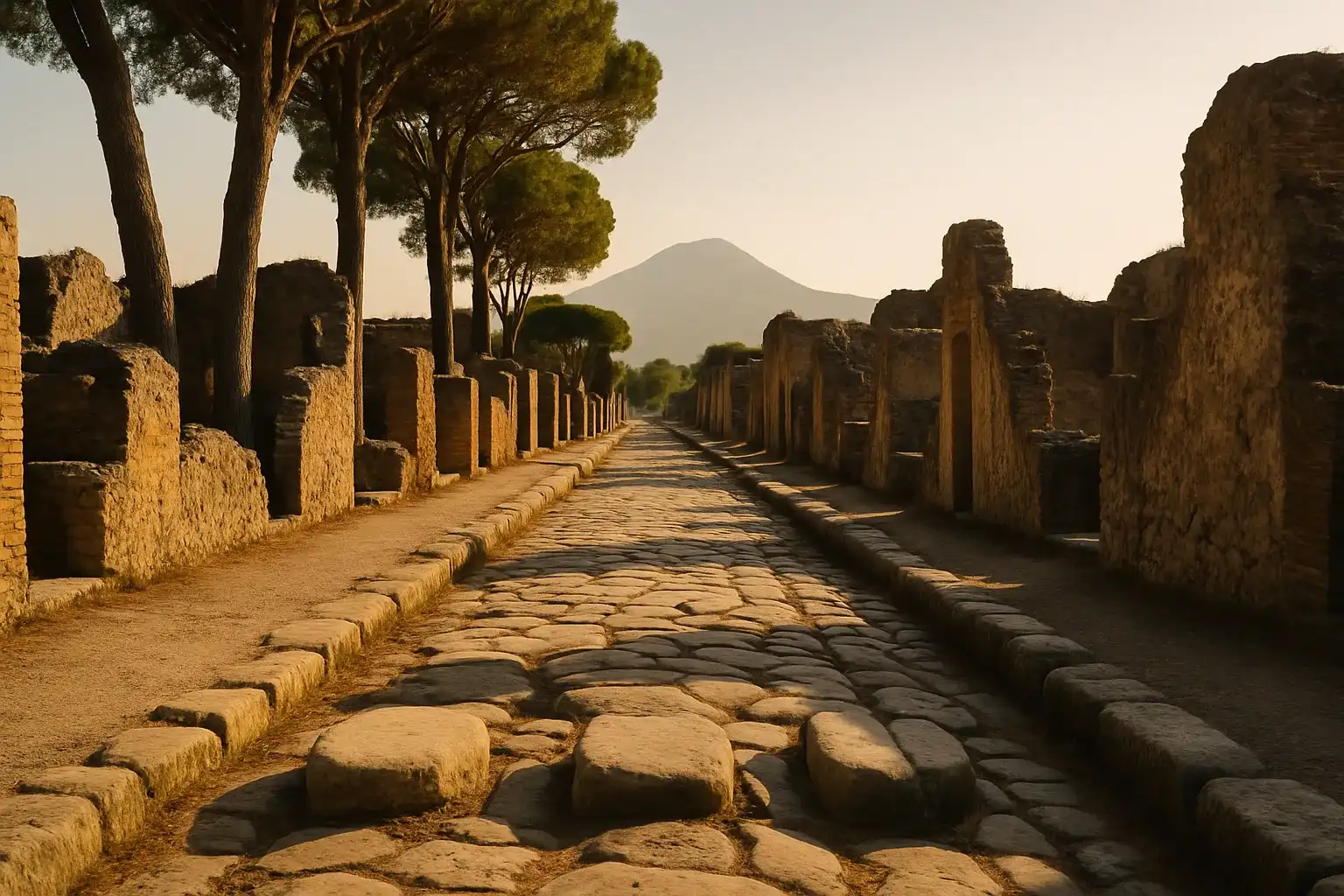
Pompeii Italy Travel Guide: Frozen in Time, Complete 2026
Roman EmpireWalk the streets of ancient Pompeii with our complete guide. Discover the best routes, must-see hous...
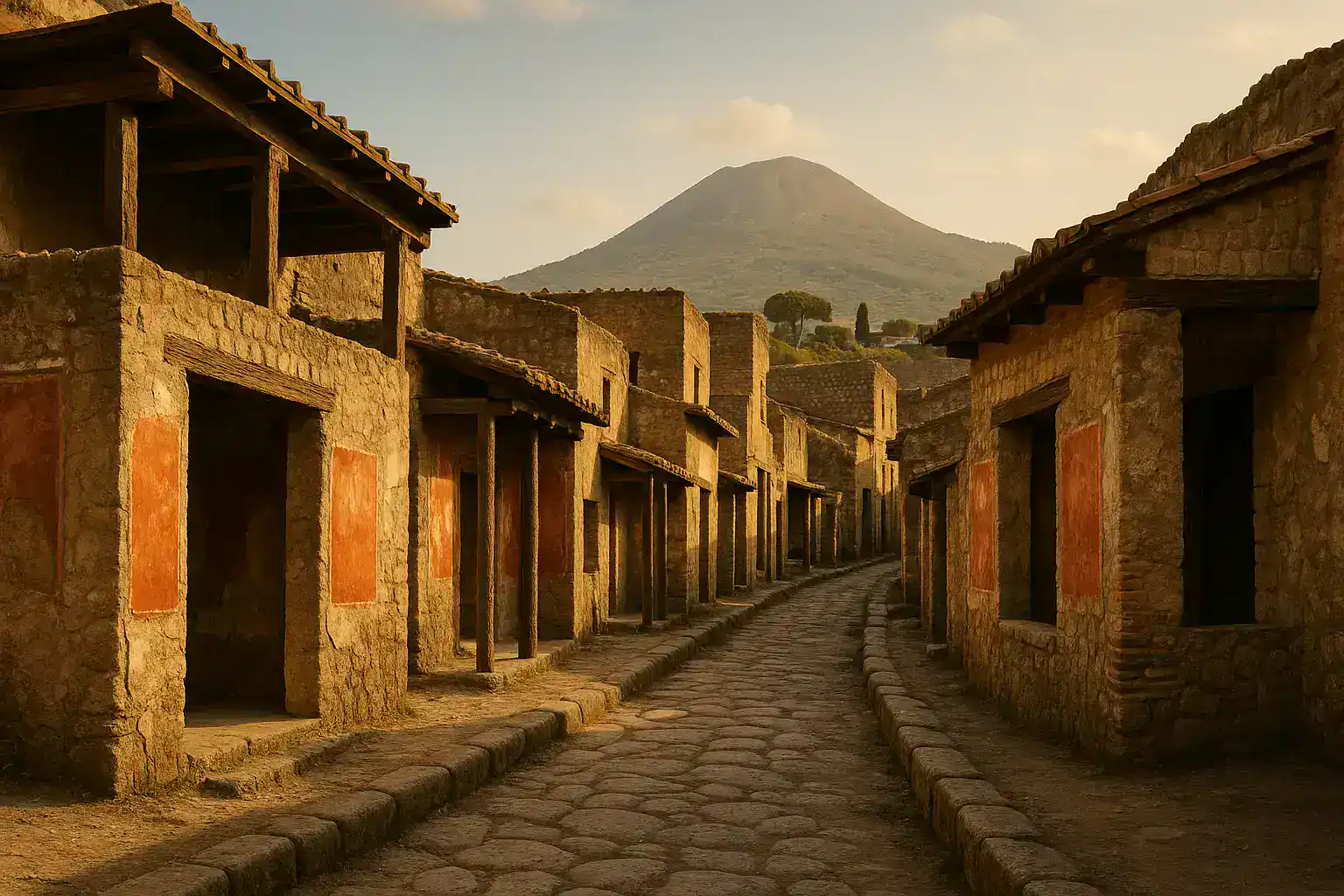
Herculaneum Italy Travel Guide 2026: Better Preserved Than Pompeii
Roman EmpireDiscover Herculaneum's extraordinary preservation of ancient Roman life. See carbonized wood, vivid ...
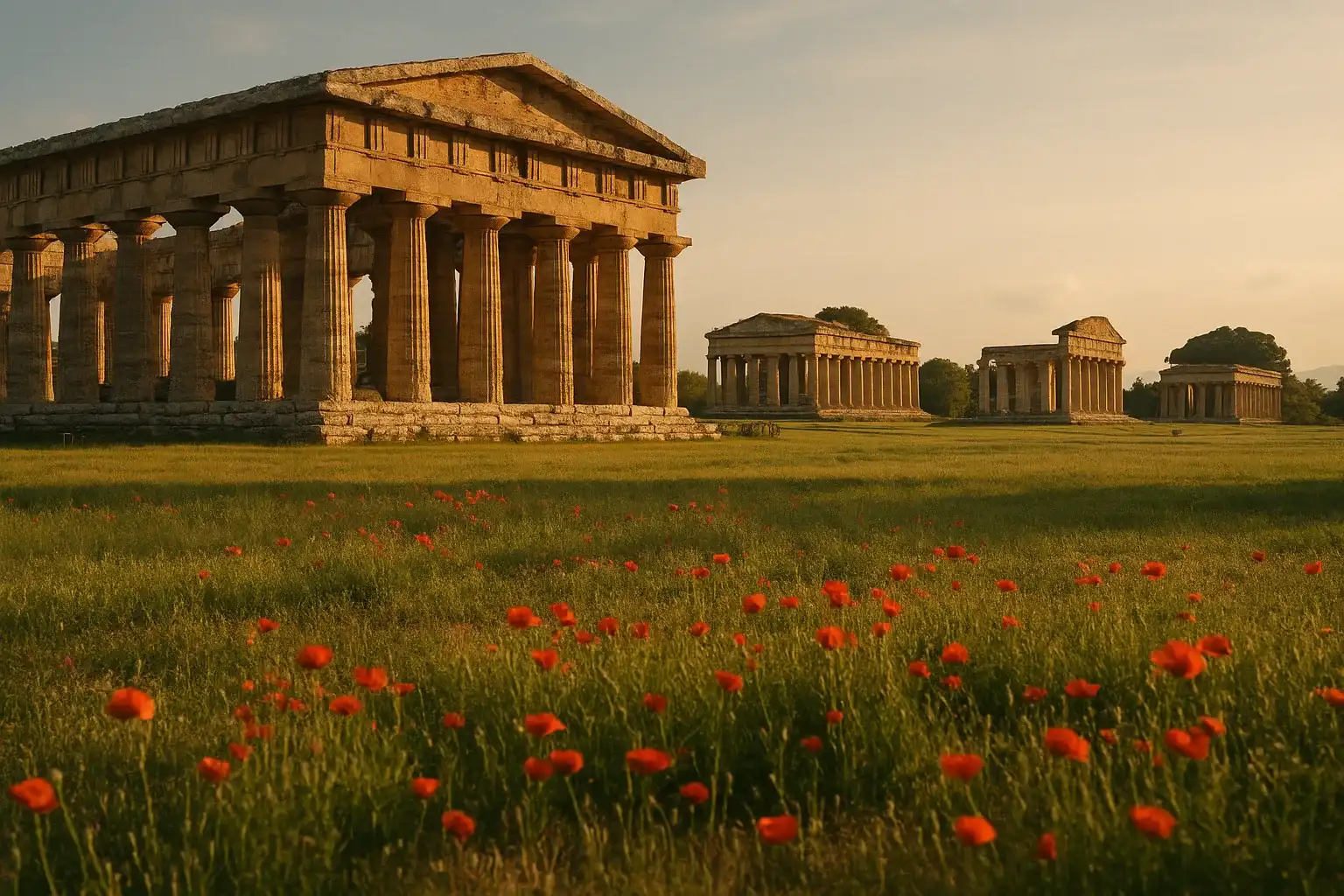
Paestum: Europe's Best-Preserved Greek Temples on Italy's
Ancient Greek / RomanDiscover Paestum's magnificent Greek temples, the Tomb of the Diver, and buffalo mozzarella farms on...
Teatro Romano di Benevento Guide 2026: Roman Theater Stop in Campania
RomanPlan a smart visit to Benevento’s Roman Theater with timing, route pairings, and practical tips for ...