Quick Info
At a glance
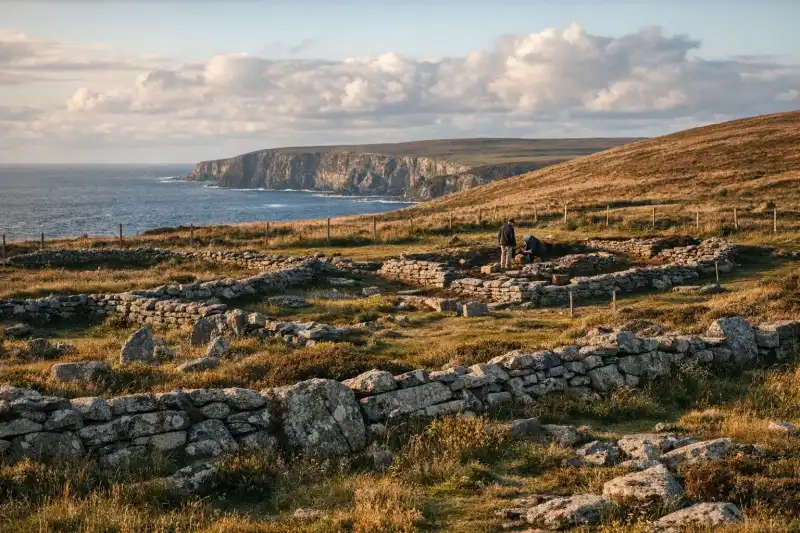
Céide Fields in Ireland feels less like a single monument and more like a revelation slowly rising from the land itself. On the wild north coast of County Mayo, where Atlantic winds sweep across high bog and the sea crashes against dark cliffs below, this prehistoric landscape preserves traces of one of the world’s earliest known enclosed farming systems. What appears at first to be open peatland turns out to conceal miles of carefully laid stone walls, old house sites, and megalithic tombs created by Neolithic communities more than 5,000 years ago.
That sense of contrast is what makes a visit here so memorable. The scenery is raw, expansive, and unmistakably western Irish: a horizon of moor, cloud, and ocean, with a modern visitor centre standing as the doorway into a much older world. Céide Fields is not a ruin in the conventional sense, with towering walls or dramatic temples. Instead, it is a landscape archive. Beneath the blanket bog lies a deliberate human design: fields plotted out for farming, land divided by boundaries, woodland cleared, and communities established in a place that today seems remote and elemental. The site invites visitors to imagine a very different ancient Ireland, one with active farms, managed land, and people deeply engaged with the challenges of climate, soil, and survival. For travelers interested in archaeology, prehistoric Europe, or Ireland beyond its castles and monasteries, Céide Fields offers one of the country’s most thought-provoking destinations.
History
Discovery beneath the bog
Although the Neolithic landscape itself is ancient, Céide Fields came to wider attention only in the modern era. The area’s buried archaeology remained protected for millennia under layers of blanket bog, which gradually accumulated over the original ground surface. Local people had long known the area as bogland, but the hidden extent of what lay underneath was not understood until the 20th century.
The breakthrough is closely associated with the work of schoolteacher and amateur archaeologist Patrick Caulfield, and later his son, Professor Seamus Caulfield. While cutting peat, Patrick Caulfield noticed lines of stones below the bog that seemed too regular to be natural. These were not random deposits but the tops of ancient drystone walls. Seamus Caulfield expanded this work scientifically, surveying and excavating the site and helping reveal an immense prehistoric field system stretching across the landscape. What emerged was extraordinary: not an isolated feature but an organized agricultural terrain of great age and scale.
The discovery changed how archaeologists understood early farming in Ireland. Rather than viewing Neolithic communities simply as small clearers of woodland or builders of tombs, Céide Fields showed them capable of planning and managing a broad, enclosed landscape.
Neolithic settlement and farming
The main phase of activity at Céide Fields dates to around 3500 BCE, during the Neolithic period, when farming had become established in Ireland. The people who lived here cleared native pine woodland to create fields and grazing land. They built stone walls to divide plots, likely for livestock management and agricultural organization, and established domestic structures within this planned environment.
This was not casual or temporary occupation. The scale of the walls indicates sustained labor and long-term investment. The soils at the time were more suitable for cultivation than they appear today, and the local communities may have combined crop growing with cattle husbandry. Their world would have been wooded in places, productive, and socially coordinated. The tombs found in the area also suggest ritual and ancestral significance, linking farming life to wider spiritual beliefs.
Archaeological evidence points to a society that was shaping the land carefully. Boundaries mattered. Place mattered. The effort needed to clear forest, gather stone, and construct durable walls speaks to communal work and an intimate understanding of terrain.
Environmental change and abandonment
One of the most important historical stories at Céide Fields is environmental transformation. Over time, deforestation, shifting climate conditions, and soil deterioration contributed to the decline of the agricultural landscape. As woodland disappeared and the land became wetter and less fertile, peat began to form. Blanket bog slowly spread across the abandoned fields, sealing the old walls and habitation traces beneath it.
This process, while destructive to farming, was remarkably preservative for archaeology. The bog acted almost like a protective blanket, covering the Neolithic ground surface and safeguarding patterns that might otherwise have vanished through ploughing or later development. In many places, the archaeological remains survived because they were entombed rather than reused or erased.
The transition from farmed terrain to peat-covered moor also offers a powerful lesson in long-term environmental change. Céide Fields is not only evidence of prehistoric life but also of the vulnerability of human landscapes. It reveals how climate, ecology, and land use can reshape an entire region over centuries.
Excavation, interpretation, and public heritage
From the later 20th century onward, archaeological excavation and interpretation made Céide Fields accessible to the public as one of Ireland’s most important prehistoric sites. Research focused on mapping buried walls, identifying house sites and tombs, and reconstructing the ancient environment through pollen analysis and other scientific methods. These studies helped build a picture of woodland clearance, farming practices, and eventual bog formation.
A visitor centre was developed to explain the significance of the site, making the hidden landscape understandable to non-specialists. This was essential because Céide Fields can be difficult to grasp through surface remains alone. The exhibition, guided walks, and interpretive displays translate subtle archaeological traces into a coherent story of early farming life.
Today, Céide Fields stands as both a major research site and a public heritage destination. Its importance lies not in monumental architecture but in its completeness as a prehistoric cultural landscape. It preserves evidence of economy, settlement, ritual, and ecological change in one place. That combination makes it one of the most compelling windows into Neolithic Ireland and one of the most distinctive archaeological experiences on the Atlantic edge of Europe.
Key Features
The most remarkable feature of Céide Fields is the field system itself. Extending beneath the bog for many kilometers, these drystone boundaries form an organized prehistoric landscape unlike the more isolated monuments many travelers expect from ancient sites. Even when the walls are not fully visible above ground, their presence can be understood through exposed sections, archaeological diagrams, and guided interpretation. The idea that such a vast network of land divisions survives below the peat is central to the site’s fascination. It transforms what looks like open moor into a carefully planned human environment.
Another major attraction is the site’s evidence for Neolithic domestic life. Archaeologists have identified house remains in the area, helping to connect the field boundaries with actual settlement rather than abstract land use. These traces suggest that people were not simply visiting or using the area seasonally; they were living here, organizing households, herding animals, and maintaining a structured rural landscape. The domestic dimension gives Céide Fields emotional weight. It was a lived-in place, not just a ceremonial one.
The megalithic tombs associated with the landscape add a ritual layer to the experience. As elsewhere in Neolithic Ireland, burial and ceremony were woven into daily life and territory. These tombs hint that the communities who farmed here also marked the land spiritually, linking ancestry, memory, and ownership. The combination of tombs, houses, and fields creates a fuller portrait of society than many single-feature archaeological sites can offer.
The visitor centre is one of the key practical and interpretive features of Céide Fields. Because so much of the archaeology lies hidden beneath bog, the centre is essential in helping visitors understand what they are seeing. Exhibits explain how the fields were discovered, how archaeologists investigate buried landscapes, and what scientists have learned about the ancient environment. Models and reconstructions help translate subtle ground evidence into a vivid image of Neolithic farming life. For many visitors, this context is what turns the site from a scenic stop into a genuinely memorable encounter with deep history.
Architecturally, the visitor centre also sits impressively in the landscape, and its viewing point over the Atlantic cliffs is one of the most dramatic in County Mayo. This is another defining feature of Céide Fields: the setting. The site occupies elevated coastal bogland above steep sea cliffs, and the contrast between prehistoric field systems and raw ocean scenery is striking. You are never far from the elements here. Wind, mist, light, and changing weather shape the mood of every visit. On clear days, the coast feels immense and exhilarating; in cloud or rain, it can seem austere and ancient in an entirely different way.
Guided walks are often the best way to appreciate the fields themselves. Trained guides can point out exposed wall lines, explain excavation methods, and describe how a seemingly featureless bog contains one of Europe’s great prehistoric landscapes. Without that explanation, some of the significance can remain invisible. With it, visitors begin to read the land differently: subtle rises become old surfaces, cut sections reveal buried walls, and the bog becomes a historical document.
Finally, Céide Fields is important for what it teaches about environmental history. The site is not only about human achievement but also about ecological consequence and change. Woodland was cleared, soils were stressed, and wet conditions eventually led to bog growth that swallowed the fields. That long story of human impact and environmental response gives the place a relevance beyond archaeology. It speaks to land management, sustainability, and the fragility of settled landscapes. Few sites present this lesson as clearly or as powerfully.
Getting There
Céide Fields is located on the north coast of County Mayo, roughly 35 km northwest of Ballina by road, though journey times can feel longer because of rural routes. If you are driving, this is the easiest and most flexible option. From Ballina, allow around 45 to 60 minutes depending on the route and weather. From Westport, expect roughly 1 hour 45 minutes to 2 hours, and from Galway, around 3 hours. Car rental in western Ireland often starts from about €35 to €70 per day, with fuel extra, and having your own vehicle makes it much easier to combine Céide Fields with other Mayo coastal stops.
Public transport is possible but limited. Bus services connect larger towns such as Ballina, Castlebar, and Westport, but direct service to Céide Fields itself is infrequent or seasonal. In practice, many travelers take a bus to Ballina and continue by taxi. A one-way bus fare to Ballina from Galway may range from about €15 to €25 depending on the operator and booking time. A taxi from Ballina to Céide Fields can cost approximately €50 to €75 each way, so this option is best arranged in advance.
Organized day tours focused specifically on Céide Fields are less common than tours to more famous western Ireland sites, but private heritage tours of County Mayo or broader west-of-Ireland itineraries may include it. These can be worthwhile if you want commentary and easier logistics. If self-driving, be prepared for narrow local roads, strong coastal weather, and limited services near the site. Good footwear and a weatherproof jacket are strongly recommended even for a short visit.
When to Visit
The best time to visit Céide Fields is generally from late spring through early autumn, when days are longer, the roads are easier to navigate, and the visitor centre and guided experiences are more likely to be operating on fuller schedules. May, June, and September are especially appealing because they often combine relatively mild weather with fewer crowds than the peak summer season. In these months, visibility can be excellent, and the Atlantic views from the cliffs are at their most rewarding.
Summer, especially July and August, offers the greatest convenience for most travelers. Opening hours are usually more reliable, and the surrounding Mayo countryside is at its greenest. However, “summer” on Ireland’s Atlantic edge does not guarantee warm or dry conditions. Wind, mist, and sudden rain are always possible, so dress in layers and bring waterproof clothing. Even in bright weather, the exposed coastal setting can feel chilly.
Autumn can be atmospheric, with dramatic skies and fewer visitors, but weather becomes more unpredictable. Winter visits are possible for determined travelers, yet they require extra planning. Some visitor services may be reduced, daylight is short, and strong Atlantic conditions can make the site feel very exposed. That said, winter can also highlight the elemental character of the landscape if you are prepared.
Morning visits are often a good idea, especially if you are combining Céide Fields with other Mayo attractions later in the day. Clearer light can help with coastal views, though conditions change quickly. Before any trip, check current opening times, local weather forecasts, and whether guided walks are available. At Céide Fields, interpretation adds significantly to the experience, so timing your visit around available tours can make a real difference.
| Quick Facts | Details |
|---|---|
| Site Name | Céide Fields |
| Location | County Mayo, Ireland |
| Period | Neolithic |
| Main Date | c. 3500 BCE |
| Known For | Prehistoric field systems, house sites, and megalithic tombs beneath blanket bog |
| Setting | Atlantic coastal bogland above sea cliffs |
| Best Base | Ballina |
| Visit Duration | 1.5 to 3 hours |
| Best Season | Late spring to early autumn |
| Access Notes | Most convenient by car; public transport options are limited |
Guided tours: worth it?
Most travelers can visit Céide Fields independently. Compare a tour only if you want a tighter history-focused visit, easier logistics, or a guide who can answer questions on the spot.
Best for
- Short visits where a planned route saves time
When to go self-guided
Go independently if you prefer setting your own pace, reading as you go, and checking official hours or ticket rules directly before you arrive.
What I’d avoid
Skip paid tours that bundle unrelated stops you do not actually want. The best option should either save meaningful planning time or add historical context you would miss on your own.
Céide Fields and North Mayo day tours
Useful when: you want to compare guided formats before deciding
County Mayo archaeological tours
Useful when: you want to compare guided formats before deciding
West Ireland heritage tours from Galway
Useful when: transport or pickup logistics matter
Some tour links are affiliate links, which may earn Ancient Travel a small commission at no extra cost to you. I try to surface options that make practical sense for the site—not just anything bookable.
Frequently Asked Questions
What are the Céide Fields?
Céide Fields are an extensive prehistoric field system in County Mayo, Ireland, preserved beneath blanket bog. The site includes stone field walls, house remains, and megalithic tombs dating mainly to the Neolithic period.
How old is Céide Fields?
The main farming landscape at Céide Fields dates to around 3500 BCE, making it one of the oldest known enclosed field systems in the world.
Do you need a ticket to visit Céide Fields?
Access arrangements can vary seasonally, especially for the visitor centre and guided interpretation. It is best to check current opening hours, admission prices, and tour availability before traveling.
Can you see the ancient field walls easily?
Some features are interpreted from exposed sections and guided walk areas rather than as fully visible walls across the whole bog. The visitor experience often relies on the exhibition, viewpoints, and guided explanation to understand the buried landscape.
How much time should I allow for a visit?
Most visitors should allow 1.5 to 3 hours for the exhibition, cliff views, and a guided walk where available.
Is Céide Fields suitable for families?
Yes, many families enjoy the visitor centre and dramatic coastal setting, though parts of the site can be exposed to wind and weather, so sturdy footwear and layers are recommended.
Nearby Ancient Sites
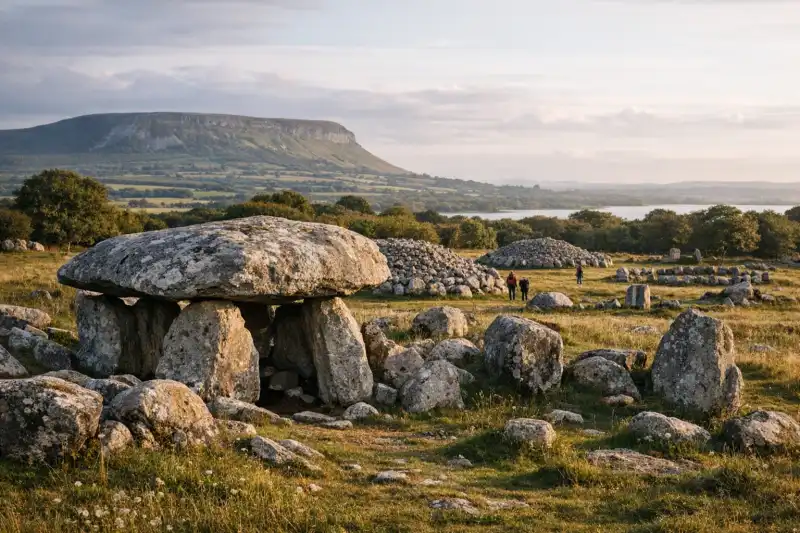
Carrowmore Megalithic Cemetery
Neolithic communities of prehistoric IrelandExplore Carrowmore Megalithic Cemetery, Ireland’s vast Neolithic burial landscape near Sligo, with t...
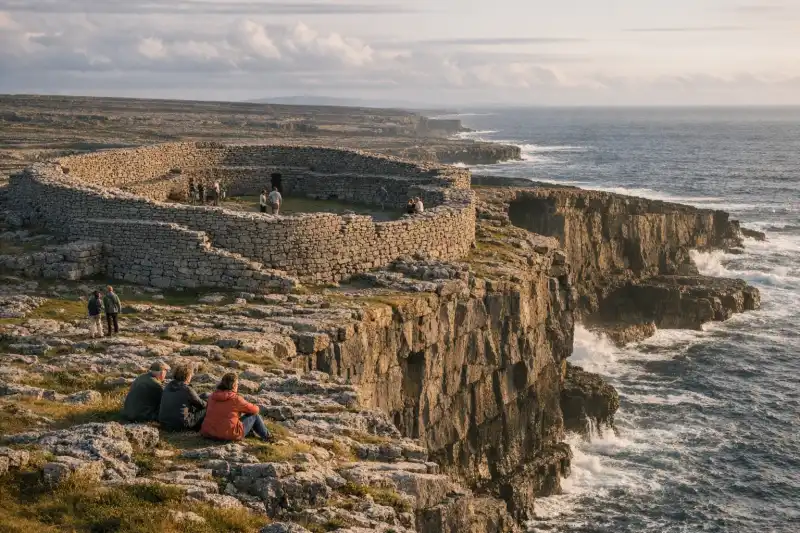
Aran Islands Stone Forts
Prehistoric and early medieval IrishExplore the dramatic prehistoric stone forts of Ireland’s Aran Islands, where Atlantic cliffs and an...
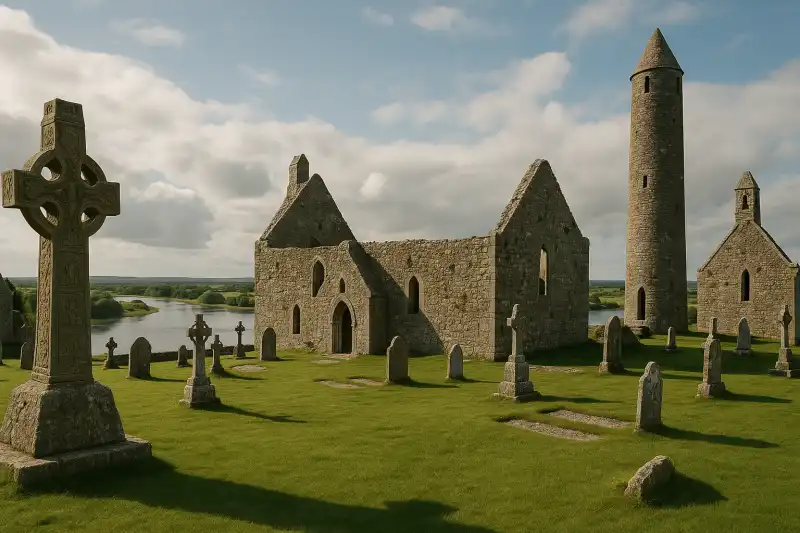
Clonmacnoise Travel Guide 2026: Monastic Ruins, High Crosses, and River Shannon Context
Early Medieval IrelandPlan a first visit to Clonmacnoise with practical timing, monastic-site context, and clear route adv...