Quick Info
Curated Experiences
Casma Valley Archaeological Day Trip from Lima
Private Northern Peru Archaeology Tour: Sechín and Chankillo
Ancient Casma Route: Cerro Sechín, Sechín Alto, and Local Museum
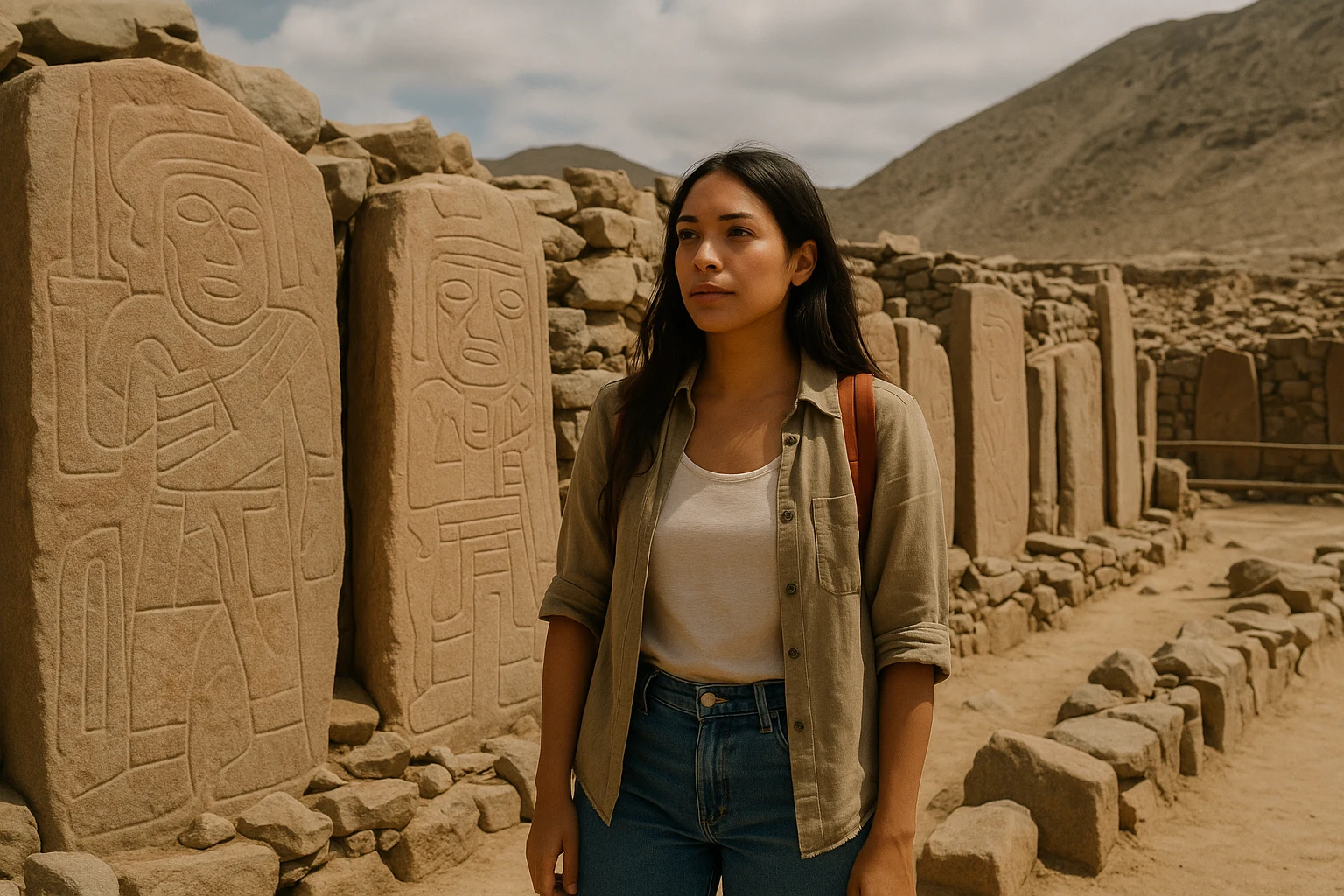
The first time you stand in front of the carved stones at Cerro Sechín, Peru, the site feels less like a ruin and more like an argument carved into earth and granite. Figures stride, bleed, dismember, and stare back from monoliths set into a ceremonial enclosure in the Casma Valley, north of Lima. Even if you have visited Peru’s better-known highland icons, Cerro Sechín lands differently: older in mood, harsher in imagery, and unusually direct about power. This is not architecture built only to impress. It is architecture built to communicate control.
That is exactly why Ancient Travels recommends Cerro Sechín as a serious stop for travelers who want to understand Peru before empires. The site sits within a dense archaeological landscape that includes early monumental centers, agricultural corridors, and ritual complexes that predate later Andean political systems by many centuries. In practical terms, it is also one of the easiest high-value archaeological visits from Casma, with short transfer times and a compact layout you can explore in a focused half day. This guide walks you through the site’s chronology, the monolith program and key architectural sectors, transportation logistics, admission details, seasonal timing, and how to combine Cerro Sechín with nearby Casma Valley highlights in one coherent itinerary.
History: Violence, Ceremony, and Authority in the Casma Valley
Early valley communities and ceremonial foundations (c. 2500-1800 BCE)
Long before Cerro Sechín’s famous carved walls were assembled, the Casma basin was already home to communities managing river-fed agriculture along Peru’s dry coast. Irrigation potential, maritime exchange, and valley connectivity encouraged settlements to become more structured, with ceremonial building emerging as a way to organize labor and identity across groups. In this setting, early platform architecture and communal spaces began to signal leadership through ritual coordination rather than simple domestic growth. Cerro Sechín developed from this landscape of experimentation, where monumentality and social control were becoming increasingly intertwined.
Construction of the main Sechín complex (c. 1800-1500 BCE)
During the Initial Period, Cerro Sechín appears to have consolidated into a major ceremonial-administrative center. Builders created a central architecture of adobe and stone, then framed parts of it with upright monoliths carved in high-impact relief. This phase likely involved repeated remodeling rather than one-time construction, suggesting that leadership renewed the site’s visual program over generations. The iconography’s emphasis on bodies, trophies, and armed figures has fueled debate: was it literal warfare memory, ritualized myth, or both? Whatever the precise meaning, the ensemble projected disciplined authority to anyone entering the complex.
Regional interaction and ideological competition (c. 1500-1200 BCE)
As Casma and neighboring valleys intensified their own ceremonial traditions, Cerro Sechín operated within a broader network of interacting centers rather than in isolation. Sites in the Sechín zone seem to reflect both shared cultural language and local competition over prestige, labor, and ritual legitimacy. In this context, the carved perimeter may have served as a political statement visible to visiting groups, not only local residents. The site’s architectural staging indicates controlled movement and selective access, with elite narratives literally embedded in stone. Cerro Sechín thus functioned as both ritual venue and ideological theater in a competitive regional landscape.
Transformation and shifting centers of power (c. 1200-800 BCE)
Like many early ceremonial complexes, Cerro Sechín eventually lost its central role as political geographies changed across coastal Peru. Settlement focus shifted, monument use transformed, and later communities inherited the site’s presence without replicating its exact visual strategy. This was less a sudden collapse than a reorganization across multiple valleys where authority could move to new built environments and emerging ceremonial forms. Even as direct use declined, the memory of Sechín’s symbolic language likely persisted in regional traditions around warfare, sacrifice, and sacred rulership.
Modern rediscovery and archaeological interpretation (20th century-present)
Systematic excavations in the twentieth century brought Cerro Sechín into international archaeological discussion, especially through documentation of its carved monolith program and stratified construction phases. Researchers connected the site to wider debates about early Andean state formation, ritual violence imagery, and the relationship between monumental architecture and political messaging. Conservation work today focuses on protecting exposed carvings from weathering while maintaining visitor access to the enclosure and key sectors. Cerro Sechín remains interpretively alive: each new study refines chronology, iconographic reading, and the site’s role in the larger Casma-Sechín cultural system.
The Key Monuments: What to See at Cerro Sechín
The carved perimeter monoliths
The heart of Cerro Sechín is its carved perimeter wall, where upright stone slabs display one of the most unsettling and unforgettable visual programs in ancient Peru. Many reliefs depict dismembered body parts, severed heads, weapon-bearing figures, and dynamic scenes of confrontation. Carvers used bold outlines and layered forms to keep imagery legible even at distance, turning the enclosure into a continuous narrative field rather than isolated art panels. The effect is cumulative: as you walk the perimeter, repetition and variation reinforce a message of force, order, and embodied consequence.
Scholars disagree on whether the carvings document actual conflict events, mythic combat, ritual sacrifice, or a synthesis of all three. What matters for travelers is that the imagery was intentionally public and architectural. These are not portable objects hidden in elite rooms; they are external statements integrated into movement around the site. For photography, low-angle morning light is especially useful because shallow shadows sharpen carved contours and make scene details easier to read.
The central adobe-and-stone core
Behind and within the carved enclosure lies the central architectural core, where construction phases reveal Cerro Sechín’s long ritual life. Portions of this core combine adobe massing with stone-facing elements, suggesting evolving engineering choices and repeated ceremonial investment. Rather than one pristine temple silhouette, you encounter a layered built environment that records remodeling, filling, and reconfiguration over time. This stratified quality is important: it demonstrates that Cerro Sechín was maintained and reinterpreted by successive groups, not frozen after a single founding event.
As you move through this sector, pay attention to elevation changes and directional alignments. These are clues to processional planning and controlled access, likely designed to separate public observation from restricted ritual action. The architecture communicates hierarchy through pathways as much as through walls.
The iconographic figure sequence
One of the most compelling experiences at Cerro Sechín is tracing the figure sequence across multiple monoliths rather than treating each slab as a standalone image. Certain motifs recur — armed personages, anatomical fragments, and stacked visual zones — implying a structured narrative grammar. Even without full scholarly consensus on meaning, the sequence appears intentional in order and emphasis, possibly guiding viewers through a cosmological or political storyline linked to leadership legitimacy.
This is where a slower visit pays off. Spend time comparing carving depth, posture, and object placement from one slab to the next. Differences may mark rank, role, or symbolic function. Travelers who rush only for a few photos often miss that the wall works as a coordinated communication system. Mid-morning usually offers the best compromise between readable light and manageable heat.
Excavated sectors and construction layers
Beyond the iconic carvings, excavated areas around the complex expose construction layers that help translate visual drama into archaeological process. Fill episodes, wall rebuilds, and phased surfaces point to cycles of use and renewal, where architecture was repeatedly modified to sustain ceremonial authority. These sectors may feel less immediately theatrical, but they are essential to understanding chronology and social organization. They show how labor was mobilized, how space was redefined, and how ritual centers survived through transformation.
If you are visiting with a guide, ask specifically about construction sequence and dating methods. That conversation often turns Cerro Sechín from a dramatic image gallery into a deeply historical urban project.
The broader Sechín landscape and viewpoints
Cerro Sechín makes the most sense when viewed as part of the larger Sechín-Casma landscape, not an isolated monument. Nearby valleys hold additional ceremonial and administrative sites, and the topography itself helps explain why this zone supported early complex societies. From available viewpoints, you can read how river access, cultivable strips, and movement corridors frame the site. The setting underscores the core point: ideological architecture here was grounded in ecological strategy.
Take a few minutes near the end of your visit to step back from specific carvings and look outward. That pause reframes the site from symbolic violence alone to a broader system of land, labor, and authority. In late afternoon, warmer light can add texture to both stone and surrounding valley contours.
Getting There: Transportation and Access
Cerro Sechín is one of the more accessible high-impact archaeological sites on Peru’s north-central coast, especially if you base yourself in Casma.
From Casma
Casma is the nearest practical hub, and the transfer to Cerro Sechín is short enough to support a flexible schedule.
- Taxi: Usually the simplest option; expect roughly S/20-35 ($5-9 USD) round trip with brief wait time, depending on negotiation and season.
- Mototaxi + local transfer: Sometimes available for budget travelers on short hops, though comfort and reliability vary by time of day.
- Private driver/guide: Common for travelers combining multiple valley sites; often around S/150-300 ($40-80 USD) for a half-day route including waiting time.
From Lima
Travelers starting in Lima can visit Cerro Sechín, but it is a long day unless you overnight in Casma.
- Intercity bus to Casma + taxi onward: The most independent route. Lima-Casma buses commonly take about 5-6.5 hours, then a 10-20 minute taxi to the site.
- Organized archaeology day route: Available intermittently via operators focusing on north-coast heritage; easier logistics but long total duration.
- Rental car: Gives maximum flexibility for combining sites, though road fatigue, tolls, and timing make it best for experienced long-distance drivers.
From Chimbote or Trujillo corridor
If you are moving along Peru’s northern coast circuit, Cerro Sechín fits well as an inland detour.
- Regional bus + taxi: Chimbote to Casma is typically straightforward, with onward local transport to the site.
- Private transfer: Useful if you plan same-day combinations with Sechín Alto or Chankillo.
- Self-drive: Practical on a broader overland itinerary, with easier pacing than a same-day Lima return.
Admission and hours
Entry is generally inexpensive, often around S/5-11 ($1.50-3 USD), though exact rates can change. Carry cash in soles, especially small notes. Opening windows are usually daytime with reduced flexibility near closing, so avoid arriving late if you want time to study the carvings. Card acceptance is inconsistent, and local staffing patterns can affect access during holidays. The best strategy is to visit early, when temperatures are lower and relief detail is easier to read in angled light.
When to Visit: Seasonal Considerations
Spring (September-November)
Spring is a strong season for Cerro Sechín, with many days falling around 18-27°C (64-81°F). Heat is usually manageable through late morning, and visibility is often clear enough for good landscape context shots. Crowds remain moderate outside holiday peaks. For most travelers balancing comfort, photography, and stable road conditions, spring is one of the best windows.
Summer (December-March)
Summer can bring hotter conditions, often around 22-31°C (72-88°F), with stronger sun exposure across open archaeological surfaces. Midday visits become more physically demanding, especially if you combine multiple valley sites. Crowd levels fluctuate with domestic travel periods. If you come in summer, start early, carry extra water, and prioritize shade breaks between sectors.
Autumn (April-May)
Autumn typically offers warm but easing temperatures around 19-28°C (66-82°F), making it a practical shoulder season. Visitor pressure often drops after summer peaks, and site circulation feels calmer. This is a good time for travelers who want a less rushed reading of the monolith sequence while still enjoying relatively stable weather.
Winter (June-August)
Winter in this coastal-influenced region is milder than many visitors expect, often around 16-24°C (61-75°F), with occasional haze or overcast periods. Conditions are usually comfortable for walking, though contrast in photos may be softer. Bring a light layer for early starts and remove it as the day warms. Winter remains very workable and can be pleasant for long, deliberate site exploration.
Combining Cerro Sechín with Casma Valley
Cerro Sechín works best as part of a half-day or full-day Casma Valley sequence that emphasizes chronology and context rather than box-checking. A rewarding morning plan begins with arrival at Cerro Sechín by 8:00 AM, when the light still gives the carved wall strong definition and walking conditions are cooler. Spend about 90 minutes moving slowly around the monolith perimeter, then another 30-45 minutes in the core architecture and excavated sectors. By 10:30 AM, you can transition toward nearby sites while interpretation is still fresh in your mind.
From there, many travelers continue to Sechín Alto or another valley complex to compare scale and ceremonial planning. The transfer is short, and the thematic progression is useful: Cerro Sechín gives you concentrated iconography and symbolic messaging; the neighboring sites expand the landscape story into broader settlement strategy. A local guide can stitch these places together quickly, but even independent travelers can build a coherent sequence with pre-arranged transport from Casma.
If you prefer a gentler pace, turn the outing into a long half day. After Cerro Sechín, return to Casma around 12:30 PM for lunch — seafood and criollo spots near the center are common choices — then decide whether to add one nearby site or save energy for the following day. This version keeps archaeology enjoyable rather than exhausting.
Travelers coming from Lima should strongly consider an overnight in Casma. Leaving Lima before dawn, visiting Cerro Sechín and one additional site, then returning the same night is possible but physically draining. A one-night stay lets you preserve attention for what matters: the carvings, the architecture, and the valley logic that ties everything together.
On a broader north-coast itinerary, Cerro Sechín also pairs well with Chan Chan and El Brujo across multiple days. That progression traces a compelling arc from early ceremonial authority to later state-scale adobe urbanism. In practical terms, it is one of the clearest ways to feel Peru’s long coastal timeline in your own body, one site at a time.
Why Cerro Sechín Matters
Cerro Sechín matters because it refuses simplification. It is not a romantic ruin softened by distance. It is a place where early political power, ritual performance, and visual violence are still legible in stone, forcing you to confront how authority was staged and remembered in ancient societies. For travelers, that confrontation is valuable. It pushes archaeology beyond admiration into interpretation.
It also matters because it broadens Peru’s historical imagination. Many itineraries jump quickly from colonial cities to Inca landmarks, leaving the deeper coastal story underseen. Cerro Sechín restores that missing depth, showing that sophisticated ceremonial and ideological systems were thriving in the Casma Valley long before later imperial formations. You leave with a different timeline and, often, a sharper question: how many foundations of Andean civilization are still hidden in plain sight along these valleys?
If you go with patience, water, and time to look carefully, Cerro Sechín gives you more than dramatic carvings. It gives you a rare encounter with the mechanics of early power — preserved at human scale, under open sky, and still speaking.
Quick Facts
| Attribute | Details |
|---|---|
| Location | Casma Valley, Ancash, Peru |
| Ancient Name | Sechín ceremonial complex |
| UNESCO Status | Not inscribed as an individual UNESCO site |
| Established | c. 1800 BCE ceremonial center |
| Distance from nearest hub | ~5 km from Casma (about 10-20 min by road) |
| Entry Fee | Typically S/5-11 (about $1.50-3 USD) |
| Hours | Daytime access; verify current local schedule |
| Best Time | Spring or autumn mornings |
| Suggested Stay | 1.5-2.5 hours |
| Primary Highlights | Carved monolith wall, core architecture, valley context |
Explore More Peru
- Chan Chan: The largest adobe city in the Americas and the political heart of the Chimú state.
- Caral-Supe: Monumental preceramic urbanism that rewrites the chronology of civilization in the Americas.
- El Brujo Complex: A major Moche ceremonial center known for painted architecture and elite burials.
Plan your complete Peru journey with our Peru Ancient Sites Guide. For route planning, read How to Plan a Peru Archaeology Itinerary.
Frequently Asked Questions
How much time should I plan for Cerro Sechín?
Most travelers need 1.5 to 2.5 hours on site, depending on how closely they study the monoliths and nearby architectural sectors. If you're pairing Cerro Sechín with Sechín Alto or Chankillo, reserve a half day in the Casma Valley.
What is the best time of day to visit Cerro Sechín?
Early morning is usually best for cooler walking and cleaner side light on the carved stones. Late afternoon can also be photogenic, but midday sun can flatten relief details and make exposed areas feel hot.
How much is the entrance fee at Cerro Sechín?
Admission is typically low-cost, often around S/5-11 (about $1.50-3 USD), with occasional local variation by category and administration updates. Carry small cash in soles, since card payment is not always available.
How do I get to Cerro Sechín from Casma?
Cerro Sechín is a short ride from Casma, usually 10-20 minutes by taxi depending on your starting point. You can also arrange transport through local guides or lodging, especially if you plan to continue to other valley sites.
What makes Cerro Sechín important compared with other Peruvian ruins?
Its carved perimeter monoliths are among the most striking early stone relief programs on Peru's coast, with imagery that still drives scholarly debate. The site helps explain how ceremonial authority, warfare symbolism, and regional identity developed before later Andean states.
Is Cerro Sechín safe and family-friendly?
Yes, it is generally safe for standard cultural tourism, especially in daylight with normal precautions around valuables and transport arrangements. Families can visit comfortably if they bring sun protection, water, and footwear suited to uneven archaeological ground.
Nearby Ancient Sites
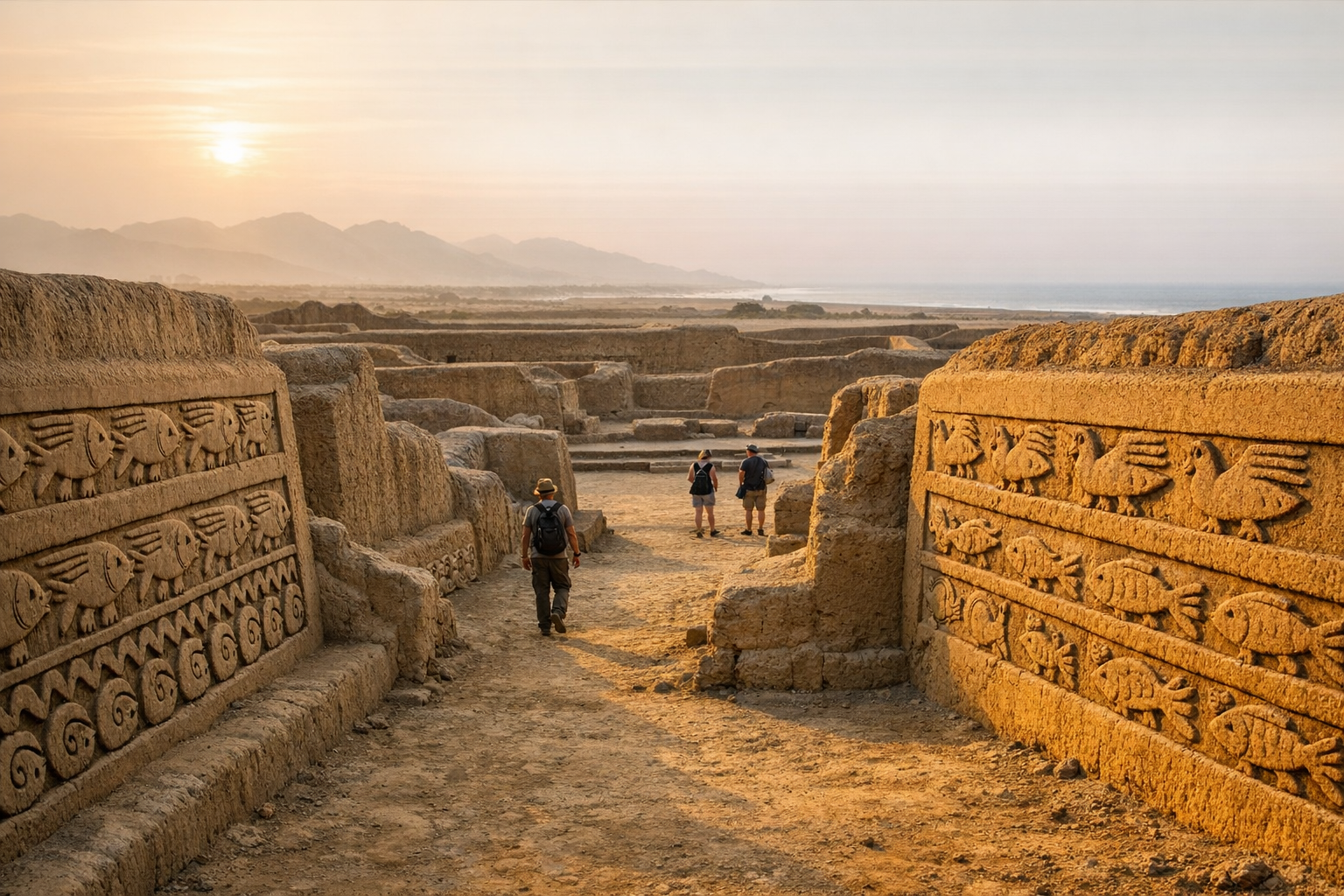
Chan Chan Peru Guide 2026: Chimu Capital & Adobe Citadels
ChimuExplore Chan Chan near Trujillo — the largest pre-Columbian city in the Americas. Discover the Chimu...
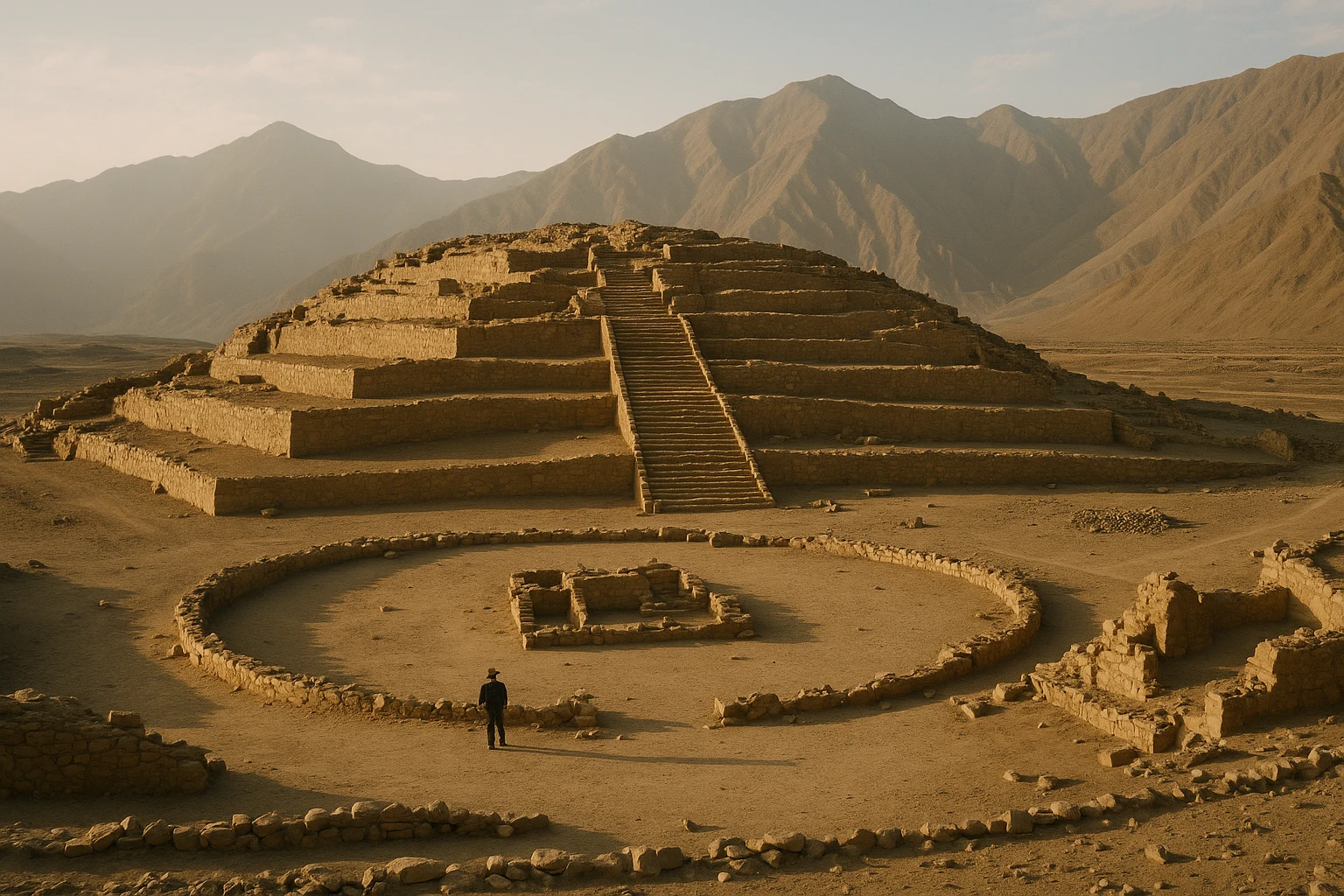
Caral-Supe Peru Guide 2026: Sacred Pyramids & the First Andean City
Norte-Chico-CaralVisit Caral-Supe in Peru, the oldest known city in the Americas, with practical transport from Lima,...
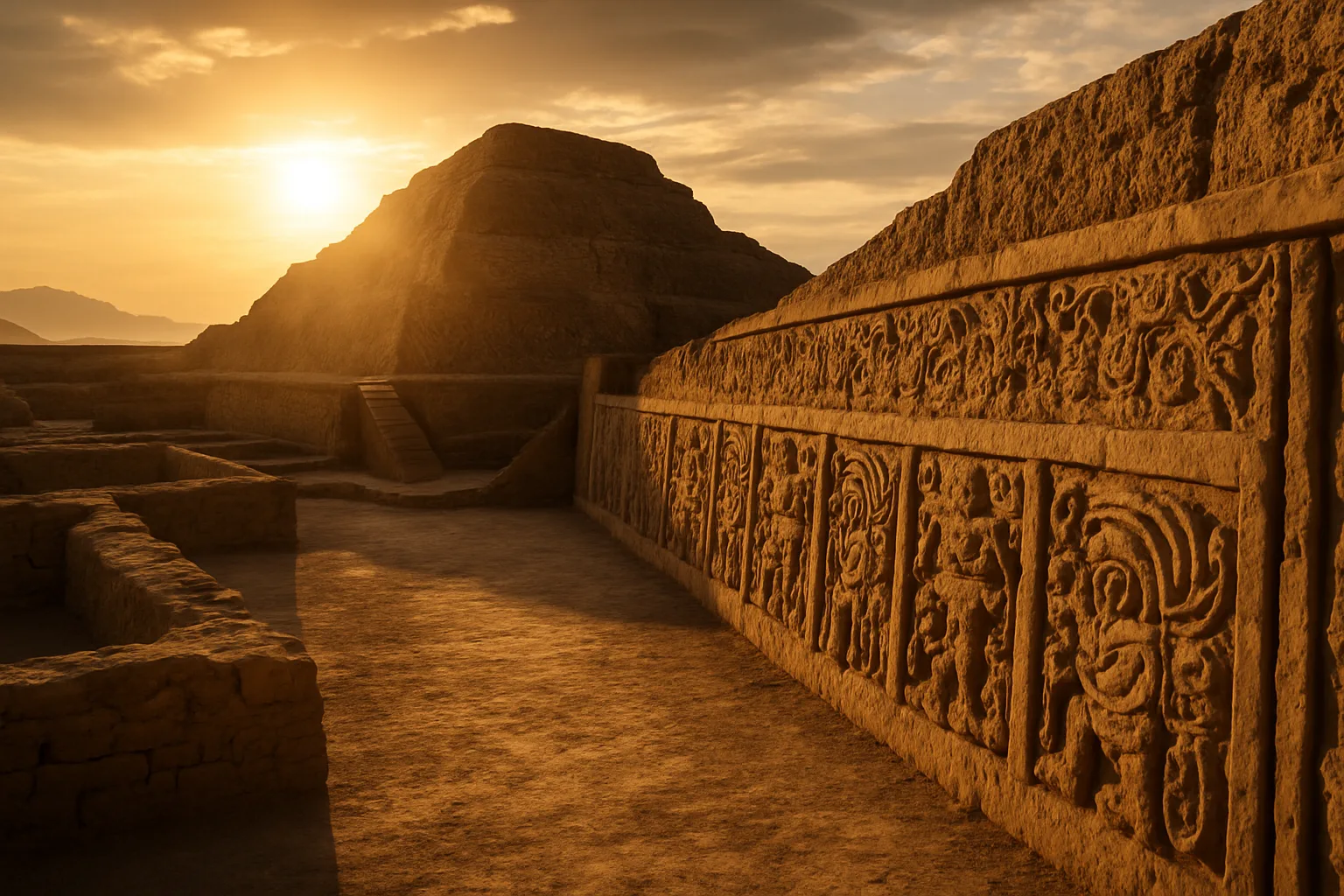
El Brujo Complex Peru Guide 2026: Lady of Cao & Moche Pyramids
Moche-ChimuVisit El Brujo Complex near Trujillo, Peru: Huaca Cao Viejo, the Lady of Cao tomb, and Moche murals....