Quick Info
Curated Experiences
Cerveteri Banditaccia Necropolis Guided Visit
Etruscan Lazio Full Day: Cerveteri + Tarquinia
Cerveteri sits about 50 kilometers northwest of Rome, overlooking the Tyrrhenian coast from a tufa plateau that once supported one of the ancient Mediterranean’s wealthiest cities. The main draw is Banditaccia, a UNESCO World Heritage necropolis where Etruscan families built elaborate underground tombs arranged along paved streets - a funerary city that mirrors the layout of the living settlement it served. For travelers working through central Italy’s layered history, this is the site that makes the Etruscans tangible. After walking Banditaccia’s tomb-lined avenues, a Colosseum visit reads less like an isolated Roman monument and more like one chapter in a much longer peninsula story.
Why Cerveteri Matters
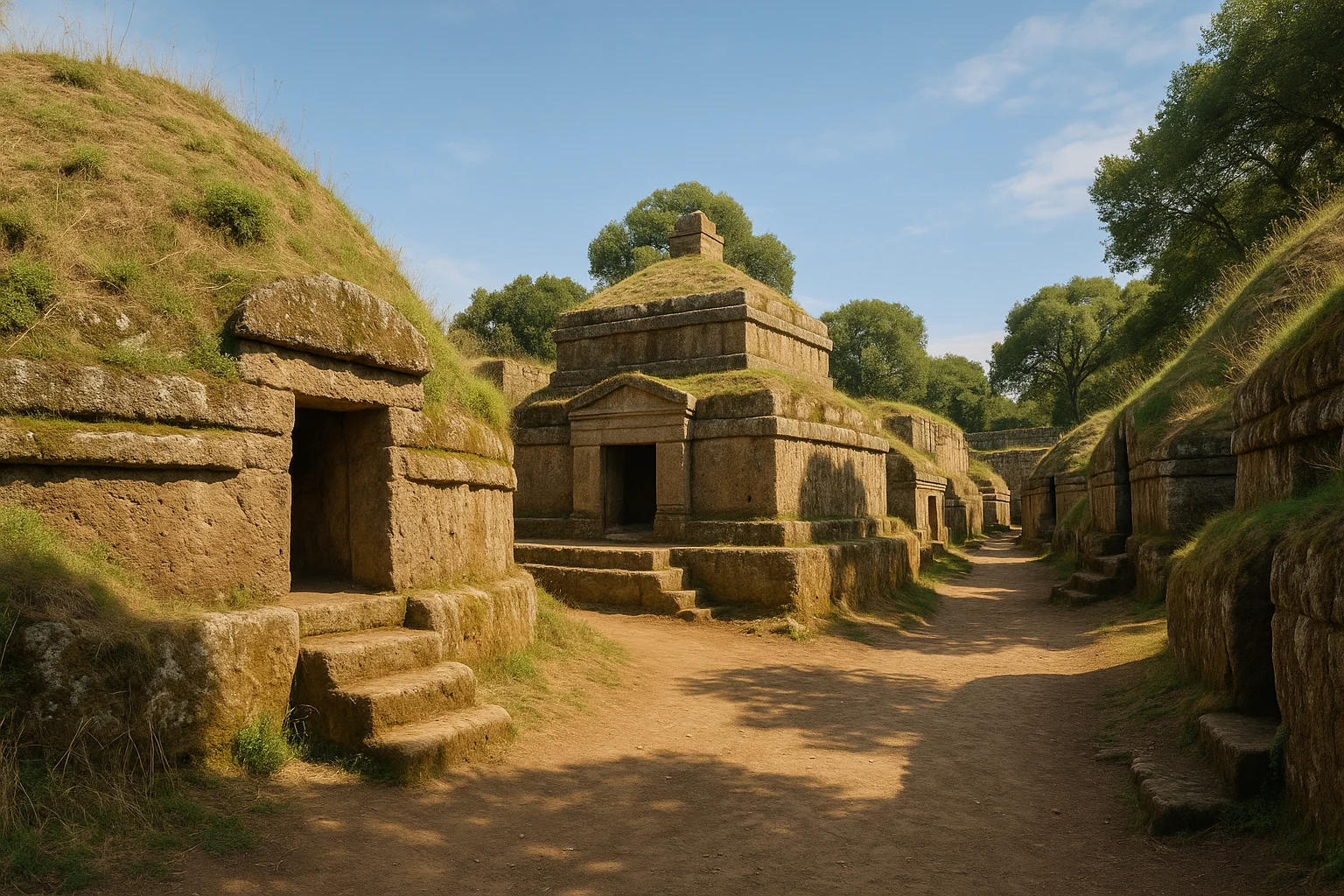
Most ancient civilizations left behind temples, walls, or civic architecture. The Etruscans left tombs - and at Banditaccia, those tombs compose an entire planned district. The necropolis covers roughly 400 hectares (the visitable core is smaller), with thousands of burial structures dating from the 9th to the 3rd century BCE. What sets it apart is legibility. You don’t need specialist training to read the site. Streets run in grids. Tombs cluster by family and period. Architectural forms shift visibly across centuries, from simple pit graves to monumental tumuli to late-period cube tombs stacked along narrow lanes.
This matters for three reasons. First, it is the best surviving example of Etruscan urban planning applied to a funerary context - a “city of the dead” that reveals how living cities may have been organized. Second, tomb interiors reproduce domestic architecture: carved beds, ceiling beams, doorframes, and household objects rendered in stone. These rooms are the closest thing we have to walking through an Etruscan house. Third, Banditaccia anchors the broader Etruscan story geographically, linking Caere’s documented wealth (from trade, metalwork, and maritime commerce) to physical evidence you can stand inside.
Historical Context
Ancient Caere (Greek: Agylla) was among the most powerful of the twelve major Etruscan city-states. Its wealth derived from control of coastal trade routes and nearby mineral deposits. By the 7th and 6th centuries BCE, Caere maintained diplomatic ties with Greece and maintained a treasury at Delphi - one of only a few non-Greek polities to do so. Its port at Pyrgi (modern Santa Severa) housed a famous sanctuary whose bilingual gold tablets, discovered in 1964, provided a critical key for understanding Etruscan language.
The necropolis at Banditaccia developed in phases. Early burials (9th-8th century BCE) were simple cremation pits in the Villanovan tradition. As Caere’s wealth grew during the Orientalizing period (7th century BCE), elite families began constructing large circular tumuli - earthen mounds over carved-rock chambers, some exceeding 30 meters in diameter. These tumuli contained multi-room interiors with sculpted furnishings and rich grave goods, reflecting contact with Phoenician, Greek, and Near Eastern trading partners.
By the 6th and 5th centuries BCE, tomb architecture shifted toward rectilinear “house-form” or “cube” tombs arranged in regular rows, suggesting evolving social structures and possibly a broader distribution of wealth. Caere’s decline accelerated after military setbacks against Syracuse in 474 BCE and eventual Roman absorption in the 4th-3rd centuries BCE. The necropolis continued in diminished use but never matched its earlier scale.
What to Prioritize On Site
The Main Circulation Routes
Begin by walking the primary axes to absorb the site’s scale and planning logic. The main street (Via degli Inferi and its extensions) gives you a chronological cross-section: older tumuli on the periphery, later cube tombs along tighter lanes. Understanding this layout first prevents the common mistake of diving into individual tombs without grasping how they relate to each other.
The Great Tumuli
The monumental circular tumuli are the site’s signature structures. Look for the Tomba dei Capitelli and Tomba dei Rilievi in particular. The Tomba dei Rilievi (Tomb of the Reliefs) is Banditaccia’s most famous interior - a 4th-century BCE family chamber with stucco reliefs depicting household objects, weapons, and animals on walls and pillars. Access is sometimes restricted to viewing through a glass partition, but even from the threshold the detail is striking. The Tomba della Capanna (Tomb of the Hut) preserves a ceiling carved to imitate wooden roof beams, giving direct evidence of domestic building techniques.
The Cube Tomb District
The later rectilinear tombs, arranged in dense rows along narrow streets, create the most “urban” feeling anywhere in the necropolis. These are smaller and less ornate than the tumuli but collectively more powerful as evidence of community-scale funerary planning. Walk the full length of at least one lane to feel the density.
Museo Nazionale Cerite
The small museum in Cerveteri’s town center (Piazza Santa Maria) holds grave goods, sarcophagi, and ceramics removed from the necropolis over centuries. It contextualizes what you see at the site itself. Budget 30-45 minutes. The museum and necropolis require separate tickets.
Practical Visit Strategy
Focused pass: 1.5 to 2 hours covers the main axes and key tombs. Arrive early to avoid tour groups in the tumuli interiors.
Full archaeology visit: 3 to 4 hours with the museum included. This pace lets you compare tomb types carefully and take notes if you’re visiting Tarquinia the same day.
With Tarquinia pairing: Commit a full day. Drive Cerveteri in the morning (architecture focus), then Tarquinia in the afternoon (painted tomb focus). The two sites are roughly 70 kilometers apart. This is the strongest single-day Etruscan itinerary available in Lazio.
Getting there: By car from Rome, take the A12 motorway toward Civitavecchia and exit at Cerveteri-Ladispoli. The necropolis is about 2 kilometers from the town center, uphill on a signed road. By public transport, COTRAL buses run from Rome’s Cornelia metro station (Line A) to Cerveteri town, but the final stretch to Banditaccia requires a taxi, local shuttle, or a 25-minute uphill walk.
When to go: Spring (April-May) and early autumn (September-October) are ideal. Summer heat on the exposed tufa plateau is significant, and shade is limited outside tomb interiors. Winter visits are quieter but check reduced hours.
What to bring: Sturdy shoes with grip (tufa surfaces are uneven and can be slippery when damp), sun protection, water, and a small flashlight for dimly lit tomb chambers. Some interiors have no electric lighting.
Route Pairing and Nearby Sites
Cerveteri fits naturally into a Lazio archaeology corridor. The most direct pairing is with Tarquinia, where painted tombs complement Banditaccia’s architectural focus. Together, the two sites constitute a single UNESCO designation.
For Rome-based itineraries, Cerveteri sharpens visits to the Colosseum, Baths of Caracalla, and the Appian Way by placing Roman infrastructure in its pre-Roman context. The Etruscan collection at Rome’s Villa Giulia museum (not on AncientTravel yet) is the essential indoor complement, housing the Sarcophagus of the Spouses originally from Banditaccia.
Southward, the Italy ancient sites hub covers additional options for extending your route through Campania and Sicily.
Final Take
Cerveteri does something no museum or textbook replicates: it lets you walk the spatial logic of a civilization that Rome systematically absorbed and partially erased. Banditaccia is not a single monument but a landscape-scale archive, readable without special expertise if you give it enough time. For travelers building a serious Italian itinerary, this is the site that transforms “pre-Roman” from a vague chronological label into architecture you can touch. Pair it with Tarquinia, then carry that context into Rome itself.
Quick Facts
| Attribute | Details |
|---|---|
| Location | Cerveteri, Lazio, Italy (50 km northwest of Rome) |
| Country | Italy |
| Region | Lazio |
| Civilization | Etruscan |
| Historical Period | 9th to 3rd centuries BCE |
| UNESCO Status | World Heritage Site (2004, jointly with Tarquinia) |
| Established | Ancient Caere rose as a major Etruscan center in the early 1st millennium BCE |
| Coordinates | 42.0028, 12.1028 |
Frequently Asked Questions
What is unique about Cerveteri compared with other ancient cemeteries?
Cerveteri's Banditaccia necropolis is laid out like a city of the dead, with streets and architectonic tomb forms that mirror domestic spatial logic.
Is Cerveteri better than Tarquinia, or should you do both?
They are complementary: Cerveteri excels in tomb architecture and urban planning, while Tarquinia is stronger for painted tomb imagery.
How much time is needed at Banditaccia?
Most visitors need 2 to 3 hours for a meaningful circuit, with more time for detailed reading and photography.
Can you do Cerveteri as a Rome day trip without a car?
Yes, though logistics are simpler with private transfer or organized tours; public transit options exist but can be slower.
Nearby Ancient Sites
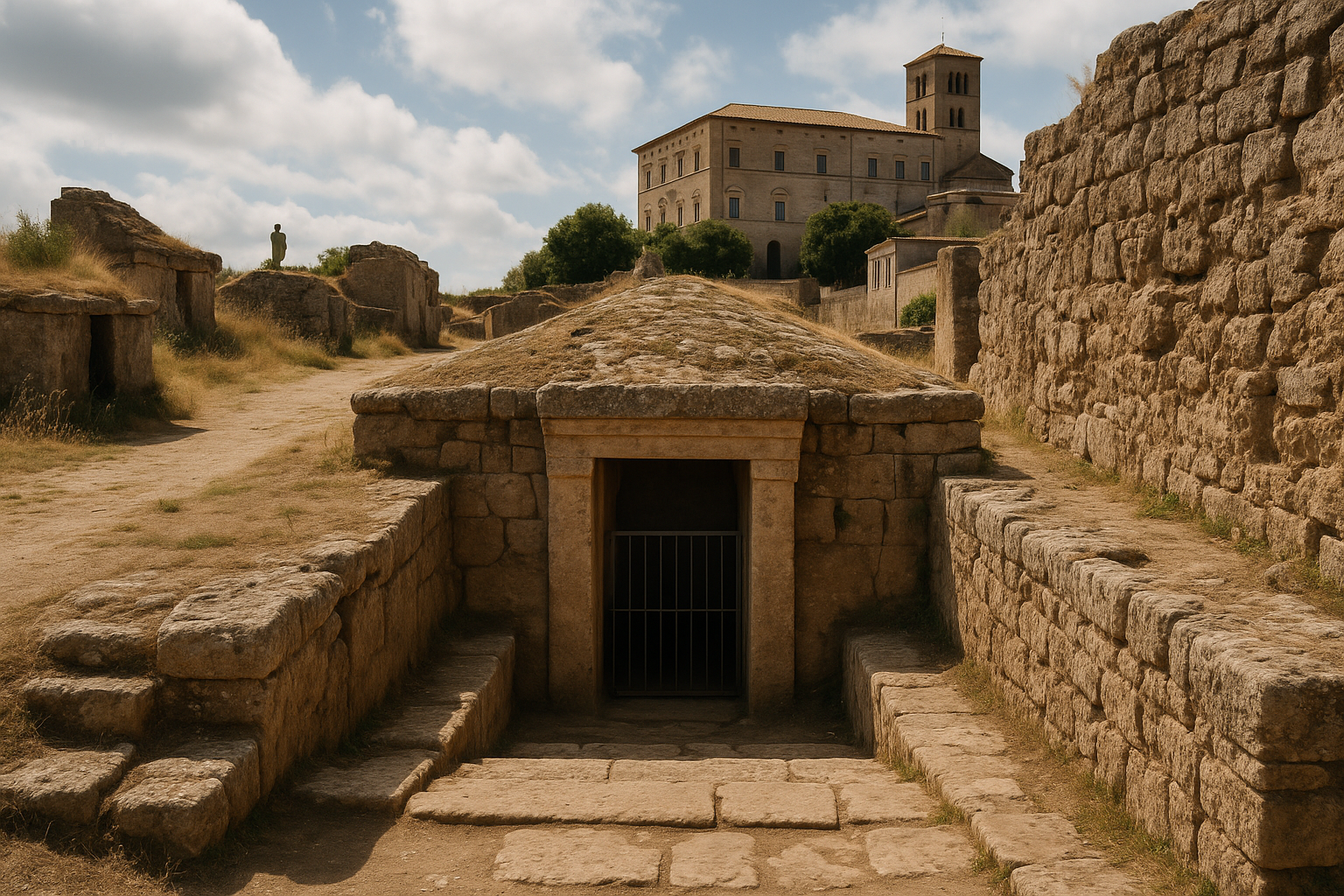
Tarquinia Guide 2026: Etruscan Painted Tombs, Necropolis Access, and Museum Plan
EtruscanUse this Tarquinia guide to plan a smooth visit to the Monterozzi necropolis and museum collections,...
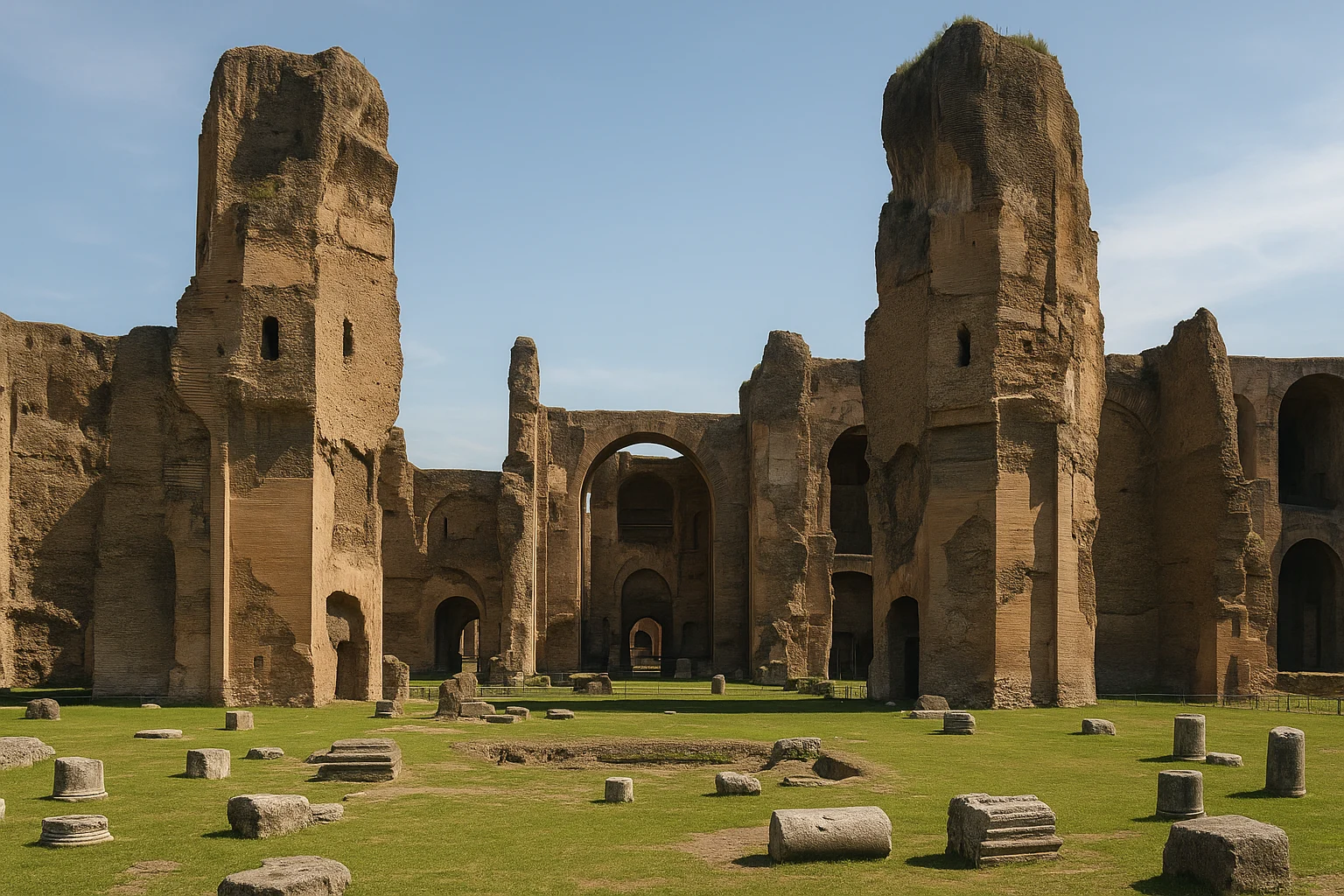
Baths of Caracalla Rome Guide 2026
RomanPlan your visit to the Baths of Caracalla with practical route advice, history context, timing, and ...
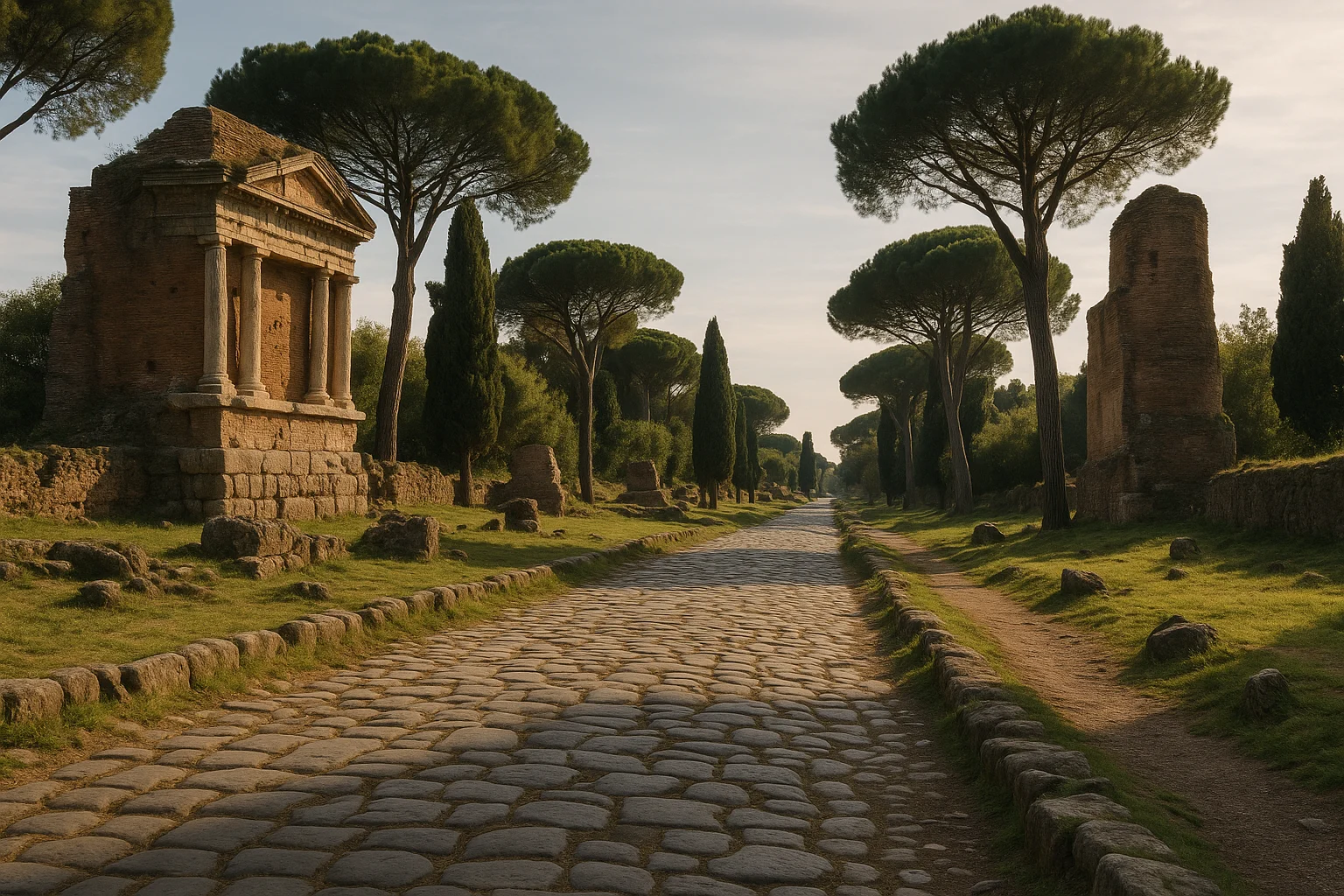
Appian Way Rome Guide 2026
RomanPlan a smart visit to the Appian Way with route choices, catacomb logistics, bike-vs-walk strategy, ...
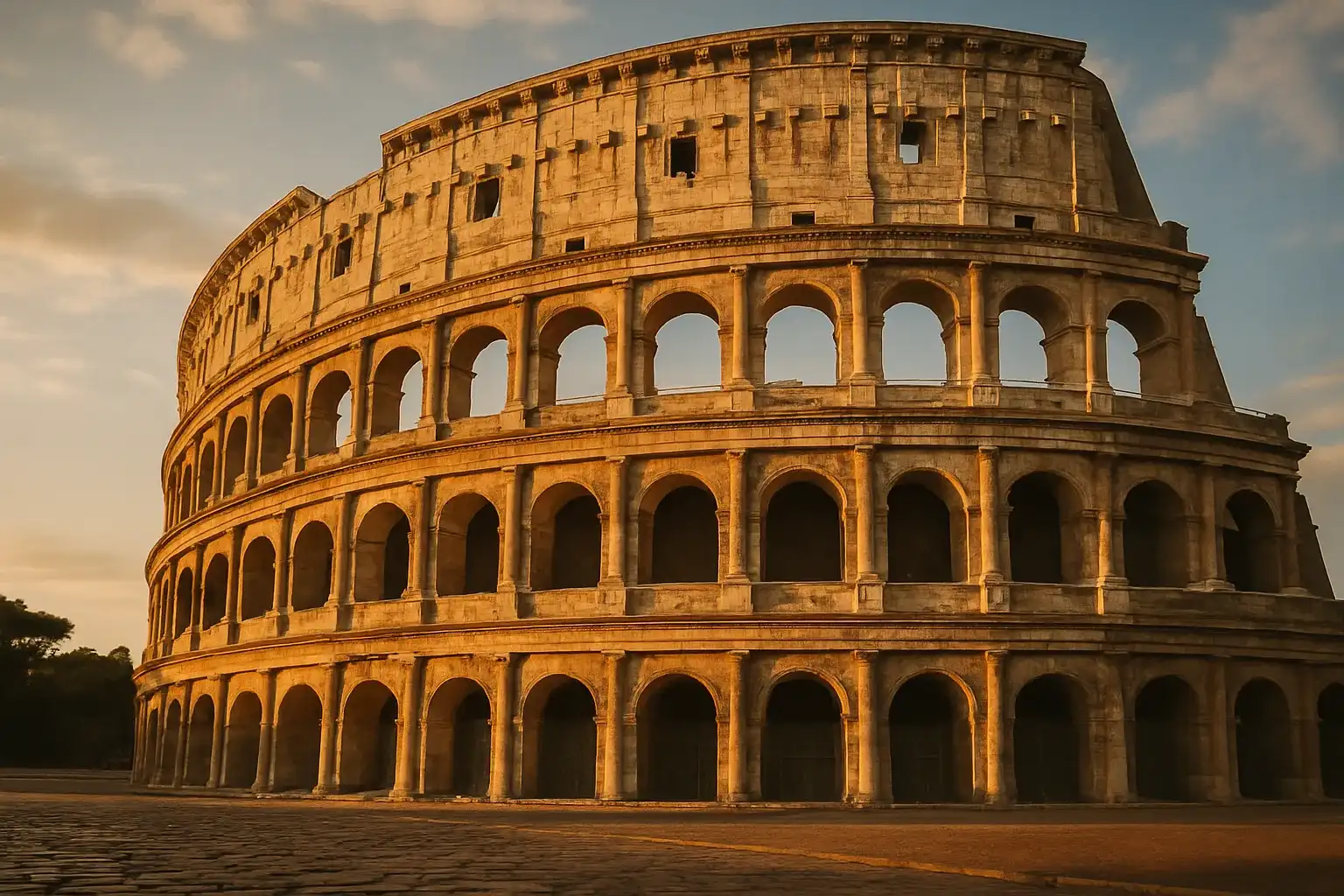
Colosseum Rome: Complete 2026 Guide to Arena Floor, Tickets, and Timing
Roman EmpirePlan the perfect Colosseum visit with timed-entry strategy, Arena Floor and underground access tips,...